
Participatory Pattern Workshops A Methodology for Open Learning

- Slides: 20
Participatory Pattern Workshops: A Methodology for Open Learning Design Inquiry Yishay Mor, Steven Warburton, Niall Winters ALT-C 2012, Manchester
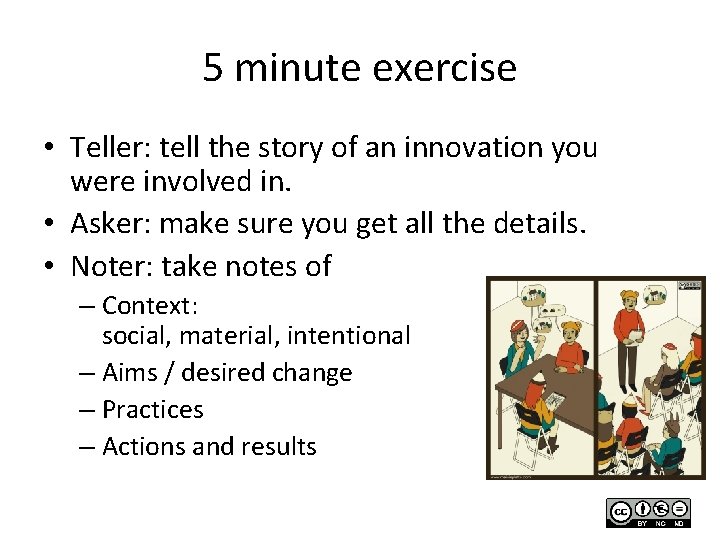
5 minute exercise • Teller: tell the story of an innovation you were involved in. • Asker: make sure you get all the details. • Noter: take notes of – Context: social, material, intentional – Aims / desired change – Practices – Actions and results
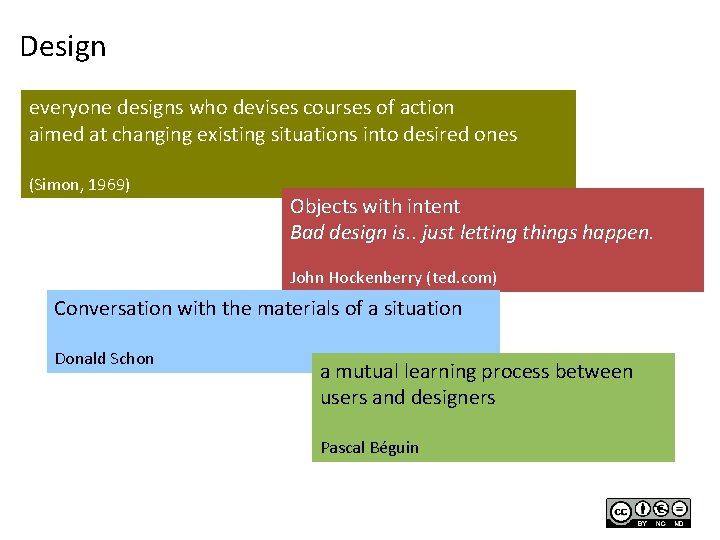
Design everyone designs who devises courses of action aimed at changing existing situations into desired ones (Simon, 1969) Objects with intent Bad design is. . just letting things happen. John Hockenberry (ted. com) Conversation with the materials of a situation Donald Schon a mutual learning process between users and designers Pascal Béguin
Learning Design The deliberate creative practice of devising new practices, plans of activity, resources and tools aimed at achieving particular educational aims in a given situation.
Challenge: sharing design knowledge • Context: – Heterogeneous communities of educational practitioners. – Distributed expertise. – Tacit intuitive knowledge. – Implicit assumptions. • Aim: – Enable critical collaborative reflection on design experiences.
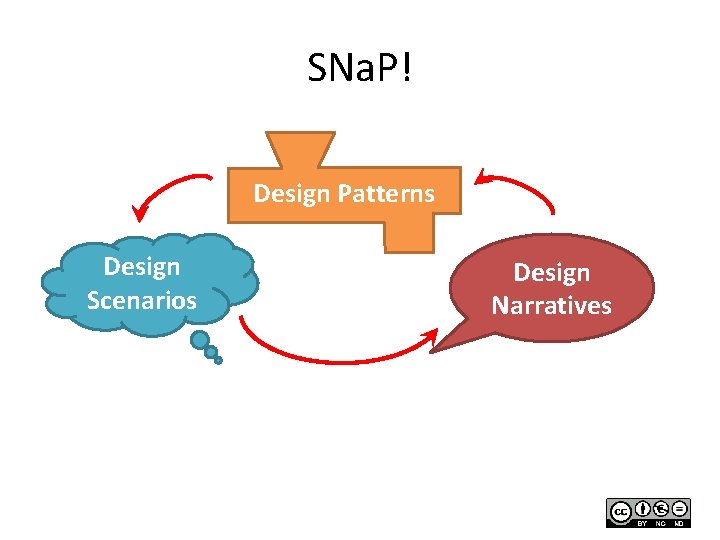
SNa. P! Design Patterns Design Scenarios Design Narratives
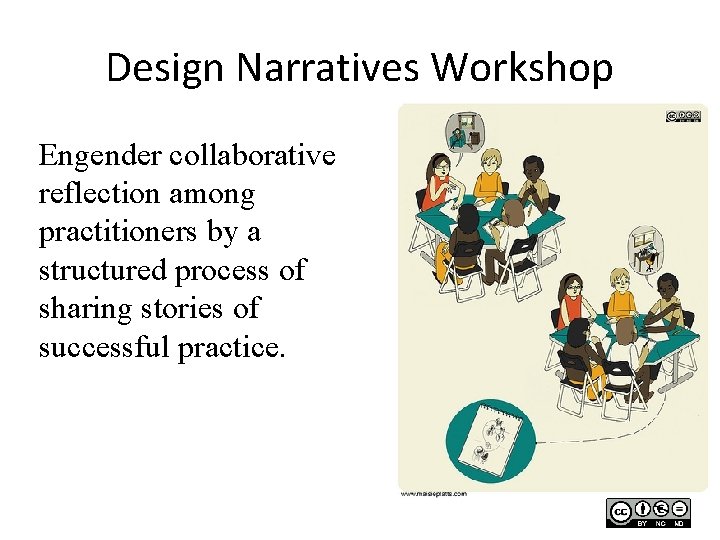
Design Narratives • Accounts of critical events from a personal, phenomenological perspective. • Focus on design in the sense of problem solving – describing a problem in the chosen domain, the actions taken to resolve it and their unfolding effects. • Provide an account of the history and evolution of a design over time – including the research context, the tools and activities designed, and the results of users’ interactions with these. • Portray the complete path leading to an educational innovation, not just its final form – including failed attempts and the modifications they espoused.
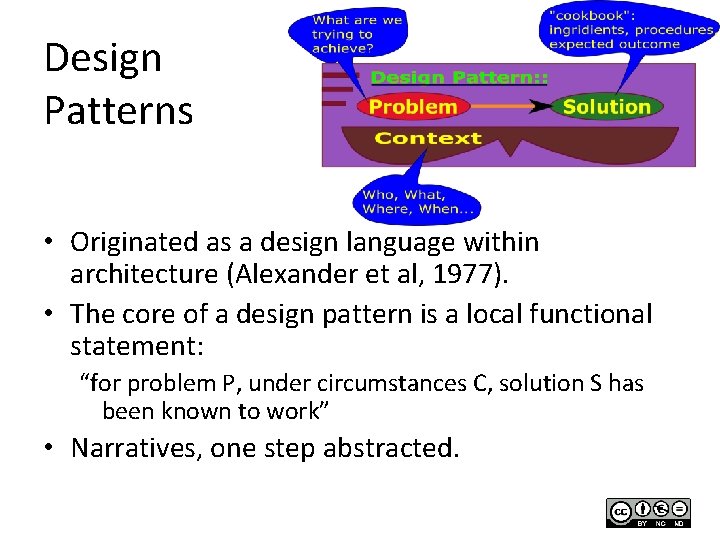
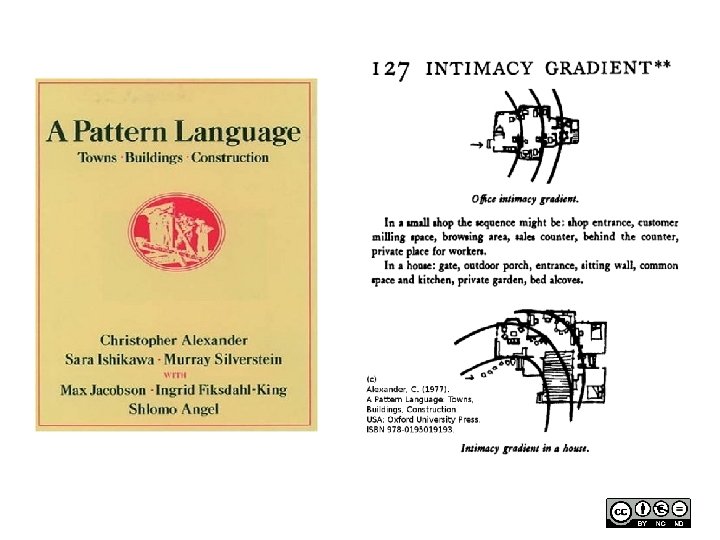
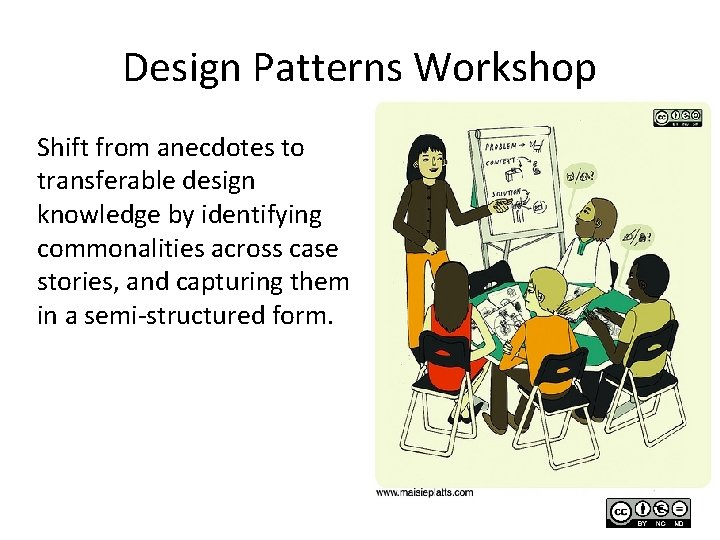
Design Patterns • Originated as a design language within architecture (Alexander et al, 1977). • The core of a design pattern is a local functional statement: “for problem P, under circumstances C, solution S has been known to work” • Narratives, one step abstracted.
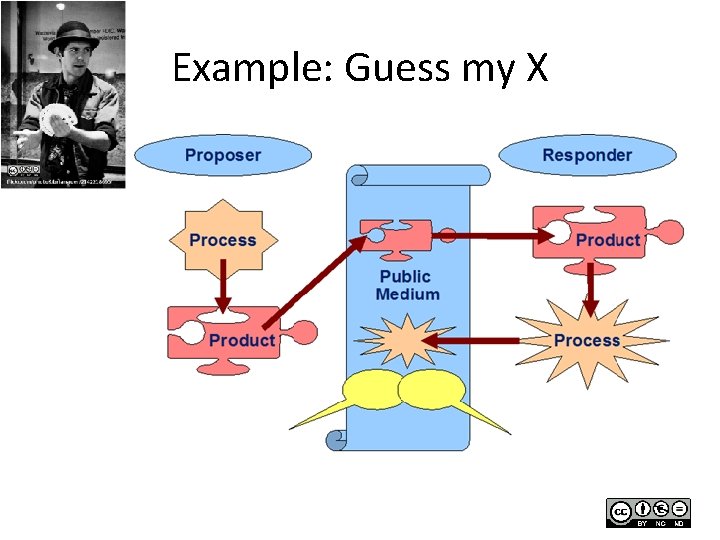
Example: Guess my X
Example: try once, refine once http: //patternlanguagenetwork. myxwiki. org/xwiki/bin/view/Patterns/Try. Once. Refine. Once
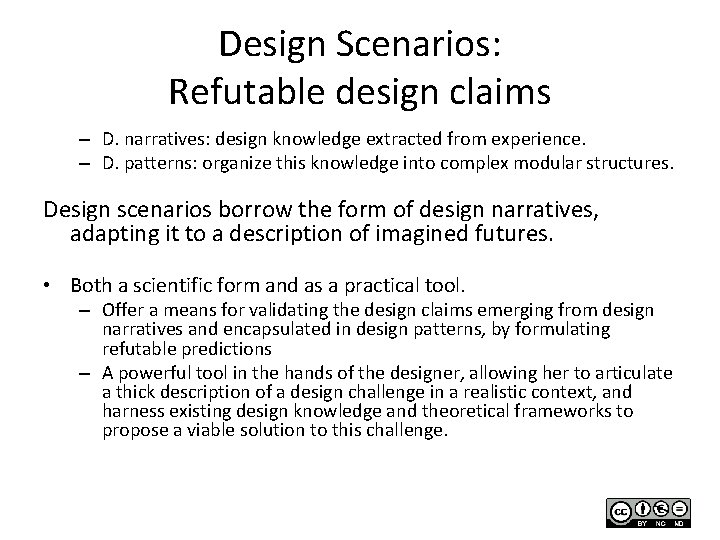
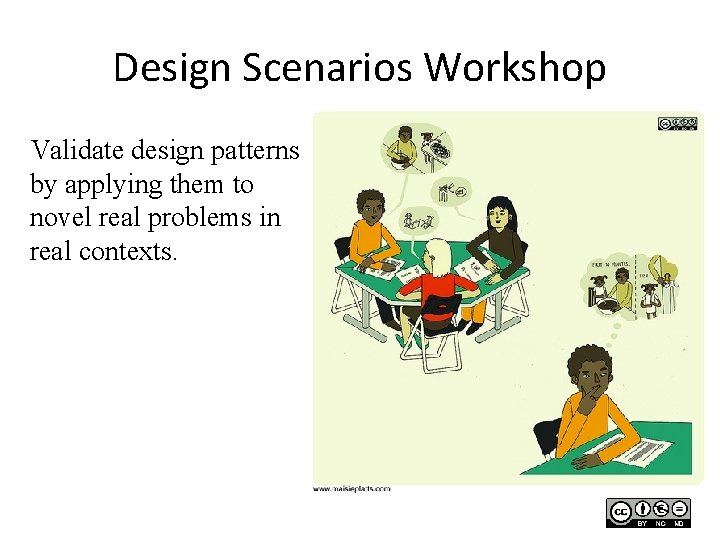
Design Scenarios: Refutable design claims – D. narratives: design knowledge extracted from experience. – D. patterns: organize this knowledge into complex modular structures. Design scenarios borrow the form of design narratives, adapting it to a description of imagined futures. • Both a scientific form and as a practical tool. – Offer a means for validating the design claims emerging from design narratives and encapsulated in design patterns, by formulating refutable predictions – A powerful tool in the hands of the designer, allowing her to articulate a thick description of a design challenge in a realistic context, and harness existing design knowledge and theoretical frameworks to propose a viable solution to this challenge.
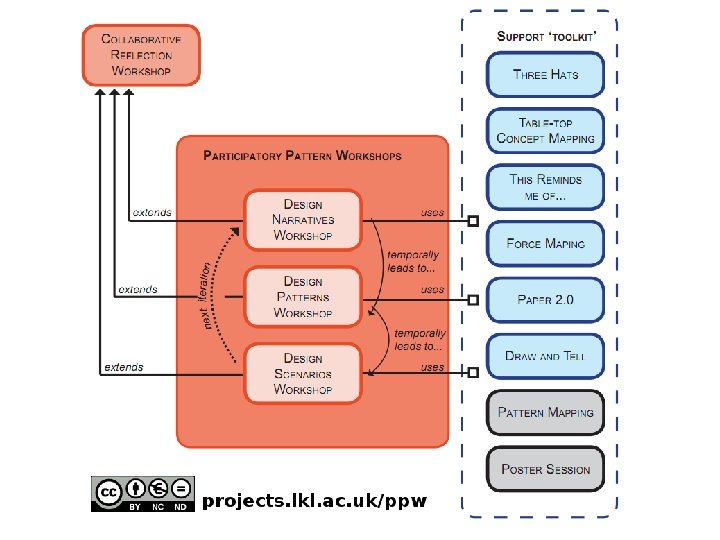
Design Narratives Workshop Engender collaborative reflection among practitioners by a structured process of sharing stories of successful practice.
Design Patterns Workshop Shift from anecdotes to transferable design knowledge by identifying commonalities across case stories, and capturing them in a semi-structured form.
Design Scenarios Workshop Validate design patterns by applying them to novel real problems in real contexts.
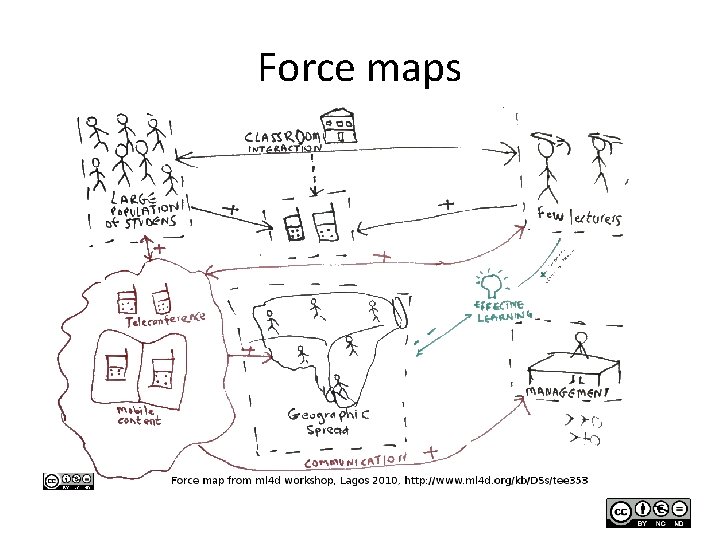
Force maps
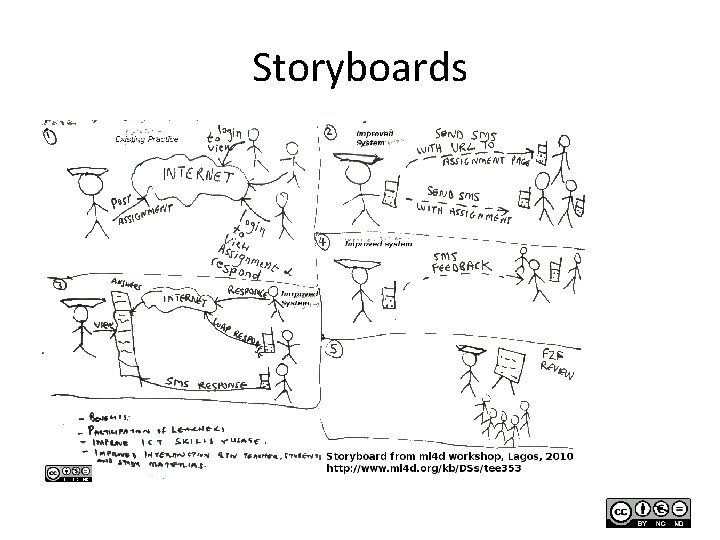
Storyboards
Read all about it. . • http: //projects. lkl. ac. uk/ppw • Mor, Y. ; Warburton, S. & Winters, N. (2012), 'Participatory Pattern Workshops: A Methodology for Open Learning Design Inquiry', Research in Learning Technology 20 http: //www. researchinlearningtechnology. net/index. php/rlt/ article/view/19197/html • Mor, Y. SNa. P! Re-using, sharing and communicating designs and design knowledge using Scenarios, Narratives and Patterns. Handbook of Design in Educational Technology. editor(s) Luckin, R. ; Goodyear, P. ; Grabowski, B. ; Puntambekar, S. ; Winters, N. and Underwood, J. Routledge, forthcoming.
Thank You Yishay Mor, yishay. mor@open. ac. uk, yishaymor. org Niall Winters, n. winters@ioe. ac. uk, lkl. ac. uk/niall Steven Warburton, s. warburton@surrey. ac. uk