
Participatory Ergonomics Program to Address Musculoskeletal Disorder Risk
- Slides: 1
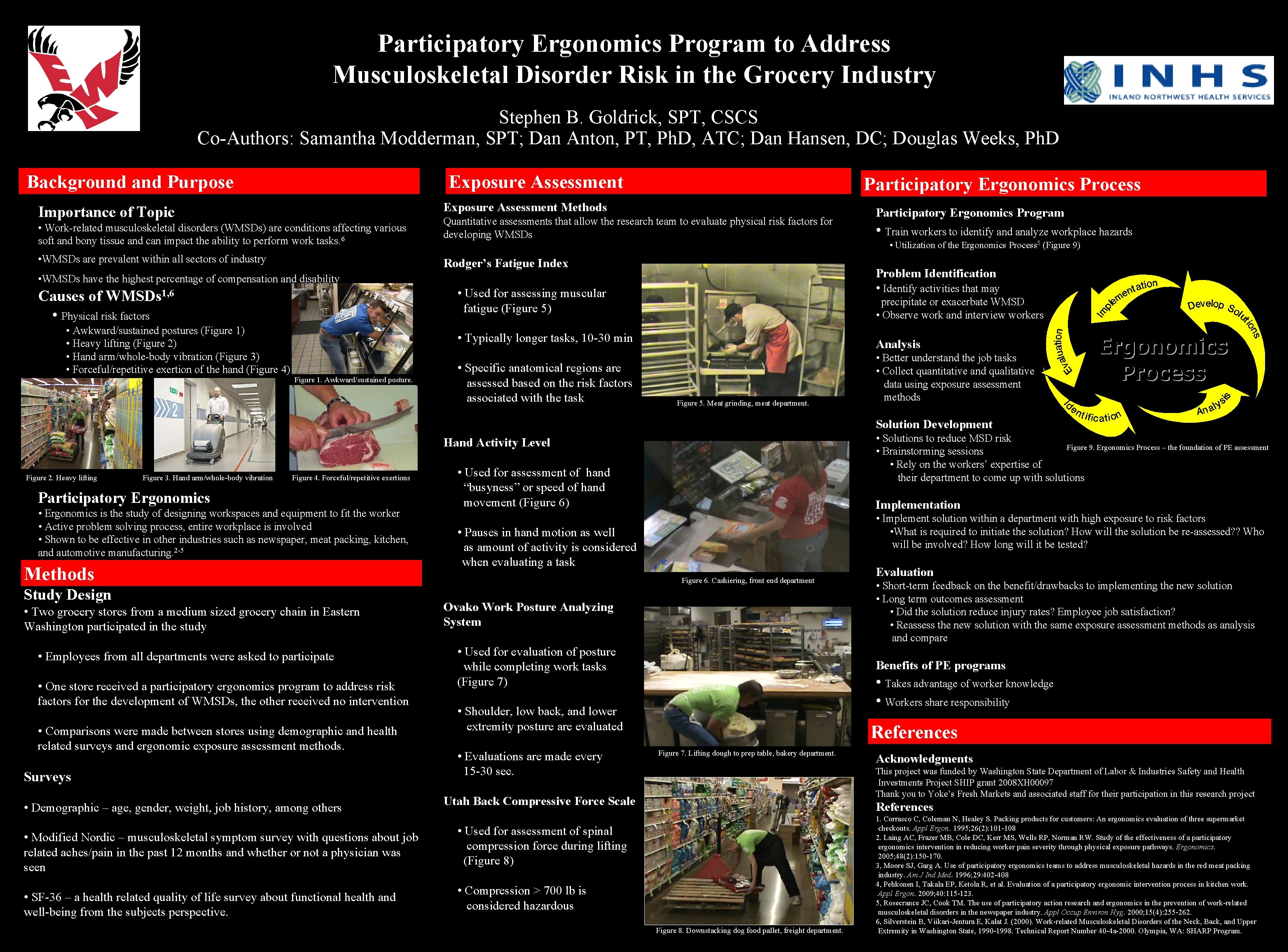
Participatory Ergonomics Program to Address Musculoskeletal Disorder Risk in the Grocery Industry Stephen B. Goldrick, SPT, CSCS Co-Authors: Samantha Modderman, SPT; Dan Anton, PT, Ph. D, ATC; Dan Hansen, DC; Douglas Weeks, Ph. D Background and Purpose Exposure Assessment Participatory Ergonomics Process Exposure Assessment Methods Importance of Topic • Work-related musculoskeletal disorders (WMSDs) are conditions affecting various soft and bony tissue and can impact the ability to perform work tasks. 6 • WMSDs are prevalent within all sectors of industry Quantitative assessments that allow the research team to evaluate physical risk factors for developing WMSDs Rodger’s Fatigue Index • Awkward/sustained postures (Figure 1) • Heavy lifting (Figure 2) • Hand arm/whole-body vibration (Figure 3) • Forceful/repetitive exertion of the hand (Figure 4) • Used for assessing muscular fatigue (Figure 5) Figure 1. Awkward/sustained posture. • Utilization of the Ergonomics Process 5 (Figure 9) precipitate or exacerbate WMSD • Observe work and interview workers • Typically longer tasks, 10 -30 min • Specific anatomical regions are assessed based on the risk factors associated with the task • Train workers to identify and analyze workplace hazards Problem Identification • Identify activities that may • WMSDs have the highest percentage of compensation and disability Causes of WMSDs 1, 6 • Physical risk factors Participatory Ergonomics Program Analysis Figure 5. Meat grinding, meat department. • Better understand the job tasks • Collect quantitative and qualitative data using exposure assessment methods Solution Development • Solutions to reduce MSD risk Figure 9. Ergonomics Process – the foundation of PE assessment • Brainstorming sessions • Rely on the workers’ expertise of their department to come up with solutions Hand Activity Level Figure 2. Heavy lifting Figure 3. Hand arm/whole-body vibration Figure 4. Forceful/repetitive exertions Participatory Ergonomics • Ergonomics is the study of designing workspaces and equipment to fit the worker • Active problem solving process, entire workplace is involved • Shown to be effective in other industries such as newspaper, meat packing, kitchen, and automotive manufacturing. 2 -5 Methods Study Design • Two grocery stores from a medium sized grocery chain in Eastern Washington participated in the study • Employees from all departments were asked to participate • One store received a participatory ergonomics program to address risk factors for the development of WMSDs, the other received no intervention • Comparisons were made between stores using demographic and health related surveys and ergonomic exposure assessment methods. Surveys • Demographic – age, gender, weight, job history, among others • Modified Nordic – musculoskeletal symptom survey with questions about job related aches/pain in the past 12 months and whether or not a physician was seen • SF-36 – a health related quality of life survey about functional health and well-being from the subjects perspective. • Used for assessment of hand “busyness” or speed of hand movement (Figure 6) Implementation • Implement solution within a department with high exposure to risk factors • What is required to initiate the solution? How will the solution be re-assessed? ? Who will be involved? How long will it be tested? • Pauses in hand motion as well as amount of activity is considered when evaluating a task Figure 6. Cashiering, front end department Ovako Work Posture Analyzing System • Used for evaluation of posture while completing work tasks (Figure 7) • Short-term feedback on the benefit/drawbacks to implementing the new solution • Long term outcomes assessment • Did the solution reduce injury rates? Employee job satisfaction? • Reassess the new solution with the same exposure assessment methods as analysis and compare Benefits of PE programs • Takes advantage of worker knowledge • Workers share responsibility • Shoulder, low back, and lower extremity posture are evaluated • Evaluations are made every 15 -30 sec. Evaluation References Figure 7. Lifting dough to prep table, bakery department. Acknowledgments This project was funded by Washington State Department of Labor & Industries Safety and Health Investments Project SHIP grant 2008 XH 00097 Thank you to Yoke’s Fresh Markets and associated staff for their participation in this research project Utah Back Compressive Force Scale References • Used for assessment of spinal compression force during lifting (Figure 8) • Compression > 700 lb is considered hazardous Figure 8. Downstacking dog food pallet, freight department. 1. Corrasco C, Coleman N, Healey S. Packing products for customers: An ergonomics evaluation of three supermarket checkouts. Appl Ergon. 1995; 26(2): 101 -108 2. Laing AC, Frazer MB, Cole DC, Kerr MS, Wells RP, Norman RW. Study of the effectiveness of a participatory ergonomics intervention in reducing worker pain severity through physical exposure pathways. Ergonomics. 2005; 48(2): 150 -170. 3, Moore SJ, Garg A. Use of participatory ergonomics teams to address musculoskeletal hazards in the red meat packing industry. Am J Ind Med. 1996; 29: 402 -408 4, Pehkonen I, Takala EP, Ketola R, et al. Evaluation of a participatory ergonomic intervention process in kitchen work. Appl Ergon. 2009; 40: 115 -123. 5, Rosecrance JC, Cook TM. The use of participatory action research and ergonomics in the prevention of work-related musculoskeletal disorders in the newspaper industry. Appl Occup Environ Hyg. 2000; 15(4): 255 -262. 6, Silverstein B, Viikari-Jentura E, Kalat J. (2000). Work-related Musculoskeletal Disorders of the Neck, Back, and Upper Extremity in Washington State, 1990 -1998. Technical Report Number 40 -4 a-2000. Olympia, WA: SHARP Program.