
Partial Trapeziectomy with Local Capsular Interposition vs Total




- Slides: 17
Partial Trapeziectomy with Local Capsular Interposition vs. Total Trapeziectomy: A Cadaveric Biomechanical Study Deana Mercer, Christina Salas, Moheb Moneim Proceedings of the 1 st ITOW Newport, RI 1
Disclosure • None 2
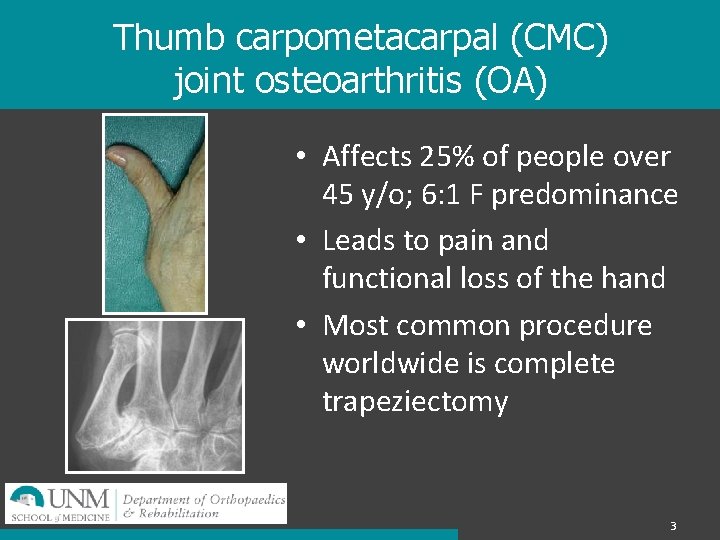
Thumb carpometacarpal (CMC) joint osteoarthritis (OA) • Affects 25% of people over 45 y/o; 6: 1 F predominance • Leads to pain and functional loss of the hand • Most common procedure worldwide is complete trapeziectomy 3
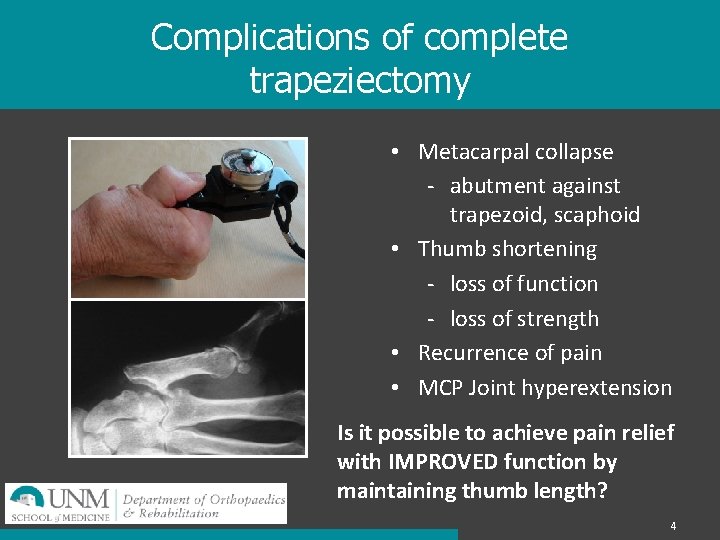
Complications of complete trapeziectomy • Metacarpal collapse - abutment against trapezoid, scaphoid • Thumb shortening - loss of function - loss of strength • Recurrence of pain • MCP Joint hyperextension Is it possible to achieve pain relief with IMPROVED function by maintaining thumb length? 4
Purpose To biomechanically evaluate a proposed treatment of thumb basal joint arthritis with three components 1. Partial trapezium resection 2. Partial metacarpal base resection 3. Local capsular interposition Maintains more length? We took our questions to the lab 5
Methods In a cadaveric hand model utilizing 9 matched pairs, we compared thumb metacarpal to scaphoid distance on x-ray after a) partial resection of the trapezium and base of the first metacarpal with capsular interposition (PTCI) b) and after complete resection of the trapezium with capsular interposition (TTCI) 6
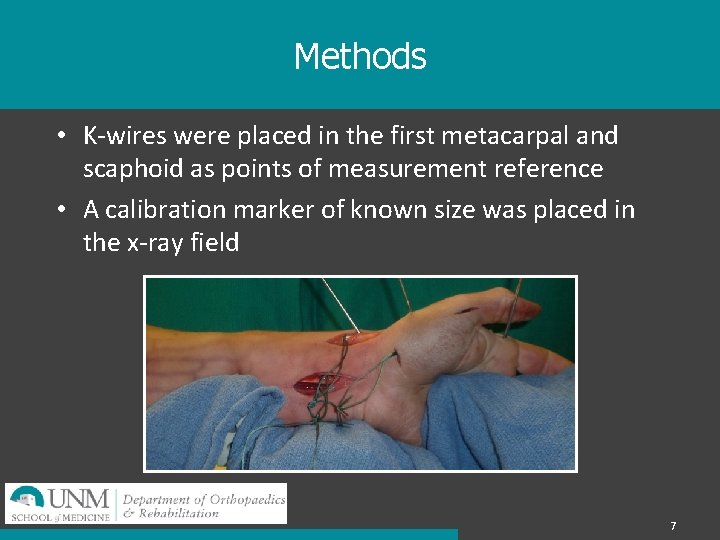
Methods • K-wires were placed in the first metacarpal and scaphoid as points of measurement reference • A calibration marker of known size was placed in the x-ray field 7
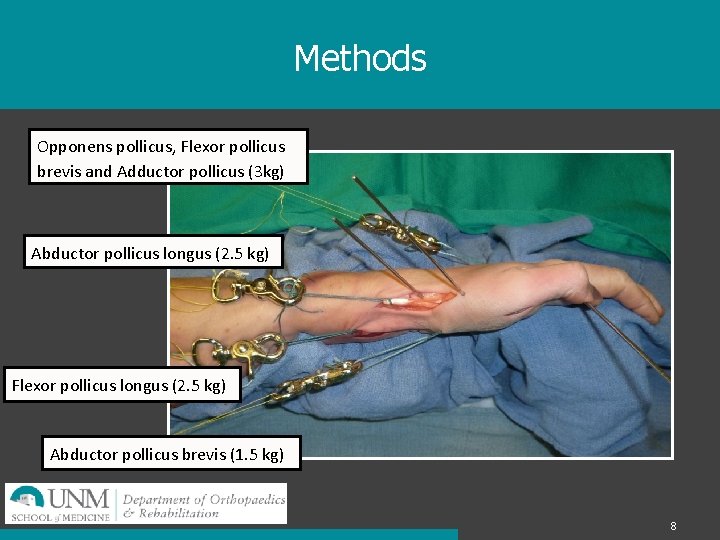
Methods Opponens pollicus, Flexor pollicus brevis and Adductor pollicus (3 kg) Abductor pollicus longus (2. 5 kg) Flexor pollicus longus (2. 5 kg) Abductor pollicus brevis (1. 5 kg) 8
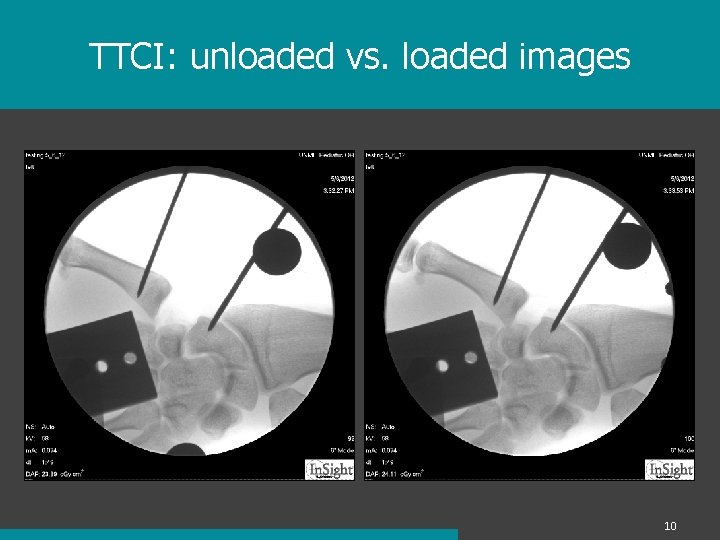
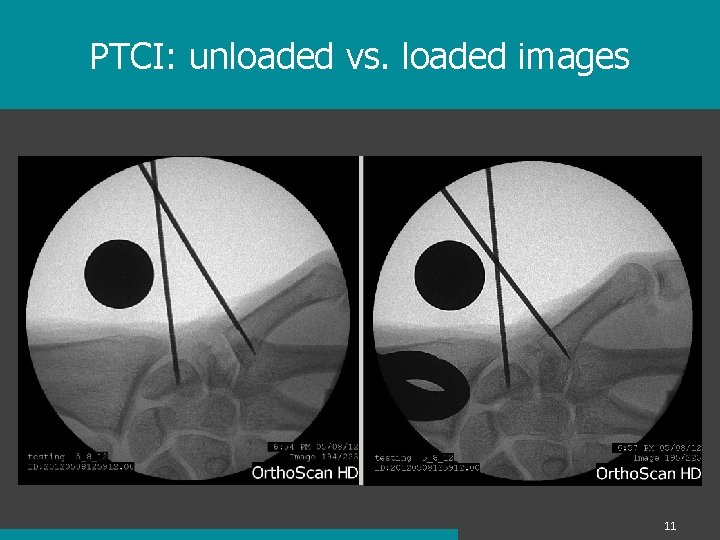
Methods • Native joint data collected for all hands - provides a baseline measure of thumb length - thumb in a loaded and unloaded position • Surgical procedure - PTCI vs. TTCI • 3 readers independently measured distances from x-ray images (3 readings/load-unload cycle) TTCI PTCI 9
TTCI: unloaded vs. loaded images 10
PTCI: unloaded vs. loaded images 11
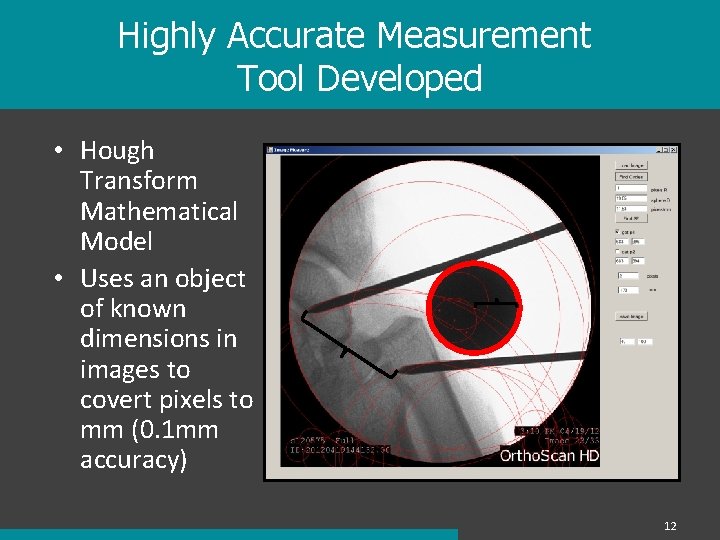
Highly Accurate Measurement Tool Developed • Hough Transform Mathematical Model • Uses an object of known dimensions in images to covert pixels to mm (0. 1 mm accuracy) 12
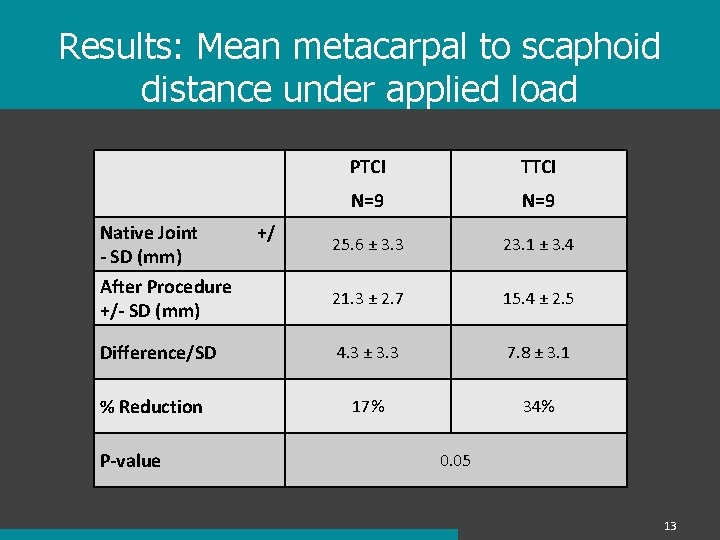
Results: Mean metacarpal to scaphoid distance under applied load Native Joint +/ - SD (mm) After Procedure +/- SD (mm) Difference/SD % Reduction P-value PTCI TTCI N=9 25. 6 ± 3. 3 23. 1 ± 3. 4 21. 3 ± 2. 7 15. 4 ± 2. 5 4. 3 ± 3. 3 7. 8 ± 3. 1 17% 34% 0. 05 13
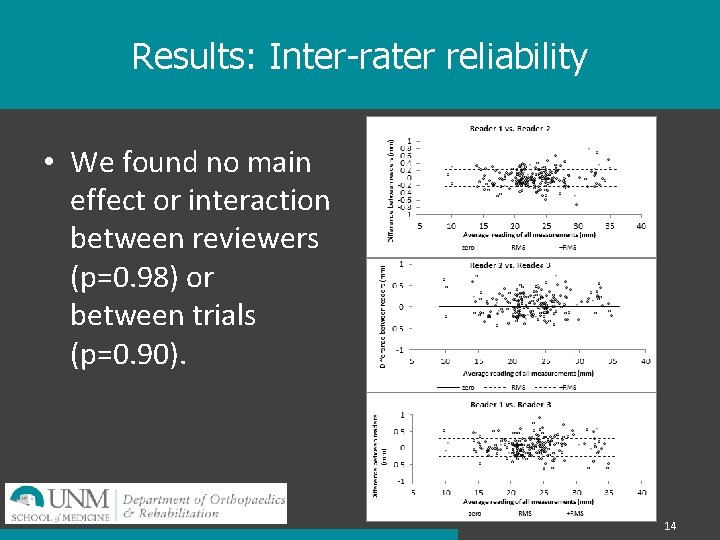
Results: Inter-rater reliability • We found no main effect or interaction between reviewers (p=0. 98) or between trials (p=0. 90). 14
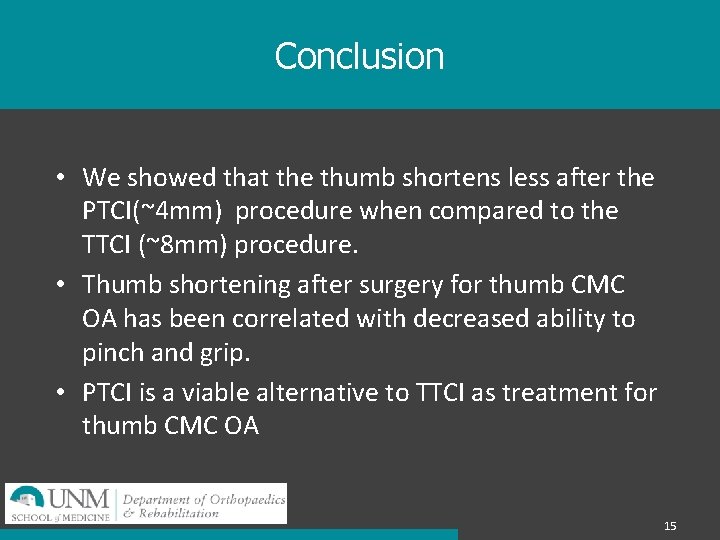
Conclusion • We showed that the thumb shortens less after the PTCI(~4 mm) procedure when compared to the TTCI (~8 mm) procedure. • Thumb shortening after surgery for thumb CMC OA has been correlated with decreased ability to pinch and grip. • PTCI is a viable alternative to TTCI as treatment for thumb CMC OA 15
Limitations • Cadaveric study • Simulated loading of the thumb CMC joint 16
Thank You 17