
Partial Dislocations Lauren Ayers 22 71 Outline Partial
- Slides: 12
Partial Dislocations Lauren Ayers 22. 71
Outline • Partial Dislocations – Why Partials? – Stacking Faults • Lomer-Cottrel Lock • Force on a Dislocation • Line Tension Model • Dislocation Density
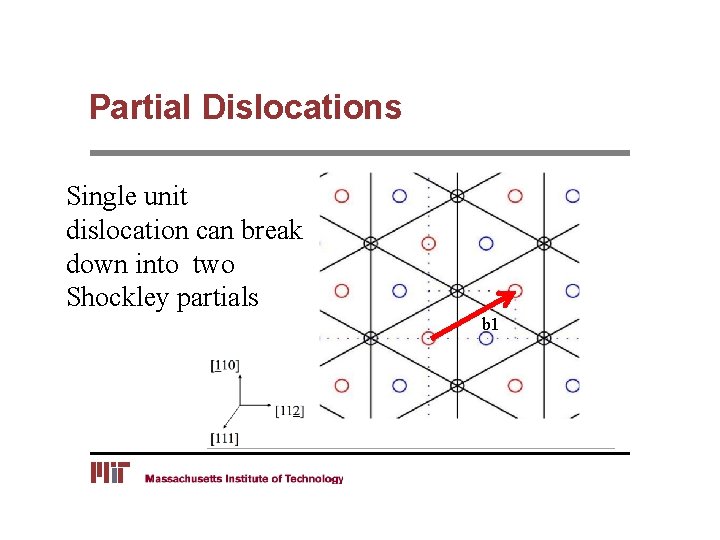
Partial Dislocations Single unit dislocation can break down into two Shockley partials b 1
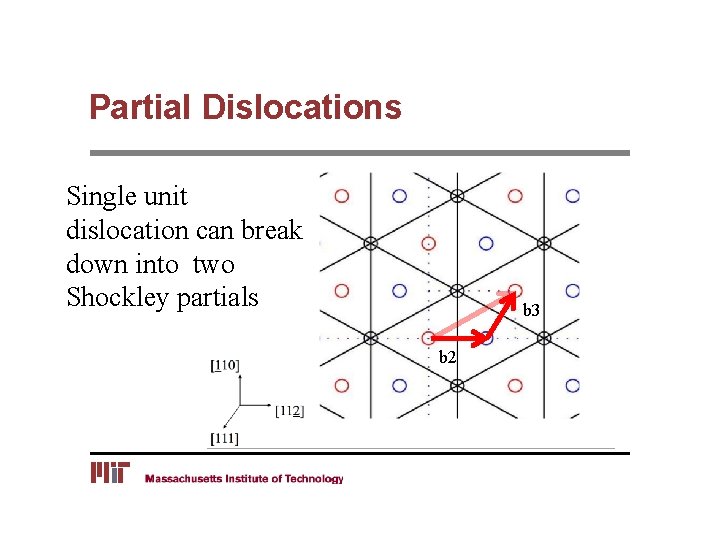
Partial Dislocations Single unit dislocation can break down into two Shockley partials b 3 b 2
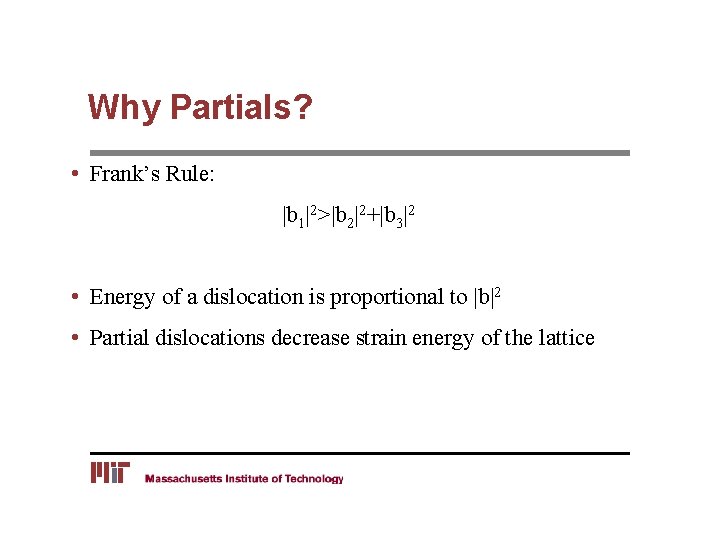
Why Partials? • Frank’s Rule: |b 1|2>|b 2|2+|b 3|2 • Energy of a dislocation is proportional to |b|2 • Partial dislocations decrease strain energy of the lattice
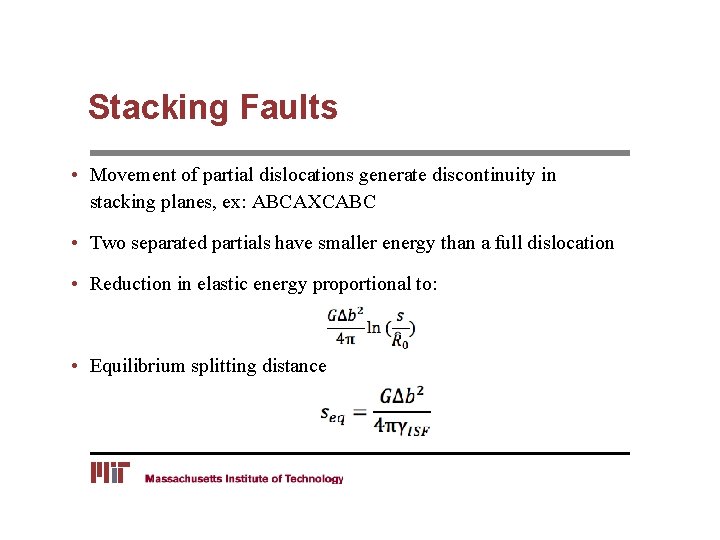
Stacking Faults • Movement of partial dislocations generate discontinuity in stacking planes, ex: ABCAXCABC • Two separated partials have smaller energy than a full dislocation • Reduction in elastic energy proportional to: • Equilibrium splitting distance
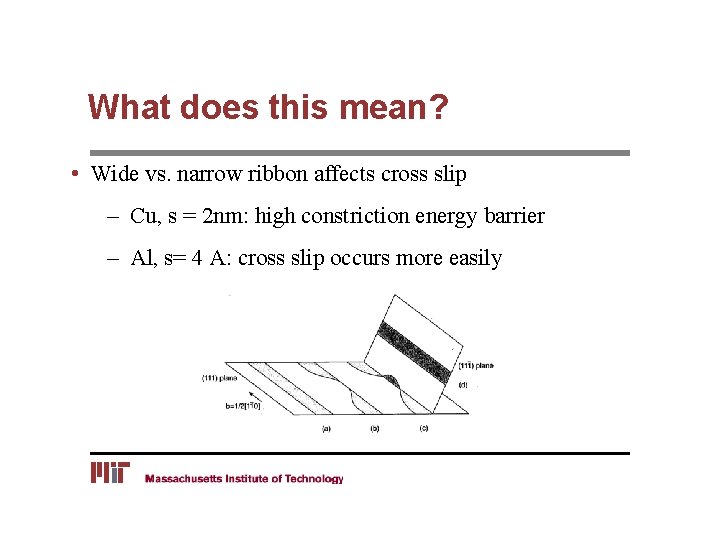
What does this mean? • Wide vs. narrow ribbon affects cross slip – Cu, s = 2 nm: high constriction energy barrier – Al, s= 4 A: cross slip occurs more easily
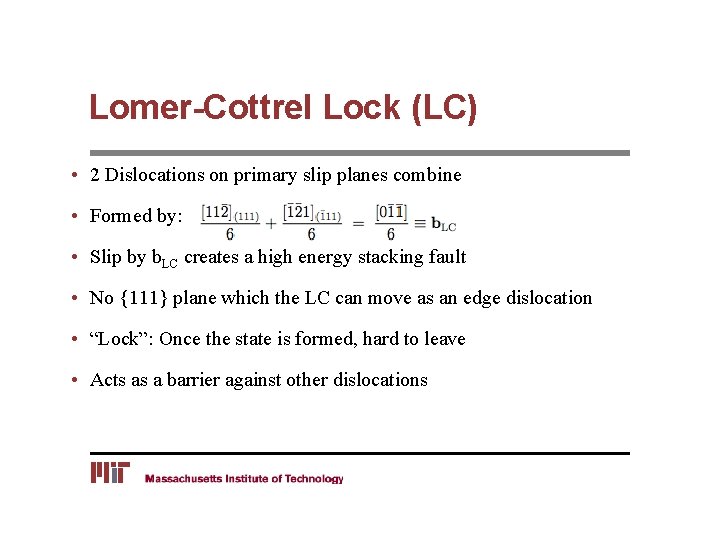
Lomer-Cottrel Lock (LC) • 2 Dislocations on primary slip planes combine • Formed by: • Slip by b. LC creates a high energy stacking fault • No {111} plane which the LC can move as an edge dislocation • “Lock”: Once the state is formed, hard to leave • Acts as a barrier against other dislocations
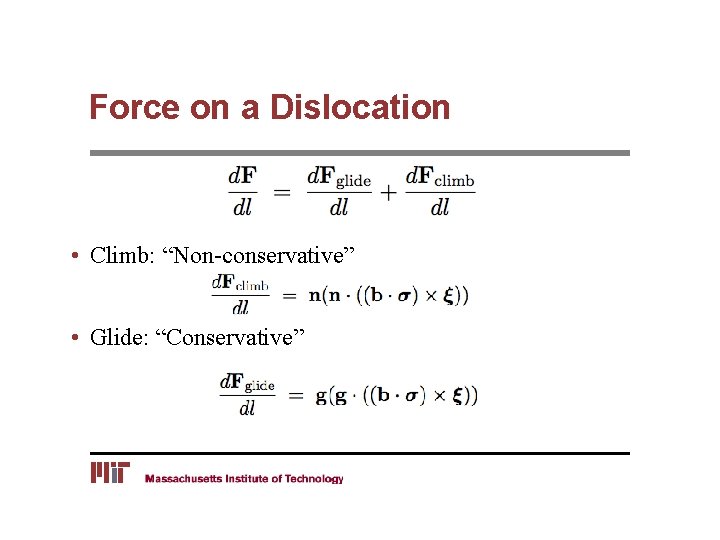
Force on a Dislocation • Climb: “Non-conservative” • Glide: “Conservative”
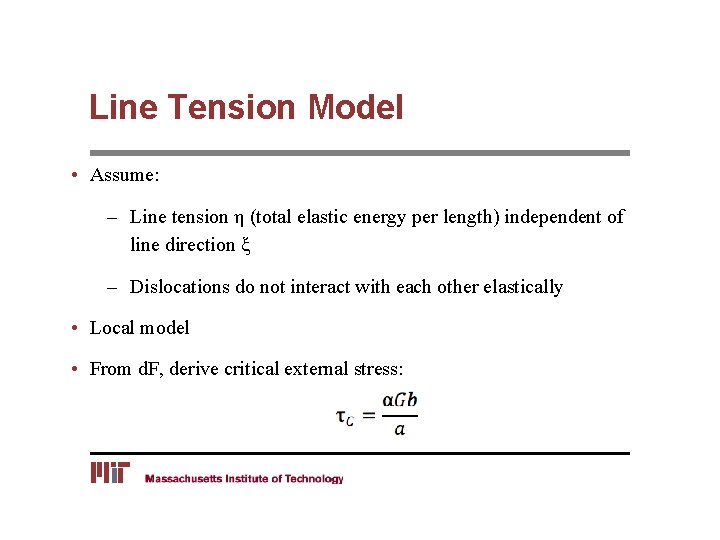
Line Tension Model • Assume: – Line tension η (total elastic energy per length) independent of line direction ξ – Dislocations do not interact with each other elastically • Local model • From d. F, derive critical external stress:
Dislocation Density • Total length of all dislocations in a unit volume of material • 1/m 2 or m/m 3
Thanks!