
PART IV SOCIAL CONTEXT 1 INTRODUCTION TO SOCIAL

- Slides: 14
PART IV: SOCIAL CONTEXT 1
INTRODUCTION TO SOCIAL CONTEXT Examples of context Macro- and micro-context Dynamics between context and other units What is ‘environment’? Examples of macro-context Three types of micro-context 2
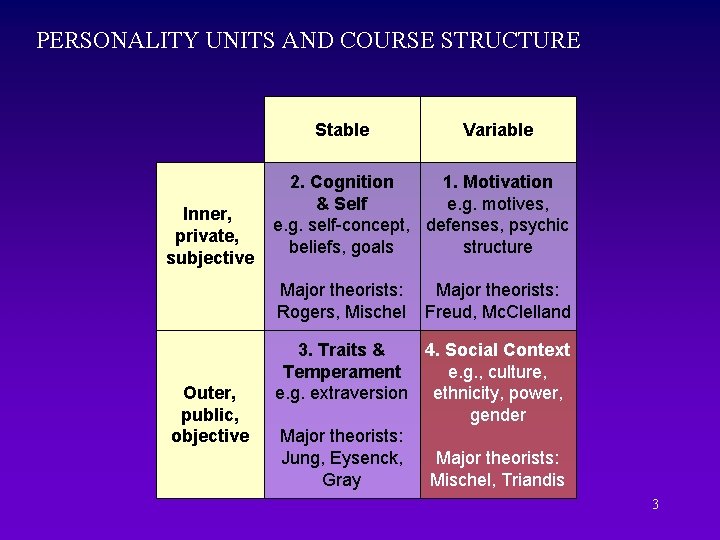
PERSONALITY UNITS AND COURSE STRUCTURE Stable Inner, private, subjective 2. Cognition 1. Motivation & Self e. g. motives, e. g. self-concept, defenses, psychic beliefs, goals structure Major theorists: Rogers, Mischel Outer, public, objective Variable Major theorists: Freud, Mc. Clelland 3. Traits & 4. Social Context Temperament e. g. , culture, e. g. extraversion ethnicity, power, gender Major theorists: Jung, Eysenck, Major theorists: Gray Mischel, Triandis 3
Virginia Woolf on how she was influenced by her mother: Until I was in the forties. . . The presence of my mother obsessed me. I could hear her voice, see her, imagine what she would do or say as I went about my day’s doings. She was one of the invisible presences who after all play so important a part in every life. . Consider what immense forces society brings to play upon each of us, how that society changes from decade to decade; and also from class to class; well, if we cannot analyze these invisible presences, we know very little of [any person about whom we write]. 4
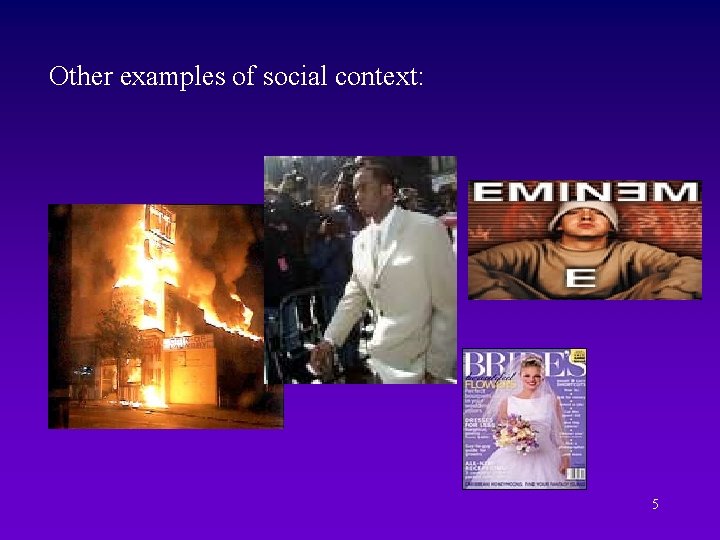
Other examples of social context: 5
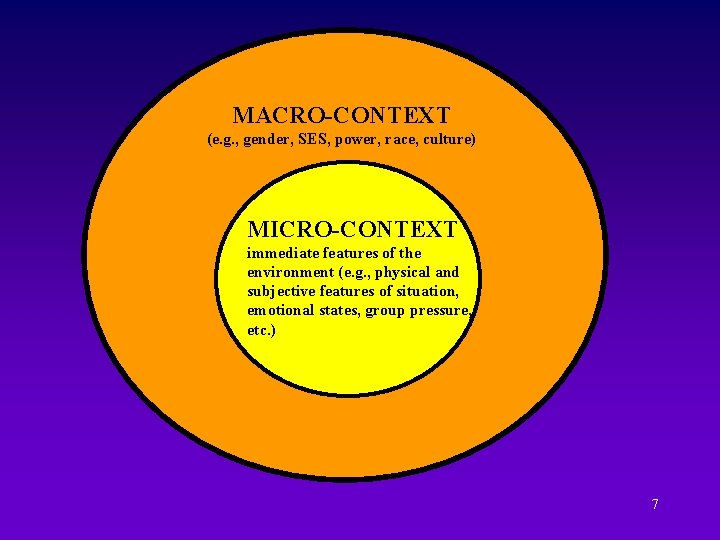
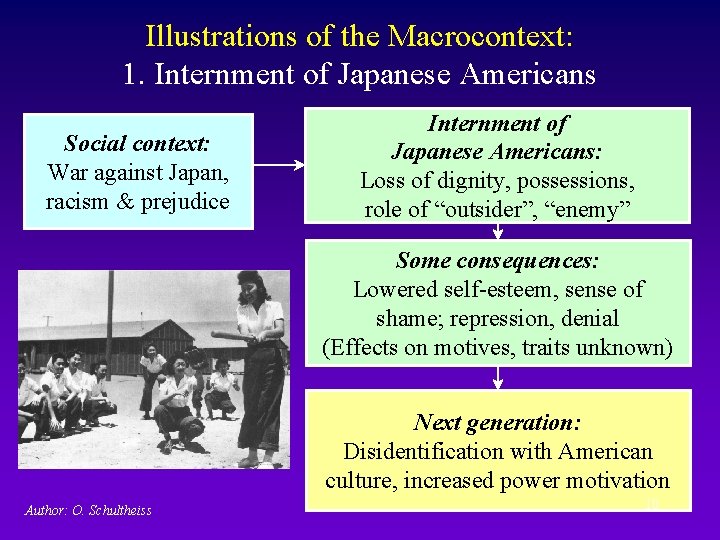
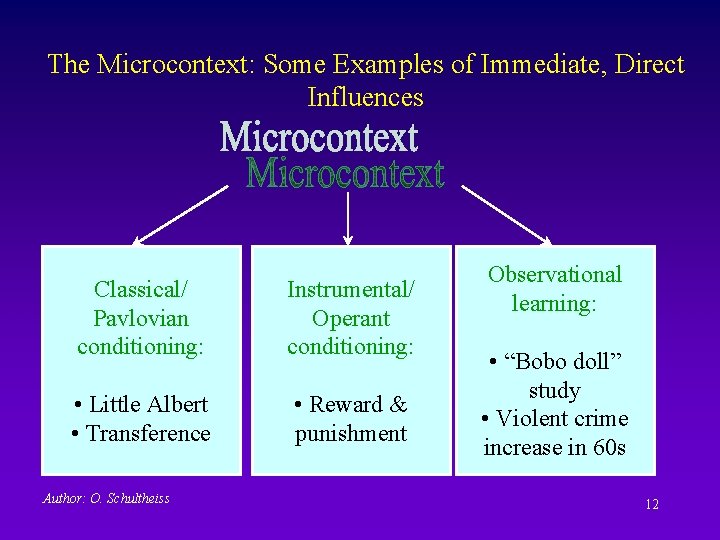
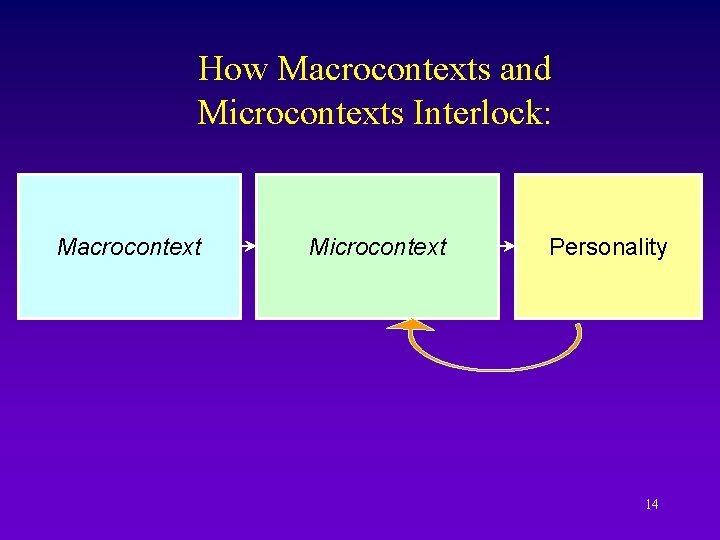
Two Types of Contexts Microcontexts: Immediate features of the present situation; past and present learning and reinforcement history. (E. g. responses and habits) Little Albert and Bobo doll experiments. Macrocontexts: Large-scale, complex, and enduring patterns of environments. (E. g. gender, social class, religion, race, processes of social identity and influence) Internment of Japanese Americans during WWII and gender 6
MACRO-CONTEXT (e. g. , gender, SES, power, race, culture) MICRO-CONTEXT immediate features of the MICRO-CONTEXT environment (e. g. , physical and subjective features of situation, emotional states, group pressure, etc. ) 7
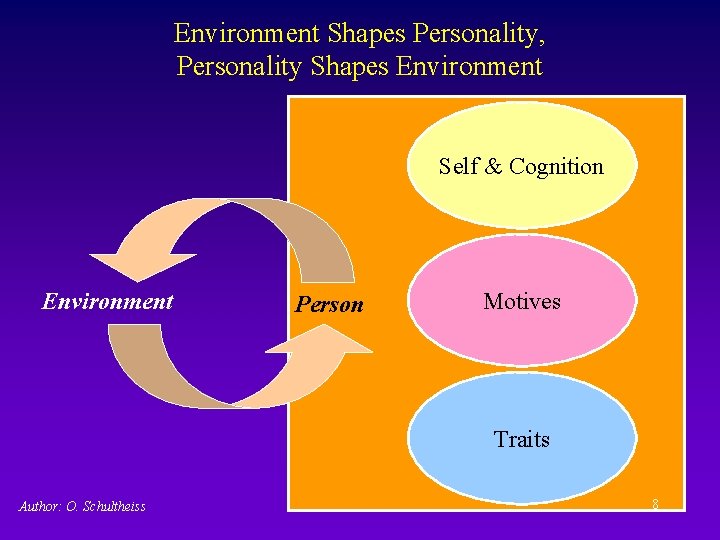
Environment Shapes Personality, Personality Shapes Environment Self & Cognition Environment Person Motives Traits Author: O. Schultheiss 8
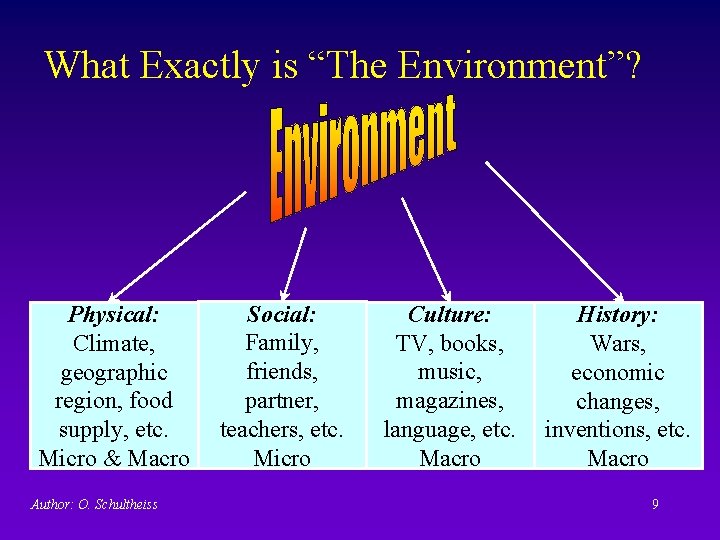
What Exactly is “The Environment”? Physical: Climate, geographic region, food supply, etc. Micro & Macro Author: O. Schultheiss Social: Family, friends, partner, teachers, etc. Micro Culture: TV, books, music, magazines, language, etc. Macro History: Wars, economic changes, inventions, etc. Macro 9
Illustrations of the Macrocontext: 1. Internment of Japanese Americans Social context: War against Japan, racism & prejudice Internment of Japanese Americans: Loss of dignity, possessions, role of “outsider”, “enemy” Some consequences: Lowered self-esteem, sense of shame; repression, denial (Effects on motives, traits unknown) Next generation: Disidentification with American culture, increased power motivation Author: O. Schultheiss 10
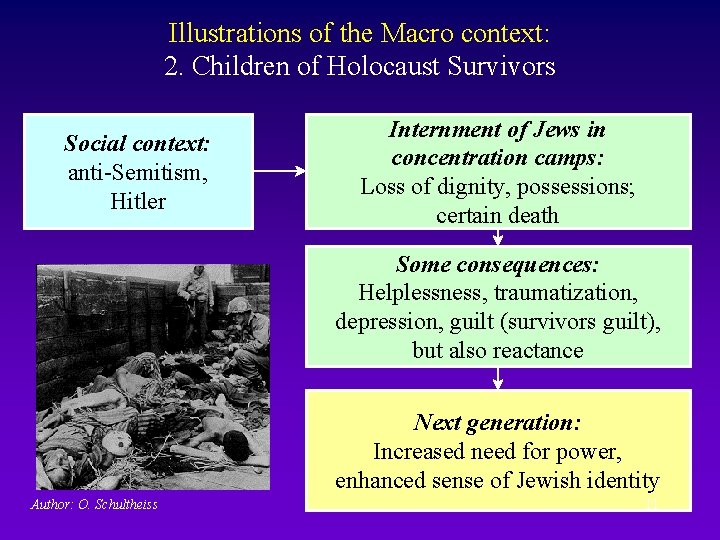
Illustrations of the Macro context: 2. Children of Holocaust Survivors Social context: anti-Semitism, Hitler Internment of Jews in concentration camps: Loss of dignity, possessions; certain death Some consequences: Helplessness, traumatization, depression, guilt (survivors guilt), but also reactance Next generation: Increased need for power, enhanced sense of Jewish identity Author: O. Schultheiss 11
The Microcontext: Some Examples of Immediate, Direct Influences Classical/ Pavlovian conditioning: Instrumental/ Operant conditioning: • Little Albert • Transference • Reward & punishment Author: O. Schultheiss Observational learning: • “Bobo doll” study • Violent crime increase in 60 s 12
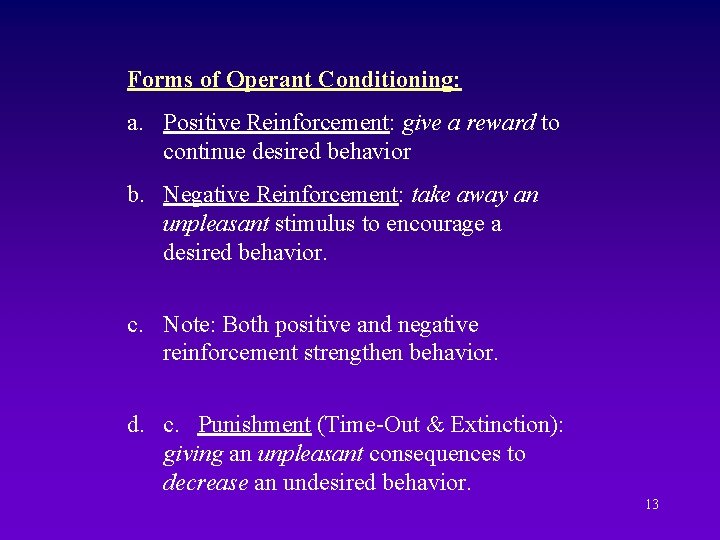
Forms of Operant Conditioning: a. Positive Reinforcement: give a reward to continue desired behavior b. Negative Reinforcement: take away an unpleasant stimulus to encourage a desired behavior. c. Note: Both positive and negative reinforcement strengthen behavior. d. c. Punishment (Time-Out & Extinction): giving an unpleasant consequences to decrease an undesired behavior. 13
How Macrocontexts and Microcontexts Interlock: Macrocontext Microcontext Personality 14