
PART II THE MAIN STEPS OF EFFECTIVE COUNSELING
- Slides: 18
PART II THE MAIN STEPS OF EFFECTIVE COUNSELING
Counseling is a confidential dialogue between a medical provider and a client that helps a client to make his or her own informed decision and to cope with stress. 34
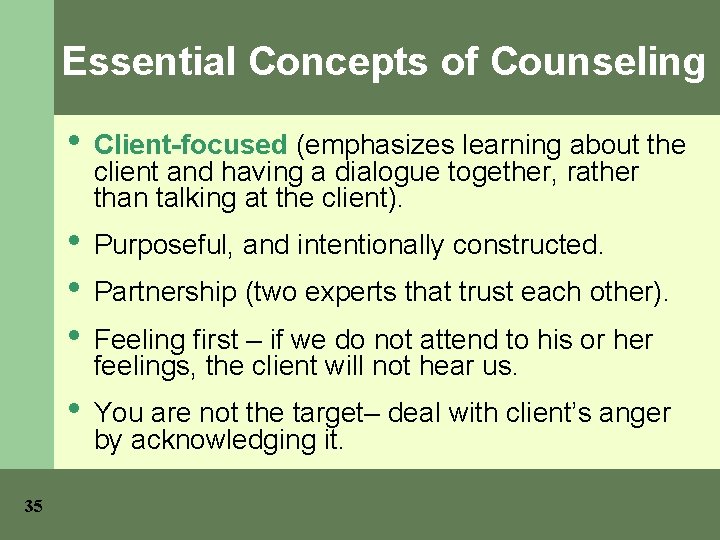
Essential Concepts of Counseling 35 • Client-focused (emphasizes learning about the client and having a dialogue together, rather than talking at the client). • • • Purposeful, and intentionally constructed. • You are not the target– deal with client’s anger by acknowledging it. Partnership (two experts that trust each other). Feeling first – if we do not attend to his or her feelings, the client will not hear us.
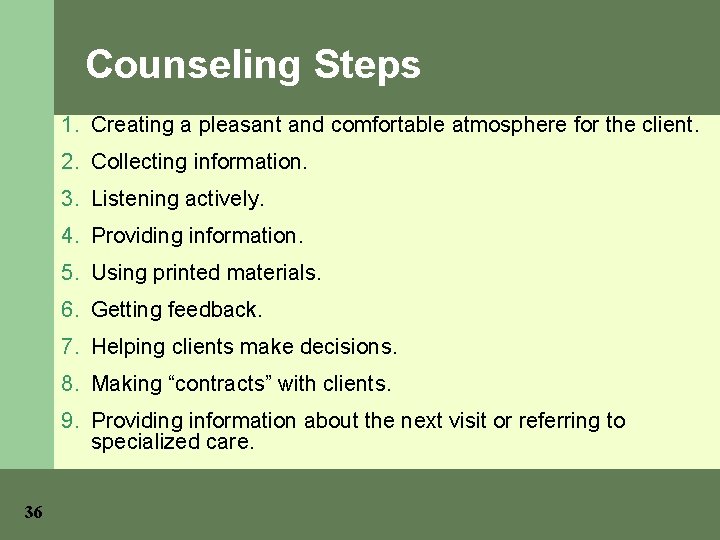
Counseling Steps 1. Creating a pleasant and comfortable atmosphere for the client. 2. Collecting information. 3. Listening actively. 4. Providing information. 5. Using printed materials. 6. Getting feedback. 7. Helping clients make decisions. 8. Making “contracts” with clients. 9. Providing information about the next visit or referring to specialized care. 36
1. Creating a pleasant and comfortable atmosphere for the client • Assure privacy and confidentiality. • Be positive and encouraging. • Use a friendly tone of voice and attentive body language to convey warmth, interest, and respect. 37
2. Collecting information • Focus on the client. • Explore the client’s lifestyle, life stage, life goals, and preferences. • Ask open-ended questions. • Guide, but don’t control. 38
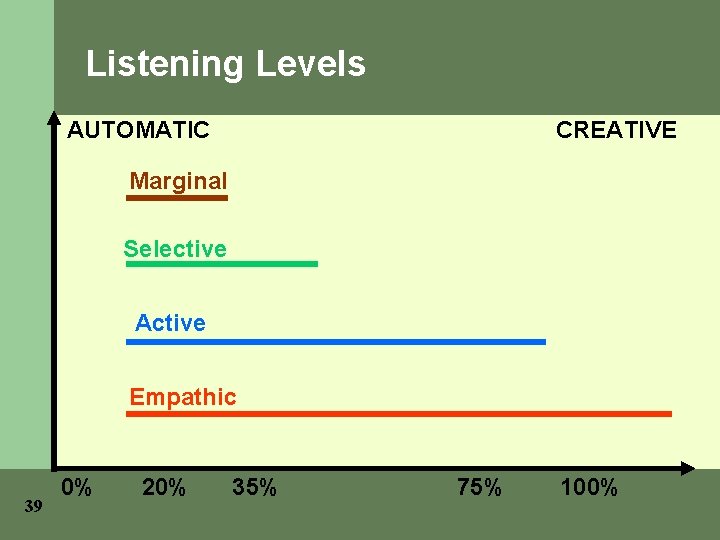
Listening Levels AUTOMATIC CREATIVE Marginal Selective Active Empathic 39 0% 20% 35% 75% 100%
3. Listening actively • • 40 Clarify Empathize Reflect Paraphrase Praise and encourage Summarize Respond to the client’s concerns, including rumors, respectfully and constructively
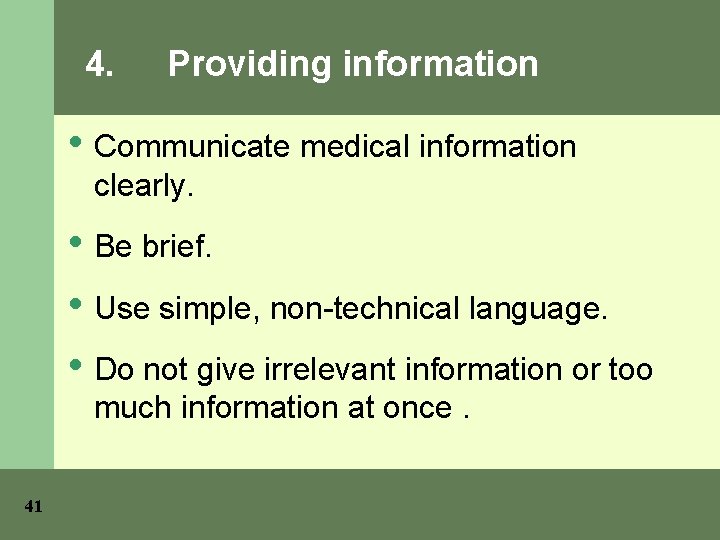
4. Providing information • Communicate medical information clearly. • Be brief. • Use simple, non-technical language. • Do not give irrelevant information or too much information at once. 41
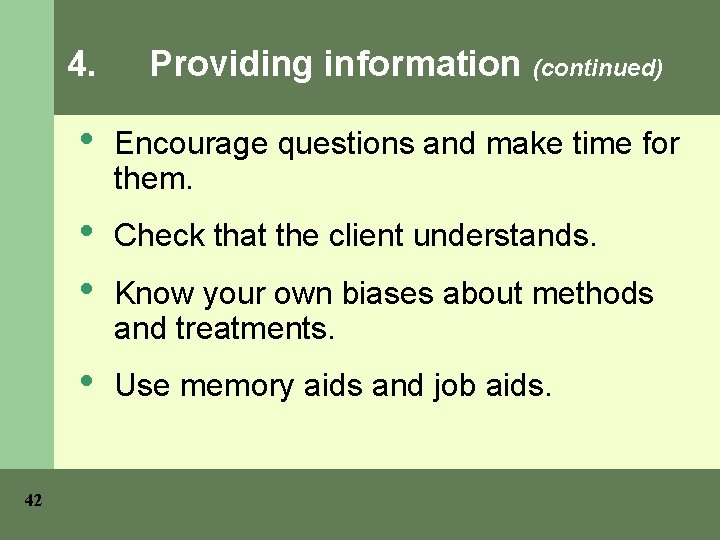
42 4. Providing information (continued) • Encourage questions and make time for them. • • Check that the client understands. • Use memory aids and job aids. Know your own biases about methods and treatments.
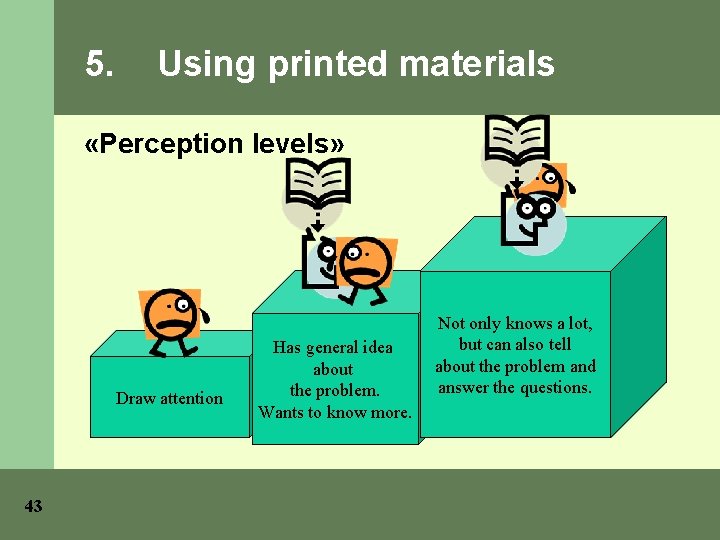
5. Using printed materials «Perception levels» Draw attention 43 Has general idea about the problem. Wants to know more. Not only knows a lot, but can also tell about the problem and answer the questions.
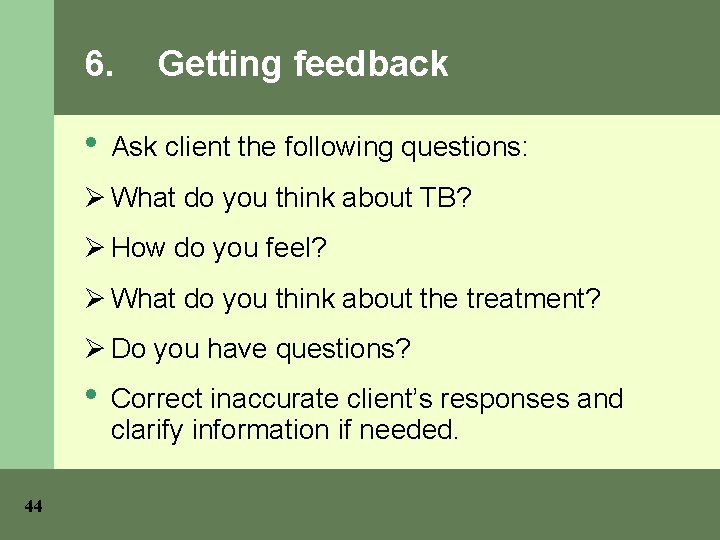
6. • Getting feedback Ask client the following questions: Ø What do you think about TB? Ø How do you feel? Ø What do you think about the treatment? Ø Do you have questions? • 44 Correct inaccurate client’s responses and clarify information if needed.
7. Helping clients make decisions • Let client know that he (she) has options and the choice belongs to him or her. • Offer to help clients think through the options. • Ask client to confirm his or her decision. • Help the returning client weigh the pros and cons of continuing treatment. 45
Motives influencing decision-making • Physiological • Emotional • Rational • Practicality • Interpersonal relationships 46
Types of decisions 47 • • • Decision not to interfere. • • Decision shifting. Intuitive, sudden decision. Decision in response of family or friend’s actions. Deliberate decision.
Stages of Health Behavior Adoption: 1. Pre-awareness 2. Awareness 3. Preparation for action/decisionmaking 4. Action (trying the new behavior) 5. Maintenance 48
8. Making “contracts” with clients – agree on who will do what and by when 49 • Help client plan how to carry out his or her decision. • • Develop step-by-step plan for the near future. • Invite client to call or return if he (she) has questions, doubts, or concerns. • Schedule the next visit, if appropriate. If possible, give client informational materials that he (she) can consult at home.
9. Providing information about the next visit or referring to specialized care 50