
Part II Surplus a k a excess supply

- Slides: 14
Part II
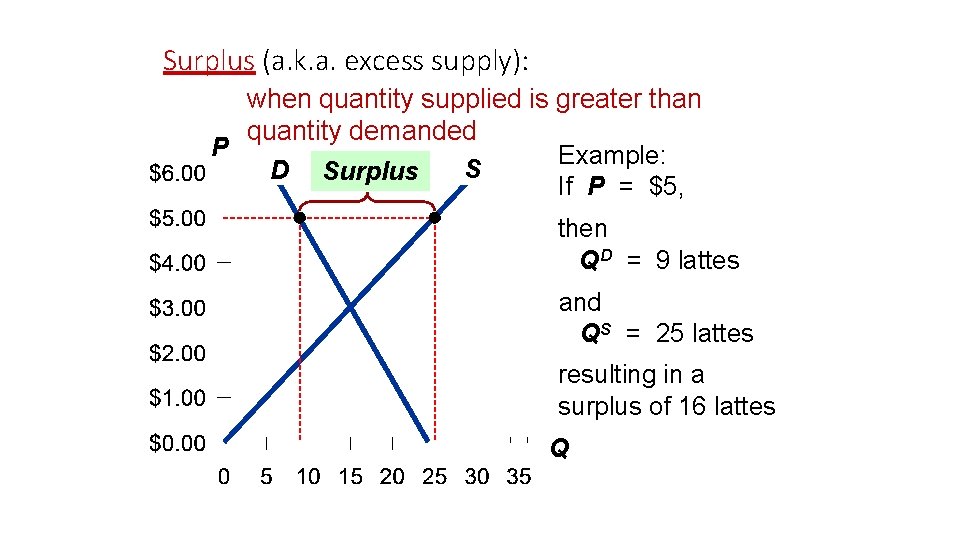
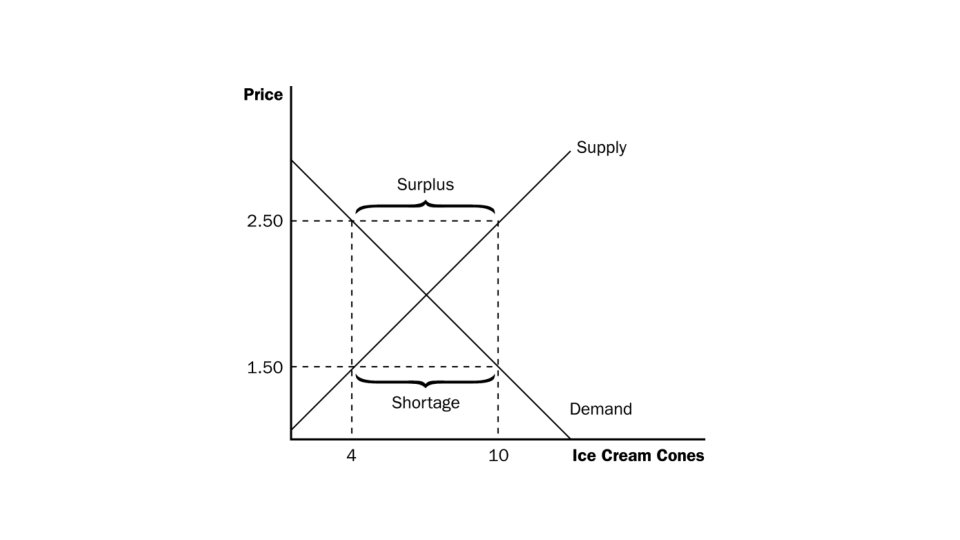
Surplus (a. k. a. excess supply): when quantity supplied is greater than quantity demanded P Example: S D Surplus If P = $5, then QD = 9 lattes and QS = 25 lattes resulting in a surplus of 16 lattes Q
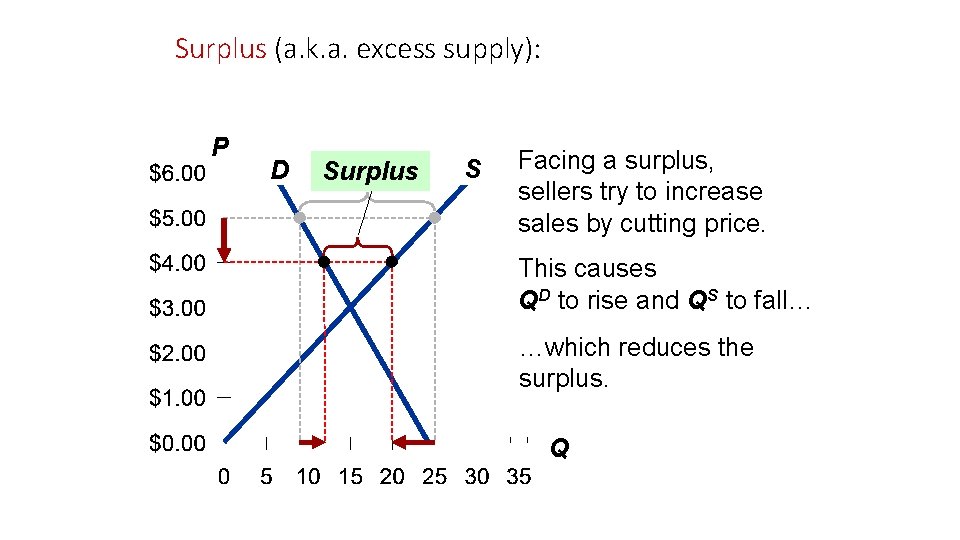
Surplus (a. k. a. excess supply): P D Surplus S Facing a surplus, sellers try to increase sales by cutting price. This causes QD to rise and QS to fall… …which reduces the surplus. Q
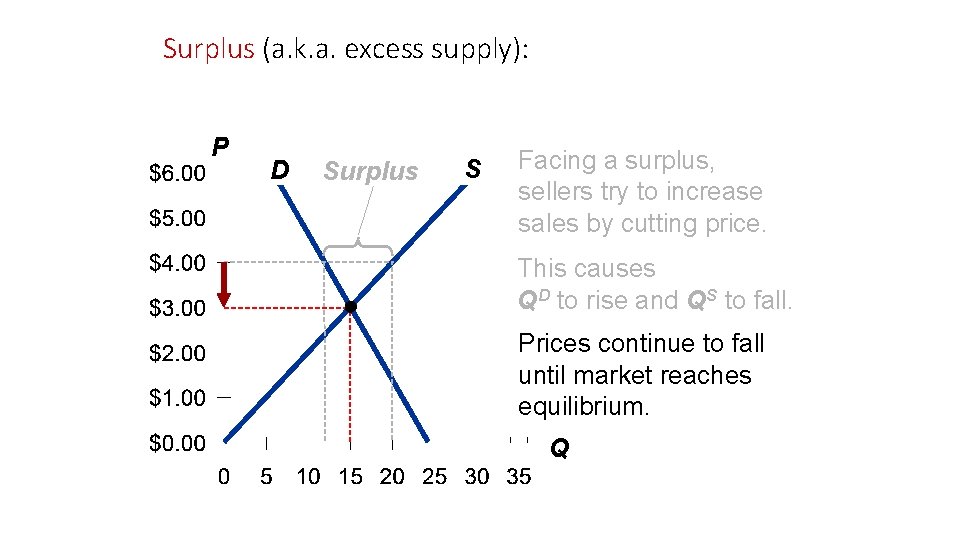
Surplus (a. k. a. excess supply): P D Surplus S Facing a surplus, sellers try to increase sales by cutting price. This causes QD to rise and QS to fall. Prices continue to fall until market reaches equilibrium. Q
What happens to price when there is a surplus? • Surplus • Suppliers cannot sell all of their goods • Inventory grows • Expensive to store • What happens to price? • It lowers to the equilibrium price
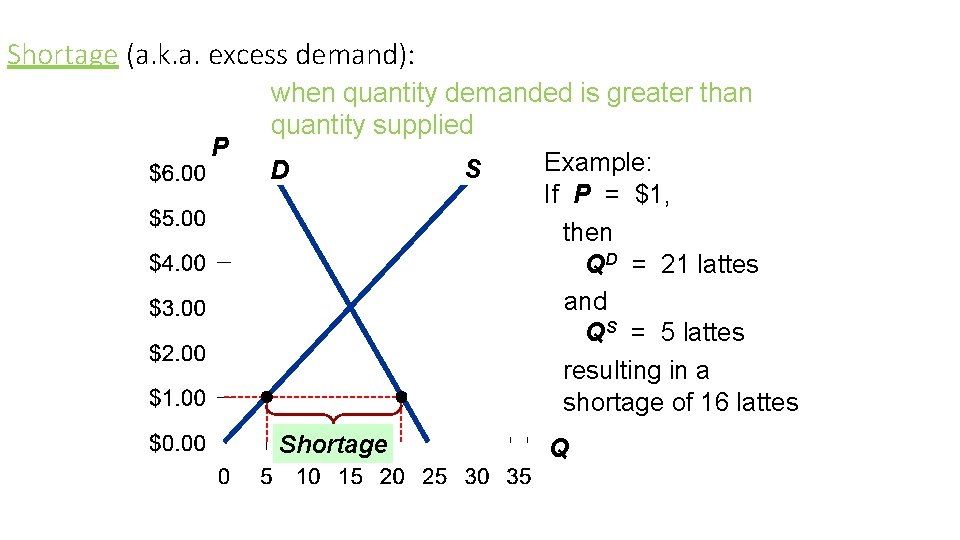
Shortage (a. k. a. excess demand): P when quantity demanded is greater than quantity supplied Example: S D If P = $1, then QD = 21 lattes and QS = 5 lattes resulting in a shortage of 16 lattes Shortage Q
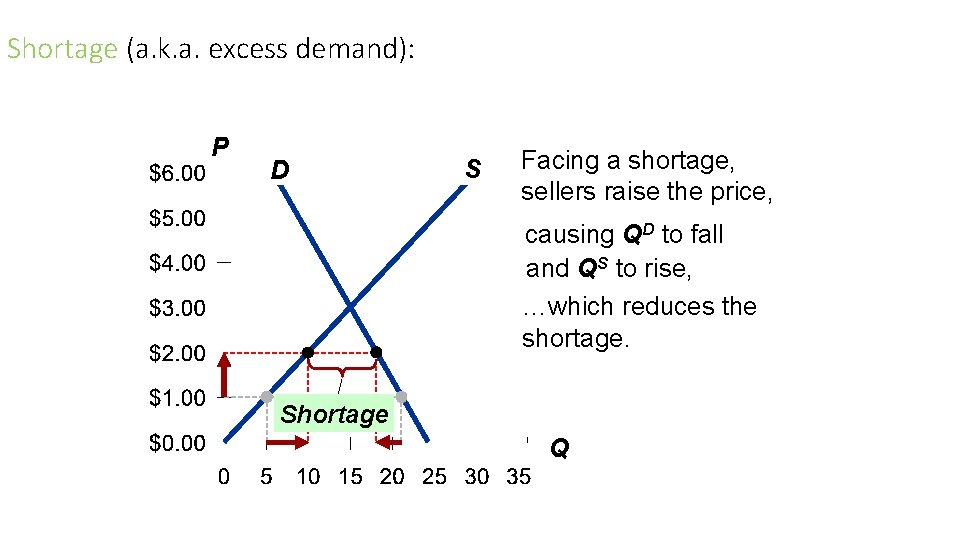
Shortage (a. k. a. excess demand): P D S Facing a shortage, sellers raise the price, causing QD to fall and QS to rise, …which reduces the shortage. Shortage Q
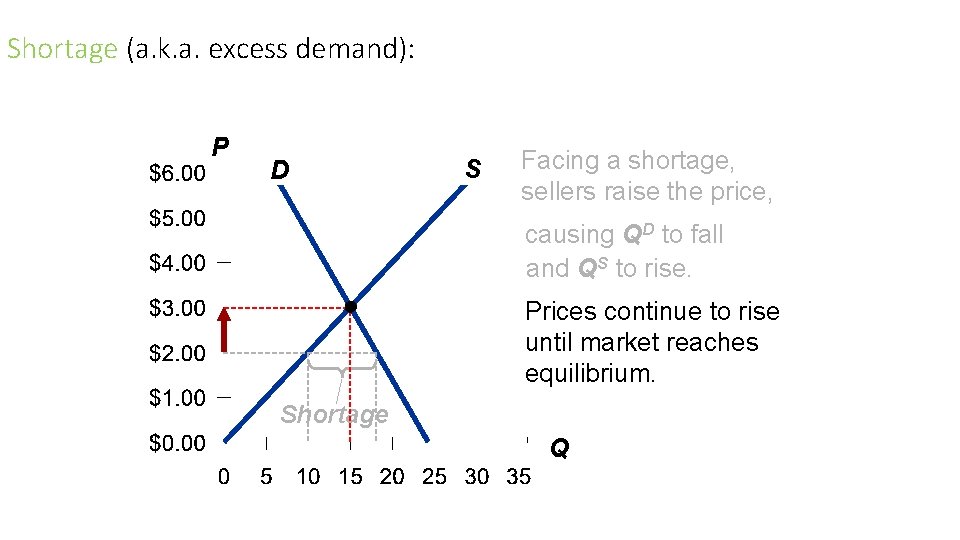
Shortage (a. k. a. excess demand): P D S Facing a shortage, sellers raise the price, causing QD to fall and QS to rise. Prices continue to rise until market reaches equilibrium. Shortage Q
What happens to price when there is a shortage? • Shortage • Price is below equilibrium causing a high demand for the good and a low supply • Buyers will pay higher prices for goods • Higher prices motivate suppliers to produce more • Price will rise until it reaches equilibrium
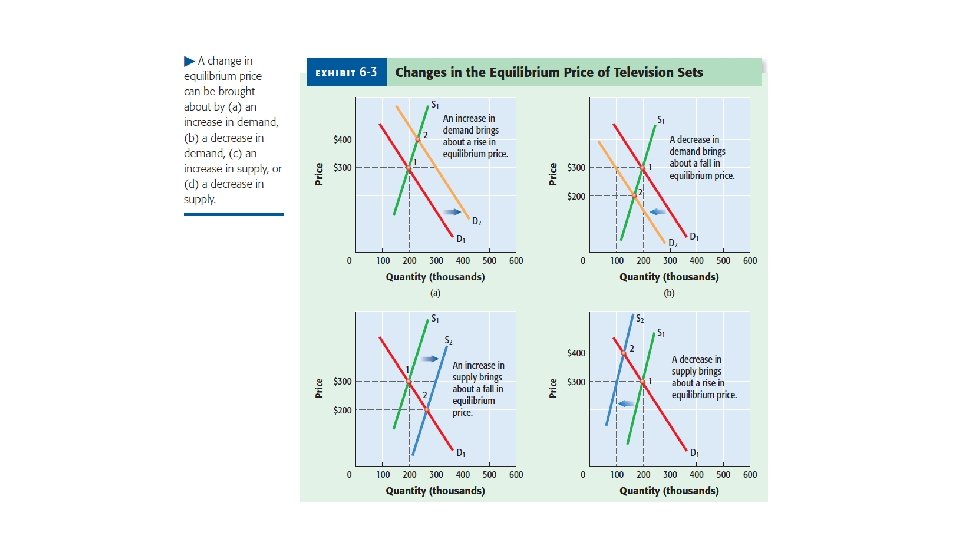
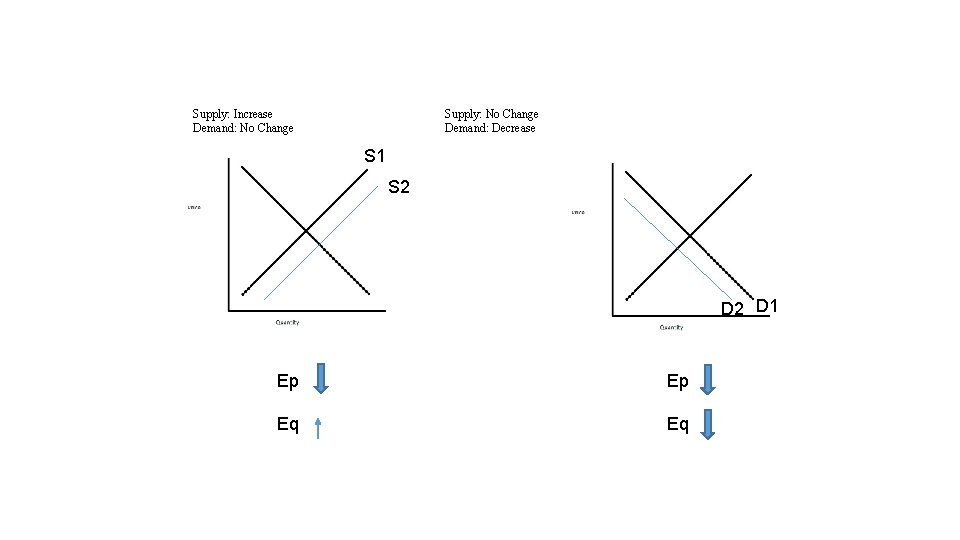
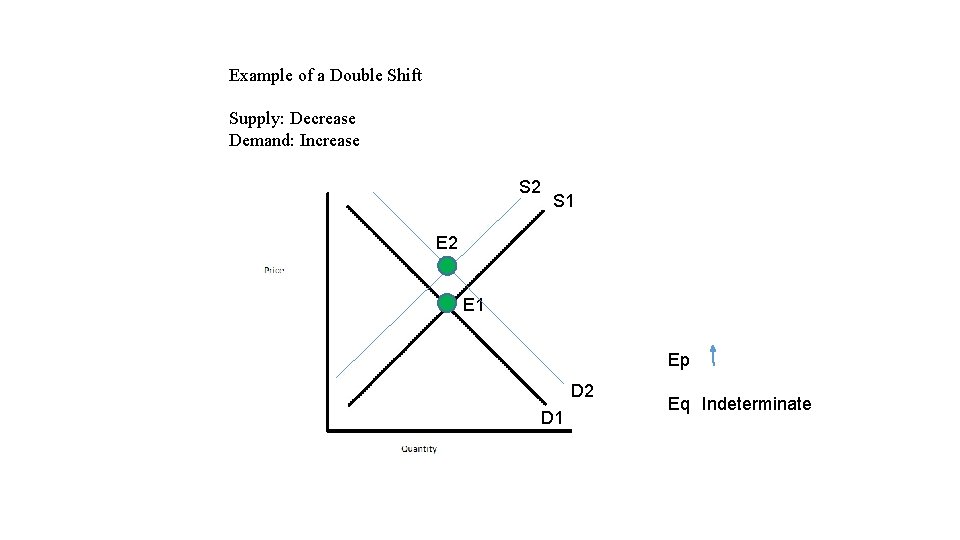
• How do shortages and surpluses effect equilibrium price and quantity? • You will need to be able to analyze a shift and explain whether Ep and Eq increased or decreased • See examples on the next few slides
Supply: Increase Demand: No Change Supply: No Change Demand: Decrease S 1 S 2 D 1 Ep Ep Eq Eq
Example of a Double Shift Supply: Decrease Demand: Increase S 2 S 1 E 2 E 1 Ep D 2 D 1 Eq Indeterminate