
Part II Splanchnology Chapter 6 RESPIRATORY SYSTEM General
- Slides: 18
Part II Splanchnology Chapter 6 RESPIRATORY SYSTEM
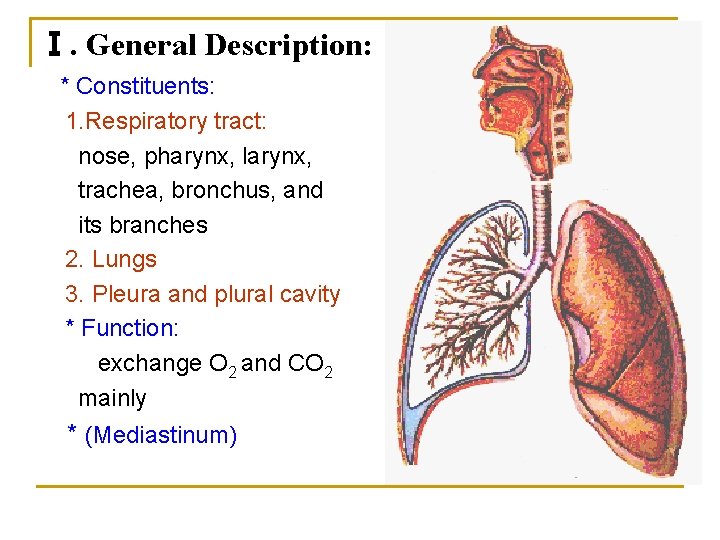
Ⅰ. General Description: * Constituents: 1. Respiratory tract: nose, pharynx, larynx, trachea, bronchus, and its branches 2. Lungs 3. Pleura and plural cavity * Function: exchange O 2 and CO 2 mainly * (Mediastinum)
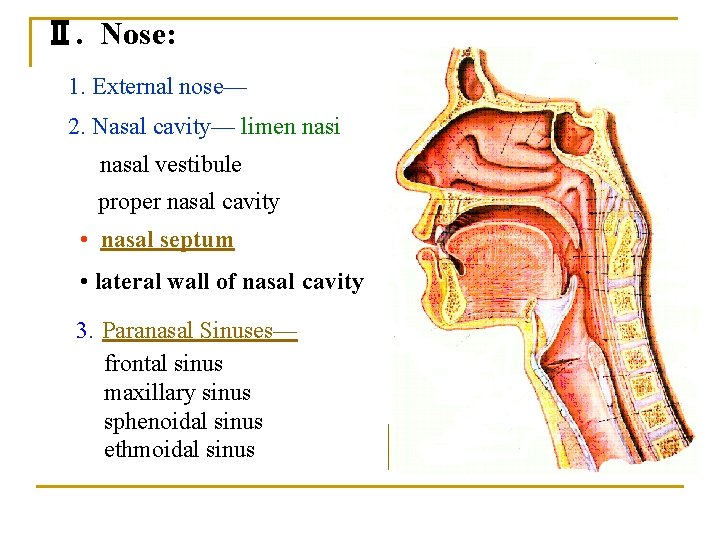
Ⅱ. Nose: 1. External nose— 2. Nasal cavity— limen nasi nasal vestibule proper nasal cavity • nasal septum • lateral wall of nasal cavity 3. Paranasal Sinuses— frontal sinus maxillary sinus sphenoidal sinus ethmoidal sinus
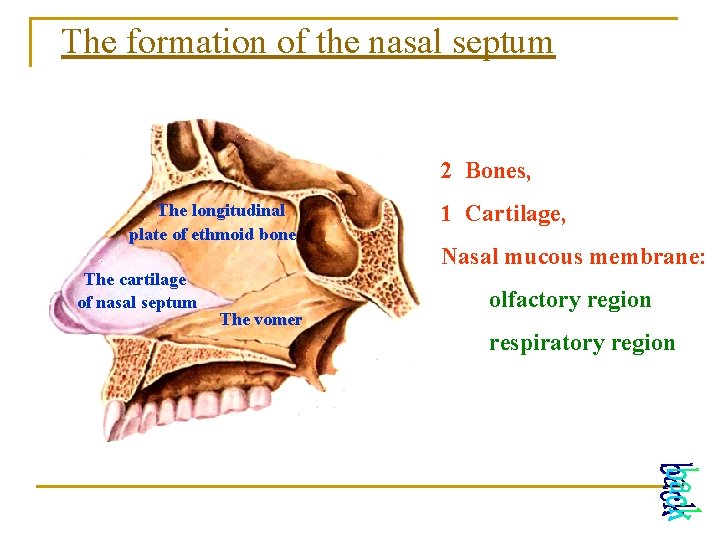
The formation of the nasal septum 2 Bones, The longitudinal plate of ethmoid bone The cartilage of nasal septum The vomer 1 Cartilage, Nasal mucous membrane: olfactory region respiratory region
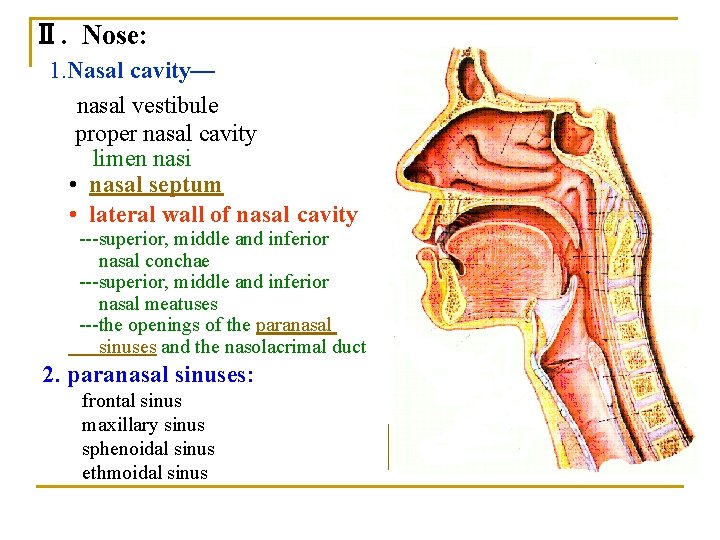
Ⅱ. Nose: 1. Nasal cavity— nasal vestibule proper nasal cavity limen nasi • nasal septum • lateral wall of nasal cavity ---superior, middle and inferior nasal conchae ---superior, middle and inferior nasal meatuses ---the openings of the paranasal sinuses and the nasolacrimal duct 2. paranasal sinuses: frontal sinus maxillary sinus sphenoidal sinus ethmoidal sinus
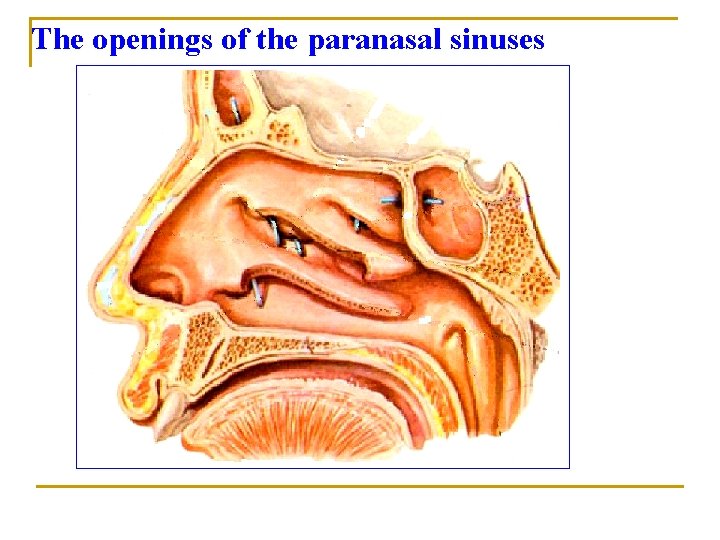
The openings of the paranasal sinuses
Ⅲ. Larynx 1. Position: It is located at anterior part of neck, in front of 4~6 cervical vertebrae 2. Framework: It is formed by laryngeal cartilages and their articulations q Cartilages: thyroid cartilage cricoid cartilage epiglottic cartilage arytenoid cartilage (paired)
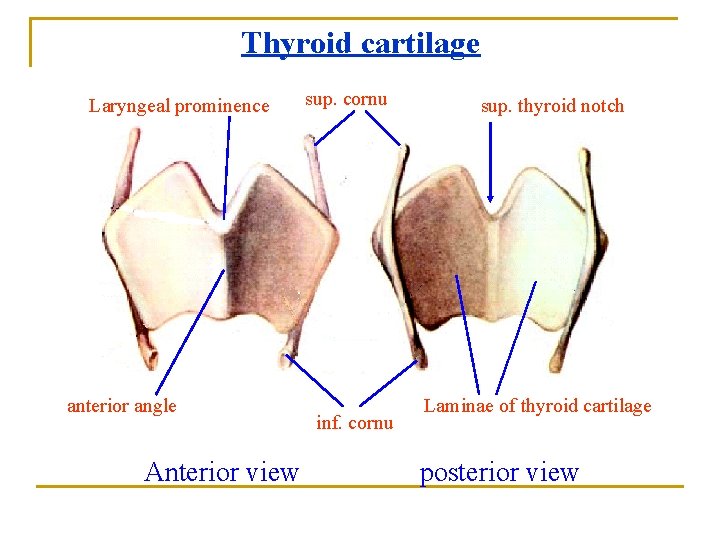
Thyroid cartilage Laryngeal prominence sup. cornu sup. thyroid notch lamina anterior angle Anterior view inf. cornu Laminae of thyroid cartilage posterior view
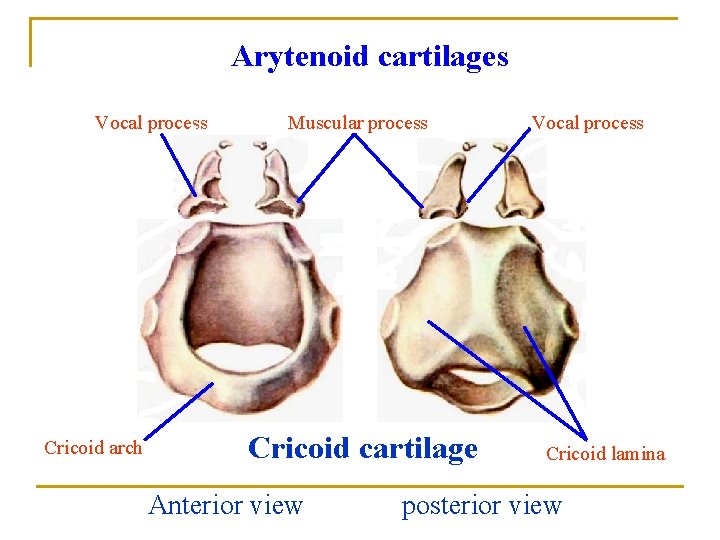
Arytenoid cartilages Muscular process Vocal process Cricoid arch Muscular process Cricoid cartilage Anterior view Vocal process Cricoid lamina posterior view
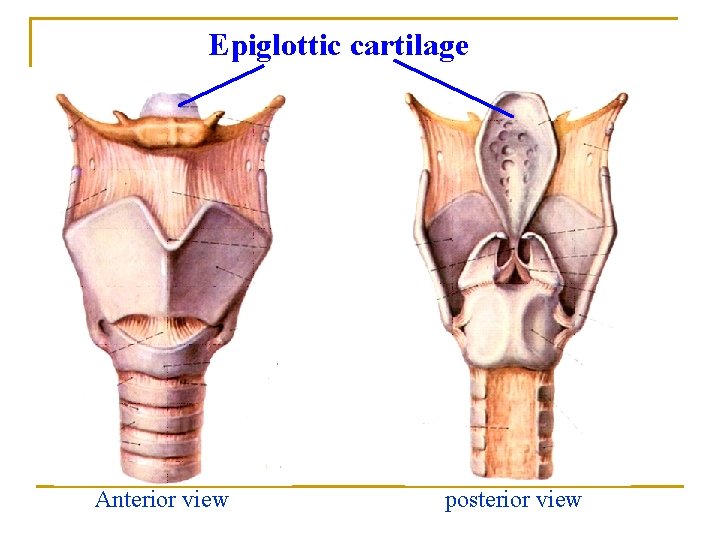
Epiglottic cartilage Anterior view posterior view
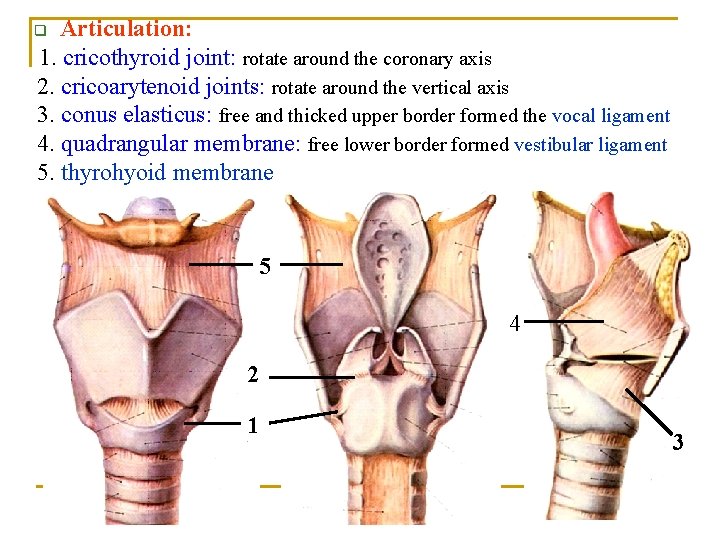
Articulation: 1. cricothyroid joint: rotate around the coronary axis 2. cricoarytenoid joints: rotate around the vertical axis 3. conus elasticus: free and thicked upper border formed the vocal ligament 4. quadrangular membrane: free lower border formed vestibular ligament 5. thyrohyoid membrane q 5 4 2 1 3
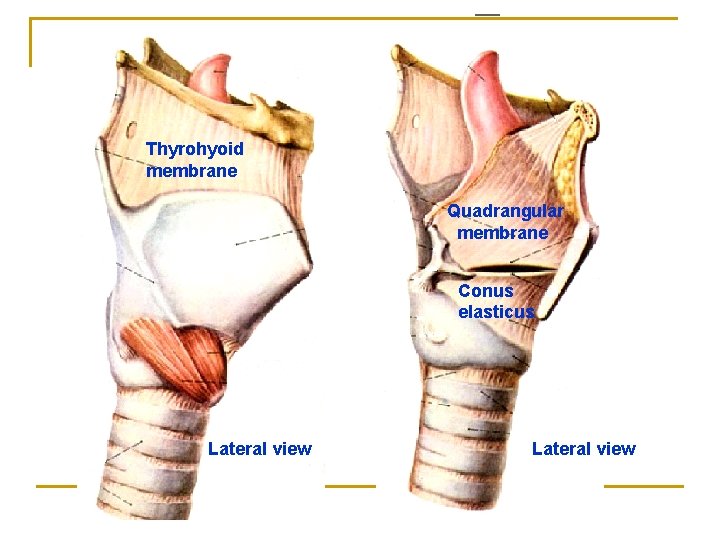
Thyrohyoid membrane Quadrangular membrane Conus elasticus Lateral view
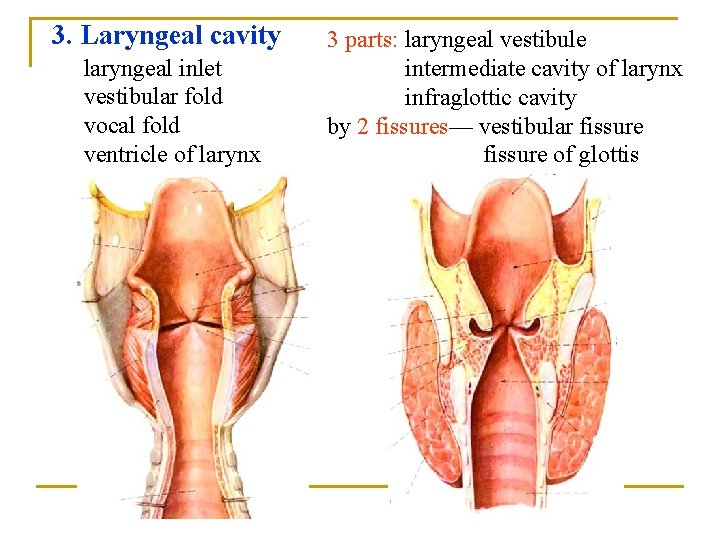
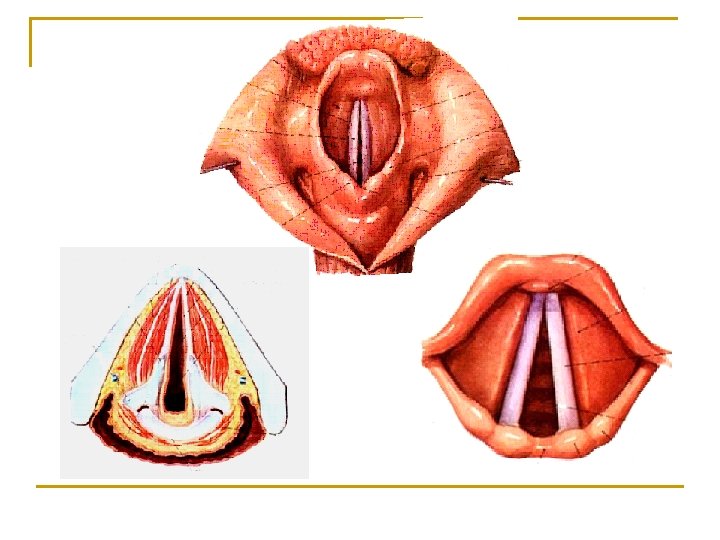
3. Laryngeal cavity laryngeal inlet vestibular fold vocal fold ventricle of larynx 3 parts: laryngeal vestibule intermediate cavity of larynx infraglottic cavity by 2 fissures— vestibular fissure of glottis
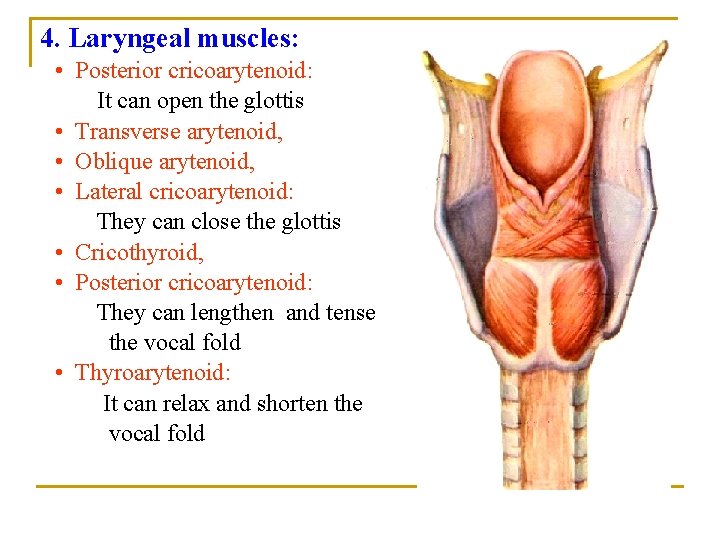
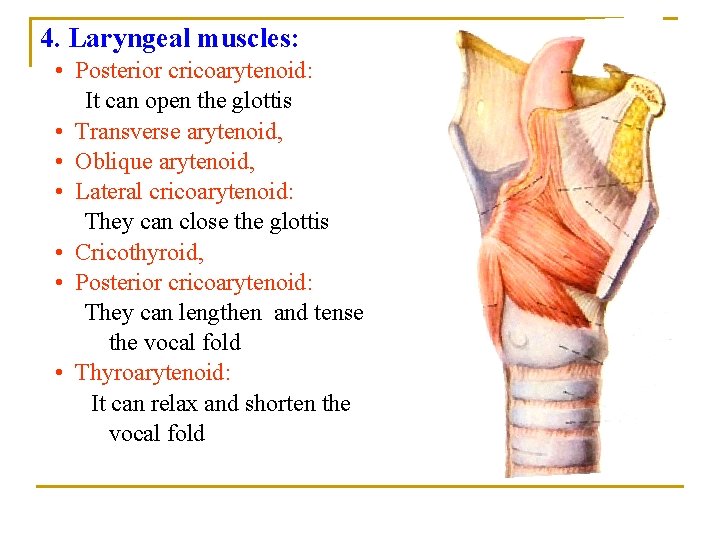
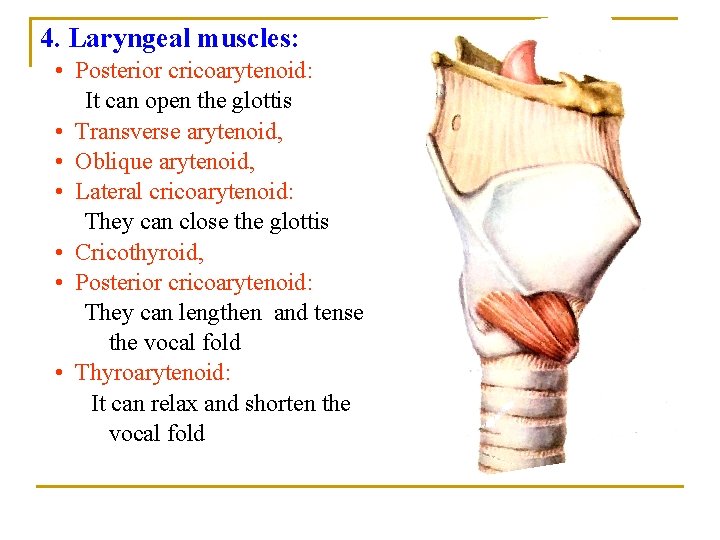
4. Laryngeal muscles: • Posterior cricoarytenoid: It can open the glottis • Transverse arytenoid, • Oblique arytenoid, • Lateral cricoarytenoid: They can close the glottis • Cricothyroid, • Posterior cricoarytenoid: They can lengthen and tense the vocal fold • Thyroarytenoid: It can relax and shorten the vocal fold
4. Laryngeal muscles: • Posterior cricoarytenoid: It can open the glottis • Transverse arytenoid, • Oblique arytenoid, • Lateral cricoarytenoid: They can close the glottis • Cricothyroid, • Posterior cricoarytenoid: They can lengthen and tense the vocal fold • Thyroarytenoid: It can relax and shorten the vocal fold
4. Laryngeal muscles: • Posterior cricoarytenoid: It can open the glottis • Transverse arytenoid, • Oblique arytenoid, • Lateral cricoarytenoid: They can close the glottis • Cricothyroid, • Posterior cricoarytenoid: They can lengthen and tense the vocal fold • Thyroarytenoid: It can relax and shorten the vocal fold
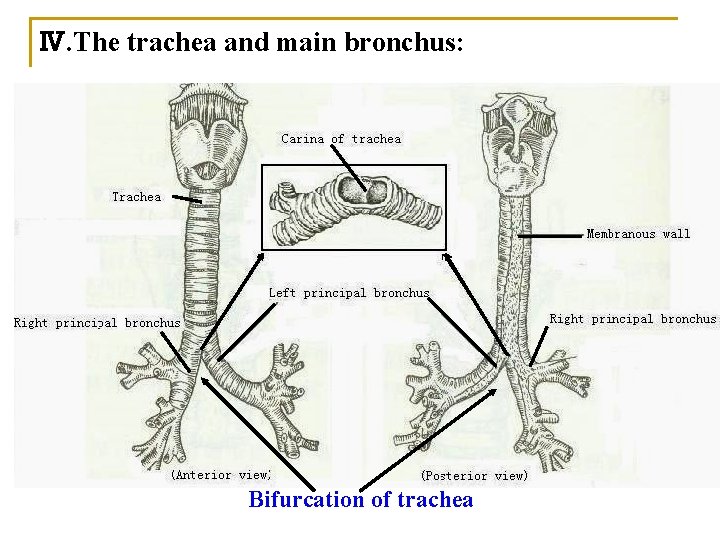
Ⅳ. The trachea and main bronchus: Bifurcation of trachea