
PART I Labor Relations Overview Chapter 2 Private
PART I Labor Relations Overview Chapter 2 Private Sector Labor Relations: History and Law Copyright © 2013 Pearson Education, Inc. Publishing as Prentice Hall 2 -1
Chapter Outline • • • The Roots of the American Labor Movement Growth of National Unions Early Judicial Regulation Pro-Labor Legislation The Creation of a National Labor Policy Workforce Diversity Copyright © 2013 Pearson Education, Inc. Publishing as Prentice Hall 2 -2
The Roots of the American Labor Movement • Pre-Revolutionary America • Agricultural economy • Little division between employers and employees • Labor force • Free laborers • Indentured servants • Black slaves Copyright © 2013 Pearson Education, Inc. Publishing as Prentice Hall 2 -3
The Roots of the American Labor Movement • Labor unions: An organization of workers dedicated to protecting their interests in the workplace and improving wages, hours, and working conditions Copyright © 2013 Pearson Education, Inc. Publishing as Prentice Hall 2 -4
Growth of National Unions • National Labor Union (NLU) • Founded in 1866 • The first union to allow skilled and unskilled workers to join in one union • It pursued a political as well as a workplace agenda • National Colored Labor Union (NCLU) • NLU’s reluctance to admit African Americans to full membership led to the creation of the NCLU • It hoped to affiliate with the NLU but was refused in the 1870 Congress Copyright © 2013 Pearson Education, Inc. Publishing as Prentice Hall 2 -5
Growth of National Unions (cont. ) • Molly Maguires • A group of union organizers who were prosecuted and either executed or imprisoned after an 1875 strike against anthracite mine owners failed • Railway Strike - 1877 • The bitter and violent strike involving railroad workers from Maryland to Missouri who protested 10 percent wage cuts after a 35 percent cut years earlier Copyright © 2013 Pearson Education, Inc. Publishing as Prentice Hall 2 -6
Growth of National Unions (cont. ) • Haymarket Square Riot - 1886 • Demonstration in support of 8 -hour day led to a series of confrontations with Chicago police • Public became fearful of labor organizations Copyright © 2013 Pearson Education, Inc. Publishing as Prentice Hall 2 -7
Growth of National Unions (cont. ) • Knights of Labor: An organization open to skilled and unskilled laborers, formed in 1869 as The Noble Order of the Knights of Labor (KOL) • It sought economic and social reform through political action rather than strikes Copyright © 2013 Pearson Education, Inc. Publishing as Prentice Hall 2 -8
Growth of National Unions (cont. ) • Homestead Strike - 1892 • Involved the Amalgamated Association of Iron and Steel Workers and the Carnegie Steel Company • Armed confrontation between strikers and armed Pinkerton guards • Union broken at plant and other steel mills Copyright © 2013 Pearson Education, Inc. Publishing as Prentice Hall 2 -9
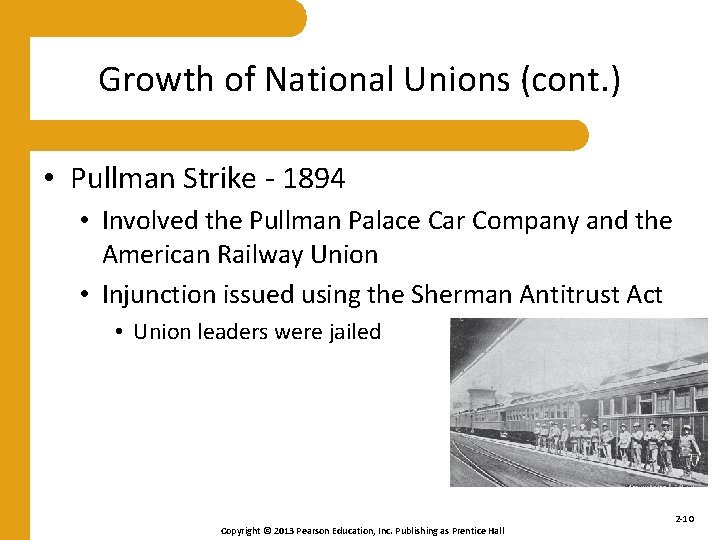
Growth of National Unions (cont. ) • Pullman Strike - 1894 • Involved the Pullman Palace Car Company and the American Railway Union • Injunction issued using the Sherman Antitrust Act • Union leaders were jailed Copyright © 2013 Pearson Education, Inc. Publishing as Prentice Hall 2 -10

Growth of National Unions (cont. ) • Eugene Debs - Founder of American Railway Union • Led the democratic socialist movement in America • Espoused industrial unionism • Ran for president of the U. S. in 1920 Copyright © 2013 Pearson Education, Inc. Publishing as Prentice Hall 2 -11
Growth of National Unions (cont. ) • American Federation of Labor (AFL) - created in 1886 • A federation of unions made up of skilled workers formed in 1886 by Samuel Gompers • The AFL offered trade unions local autonomy because the national union operated as a decentralized organization • Eventually the AFL merged with the CIO Copyright © 2013 Pearson Education, Inc. Publishing as Prentice Hall 2 -11
Growth of National Unions (cont. ) • Samuel Gompers (1850 -1924) • British-born U. S. labor leader, founder and first president of the American Federation of Labor (AFL) • He was a union organizer known for his opposition to radicalism and political involvement • Believed that unions should focus on economic goals, bringing about change through strikes and boycotts Copyright © 2013 Pearson Education, Inc. Publishing as Prentice Hall 2 -12
Growth of National Unions (cont. ) • Bunker Hill & Sullivan Mining Incident, Cour d’Alene, Idaho • Western Federation of Miners (WFM) involved in a series of violent strikes • 1899 - WFM demanded recognition of union • Company fired all WFM members • Federal troops arrested miners • “Bull Pen” Copyright © 2013 Pearson Education, Inc. Publishing as Prentice Hall 2 -13

Growth of National Unions (cont. ) • Industrial Workers of the World (IWW) created in 1905 • Wobblies • Comprised of Western Federation of Miners, other activist political and labor groups Copyright © 2013 Pearson Education, Inc. Publishing as Prentice Hall 2 -14
Growth of National Unions (cont. ) • Goals • Become one large industrial union • Overthrow capitalism in favor of a cooperative society • Participated in a number of highly-publicized strikes • 1903 Women’s Trade Union League – first association dedicated to organizing women Copyright © 2013 Pearson Education, Inc. Publishing as Prentice Hall 2 -15
Growth of National Unions (cont. ) • Ludlow Massacre - 1914 • Miners on strike were evicted from their company -owned houses • The miners erected a tent colony on public property • The coal operators used the Colorado militia, thugs hired as strikebreakers, attacked without warning, killing 20 men, women, and children Copyright © 2013 Pearson Education, Inc. Publishing as Prentice Hall 2 -16
Growth of National Unions (cont. ) • John L. Lewis - 1880 – 1969 • An American leader of organized labor who served as president of the United Mine Workers of America from 1920 to 1960 • He was a major player in the history of coal mining Copyright © 2013 Pearson Education, Inc. Publishing as Prentice Hall 2 -17
Growth of National Unions (cont. ) • He was the driving force behind the founding of the Congress of Industrial Organizations and helped organize millions of other industrial workers in the 1930 s • After resigning as head of the CIO in 1941, he took the Mine Workers out of the CIO in 1942, then back into the American Federation of Labor (AFL) in 1944 Copyright © 2013 Pearson Education, Inc. Publishing as Prentice Hall 2 -18
Growth of National Unions (cont. ) • Congress of Industrial Organizations (CIO): • A federation of unions made up of industrial workers formed in 1935 by John L. Lewis • The CIO organized unions within industries and included all the workers at a work site rather than restricting membership to one trade • Eventually merged with the AFL Copyright © 2013 Pearson Education, Inc. Publishing as Prentice Hall 2 -19
Early Judicial Regulation • Cordwainers Conspiracy Cases • If two or more people conspired to commit an illegal act, they were guilty of conspiracy whether or not they ever completed the particular illegal act • Cases in Philadelphia, New York, and Pittsburgh • Commonwealth v. Hunt - 1842 • Reversed criminal conspiracy interpretation for union activity • Must prove an illegal purpose or reliance on illegal means Copyright © 2013 Pearson Education, Inc. Publishing as Prentice Hall 2 -20
Early Judicial Regulation (cont. ) • Use of labor injunctions • A court order that prohibits any individual or group from performing any act that violates the rights of other individuals concerned • Until 1932, injunctions were primarily used by employers to end boycotts or strikes Copyright © 2013 Pearson Education, Inc. Publishing as Prentice Hall 2 -21
Early Judicial Regulation (cont. ) • Erdman Act - 1898 • Gave certain protections to union members • Provided mediation and conciliation of railway labor disputes Copyright © 2013 Pearson Education, Inc. Publishing as Prentice Hall 2 -22
Pro-Labor Legislation • Clayton Act (1914) • Stated that: • Labor was not a commodity • The existence and operation of labor organizations were not prohibited by antitrust • Individual members of unions were not restrained from lawful activities • The act provided that neither the labor organization nor its members were considered illegal combinations or conspiracies in restraint of trade Copyright © 2013 Pearson Education, Inc. Publishing as Prentice Hall 2 -23
Pro-Labor Legislation (cont. ) • National War Labor Board • Created during World War I, President Woodrow Wilson formed the National War Labor Board to prevent labor disputes from disrupting the war effort • Formed to provide a means of settlement by mediation or conciliation of labor controversies in necessary war industries • It adopted self-organization and collective bargaining as its basic policy • Abolished after WWI Copyright © 2013 Pearson Education, Inc. Publishing as Prentice Hall 2 -24
Pro-Labor Legislation (cont. ) • The Railway Labor Act - 1926 • Passed to prevent disruptions in the nation’s rail service • It required railroad employers to negotiate with employees’ union • In 1936 it was expanded to include the airline industry Copyright © 2013 Pearson Education, Inc. Publishing as Prentice Hall 2 -25
Creation of National Labor Policy (cont. ) • Stock market crash of 1929 created conditions that led to sympathy for workers’ problems • Judicial process was too slow to deal with problems • State legislation was ineffectual • Norris-La Guardia Act - 1932 • The act restricts the federal courts from issuing injunctions in labor disputes, except to maintain law and order • The act made yellow-dog contracts illegal Copyright © 2013 Pearson Education, Inc. Publishing as Prentice Hall 2 -26
Creation of National Labor Policy (cont. ) • National Labor Relations Act (The Wagner Act) • The cornerstone of U. S. Federal labor law • The act was the first in history to give most private sector employees the right to organize into unions, the right to bargain collectively with employers, defined unfair labor practices by employers, and created the NLRB Copyright © 2013 Pearson Education, Inc. Publishing as Prentice Hall 2 -27
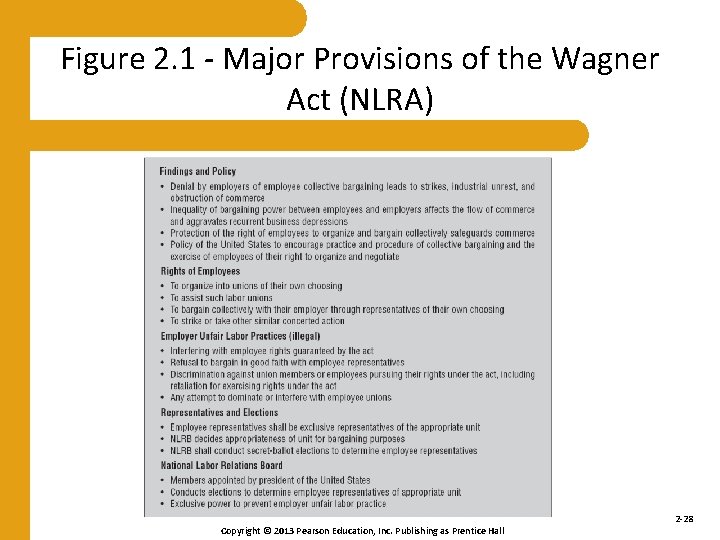
Figure 2. 1 - Major Provisions of the Wagner Act (NLRA) Copyright © 2013 Pearson Education, Inc. Publishing as Prentice Hall 2 -28
Creation of National Labor Policy (cont. ) • Fair Labor Standards Act - 1938 • Passed in 1936 • It requires employers to pay covered employees at least the federal minimum wage and overtime pay of one-and-one-half-times the regular rate of pay for work exceeding a 40 hour week Copyright © 2013 Pearson Education, Inc. Publishing as Prentice Hall 2 -29
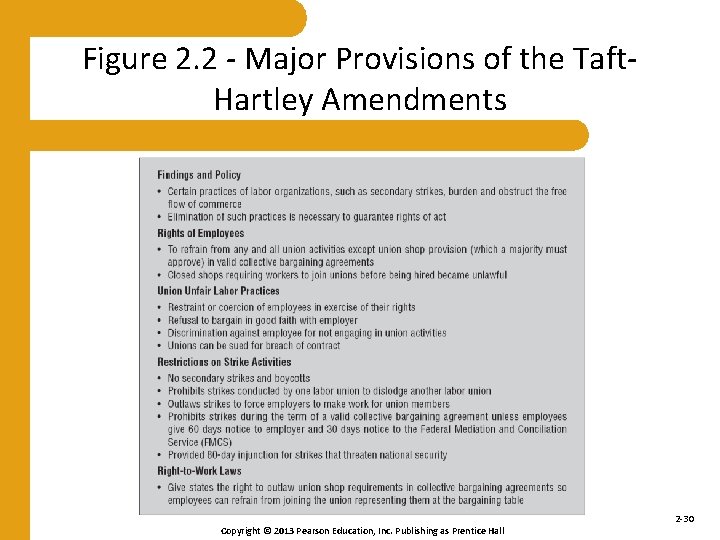
Figure 2. 2 - Major Provisions of the Taft. Hartley Amendments Copyright © 2013 Pearson Education, Inc. Publishing as Prentice Hall 2 -30
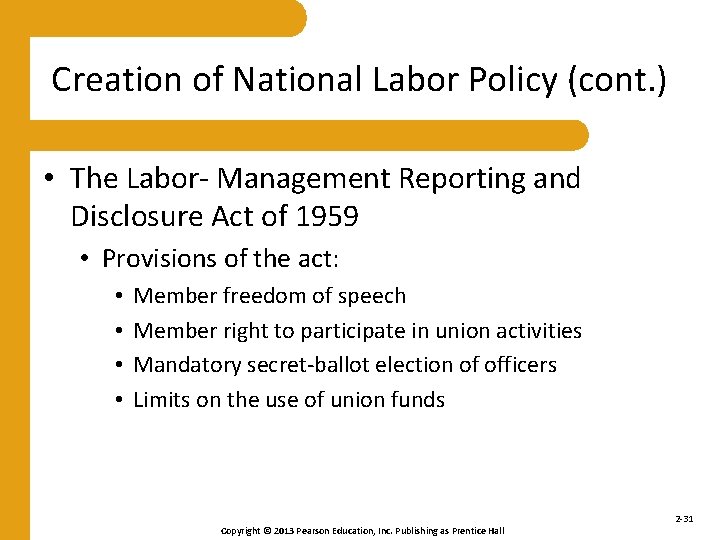
Creation of National Labor Policy (cont. ) • The Labor- Management Reporting and Disclosure Act of 1959 • Provisions of the act: • • Member freedom of speech Member right to participate in union activities Mandatory secret-ballot election of officers Limits on the use of union funds Copyright © 2013 Pearson Education, Inc. Publishing as Prentice Hall 2 -31

Creation of National Labor Policy (cont. ) • Labor-Management Reporting and Disclosure Act of 1959 (Landrum-Griffin Act) • Passed in 1959 • To help regulate internal union operations • The act amended the Wagner Act and the Taft. Hartley Act • Resulted in the limitation of boycotts and picketing, the creation of safeguards for union elections, and the establishment of controls for the handling of union funds Copyright © 2013 Pearson Education, Inc. Publishing as Prentice Hall 2 -32
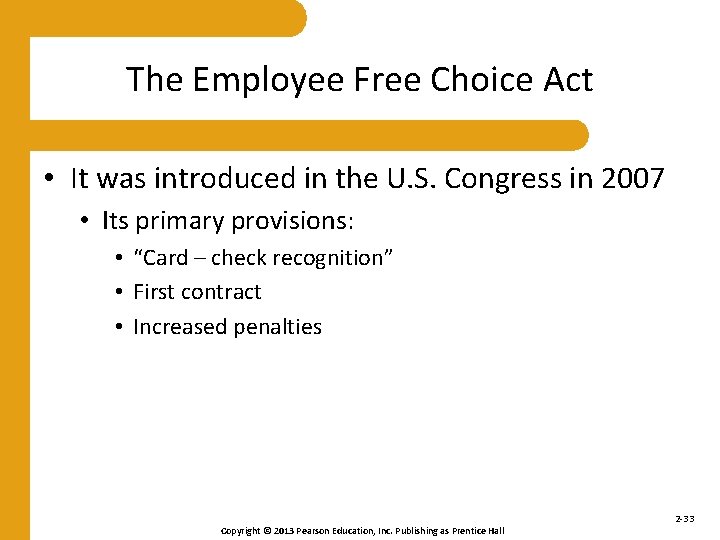
The Employee Free Choice Act • It was introduced in the U. S. Congress in 2007 • Its primary provisions: • “Card – check recognition” • First contract • Increased penalties Copyright © 2013 Pearson Education, Inc. Publishing as Prentice Hall 2 -33
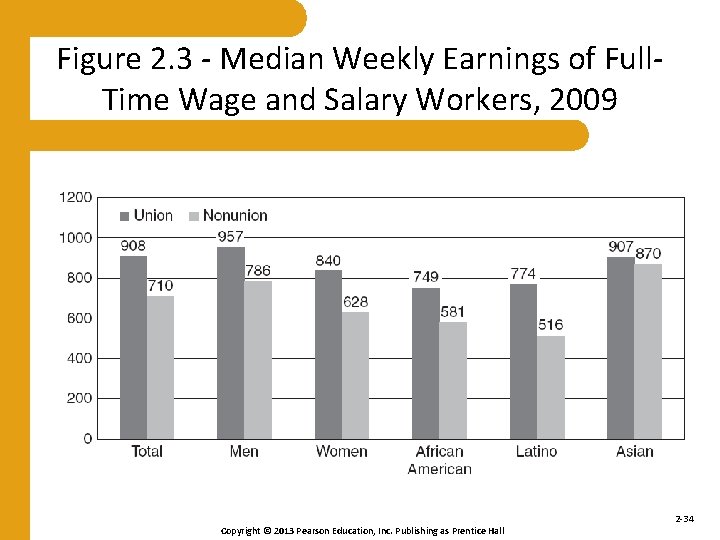
Figure 2. 3 - Median Weekly Earnings of Full. Time Wage and Salary Workers, 2009 Copyright © 2013 Pearson Education, Inc. Publishing as Prentice Hall 2 -34
African Americans and Unions • National Colored Labor Union (NCLU) • Headed by Isaac Myers • The NCLU was organized in the South in 1870 • The white labor movement did not agree • Maryland Freedom Union and the Mississippi Freedom Labor Union • Organized and engineered strikes and demonstrations to improve the lot of African American workers who had been shunted to lowpaying jobs Copyright © 2013 Pearson Education, Inc. Publishing as Prentice Hall 2 -35
Women and Unions • Major areas of potential growth for unionization • Health industry • Clerical workers Copyright © 2013 Pearson Education, Inc. Publishing as Prentice Hall 2 -36
Women and Unions (cont. ) • Women’s Trade Union League • Formed by reformers and working women • Adopted a six-point platform • • • Equal pay for equal work Full citizenship for women An eight-hour workday A minimum wage Organization of all workers into unions The economic programs of the American Federation of Labor Copyright © 2013 Pearson Education, Inc. Publishing as Prentice Hall 2 -37
Women and Unions (cont. ) • Coalition of Labor Union Women (CLUW) • Formed in 1974, by the women within the U. S. labor movement • To promote a renewed interest among women to unionize Copyright © 2013 Pearson Education, Inc. Publishing as Prentice Hall 2 -38
Immigrants and Unions • Except for American Indians and their descendants, all the people of the United States are immigrants or descendants of immigrants • It was not until after World War I that industrial labor unions took a negative stand on immigration Copyright © 2013 Pearson Education, Inc. Publishing as Prentice Hall 2 -39
Immigrants and Unions (cont. ) • Unionists supported the Immigration Acts of 1921 and 1924, which restricted immigration, because those acts reduced the nation’s labor supply Copyright © 2013 Pearson Education, Inc. Publishing as Prentice Hall 2 -40
Immigrants and Unions (cont. ) • Current scenario • American employers and unions recognize that new unskilled immigrants are changing workplaces across the United States • Union leaders and managers are realizing they must abandon old assumptions to gain the loyalty of each new wave of immigrants Copyright © 2013 Pearson Education, Inc. Publishing as Prentice Hall 2 -41
All rights reserved. No part of this publication may be reproduced, stored in a retrieval system, or transmitted, in any form or by any means, electronic, mechanical, photocopying, recording, or otherwise, without the prior written permission of the publisher. Printed in the United States of America. Copyright © 2013 Pearson Education, Inc. Publishing as Prentice Hall 2 -42
- Slides: 43