
PART I CLASSICAL CHINA THE POLITICS Chinese Dynasties
- Slides: 41
PART I CLASSICAL CHINA: THE POLITICS
Chinese Dynasties • Chinese history is organized into dynasties • Dynasty: Succession of rulers from same family • Marked by technology, culture, politics, kings, etc.
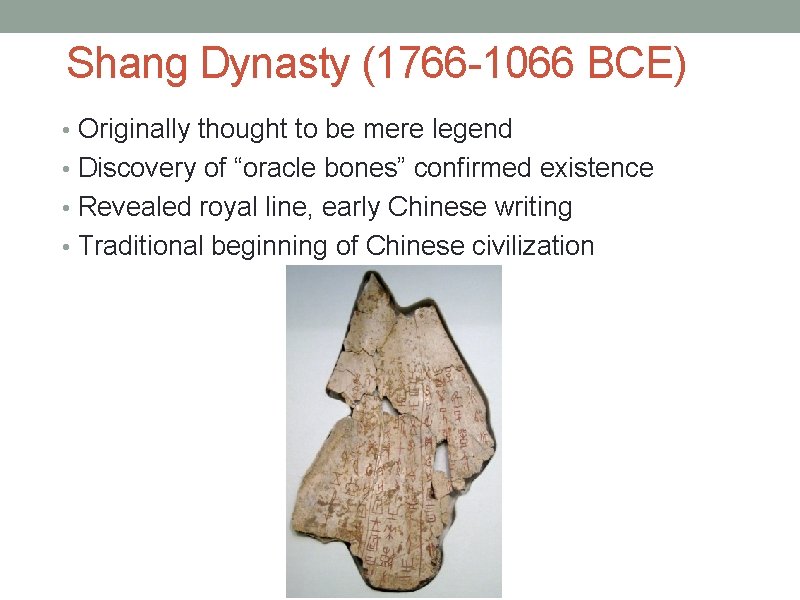
Shang Dynasty (1766 -1066 BCE) • Originally thought to be mere legend • Discovery of “oracle bones” confirmed existence • Revealed royal line, early Chinese writing • Traditional beginning of Chinese civilization
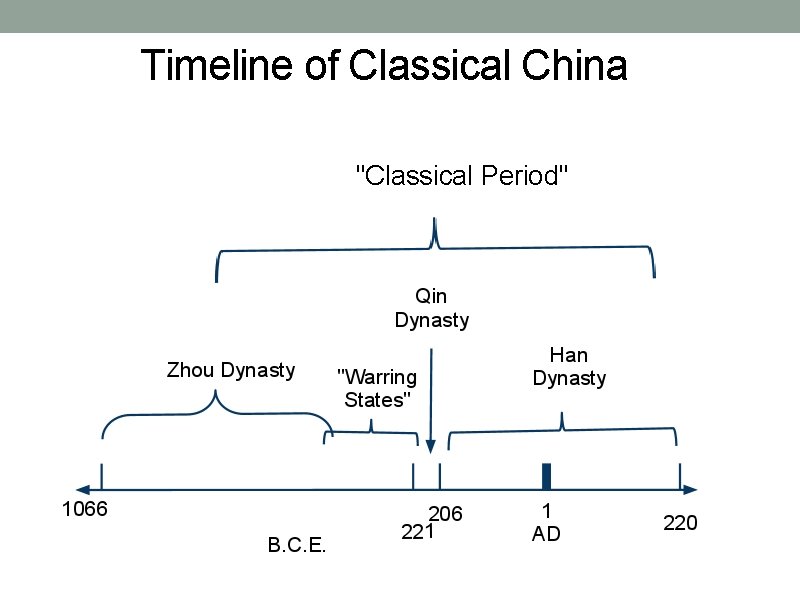
Timeline of Classical China "Classical Period"
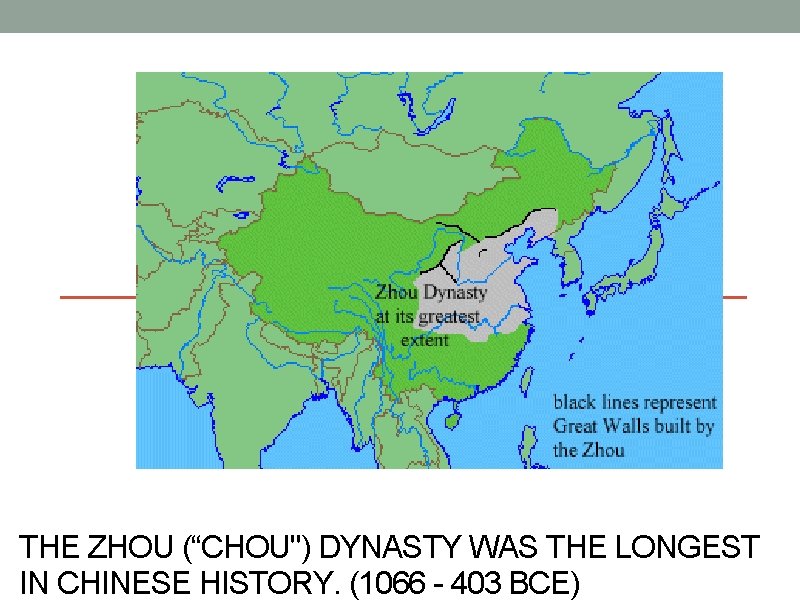
THE ZHOU (“CHOU") DYNASTY WAS THE LONGEST IN CHINESE HISTORY. (1066 - 403 BCE)
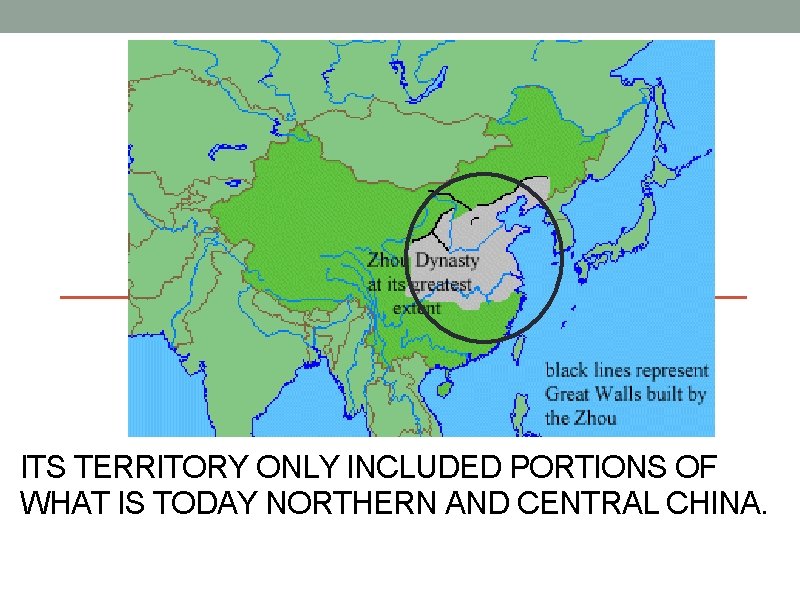
ITS TERRITORY ONLY INCLUDED PORTIONS OF WHAT IS TODAY NORTHERN AND CENTRAL CHINA.
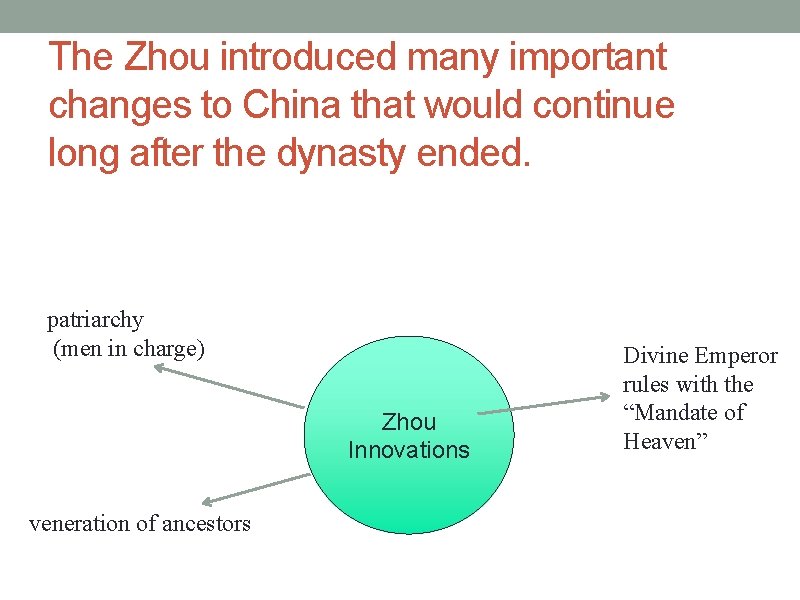
The Zhou introduced many important changes to China that would continue long after the dynasty ended. patriarchy (men in charge) Zhou Innovations veneration of ancestors Divine Emperor rules with the “Mandate of Heaven”
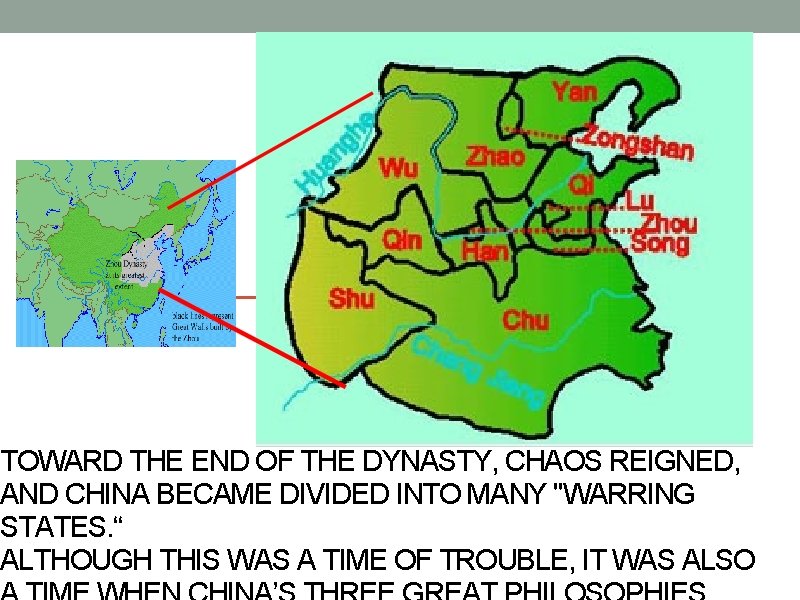
TOWARD THE END OF THE DYNASTY, CHAOS REIGNED, AND CHINA BECAME DIVIDED INTO MANY "WARRING STATES. “ ALTHOUGH THIS WAS A TIME OF TROUBLE, IT WAS ALSO
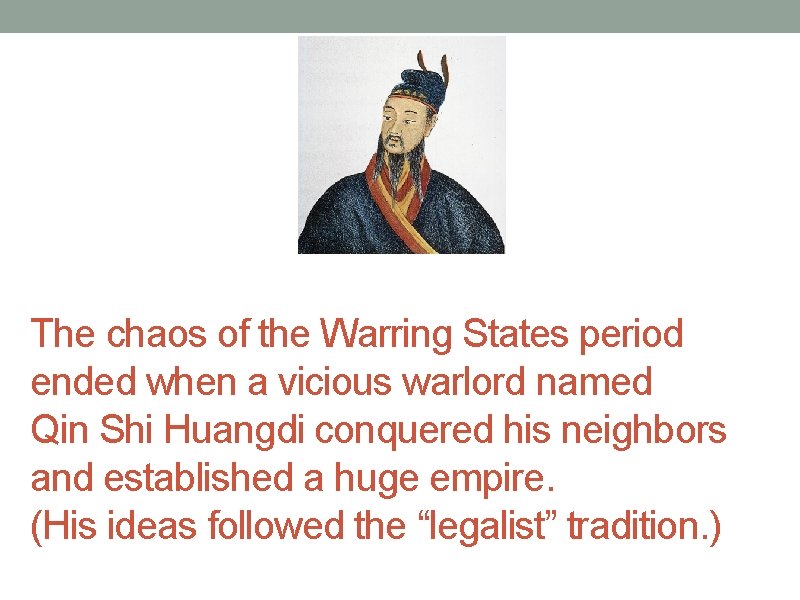
The chaos of the Warring States period ended when a vicious warlord named Qin Shi Huangdi conquered his neighbors and established a huge empire. (His ideas followed the “legalist” tradition. )
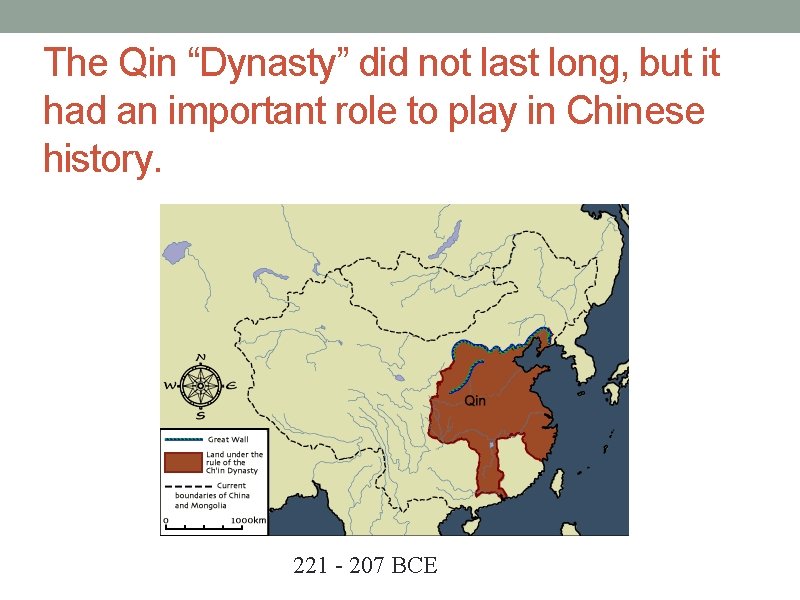
The Qin “Dynasty” did not last long, but it had an important role to play in Chinese history. 221 - 207 BCE
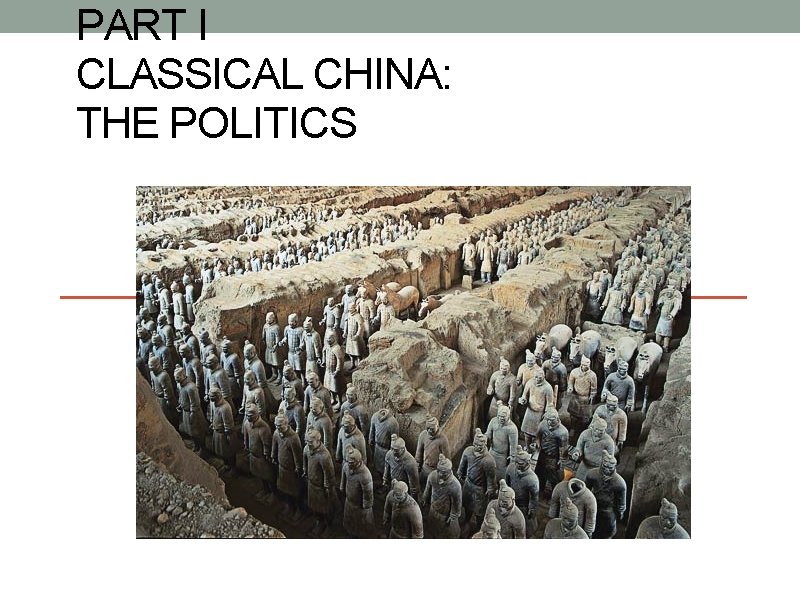
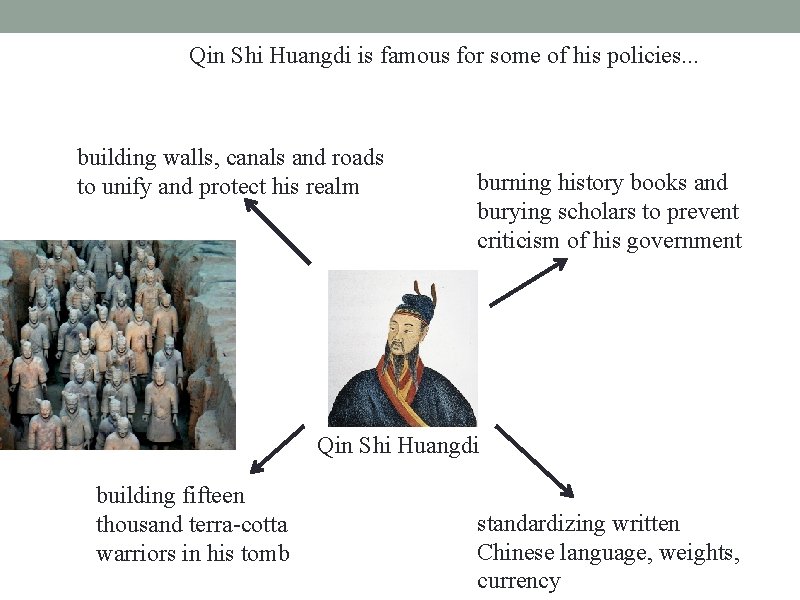
Qin Shi Huangdi is famous for some of his policies. . . building walls, canals and roads to unify and protect his realm burning history books and burying scholars to prevent criticism of his government Qin Shi Huangdi building fifteen thousand terra-cotta warriors in his tomb standardizing written Chinese language, weights, currency
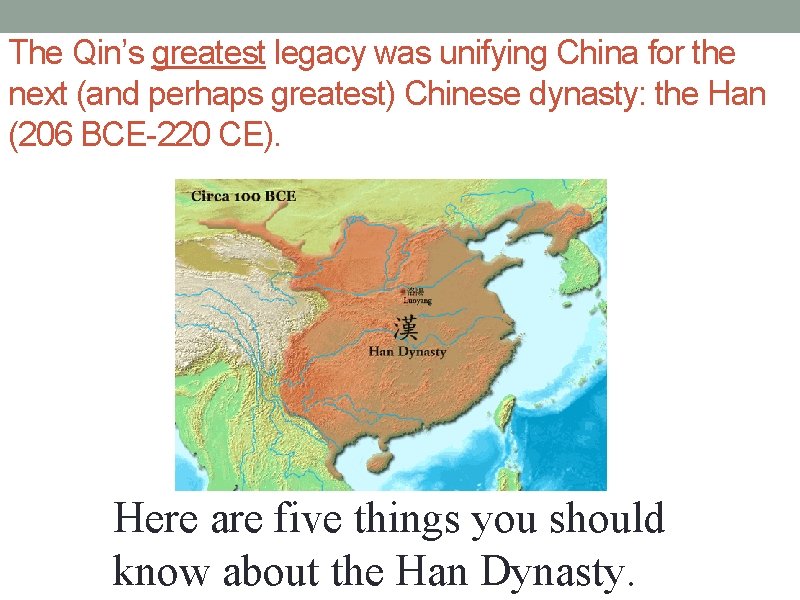
The Qin’s greatest legacy was unifying China for the next (and perhaps greatest) Chinese dynasty: the Han (206 BCE-220 CE). Here are five things you should know about the Han Dynasty.
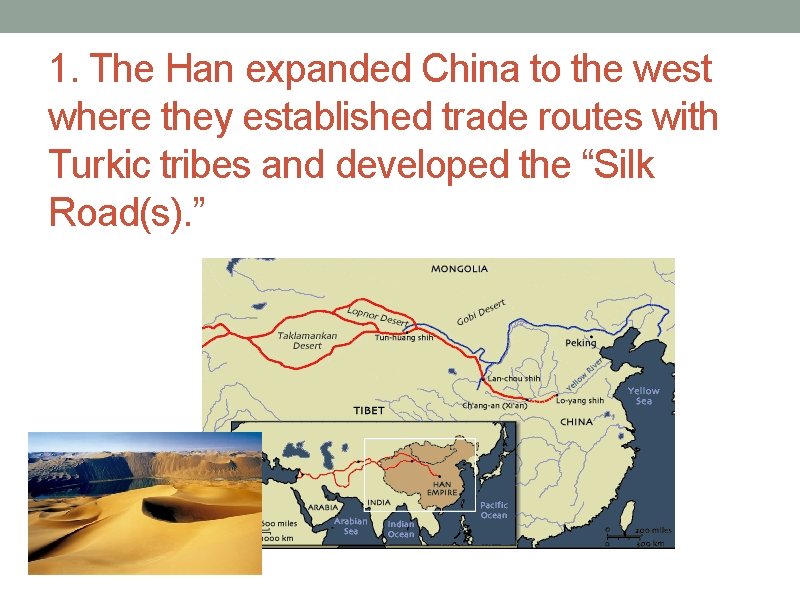
1. The Han expanded China to the west where they established trade routes with Turkic tribes and developed the “Silk Road(s). ”
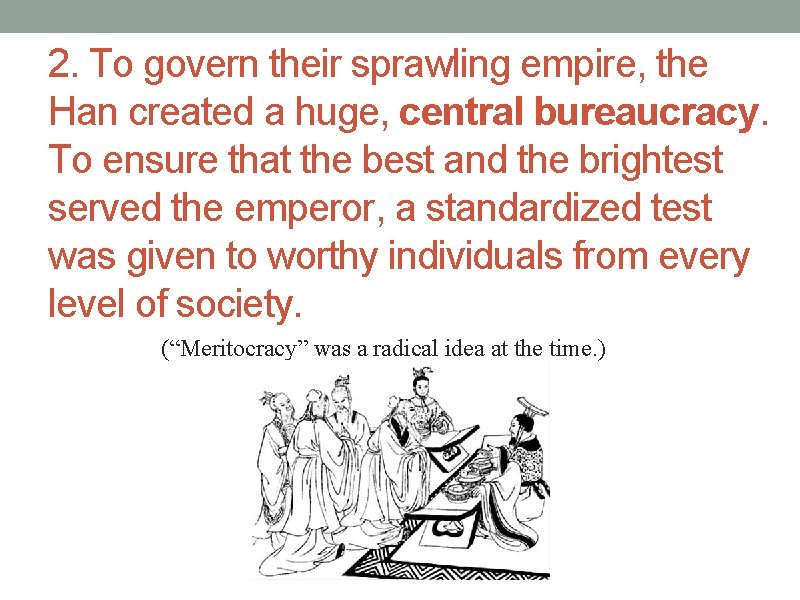
2. To govern their sprawling empire, the Han created a huge, central bureaucracy. To ensure that the best and the brightest served the emperor, a standardized test was given to worthy individuals from every level of society. (“Meritocracy” was a radical idea at the time. )
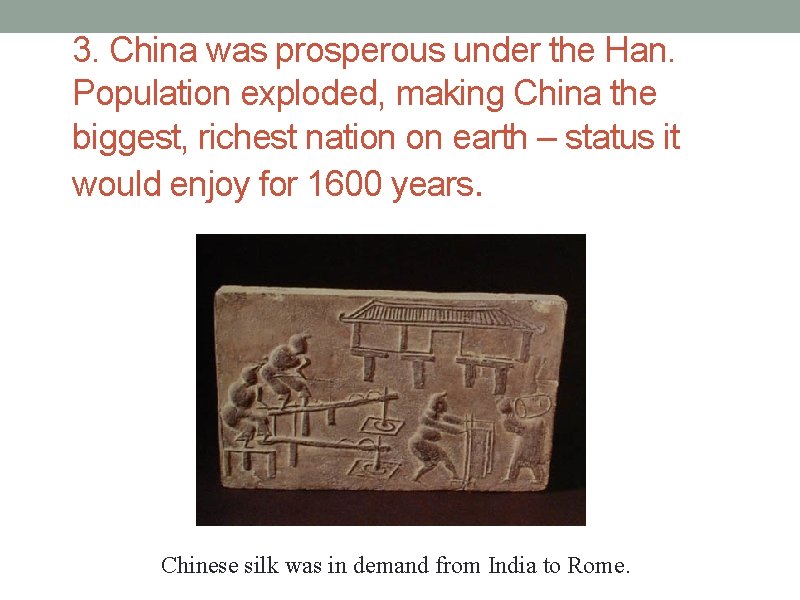
3. China was prosperous under the Han. Population exploded, making China the biggest, richest nation on earth – status it would enjoy for 1600 years. Chinese silk was in demand from India to Rome.
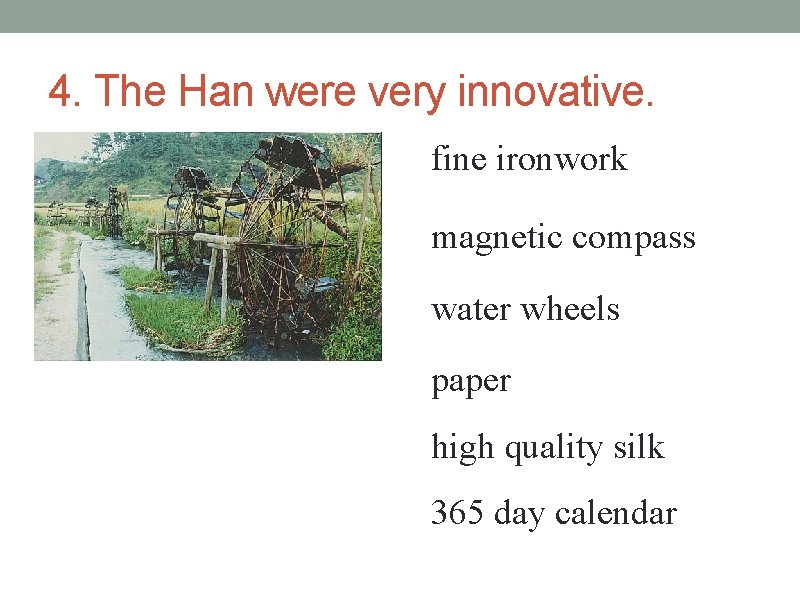
4. The Han were very innovative. fine ironwork magnetic compass water wheels paper high quality silk 365 day calendar
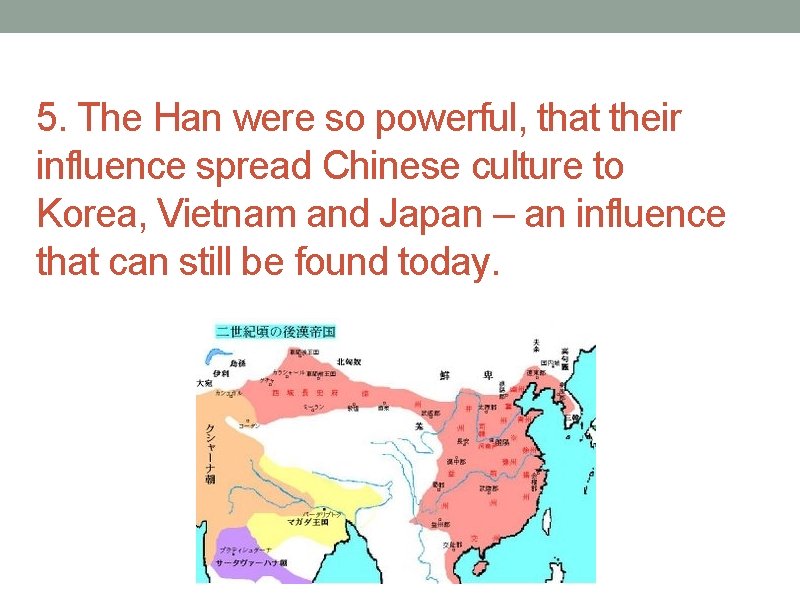
5. The Han were so powerful, that their influence spread Chinese culture to Korea, Vietnam and Japan – an influence that can still be found today.
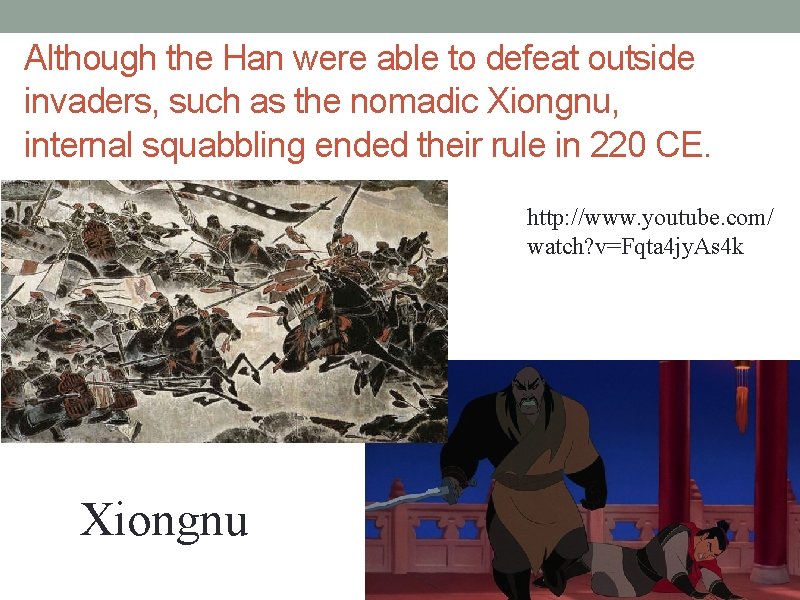
Although the Han were able to defeat outside invaders, such as the nomadic Xiongnu, internal squabbling ended their rule in 220 CE. http: //www. youtube. com/ watch? v=Fqta 4 jy. As 4 k Xiongnu
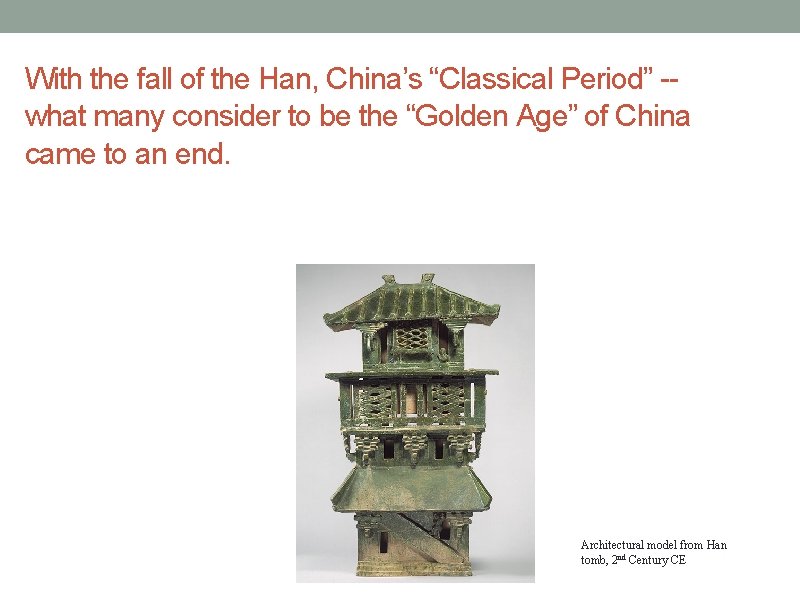
With the fall of the Han, China’s “Classical Period” -what many consider to be the “Golden Age” of China came to an end. Architectural model from Han tomb, 2 nd Century CE
Part II Classical China: Three Philosophies
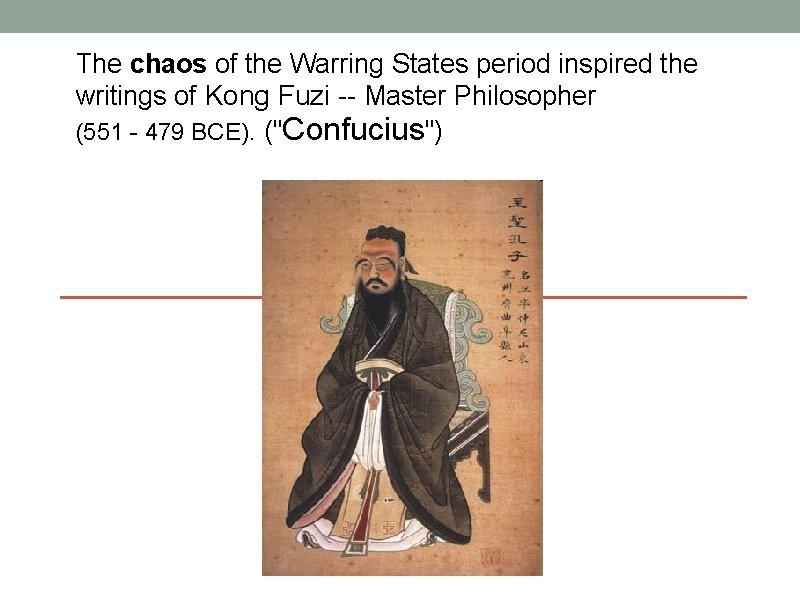
The chaos of the Warring States period inspired the writings of Kong Fuzi -- Master Philosopher (551 - 479 BCE). ("Confucius")
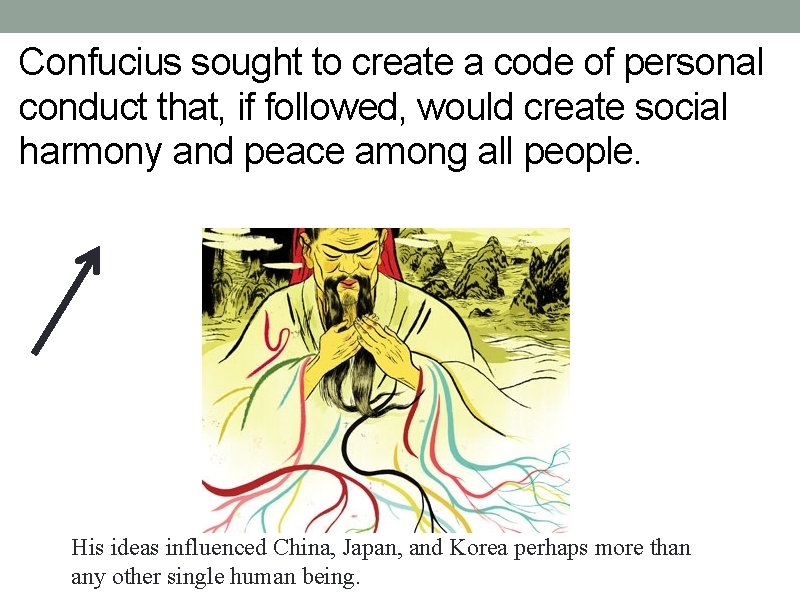
Confucius sought to create a code of personal conduct that, if followed, would create social harmony and peace among all people. His ideas influenced China, Japan, and Korea perhaps more than any other single human being.
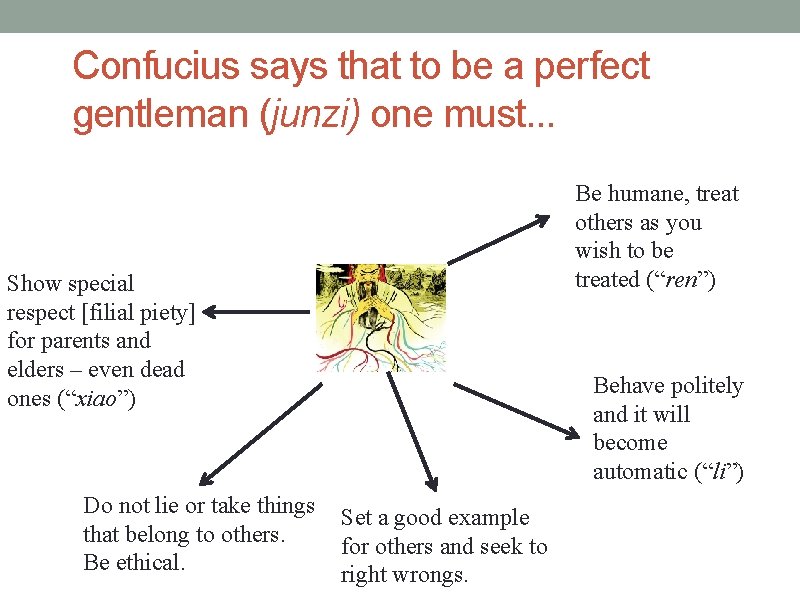
Confucius says that to be a perfect gentleman (junzi) one must. . . Be humane, treat others as you wish to be treated (“ren”) Show special respect [filial piety] for parents and elders – even dead ones (“xiao”) Do not lie or take things that belong to others. Be ethical. Behave politely and it will become automatic (“li”) Set a good example for others and seek to right wrongs.
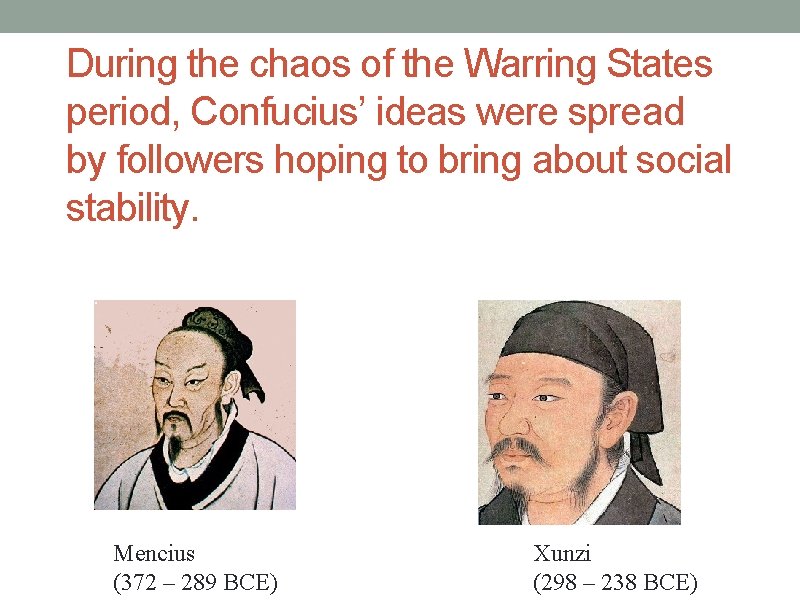
During the chaos of the Warring States period, Confucius’ ideas were spread by followers hoping to bring about social stability. Mencius (372 – 289 BCE) Xunzi (298 – 238 BCE)
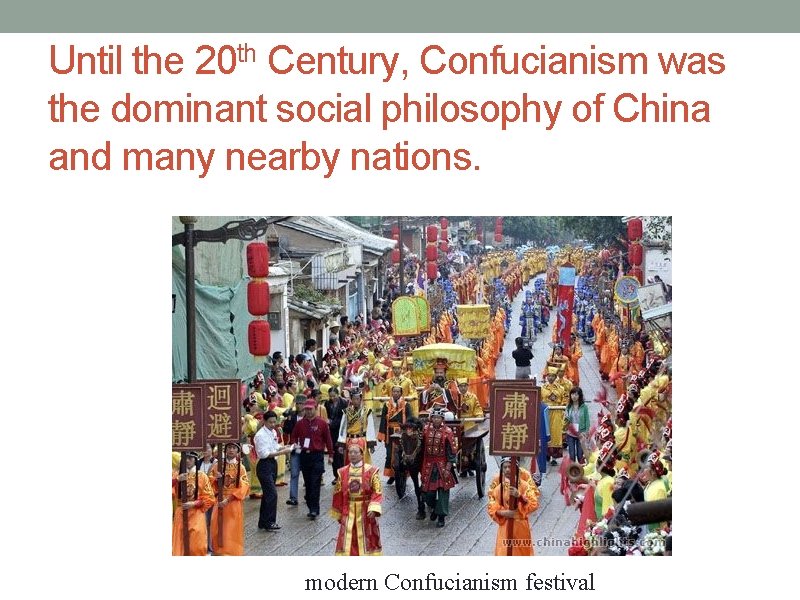
Until the 20 th Century, Confucianism was the dominant social philosophy of China and many nearby nations. modern Confucianism festival
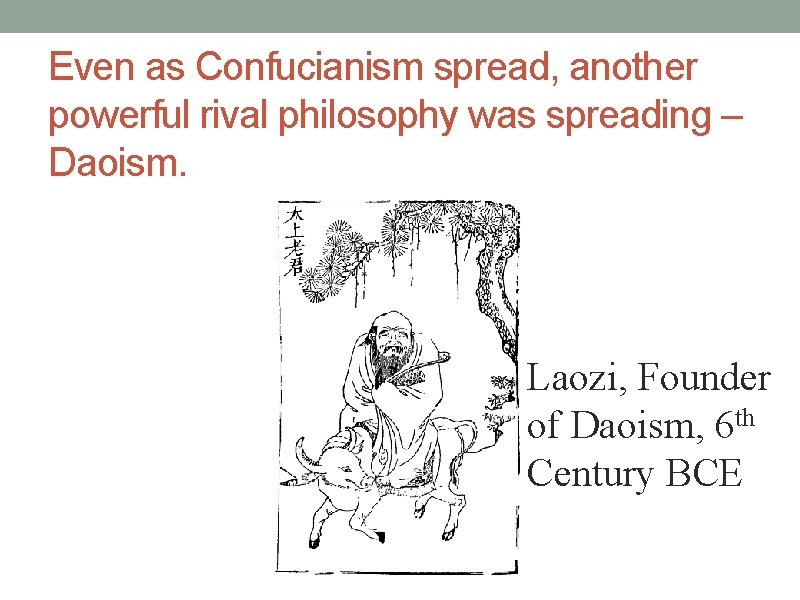
Even as Confucianism spread, another powerful rival philosophy was spreading – Daoism. Laozi, Founder of Daoism, 6 th Century BCE
In a book about Laozi’s teachings entitled “The Dao De Jing” the “Dao” is described as “The Way the World Is. ” -- The Dao cannot be fundamentally altered, so why try to change it? Instead, learn to be at peace with the world as you find it. -- A Daoist engages in Wuwei – simple living and disengagement from the world. -- politics, ambition, and social activism are to be avoided.
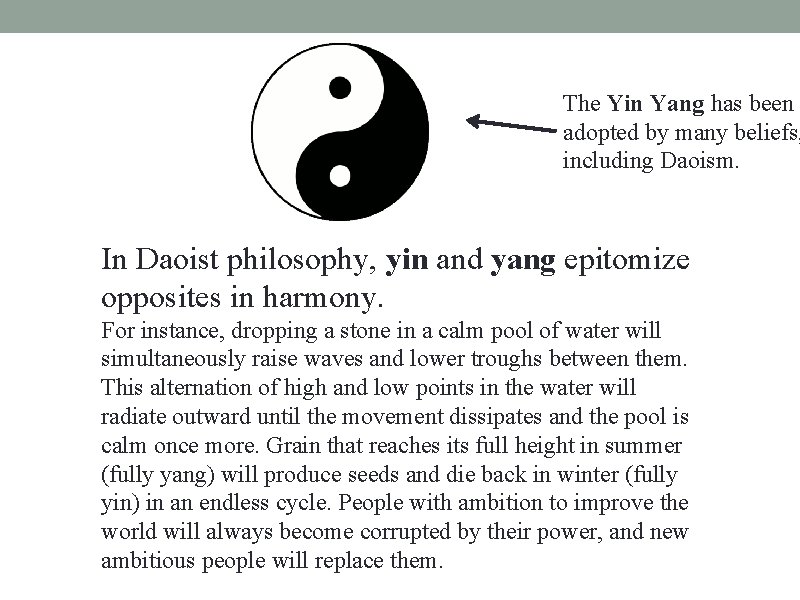
The Yin Yang has been adopted by many beliefs, including Daoism. In Daoist philosophy, yin and yang epitomize opposites in harmony. For instance, dropping a stone in a calm pool of water will simultaneously raise waves and lower troughs between them. This alternation of high and low points in the water will radiate outward until the movement dissipates and the pool is calm once more. Grain that reaches its full height in summer (fully yang) will produce seeds and die back in winter (fully yin) in an endless cycle. People with ambition to improve the world will always become corrupted by their power, and new ambitious people will replace them.
Can you guess why the ideologies of Confucianism and Daoism clashed? ?
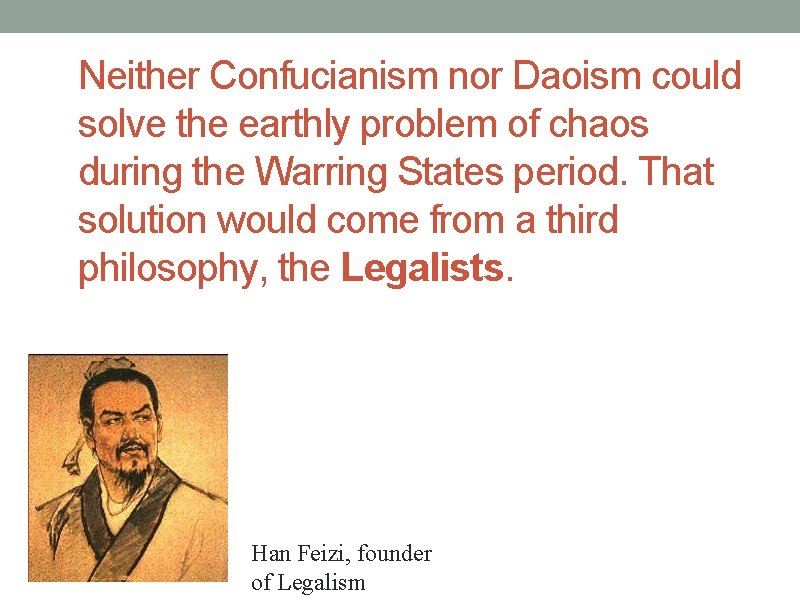
Neither Confucianism nor Daoism could solve the earthly problem of chaos during the Warring States period. That solution would come from a third philosophy, the Legalists. Han Feizi, founder of Legalism
Legalists did not believe in moral correctness, filial piety, or spiritual harmony. They cared about centralizing state power so as to achieve peace. And power, for them, came from military might and control of food supplies.
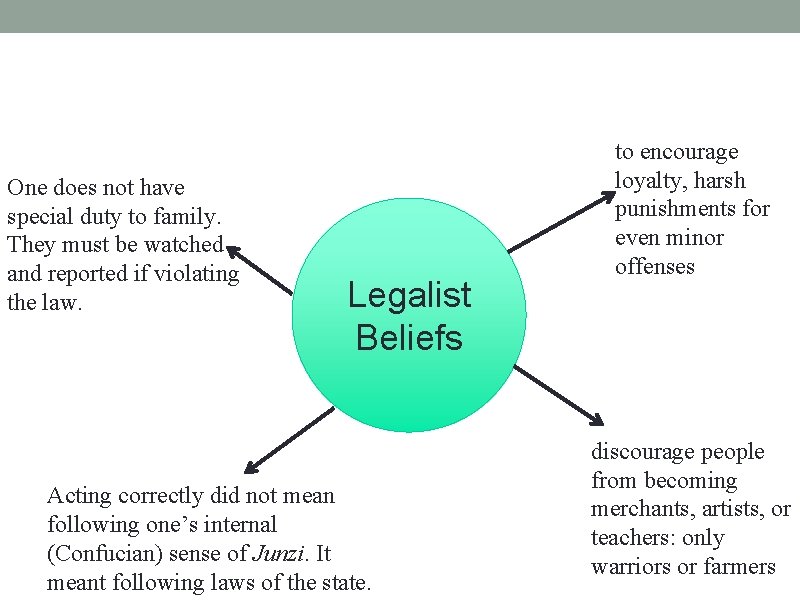
One does not have special duty to family. They must be watched and reported if violating the law. Legalist Beliefs Acting correctly did not mean following one’s internal (Confucian) sense of Junzi. It meant following laws of the state. to encourage loyalty, harsh punishments for even minor offenses discourage people from becoming merchants, artists, or teachers: only warriors or farmers
Can you speculate why Legalism would clash with Confucianism and Daoism?
Women in China • On a sheet of looseleaf… • Take notes on the three short readings • As you write, also note… • What the reading tells you about women’s role in Chinese society • How the treatment of women relates to any of the 3 main Chinese philosophies We will be discussing your findings!
CHINESE SOCIETY
Chinese Society • Central Bureaucracy • Selected based on merit, not wealth or family (Confucian) • Imperial academy created to train potential officials • Had to take civil service exam • Theoretically open to all—usually limited to men with means • Did provide some social mobility • Officials were very influential… • Culturally • Intellectually • Politically
Cultural Homogeneity • Assimilating people into the Chinese empires • Culturally • Linguistically • Ethnically • Not like Rome! In the Roman Empire you could become a “citizen” but never share a cultural identity
Landlords v. Peasants • Chinese landlords controlled most of the land, often didn’t pay taxes • Most farmers were peasants who worked on the landlord’s estates • The landlords were usually from families of officials • Peasants had to pay taxes, often paid a large share of their crop to the landlord • Led to disgruntled peasants, rebellion
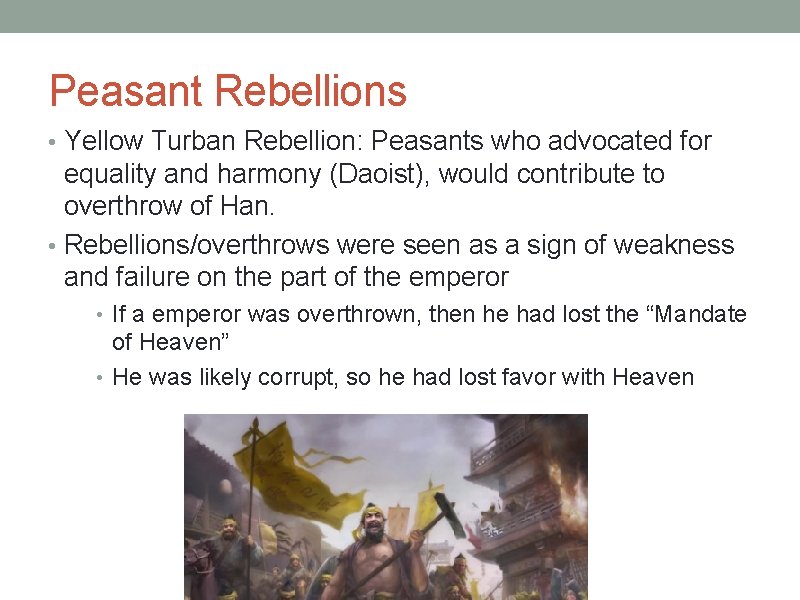
Peasant Rebellions • Yellow Turban Rebellion: Peasants who advocated for equality and harmony (Daoist), would contribute to overthrow of Han. • Rebellions/overthrows were seen as a sign of weakness and failure on the part of the emperor • If a emperor was overthrown, then he had lost the “Mandate of Heaven” • He was likely corrupt, so he had lost favor with Heaven
Comparing Roman and Han Empires • With 2 -3 other people, compare and contrast the Roman and Han empires • Come up with at least 2 similarities and 2 differences, and explain • Similar questions have come up on the AP test!
Crash Course: China • http: //www. youtube. com/watch? v=yl. WORy. To 4