
Part B presentation The adolescent analysis of Isabella
Part B presentation The adolescent analysis of Isabella Swan ( twilight) By Aymie Sultana and Jessica Bradford

Index 1. 2. 3. 4. 5. Physical development Cognitive development Personality development Social development Emotional development
Physical development There are four main aspects of physical development that affect Isabella. These include: v. Body growth v. Motor development v. Puberty v. Brain development
Puberty/Body Growth Isabella swan’s milestone of puberty and body growth is evident in the reactions and words of the people in her microsystem such as Jacob and Charlie ( her father). The observations noticed include: • Height • Weight • Appearance • Body proportion • Sexual desire and stimulation • Breast development

Movie Snipit
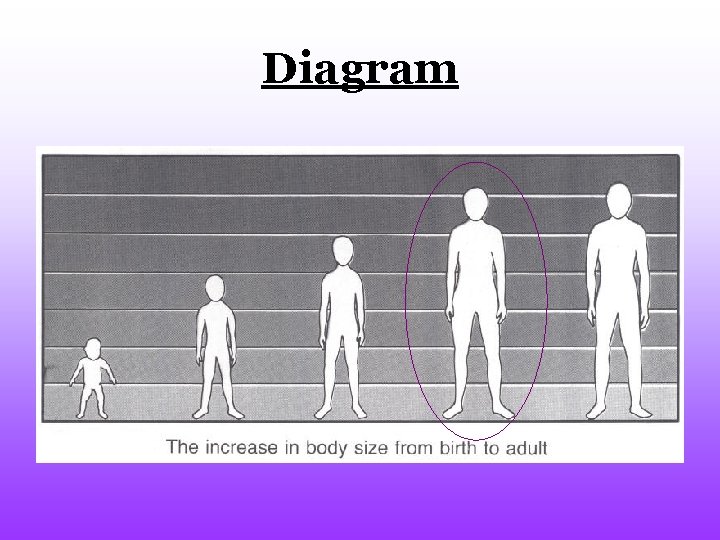
Diagram
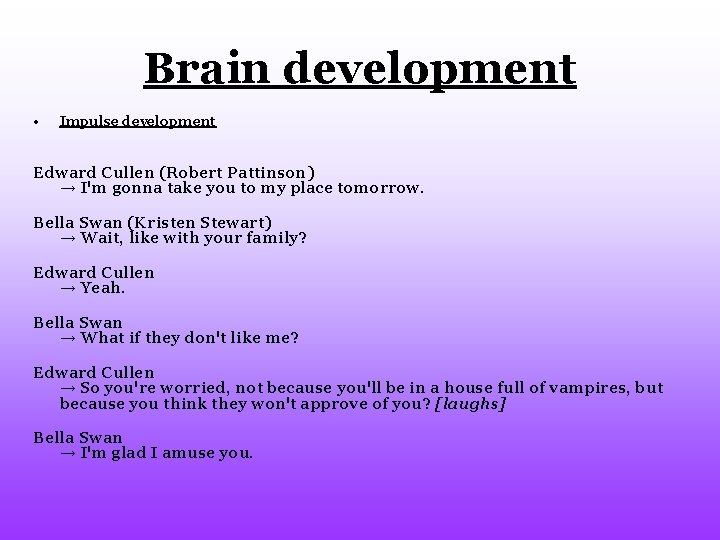
Brain development • Impulse development Edward Cullen (Robert Pattinson) → I'm gonna take you to my place tomorrow. Bella Swan (Kristen Stewart) → Wait, like with your family? Edward Cullen → Yeah. Bella Swan → What if they don't like me? Edward Cullen → So you're worried, not because you'll be in a house full of vampires, but because you think they won't approve of you? [laughs] Bella Swan → I'm glad I amuse you.
Analysis of Quote • This segment of dialogue taken from the film, puts extra emphasis on the main point that Bella is completely disregarding the factor of being introduced to a family full of bloodsucking, inhumane vampires, her main fear however is seen to be whether or not they will like her, showing her lack of judgment on the situation in which she has affirmed herself into.
Motor development • Psychomotor development in relation to learning is the relationship between cognitive functions and physical movement. • “neurological maturation is important because not all centers of the brain are operational at birth… growth in perceptual capacities is very important to the development of motor skills”; . (Thelen 1995).
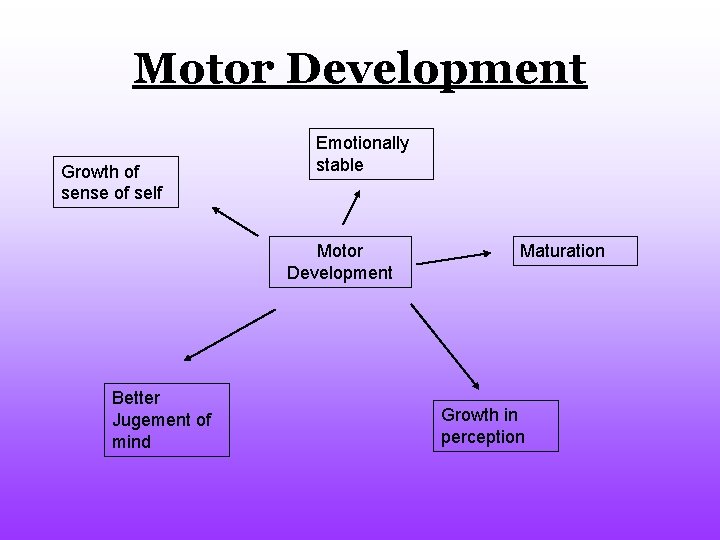
Motor Development Growth of sense of self Emotionally stable Motor Development Better Jugement of mind Maturation Growth in perception
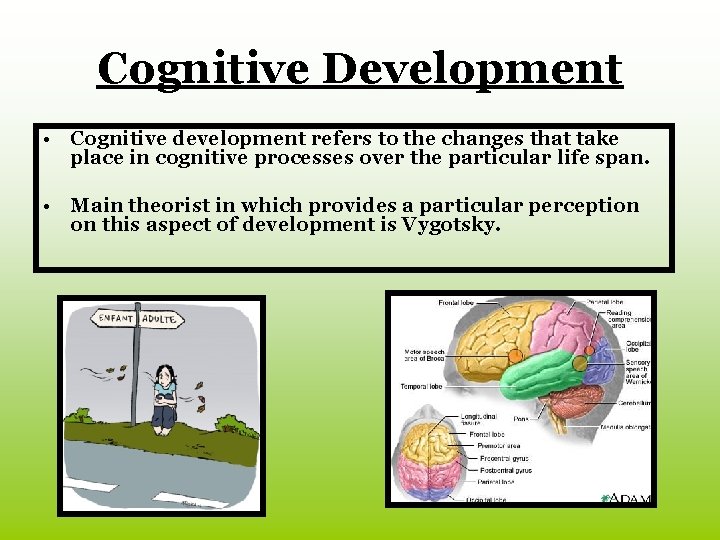
Cognitive Development • Cognitive development refers to the changes that take place in cognitive processes over the particular life span. • Main theorist in which provides a particular perception on this aspect of development is Vygotsky.
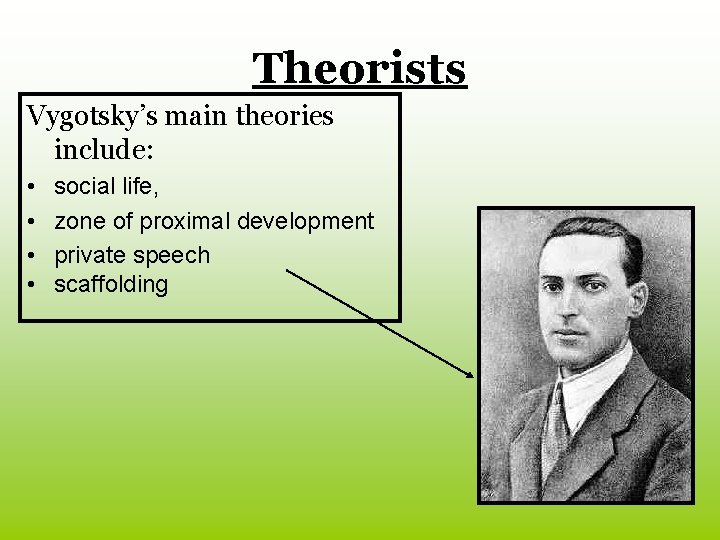
Theorists Vygotsky’s main theories include: • • social life, zone of proximal development private speech scaffolding
Vygotsky • Zone of proximal development / social life “Vygotsky believes that information was acquired before development can occur” ( Slavin, 2003), and had also established the socio-cultural theory • Bella is a very independent person, she does not hold older mentors or a persona of great importance. Therefore her zone of proximal development is very self depending, fortunately Bella is intelligent and therefore has the desire to learn and achieve new ability. But unfortunately she has no great desire to be actively involved in a social group.
Vygotsky It is seen that private speech is the most powerful cultural tool employed by human to assist in learning, and that it is also an adaptive tool that helps the individual learn new tasks and skills” (Vygotsy) 1987 • Private speech is a indication of Isabella’s cognitive development. She does not necessarily use private speech to accomplish a new skill but uses the tool to clarify the challenging situations she is faced in dealing with.

Vygotsky Scaffolding • Edward provides the scaffold of the vampire culture • Through the positive outlook of Bella she wishes to reciprocate that scaffold and eventually become a vampire.
Personality Development Defining personality Theories of personality • Psychoanalytic (egocentric) Erikson (1997) • Humanistic (Rogers, 1951 : Maslow, 1971) • Behaviourism (Watson 1878 -1958 and Skinner 1904 -1990)
Definition of personality • Personality comes from the Latin word Persona, meaning masked person, character or a role, “it often extends beyond traits to encompass mental schema” (Allport & Odbert 1936). • Personality development refers to the extent in which an individuals essence, characteristic thought and behaviour change over a particular time span defining personality, “as a phenomenological process in which cognitions and perceptions mediate links between the individual and the environment” (Lewin 1935).
Behaviorism (Watson 1878 -1958 and Skinner 1904 -1990) • Although Charlie himself is a shy person he encourages Bella, to be more socially active and less shy( therefore creating the environmental stimuli proposed by Watson and skinner). He does this to break the shy personality trait of Bella, but in the process contradicts himself as he too poses this trait.
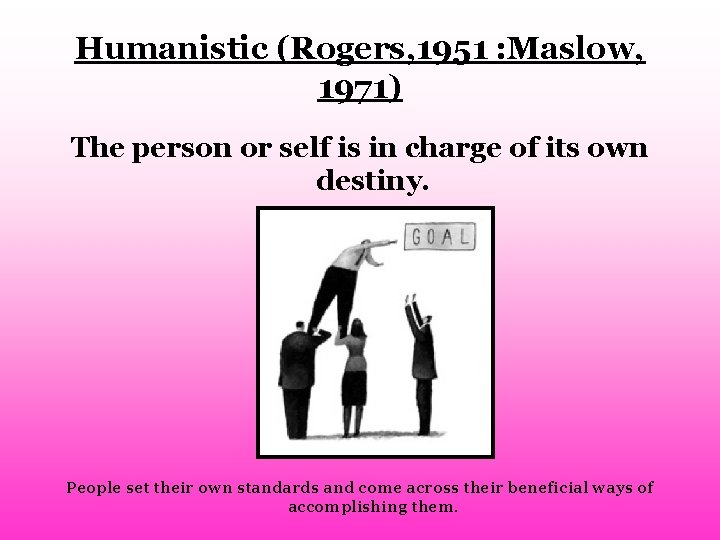
Humanistic (Rogers, 1951 : Maslow, 1971) The person or self is in charge of its own destiny. People set their own standards and come across their beneficial ways of accomplishing them.
Egocentric (Erikson, 1997) • Eight stages of epigenetic personality development which creates a person. • Bella is currently experiencing, Fidelity (identity vs confusion) and love (intimacy vs isolation)
Social development refers to the intricate relationships in which one individual shares with a group of other individuals. This is crucial in the development of a person as it allows a sustained bond that is valued and provides support.
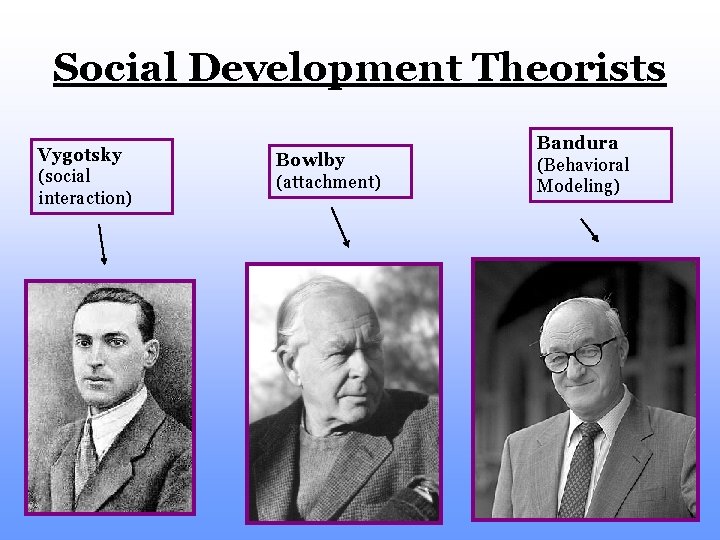
Social Development Theorists Vygotsky (social interaction) Bowlby (attachment) Bandura (Behavioral Modeling)
Social Interaction • According to Vygotsky 1978 “social interaction plays a fundamental role in the process of social development”. • During adolescence it is typical that the individual strives to look and act an particular way due their chosen social interactions. However Bella strives to be included in a different social interaction than normal, this is the Cullen vampire family. She tends to reject her friends in order to spend as much time as possible with Edward.
Attachment shows: • confidence • sense of involvement • sense of complete trust • competence • The connection and relationship between Bella and Edward shows Bella’s sense of attachment and therefore her progress of social development.
Behaviour Modeling • According to Bandura “most human behaviour is learned through observing other behaviour, attitudes, and outcomes of those behaviour’s” (1997). • Through the example of Bella's mum and stepdad’s relationship Bella is able to reproduce their scaffold of that strong relationship with her own, with Edward.
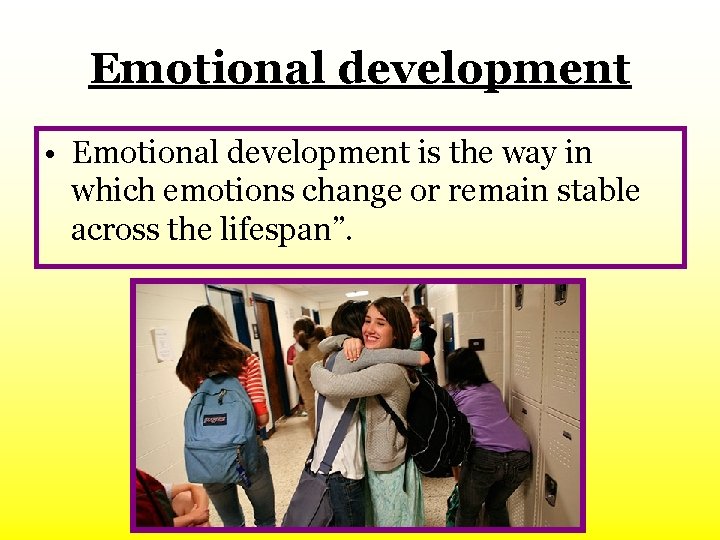
Emotional development • Emotional development is the way in which emotions change or remain stable across the lifespan”.
Theorist Bandura • Acknowledges the factor of being able to control emotion. • More beneficial to the Individual • Interaction between the individual and the adult, offers support and a sense of stability.
Challenges and transitions for Bella • Moving to Forks, and dealing with the change of climate and living style • Having to adapt and form a transition into a new community and a new school which brought along the aspect of a new social life • Problems in which she faced with Edward through beginning stages of the relationship • The discovery of Edward being a vampire “People who can exercise some control over their emotional life are more successful in their selfregulatory efforts than individuals who are at the mercy of their emotions” (Bandura 1999). These problems provide her with the opportunity to present resilience.
Support from parents • Bandura states (as cited from Eisenburg, Fabes, and Murphy 1996) that “children should be better able to learn expected behaviour and enact appropriate behaviour in emotional contexts when parents provide supportive reactions” Although the relationship between charlie and Bella is not that strong, Charlie still implies good intentions of being a supportive father, clarifying the conclusion of a positive emotional development

Bibliography • • • http: //www. hillaryblakeley. net/wp-content/uploads/2009/08/vygotsky 1. jpg (Vygotsky) http: //www. notablebiographies. com/images/uewb_08_img 0554. jpg (Piaget) http: //5122 psychology. pbworks. com/f/1204659320/bandura. jpg( Bandura) http: //www 1. sciencemuseum. org. uk/hommedia. ashx? id=11050&size=Small ( Bowlby) http: //4. bp. blogspot. com/_Nu. BR 0 h_vbs. Y/TBXy. MDR 4 zv. I/AAAAAUQ/5 PNgfe. Cn a. V 0/s 1600/adolescence 4001. jpg ( adolescence animated) http: //blogs. psychcentral. com/pop-psychology/files/2010/03/Bella. jpg ( Bella's Picture) • http: //www. homemorals. com/images/Cognitive-Milestones-In. Adolescence. jpg ( physical adolesent development picture) • • http: //s 4. hubimg. com/u/593419_f 520. jpg ( goal reaching picture) http: //www. besthealth. com/besthealth/bodyguide/reftext/images/anatomy_brain. jpg ( brain picture) http: //www. almightydad. com/wp-content/uploads/2010/06/teenagers 3. jpg ( teenagers on personal development) http: //graphics 8. nytimes. com/images/2009/05/26/us/28 hugs_600. JPG (teenage hug)
Bibliography PHYSICAL: Machover, J. (1990). Adolescence and Puberty. Location N/A: Oxford University Press. COGNITIVE: Davis, B. (2006). Piaget vs. Vygotsky: The cognitive development Theory. Retrieved 27 th October, 2010, from http: //www. associatedcontent. com/article/94974/piaget_vs_vygotsky_the_cognitive_development. ht ml? cat=72 Richardson, K. (1998). Models of Cognitive Development. Location N/A: Psychology Press. PERSONALITY: Dulkkinen. (2002). Paths to Successful development: personality in the life course. Location N/A: Cambridge University Press. Author N/A. (Monday 18 June, 2007). A level, psychology notes. Retrieved 27 th October, 2010, from http: //alevelpsychologynotes. blogspot. com/2007/06/personality_development. html Simanowitz. (2003). Personality Development. Location N/A: Mc. Graw-Hill Education. EMOTIONAL: Head, J. (1997). Working with Adolescents. Location N/A: Routledge. Author N/A. (2008). Social Development Theory: Vygotsky. Retrieved 27 th October, 2010, from http: //www. learning_theories. com/Vygotskys_socil_learning_theory. html SOCIAL: Kearsley, G. (1994 -2010). Social learning theory. Retrieved 27 th October, 2010, from http: //tip. psychology. org/bandura. html Paul, G. (1994). Emotional growth and learning. Location N/A: Routledge.
- Slides: 32