
PART 6 Nervous system SPECIAL SENSES C VISION
- Slides: 50
PART 6 Nervous system: SPECIAL SENSES C. VISION Describe the accessory eye structures. Describe the structure of the eyeball Define refraction, accommodation, and convergence. Describe the structure and function of photoreceptors. Describe the visual pathway.
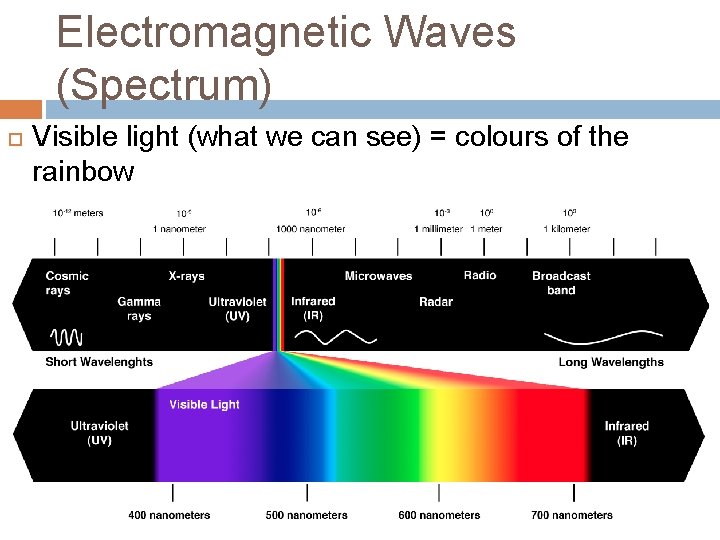
Electromagnetic Waves (Spectrum) Visible light (what we can see) = colours of the rainbow Human eye responds to wavelengths from ~ 390700 nm
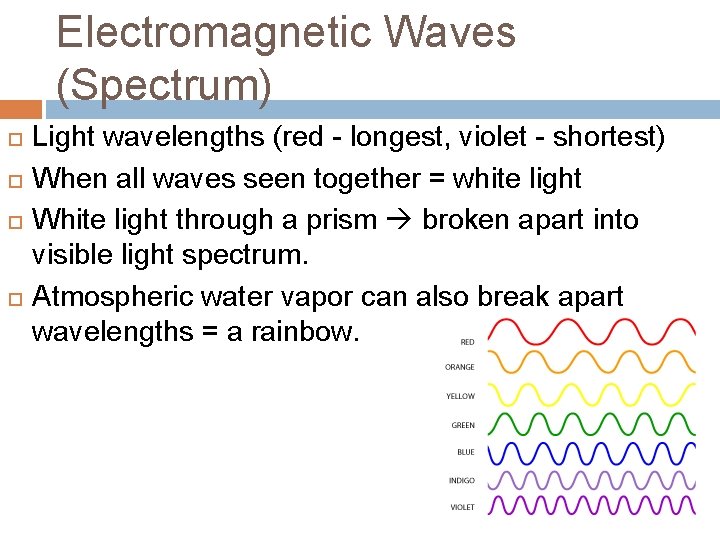
Electromagnetic Waves (Spectrum) Light wavelengths (red - longest, violet - shortest) When all waves seen together = white light White light through a prism broken apart into visible light spectrum. Atmospheric water vapor can also break apart wavelengths = a rainbow.
Colour Blindness The inability to distinguish the differences between certain colours. Genetic condition resulting from an absence of colour-sensitive pigment in the cones of the retina.
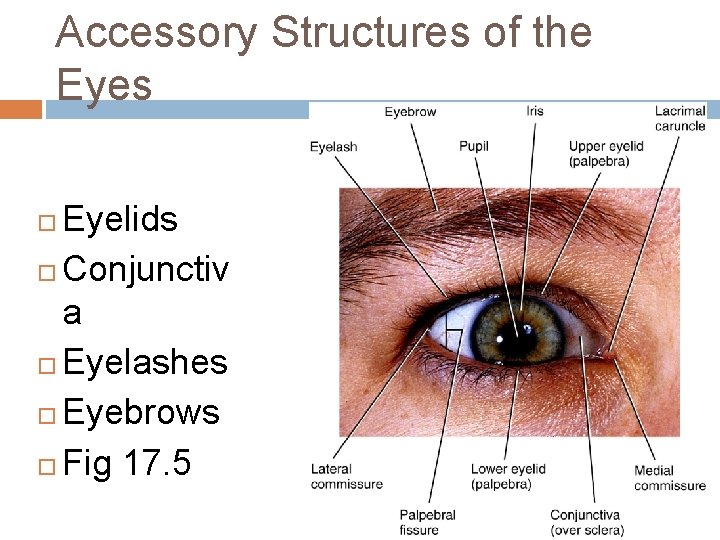
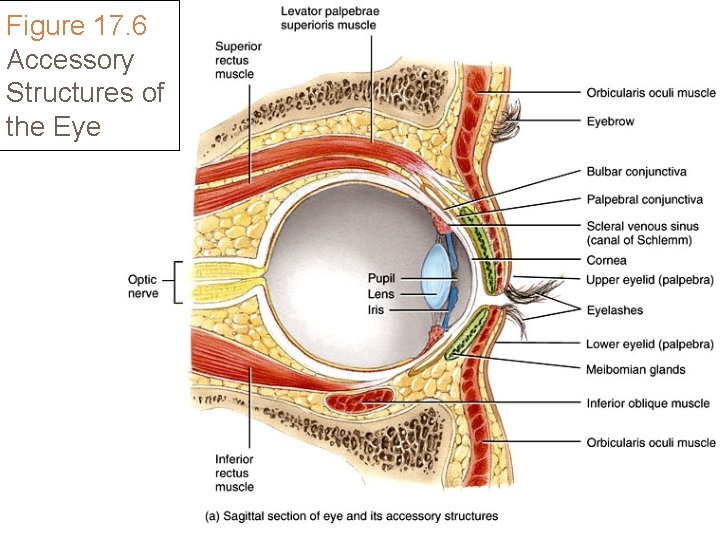
Accessory Structures of the Eyes Eyelids Conjunctiv a Eyelashes Eyebrows Fig 17. 5
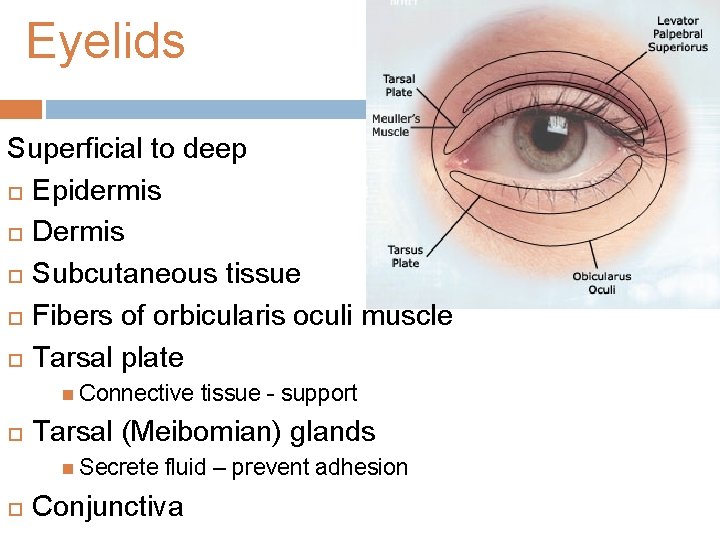
Eyelids Superficial to deep Epidermis Dermis Subcutaneous tissue Fibers of orbicularis oculi muscle Tarsal plate Connective Tarsal (Meibomian) glands Secrete tissue - support fluid – prevent adhesion Conjunctiva
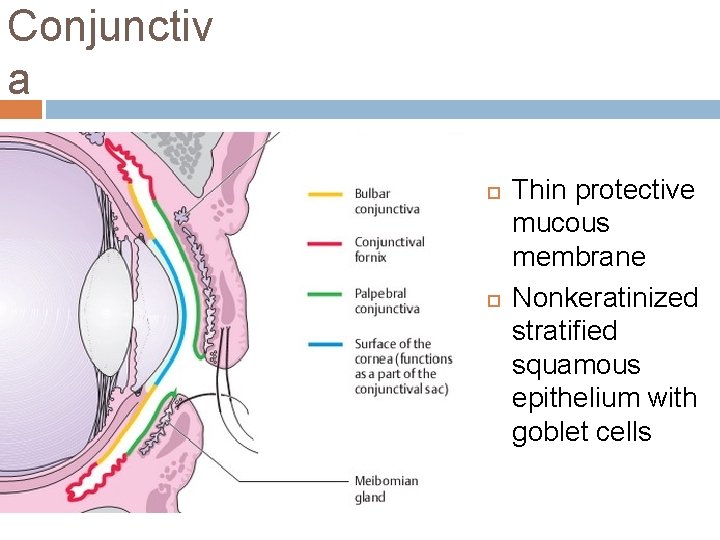
Conjunctiv a Thin protective mucous membrane Nonkeratinized stratified squamous epithelium with goblet cells
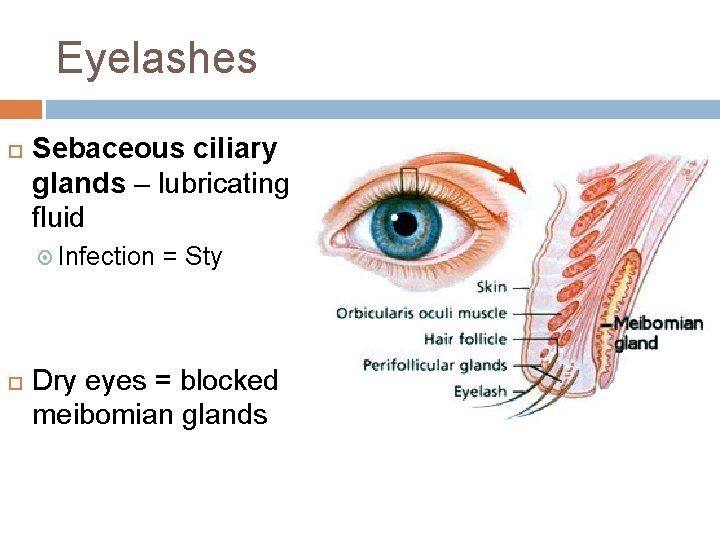
Eyelashes Sebaceous ciliary glands – lubricating fluid Infection = Sty Dry eyes = blocked meibomian glands
Figure 17. 6 Accessory Structures of the Eye
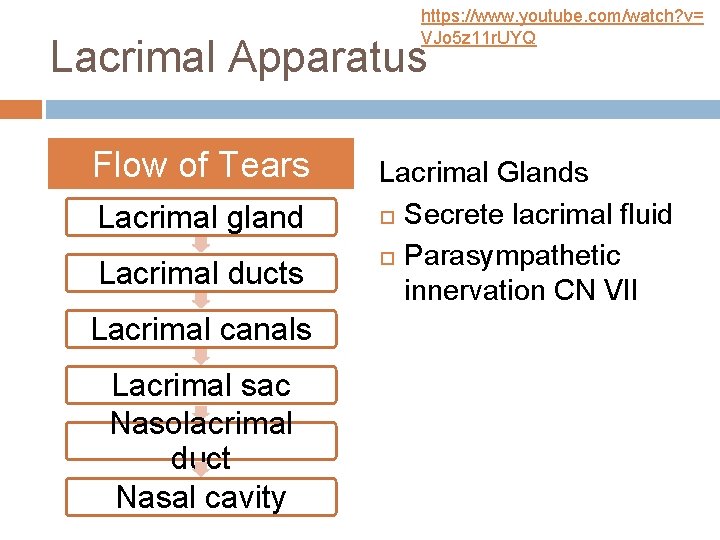
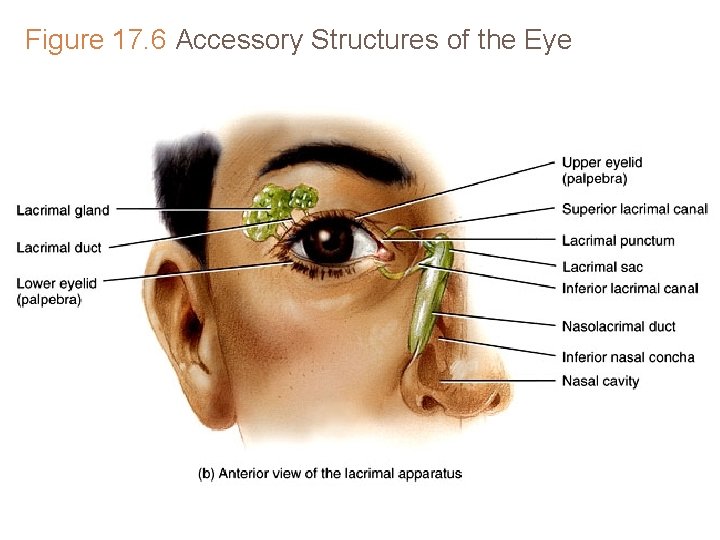
https: //www. youtube. com/watch? v= VJo 5 z 11 r. UYQ Lacrimal Apparatus Flow of Tears Lacrimal gland Lacrimal ducts Lacrimal canals Lacrimal sac Nasolacrimal duct Nasal cavity Lacrimal Glands Secrete lacrimal fluid Parasympathetic innervation CN VII
Figure 17. 6 Accessory Structures of the Eye
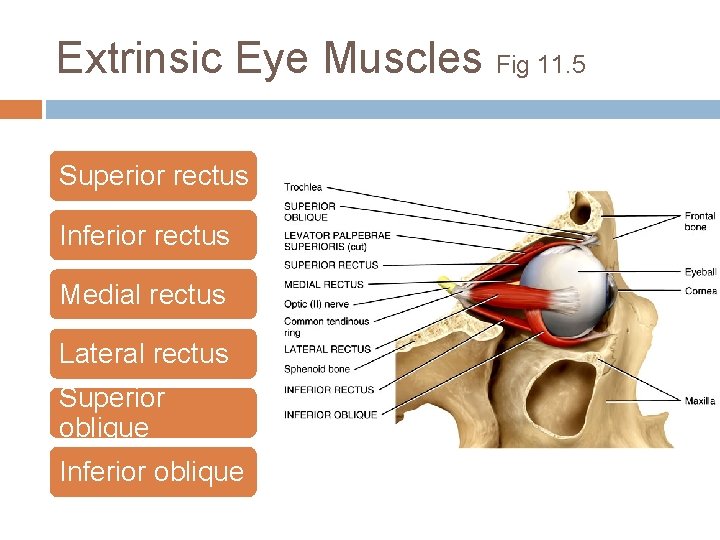
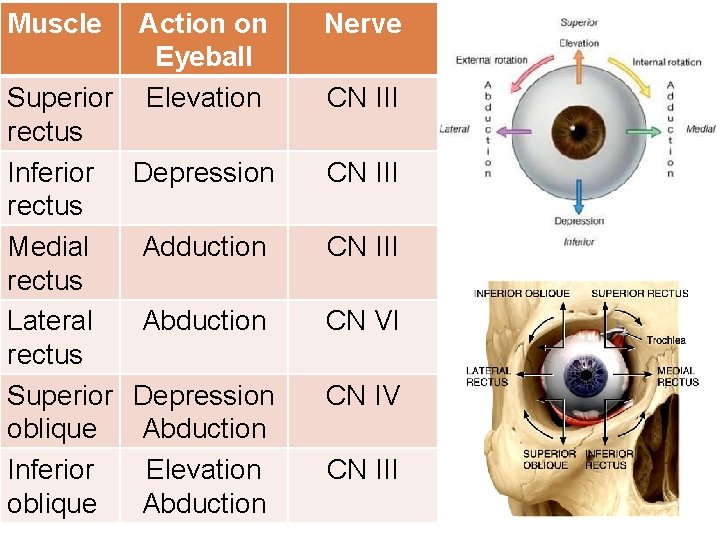
Extrinsic Eye Muscles Fig 11. 5 Superior rectus Inferior rectus Medial rectus Lateral rectus Superior oblique Inferior oblique
Muscle Action on Eyeball Superior Elevation rectus Inferior Depression rectus Medial Adduction rectus Lateral Abduction rectus Superior Depression oblique Abduction Inferior Elevation oblique Abduction Nerve CN III CN VI CN IV CN III
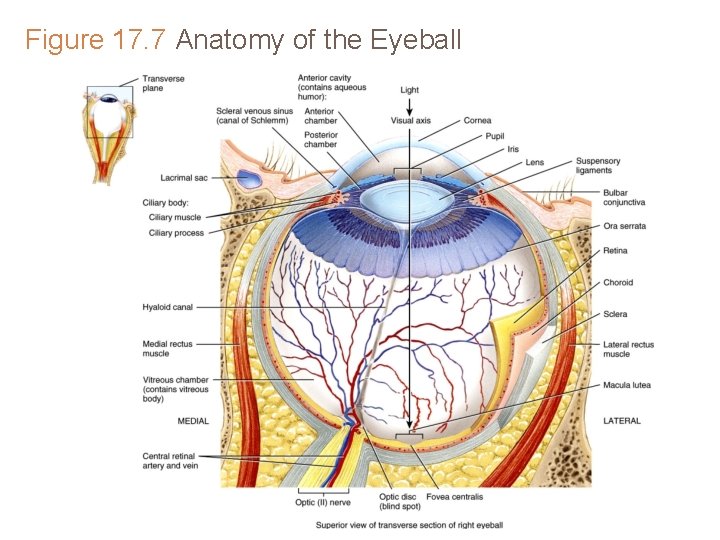
Anatomy of the Eyeball Fibrous tunic Vascular tunic Nervous tunic - Retina
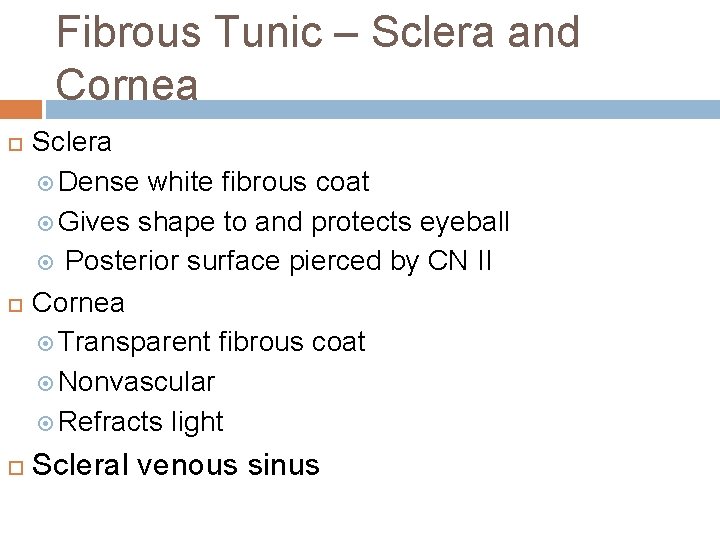
Fibrous Tunic – Sclera and Cornea Sclera Dense white fibrous coat Gives shape to and protects eyeball Posterior surface pierced by CN II Cornea Transparent fibrous coat Nonvascular Refracts light Scleral venous sinus
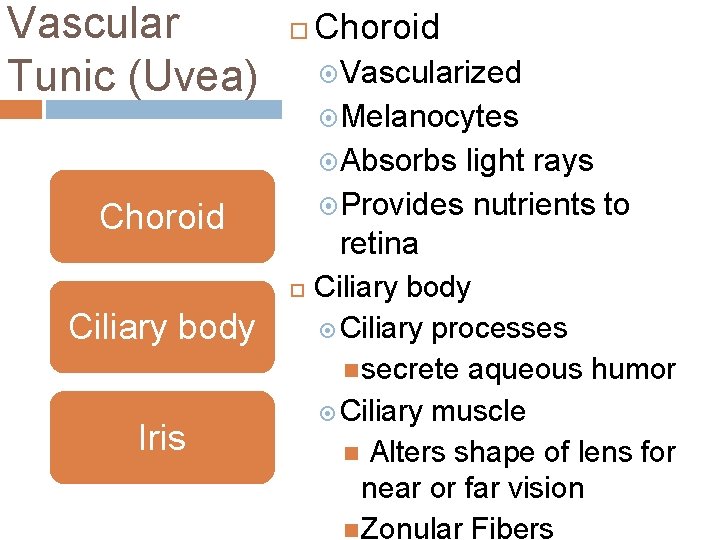
Vascular Tunic (Uvea) Choroid Vascularized Melanocytes Absorbs light rays Provides nutrients to retina Choroid Ciliary body Iris Ciliary body Ciliary processes secrete aqueous humor Ciliary muscle Alters shape of lens for near or far vision Zonular Fibers
Vascular Tunic Iris (rainbow) Circular and radial smooth muscle fibers Flattened Regulates donut amount of light entering pupil Iris Melanocytes Amount of melanin determines eye colour
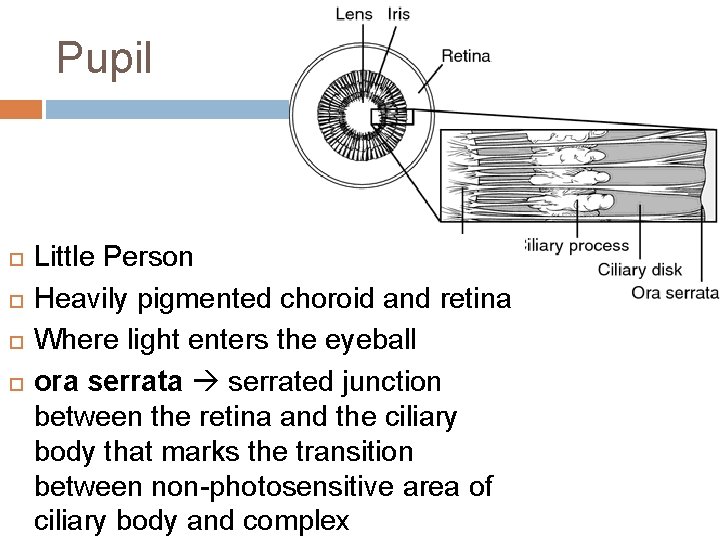
Pupil Little Person Heavily pigmented choroid and retina Where light enters the eyeball ora serrata serrated junction between the retina and the ciliary body that marks the transition between non-photosensitive area of ciliary body and complex
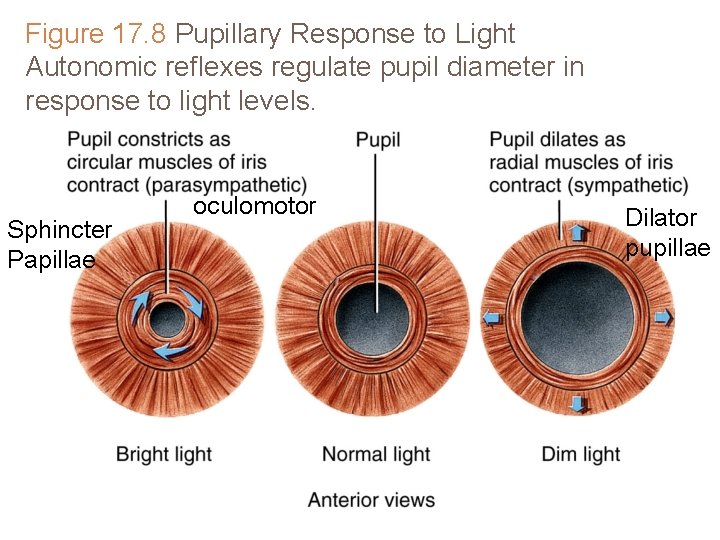
Figure 17. 8 Pupillary Response to Light Autonomic reflexes regulate pupil diameter in response to light levels. Sphincter Papillae oculomotor Dilator pupillae
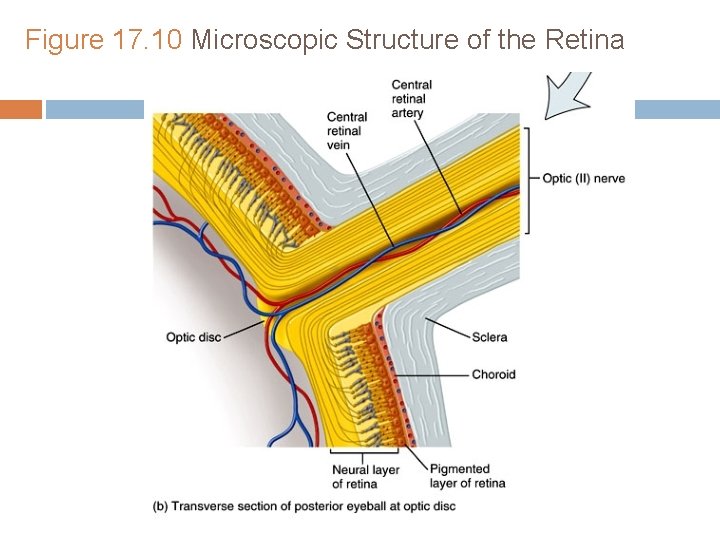
Retina (Nervous Tunic) 3 rd, inner coat Lines posterior eyeball Beginning of visual pathway Pathological viewing Optic disk Where CN II exits eye Central retinal a. and v. Bundled with optic nerve Branch across retina
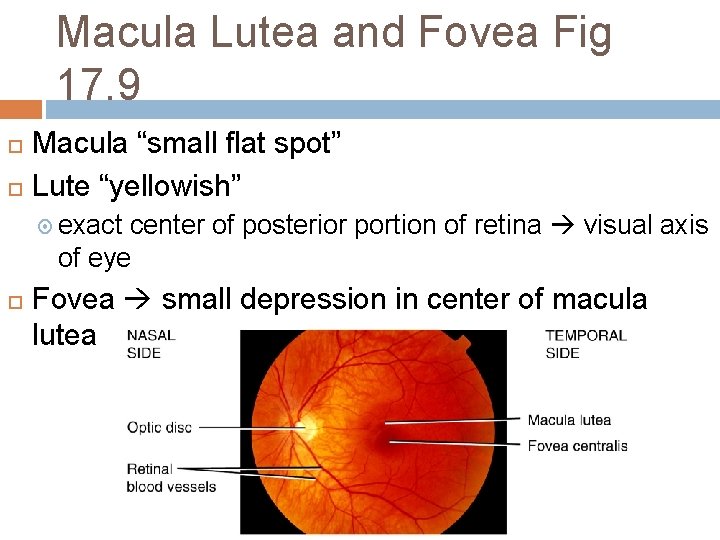
Macula Lutea and Fovea Fig 17. 9 Macula “small flat spot” Lute “yellowish” exact center of posterior portion of retina visual axis of eye Fovea small depression in center of macula lutea
Figure 17. 7 Anatomy of the Eyeball
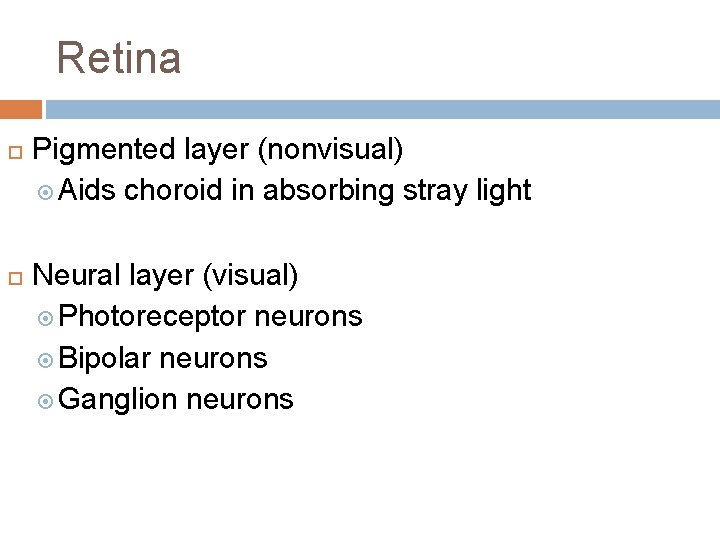
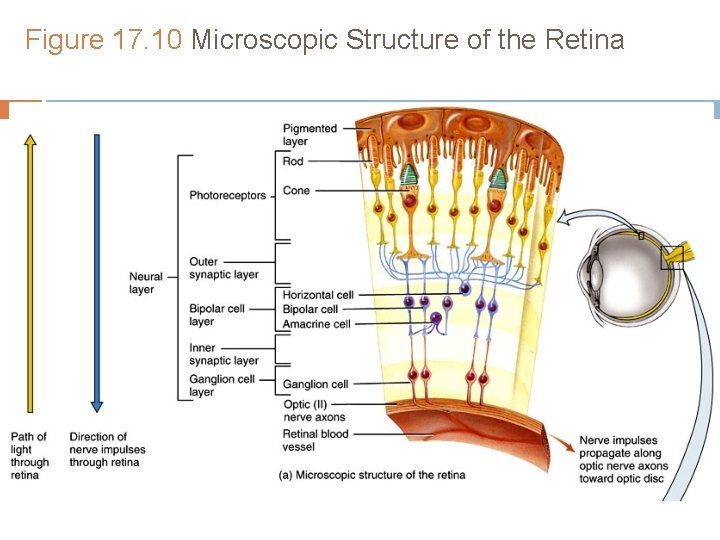
Retina Pigmented layer (nonvisual) Aids choroid in absorbing stray light Neural layer (visual) Photoreceptor neurons Bipolar neurons Ganglion neurons
Figure 17. 10 Microscopic Structure of the Retina
Figure 17. 10 Microscopic Structure of the Retina
Photoreceptor Neurons Rods Black-and-white vision in dim light Allow us to see shades of gray Permit us to see shapes and movement Cones Specialized for color vision and sharpness of vision in bright light
Photoreceptor Neurons Rods Absent from fovea Increase in density towards periphery More sensitive than cone vision You can see faint objects better if you gaze slightly to one side. Cones Most densely concentrated in central fovea
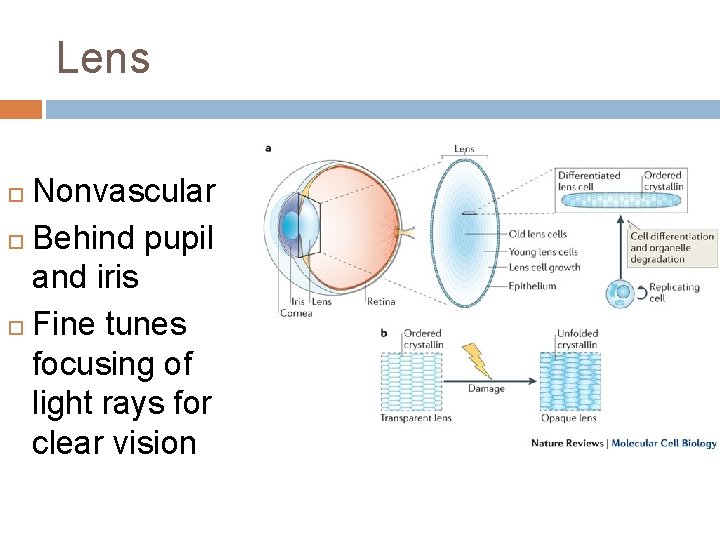
Lens Nonvascular Behind pupil and iris Fine tunes focusing of light rays for clear vision
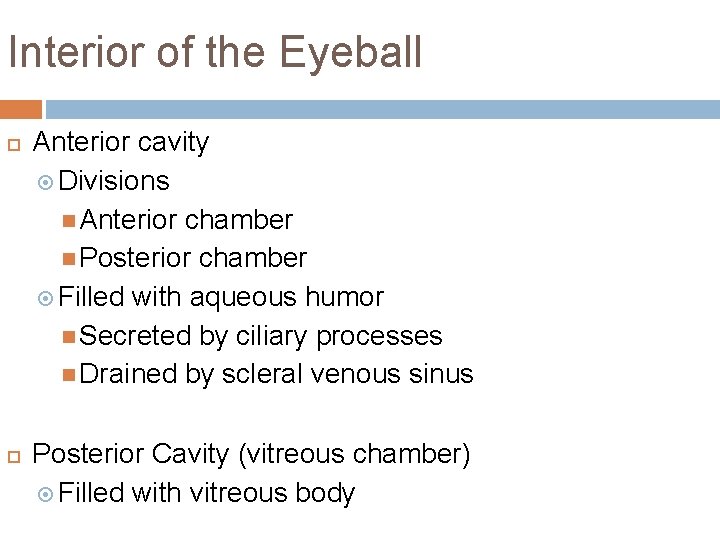
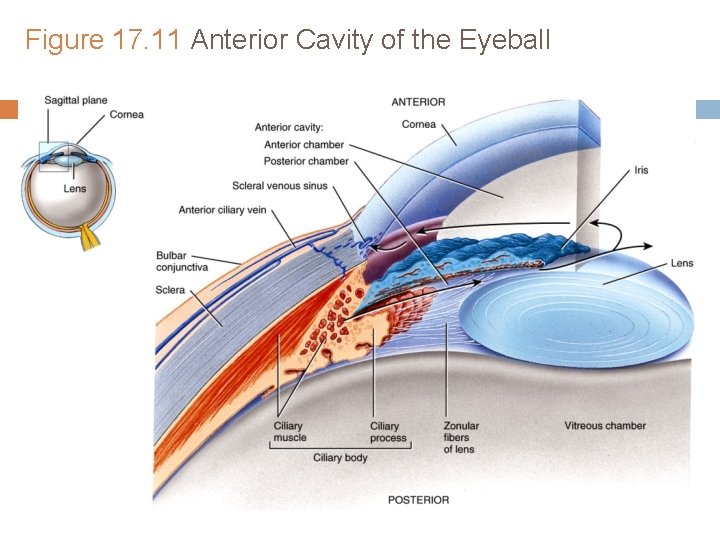
Interior of the Eyeball Anterior cavity Divisions Anterior chamber Posterior chamber Filled with aqueous humor Secreted by ciliary processes Drained by scleral venous sinus Posterior Cavity (vitreous chamber) Filled with vitreous body
Figure 17. 11 Anterior Cavity of the Eyeball
Aqueous Humor Transparent, gelatinous fluid (similar to plasma) Should contain a low concentration of protein
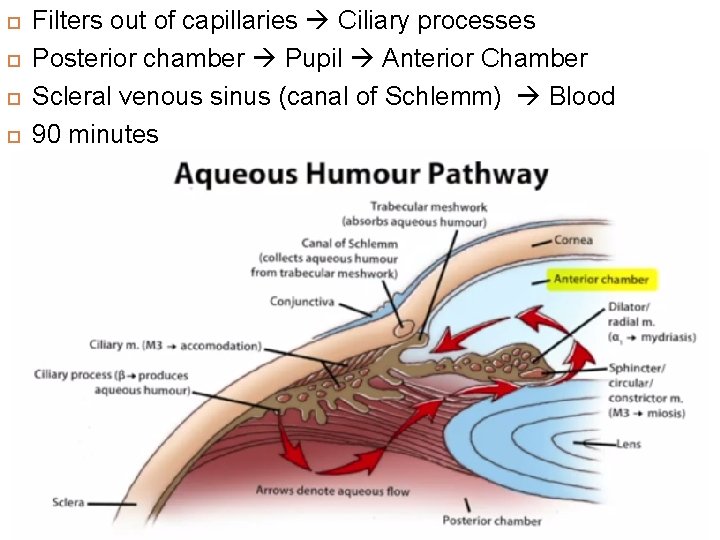
Filters out of capillaries Ciliary processes Posterior chamber Pupil Anterior Chamber Scleral venous sinus (canal of Schlemm) Blood 90 minutes
Intraocular Pressure Aqueous humor (along with vitreous body) Maintains shape of eyeball Forms clear images Normally 15 mm Hg
Vitreous Body Vitreous (posterior) chamber Between lens and retina Transparent gel (4/5 of eye) Holds retina flush against choroid Even surface = clear images Not constantly replaced Phagocytic cells to clear debris
Disorders of the Vitreous Body Flashes Floaters https: //www. youtube. com/watch? v=Y 6 e_m 9 iq-4 Q
Image Formation Refraction Accommodation Pupillary restriction Convergence
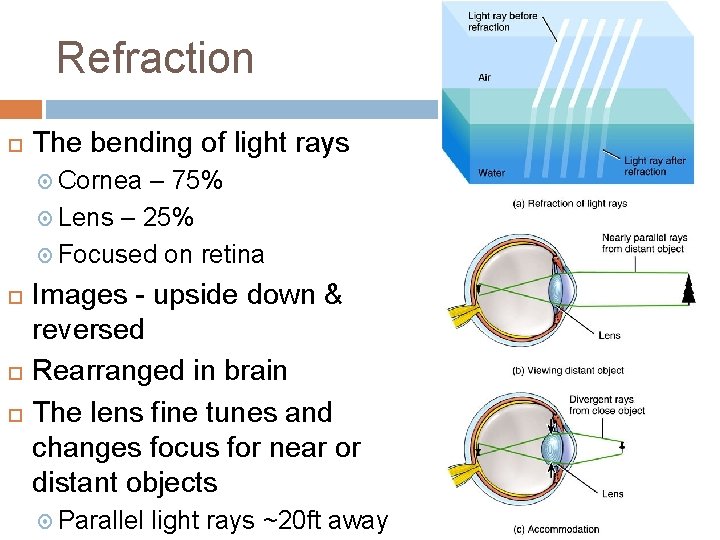
Refraction The bending of light rays Cornea – 75% Lens – 25% Focused on retina Images - upside down & reversed Rearranged in brain The lens fine tunes and changes focus for near or distant objects Parallel light rays ~20 ft away
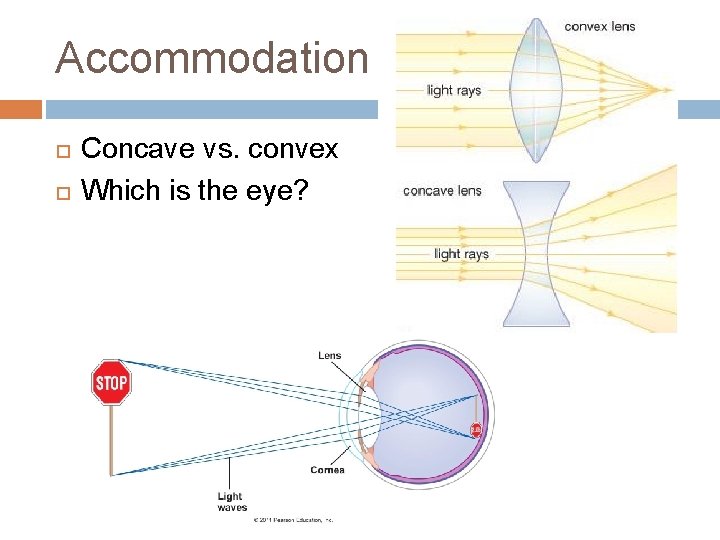
Accommodation Concave vs. convex Which is the eye?
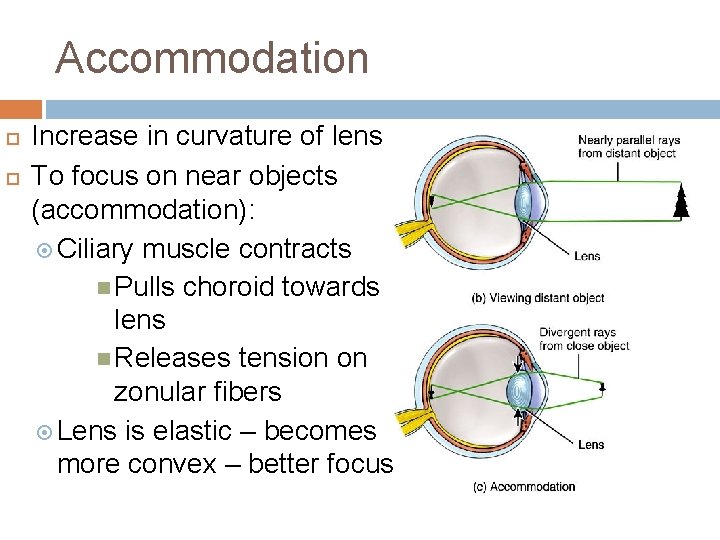
Accommodation Increase in curvature of lens To focus on near objects (accommodation): Ciliary muscle contracts Pulls choroid towards lens Releases tension on zonular fibers Lens is elastic – becomes more convex – better focus
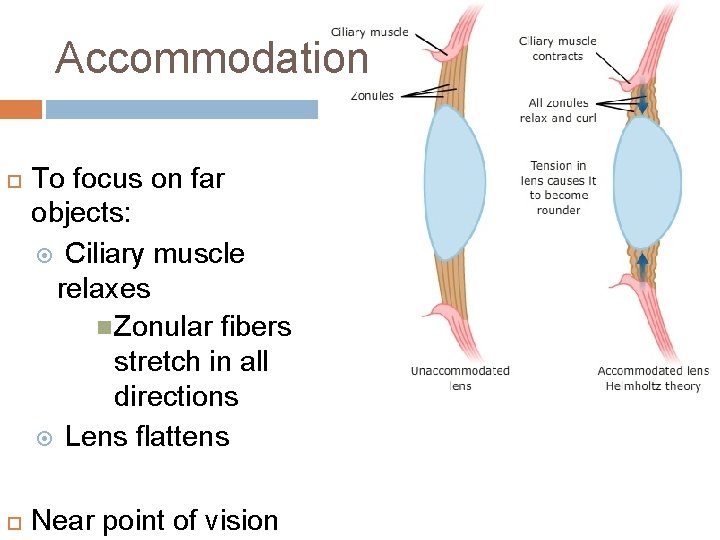
Accommodation To focus on far objects: Ciliary muscle relaxes Zonular fibers stretch in all directions Lens flattens Near point of vision
Constriction of the Pupil Occurs simultaneously with accommodation Prevents light rays from entering eye through periphery of lens Clearer image Convergence Eyeballs move medially so they are both directed toward an object being viewed
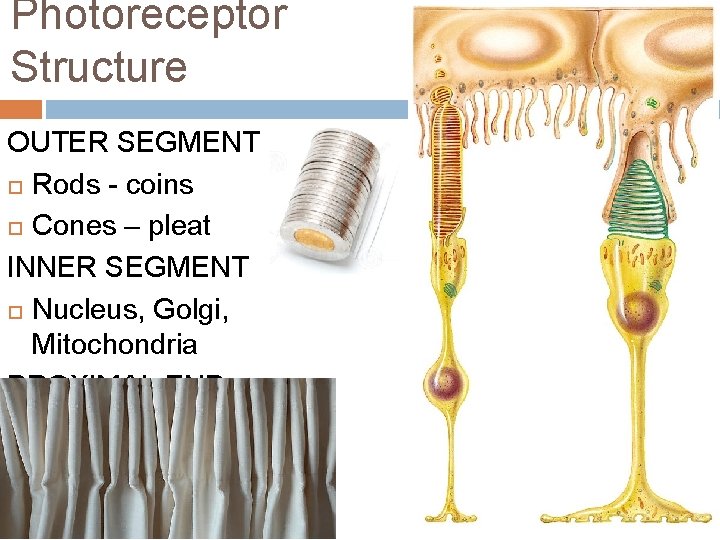
Photoreceptor Structure OUTER SEGMENT Rods - coins Cones – pleat INNER SEGMENT Nucleus, Golgi, Mitochondria PROXIMAL END
Photopigments Coloured proteins Change shape when they absorb light. Composed of: Opsin (4 types) Retinal Types: Rhodopsin in rods 3 others in cones
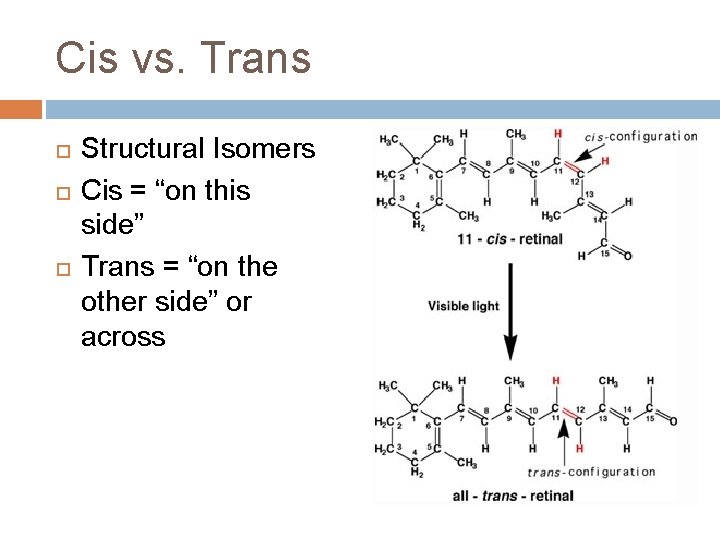
Cis vs. Trans Structural Isomers Cis = “on this side” Trans = “on the other side” or across
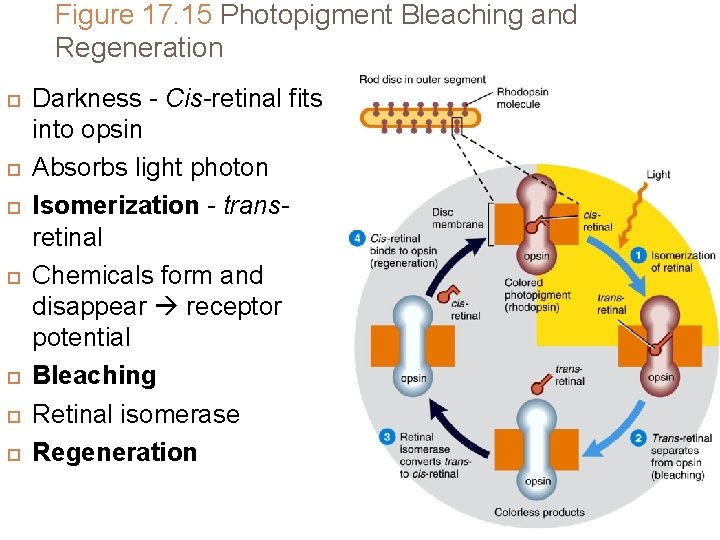
Figure 17. 15 Photopigment Bleaching and Regeneration Darkness - Cis-retinal fits into opsin Absorbs light photon Isomerization - transretinal Chemicals form and disappear receptor potential Bleaching Retinal isomerase Regeneration
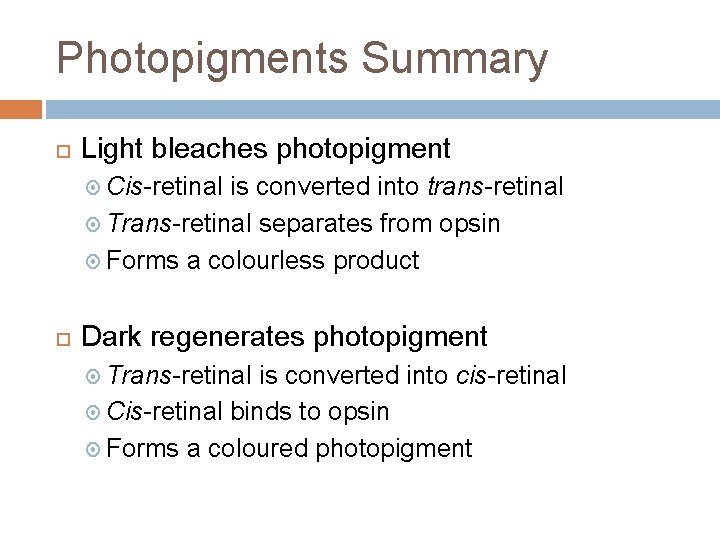
Photopigments Summary Light bleaches photopigment Cis-retinal is converted into trans-retinal Trans-retinal separates from opsin Forms a colourless product Dark regenerates photopigment Trans-retinal is converted into cis-retinal Cis-retinal binds to opsin Forms a coloured photopigment
Light sensitivity Visual system adjusts in sec from dark to light decreases sensitivity From light to dark sensitivity increases slowly (minutes) Increase light – more photopigments bleached Daylight – regeneration of rhodopsin cannot keep up with bleaching RODS barely involved in daylight vision Cones regenerate fast enough that cis form always present If light is abruptly taken away – sensitivity increases
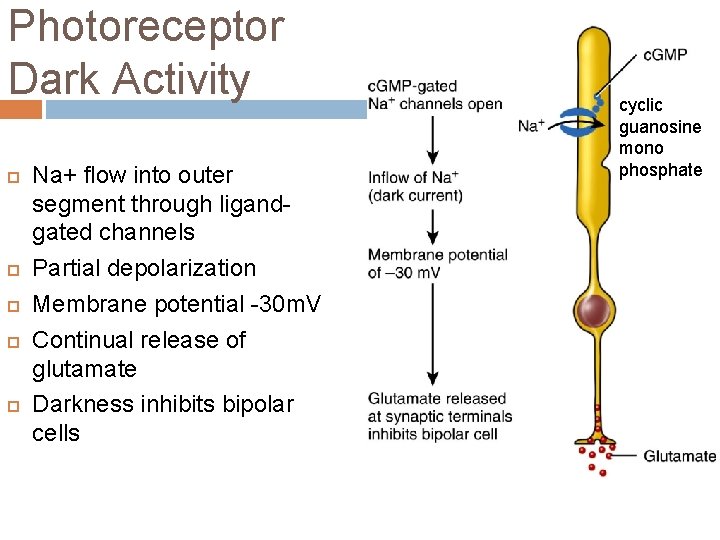
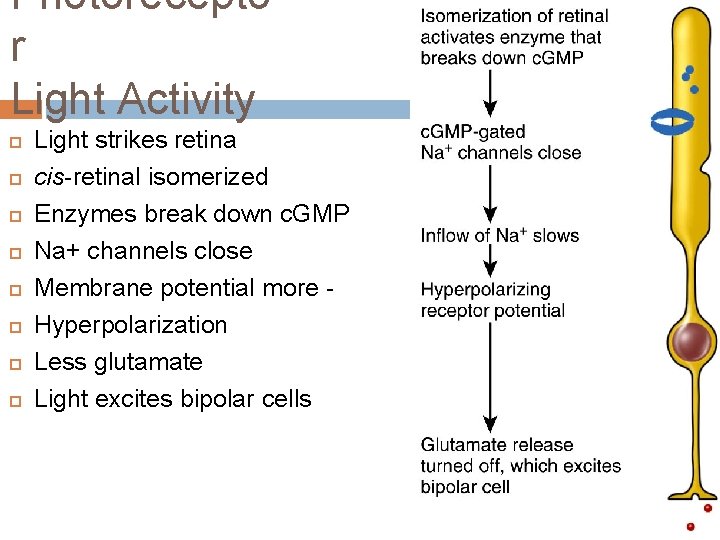
Photoreceptor Dark Activity Na+ flow into outer segment through ligandgated channels Partial depolarization Membrane potential -30 m. V Continual release of glutamate Darkness inhibits bipolar cells cyclic guanosine mono phosphate
Photorecepto r Light Activity Light strikes retina cis-retinal isomerized Enzymes break down c. GMP Na+ channels close Membrane potential more Hyperpolarization Less glutamate Light excites bipolar cells
Photoreceptors do not signal colour, only the presence of light in the visual field. Photoreceptors respond to the wavelength and intensity of light Red light at one intensity and green light at another intensity could elicit the same response. So to actually determine colour, the visual system compares responses across many photoreceptors (primarily cones) to determine what colour is actually being seen. To determine intensity, the visual system pays