
PART 5 A FETAL DEVELOPMENT Neurulation Organ Formation
- Slides: 21
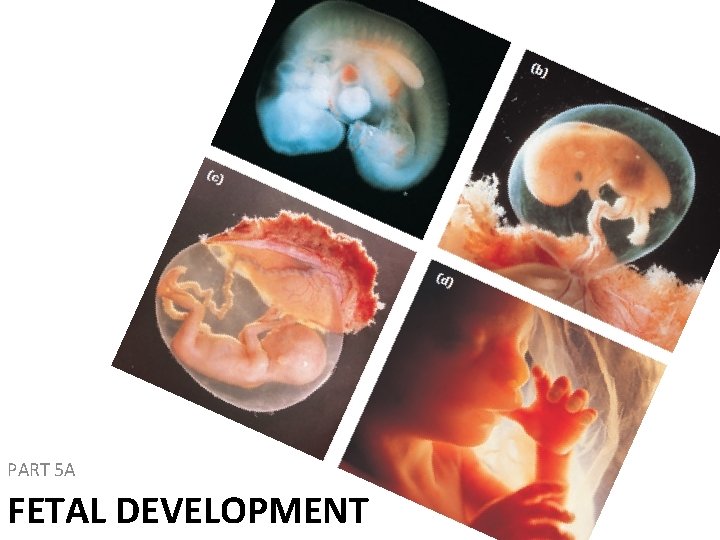
PART 5 A FETAL DEVELOPMENT
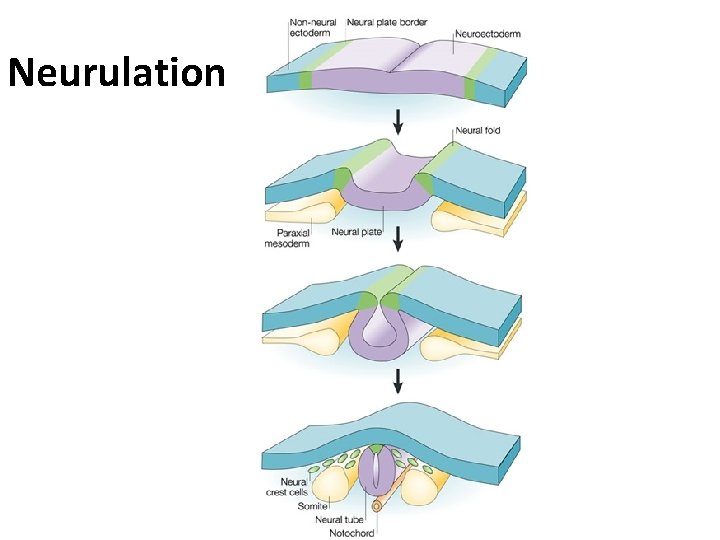
Neurulation & Organ Formation • Between 3 rd – 8 th weeks Embryonic development (morphogenesis) occurs which builds the base structures of the body systems. • Neurulation marks the beginning of organ formation • Neurulation is the process of forming the neural tube, which develops into the brain and spinal cord
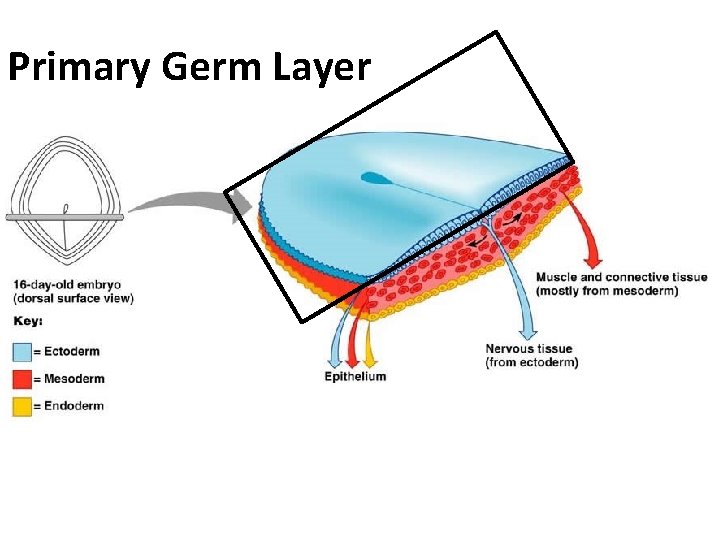
Primary Germ Layer
Neurulation 1. Notochord forms from mesoderm 2. Neural tube starts as a plate of the ectoderm above the notochord 3. Edges of plate fold inwards and pinches off from the ectoderm (brain/spinal cord) 4. Cells in the above the neural tube develop into organs, bones and muscle
Neurulation
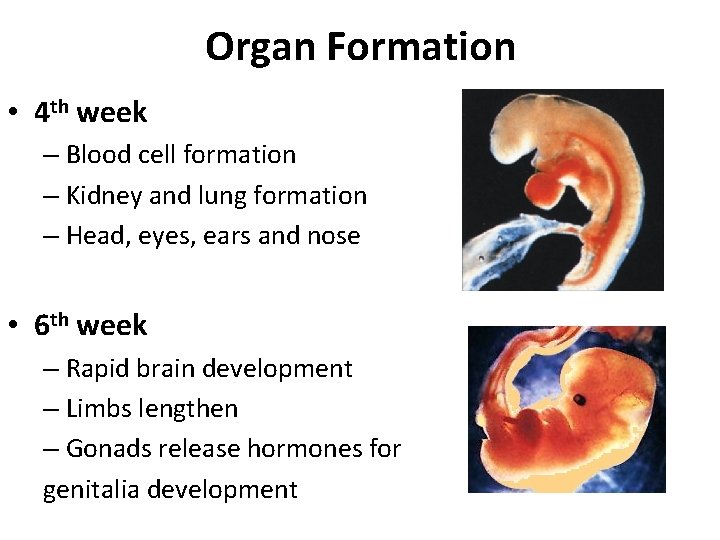
Organ Formation • 4 th week – Blood cell formation – Kidney and lung formation – Head, eyes, ears and nose • 6 th week – Rapid brain development – Limbs lengthen – Gonads release hormones for genitalia development
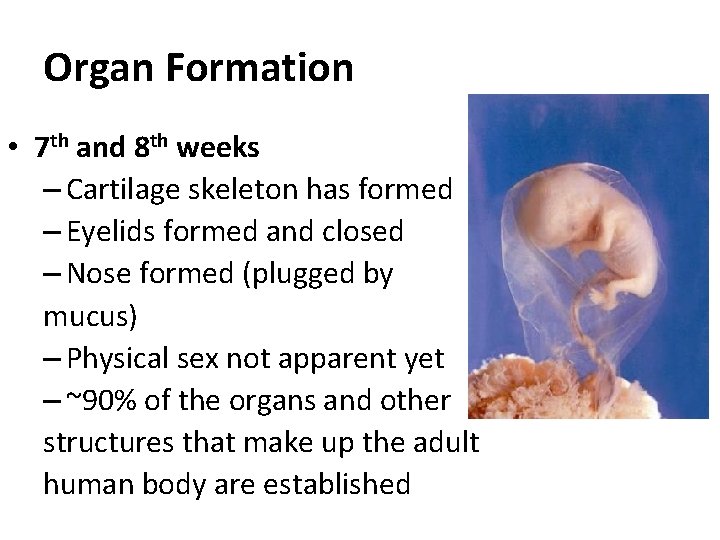
Organ Formation • 7 th and 8 th weeks – Cartilage skeleton has formed – Eyelids formed and closed – Nose formed (plugged by mucus) – Physical sex not apparent yet – ~90% of the organs and other structures that make up the adult human body are established
Fetal Development • Starts during the 9 th week and continues until birth • Follows embryonic development (building of structures) • Fetal development = growth and refinement of existing structures
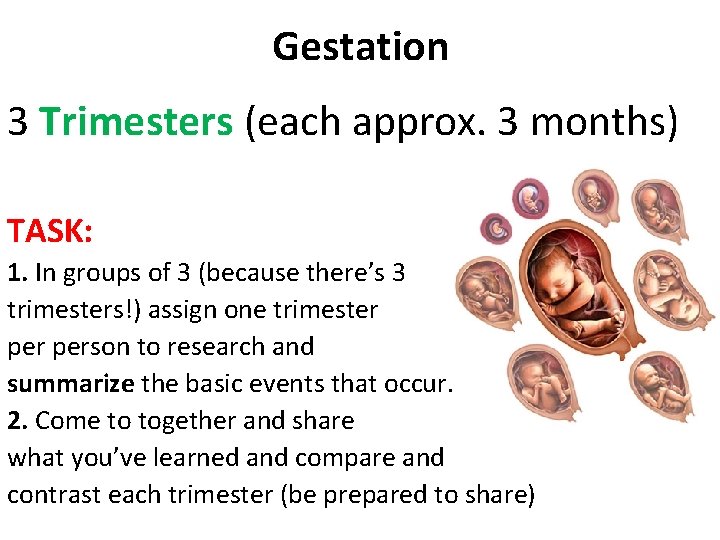
Gestation 3 Trimesters (each approx. 3 months) TASK: 1. In groups of 3 (because there’s 3 trimesters!) assign one trimester person to research and summarize the basic events that occur. 2. Come to together and share what you’ve learned and compare and contrast each trimester (be prepared to share)
First Trimester Research Notes:
Second Trimester Research Notes:
Third Trimester Research Notes:
Compare & Contrast Trimester 1 Trimester 2 Trimester 3
Teratogens & Development • Teratogen - Any agent that causes a structural abnormality due to exposure during pregnancy • Especially dangerous during embryonic development (building of structures & neurulation) • Examples: cigarettes, alcohol, antibiotics, acne medications, vitamins, anti-cancer drugs, etc.
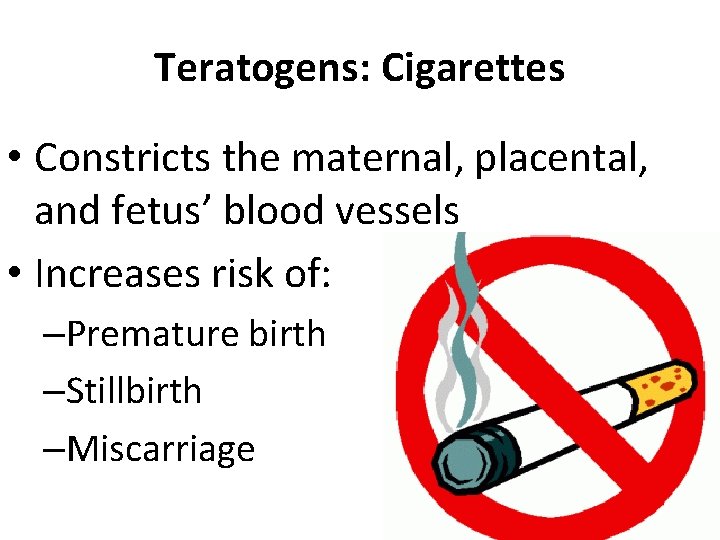
Teratogens: Cigarettes • Constricts the maternal, placental, and fetus’ blood vessels • Increases risk of: –Premature birth –Stillbirth –Miscarriage
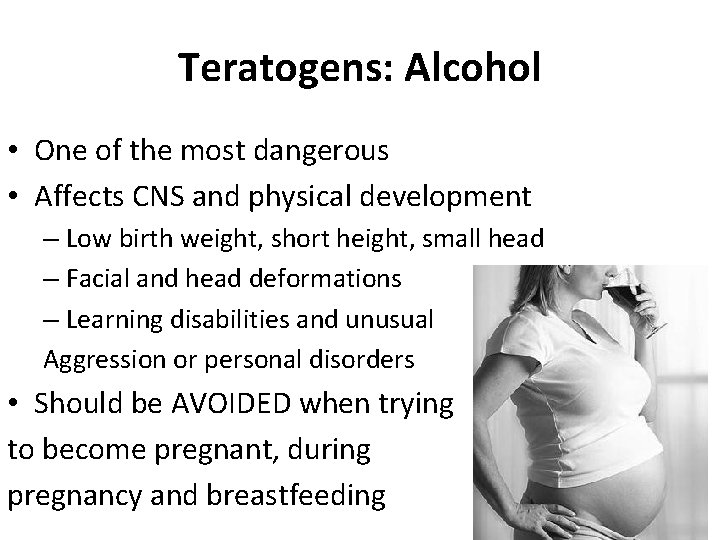
Teratogens: Alcohol • One of the most dangerous • Affects CNS and physical development – Low birth weight, short height, small head – Facial and head deformations – Learning disabilities and unusual Aggression or personal disorders • Should be AVOIDED when trying to become pregnant, during pregnancy and breastfeeding
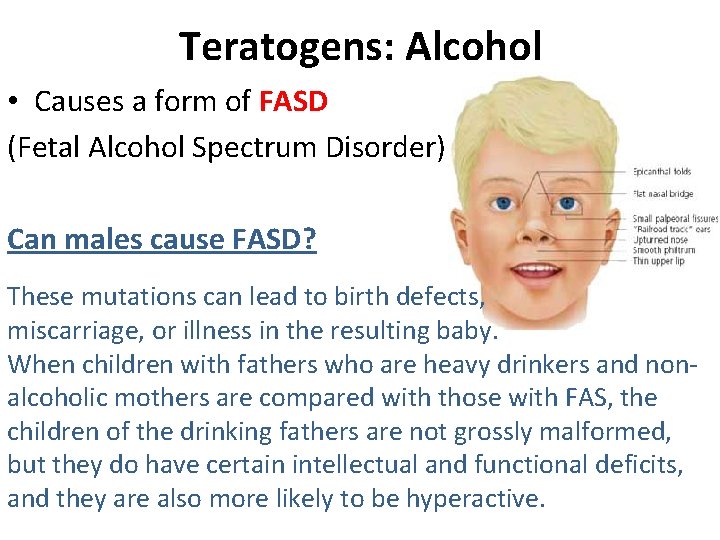
Teratogens: Alcohol • Causes a form of FASD (Fetal Alcohol Spectrum Disorder) Can males cause FASD? These mutations can lead to birth defects, miscarriage, or illness in the resulting baby. When children with fathers who are heavy drinkers and nonalcoholic mothers are compared with those with FAS, the children of the drinking fathers are not grossly malformed, but they do have certain intellectual and functional deficits, and they are also more likely to be hyperactive.
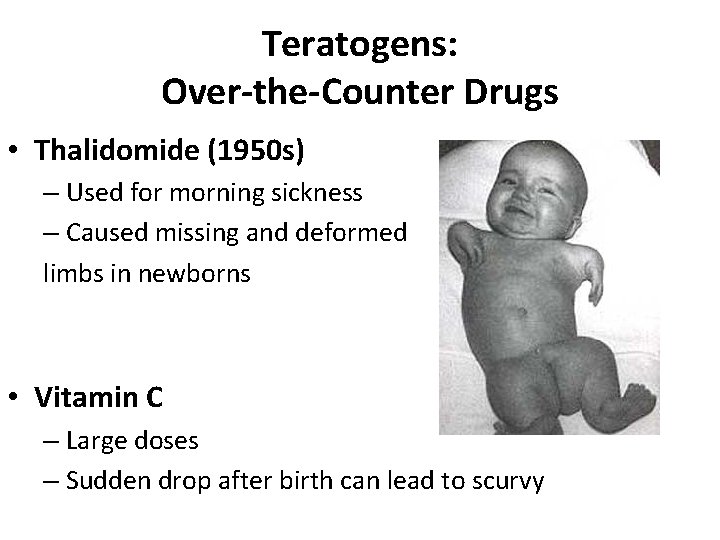
Teratogens: Over-the-Counter Drugs • Thalidomide (1950 s) – Used for morning sickness – Caused missing and deformed limbs in newborns • Vitamin C – Large doses – Sudden drop after birth can lead to scurvy
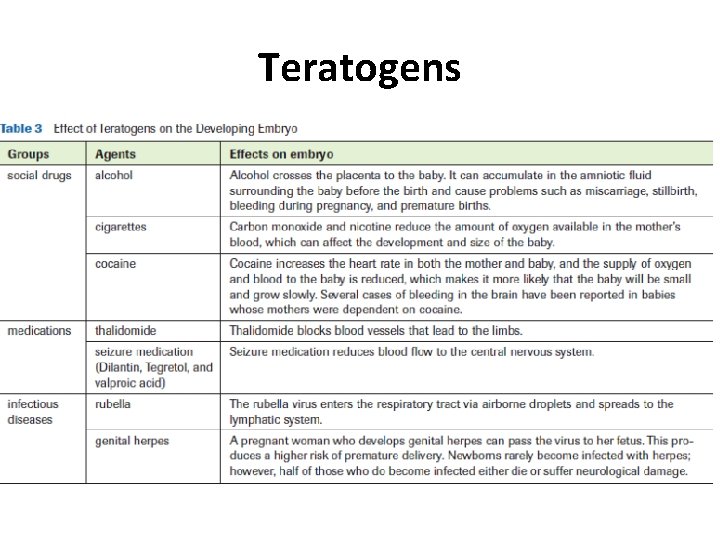
Teratogens
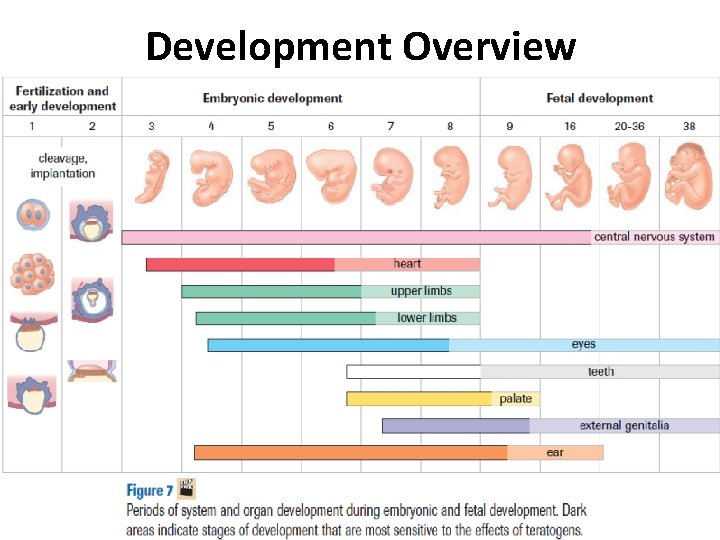
Development Overview
Practice • Pg. 536 Practice #2, 3 • Pg. 538 Read Explore the Issue – FASD – Understand the Issue #1 -3 • Pg. 544 #2