
Part 4 Leading Chapter 8 Foundations of Individual



- Slides: 44
Part 4: Leading Chapter 8 Foundations of Individual and Group Behavior Power. Point Presentation by Charlie Cook Copyright © 2004 Prentice Hall, Inc. All rights reserved.
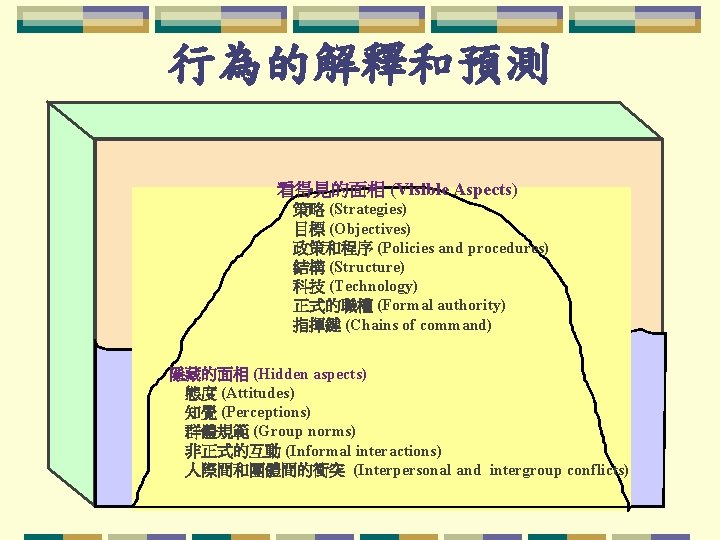
組織行為 Organizational Behavior, OB l The organization as an Iceberg Metaphor
行為的解釋和預測 看得見的面相 (Visible Aspects) 策略 (Strategies) 目標 (Objectives) 政策和程序 (Policies and procedures) 結構 (Structure) 科技 (Technology) 正式的職權 (Formal authority) 指揮鍵 (Chains of command) 隱藏的面相 (Hidden aspects) 態度 (Attitudes) 知覺 (Perceptions) 群體規範 (Group norms) 非正式的互動 (Informal interactions) 人際間和團體間的衝突 (Interpersonal and intergroup conflicts)
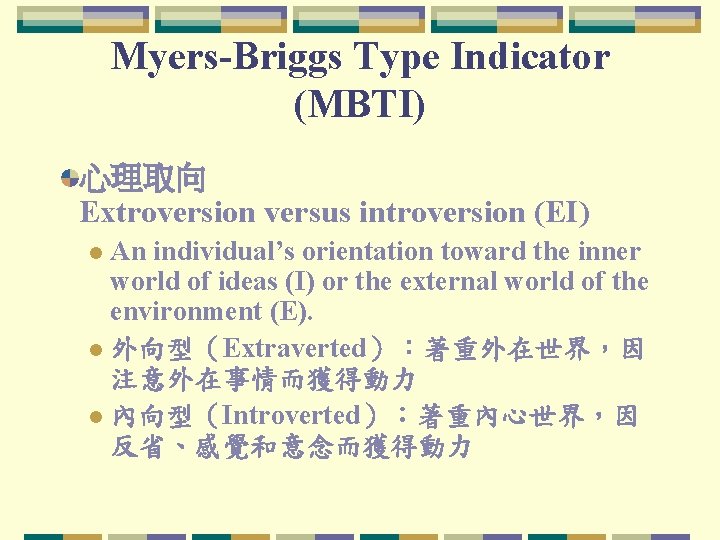
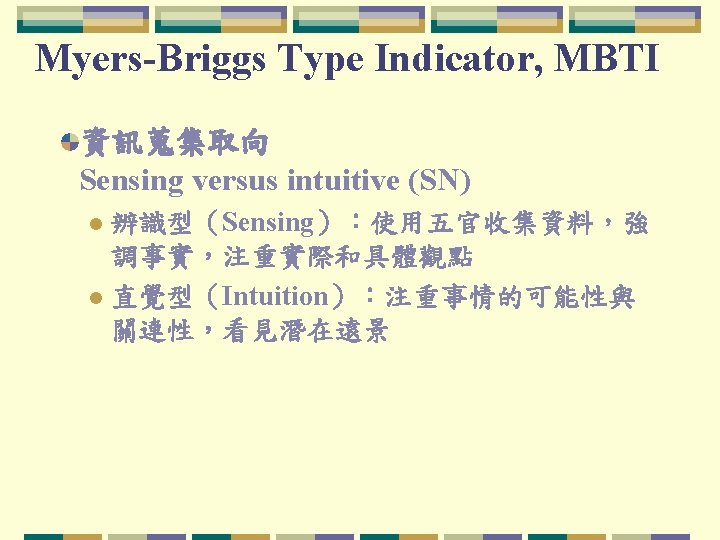
Myers-Briggs Type Indicator (MBTI) 心理取向 Extroversion versus introversion (EI) An individual’s orientation toward the inner world of ideas (I) or the external world of the environment (E). l 外向型(Extraverted):著重外在世界,因 注意外在事情而獲得動力 l 內向型(Introverted):著重內心世界,因 反省、感覺和意念而獲得動力 l
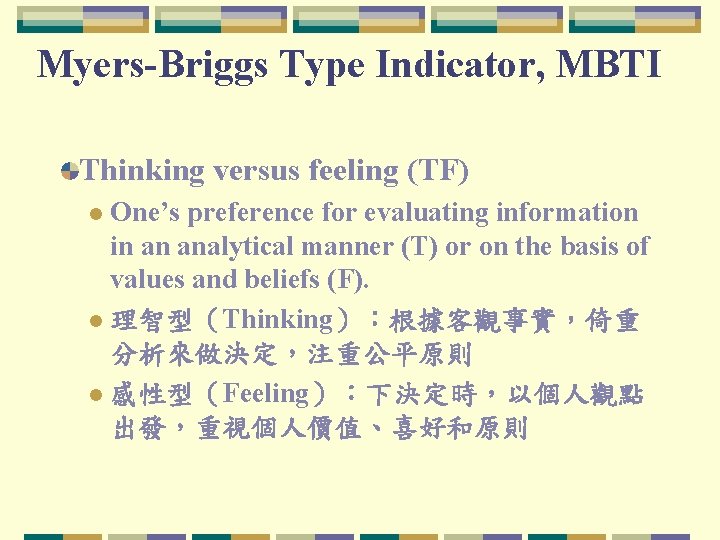
Myers-Briggs Type Indicator, MBTI Thinking versus feeling (TF) One’s preference for evaluating information in an analytical manner (T) or on the basis of values and beliefs (F). l 理智型(Thinking):根據客觀事實,倚重 分析來做決定,注重公平原則 l 感性型(Feeling):下決定時,以個人觀點 出發,重視個人價值、喜好和原則 l
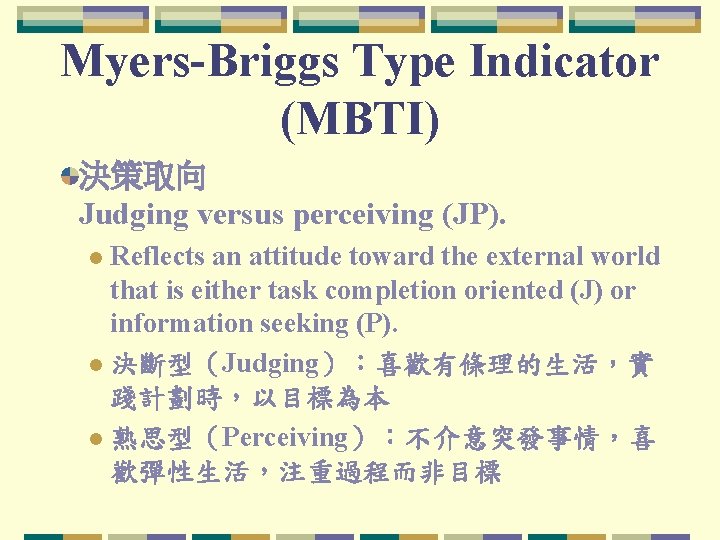
Myers-Briggs Type Indicator (MBTI) 決策取向 Judging versus perceiving (JP). Reflects an attitude toward the external world that is either task completion oriented (J) or information seeking (P). l 決斷型(Judging):喜歡有條理的生活,實 踐計劃時,以目標為本 l 熟思型(Perceiving):不介意突發事情,喜 歡彈性生活,注重過程而非目標 l
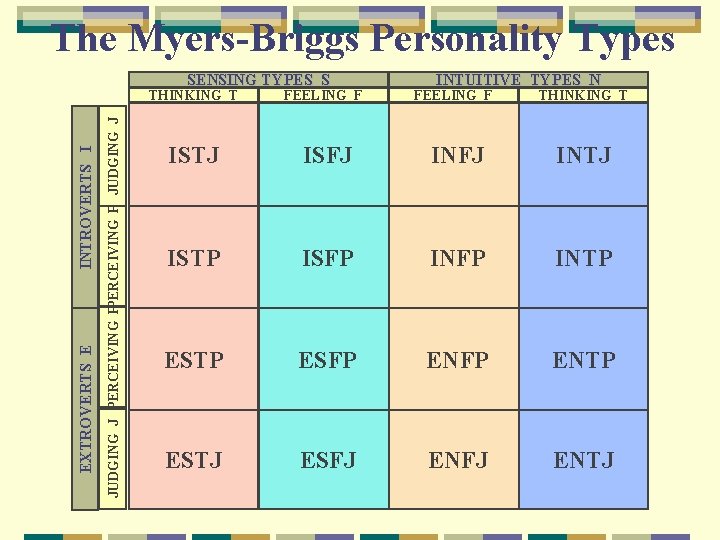
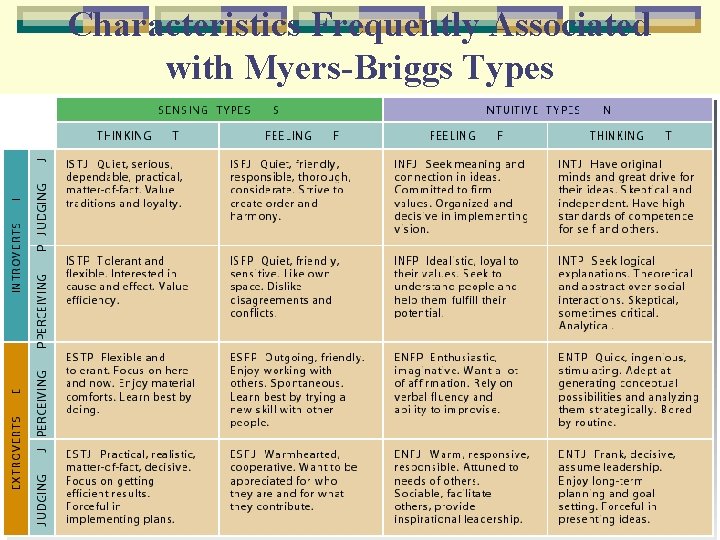
The Myers-Briggs Personality Types JUDGING J PERCEIVING P JUDGING J EXTROVERTS E INTROVERTS I SENSING TYPES S INTUITIVE TYPES N THINKING T FEELING F THINKING T ISTJ ISFJ INTJ ISTP ISFP INTP ESFP ENTP ESTJ ESFJ ENTJ
Characteristics Frequently Associated with Myers-Briggs Types
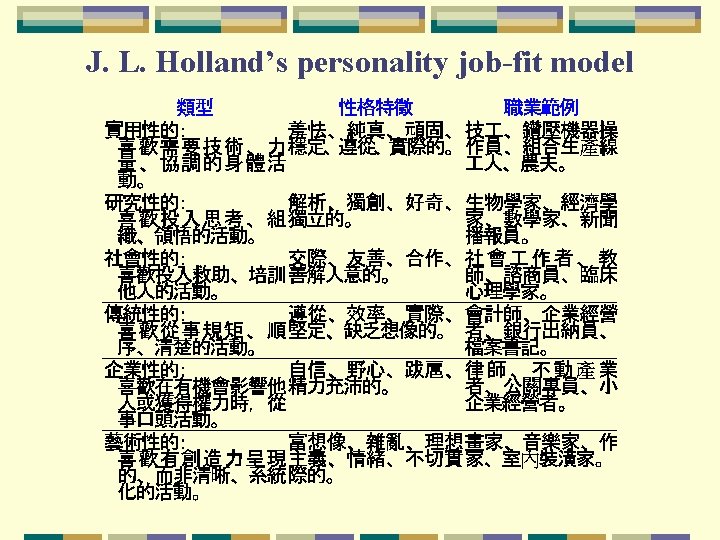
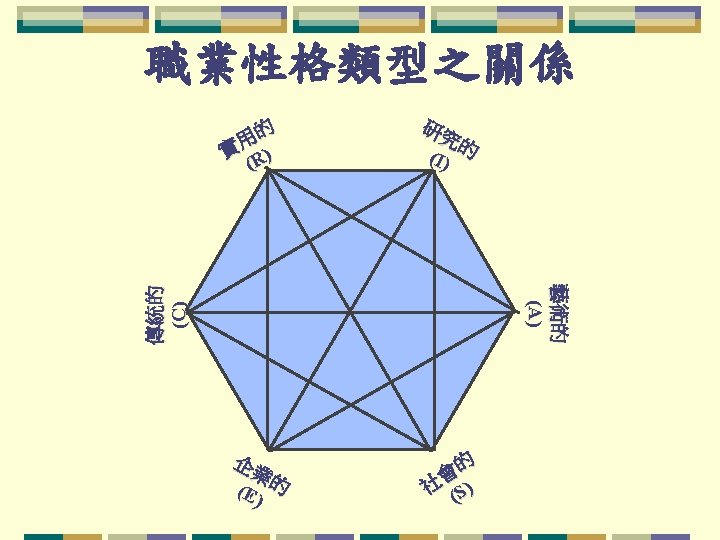
J. L. Holland’s personality job-fit model
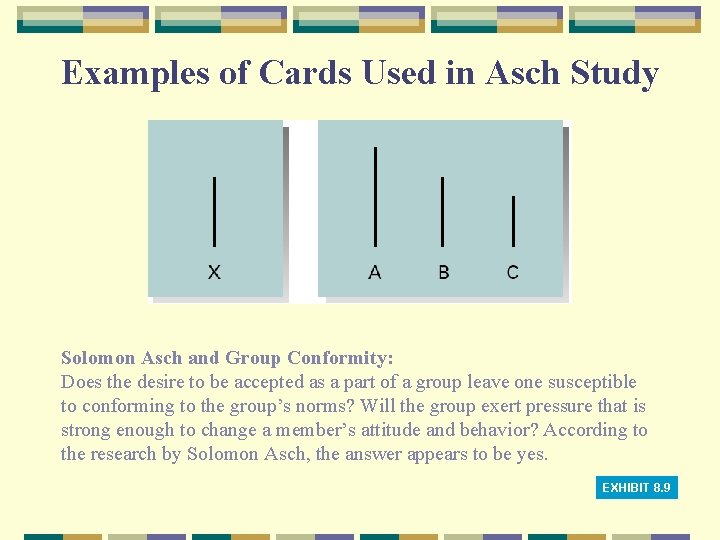
Examples of Cards Used in Asch Study Solomon Asch and Group Conformity: Does the desire to be accepted as a part of a group leave one susceptible to conforming to the group’s norms? Will the group exert pressure that is strong enough to change a member’s attitude and behavior? According to the research by Solomon Asch, the answer appears to be yes. EXHIBIT 8. 9