
Part 4 Leadership Effective Communication The Nature of

- Slides: 23
Part 4: Leadership & Effective Communication
The Nature of Leadership • Many styles of leadership can be effective. • People, influence, and goals. – Leadership is the ability to influence people toward the attainment of goals 2
Servant Leadership • Work exists for the development of the worker • Servant leaders transcend selfinterest to serve others • Servant leaders give away power, ideas, information, recognition, credit, and money 3
Authentic Leadership ü Leaders who know and understand themselves ü Inspire trust and commitment ü Staying true to one’s values and beliefs ü Respect diverse viewpoints 4
Authentic Leadership (cont’) ü Espouse and act with higher order ethical values ü Encourage collaboration ü Help others learn, grow, and develop as leaders 5
Interactive Leadership ü Consistent with Level 5 leadership ü Consensual and collaborative ü Influence derived from relationships 6
Leadership Traits • Early research on leadership focused on traits – Great Man Approach to leadership • Traits are reemerging as a leadership interest • Combine trait research with other leadership ideas • Effective leaders possess varied traits and combine these with their strengths 7
Behavioral Approaches • Research beyond leadership traits • Defined two leadership behaviors: – Task-oriented behavior – People-oriented behavior • Foundation of important leadership studies 8
Michigan Studies – Employee-centered leaders (most effective) • Establish high performance goals • Display supportive behavior – Job-centered leaders (not effective) • Less concerned with goal achievement/human needs • Focus on meeting schedules, cost-management, and efficiency 9
Contingency Approaches How do situations influence leader effectiveness? ü Situational Model of Leadership ü Leadership Model (Fiedler) ü Substitutes for leadership concept 10
Situational Theory of Leadership • Extension of behavioral theories • Focus on characteristics of followers • Seek appropriate leadership behavior • Leadership is based on relationship with followers and readiness level of followers 11
Fiedler’s Contingency Theory • Leader’s style is task oriented or relationship oriented • Goal is to match the leader’s style with organizational situation • Analyze the leader’s style to the favorability of the situation 12
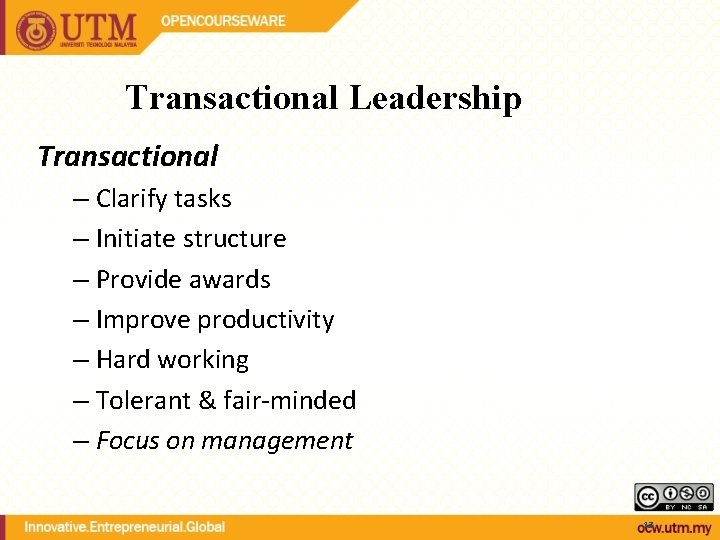
Transactional Leadership Transactional – Clarify tasks – Initiate structure – Provide awards – Improve productivity – Hard working – Tolerant & fair-minded – Focus on management 13
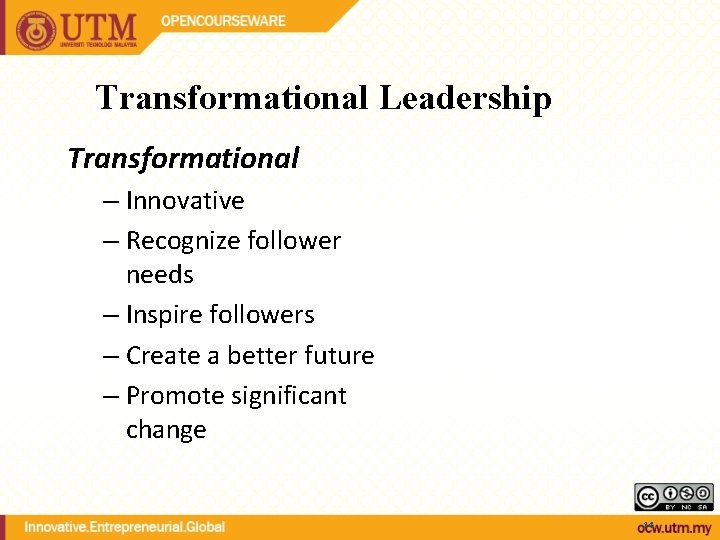
Transformational Leadership Transformational – Innovative – Recognize follower needs – Inspire followers – Create a better future – Promote significant change 14
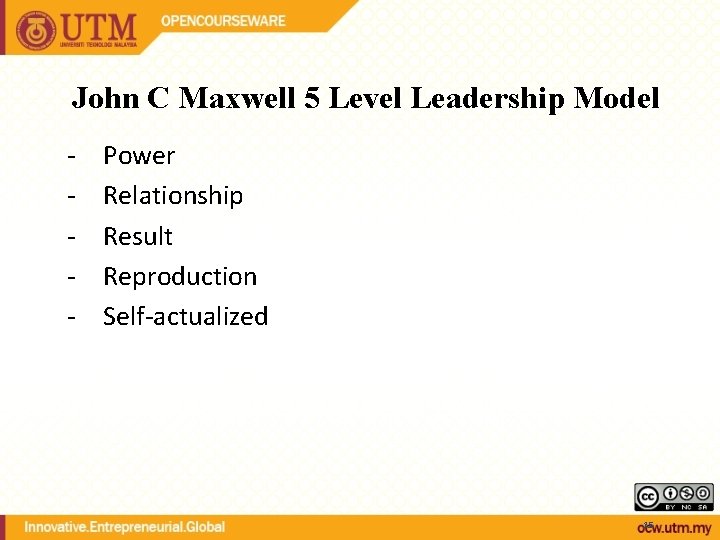
John C Maxwell 5 Level Leadership Model - Power Relationship Result Reproduction Self-actualized 15
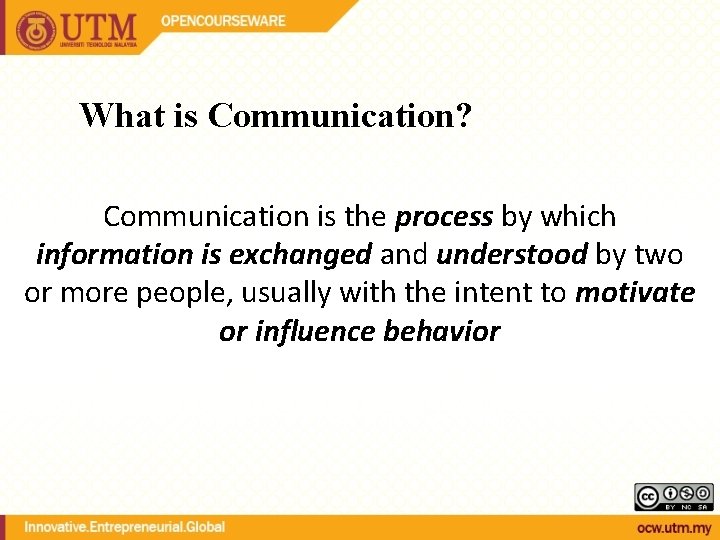
What is Communication? Communication is the process by which information is exchanged and understood by two or more people, usually with the intent to motivate or influence behavior
Communication Channels • Managers must choose appropriate channel to convey messages – Routine versus nonroutine messages • Each communication channel has advantages and disadvantages • Channel richness – the amount of information that can be communicated in an episode
Nonverbal Communication • Message sent through human actions and behavior ü Body language ü Facial expressions ü Gestures ü Touch ü Use of space • Can express enthusiasm, warmth, confidence, arrogance, indifference, and displeasure
Listening The skill of grasping both facts and feelings to interpret a message’s meaning Ø Listening to employees and customers is important Ø Information in organizations flows from the bottom up • Managers today know the importance of feedback Ø Blogs are being used to stay in touch with employees and customers
Organizational Communication • Managers are responsible for establishing and maintaining formal communication • Formal communication channels flow within the chain of command • Communication in organizations: Ø Downward Ø Upward Ø Horizontal 20
Personal Communication Channels • Personal communication may exist with formal channels • Personal communication network is personal networking across organizational boundaries • The grapevine “gossip” can be a valuable tool for managers; it links people across the organization • Written communication is a key skill with the growth of email and collaboration 21
Climate of Trust and Openness • Open communication and dialogue encourage honesty • Enhanced interpersonal skills can also foster openness, honesty, and trust • Using multiple channels increases effectiveness of communication
Thank you 23