
Part 3 Terminology Oxbow Lake A lake that

Part 3
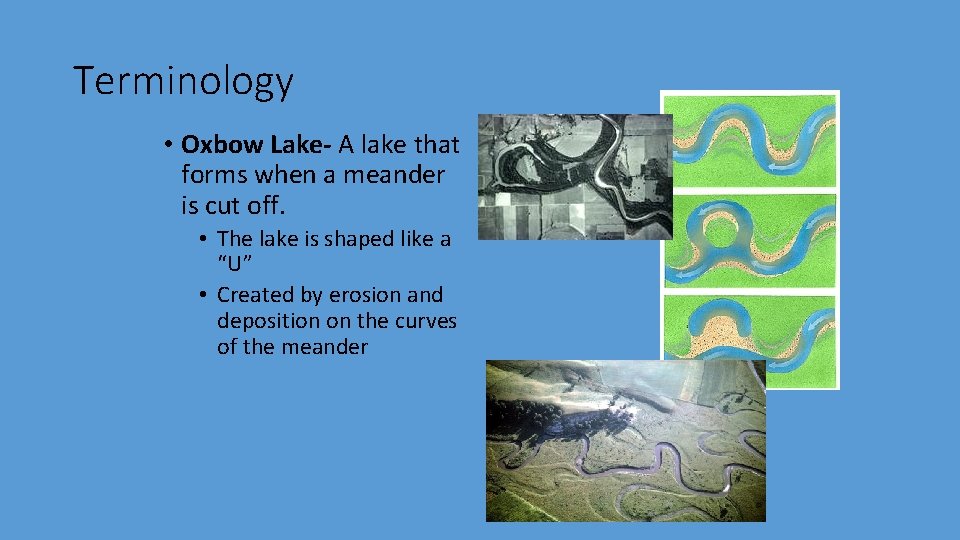
Terminology • Oxbow Lake- A lake that forms when a meander is cut off. • The lake is shaped like a “U” • Created by erosion and deposition on the curves of the meander
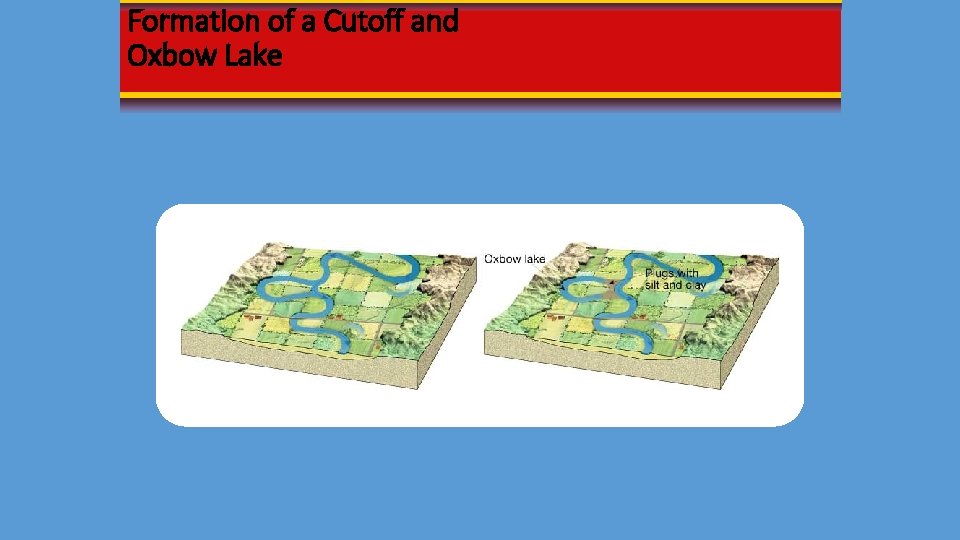
Formation of a Cutoff and Oxbow Lake
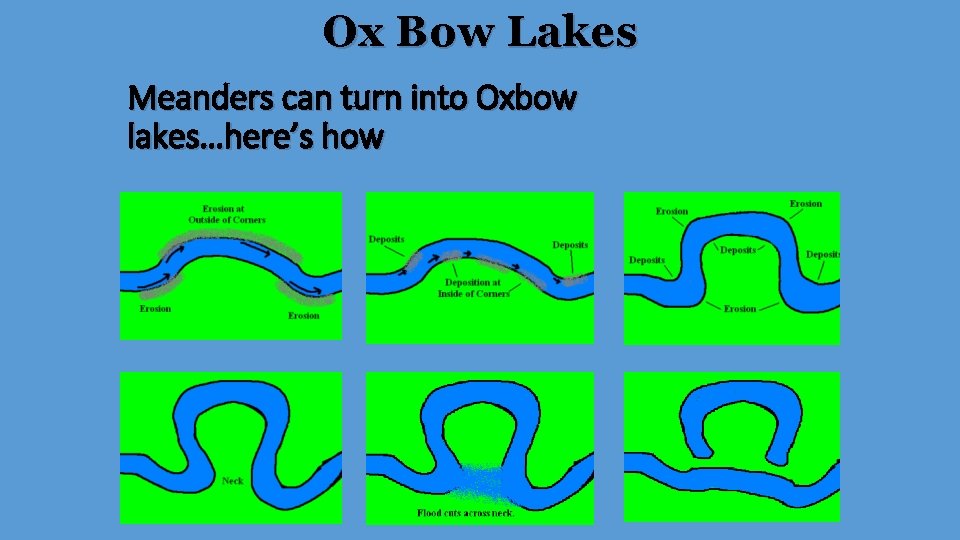
Ox Bow Lakes Meanders can turn into Oxbow lakes…here’s how

Ox Bow Lakes 1. Neck of meander is gradually eroded 2. Once cut off, the water takes the quickest/shortest route 3. What’s left behind is the Ox Bow lake
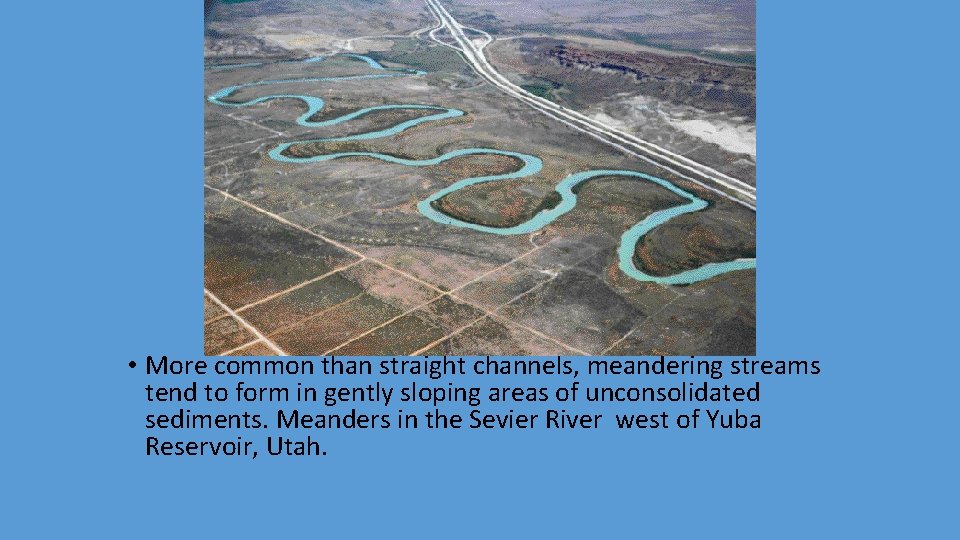
1. . • More common than straight channels, meandering streams tend to form in gently sloping areas of unconsolidated sediments. Meanders in the Sevier River west of Yuba Reservoir, Utah.
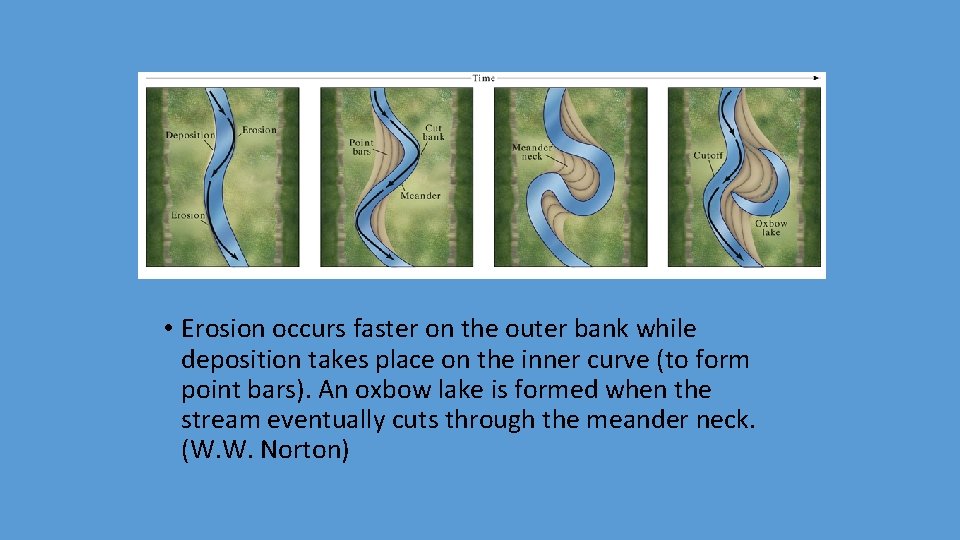
• Erosion occurs faster on the outer bank while deposition takes place on the inner curve (to form point bars). An oxbow lake is formed when the stream eventually cuts through the meander neck. (W. W. Norton)
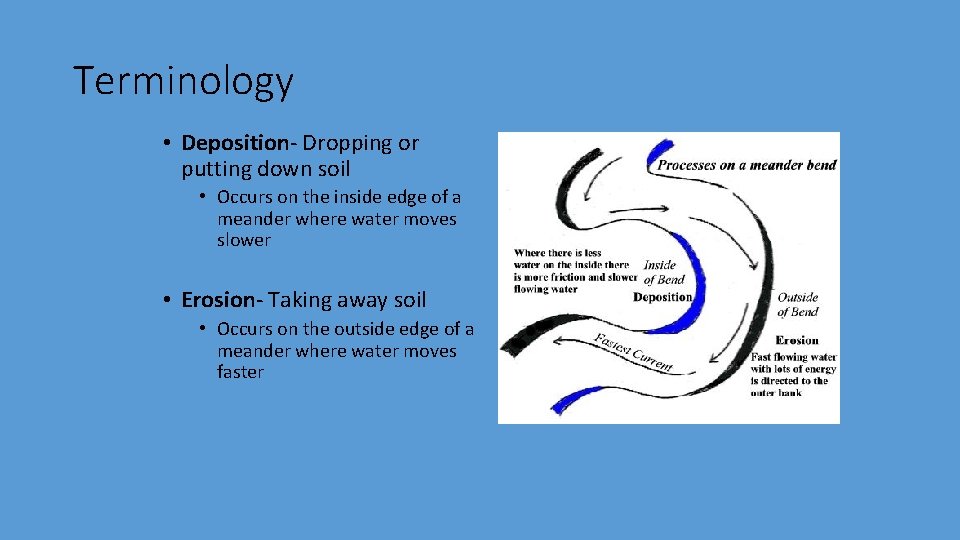
Terminology • Deposition- Dropping or putting down soil • Occurs on the inside edge of a meander where water moves slower • Erosion- Taking away soil • Occurs on the outside edge of a meander where water moves faster
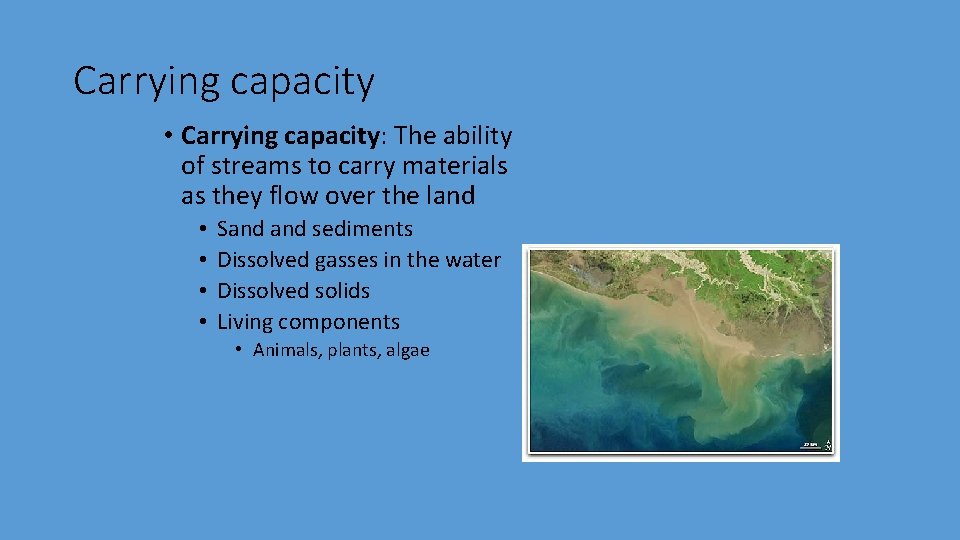
Carrying capacity • Carrying capacity: The ability of streams to carry materials as they flow over the land • • Sand sediments Dissolved gasses in the water Dissolved solids Living components • Animals, plants, algae
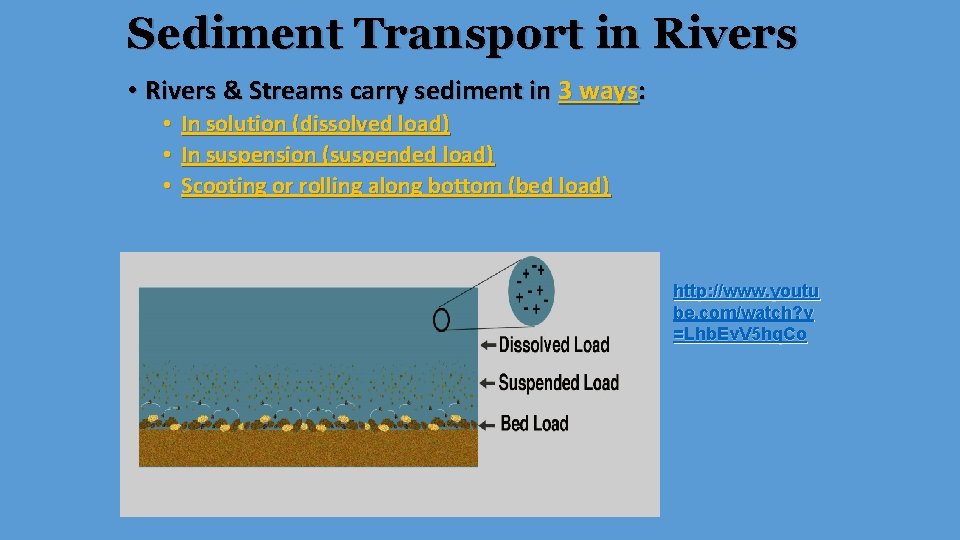
Sediment Transport in Rivers • Rivers & Streams carry sediment in 3 ways: • • • In solution (dissolved load) In suspension (suspended load) Scooting or rolling along bottom (bed load) http: //www. youtu be. com/watch? v =Lhb. Ev. V 5 hq. Co
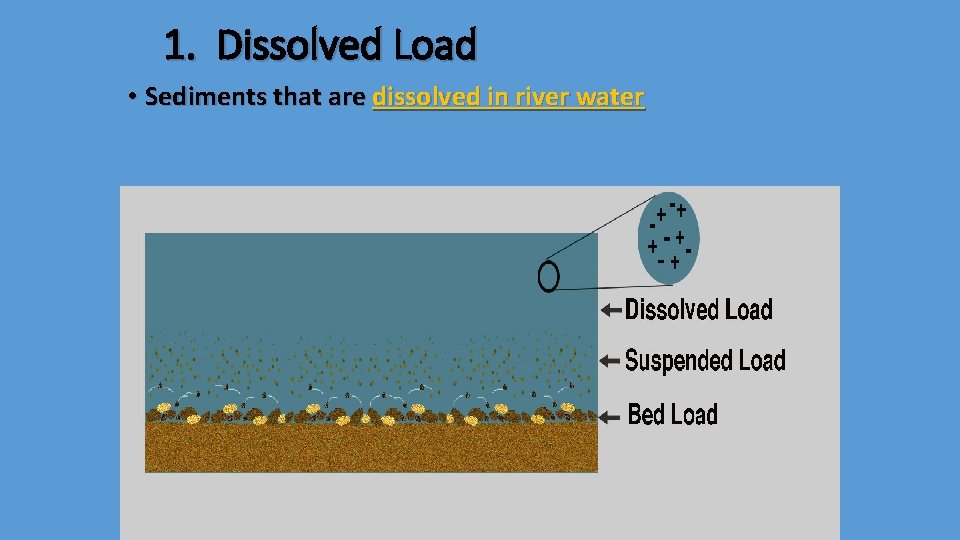
1. Dissolved Load • Sediments that are dissolved in river water
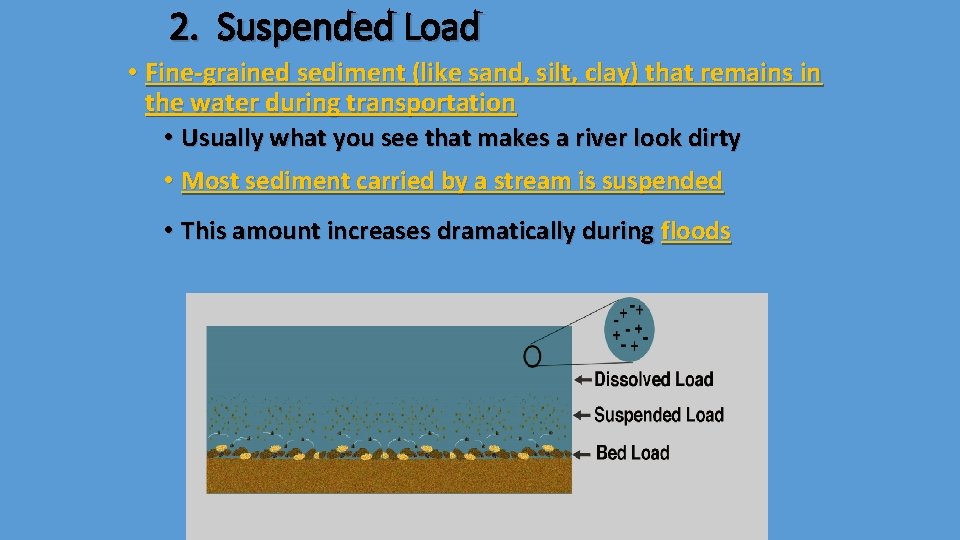
2. Suspended Load • Fine-grained sediment (like sand, silt, clay) that remains in the water during transportation • Usually what you see that makes a river look dirty • Most sediment carried by a stream is suspended • This amount increases dramatically during floods
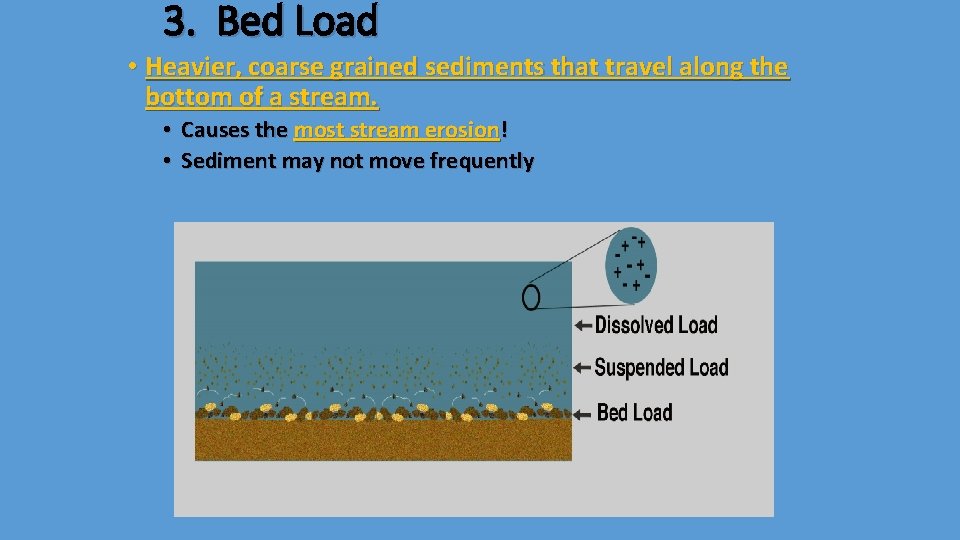
3. Bed Load • Heavier, coarse grained sediments that travel along the bottom of a stream. • Causes the most stream erosion! • Sediment may not move frequently
6. 2 The Work of Streams Floods and Flood Control A flood occurs when the discharge of a stream becomes so great that it exceeds the capacity of its channel and overflows its banks. Measures to control flooding include artificial levees, flood control dams, and placing limits on floodplain development.
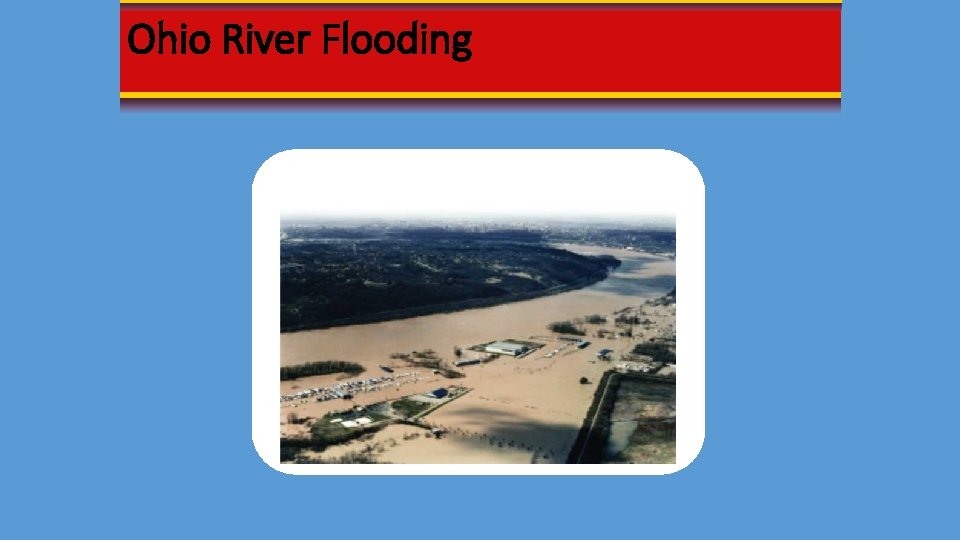
Ohio River Flooding
- Slides: 15