
Part 3 Cytoplasm Nucleus Between plasma membrane nucleus
Part 3: Cytoplasm & Nucleus
Between plasma membrane & nucleus Three elements: -: fluid Eg. water, proteins, salts, sugars -: specific functions -: chemical substances that vary depending on cell type Eg. glycogen (liver), lipid droplets (fat cells), melanin (skin & hair)
“little organs” Specialized compartments specific functions Membranous = membrane-bound Mitochondria, peroxisomes, lysosomes, ER, Golgi apparatus Nonmembranous = no membrane cytoskeleton, centrioles, ribosomes
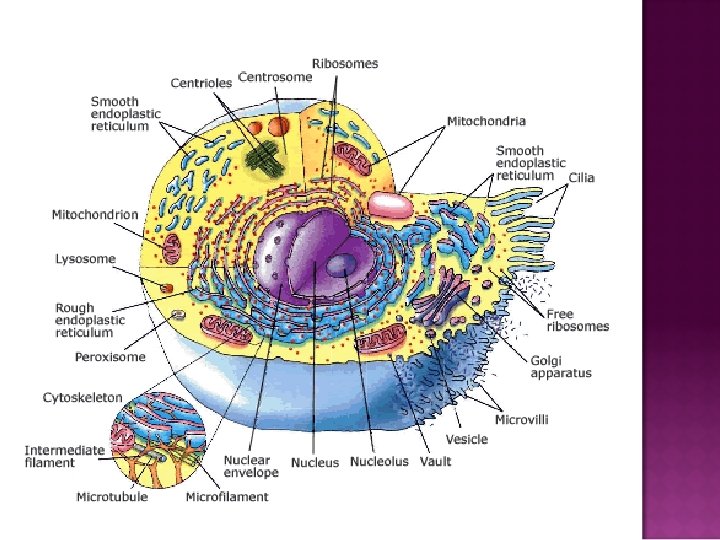
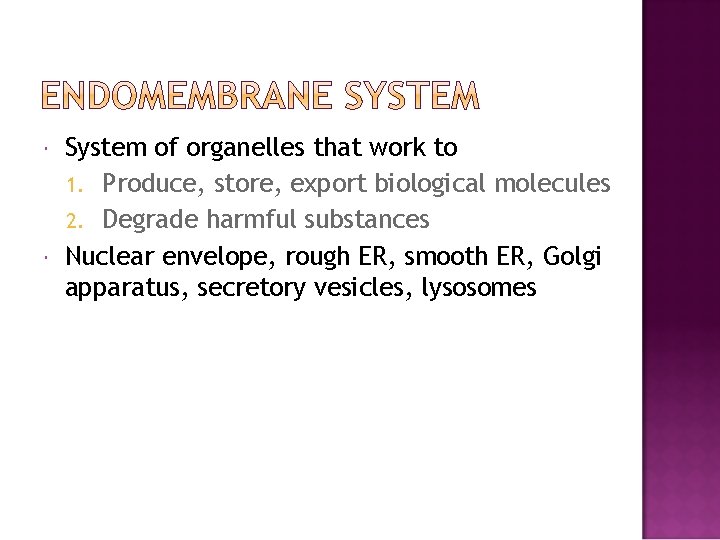
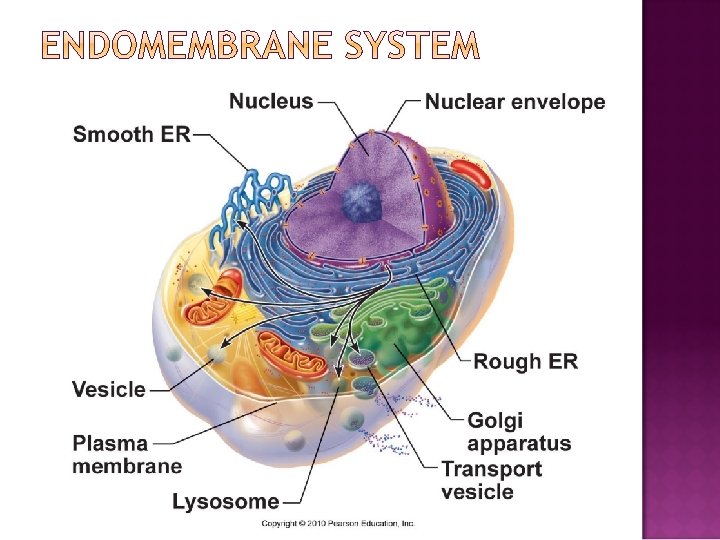
System of organelles that work to 1. Produce, store, export biological molecules 2. Degrade harmful substances Nuclear envelope, rough ER, smooth ER, Golgi apparatus, secretory vesicles, lysosomes
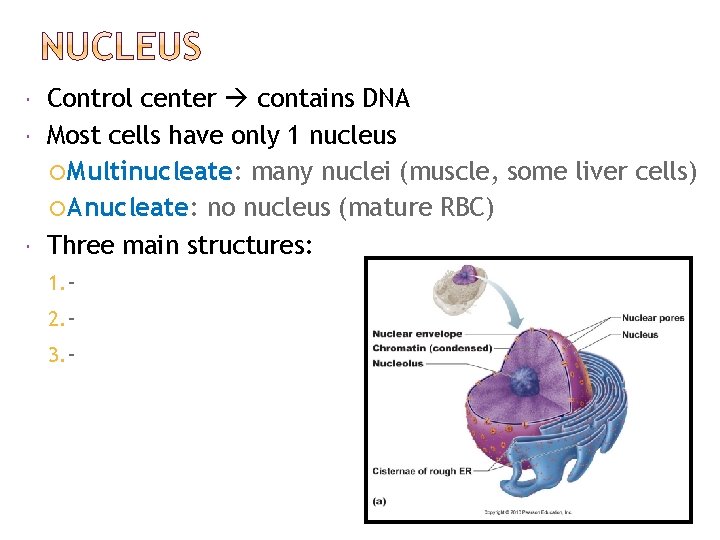
Control center contains DNA Most cells have only 1 nucleus Multinucleate: many nuclei (muscle, some liver cells) Anucleate: no nucleus (mature RBC) Three main structures: 1. 2. 3. -
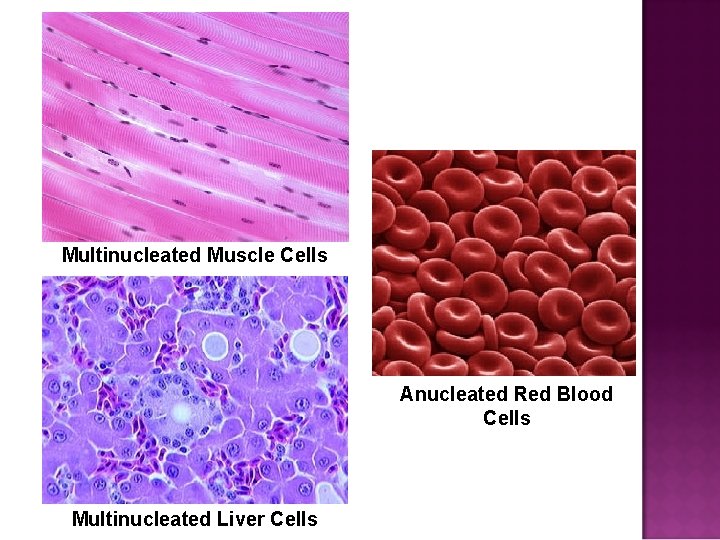
Multinucleated Muscle Cells Anucleated Red Blood Cells Multinucleated Liver Cells
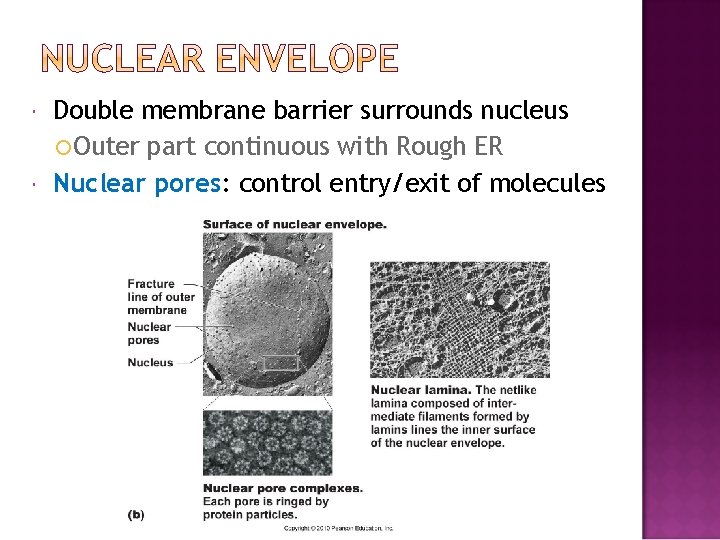
Double membrane barrier surrounds nucleus Outer part continuous with Rough ER Nuclear pores: control entry/exit of molecules
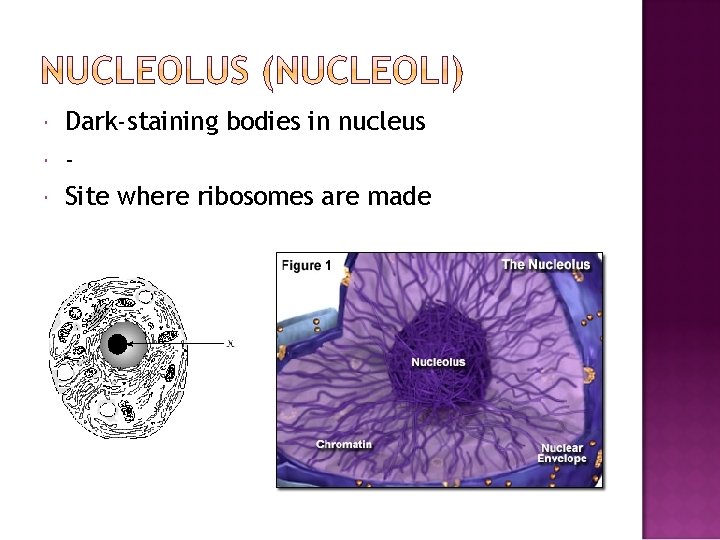
Dark-staining bodies in nucleus Site where ribosomes are made
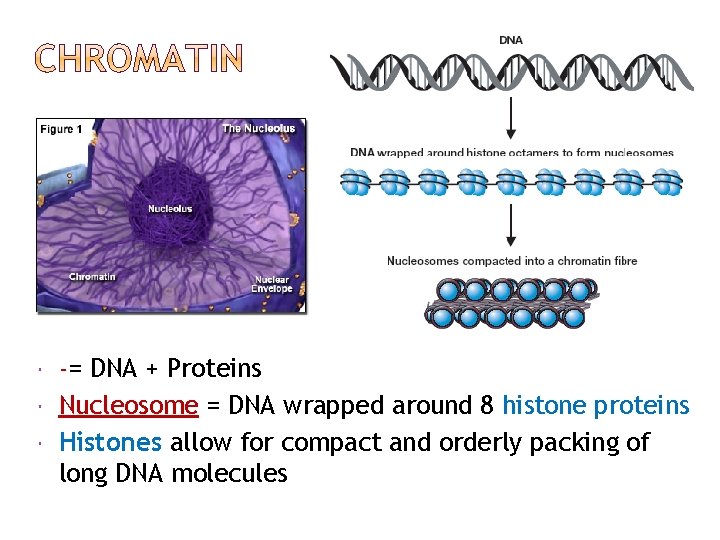
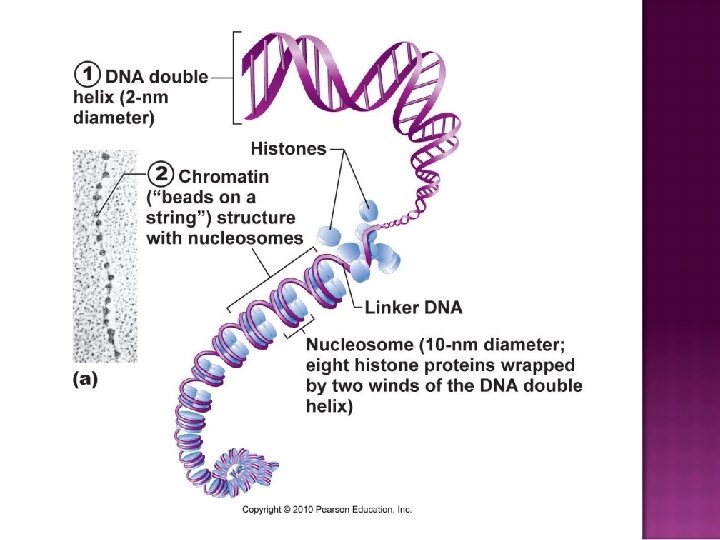
-= DNA + Proteins Nucleosome = DNA wrapped around 8 histone proteins Histones allow for compact and orderly packing of long DNA molecules
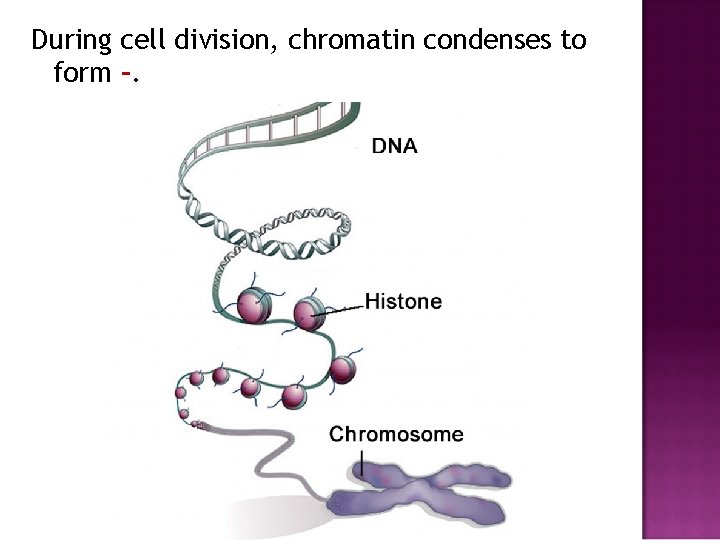
During cell division, chromatin condenses to form -.
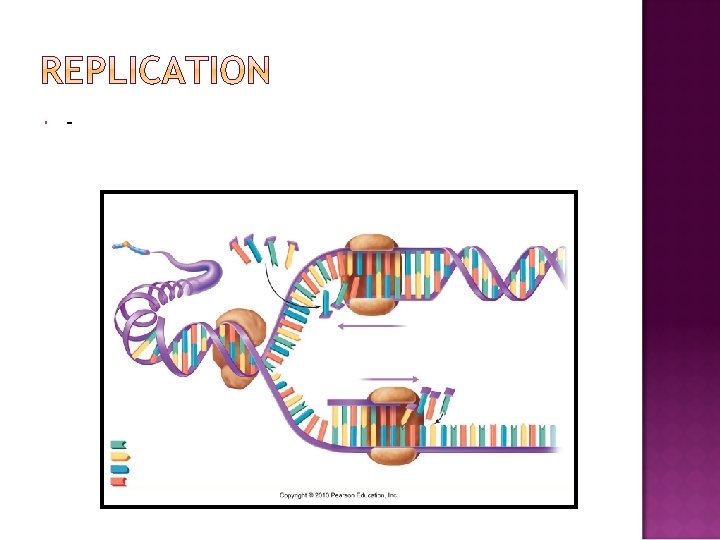
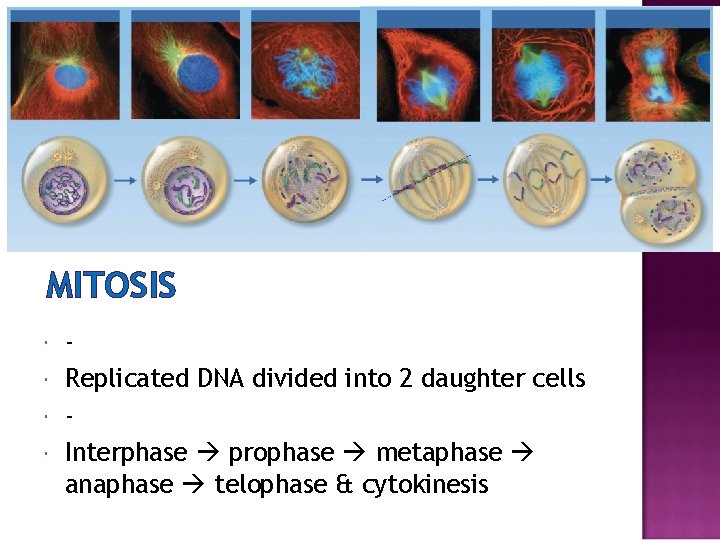
MITOSIS Replicated DNA divided into 2 daughter cells Interphase prophase metaphase anaphase telophase & cytokinesis
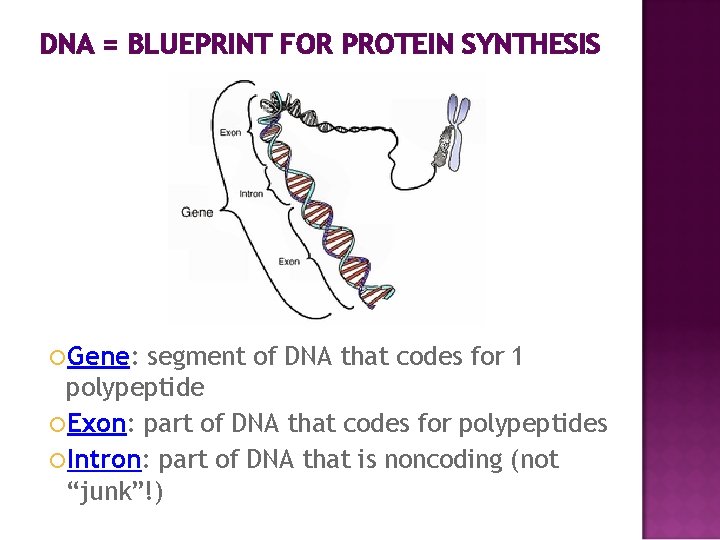
DNA = BLUEPRINT FOR PROTEIN SYNTHESIS Gene: segment of DNA that codes for 1 polypeptide Exon: part of DNA that codes for polypeptides Intron: part of DNA that is noncoding (not “junk”!)
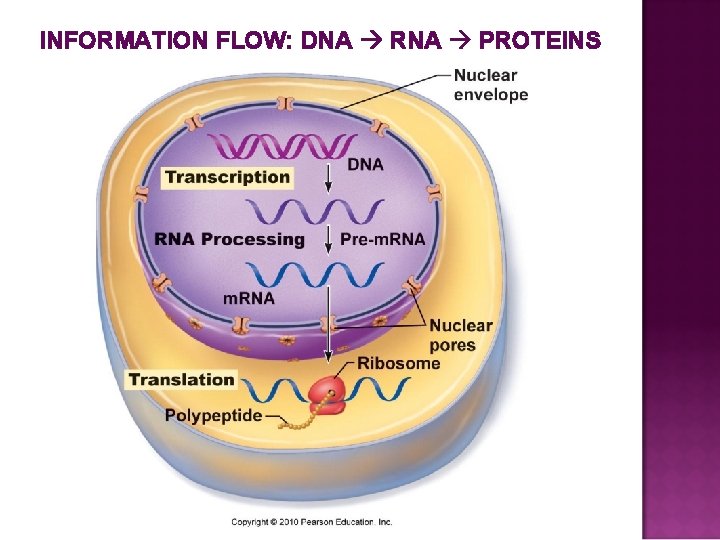
INFORMATION FLOW: DNA RNA PROTEINS
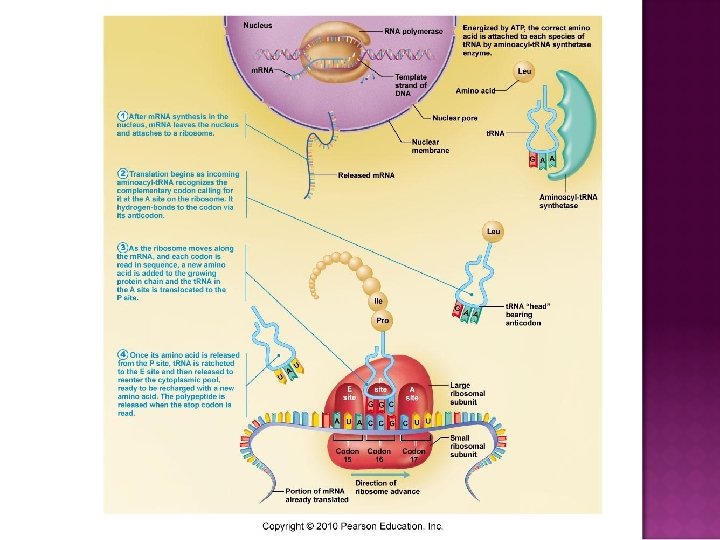
-: RNA formed from DNA Occurs in nucleus Types: m. RNA, t. RNA, r. RNA -: protein synthesis polypeptide formed from m. RNA Occurs in cytoplasm By ribosomes
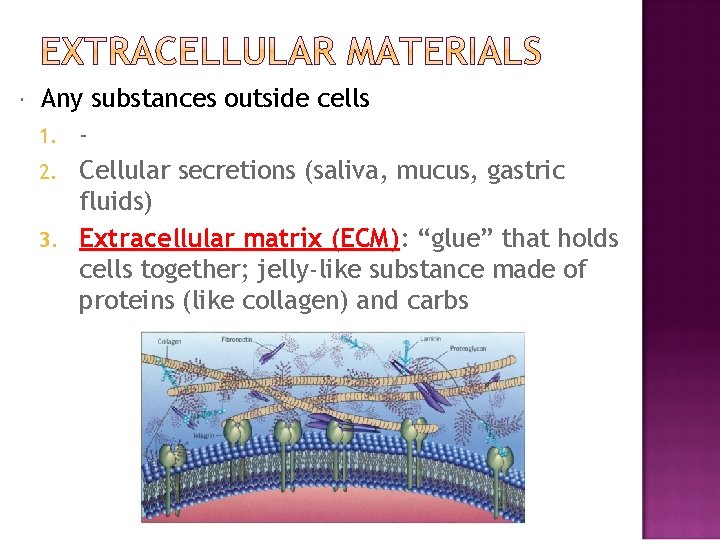
Any substances outside cells 1. 2. Cellular secretions (saliva, mucus, gastric fluids) 3. Extracellular matrix (ECM): “glue” that holds cells together; jelly-like substance made of proteins (like collagen) and carbs
- Slides: 22