
Part 3 Advancements in Adult Learning Chapter 9

- Slides: 22
Part 3: Advancements in Adult Learning
Chapter 9: New Perspectives on Andragogy
The Learner’s Need to Know v. How learning will be conducted? v. What learning will occur? v. Why learning is important? 3
Self-Directed Learning v 2 Conceptions of self-directed learning 1. Self-teaching 2. Personal autonomy 4
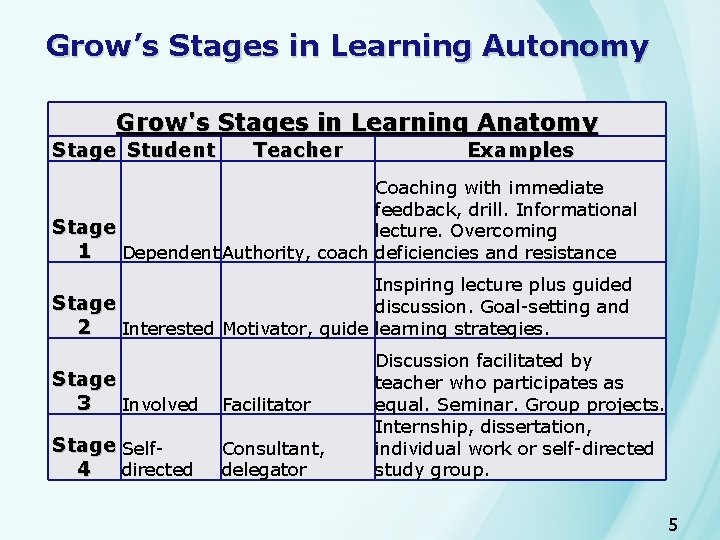
Grow’s Stages in Learning Autonomy Grow's Stages in Learning Anatomy Stage Student Teacher Examples Coaching with immediate feedback, drill. Informational Stage lecture. Overcoming 1 Dependent Authority, coach deficiencies and resistance Inspiring lecture plus guided Stage discussion. Goal-setting and 2 Interested Motivator, guide learning strategies. Stage 3 Involved Facilitator Stage Self 4 directed Consultant, delegator Discussion facilitated by teacher who participates as equal. Seminar. Group projects. Internship, dissertation, individual work or self-directed study group. 5
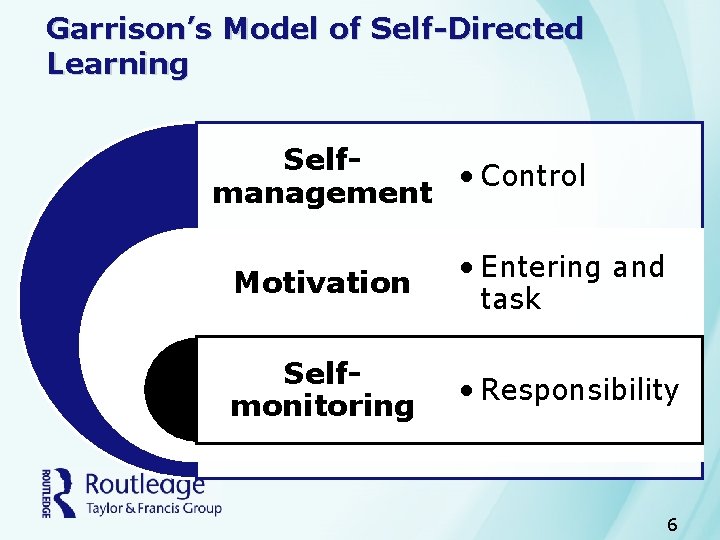
Garrison’s Model of Self-Directed Learning Self • Control management Motivation • Entering and task Selfmonitoring • Responsibility 6
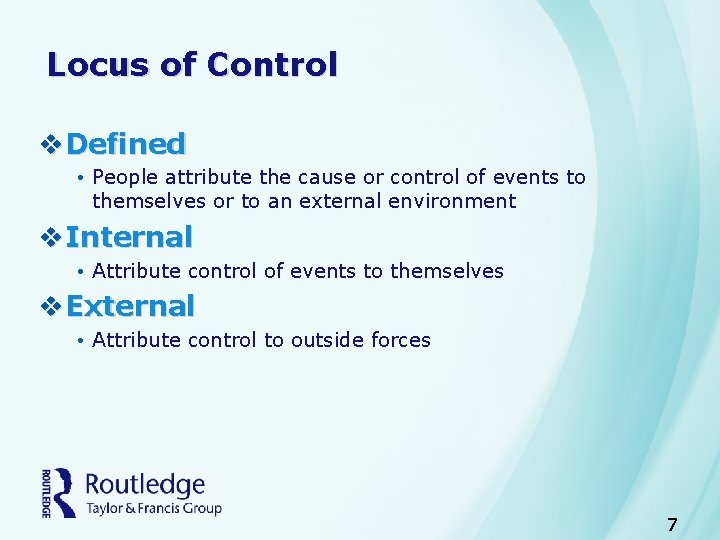
Locus of Control v. Defined • People attribute the cause or control of events to themselves or to an external environment v. Internal • Attribute control of events to themselves v. External • Attribute control to outside forces 7
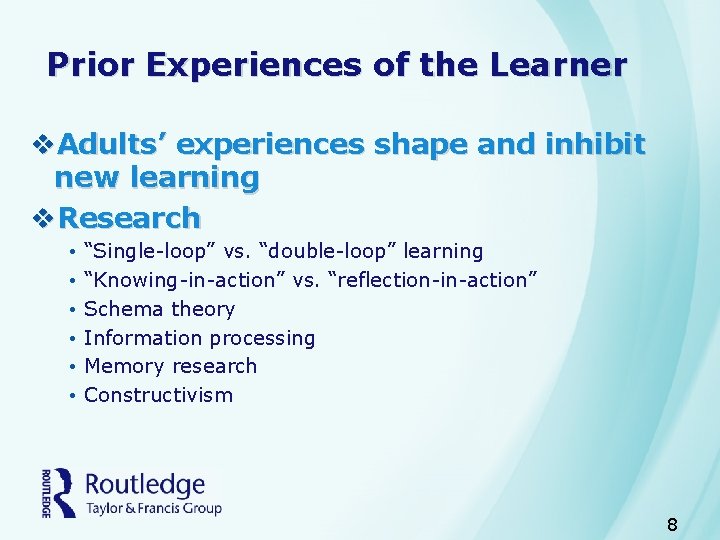
Prior Experiences of the Learner v. Adults’ experiences shape and inhibit new learning v. Research • • • “Single-loop” vs. “double-loop” learning “Knowing-in-action” vs. “reflection-in-action” Schema theory Information processing Memory research Constructivism 8
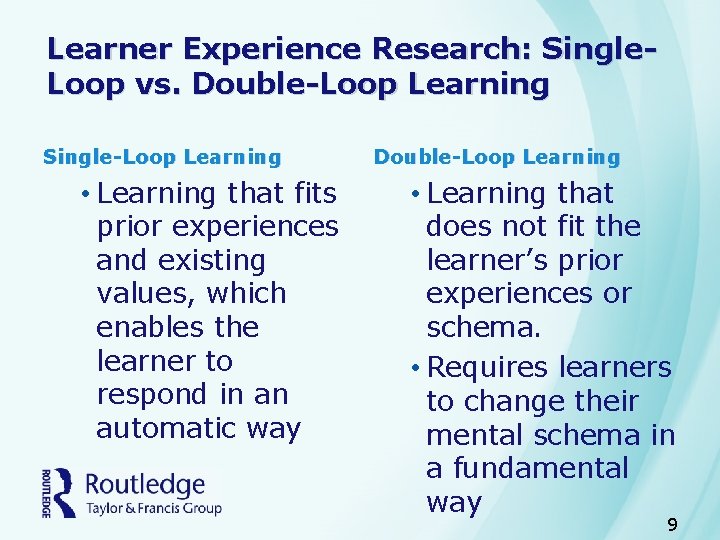
Learner Experience Research: Single. Loop vs. Double-Loop Learning Single-Loop Learning • Learning that fits prior experiences and existing values, which enables the learner to respond in an automatic way Double-Loop Learning • Learning that does not fit the learner’s prior experiences or schema. • Requires learners to change their mental schema in a fundamental way 9
Learner Experience Research: Knowing -in-action vs. Reflection-in-action Knowing-in-action • The somewhat automatic responses based on a person’s existing mental schema that enable him or her to perform efficiently in daily actions Reflection-in-action • Process of reflecting while performing to discover when schema are not appropriate & changing those schema when appropriate 10
Learner Experience Research (cont. ) v. Schema Theory • Schema are the cognitive structures that are built as learning and experiences accumulate and are packaged in memory • Result = Improved individual and organizational learning and performance 11
Learner Experience Research (cont. ) v. Information Processing • Prior knowledge acts as a filter to learning through attentional processes • Result = Learners pay more attention to learning that fits with prior knowledge schema 12
Learner Experience Research (cont. ) v. Memory Research • 3 components of memory üSensory üShort-term üLong-term • Experience affects sensory memory through the process of attention and selecting what information to process 13
Learner Experience Research (cont. ) v. Constructivism • All knowledge is context bound, and that individuals make personal meaning of their learning experiences • New information must be related to other existing information in order for learners to retain and use it 14
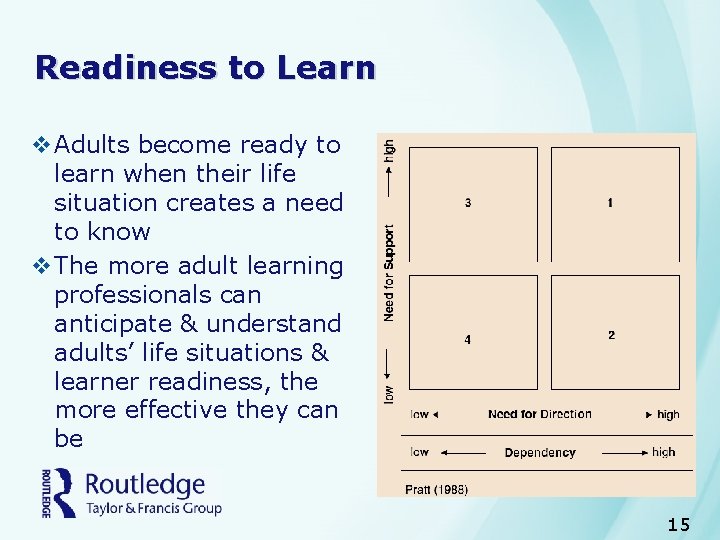
Readiness to Learn v Adults become ready to learn when their life situation creates a need to know v The more adult learning professionals can anticipate & understand adults’ life situations & learner readiness, the more effective they can be 15
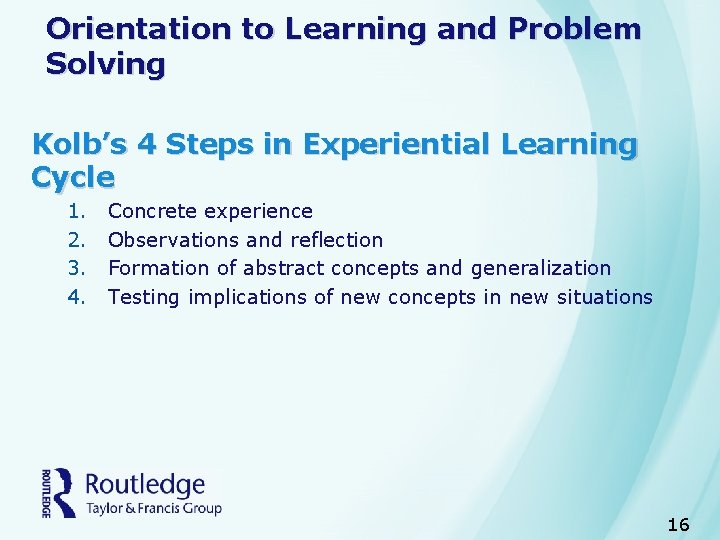
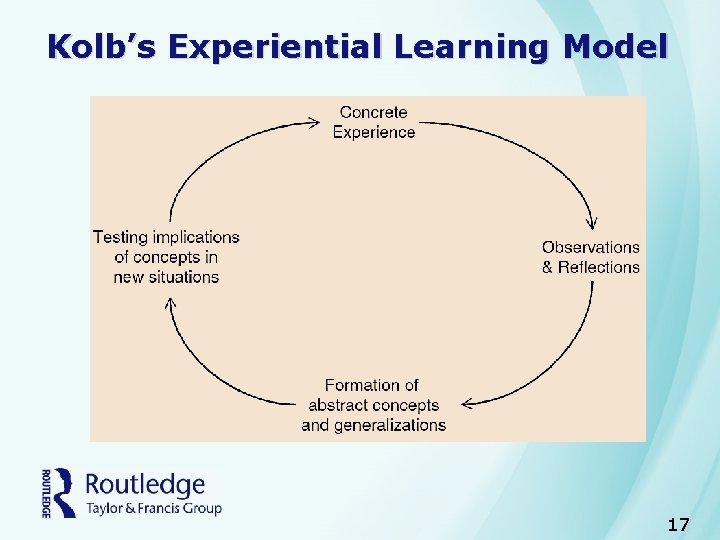
Orientation to Learning and Problem Solving Kolb’s 4 Steps in Experiential Learning Cycle 1. 2. 3. 4. Concrete experience Observations and reflection Formation of abstract concepts and generalization Testing implications of new concepts in new situations 16
Kolb’s Experiential Learning Model 17
Motivation to Learn v. Assumption of Andragogy • Adults tend to be more motivated toward learning that helps them solve problems in their lives or results in internal payoffs v. Wlodowski’s 4 Factors of Adults’ Motivation to Learn 1. 2. 3. 4. Success Volition Value Enjoyment 18
Motivation to Learn (cont. ) v 3 Motivation Factors of Expectancy Theory • Valence üValue a person places on the outcome • Instrumentality üProbability that the valued outcomes will be received, given that certain outcomes have occurred • Expectancy üBelief a person has that certain efforts will lead to outcomes that get rewarded 19
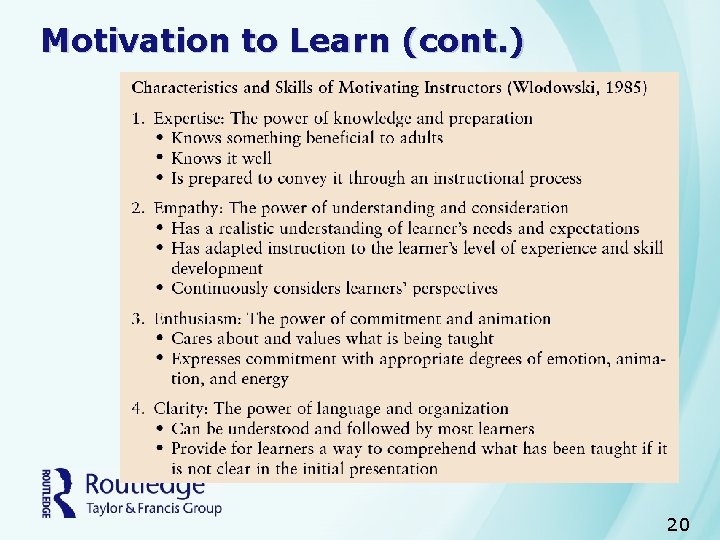
Motivation to Learn (cont. ) 20
Reflection Questions 1. Report on a personal experience confirming the principle Learners need to know. 2. Report on a personal experience confirming the principle Self-directed learning. 3. Report on a personal experience confirming the principle Prior experience of the learner. 4. Report on a personal experience confirming the principle Readiness to learn. 21
Reflection Questions (Cont. ) 5. Report on a personal experience confirming the principle Orientation to learning problem solving. 6. Report on a personal experience confirming the principle Motivation to learn. 22