
Part 2 Unit 1 Chapter 5 PROTEINS Most
- Slides: 12
Part 2 Unit 1 Chapter 5
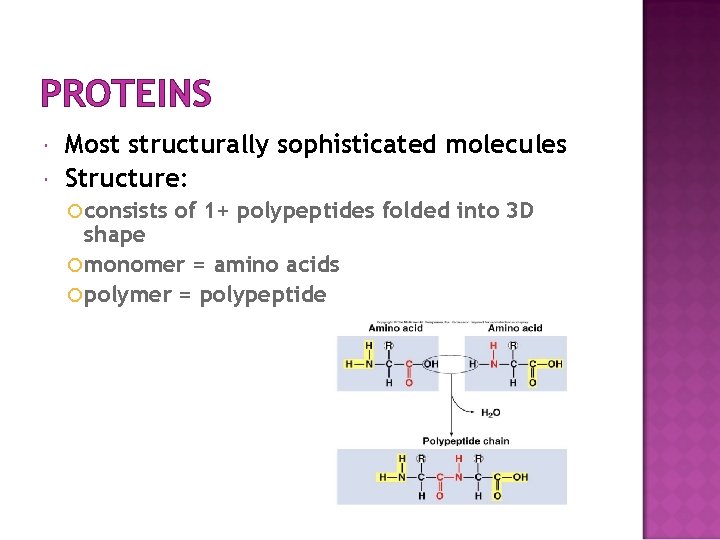
PROTEINS Most structurally sophisticated molecules Structure: consists of 1+ polypeptides folded into 3 D shape monomer = amino acids polymer = polypeptide
PROTEIN FUNCTIONS Involved in almost everything: Enzymes Defense (antibodies) Storage (Casein in milk, ovalbumin in egg whites) Transport (hemoglobin) Hormonal (insulin) Receptor (nerve cells) Contractile and motor (muscle) Structural (Keratin, collagen)
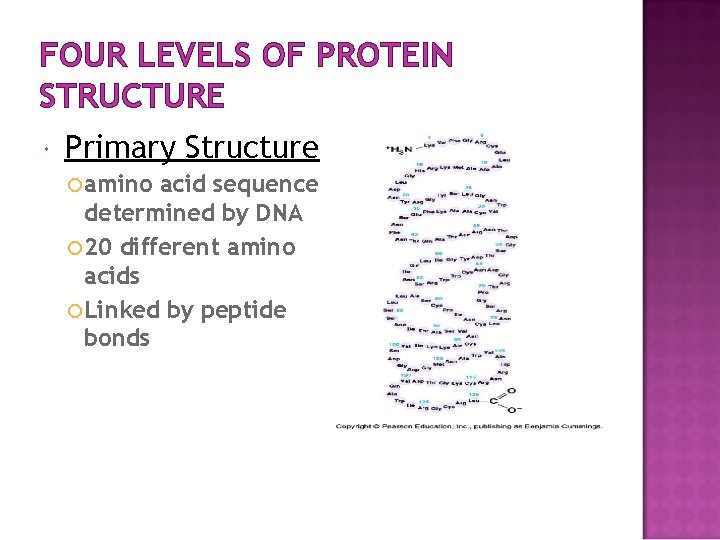
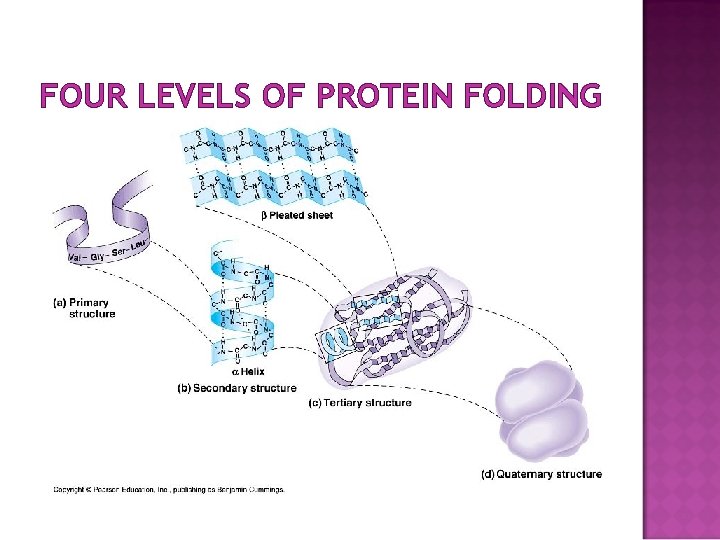
FOUR LEVELS OF PROTEIN STRUCTURE Primary Structure amino acid sequence determined by DNA 20 different amino acids Linked by peptide bonds
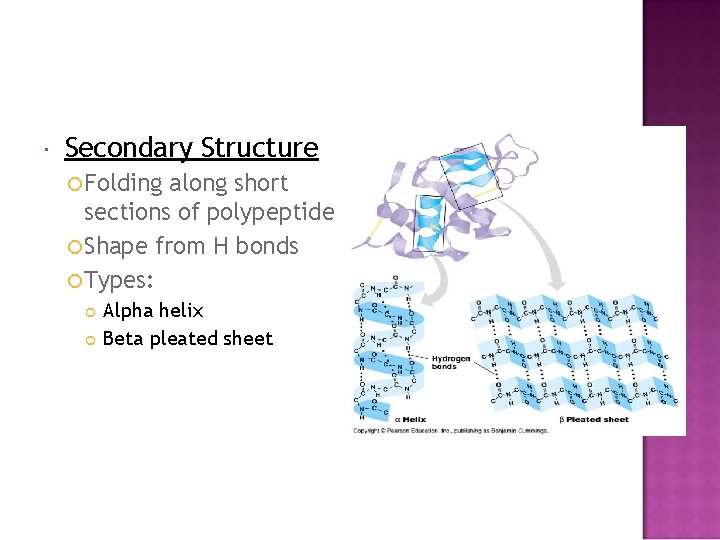
Secondary Structure Folding along short sections of polypeptide Shape from H bonds Types: Alpha helix Beta pleated sheet
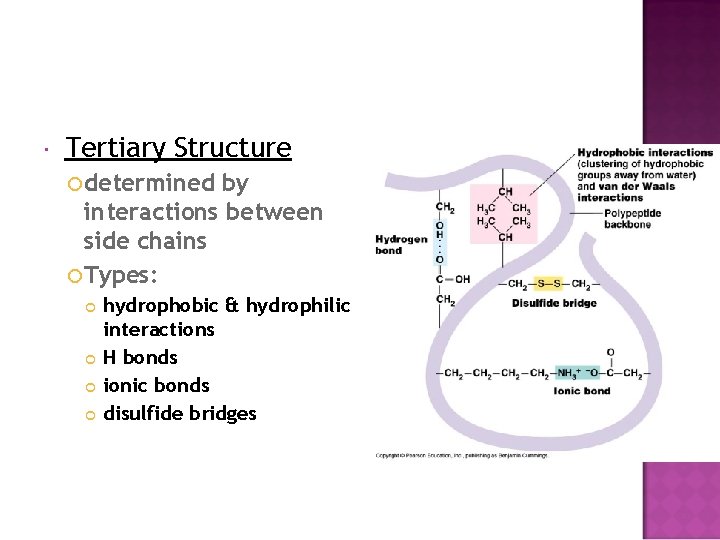
Tertiary Structure determined by interactions between side chains Types: hydrophobic & hydrophilic interactions H bonds ionic bonds disulfide bridges
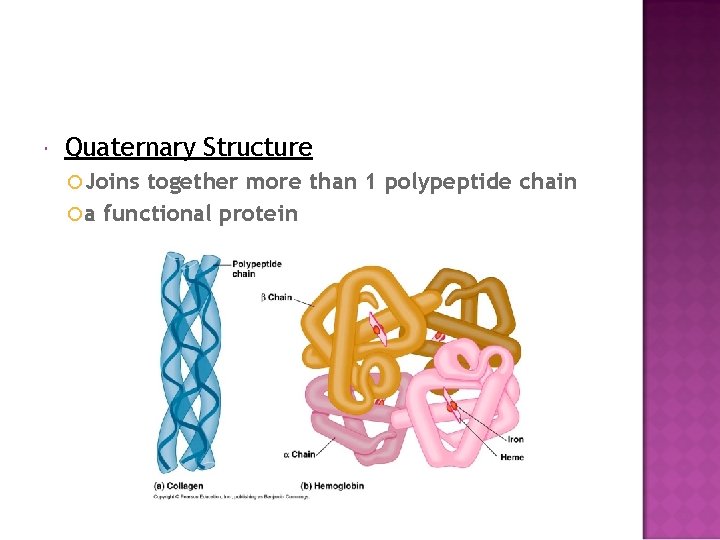
Quaternary Structure Joins together more than 1 polypeptide chain a functional protein
FOUR LEVELS OF PROTEIN FOLDING
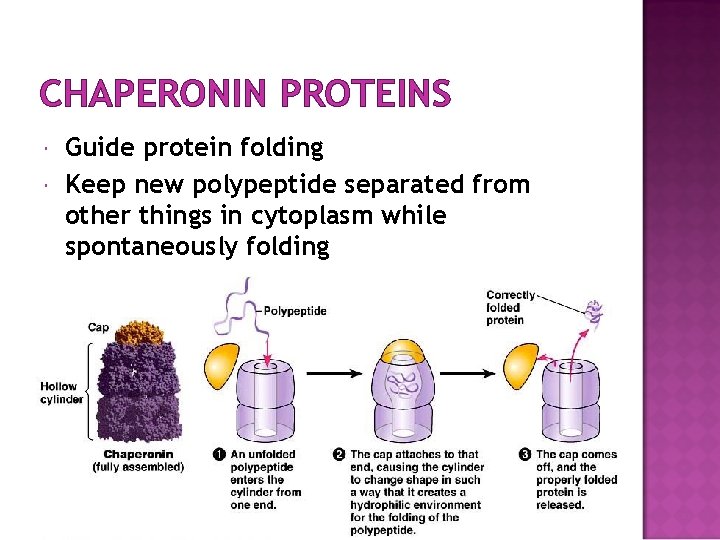
CHAPERONIN PROTEINS Guide protein folding Keep new polypeptide separated from other things in cytoplasm while spontaneously folding
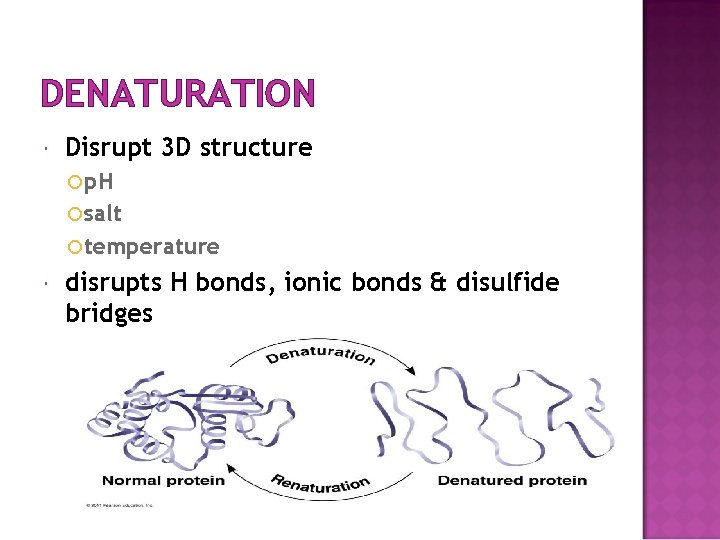
DENATURATION Disrupt 3 D structure p. H salt temperature disrupts H bonds, ionic bonds & disulfide bridges
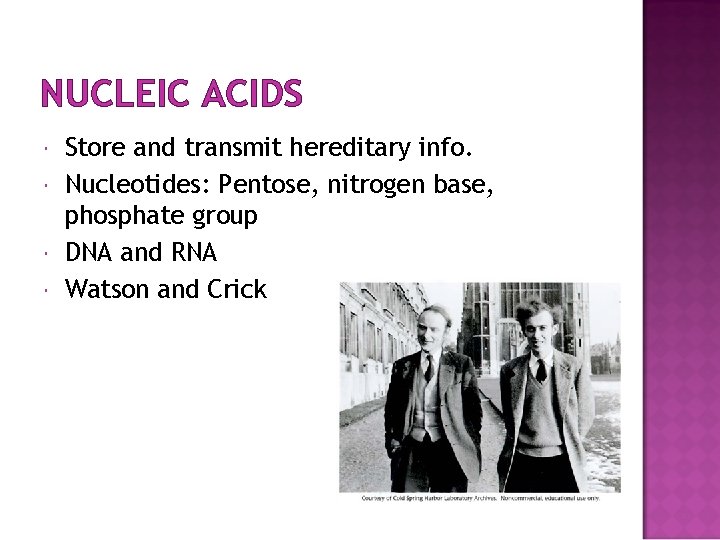
NUCLEIC ACIDS Store and transmit hereditary info. Nucleotides: Pentose, nitrogen base, phosphate group DNA and RNA Watson and Crick
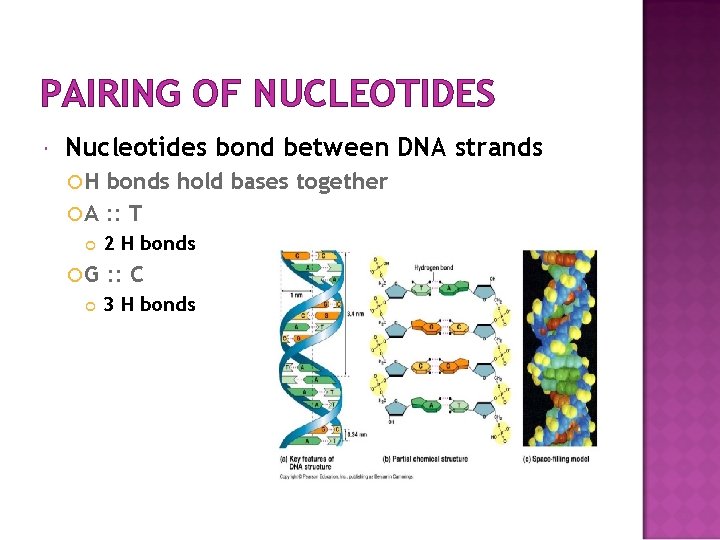
PAIRING OF NUCLEOTIDES Nucleotides bond between DNA strands H bonds hold bases together A : : T G 2 H bonds : : C 3 H bonds