
Part 2 CHM 1 C 3 Organic Acids

![Values of Ka [1] Very strong acid Large Small Almost complete ionization large number](https://slidetodoc.com/presentation_image_h2/44570746eb80e41e57988063669ad019/image-8.jpg "Values of Ka [1] Very strong acid Large Small Almost complete ionization large number")

- Slides: 31
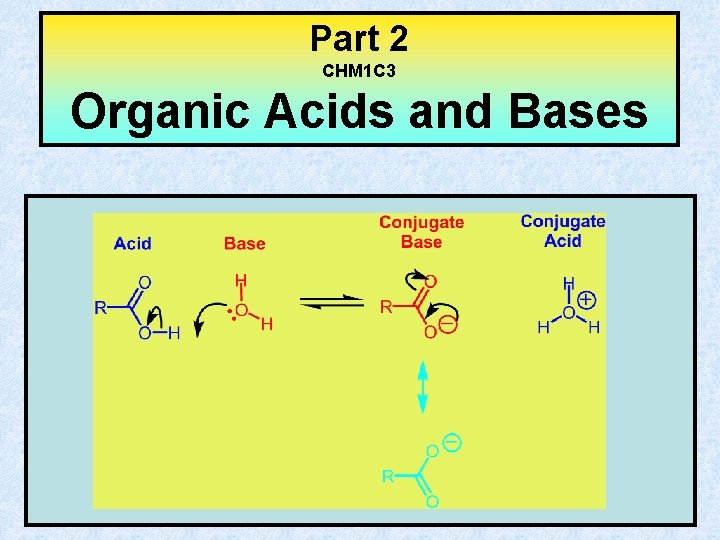
Part 2 CHM 1 C 3 Organic Acids and Bases
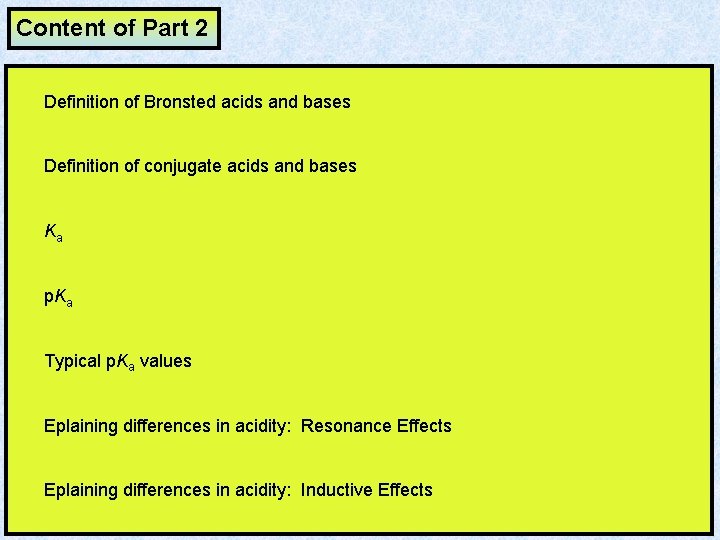
Content of Part 2 Definition of Bronsted acids and bases Definition of conjugate acids and bases Ka p. Ka Typical p. Ka values Eplaining differences in acidity: Resonance Effects Eplaining differences in acidity: Inductive Effects
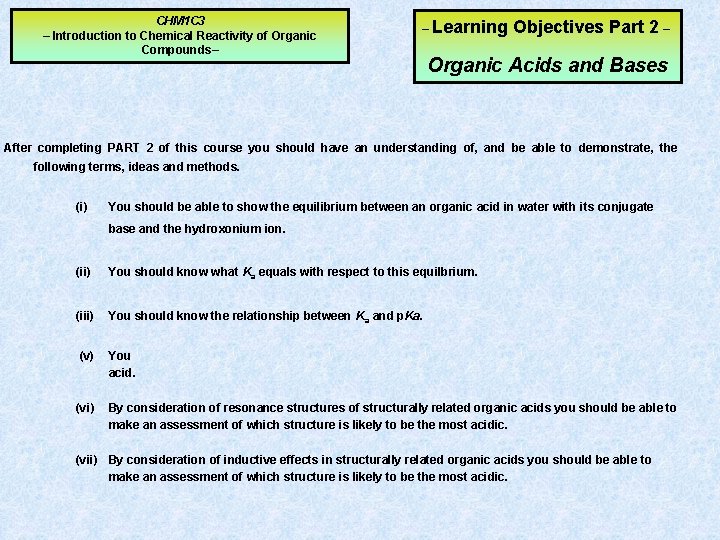
CHM 1 C 3 – Introduction to Chemical Reactivity of Organic Compounds– – Learning Objectives Part 2 – Organic Acids and Bases After completing PART 2 of this course you should have an understanding of, and be able to demonstrate, the following terms, ideas and methods. (i) You should be able to show the equilibrium between an organic acid in water with its conjugate base and the hydroxonium ion. (ii) You should know what Ka equals with respect to this equilbrium. (iii) You should know the relationship between Ka and p. Ka. (v) You acid. (vi) By consideration of resonance structures of structurally related organic acids you should be able to make an assessment of which structure is likely to be the most acidic. (vii) By consideration of inductive effects in structurally related organic acids you should be able to make an assessment of which structure is likely to be the most acidic.
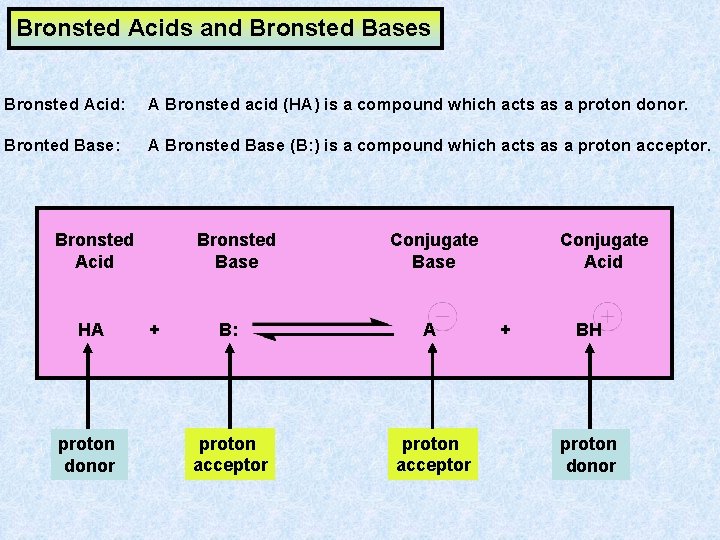
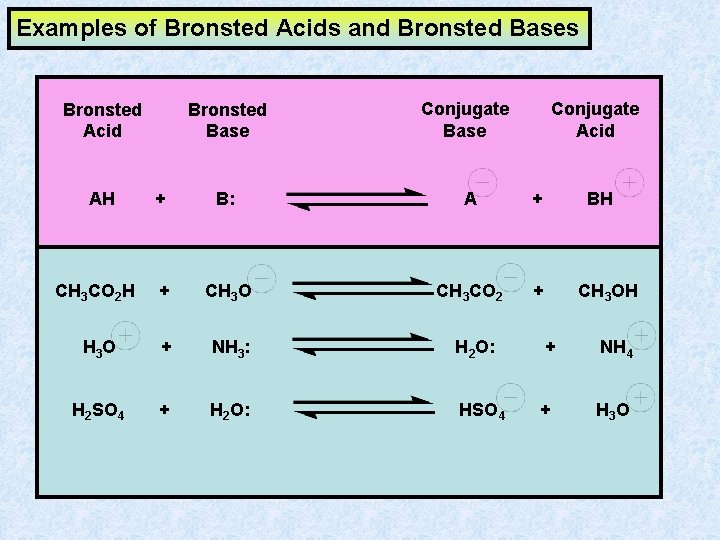
Bronsted Acids and Bronsted Bases Bronsted Acid: A Bronsted acid (HA) is a compound which acts as a proton donor. Bronted Base: A Bronsted Base (B: ) is a compound which acts as a proton acceptor. Bronsted Acid HA proton donor Bronsted Base + Conjugate Base B: A proton acceptor Conjugate Acid + BH proton donor
Examples of Bronsted Acids and Bronsted Bases Bronsted Acid AH Bronsted Base Conjugate Acid + B: A + BH CH 3 CO 2 H + CH 3 O CH 3 CO 2 + H 3 O + NH 3: H 2 O: + NH 4 H 2 SO 4 + H 2 O: HSO 4 + H 3 O CH 3 OH
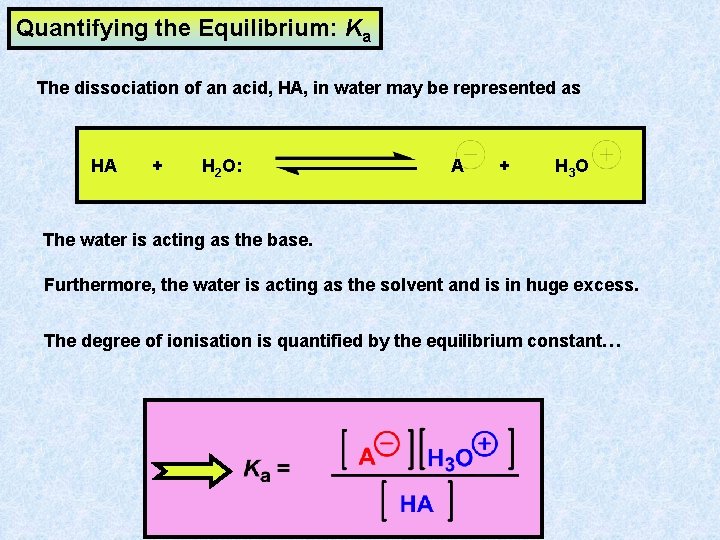
Quantifying the Equilibrium: Ka The dissociation of an acid, HA, in water may be represented as HA + H 2 O: A + H 3 O The water is acting as the base. Furthermore, the water is acting as the solvent and is in huge excess. The degree of ionisation is quantified by the equilibrium constant…
Values of Ka [1] Very strong acid Large Small Almost complete ionization large number Approaches infinity [2] Very weak acid Small Large No perceptible ionization small number Approaches zero
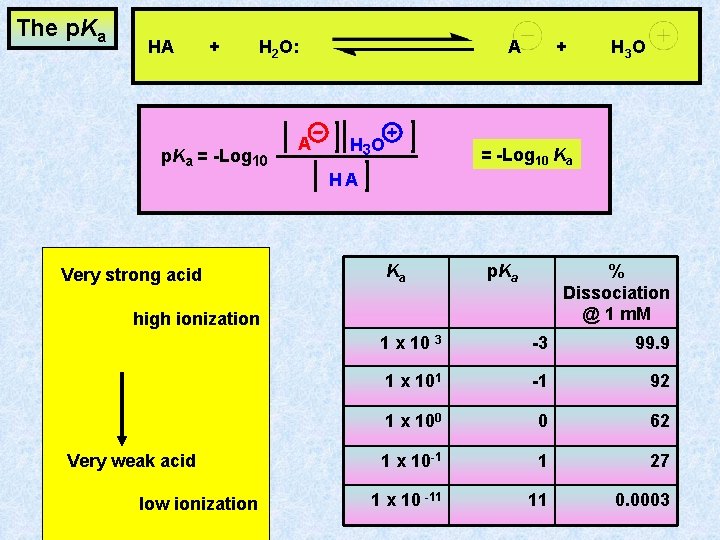
The p. Ka HA + H 2 O: p. Ka = -Log 10 A A H 3 O + H 3 O = -Log 10 Ka HA Very strong acid Ka p. Ka % Dissociation @ 1 m. M high ionization Very weak acid low ionization 1 x 10 3 -3 99. 9 1 x 101 -1 92 1 x 100 0 62 1 x 10 -1 1 27 1 x 10 -11 11 0. 0003
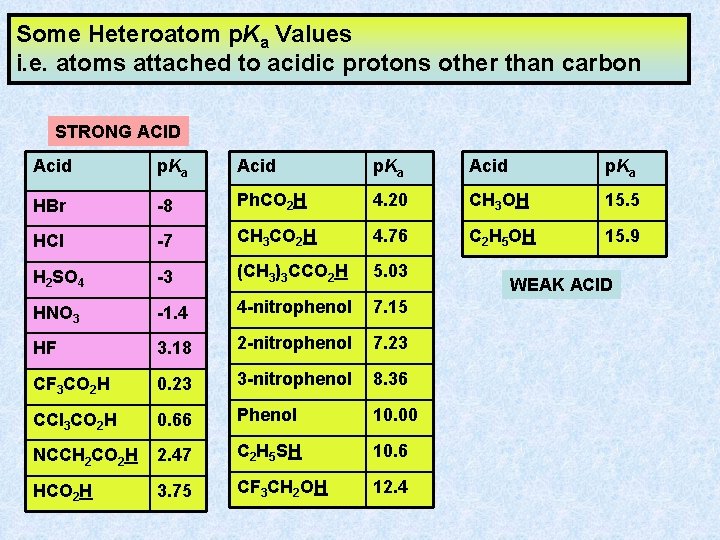
Some Heteroatom p. Ka Values i. e. atoms attached to acidic protons other than carbon STRONG ACID Acid p. Ka HBr -8 Ph. CO 2 H 4. 20 CH 3 OH 15. 5 HCl -7 CH 3 CO 2 H 4. 76 C 2 H 5 OH 15. 9 H 2 SO 4 -3 (CH 3)3 CCO 2 H 5. 03 HNO 3 -1. 4 4 -nitrophenol 7. 15 HF 3. 18 2 -nitrophenol 7. 23 CF 3 CO 2 H 0. 23 3 -nitrophenol 8. 36 CCl 3 CO 2 H 0. 66 Phenol 10. 00 NCCH 2 CO 2 H 2. 47 C 2 H 5 SH 10. 6 HCO 2 H 3. 75 CF 3 CH 2 OH 12. 4 WEAK ACID
Resonance Effects and Acidity
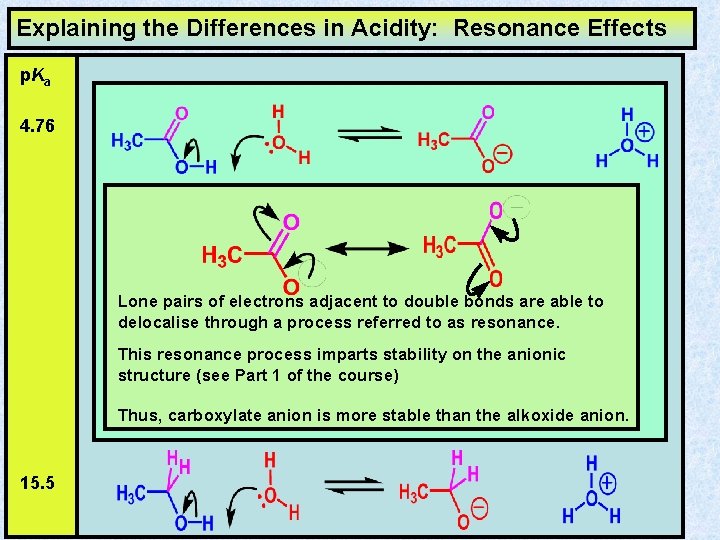
Explaining the Differences in Acidity: Resonance Effects p. Ka 4. 76 Lone pairs of electrons adjacent to double bonds are able to delocalise through a process referred to as resonance. This resonance process imparts stability on the anionic structure (see Part 1 of the course) Thus, carboxylate anion is more stable than the alkoxide anion. 15. 5
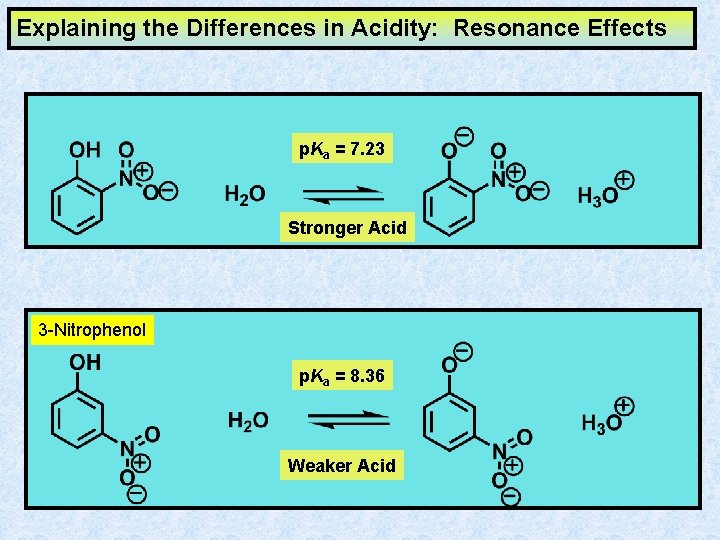
Explaining the Differences in Acidity: Resonance Effects p. Ka = 7. 23 Stronger Acid 3 -Nitrophenol p. Ka = 8. 36 Weaker Acid
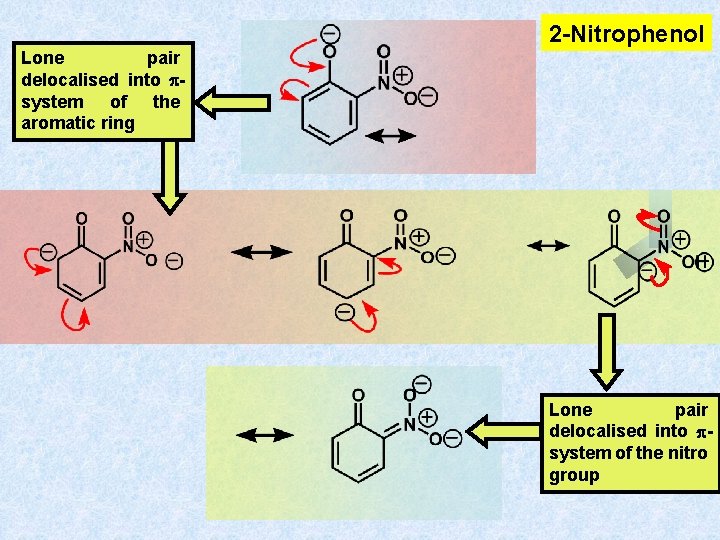
2 -Nitrophenol Lone pair delocalised into psystem of the aromatic ring Lone pair delocalised into psystem of the nitro group
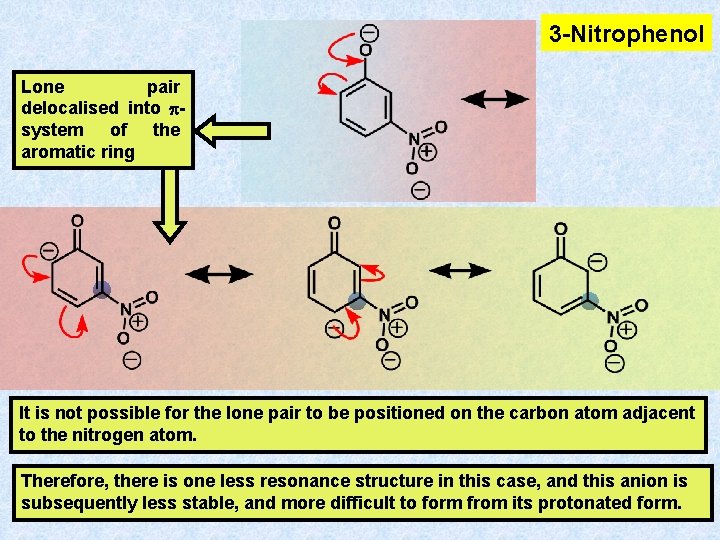
3 -Nitrophenol Lone pair delocalised into psystem of the aromatic ring It is not possible for the lone pair to be positioned on the carbon atom adjacent to the nitrogen atom. Therefore, there is one less resonance structure in this case, and this anion is subsequently less stable, and more difficult to form from its protonated form.
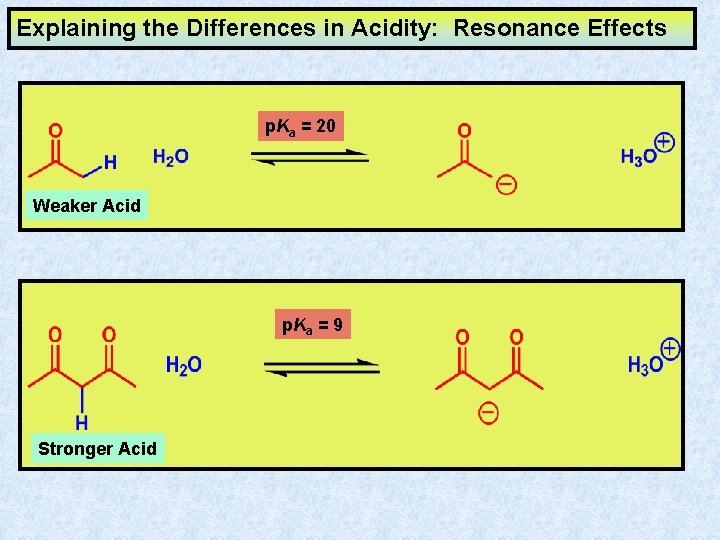
Explaining the Differences in Acidity: Resonance Effects p. Ka = 20 Weaker Acid p. Ka = 9 Stronger Acid
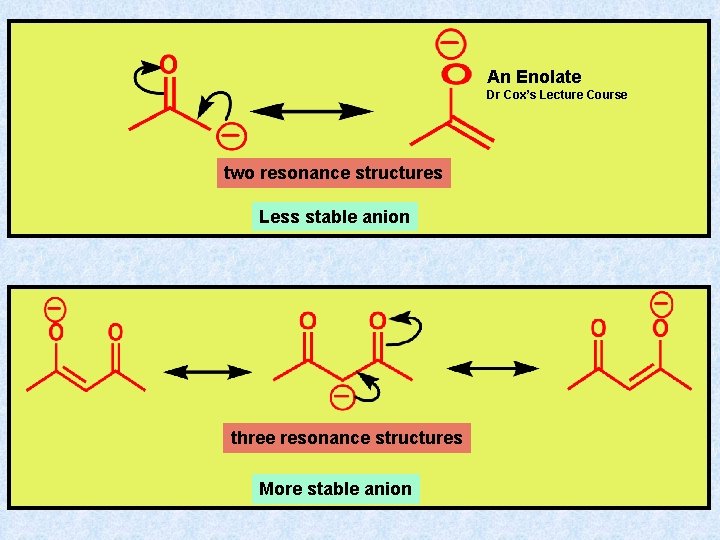
An Enolate Dr Cox’s Lecture Course two resonance structures Less stable anion three resonance structures More stable anion
Inductive Effects and Acidity
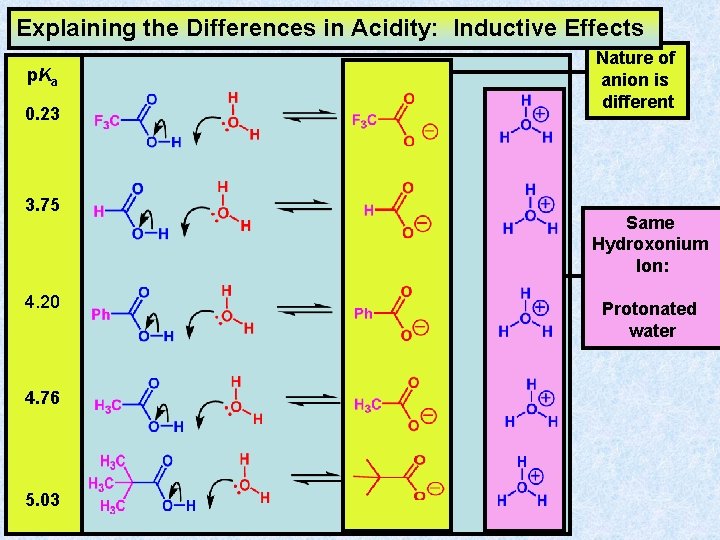
Explaining the Differences in Acidity: Inductive Effects p. Ka 0. 23 3. 75 4. 20 4. 76 5. 03 Nature of anion is different Same Hydroxonium Ion: Protonated water
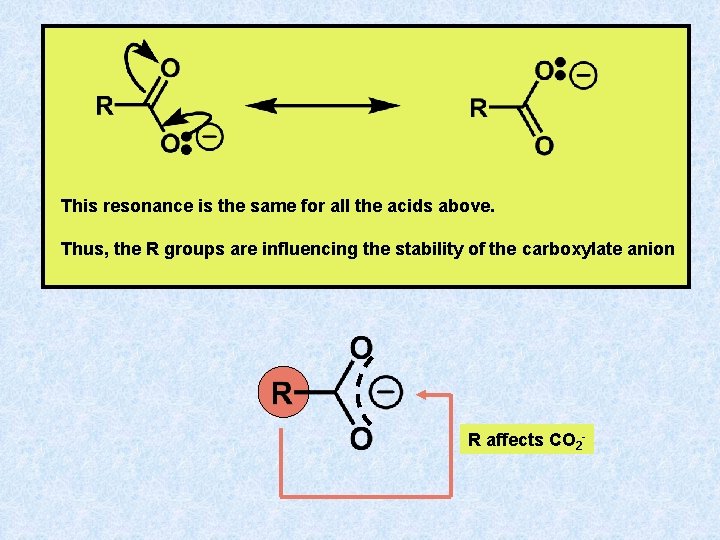
This resonance is the same for all the acids above. Thus, the R groups are influencing the stability of the carboxylate anion R affects CO 2 -
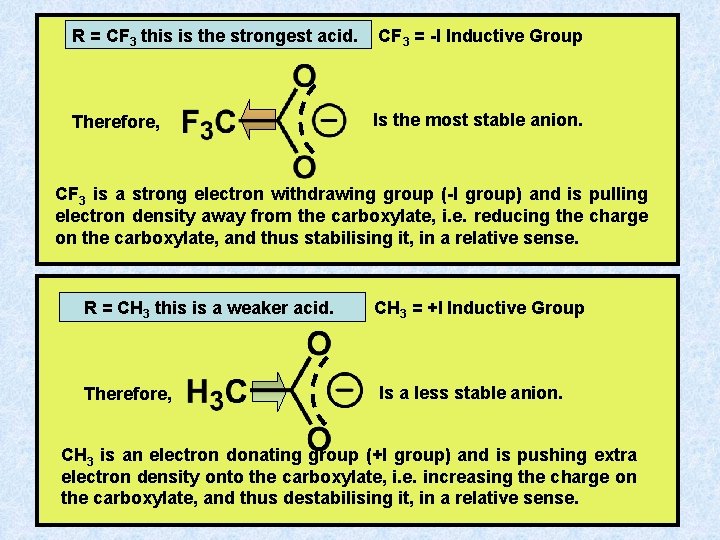
R = CF 3 this is the strongest acid. CF 3 = -I Inductive Group Therefore, Is the most stable anion. CF 3 is a strong electron withdrawing group (-I group) and is pulling electron density away from the carboxylate, i. e. reducing the charge on the carboxylate, and thus stabilising it, in a relative sense. R = CH 3 this is a weaker acid. CH 3 = +I Inductive Group Therefore, Is a less stable anion. CH 3 is an electron donating group (+I group) and is pushing extra electron density onto the carboxylate, i. e. increasing the charge on the carboxylate, and thus destabilising it, in a relative sense.
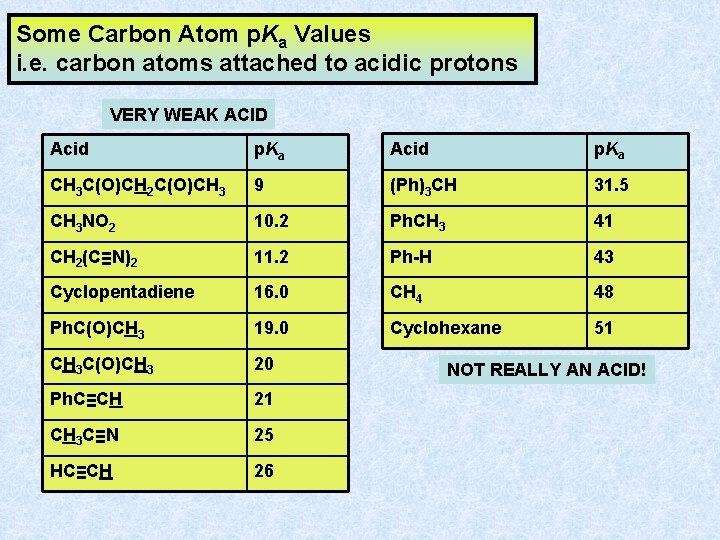
Some Carbon Atom p. Ka Values i. e. carbon atoms attached to acidic protons VERY WEAK ACID Acid p. Ka CH 3 C(O)CH 2 C(O)CH 3 9 (Ph)3 CH 31. 5 CH 3 NO 2 10. 2 Ph. CH 3 41 CH 2(C≡N)2 11. 2 Ph-H 43 Cyclopentadiene 16. 0 CH 4 48 Ph. C(O)CH 3 19. 0 Cyclohexane 51 CH 3 C(O)CH 3 20 Ph. C≡CH 21 CH 3 C≡N 25 HC≡CH 26 NOT REALLY AN ACID!
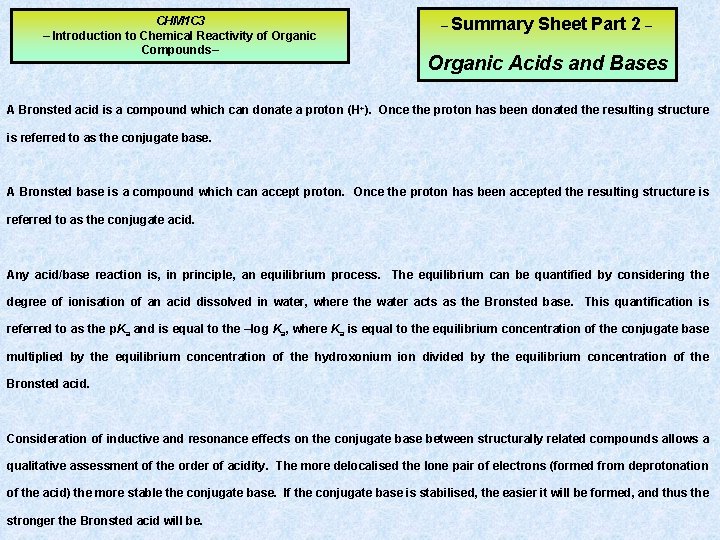
CHM 1 C 3 – Introduction to Chemical Reactivity of Organic Compounds– – Summary Sheet Part 2 – Organic Acids and Bases A Bronsted acid is a compound which can donate a proton (H+). Once the proton has been donated the resulting structure is referred to as the conjugate base. A Bronsted base is a compound which can accept proton. Once the proton has been accepted the resulting structure is referred to as the conjugate acid. Any acid/base reaction is, in principle, an equilibrium process. The equilibrium can be quantified by considering the degree of ionisation of an acid dissolved in water, where the water acts as the Bronsted base. This quantification is referred to as the p. Ka and is equal to the –log Ka, where Ka is equal to the equilibrium concentration of the conjugate base multiplied by the equilibrium concentration of the hydroxonium ion divided by the equilibrium concentration of the Bronsted acid. Consideration of inductive and resonance effects on the conjugate base between structurally related compounds allows a qualitative assessment of the order of acidity. The more delocalised the lone pair of electrons (formed from deprotonation of the acid) the more stable the conjugate base. If the conjugate base is stabilised, the easier it will be formed, and thus the stronger the Bronsted acid will be.
www for further p. Ka information http: //classes. yale. edu/chem 220 a/studyaids/p. Ka. html http: //www. chromatography. co. uk/TECHNIQS/Other/buffers. htm http: //home. planet. nl/~skok/techniques/laboratory/pka_pkb. html http: //www. wiu. edu/users/mftkv/Chem 331/acidstrength. htm http: //www. geocities. com/le_chatelier_uk/pka. html (interesting if you have audio!) http: //www. chem. wisc. edu/areas/reich/pkatable/ (p. Kas in DMSO as solvent) http: //www. agsci. ubc. ca/courses/fnh/410/protein/1_13. htm (p. Kas of aminoacids) http: //classes. yale. edu/chem 220 a/studyaids/p. Ka. html http: //www. chem. umd. edu/courses/chem 231 fribush/3 -Chapter 2 -3. pdf
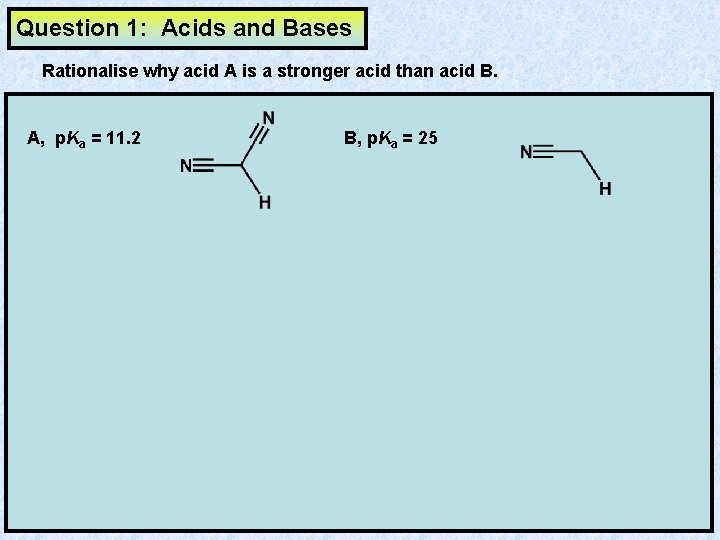
Question 1: Acids and Bases Rationalise why acid A is a stronger acid than acid B. A, p. Ka = 11. 2 B, p. Ka = 25
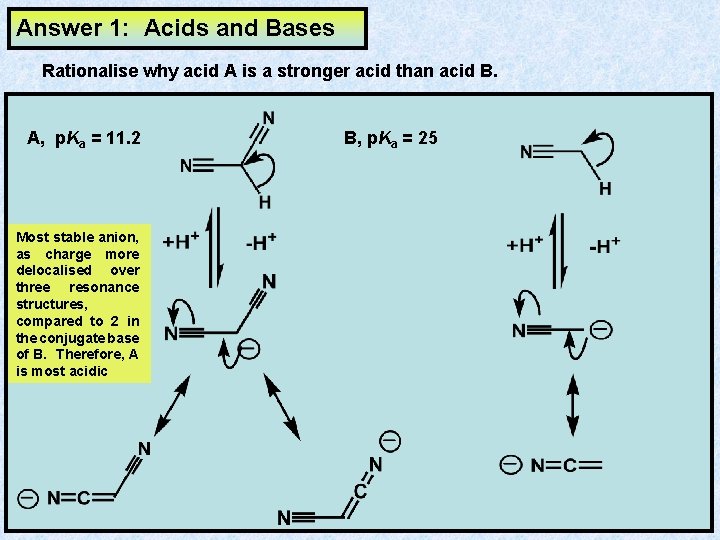
Answer 1: Acids and Bases Rationalise why acid A is a stronger acid than acid B. A, p. Ka = 11. 2 Most stable anion, as charge more delocalised over three resonance structures, compared to 2 in the conjugate base of B. Therefore, A is most acidic B, p. Ka = 25
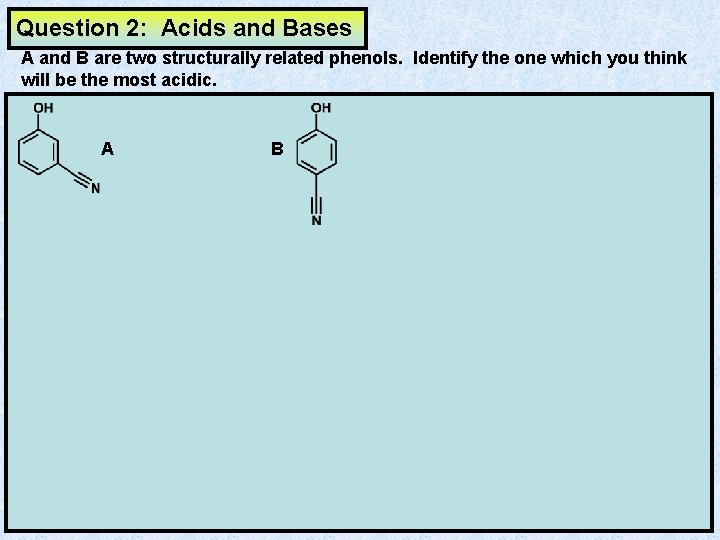
Question 2: Acids and Bases A and B are two structurally related phenols. Identify the one which you think will be the most acidic. A B
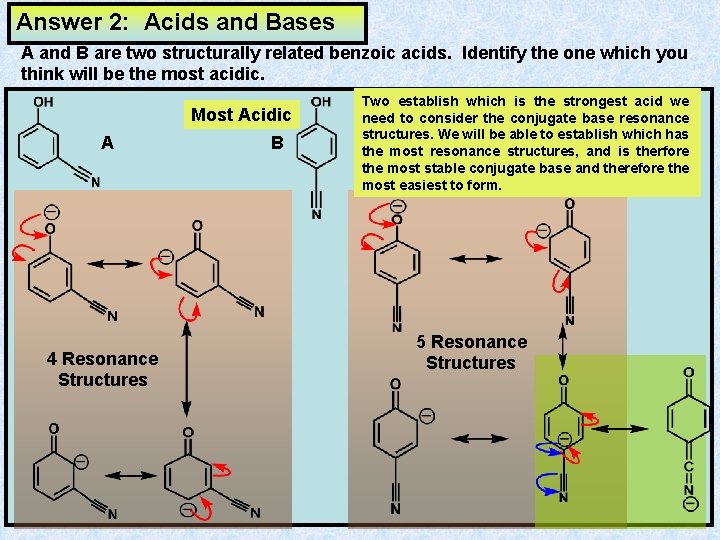
Answer 2: Acids and Bases A and B are two structurally related benzoic acids. Identify the one which you think will be the most acidic. Most Acidic A 4 Resonance Structures B Two establish which is the strongest acid we need to consider the conjugate base resonance structures. We will be able to establish which has the most resonance structures, and is therfore the most stable conjugate base and therefore the most easiest to form. 5 Resonance Structures
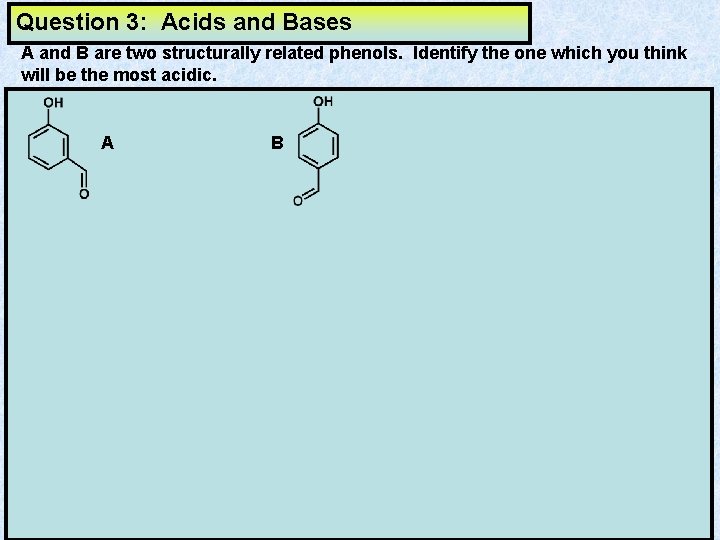
Question 3: Acids and Bases A and B are two structurally related phenols. Identify the one which you think will be the most acidic. A B
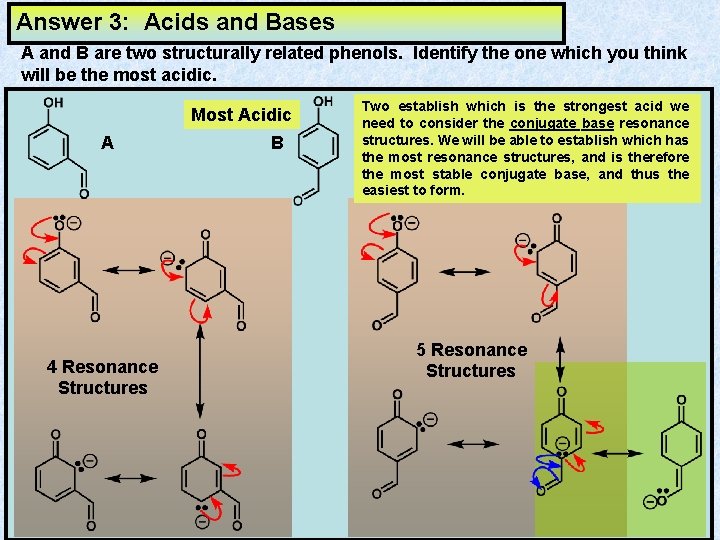
Answer 3: Acids and Bases A and B are two structurally related phenols. Identify the one which you think will be the most acidic. Most Acidic A 4 Resonance Structures B Two establish which is the strongest acid we need to consider the conjugate base resonance structures. We will be able to establish which has the most resonance structures, and is therefore the most stable conjugate base, and thus the easiest to form. 5 Resonance Structures