
Part 2 1700s The Enlightenment Path to Enlightenment


- Slides: 19
Part 2: 1700’s The Enlightenment
Path to Enlightenment • Philosophical movement of intellectuals impressed w/the achievements of Scientific Revolution • Influenced by Isaac Newtonworld is a giant machine, natural laws governed the world • And John Locke- humans born blank and are molded by sensory experiences. People could change w/their environments.
Philosophes • Philosophe- French for intellectual includes: philosophers, writers, economists, and social reformers quiz • Goal- change the world • Rational criticism applied to everything
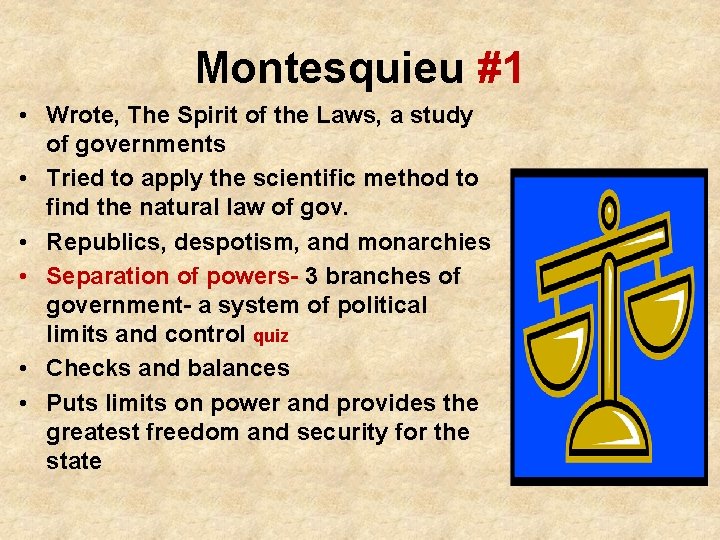
Montesquieu #1 • Wrote, The Spirit of the Laws, a study of governments • Tried to apply the scientific method to find the natural law of gov. • Republics, despotism, and monarchies • Separation of powers- 3 branches of government- a system of political limits and control quiz • Checks and balances • Puts limits on power and provides the greatest freedom and security for the state
Voltaire #2 • Prolific writer and wealthy • Known for criticism of Christianity and religious tolerance • Believed in deism- religious philosophy based on reason and natural law. • Built on ideas of Newton • A mechanic (God) created the universe, set it in motion, and allowed it run w/out interference according to its own natural laws. Quiz, #6
Diderot • Created the Encyclopedia • 28 volumes of knowledge he had collected • Purpose- to change the general way of thinking • Attacked religious superstition quiz • Supported religious toleration • Called for social, legal, and political improvements for a more tolerant/humane society • Sold to doctors, lawyers, spread enlightenment
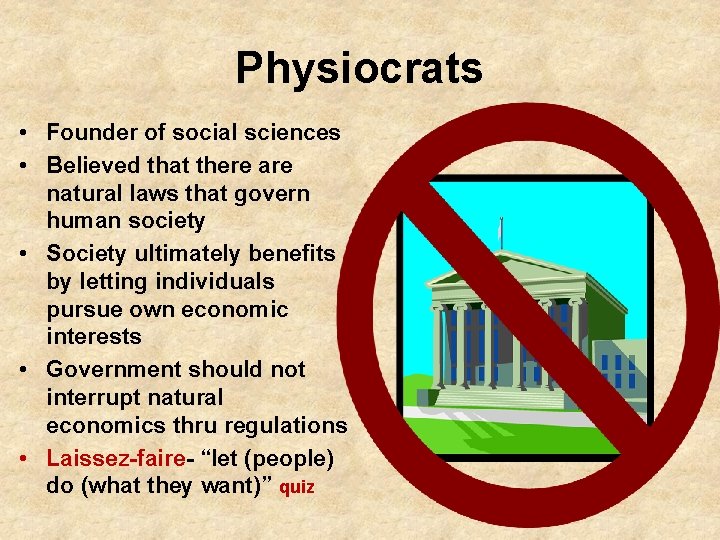
Physiocrats • Founder of social sciences • Believed that there are natural laws that govern human society • Society ultimately benefits by letting individuals pursue own economic interests • Government should not interrupt natural economics thru regulations • Laissez-faire- “let (people) do (what they want)” quiz
Adam Smith #3 • Wrote, The Wealth of Nations • Governments should not interfere w/economic matters #7 • Governments should: protect citizens from invasion, defend citizens from injustice, and keep up public works quiz, #7
Jean-Jacques Rousseau • People adopted governments and laws to protect their property, then were enslaved by it • Argued society should be governed by a social contract quiz • Social contract- an agreement among individuals that they will be governed by the general will. #8 • Believed in a balance of heart and mind, rule of the general will, and education fostering natural instincts. quiz
Women • Mary Wollstonecraft considered founder of the women’s movement • 2 problems w/thinkers • If arbitrary power of monarchs wrong, then arbitrary power of men over women wrong #9 • If all humans have reason, then that includes women #9 • Women should have same rights as men
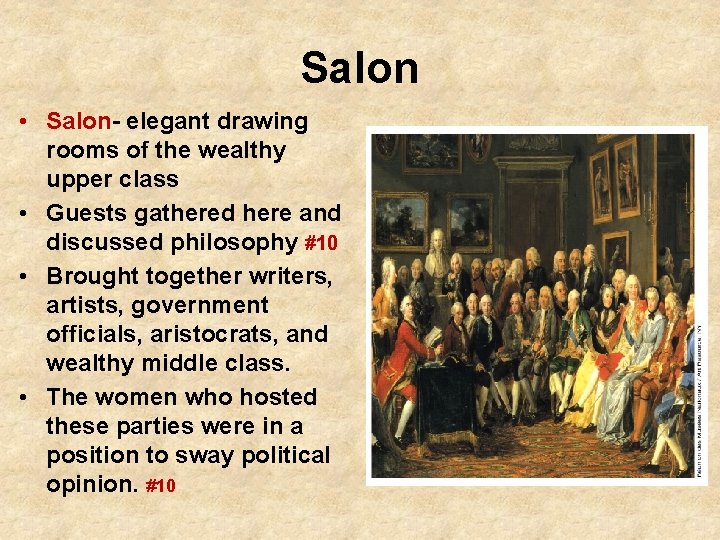
Salon • Salon- elegant drawing rooms of the wealthy upper class • Guests gathered here and discussed philosophy #10 • Brought together writers, artists, government officials, aristocrats, and wealthy middle class. • The women who hosted these parties were in a position to sway political opinion. #10
Methodism #11 • People were seeking a deeper connection to God. • John Wesley, preached in open fields, appealed to the masses, caused people to have conversion experiences • Converts joined Methodist societies • Gave middle and lower classes a sense of purpose
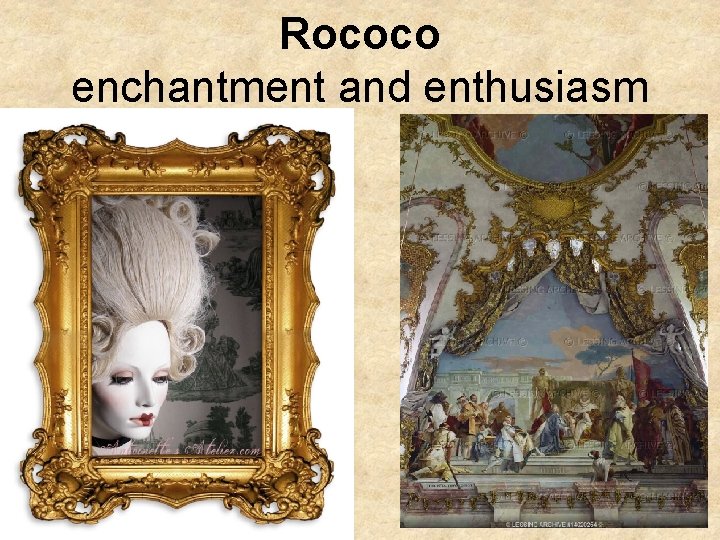
Rococo • Rococo. Emphasized grace and charm with gentle action • Used delicate designs w/graceful curves • Tried to convey pursuit of happiness, pleasure, and love.
Rococo enchantment and enthusiasm
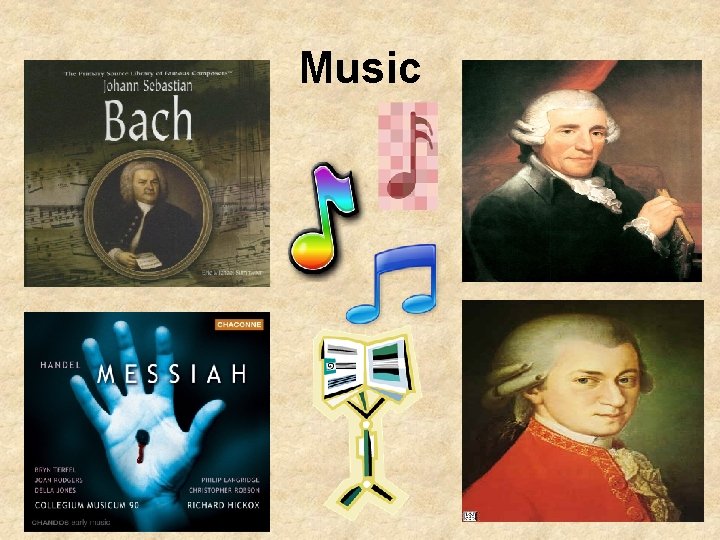
Music
Ideas of the Enlightenment • Philosophes believed in natural rights for all men • Includes: 1. Equality for all men. 2. Freedom of religion 3. Freedom of speech 4. Freedom of the press 5. Right to assemble
Enlightened rulers • Allow religious toleration • Freedom of speech and press • Rights of property • Promote arts, sciences, and education • Obey the laws and enforce them fairly • Enlightened absolutism? rulers tried to govern by Enlightenment principles while keeping royal powers.
Joseph II #13 • Only ruler to truly try Enlightened Absolutism • Heir to Queen Maria • Wanted to change the strong, centralized state • Abolished serfdom, eliminated death penalty, enacted religious reforms • Ticked everyone off, even the serfs
Quiz!