
Part 2 0 Standardised Interpretation of Paediatric CXR
- Slides: 26
Part 2. 0 Standardised Interpretation of Paediatric CXR Done in collaboration with: The Northern School of Radiology, UK County Durham and Darlington NHS Foundation Trust Authors: Dr. Alasdair Mackie MD Dr. Nadia Mcallister MD Dr. Abdelrahman Omer MD Dr. Ramdas Senasi MD Special Thanks: Professor Bernard Laya
Aim Ø Demonstrate a systematic approach to paediatric Chest X-rays using an ABCDE method.
Systematic approach Technique • A - Airways and lungs • B - Bones and soft tissues • C - Cardiac • D - Diaphragm • E - Extra body equipment Ø + - ABC Double check: Important review areas to minimise missing abnormalities.
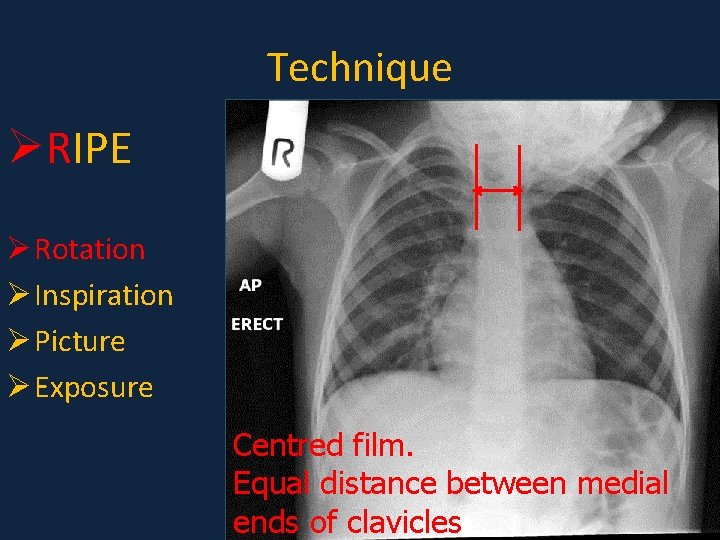
Technique ØRIPE Ø Rotation Ø Inspiration Ø Picture Ø Exposure Centred film. Equal distance between medial ends of clavicles
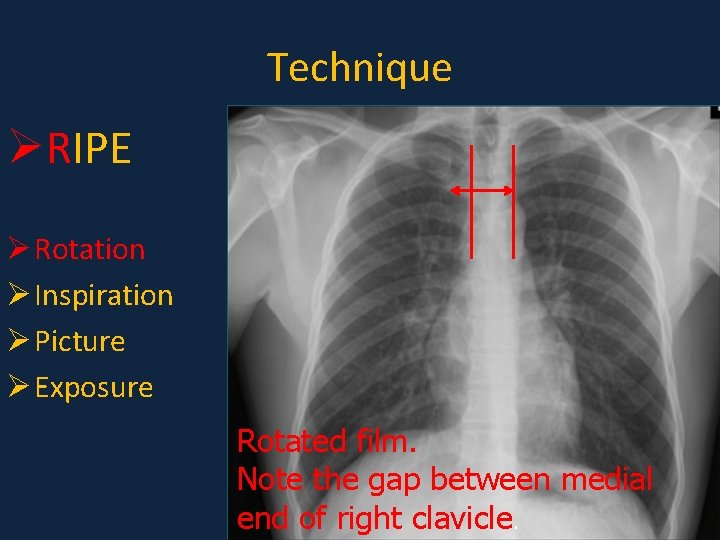
Technique ØRIPE Ø Rotation Ø Inspiration Ø Picture Ø Exposure Rotated film. Note the gap between medial end of right clavicle.
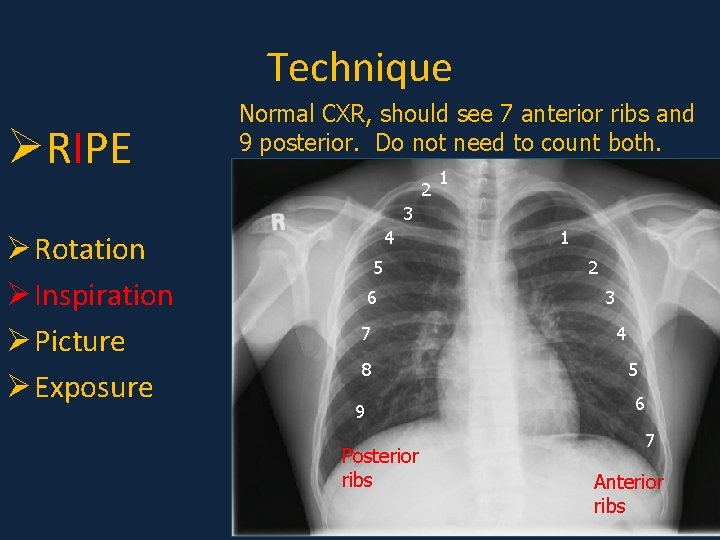
Technique ØRIPE Normal CXR, should see 7 anterior ribs and 9 posterior. Do not need to count both. 2 1 3 Ø Rotation Ø Inspiration Ø Picture Ø Exposure 4 5 6 7 8 9 Posterior ribs 1 2 3 4 5 6 7 Anterior ribs
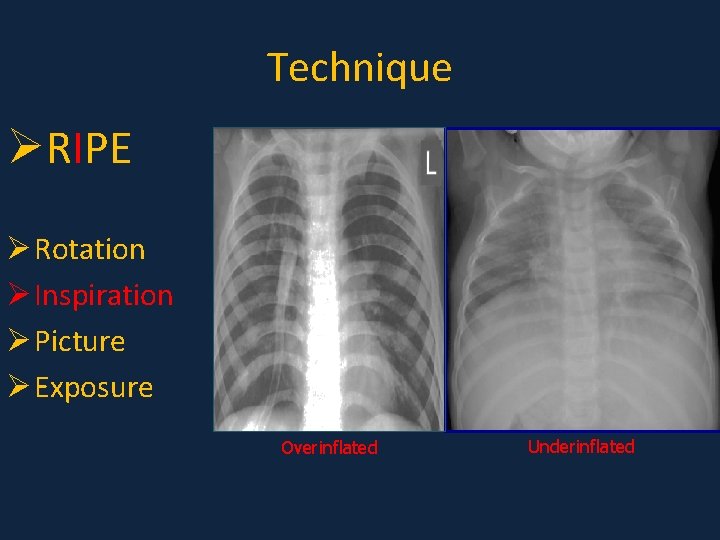
Technique ØRIPE Ø Rotation Ø Inspiration Ø Picture Ø Exposure Overinflated Underinflated
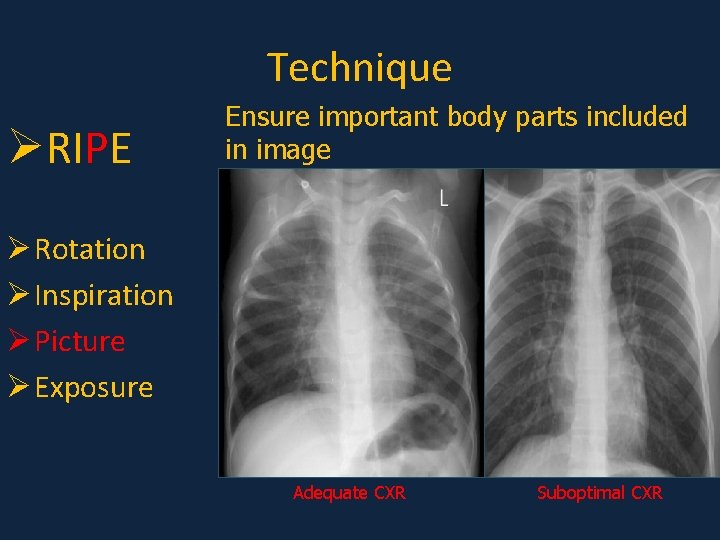
Technique ØRIPE Ensure important body parts included in image Ø Rotation Ø Inspiration Ø Picture Ø Exposure Adequate CXR Suboptimal CXR
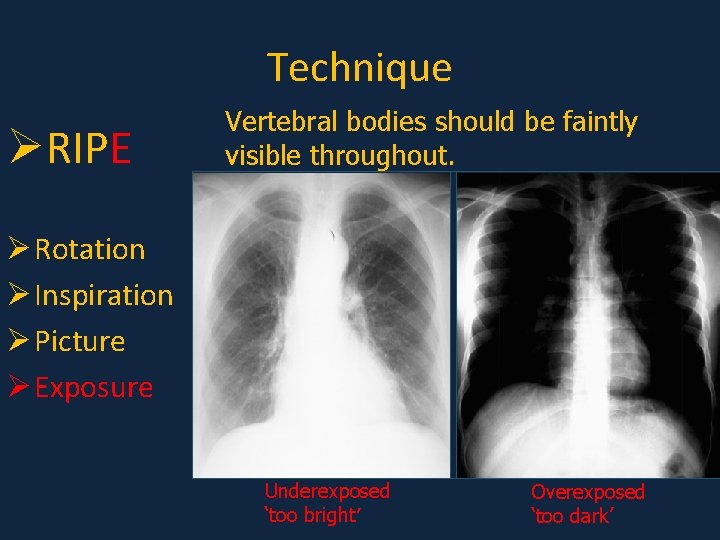
Technique ØRIPE Vertebral bodies should be faintly visible throughout. Ø Rotation Ø Inspiration Ø Picture Ø Exposure Underexposed ‘too bright’ Overexposed ‘too dark’
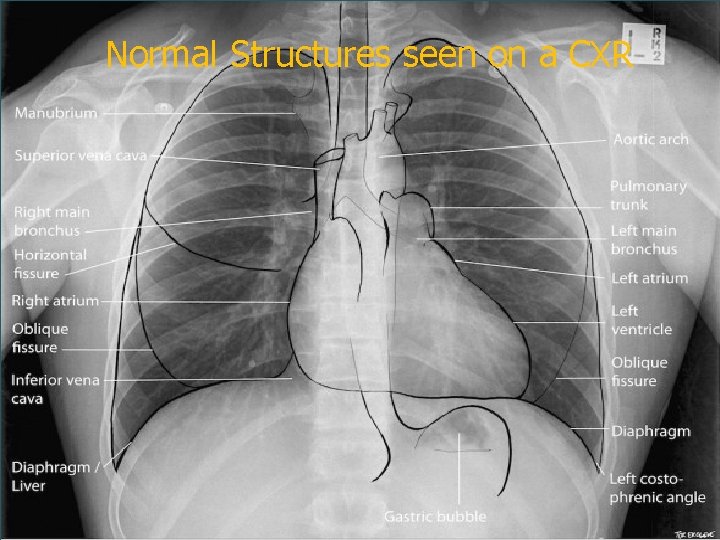
Normal Structures seen on a CXR
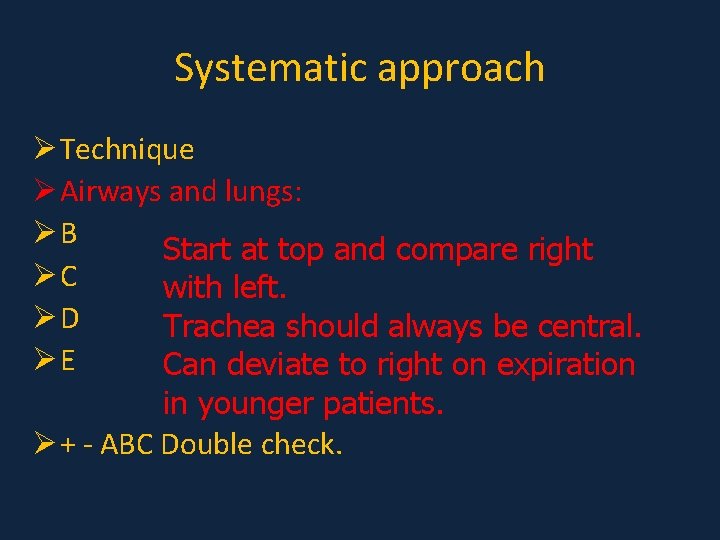
Systematic approach Ø Technique Ø Airways and lungs: ØB Start at top and compare right ØC with left. ØD Trachea should always be central. ØE Can deviate to right on expiration in younger patients. Ø + - ABC Double check.
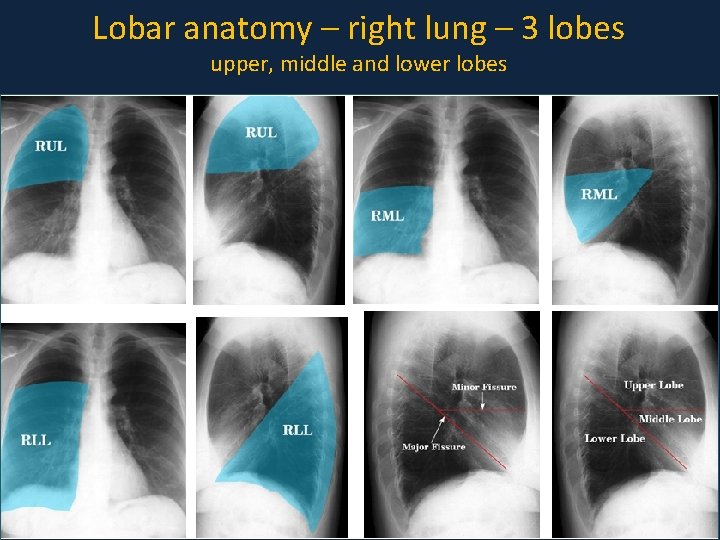
Lobar anatomy – right lung – 3 lobes upper, middle and lower lobes
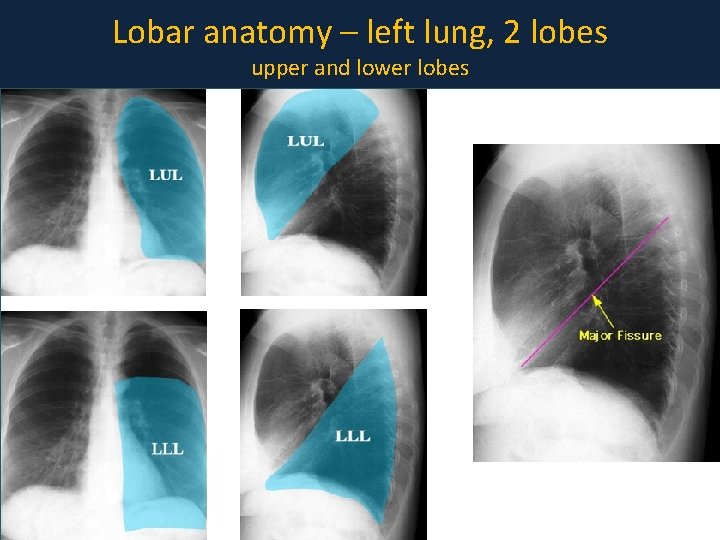
Lobar anatomy – left lung, 2 lobes upper and lower lobes
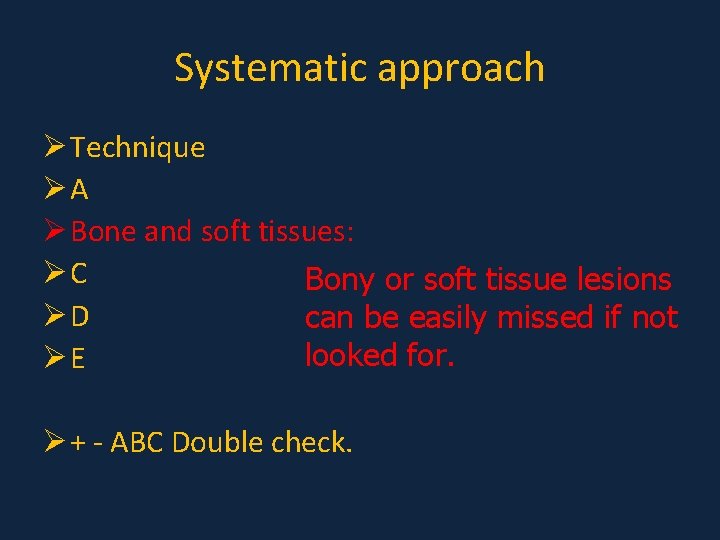
Systematic approach Ø Technique ØA Ø Bone and soft tissues: ØC Bony or soft tissue lesions ØD can be easily missed if not looked for. ØE Ø + - ABC Double check.
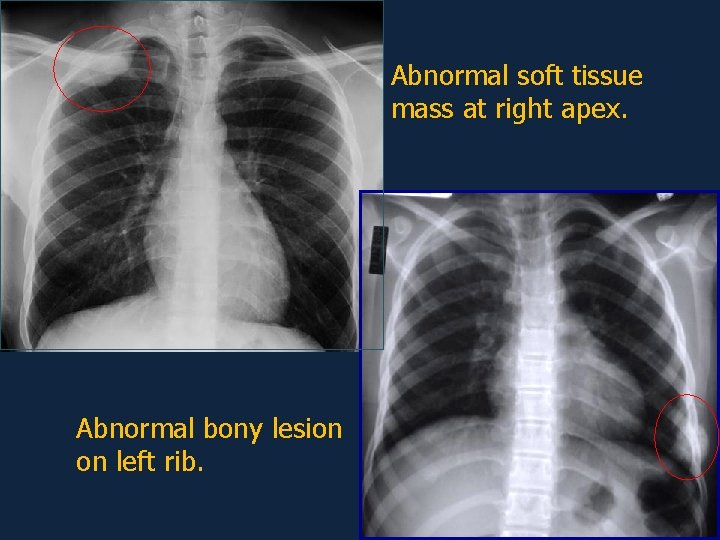
Abnormal soft tissue mass at right apex. Abnormal bony lesion on left rib.
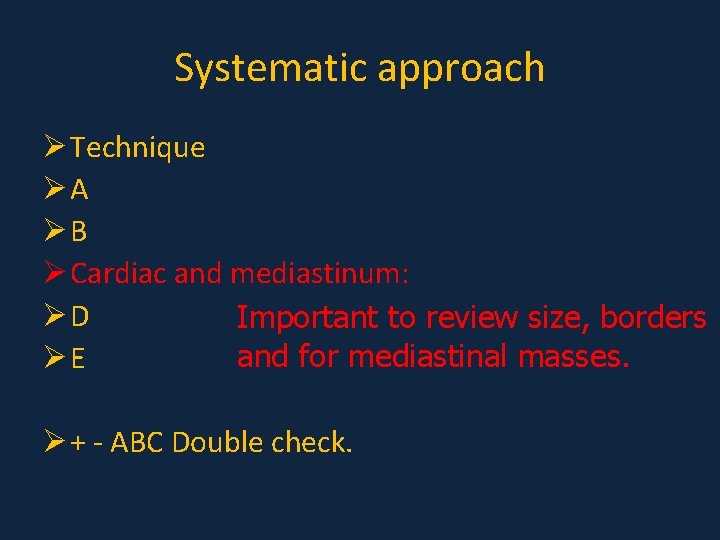
Systematic approach Ø Technique ØA ØB Ø Cardiac and mediastinum: ØD Important to review size, borders and for mediastinal masses. ØE Ø + - ABC Double check.
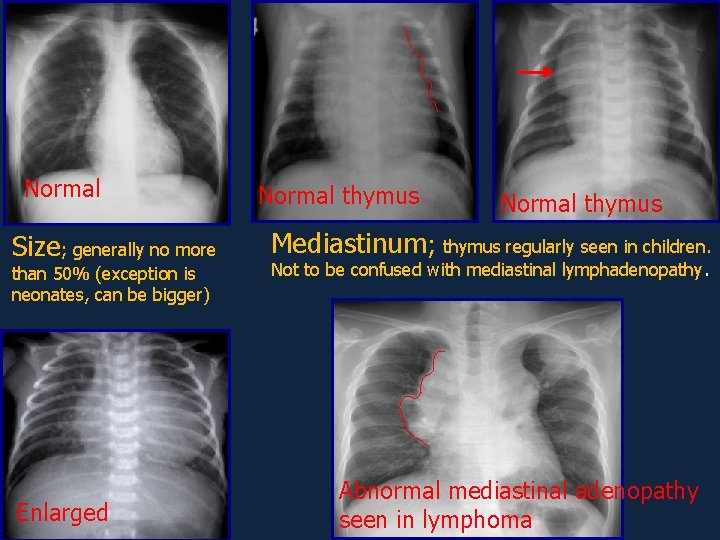
Normal Size; generally no more than 50% (exception is neonates, can be bigger) Enlarged Normal thymus Mediastinum; thymus regularly seen in children. Not to be confused with mediastinal lymphadenopathy. Abnormal mediastinal adenopathy seen in lymphoma
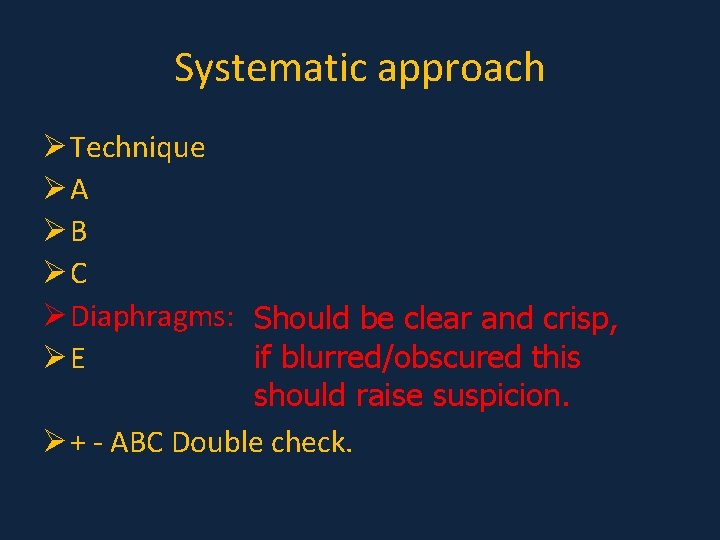
Systematic approach Ø Technique ØA ØB ØC Ø Diaphragms: Should be clear and crisp, if blurred/obscured this ØE should raise suspicion. Ø + - ABC Double check.
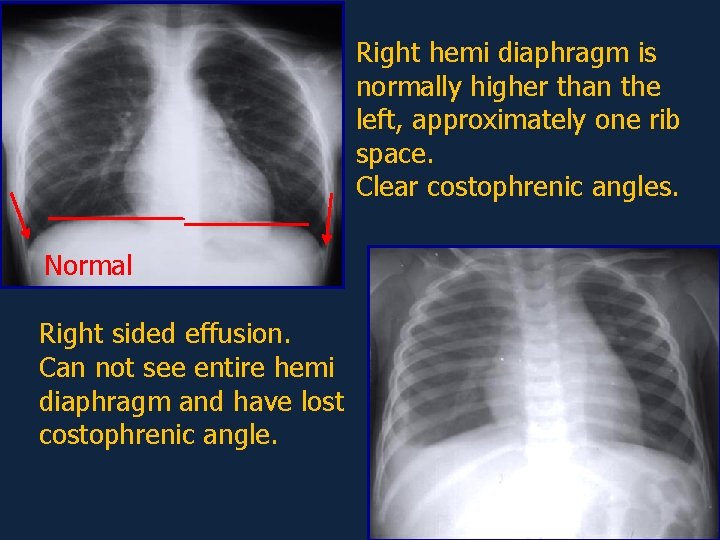
Right hemi diaphragm is normally higher than the left, approximately one rib space. Clear costophrenic angles. Normal Right sided effusion. Can not see entire hemi diaphragm and have lost costophrenic angle.
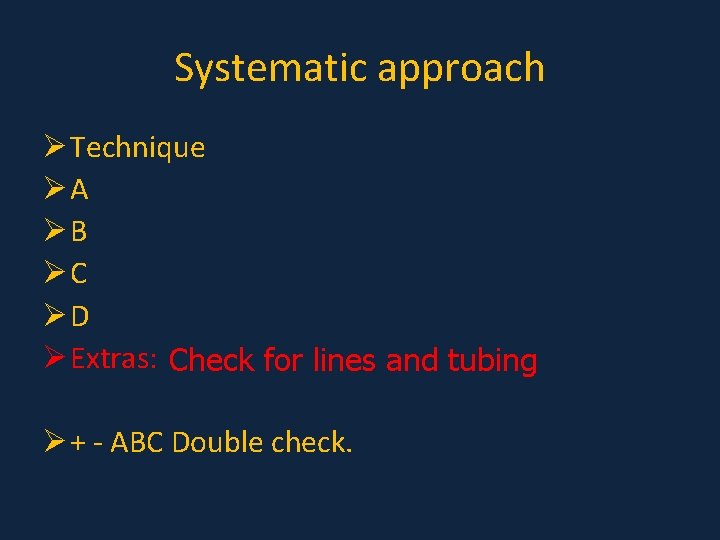
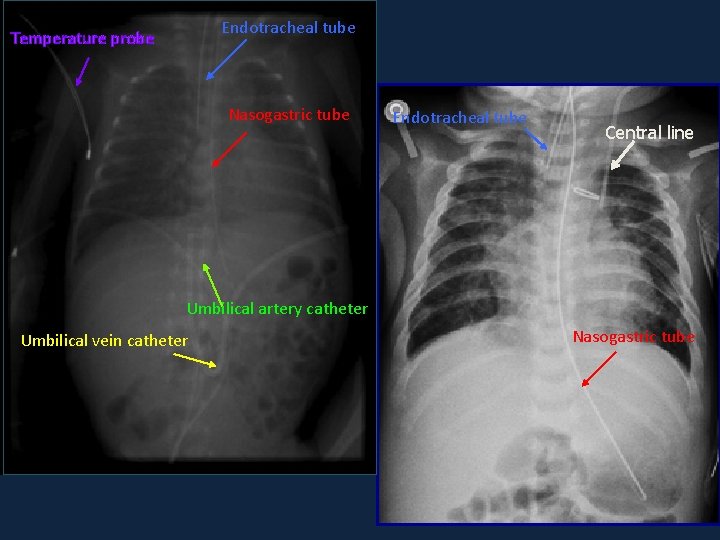
Systematic approach Ø Technique ØA ØB ØC ØD Ø Extras: Check for lines and tubing Ø + - ABC Double check.
Endotracheal tube Temperature probe Nasogastric tube Endotracheal tube Central line Umbilical artery catheter Umbilical vein catheter Nasogastric tube
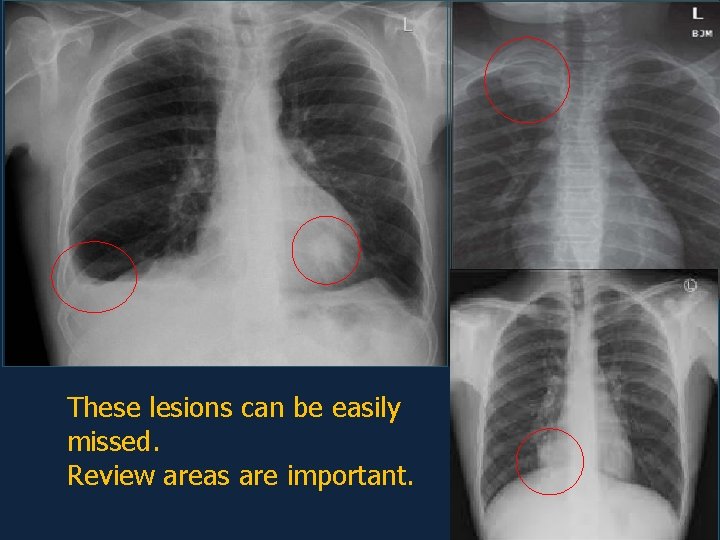
Systematic approach Ø Technique ØA ØB ØC ØD ØE Ø + - ABC Double check Apex, Behind heart, costophrenic and cardio phrenic angles.
These lesions can be easily missed. Review areas are important.
Summary ØDemonstrated a systematic approach to paediatric CXR using ABCDE. ØReinforced importance of review areas to ensure subtle things not missed.
• Thank you for your attention. • Any questions?
References Ø Images obtained from following resources; ØEurorad. org ØRadiopaedia. org ØWikiradiography. net ØLifeinthefastlane. com ØSlideshare. net