
Part 147 Oversight Mark Panton Airworthiness Manager 8


- Slides: 19
Part 147 Oversight Mark Panton Airworthiness Manager 8 th December 2016
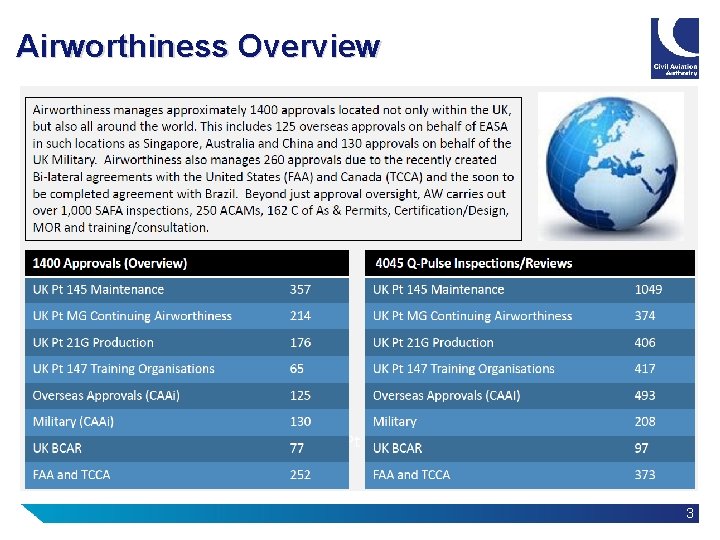
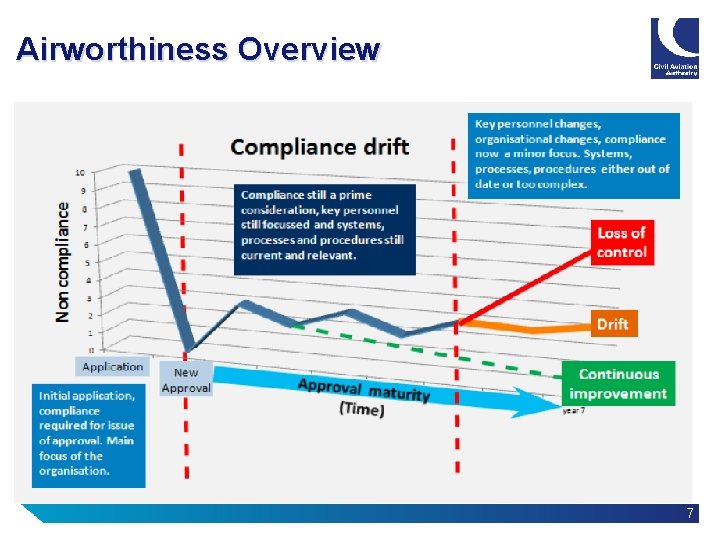
Airworthiness Overview 3
Performance Based Oversight / Regulation 4
Our Vision To transform the CAA into a Performance Based Regulator, working with industry to evidently reduce safety risk across the aviation industry. 5
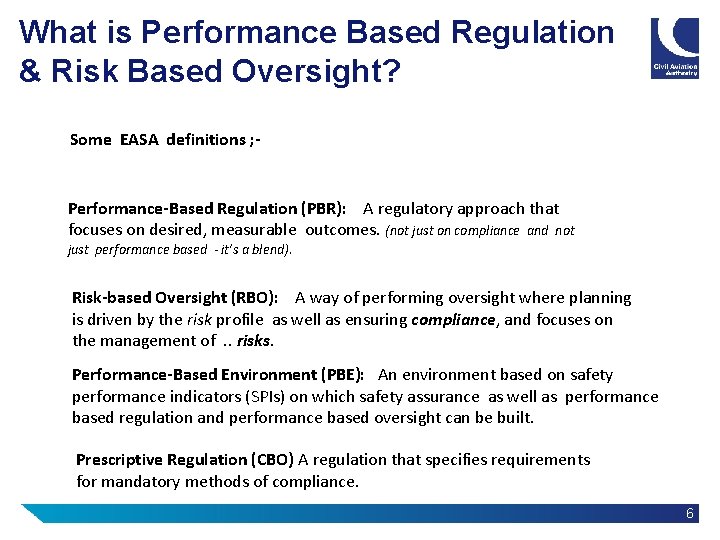
What is Performance Based Regulation & Risk Based Oversight? Some EASA definitions ; - Performance-Based Regulation (PBR): A regulatory approach that focuses on desired, measurable outcomes. (not just on compliance and not just performance based - it’s a blend). Risk-based Oversight (RBO): A way of performing oversight where planning is driven by the risk profile as well as ensuring compliance, and focuses on the management of. . risks. Performance-Based Environment (PBE): An environment based on safety performance indicators (SPIs) on which safety assurance as well as performance based regulation and performance based oversight can be built. Prescriptive Regulation (CBO) A regulation that specifies requirements for mandatory methods of compliance. 6
Airworthiness Overview 7
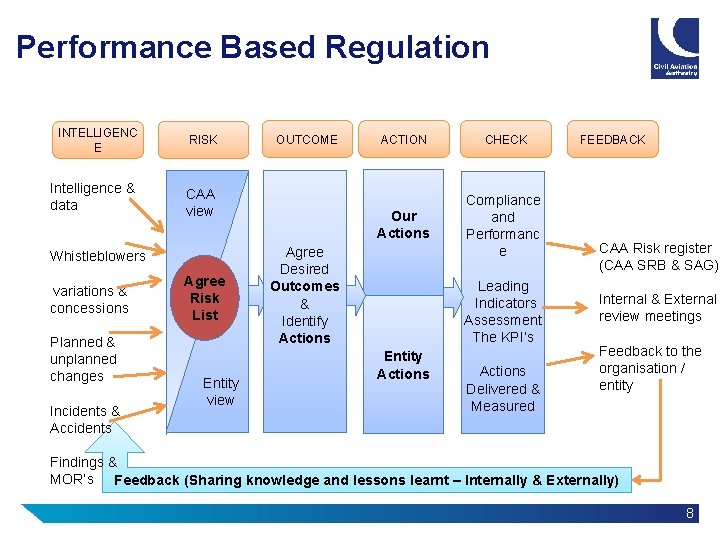
Performance Based Regulation INTELLIGENC E Intelligence & data RISK CAA view Whistleblowers variations & concessions Planned & unplanned changes Incidents & Accidents OUTCOME Agree Risk List Entity view ACTION CHECK Our Actions Compliance and Performanc e Agree Desired Outcomes & Identify Actions Leading Indicators Assessment The KPI’s Entity Actions Delivered & Measured FEEDBACK CAA Risk register (CAA SRB & SAG) Internal & External review meetings Feedback to the organisation / entity Findings & MOR’s Feedback (Sharing knowledge and lessons learnt – Internally & Externally) 8
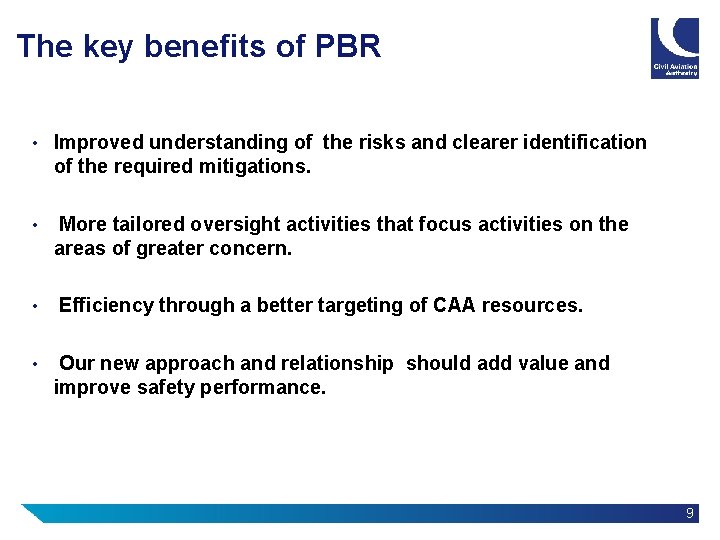
The key benefits of PBR • Improved understanding of the risks and clearer identification of the required mitigations. • More tailored oversight activities that focus activities on the areas of greater concern. • • Efficiency through a better targeting of CAA resources. Our new approach and relationship should add value and improve safety performance. 9
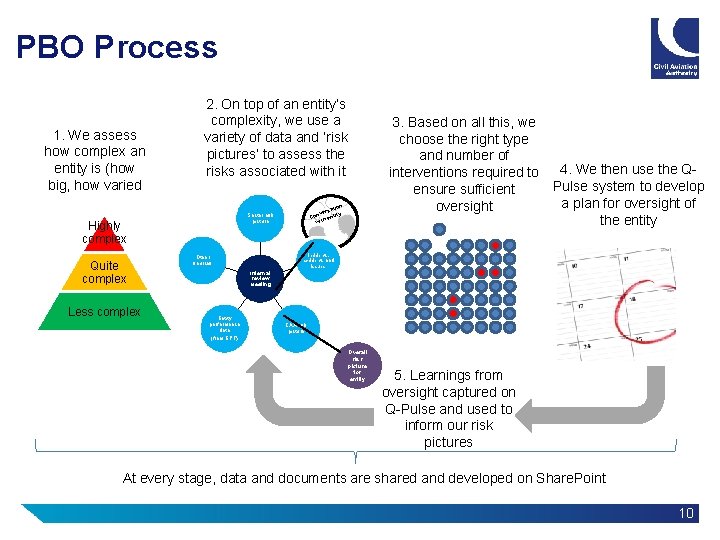
PBO Process 1. We assess how complex an entity is (how big, how varied 2. On top of an entity’s complexity, we use a variety of data and ‘risk pictures’ to assess the risks associated with it Quite complex Less complex ion sat ver ty Con th enti i w Sector risk picture Highly complex 3. Based on all this, we choose the right type and number of 4. We then use the Qinterventions required to Pulse system to develop ensure sufficient a plan for oversight of oversight the entity Incidents, accidents and issues Other sources Internal review meeting Entity performance data (from EPT) CAA risk picture Overall risk picture for entity 5. Learnings from oversight captured on Q-Pulse and used to inform our risk pictures At every stage, data and documents are shared and developed on Share. Point 10
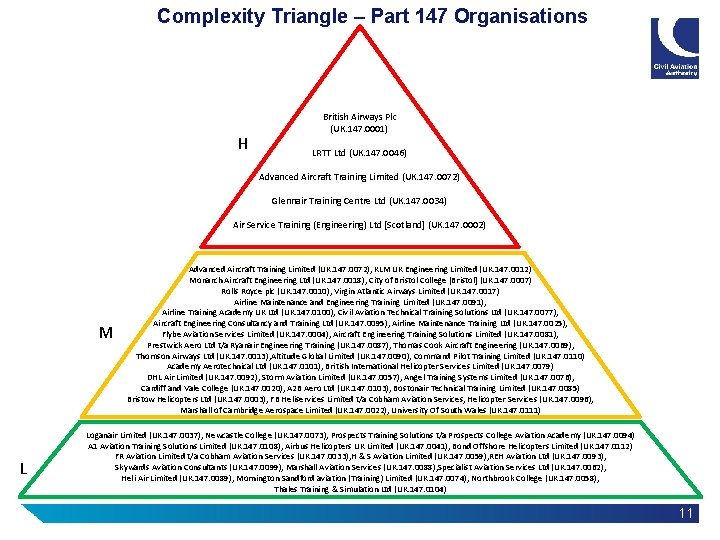
Complexity Triangle – Part 147 Organisations H British Airways Plc (UK. 147. 0001) LRTT Ltd (UK. 147. 0046) Advanced Aircraft Training Limited (UK. 147. 0072) Glennair Training Centre Ltd (UK. 147. 0034) Air Service Training (Engineering) Ltd [Scotland] (UK. 147. 0002) M L Advanced Aircraft Training Limited (UK. 147. 0072), KLM UK Engineering Limited (UK. 147. 0012) Monarch Aircraft Engineering Ltd (UK. 147. 0018), City of Bristol College [Bristol] (UK. 147. 0007) Rolls Royce plc (UK. 147. 0010), Virgin Atlantic Airways Limited (UK. 147. 0017) Airline Maintenance and Engineering Training Limited (UK. 147. 0091), Airline Training Academy UK Ltd (UK. 147. 0100), Civil Aviation Technical Training Solutions Ltd (UK. 147. 0077), Aircraft Engineering Consultancy and Training Ltd (UK. 147. 0095), Airline Maintenance Training Ltd (UK. 147. 0025), Flybe Aviation Services Limited (UK. 147. 0004), Aircraft Engineering Training Solutions Limited (UK. 147. 0081), Prestwick Aero Ltd t/a Ryanair Engineering Training (UK. 147. 0087), Thomas Cook Aircraft Engineering (UK. 147. 0069), Thomson Airways Ltd (UK. 147. 0013), Altitude Global Limited (UK. 147. 0090), Command Pilot Training Limited (UK. 147. 0110) Academy Aerotechnical Ltd (UK. 147. 0101), British International Helicopter Services Limited (UK. 147. 0079) DHL Air Limited (UK. 147. 0092), Storm Aviation Limited (UK. 147. 0057), Angel Training Systems Limited (UK. 147. 0076), Cardiff and Vale College (UK. 147. 0020), A 2 B Aero Ltd (UK. 147. 0103), Bostonair Technical Training Limited (UK. 147. 0085) Bristow Helicopters Ltd (UK. 147. 0003), FB Heliservices Limited t/a Cobham Aviation Services, Helicopter Services (UK. 147. 0096), Marshall of Cambridge Aerospace Limited (UK. 147. 0022), University Of South Wales (UK. 147. 0111) Loganair Limited (UK. 147. 0037), Newcastle College (UK. 147. 0073), Prospects Training Solutions t/a Prospects College Aviation Academy (UK. 147. 0094) A 1 Aviation Training Solutions Limited (UK. 147. 0108), Airbus Helicopters UK Limited (UK. 147. 0041), Bond Offshore Helicopters Limited (UK. 147. 0112) FR Aviation Limited t/a Cobham Aviation Services (UK. 147. 0033), H & S Aviation Limited (UK. 147. 0059), REH Aviation Ltd (UK. 147. 0093), Skywards Aviation Consultants (UK. 147. 0099), Marshall Aviation Services (UK. 147. 0088), Specialist Aviation Services Ltd (UK. 147. 0062), Heli Air Limited (UK. 147. 0089), Mornington Sandford aviation (Training) Limited (UK. 147. 0074), Northbrook College (UK. 147. 0058), Thales Training & Simulation Ltd (UK. 147. 0104) 11
Findings Analysis 12
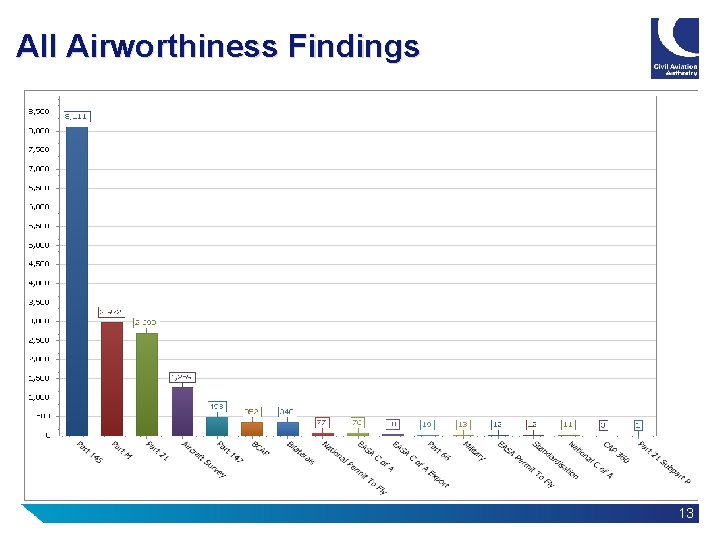
All Airworthiness Findings 13
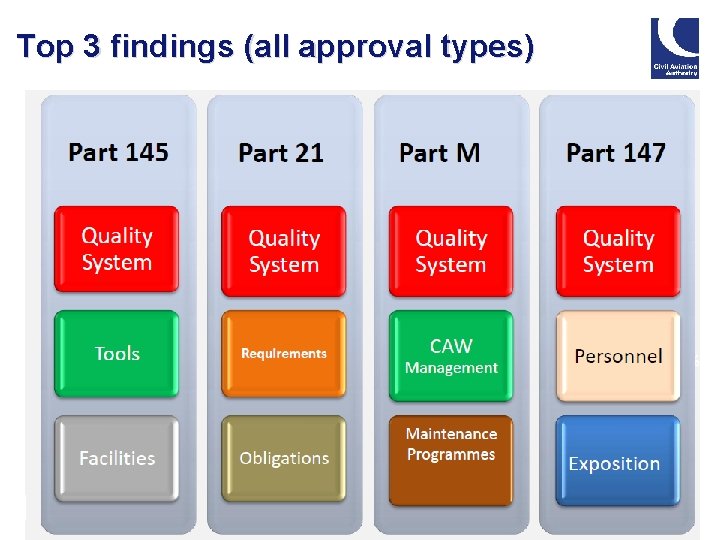
Top 3 findings (all approval types) 14
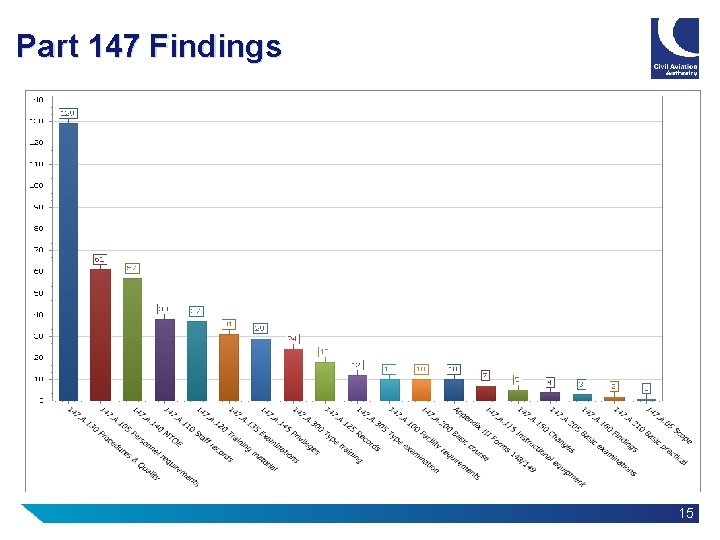
Part 147 Findings 15
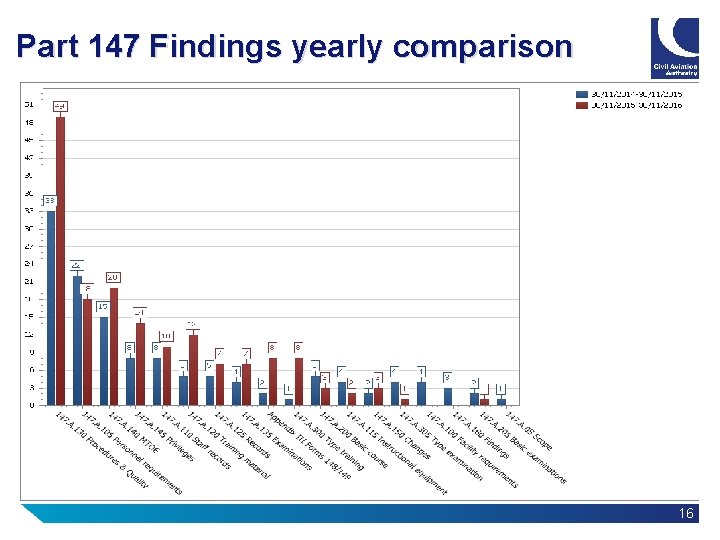
Part 147 Findings yearly comparison 16
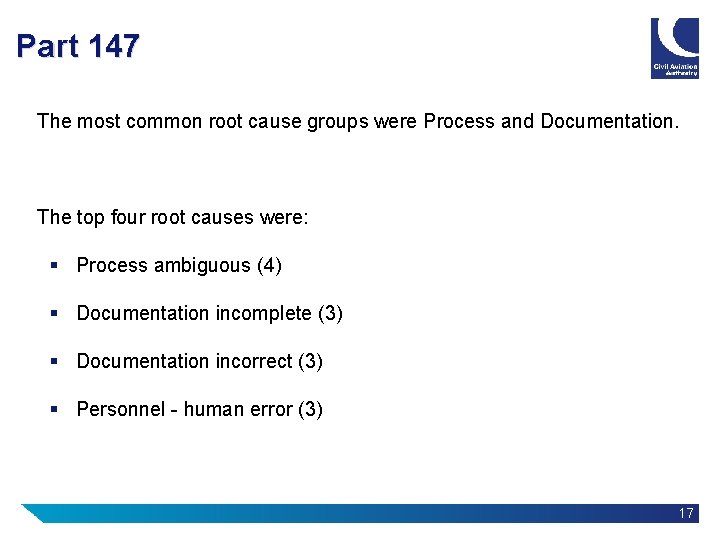
Part 147 The most common root cause groups were Process and Documentation. The top four root causes were: § Process ambiguous (4) § Documentation incomplete (3) § Documentation incorrect (3) § Personnel - human error (3) 17
Thank You 18
Questions? 19