
Part 1 Making of the Modern British State
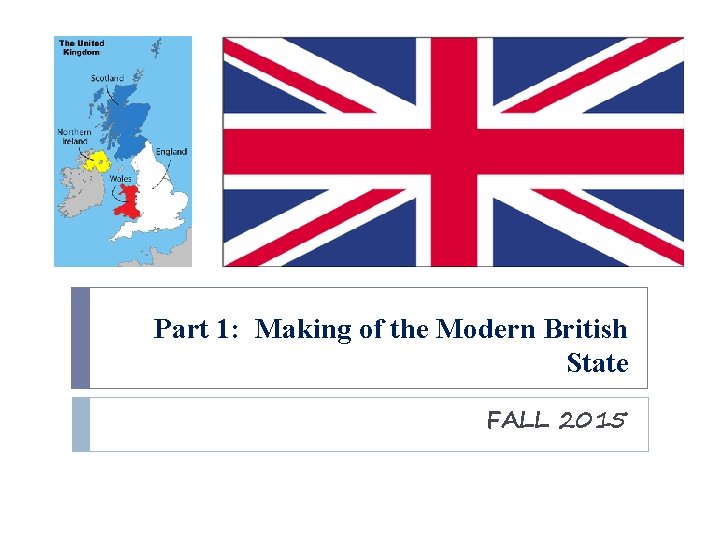
Part 1: Making of the Modern British State FALL 2015
The United Kingdom � Discussion Question: Why do we study the UK?
Why do we study the UK? � Evolutionary � Democracy Now an Advanced Democracy � Parliamentary � Democracy Westminister model � Great Power in the Past hegemonic power � 1870 - 25% of world trade � 1900 – Queen Victoria ruled an empire of 25% of world’s population � Direct colonial rule over 50 countries � Controlled international economic order and shaped political developments throughout the world � � High Standard of Living � Unitary Form of Government Example of Devolution � 1977 devolved power to Scotland Wales by creating assemblies � 1998 devolved power to Northern Ireland �
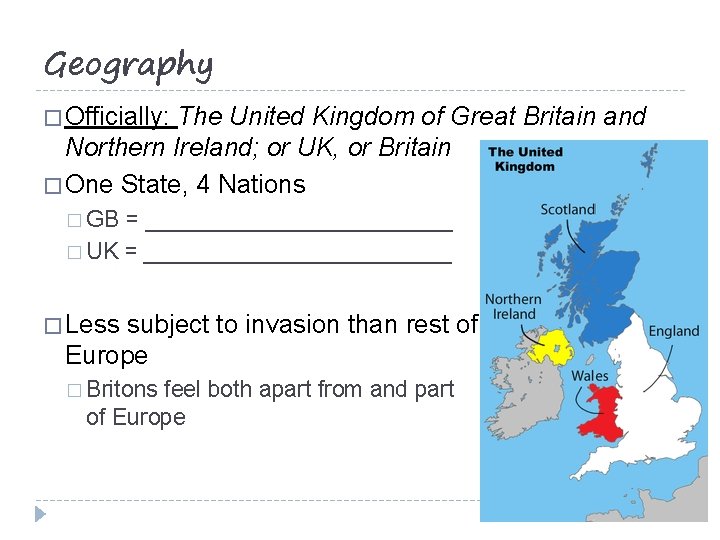
Geography � Officially: The United Kingdom of Great Britain and Northern Ireland; or UK, or Britain � One State, 4 Nations � GB = ____________ � UK = ____________ � Less subject to invasion than rest of Europe � Britons feel both apart from and part of Europe
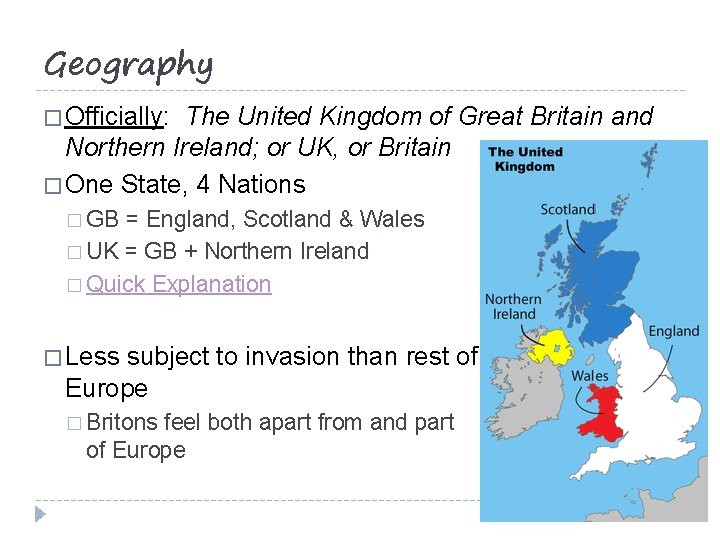
Geography � Officially: The United Kingdom of Great Britain and Northern Ireland; or UK, or Britain � One State, 4 Nations � GB = England, Scotland & Wales � UK = GB + Northern Ireland � Quick Explanation � Less subject to invasion than rest of Europe � Britons feel both apart from and part of Europe
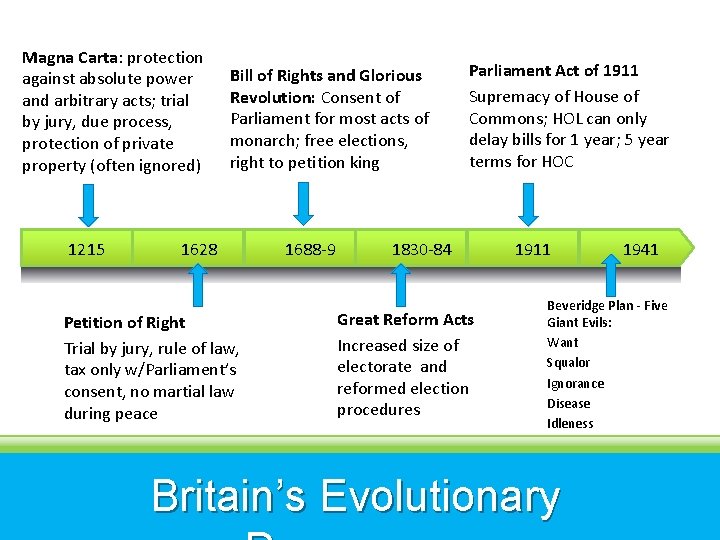
Magna Carta: protection against absolute power and arbitrary acts; trial by jury, due process, protection of private property (often ignored) 1215 Bill of Rights and Glorious Revolution: Consent of Parliament for most acts of monarch; free elections, right to petition king 1628 Petition of Right Trial by jury, rule of law, tax only w/Parliament’s consent, no martial law during peace 1688 -9 Parliament Act of 1911 Supremacy of House of Commons; HOL can only delay bills for 1 year; 5 year terms for HOC 1830 -84 Great Reform Acts Increased size of electorate and reformed election procedures 1911 1941 Beveridge Plan - Five Giant Evils: Want Squalor Ignorance Disease Idleness Britain’s Evolutionary
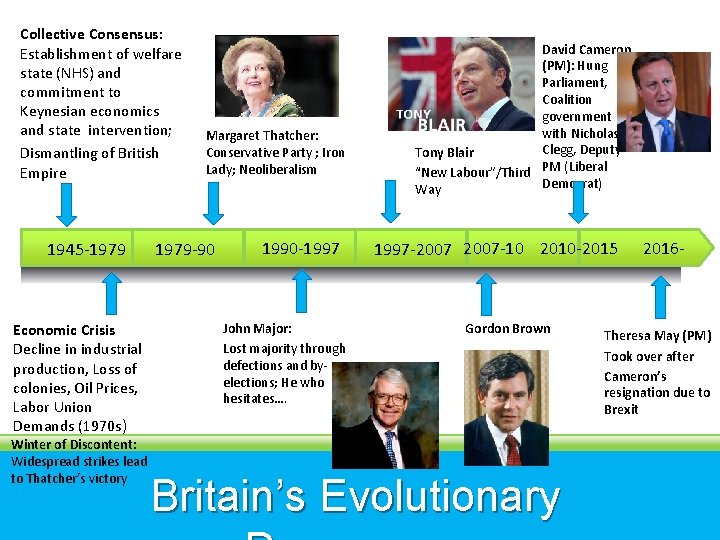
Collective Consensus: Establishment of welfare state (NHS) and commitment to Keynesian economics and state intervention; Dismantling of British Empire 1945 -1979 Economic Crisis Decline in industrial production, Loss of colonies, Oil Prices, Labor Union Demands (1970 s) Winter of Discontent: Widespread strikes lead to Thatcher’s victory Margaret Thatcher: Conservative Party ; Iron Lady; Neoliberalism 1979 -90 1990 -1997 John Major: Lost majority through defections and byelections; He who hesitates…. David Cameron (PM): Hung Parliament, Coalition government with Nicholas Clegg, Deputy Tony Blair “New Labour”/Third PM (Liberal Democrat) Way 1997 -2007 -10 2010 -2015 Gordon Brown Britain’s Evolutionary 2016 - Theresa May (PM) Took over after Cameron’s resignation due to Brexit
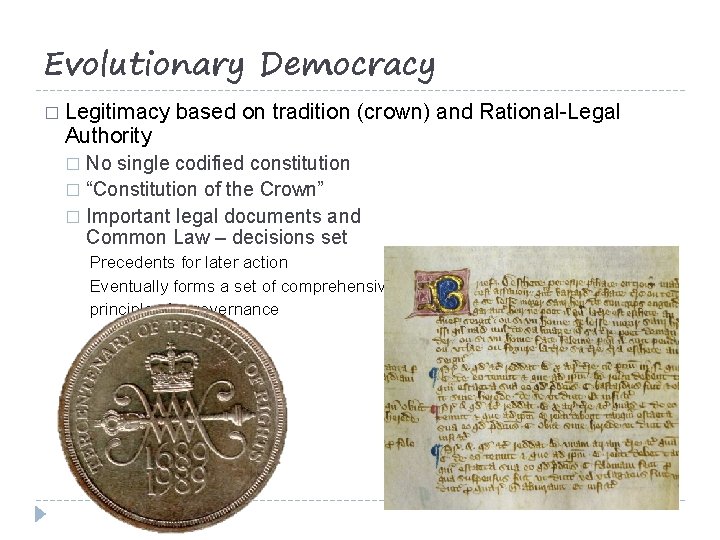
Evolutionary Democracy � Legitimacy Authority based on tradition (crown) and Rational-Legal No single codified constitution � “Constitution of the Crown” � Important legal documents and Common Law – decisions set � Precedents for later action Eventually forms a set of comprehensive principles for governance
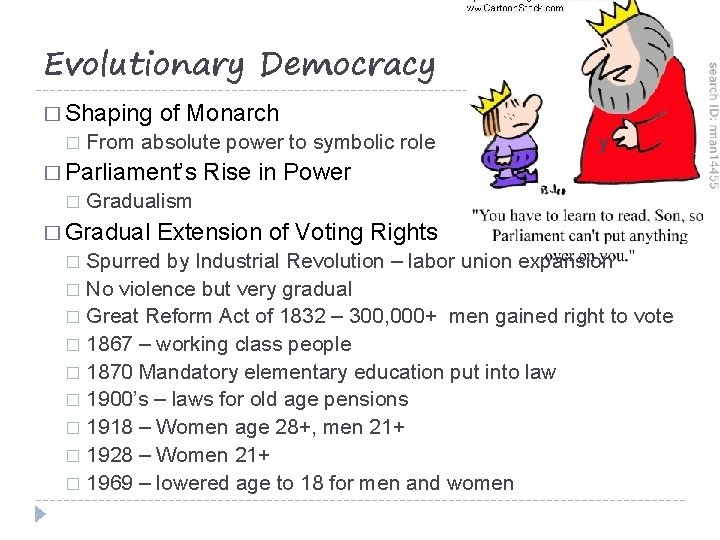
Evolutionary Democracy � Shaping � of Monarch From absolute power to symbolic role � Parliament’s � y Rise in Power Gradualism � Gradual Extension of Voting Rights Spurred by Industrial Revolution – labor union expansion � No violence but very gradual � Great Reform Act of 1832 – 300, 000+ men gained right to vote � 1867 – working class people � 1870 Mandatory elementary education put into law � 1900’s – laws for old age pensions � 1918 – Women age 28+, men 21+ � 1928 – Women 21+ � 1969 – lowered age to 18 for men and women �
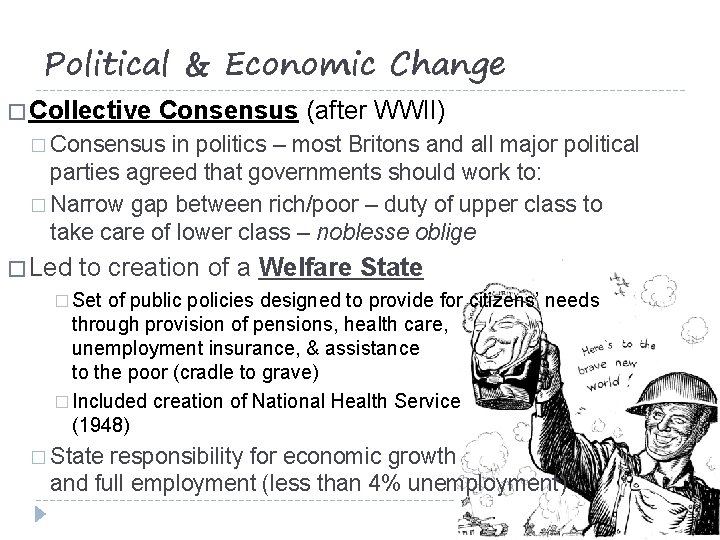
Political & Economic Change � Collective Consensus (after WWII) � Consensus in politics – most Britons and all major political parties agreed that governments should work to: � Narrow gap between rich/poor – duty of upper class to take care of lower class – noblesse oblige � Led to creation of a Welfare State � Set of public policies designed to provide for citizens’ needs through provision of pensions, health care, unemployment insurance, & assistance to the poor (cradle to grave) � Included creation of National Health Service (1948) � State responsibility for economic growth and full employment (less than 4% unemployment)
Political & Economic Change Question: Why do you think there was collective consensus on the need for a welfare state after WWII? � During WWI & WWII, state involvement in the economy increased to direct the war effort, and to help with the Depression between the wars � After WWII: Beveridge Report – argued for social progression, need to rebuild, diminishing population, fear of depression, yearnings for a better life • 'Social insurance fully developed may provide income security; It is an attack upon Want. But Want is one only of five giants on the road of reconstruction and in some ways the easiest to attack. The others are Disease, Ignorance, Squalor and Idleness (unemployment). ‘ • The problem of a diminishing population, Beveridge argued, made it 'imperative to give first place in social expenditure to the care of childhood and to the safeguarding of maternity'. Other areas covered were unemployment, disability and retirement � Discussion
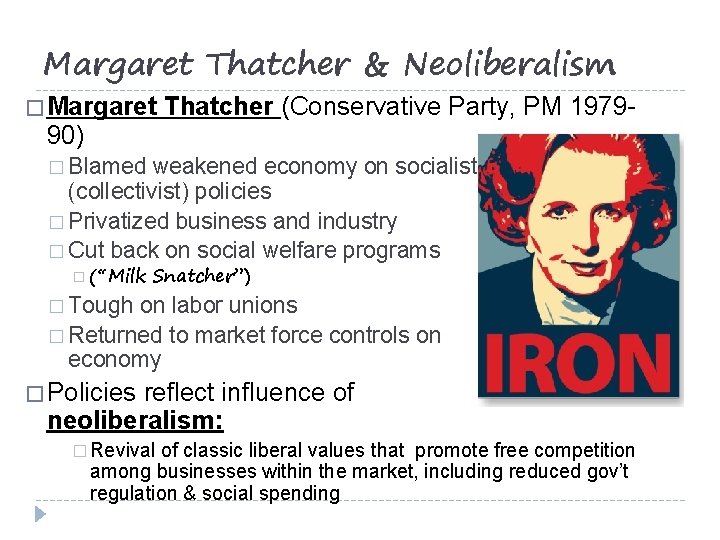
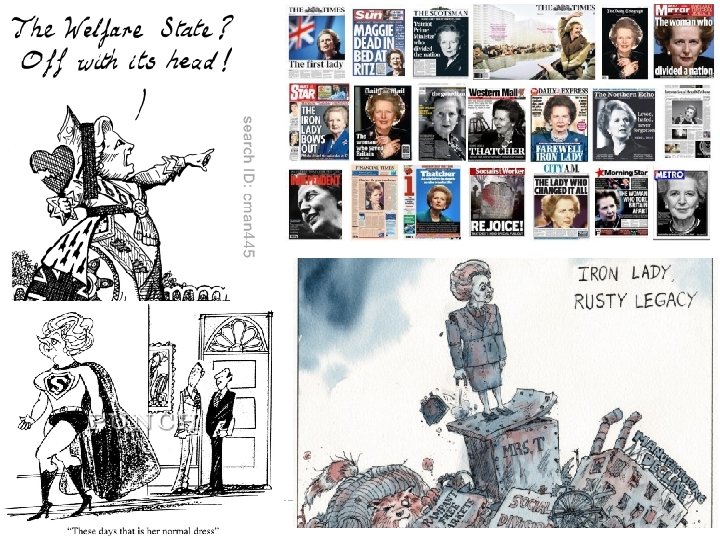
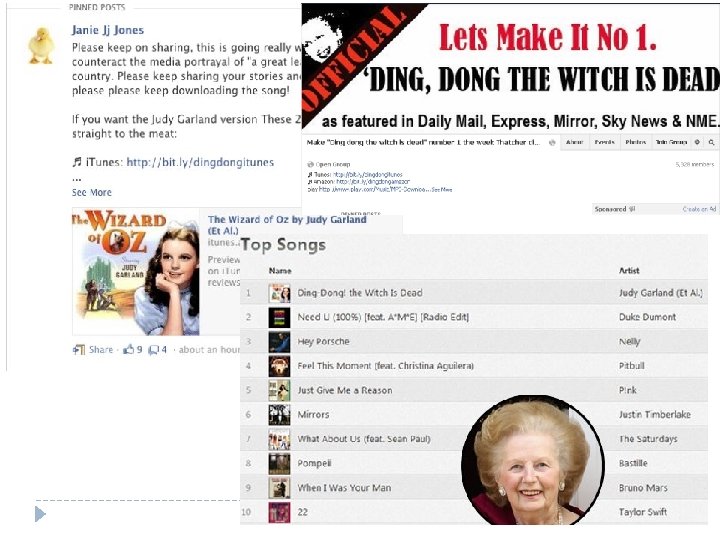
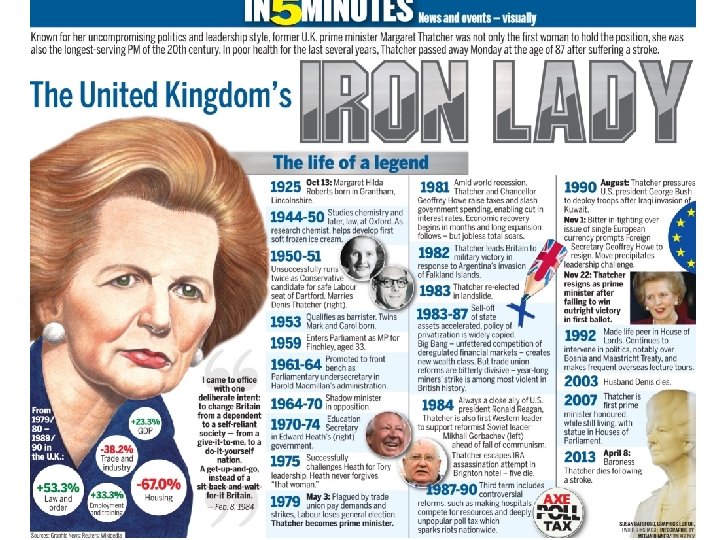
Margaret Thatcher & Neoliberalism � Margaret 90) Thatcher (Conservative Party, PM 1979 - � Blamed weakened economy on socialist (collectivist) policies � Privatized business and industry � Cut back on social welfare programs � (“Milk Snatcher”) � Tough on labor unions � Returned to market force controls on economy � Policies reflect influence of neoliberalism: � Revival of classic liberal values that promote free competition among businesses within the market, including reduced gov’t regulation & social spending
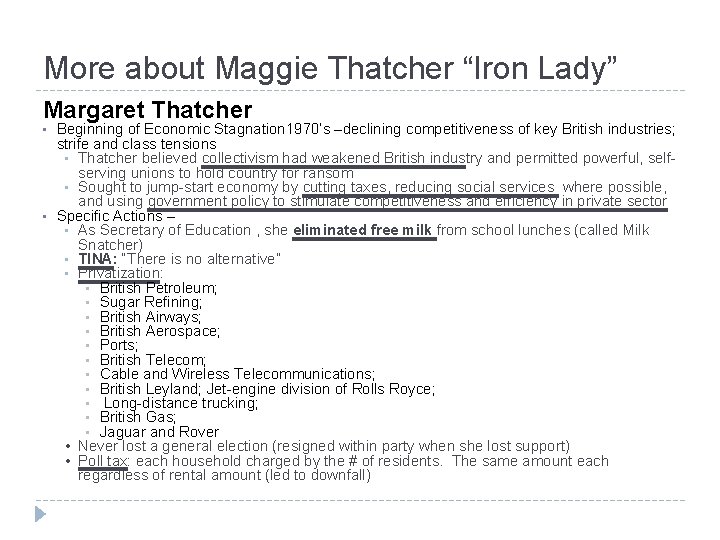
More about Maggie Thatcher “Iron Lady” Margaret Thatcher • • Beginning of Economic Stagnation 1970’s –declining competitiveness of key British industries; strife and class tensions • Thatcher believed collectivism had weakened British industry and permitted powerful, selfserving unions to hold country for ransom • Sought to jump-start economy by cutting taxes, reducing social services where possible, and using government policy to stimulate competitiveness and efficiency in private sector Specific Actions – • As Secretary of Education , she eliminated free milk from school lunches (called Milk Snatcher) • TINA: “There is no alternative” • Privatization: • British Petroleum; • Sugar Refining; • British Airways; • British Aerospace; • Ports; • British Telecom; • Cable and Wireless Telecommunications; • British Leyland; Jet-engine division of Rolls Royce; • Long-distance trucking; • British Gas; • Jaguar and Rover • Never lost a general election (resigned within party when she lost support) • Poll tax: each household charged by the # of residents. The same amount each regardless of rental amount (led to downfall)
Margaret Thatcher Question: Is it a contradiction that a member of the Conservative Party followed a policy of neo-liberalism? Explain! � Discussion � No because liberalism has a different meaning in the UK (and the rest of the world) than it does in the U. S. Liberalism supports minimal government interference. Our Republican party would be more likely to follow liberal/neo-liberal policies than our Democratic Party!
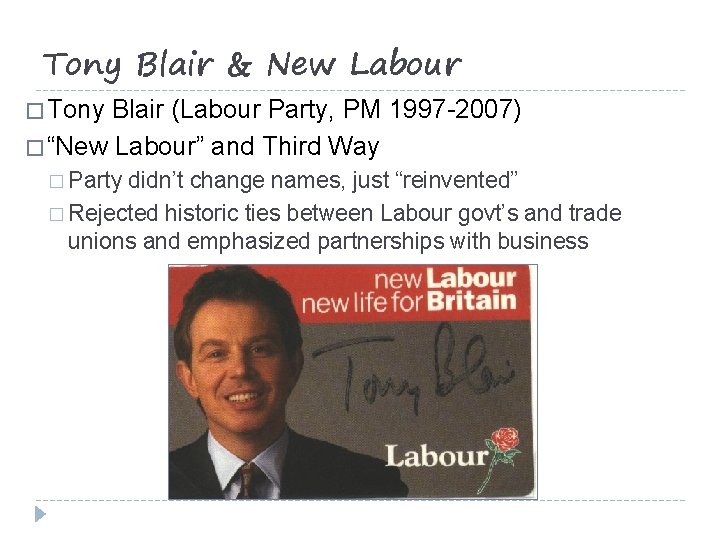
Tony Blair & New Labour � Tony Blair (Labour Party, PM 1997 -2007) � “New Labour” and Third Way � Party didn’t change names, just “reinvented” � Rejected historic ties between Labour govt’s and trade unions and emphasized partnerships with business
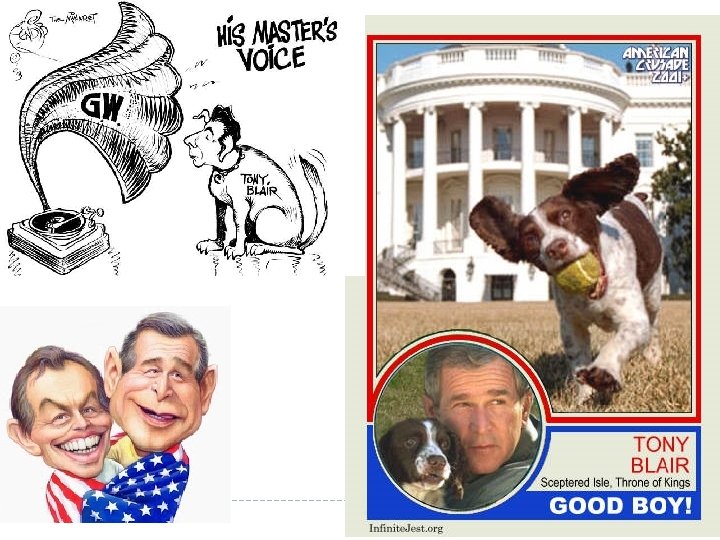
Tony Blair & New Labour �Reforms: Devolution to Scotland Wales ü Elected Mayor and council for London ü Removal of voting rights of hereditary peers in House of Lords ü Incorporates Convention on Human Rights into British law ü Eliminates part of Clause IV of party’s constitution which committed party to seek “the common ownership of the means of production, distribution, and exchange” ü Freedom of Information Act (passed in 2000) ü Downfall: Iraq War & seen as George W. Bush’s “puppy” Gordon Brown – Labour Party PM 2007 -2010
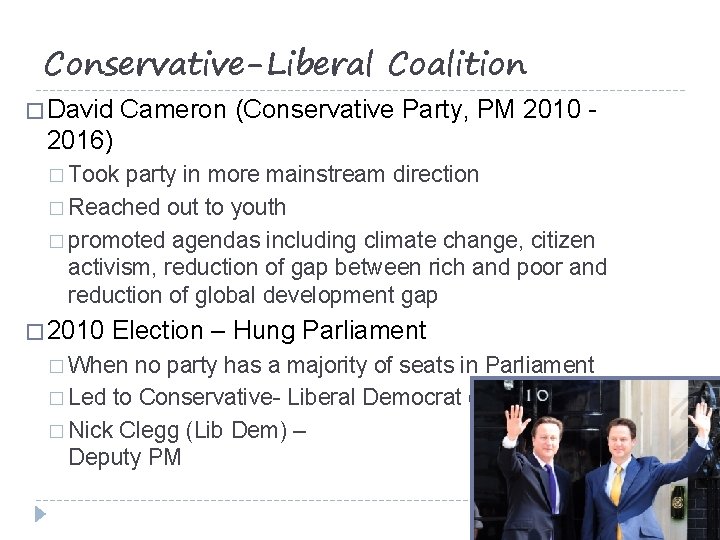
Conservative-Liberal Coalition � David Cameron (Conservative Party, PM 2010 - 2016) � Took party in more mainstream direction � Reached out to youth � promoted agendas including climate change, citizen activism, reduction of gap between rich and poor and reduction of global development gap � 2010 Election – Hung Parliament � When no party has a majority of seats in Parliament � Led to Conservative- Liberal Democrat coalition � Nick Clegg (Lib Dem) – Deputy PM
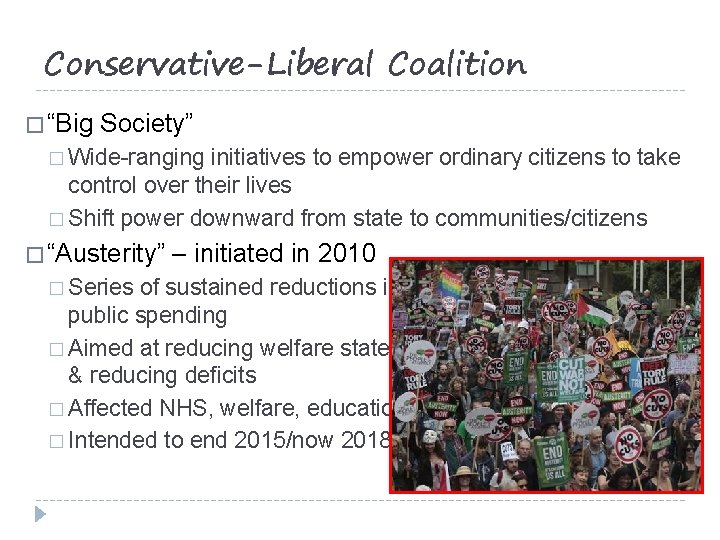
Conservative-Liberal Coalition � “Big Society” � Wide-ranging initiatives to empower ordinary citizens to take control over their lives � Shift power downward from state to communities/citizens � “Austerity” � Series – initiated in 2010 of sustained reductions in public spending � Aimed at reducing welfare state & reducing deficits � Affected NHS, welfare, education � Intended to end 2015/now 2018
The United Kingdom government austerity programme A series of sustained reductions in public spending, intended to reduce the welfare state. The cuts have affected the National Health Service, welfare, education, and other public institutions. � The programme was initiated in 2010 by the Conservative and Liberal Democrat coalition government. Its original stated goal was to, "achieve cyclically-adjusted current balance by the end of the rolling, five-year forecast period. " At the June 2010 budget, the end of the forecast period was 2015 -16. However, in 2014 the Treasury extended the proposed austerity period until at least 2018. [1] � � Examples: Cut subsidies for public housing for higher income recipients; proposals to cut diablility benefits
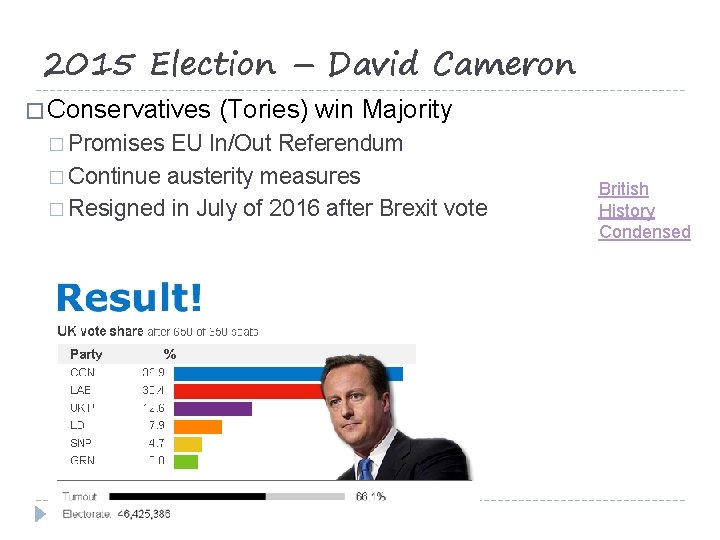
2015 Election – David Cameron � Conservatives (Tories) win Majority � Promises EU In/Out Referendum � Continue austerity measures � Resigned in July of 2016 after Brexit vote British History Condensed
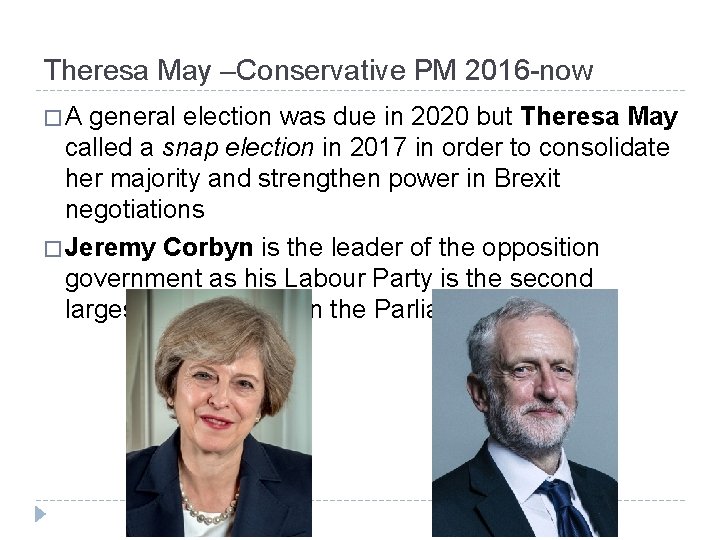
Theresa May –Conservative PM 2016 -now �A general election was due in 2020 but Theresa May called a snap election in 2017 in order to consolidate her majority and strengthen power in Brexit negotiations � Jeremy Corbyn is the leader of the opposition government as his Labour Party is the second largest in seats held in the Parliament
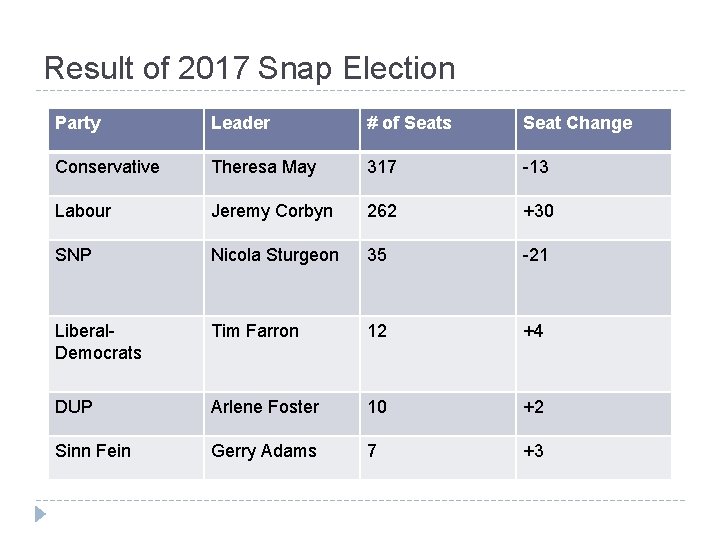
Result of 2017 Snap Election Party Leader # of Seats Seat Change Conservative Theresa May 317 -13 Labour Jeremy Corbyn 262 +30 SNP Nicola Sturgeon 35 -21 Liberal. Democrats Tim Farron 12 +4 DUP Arlene Foster 10 +2 Sinn Fein Gerry Adams 7 +3
- Slides: 26