
PART 1 DNA The Molecule of Life Download
- Slides: 39
PART 1 DNA The Molecule of Life
Download Full Animation version of MITOSIS&MEIOSIS from Teacherspayteachers NOW – Michael Clark
Also Full animation of DNA structure and Protein synthesis NOW available
UNIT 1 Introduction to DNA
DNA – The Molecule of Life Hidden in all life is a unique code This code is in the form of a chemical, called DNA Deoxyribo. Nucleic Acid
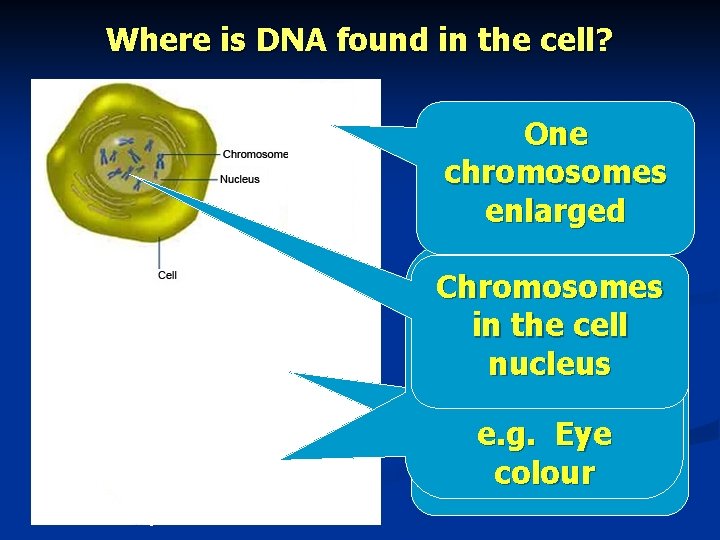
Where is DNA found in the cell? One chromosomes enlarged Genes are Chromosomes pieces ofcell DNA in the thatnucleus code for a Chromosome characteristic uncoiled e. g. Eyeto show DNA colour
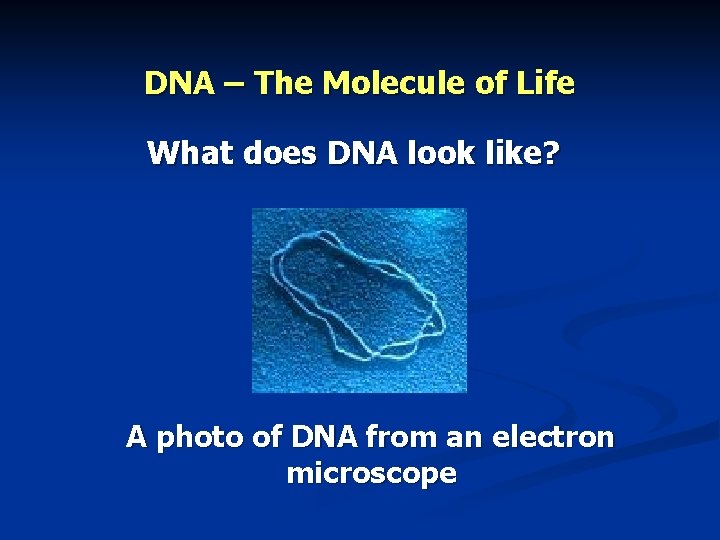
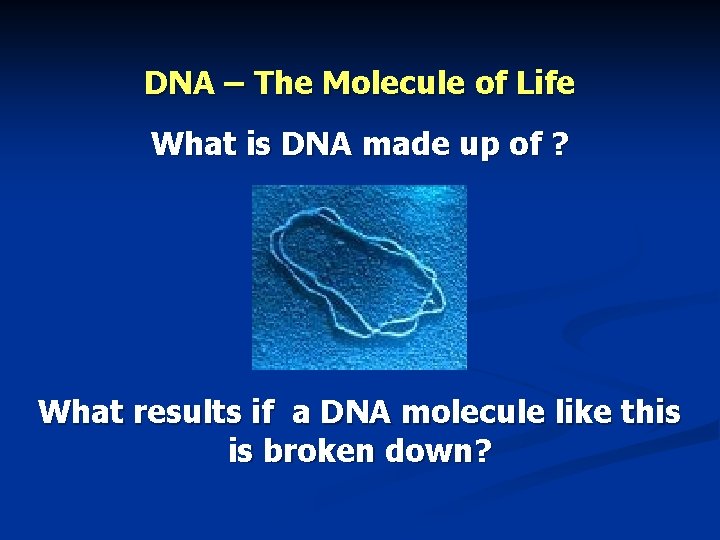
DNA – The Molecule of Life What does DNA look like? A photo of DNA from an electron microscope
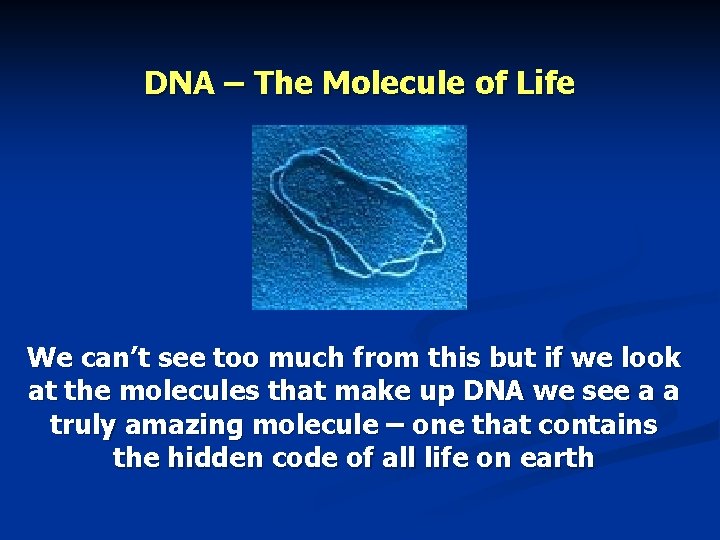
DNA – The Molecule of Life We can’t see too much from this but if we look at the molecules that make up DNA we see a a truly amazing molecule – one that contains the hidden code of all life on earth
DNA – The Molecule of Life What is DNA made up of ? What results if a DNA molecule like this is broken down?
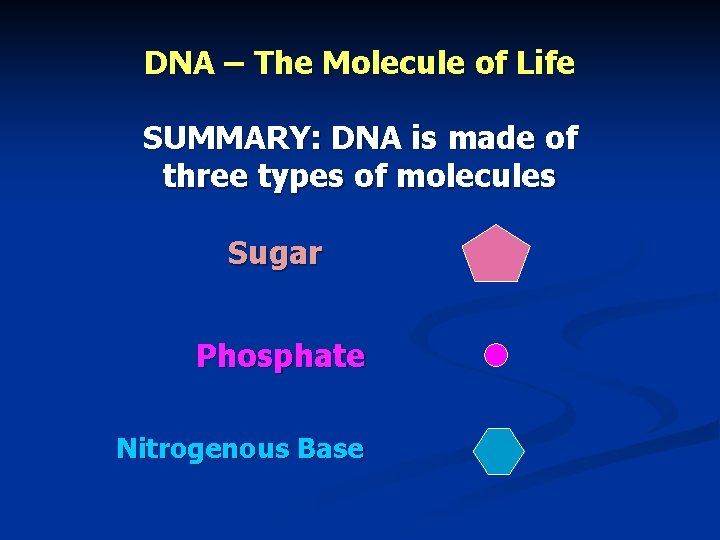
DNA – The Molecule of Life DNA is found to be made of three types of molecules:
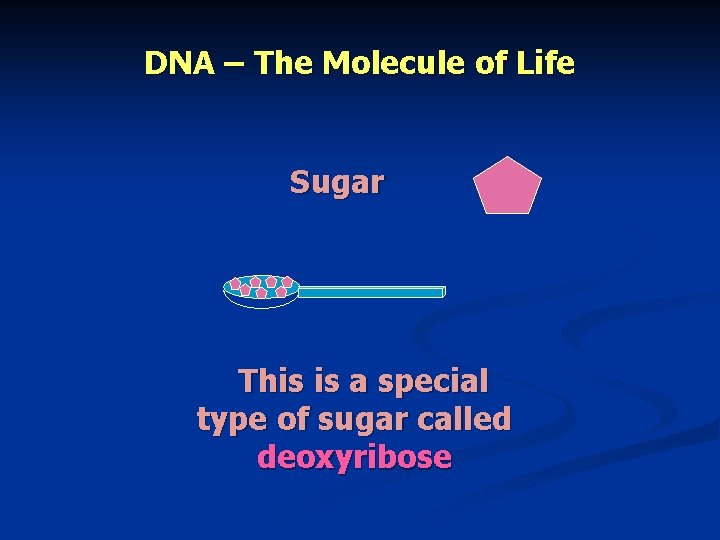
DNA – The Molecule of Life Sugar This is a special type of sugar called deoxyribose
DNA – The Molecule of Life Phosphate Similar to the chemicals used as fertilisers to grow plants
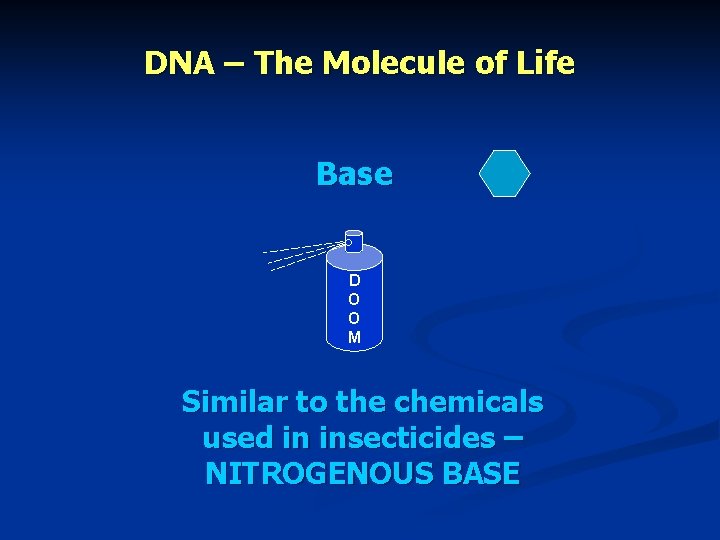
DNA – The Molecule of Life Base D O O M Similar to the chemicals used in insecticides – NITROGENOUS BASE
DNA – The Molecule of Life SUMMARY: DNA is made of three types of molecules Sugar Phosphate Nitrogenous Base
DNA UNIT 2 Chemistry and Structure
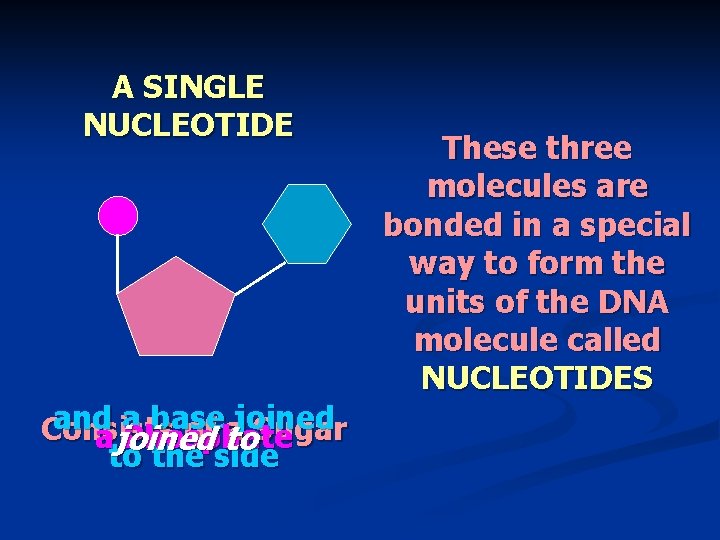
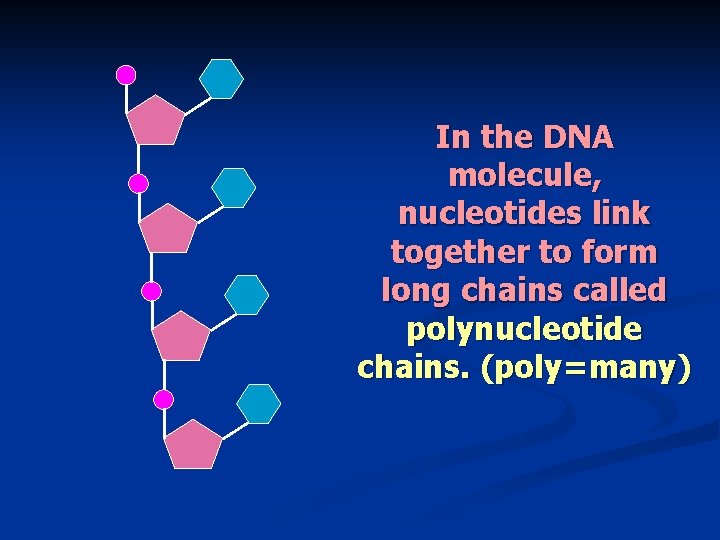
A SINGLE NUCLEOTIDE and a base joined Consists of a ajoined Phosphate to. Sugar to the side These three molecules are bonded in a special way to form the units of the DNA molecule called NUCLEOTIDES
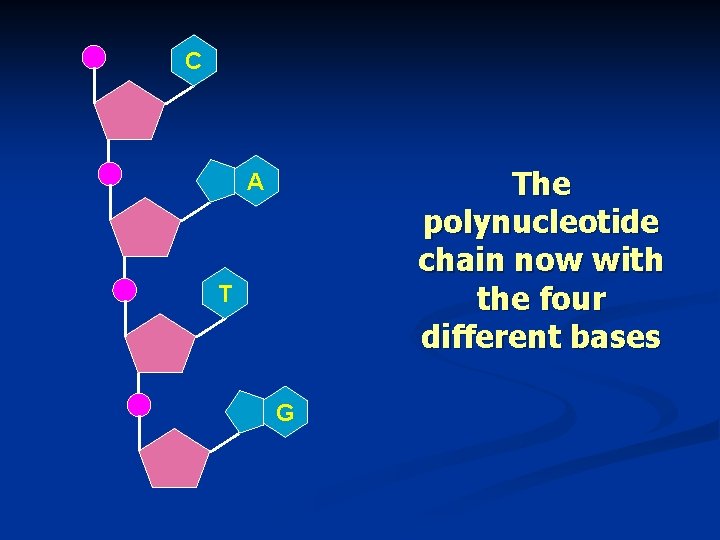
In the DNA molecule, nucleotides link together to form long chains called polynucleotide chains. (poly=many)
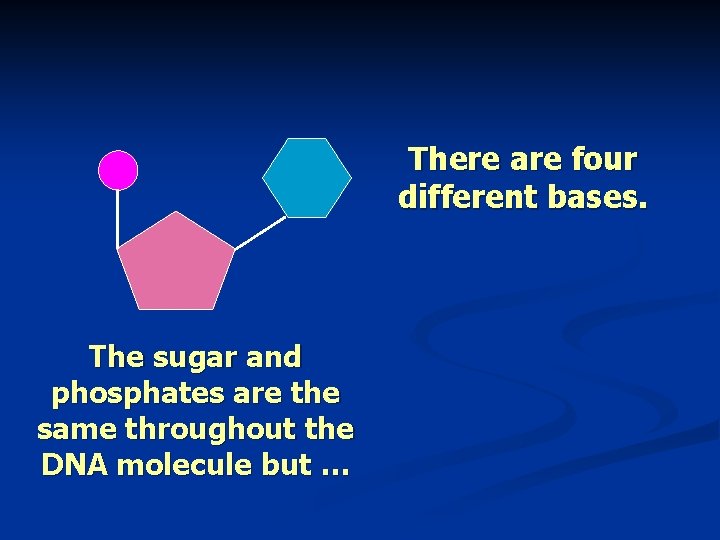
There are four different bases. The sugar and phosphates are the same throughout the DNA molecule but …
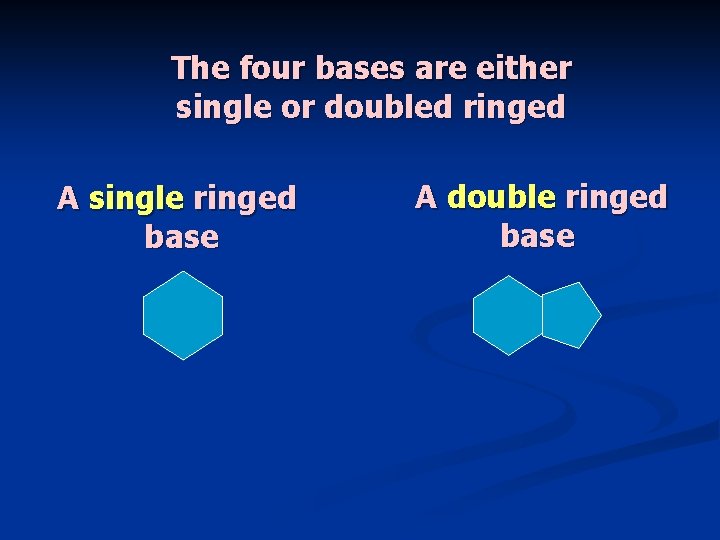
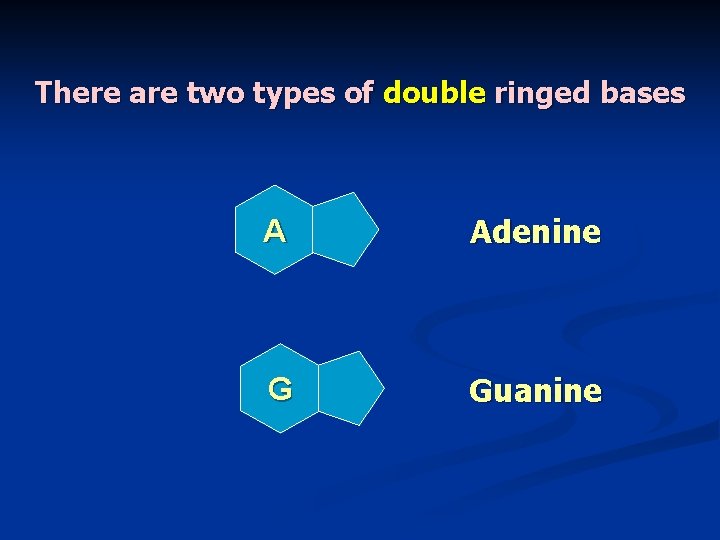
The four bases are either single or doubled ringed A single ringed base A double ringed base
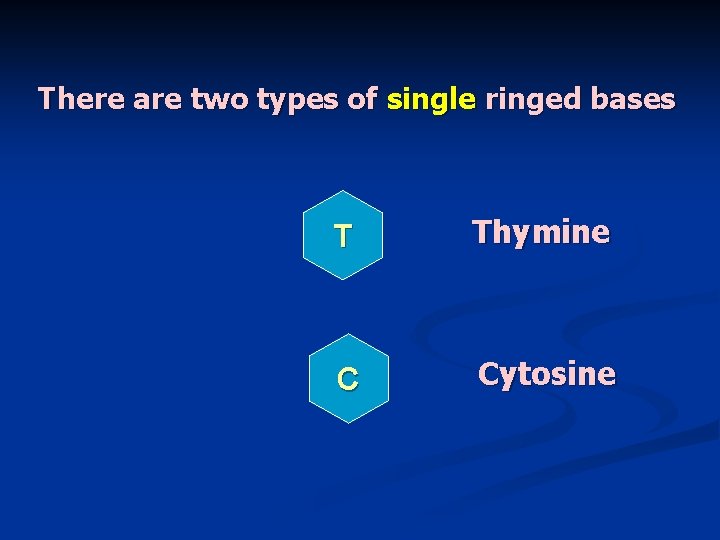
There are two types of single ringed bases T Thymine C Cytosine
There are two types of double ringed bases A Adenine G Guanine
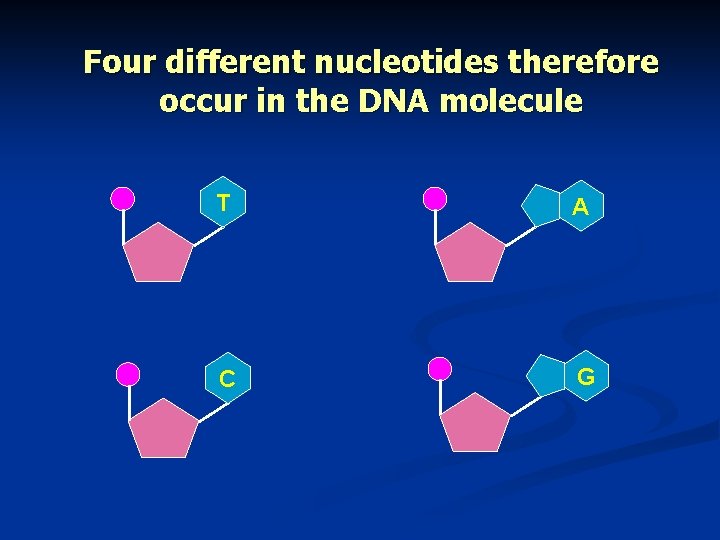
Four different nucleotides therefore occur in the DNA molecule T A C G
C The polynucleotide chain now with the four different bases A T G
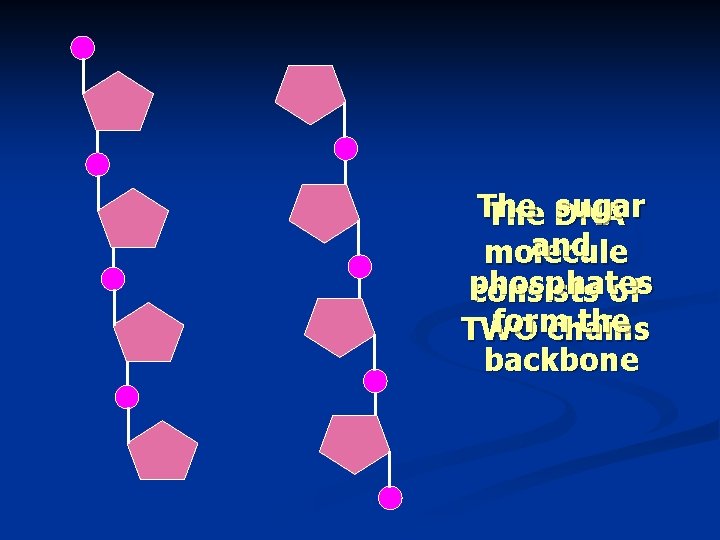
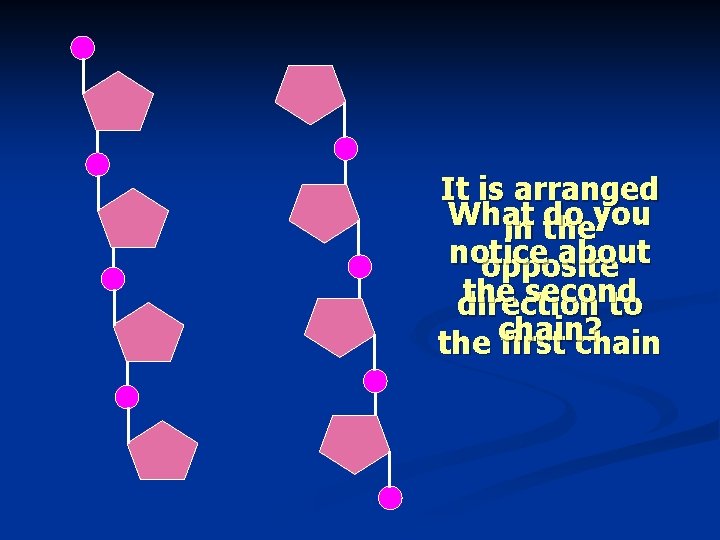
The sugar The DNA and molecule phosphates consists of form the TWO chains backbone
It is arranged What do you in the notice about opposite the second direction to the chain? first chain
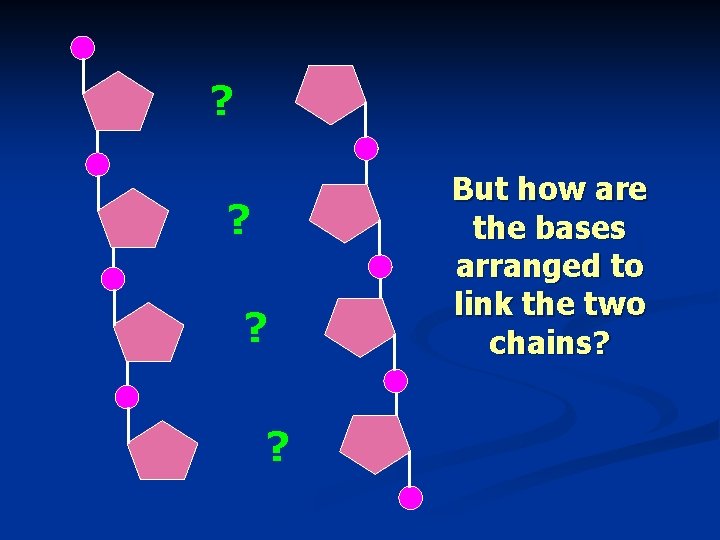
? ? But how are the bases arranged to link the two chains?
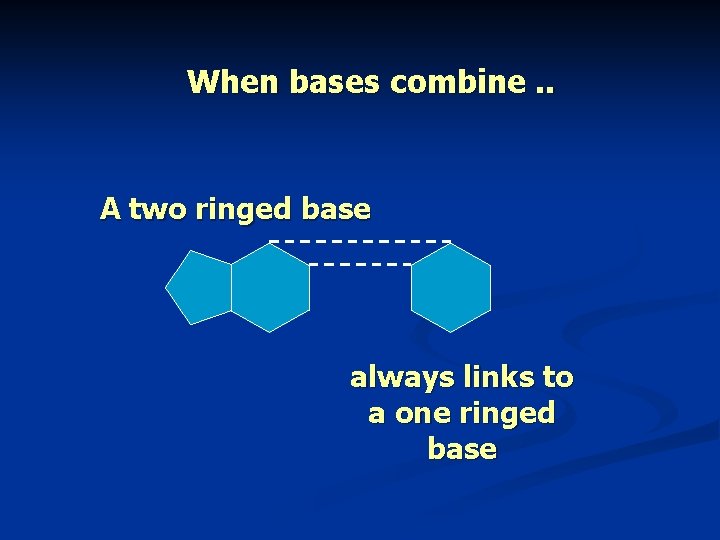
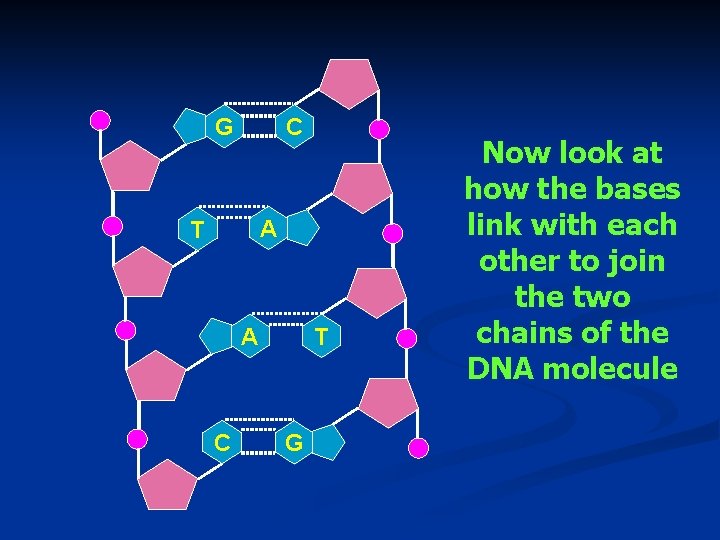
When bases combine. . A two ringed base always links to a one ringed base
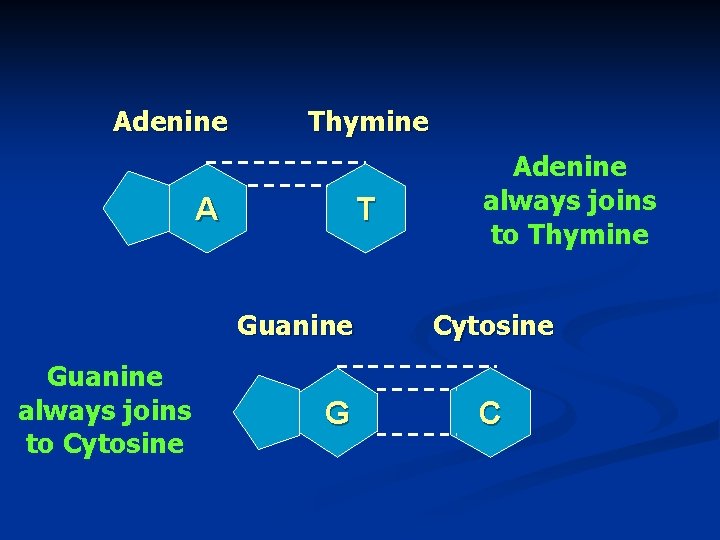
Adenine Thymine T A Guanine always joins to Cytosine G Adenine always joins to Thymine Cytosine C
G C A T T A C G Now look at how the bases link with each other to join the two chains of the DNA molecule
DNA UNIT 3 Replication DNA
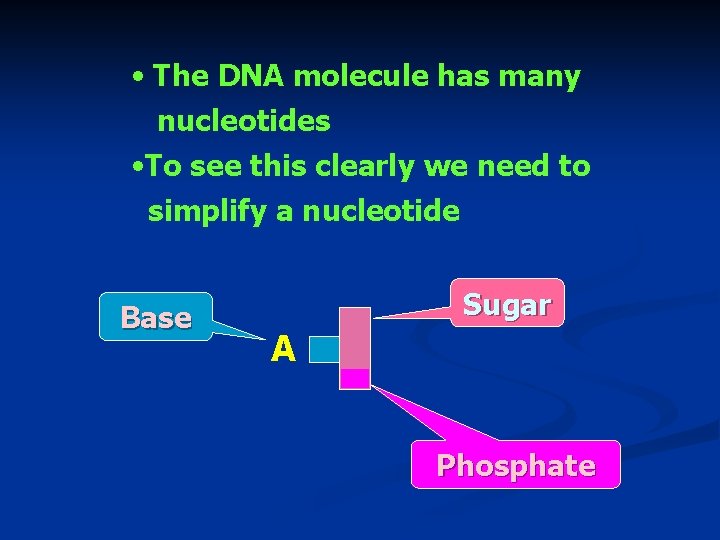
• The DNA molecule has many nucleotides • To see this clearly we need to simplify a nucleotide Base Sugar A Phosphate
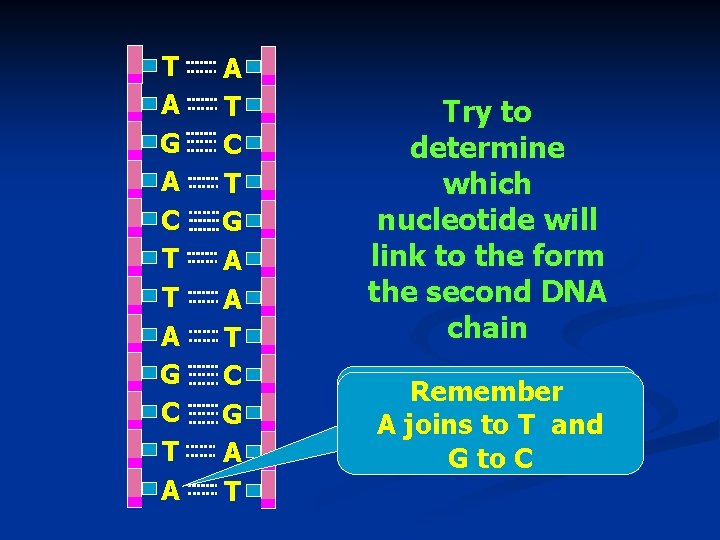
T A G A C T T A G C T A A T C T G A A T C G A T Try to determine which nucleotide will link to the form the second DNA chain Remember Which nucleotide A joins toto T A and will link ? G to C
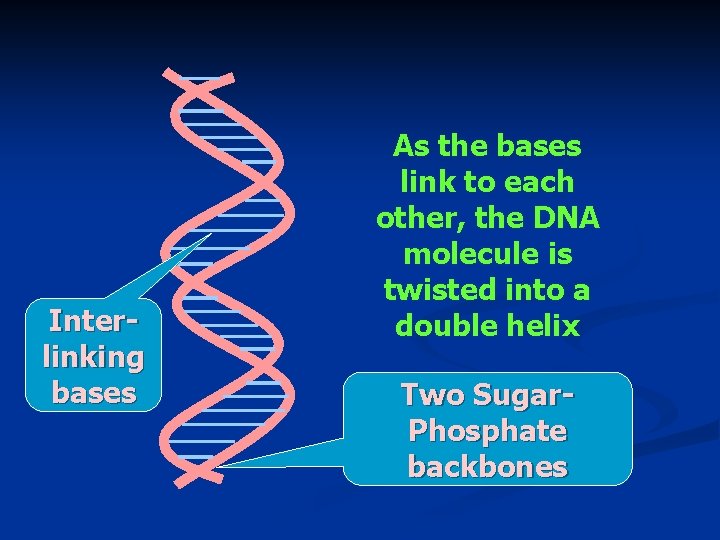
Interlinking bases As the bases link to each other, the DNA molecule is twisted into a double helix Two Sugar. Phosphate backbones
DNA replication How DNA is copied
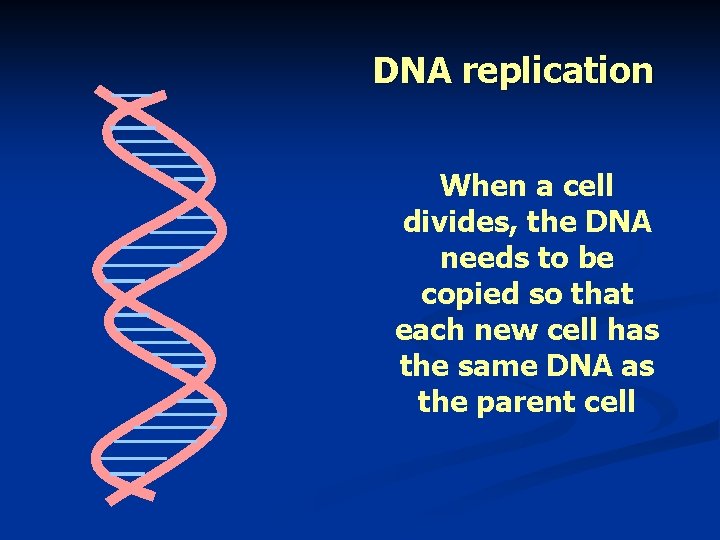
DNA replication When a cell divides, the DNA needs to be copied so that each new cell has the same DNA as the parent cell
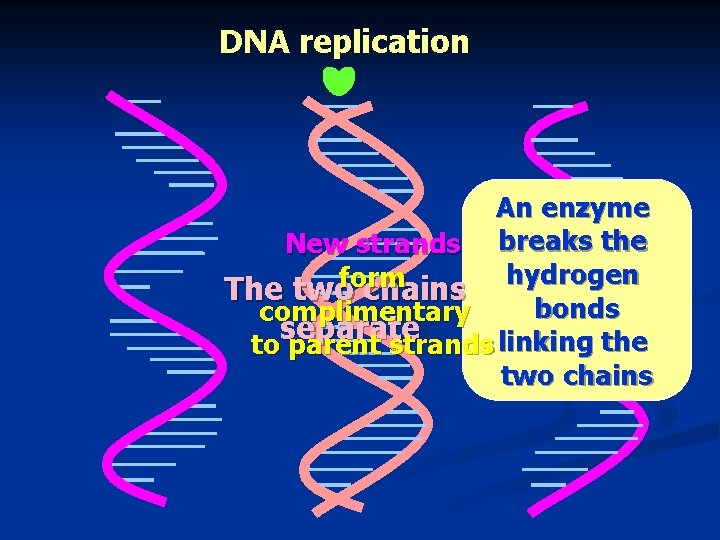
DNA replication An enzyme New strands breaks the hydrogen form The two chains bonds complimentary separate to parent strands linking the two chains
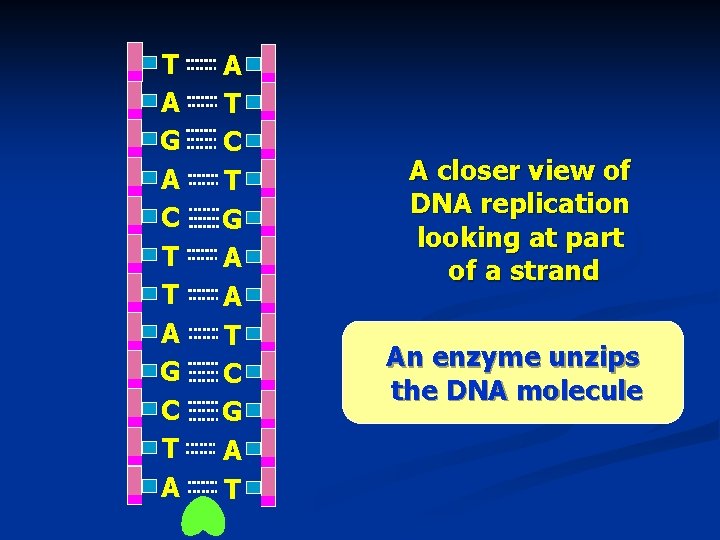
T A G A C T T A G C T A A T C T G A A T C G A T A closer view of DNA replication looking at part of a strand An enzyme unzips the DNA molecule
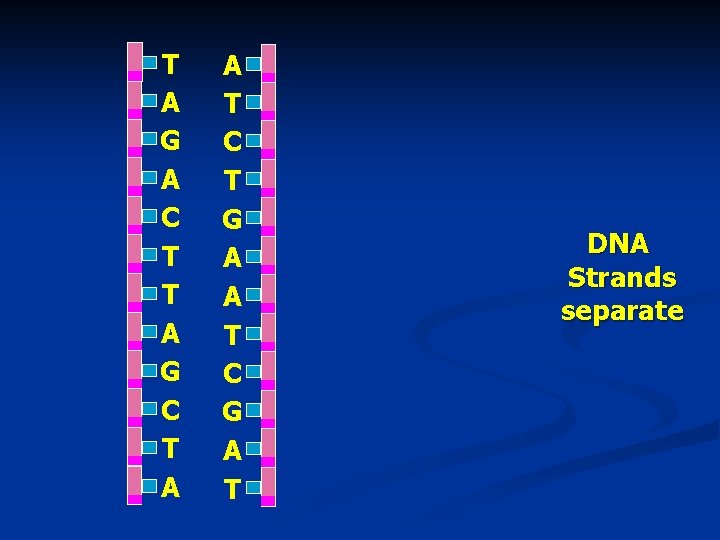
T A G A C T T A G C T A A T C T G A A T C G A T DNA Strands separate
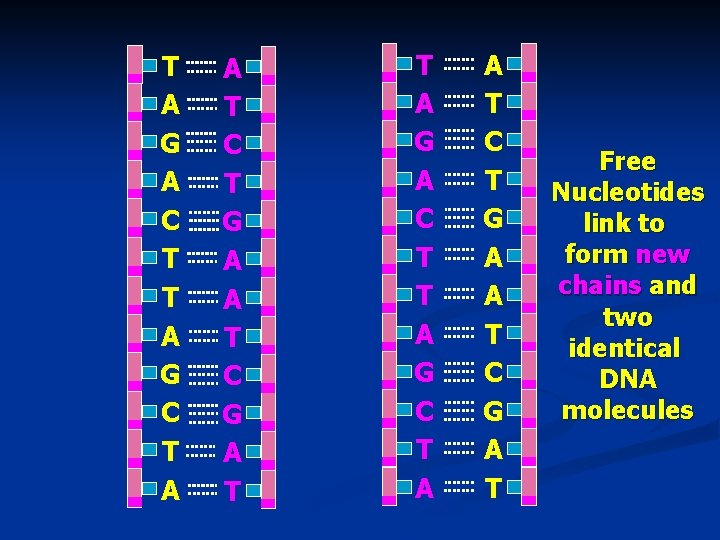
T A G A C T T A G C T A A T C T G A A T C G A T Free Nucleotides link to form new chains and two identical DNA molecules