
Part 04 Covalent Compound Nomenclature 1 Naming Covalent
- Slides: 9
Part 04 Covalent Compound Nomenclature
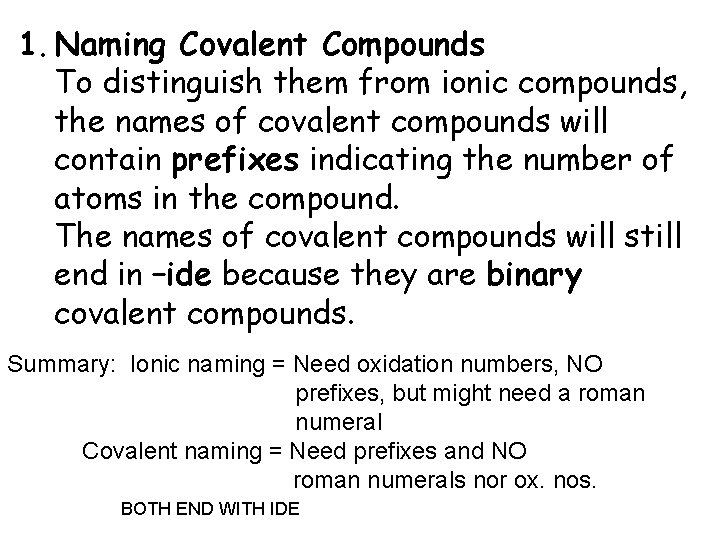
1. Naming Covalent Compounds To distinguish them from ionic compounds, the names of covalent compounds will contain prefixes indicating the number of atoms in the compound. The names of covalent compounds will still end in –ide because they are binary covalent compounds. Summary: Ionic naming = Need oxidation numbers, NO prefixes, but might need a roman numeral Covalent naming = Need prefixes and NO roman numerals nor ox. nos. BOTH END WITH IDE
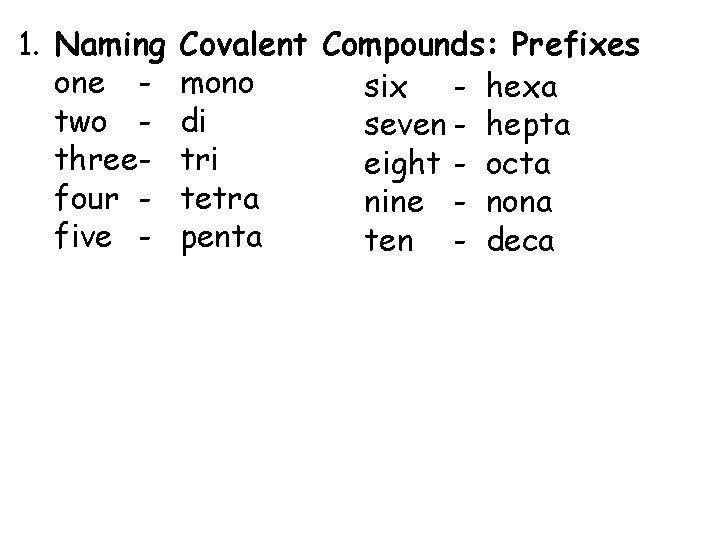
1. Naming one two threefour five - Covalent Compounds: Prefixes mono six - hexa di seven - hepta tri eight - octa tetra nine - nona penta ten - deca
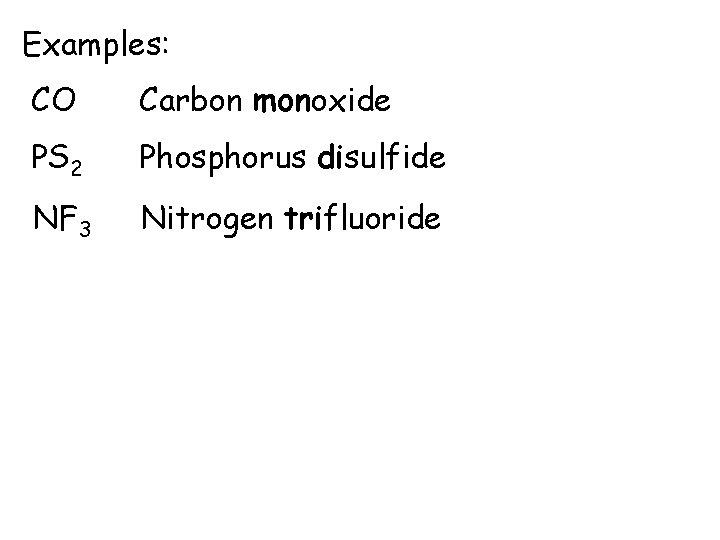
Examples: CO Carbon monoxide PS 2 Phosphorus disulfide NF 3 Nitrogen trifluoride
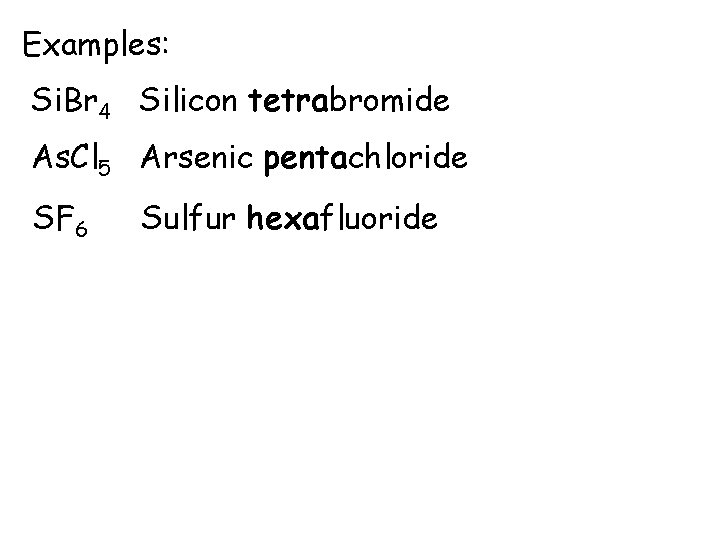
Examples: Si. Br 4 Silicon tetrabromide As. Cl 5 Arsenic pentachloride SF 6 Sulfur hexafluoride
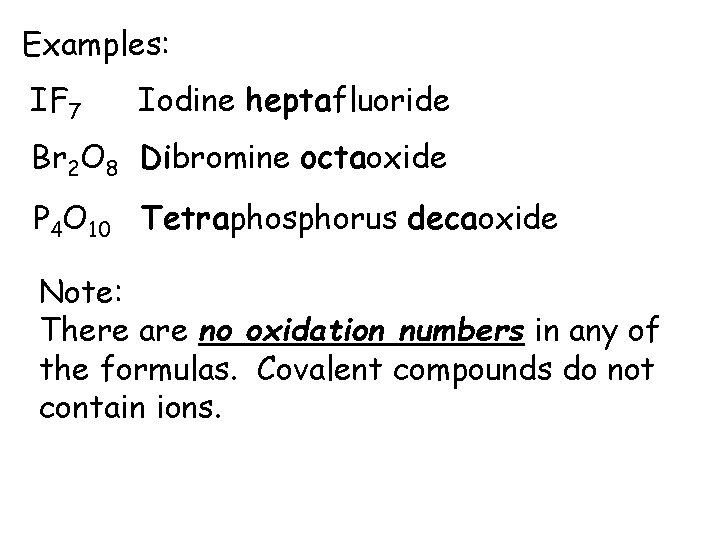
Examples: IF 7 Iodine heptafluoride Br 2 O 8 Dibromine octaoxide P 4 O 10 Tetraphosphorus decaoxide Note: There are no oxidation numbers in any of the formulas. Covalent compounds do not contain ions.
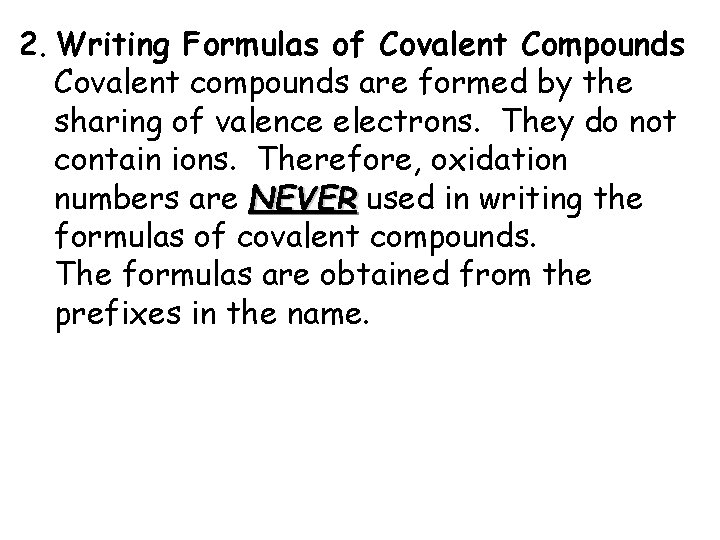
2. Writing Formulas of Covalent Compounds Covalent compounds are formed by the sharing of valence electrons. They do not contain ions. Therefore, oxidation numbers are NEVER used in writing the formulas of covalent compounds. The formulas are obtained from the prefixes in the name.
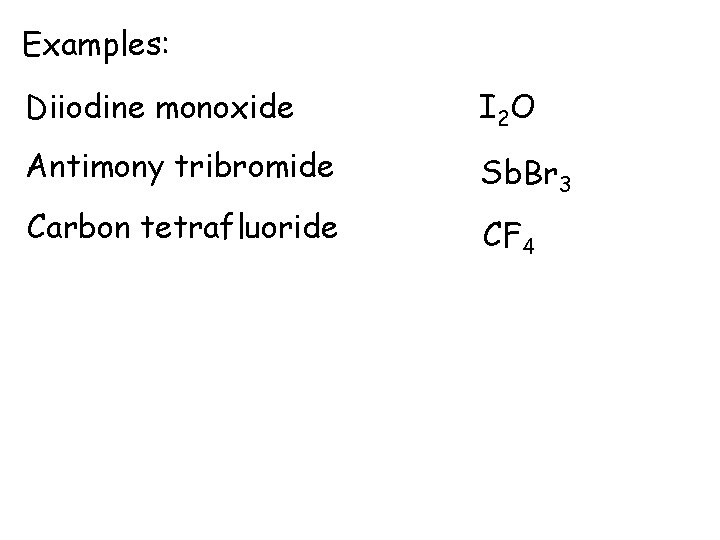
Examples: Diiodine monoxide I 2 O Antimony tribromide Sb. Br 3 Carbon tetrafluoride CF 4
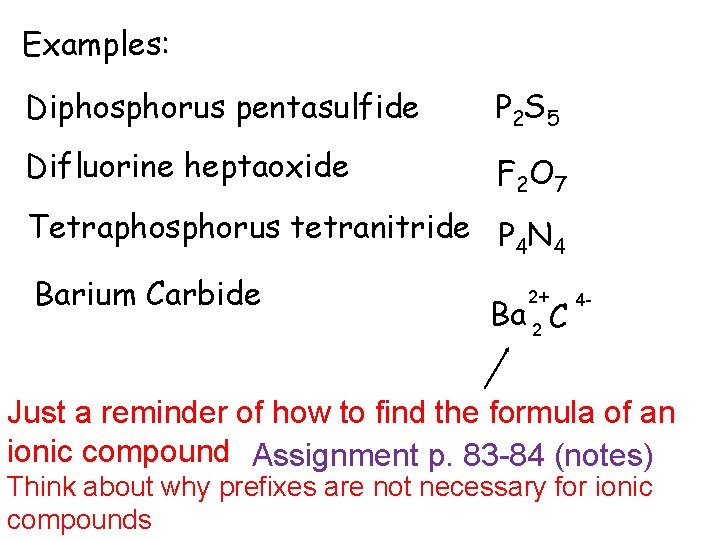
Examples: Diphosphorus pentasulfide P 2 S 5 Difluorine heptaoxide F 2 O 7 Tetraphosphorus tetranitride P 4 N 4 Barium Carbide 2+ Ba 2 C 4 - Just a reminder of how to find the formula of an ionic compound Assignment p. 83 -84 (notes) Think about why prefixes are not necessary for ionic compounds