
Parliamentary Procedure Power Point 1 Designed to serve
- Slides: 20
Parliamentary Procedure Power Point #1
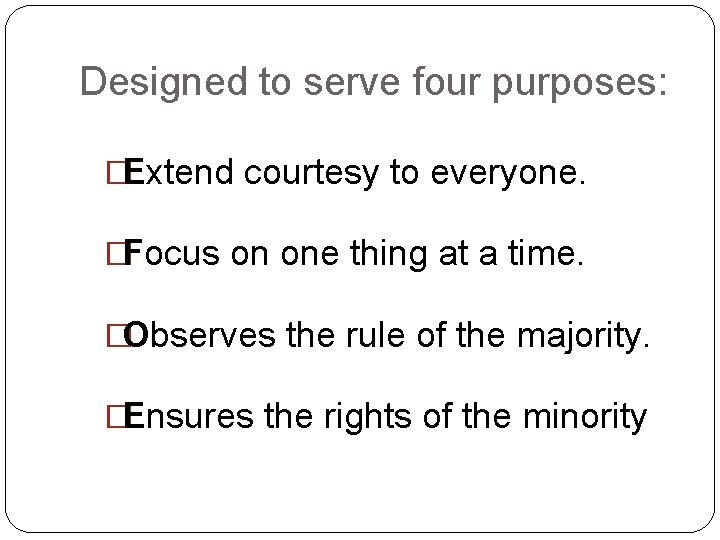
Designed to serve four purposes: �Extend courtesy to everyone. �Focus on one thing at a time. �Observes the rule of the majority. �Ensures the rights of the minority
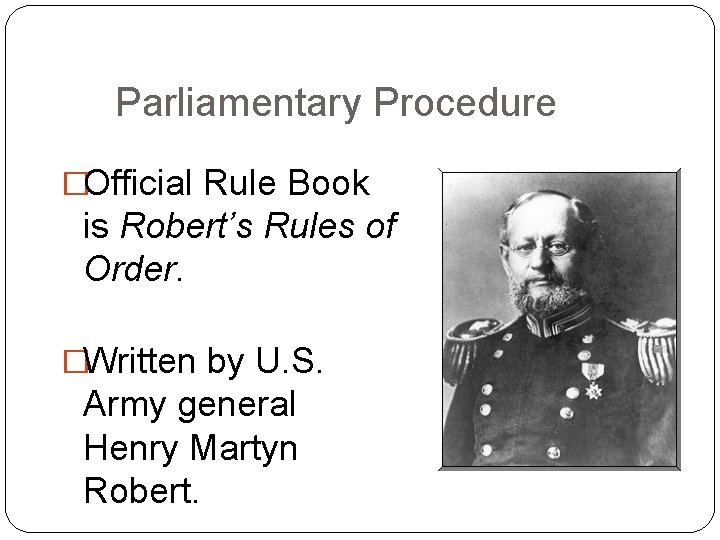
Parliamentary Procedure �Official Rule Book is Robert’s Rules of Order. �Written by U. S. Army general Henry Martyn Robert.
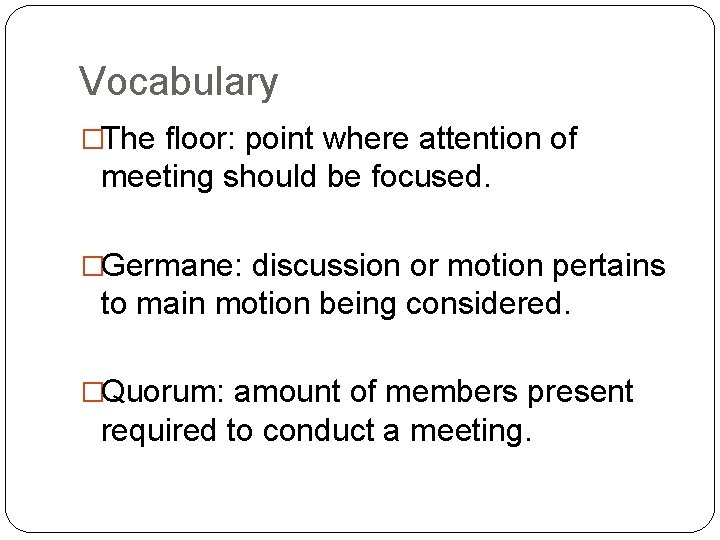
Vocabulary �The floor: point where attention of meeting should be focused. �Germane: discussion or motion pertains to main motion being considered. �Quorum: amount of members present required to conduct a meeting.
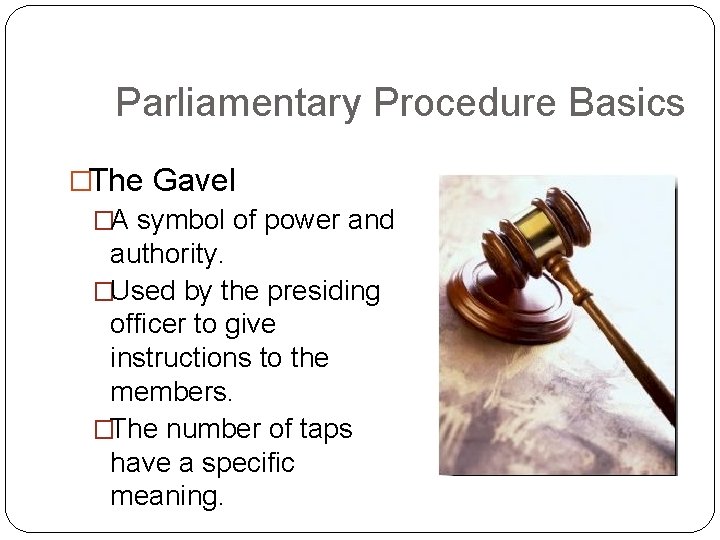
Parliamentary Procedure Basics �The Gavel �A symbol of power and authority. �Used by the presiding officer to give instructions to the members. �The number of taps have a specific meaning.
Gavel Taps �One Tap �Announcement of adjournment �Completion of business �Be seated �Two Taps �Call the meeting to order �Three Taps �Members stand during opening/closing ceremonies � Rise in union at the third tap �Sharp series of taps �Restore order at a meeting
Simon Says Gavel Taps
Voting Procedures �Voice �Aye = Agree �Nay or No = Disagree �Rising �Either stand or by a show of hands �Secret �Written vote �Roll Call �Each member speaking their vote when the secretary calls their name �Can the chairman vote? �YES, in order to force a tie or to break one if they are a member of the group.
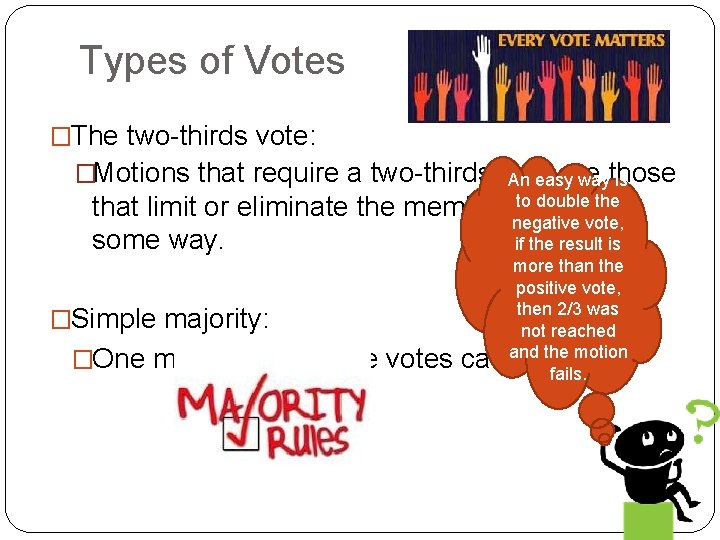
Types of Votes �The two-thirds vote: �Motions that require a two-thirds vote are An easy waythose is to rights double that limit or eliminate the members’negative in vote, some way. if the result is �Simple majority: �One more than half the votes more than the positive vote, then 2/3 was not reached motion cast. and the fails.
Order the Business �A meeting should have a set agenda. �Purpose is of the Order of Business (Agenda) is to keep the meeting moving forward. �The agenda forms the framework for the development of a good business meeting
Steps to the Order the Business �Call to Order by the President & the opening ceremony by the FFA officers. �Minutes of previous meeting read by the Secretary and approved by the body in accordance to organizational by-laws and parliamentary procedure. �Treasurer reports on the financial standing of the club.
Steps to the Order the Business �Report on Chapter program of Activities (by officers and committee chairmen). �Old Business (Business leftover from the previous meeting) �New Business (Presented by members in the form of motions) �Adjournment & Closing Ceremony
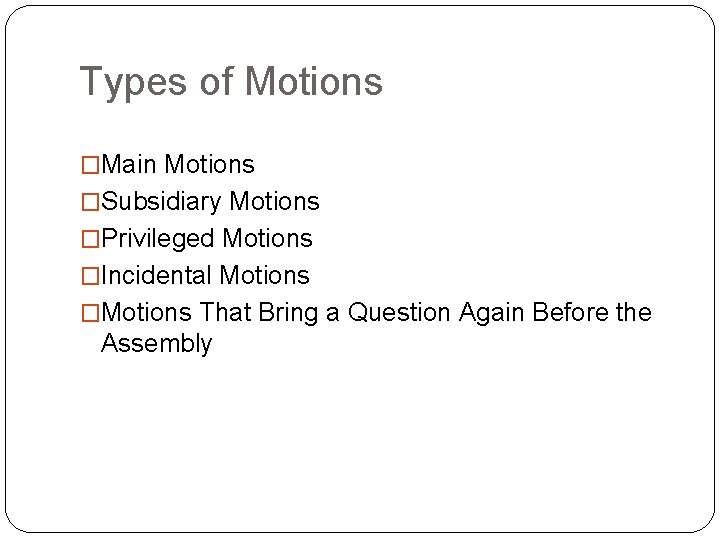
Types of Motions �Main Motions �Subsidiary Motions �Privileged Motions �Incidental Motions �Motions That Bring a Question Again Before the Assembly
Main Motions
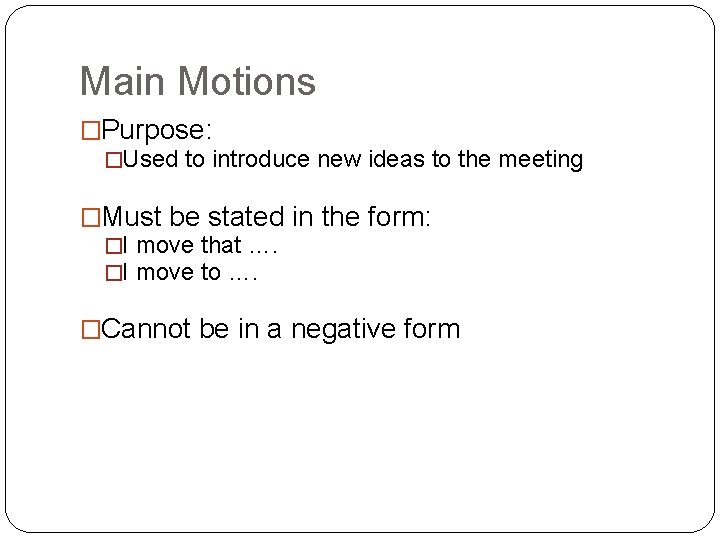
Main Motions �Purpose: �Used to introduce new ideas to the meeting �Must be stated in the form: �I move that …. �I move to …. �Cannot be in a negative form
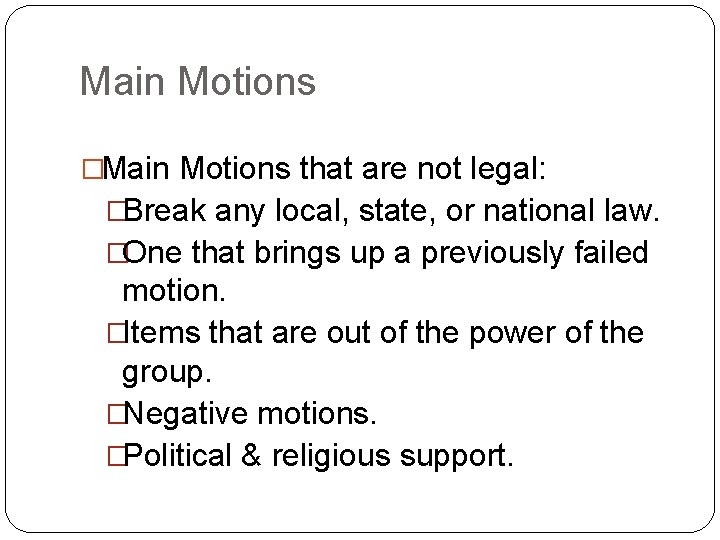
Main Motions �Main Motions that are not legal: �Break any local, state, or national law. �One that brings up a previously failed motion. �Items that are out of the power of the group. �Negative motions. �Political & religious support.
Main Motions �The person who makes a motion cannot speak against it. �Cannot interrupt another speaker. �Proper Example: �“Mr. President, I move that the chapter hold a cookout for all FFA members. ”
Main Motion �What floats your boat? �What grinds your gears? Now, you try it!
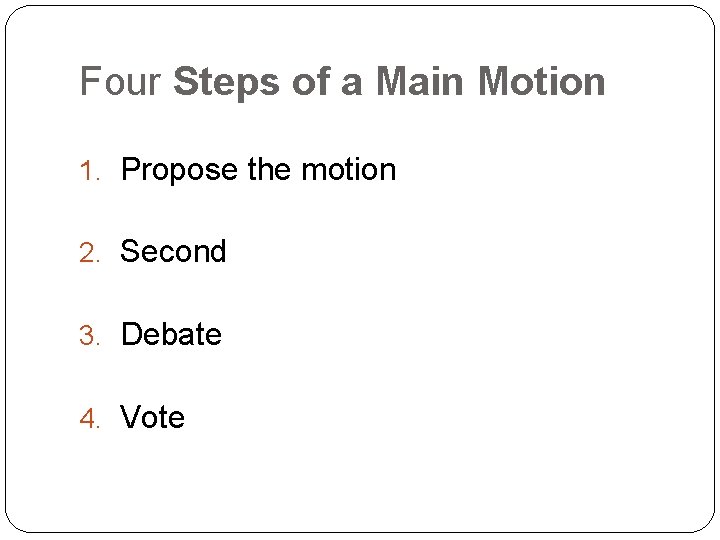
Four Steps of a Main Motion 1. Propose the motion 2. Second 3. Debate 4. Vote
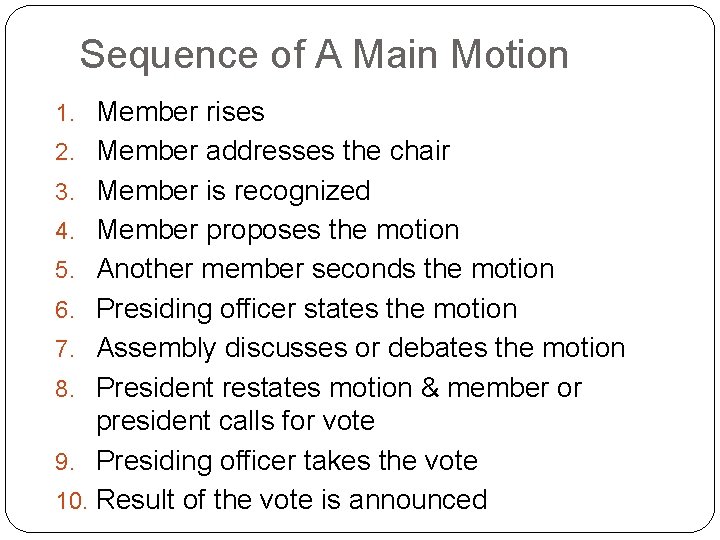
Sequence of A Main Motion 1. Member rises 2. Member addresses the chair 3. Member is recognized 4. Member proposes the motion 5. Another member seconds the motion 6. Presiding officer states the motion 7. Assembly discusses or debates the motion 8. President restates motion & member or president calls for vote 9. Presiding officer takes the vote 10. Result of the vote is announced