
Parliamentary Democracy How Does It Work l People
- Slides: 20
Parliamentary Democracy. How Does It Work?
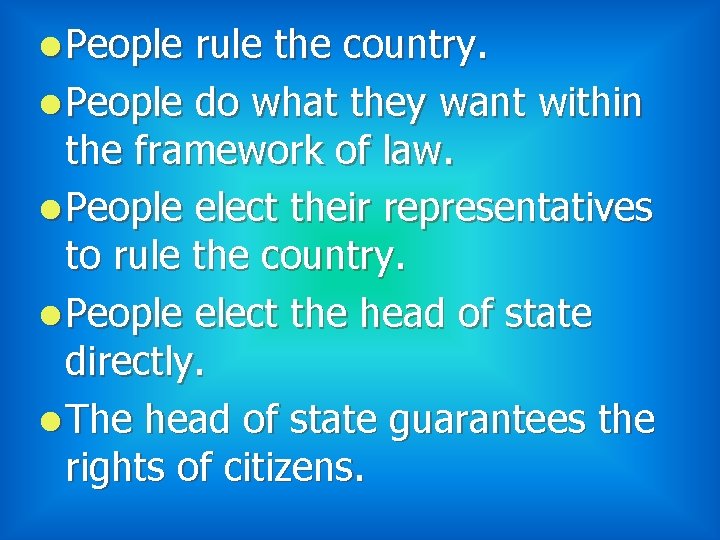
l People rule the country. l People do what they want within the framework of law. l People elect their representatives to rule the country. l People elect the head of state directly. l The head of state guarantees the rights of citizens.
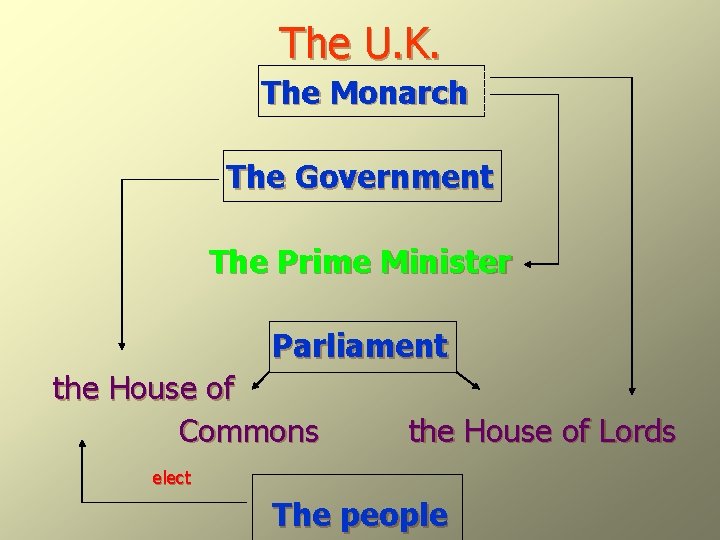
The U. K. The Monarch The Government The Prime Minister Parliament the House of Commons the House of Lords elect The people
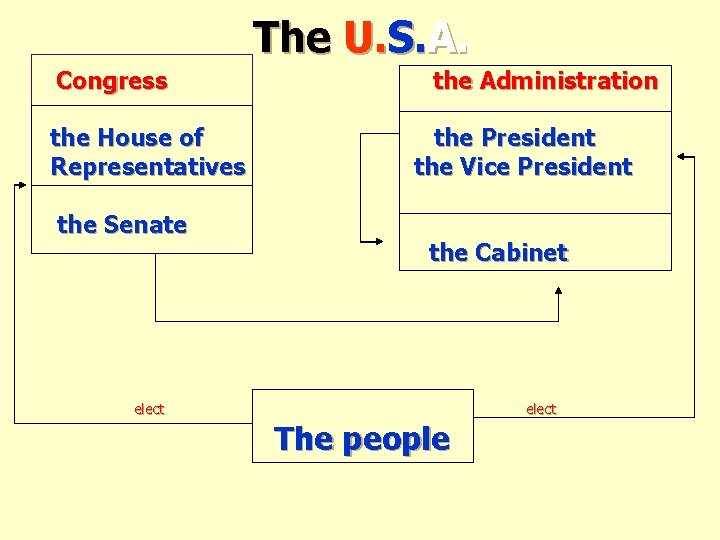
The U. S. A. Congress the House of Representatives the Senate elect the Administration the President the Vice President the Cabinet The people elect
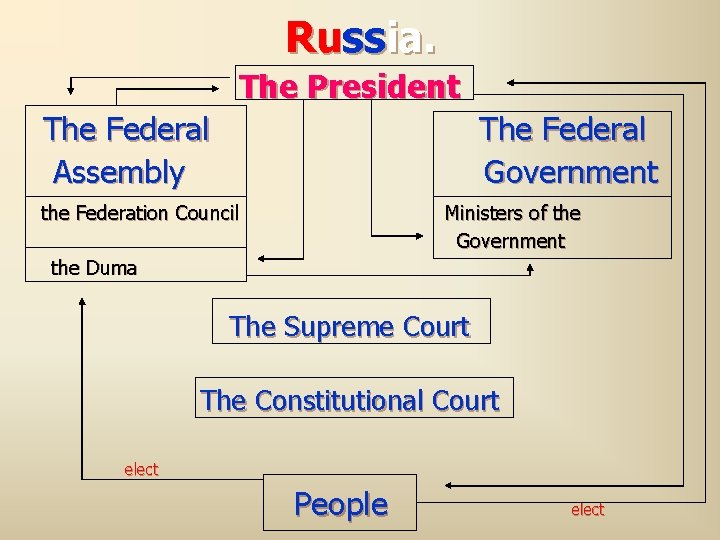
Russia. The President The Federal Assembly The Federal Government the Federation Council Ministers of the Government the Duma The Supreme Court The Constitutional Court elect People elect
Project “An Ideal State, as We Understand It’’
Political system of the country
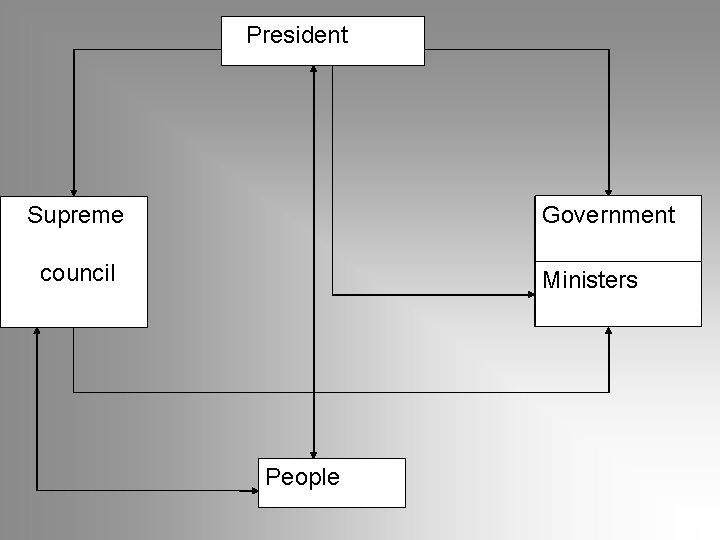
President Government Supreme council Ministers People
The political system Our state is the Presidential Republic. The President is the head of the State. He is elected by all people over 18 directly. He guarantees the basic rights of the citizens. He is the head of the executive branch of power, guarantees the basic rights of People. He can dissolve the Supreme Council, can veto laws, can declare war.
The description of the political system.
There are three branches of power in our country. The Supreme Council represents the legislative branch of power. It makes laws and introduce new projects. The President and Government represent the executive branch. The Supreme Court represents the judicial branch of power. It has the right to declare actions of the President, the Supreme Council and Government unconstitutional.
The traits of character of the politician. We think that a successful Head of the State should be a real personality. l He should be power-loving. l He should be gifted. l He should be risky. l He should be ambitious. l He should be pliable.
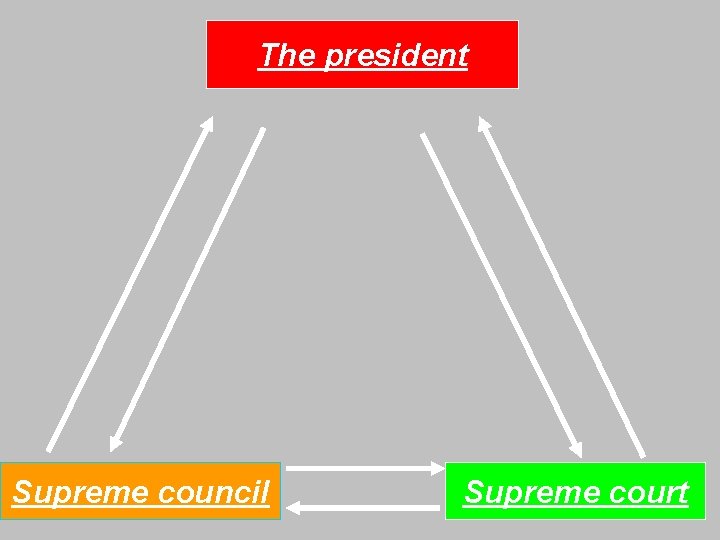
The Scheme of the political system of the country.
The president Supreme council Supreme court
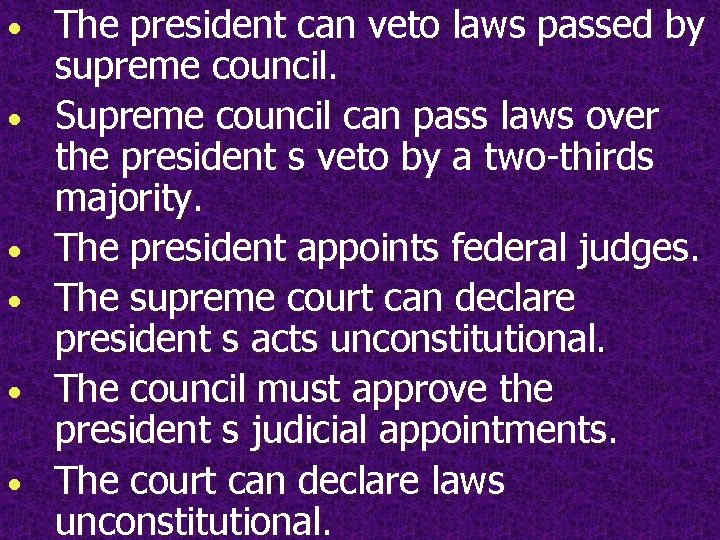
• • • The president can veto laws passed by supreme council. Supreme council can pass laws over the president s veto by a two-thirds majority. The president appoints federal judges. The supreme court can declare president s acts unconstitutional. The council must approve the president s judicial appointments. The court can declare laws unconstitutional.
Supreme Council - is the legislative branch of power. It makes laws, approves the ministers of the Government. Discusses political problems, controls the Government.
Government – is the executive branch of power. It determines government policies; coordinates government departures. It is responsible for government policies. l Government
The Supreme Court l The Supreme Council – is the judicial branch of power. Can declare presidential acts unconstitutional. Can declare laws unconstitutional. It is much more powerful branch of power
Bill of rights. 1. All citizens shall be equal in law. 2. All citizens shall have the right to leave freely and come back to the country. 3. Every citizen shall have the right to use his or her native language, freely choose any language for communication, education or other purposes. 4. All citizens shall enjoy the right to take part in ruling the country directly or through their representatives. 5. Everyone shall have the right to free education. 6. Everyone shall have the right to free medical service. 7. Everyone shall have the right to qualified judicial help. 8. The state shall protect maternity, childhood and a family.