
Parkinsons Disease By Brooke Bidyk 8 S What
Parkinson’s Disease By: Brooke Bidyk 8 S
What is it It is the second most common neurodegenerative disease and the first common movement disorder. � “Neuro” means nerves so it is the nervous system that is affected. � It gradually gets worse over time and does not go away. � James Parkinson described the symptoms and it became known as “Parkinson’s Disease. ” �
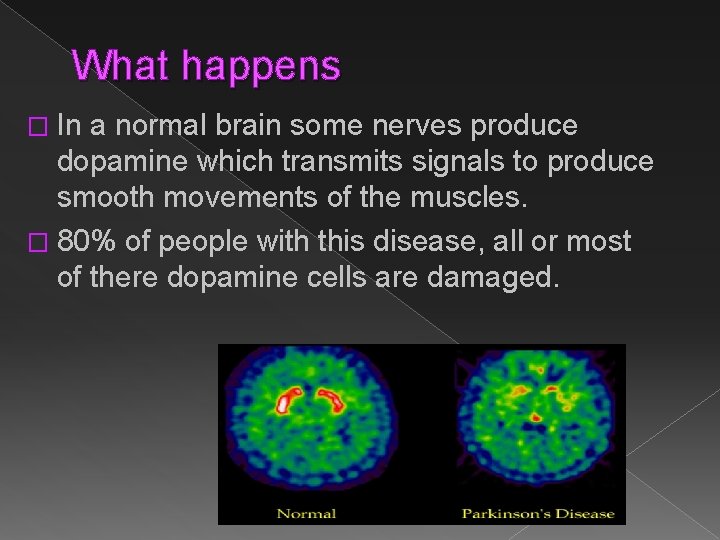
What happens � In a normal brain some nerves produce dopamine which transmits signals to produce smooth movements of the muscles. � 80% of people with this disease, all or most of there dopamine cells are damaged.

Symptoms The four most common signs are: � 1. Trembling in the hands, legs, jaws and head. � 2. Rigidly or stiffness in the muscles. � 3. Bradykinesia, or slowness of movement. � 4. Postural instability, or impaired balance �
Who gets this Disease About 50, 000 Americans gets this disease each year. � It strikes about 50% of men and women, but the reasons are unclear because there is no actual test to determine it. � It is estimated 15 to 25 percent of people with Parkinson’s disease have a known relative with that disease. �
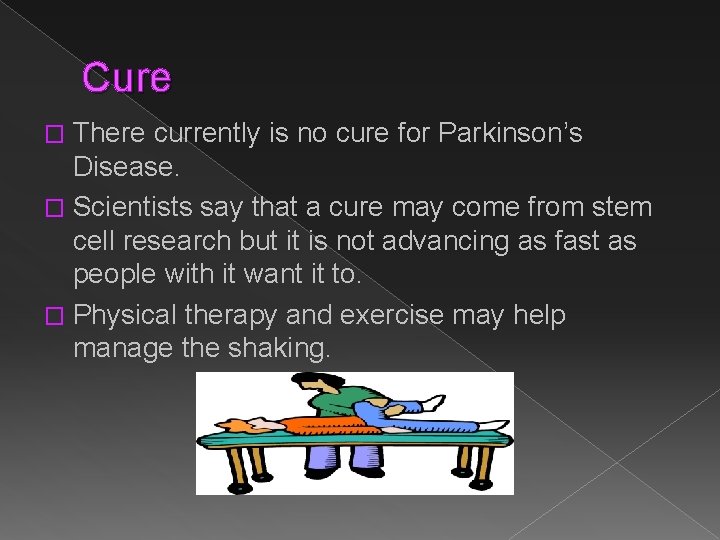
Cure There currently is no cure for Parkinson’s Disease. � Scientists say that a cure may come from stem cell research but it is not advancing as fast as people with it want it to. � Physical therapy and exercise may help manage the shaking. �
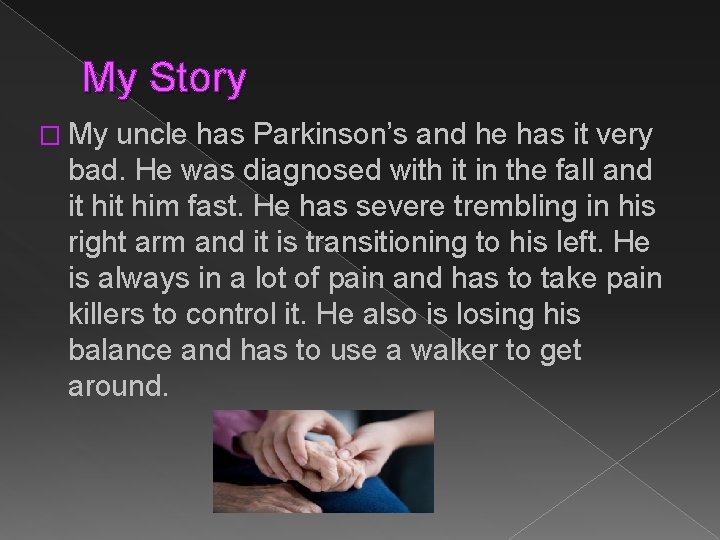
My Story � My uncle has Parkinson’s and he has it very bad. He was diagnosed with it in the fall and it him fast. He has severe trembling in his right arm and it is transitioning to his left. He is always in a lot of pain and has to take pain killers to control it. He also is losing his balance and has to use a walker to get around.
- Slides: 7