
Parking Management Sustainable Mobility Planning in Athens Monika
Parking Management & Sustainable Mobility Planning in Athens Monika Themou, transport & urban planner, Ministry of Environment Maro Evangelidou, architect & spatial planner, ex-Head Strategic Planning, Athens Masterplan Organisation Alexandros Deloukas, transport planner, Head R&T, Attiko Metro S. A. S
Summary (I) S Need to resolve the parking problem S Not effective: large garage structures in the CBD, ample onstreet parking supply around business poles S Proposed policies: (a) small parking garages distributed in older high-density residential areas, (b) constrained parking around rail-connected business poles
Summary (II) Advantages: S Breaking the connection between construction/use of habitation and the private car S Preferential car use: - for urban routes when no public transport alternative exists - for discretionary trips
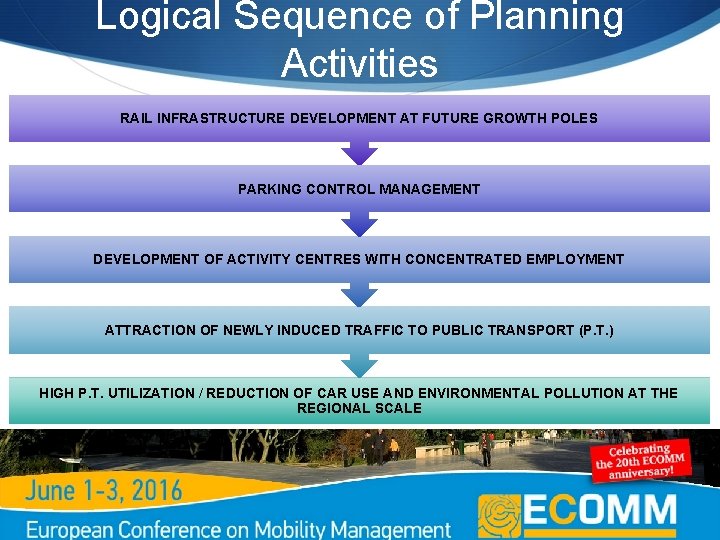
Logical Sequence of Planning Activities RAIL INFRASTRUCTURE DEVELOPMENT AT FUTURE GROWTH POLES PARKING CONTROL MANAGEMENT DEVELOPMENT OF ACTIVITY CENTRES WITH CONCENTRATED EMPLOYMENT ATTRACTION OF NEWLY INDUCED TRAFFIC TO PUBLIC TRANSPORT (P. T. ) HIGH P. T. UTILIZATION / REDUCTION OF CAR USE AND ENVIRONMENTAL POLLUTION AT THE REGIONAL SCALE
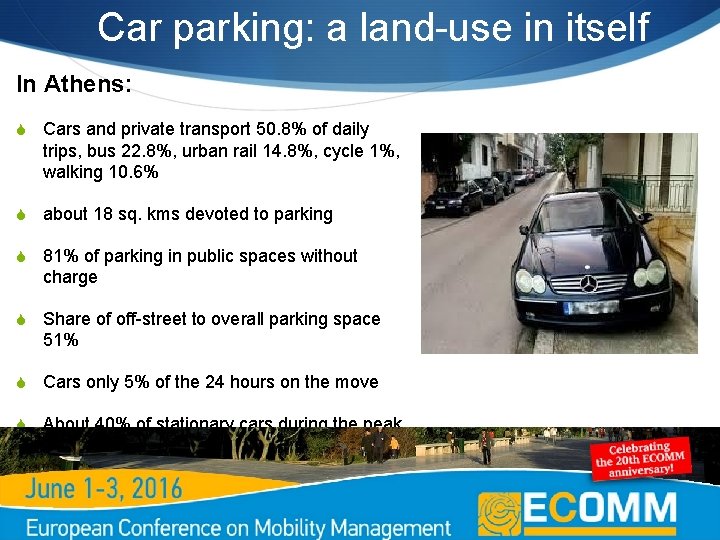
Car parking: a land-use in itself In Athens: S Cars and private transport 50. 8% of daily trips, bus 22. 8%, urban rail 14. 8%, cycle 1%, walking 10. 6% S about 18 sq. kms devoted to parking S 81% of parking in public spaces without charge S Share of off-street to overall parking space 51% S Cars only 5% of the 24 hours on the move S About 40% of stationary cars during the peak period illegally parked in the Athens CBD
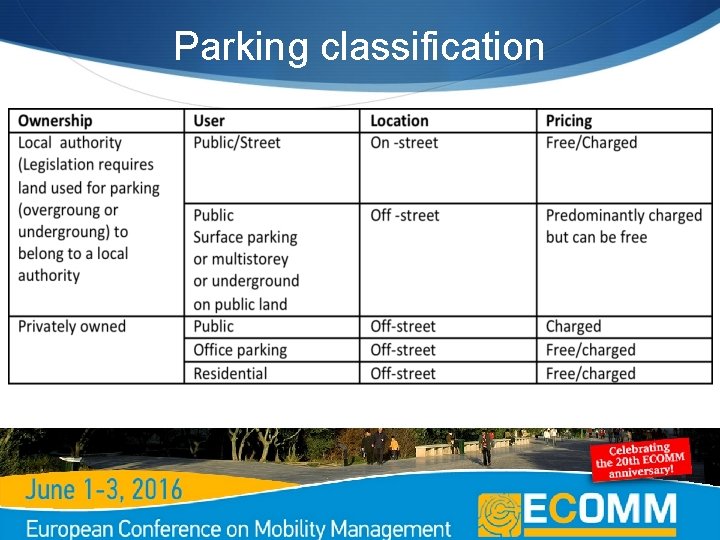
Parking classification
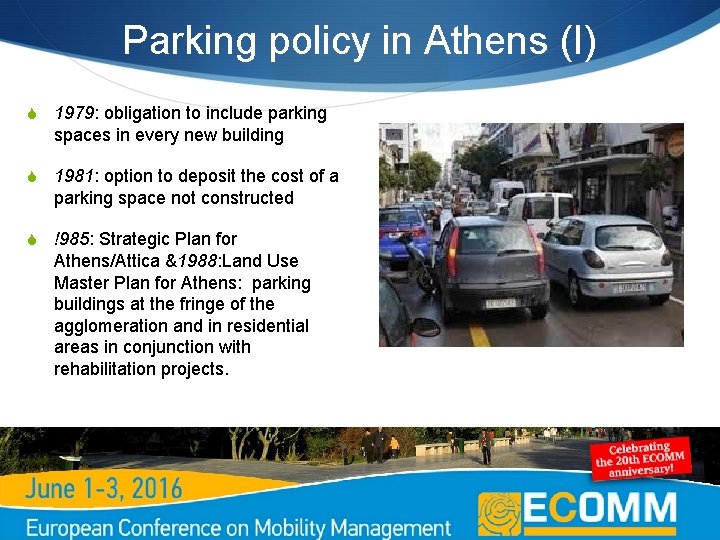
Parking policy in Athens (I) S 1979: obligation to include parking spaces in every new building S 1981: option to deposit the cost of a parking space not constructed S !985: Strategic Plan for Athens/Attica &1988: Land Use Master Plan for Athens: parking buildings at the fringe of the agglomeration and in residential areas in conjunction with rehabilitation projects.
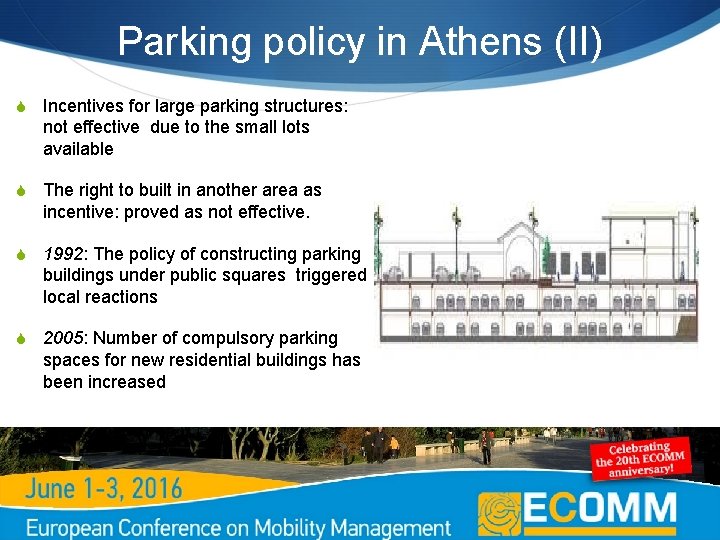
Parking policy in Athens (II) S Incentives for large parking structures: not effective due to the small lots available S The right to built in another area as incentive: proved as not effective. S 1992: The policy of constructing parking buildings under public squares triggered local reactions S 2005: Number of compulsory parking spaces for new residential buildings has been increased
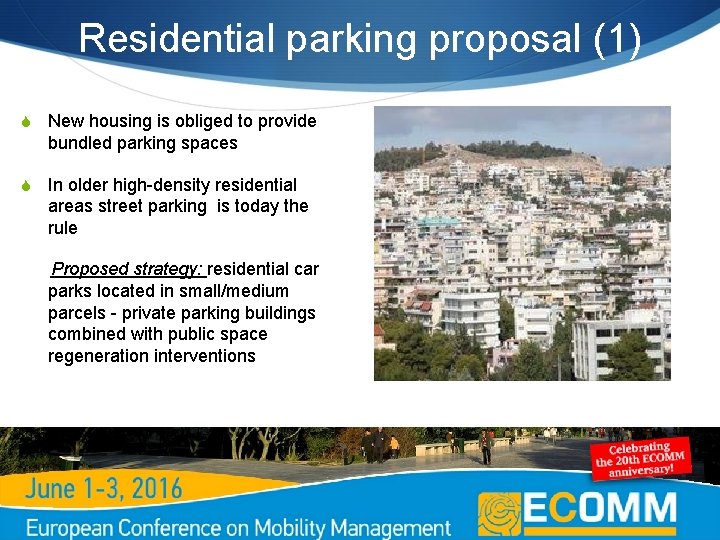
Residential parking proposal (1) S New housing is obliged to provide bundled parking spaces S In older high-density residential areas street parking is today the rule Proposed strategy: residential car parks located in small/medium parcels - private parking buildings combined with public space regeneration interventions
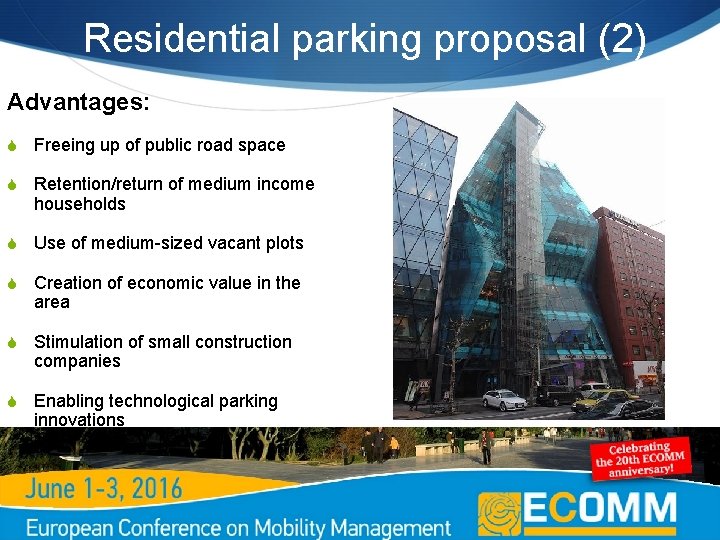
Residential parking proposal (2) Advantages: S Freeing up of public road space S Retention/return of medium income households S Use of medium-sized vacant plots S Creation of economic value in the area S Stimulation of small construction companies S Enabling technological parking innovations
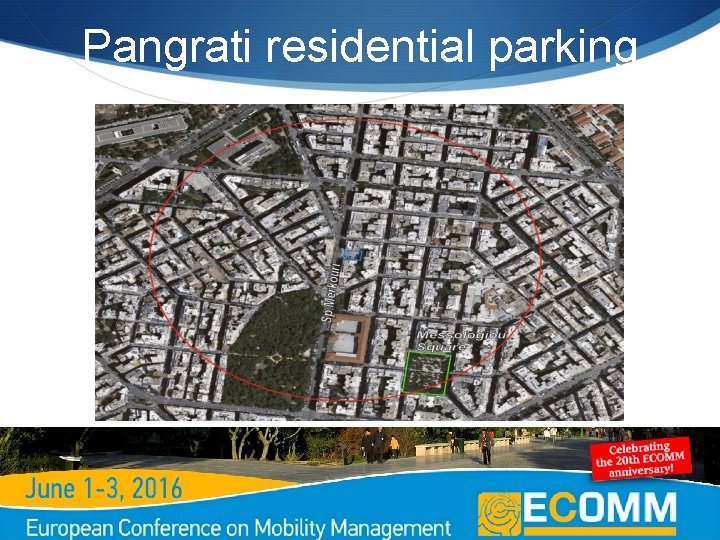
Pangrati residential parking
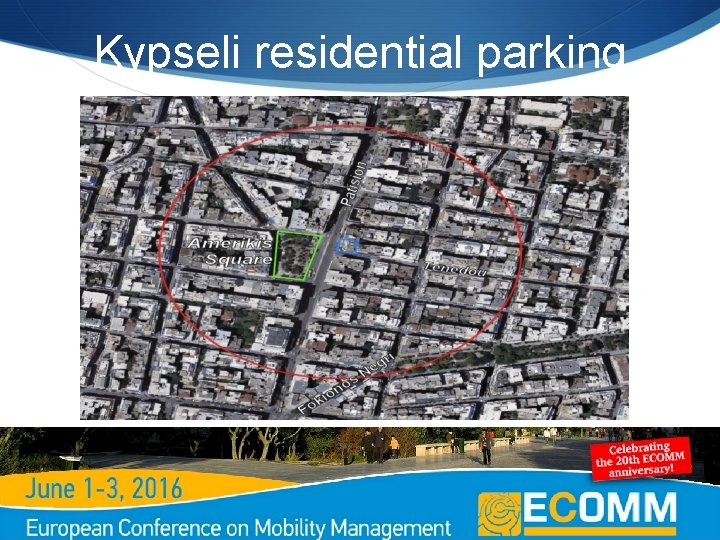
Kypseli residential parking
Business Parking S Short-stay as opposed to long- stay business parking to be privileged S Parking supply requirements should be inversely related to the transit service level Good practices from other cities: S Bern, Switzerland. ‘City-Rail’ concept; aimed is a 30% car share S Utrecht, Netherlands: City Project development
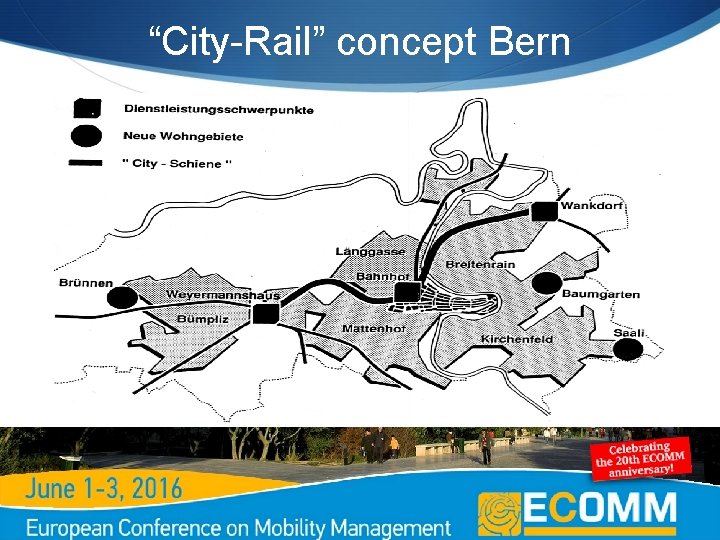
“City-Rail” concept Bern
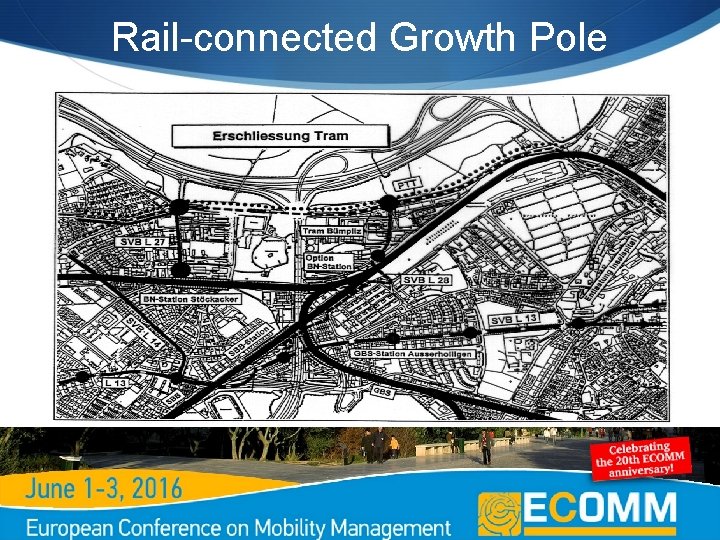
Rail-connected Growth Pole
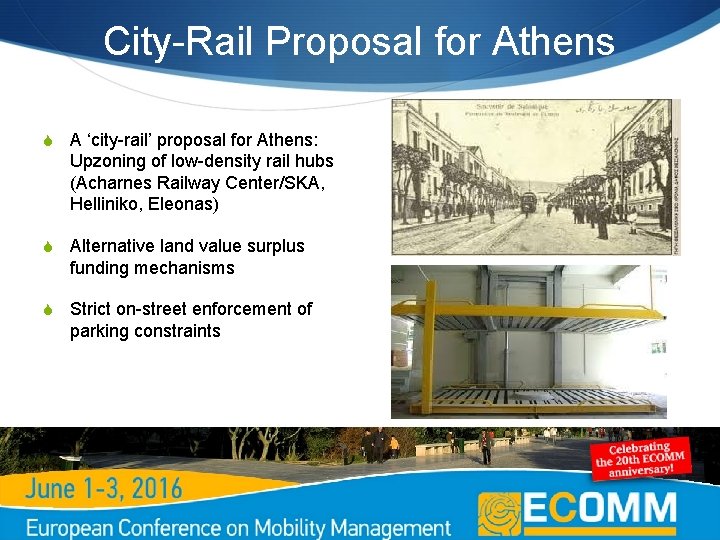
City-Rail Proposal for Athens S A ‘city-rail’ proposal for Athens: Upzoning of low-density rail hubs (Acharnes Railway Center/SKA, Helliniko, Eleonas) S Alternative land value surplus funding mechanisms S Strict on-street enforcement of parking constraints
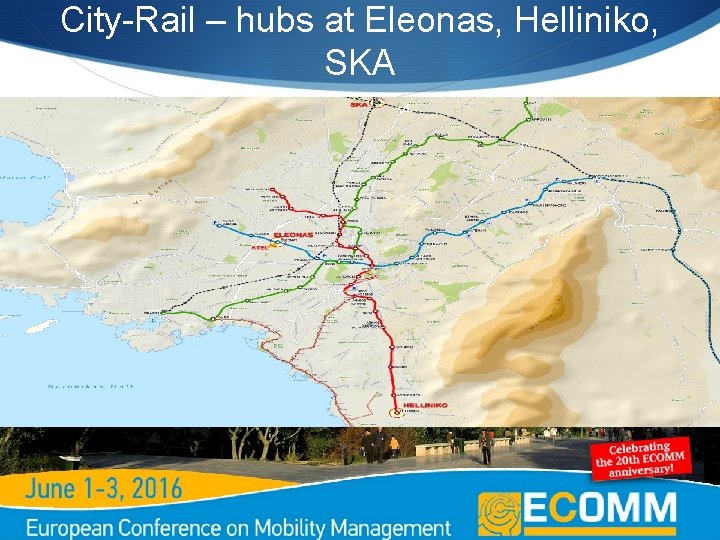
City-Rail – hubs at Eleonas, Helliniko, SKA
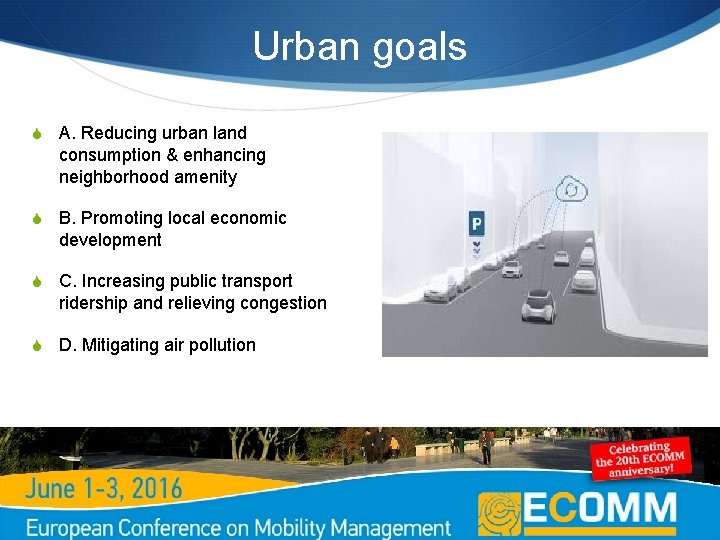
Urban goals S A. Reducing urban land consumption & enhancing neighborhood amenity S B. Promoting local economic development S C. Increasing public transport ridership and relieving congestion S D. Mitigating air pollution
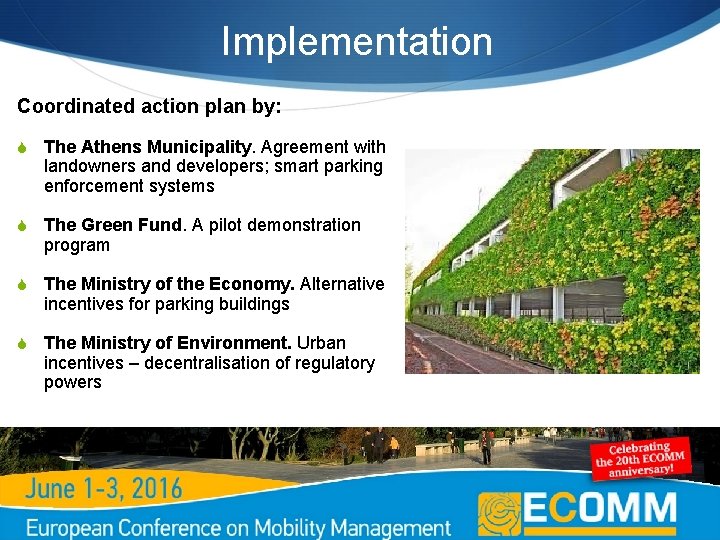
Implementation Coordinated action plan by: S The Athens Municipality. Agreement with landowners and developers; smart parking enforcement systems S The Green Fund. A pilot demonstration program S The Ministry of the Economy. Alternative incentives for parking buildings S The Ministry of Environment. Urban incentives – decentralisation of regulatory powers
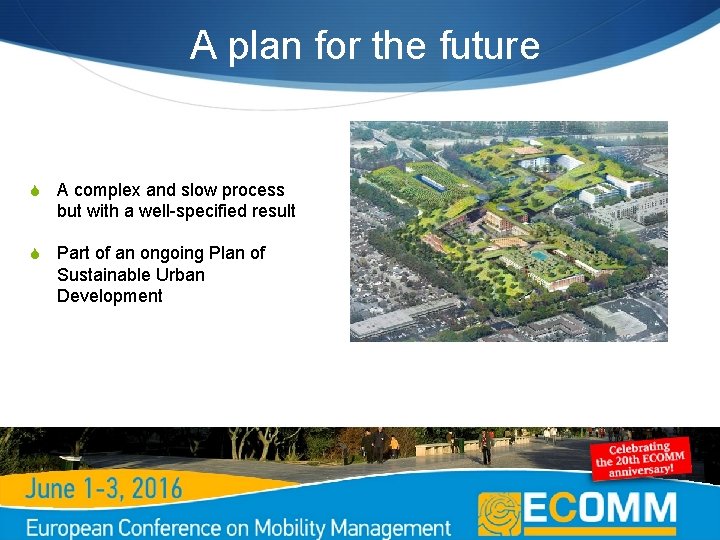
A plan for the future S A complex and slow process but with a well-specified result S Part of an ongoing Plan of Sustainable Urban Development
- Slides: 20