
Parking Lot Design Civil Engineering and Architecture 2010
- Slides: 21
Parking Lot Design Civil Engineering and Architecture © 2010 Project Lead The Way, Inc.
TABLE OF CONTENTS • • • Ingress and Egress Number of Parking Spaces Size of Parking Spaces Accessibility Aisle Width Pedestrian Circulation Special Vehicle Access Off-Street Loading Area Waste Disposal Drainage Landscaping Lighting
Ingress and Egress The means of entering and leaving the site • Regulated by state and local governments • Width • Slope • Drive radius • Pavement composition • Encroachment permit
Ingress and Egress • Discourage through traffic • Rule of thumb • Less than 5000 vehicles/day use single 2 way drive or two 1 -way drives • Align new drives with other access drives • Local regulations • Distance from corners and other drives
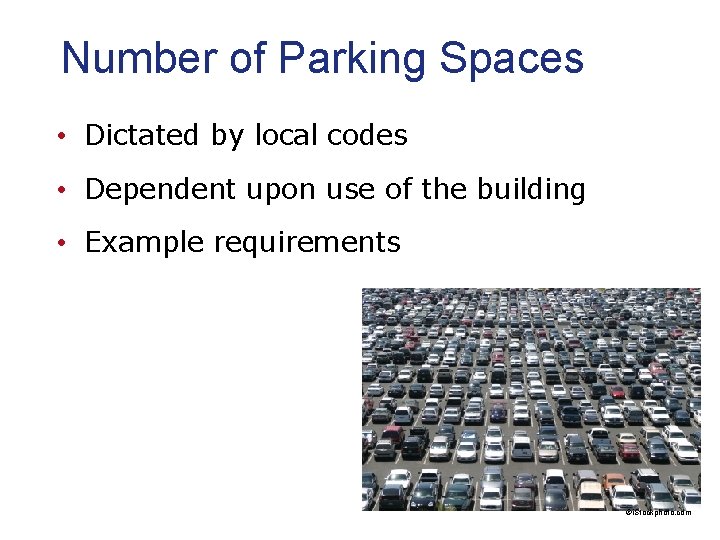
Number of Parking Spaces • Dictated by local codes • Dependent upon use of the building • Example requirements ©i. Stockphoto. com
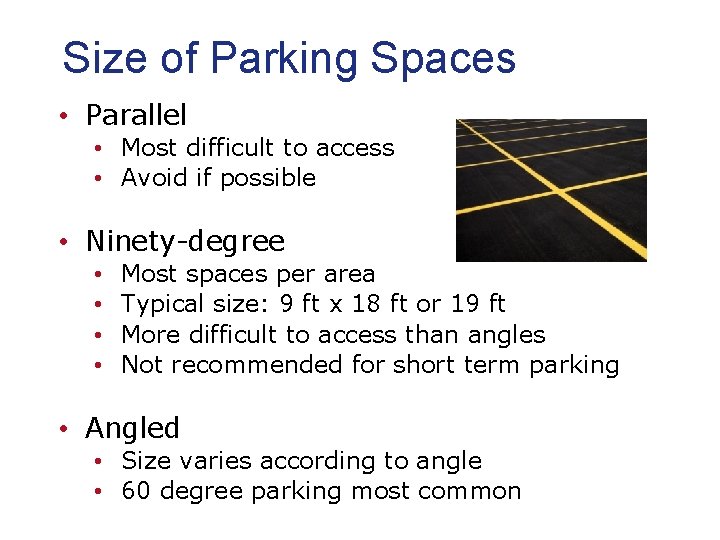
Size of Parking Spaces • Parallel • Most difficult to access • Avoid if possible • Ninety-degree • • Most spaces per area Typical size: 9 ft x 18 ft or 19 ft More difficult to access than angles Not recommended for short term parking • Angled • Size varies according to angle • 60 degree parking most common
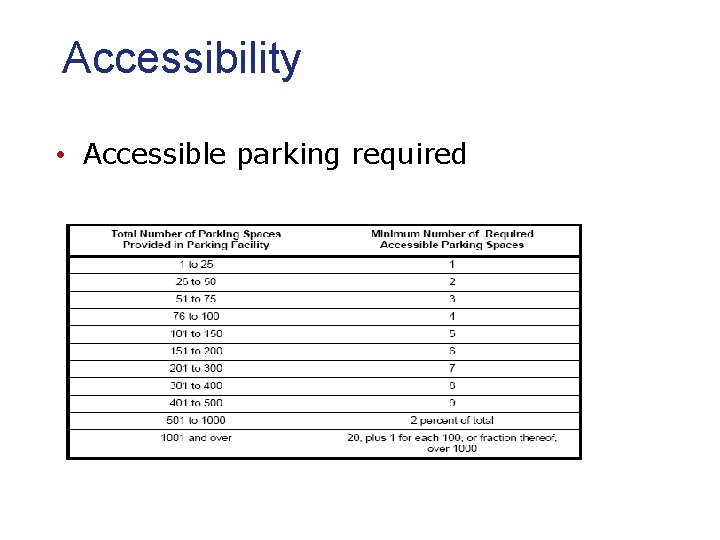
Accessibility • Accessible parking required
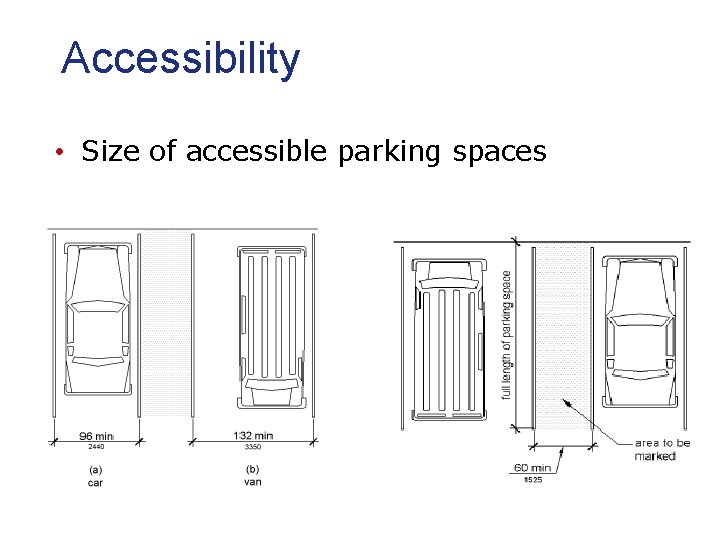
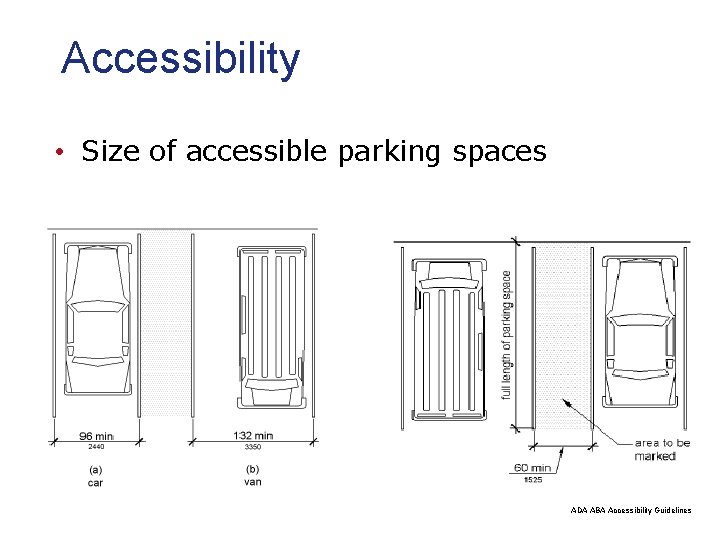
Accessibility • Size of accessible parking spaces
Accessibility • Size of accessible parking spaces ADA ABA Accessibility Guidelines
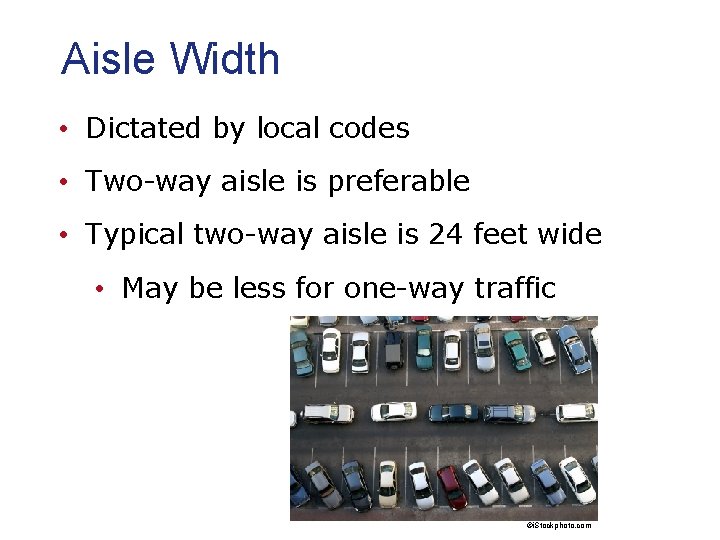
Aisle Width • Dictated by local codes • Two-way aisle is preferable • Typical two-way aisle is 24 feet wide • May be less for one-way traffic ©i. Stockphoto. com
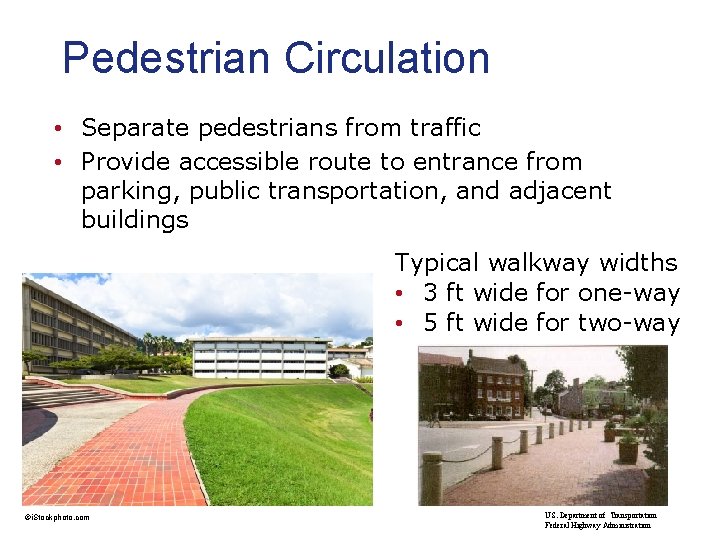
Pedestrian Circulation • Separate pedestrians from traffic • Provide accessible route to entrance from parking, public transportation, and adjacent buildings Typical walkway widths • 3 ft wide for one-way • 5 ft wide for two-way ©i. Stockphoto. com US. Department of Transportation Federal Highway Administration
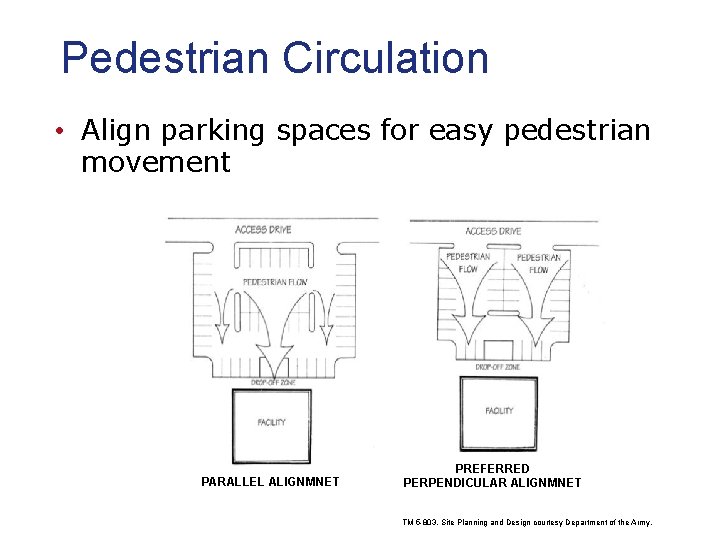
Pedestrian Circulation • Align parking spaces for easy pedestrian movement PARALLEL ALIGNMNET PREFERRED PERPENDICULAR ALIGNMNET TM 5 -803, Site Planning and Design courtesy Department of the Army.
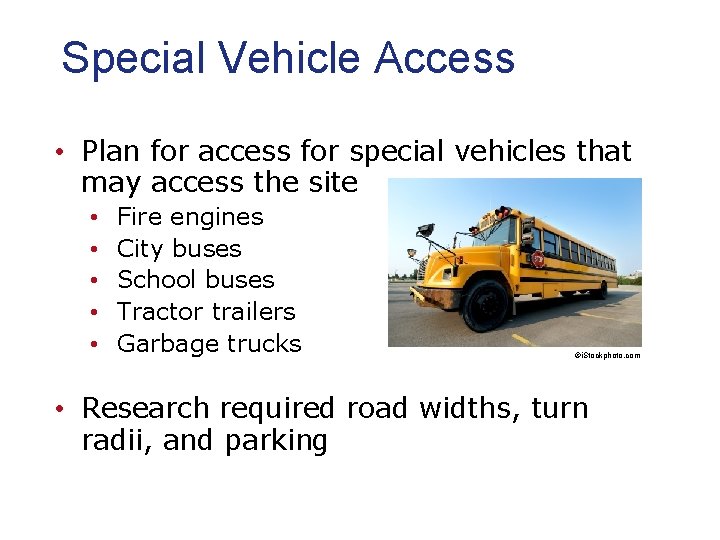
Special Vehicle Access • Plan for access for special vehicles that may access the site • • • Fire engines City buses School buses Tractor trailers Garbage trucks ©i. Stockphoto. com • Research required road widths, turn radii, and parking
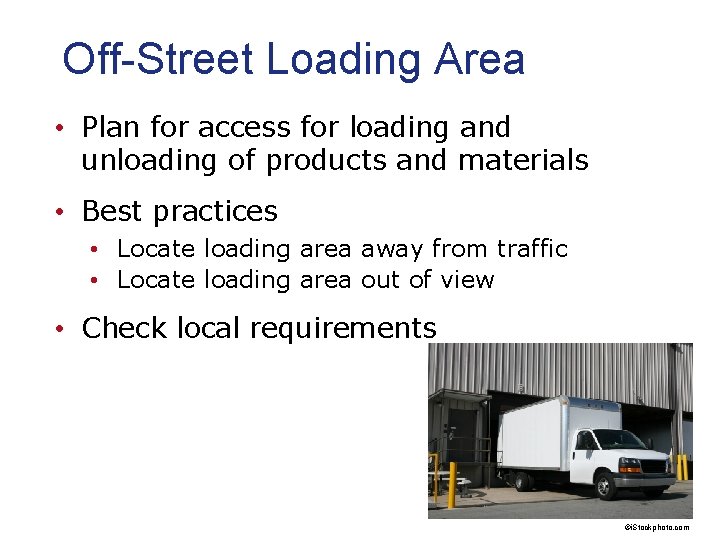
Off-Street Loading Area • Plan for access for loading and unloading of products and materials • Best practices • Locate loading area away from traffic • Locate loading area out of view • Check local requirements ©i. Stockphoto. com
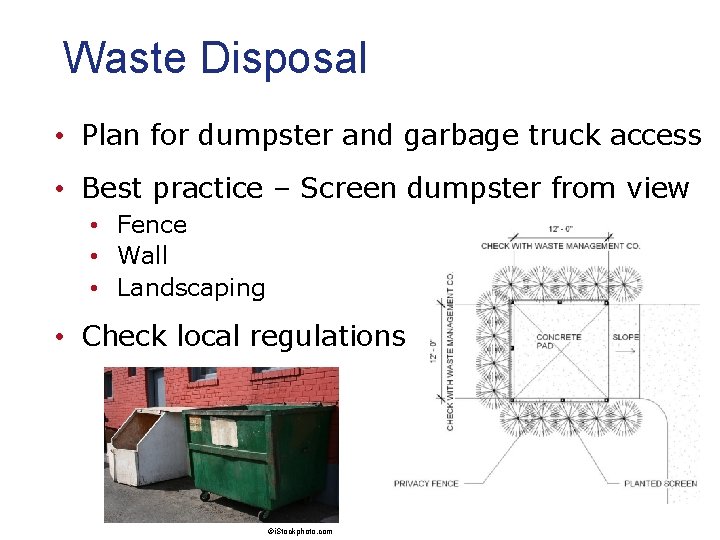
Waste Disposal • Plan for dumpster and garbage truck access • Best practice – Screen dumpster from view • Fence • Wall • Landscaping • Check local regulations ©i. Stockphoto. com
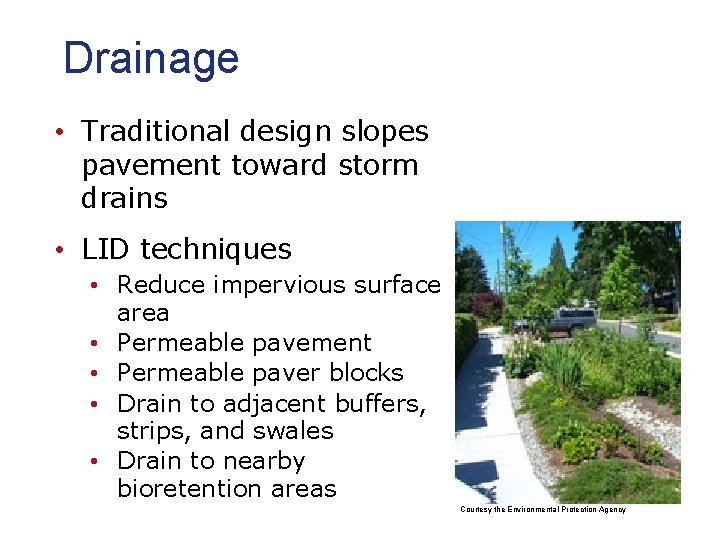
Drainage • Traditional design slopes pavement toward storm drains • LID techniques • Reduce impervious surface area • Permeable pavement • Permeable paver blocks • Drain to adjacent buffers, strips, and swales • Drain to nearby bioretention areas Courtesy the Environmental Protection Agency
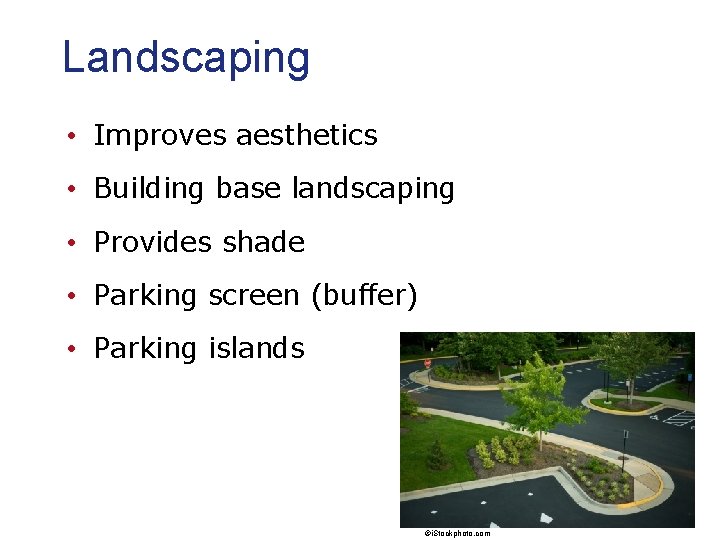
Landscaping • Improves aesthetics • Building base landscaping • Provides shade • Parking screen (buffer) • Parking islands ©i. Stockphoto. com
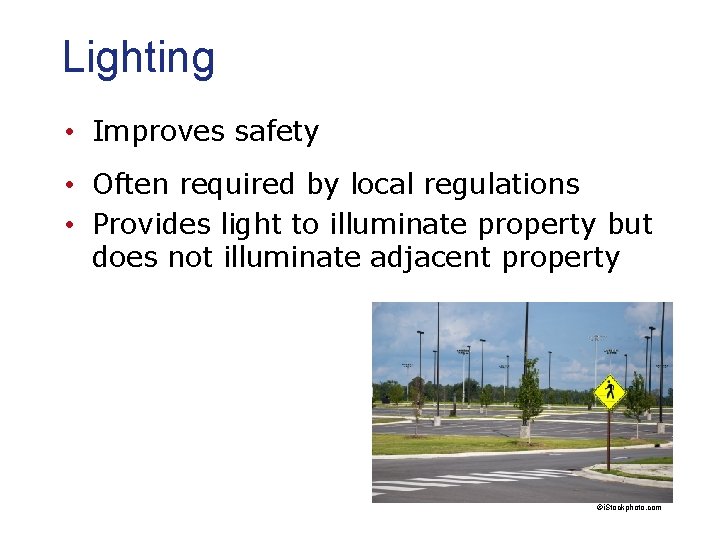
Lighting • Improves safety • Often required by local regulations • Provides light to illuminate property but does not illuminate adjacent property ©i. Stockphoto. com
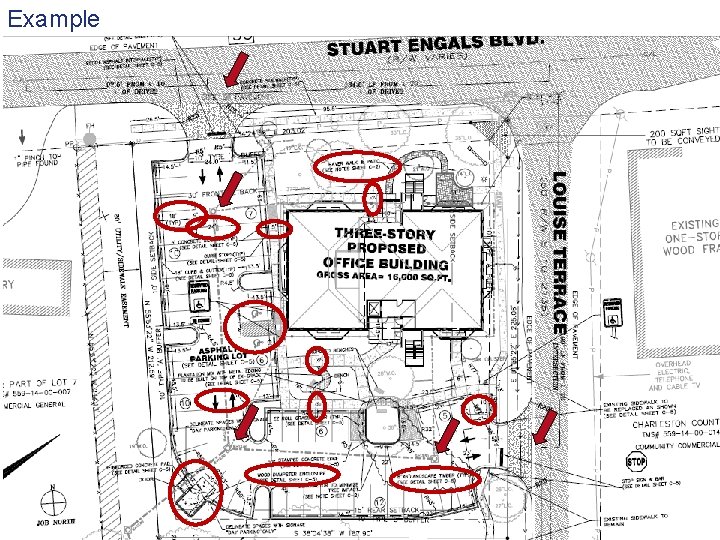
Example
TABLE OF CONTENTS • • • Ingress and Egress Number of Parking Spaces Size of Parking Spaces Accessibility Aisle Width Pedestrian Circulation Special Vehicle Access Off-Street Loading Area Waste Disposal Drainage Landscaping Lighting
Image Sources Istockphoto. (2009). Retrieved December 15, 2009, from www. istockphoto. com Environmental Protection Agency. (n. d. ). Stormwater management best practices. Retrieved December 15, 2009, from http: //www. epa. gov/greeningepa/stormwater/best_practices. ht m#permeablepavers Architectural and Transportation Barriers Compliance Board. (2004) ADA and ABA accessibility guidelines for buildings and facilities. Retrieved November 20, 2009, from http: //www. accessboard. gov/ada-aba/preamble. htm U. S. Department of Transportation, Federal Highway Administration. (n. d. ) Flexibility in highway design. Retrieved December 15, 2009, from http: //www. fhwa. dot. gov/environment/flex/ch 03. htm