
Parking Lot 53 Drainage by John Anderson Martin
Parking Lot 53 Drainage by John Anderson, Martin Bermudez, and Megan Jordan
Overview 1. Representation 2. Process 3. Evaluation a. Goals 4. Change a. Pervious pavement b. Detention Ponds 5. Impact 6. Design
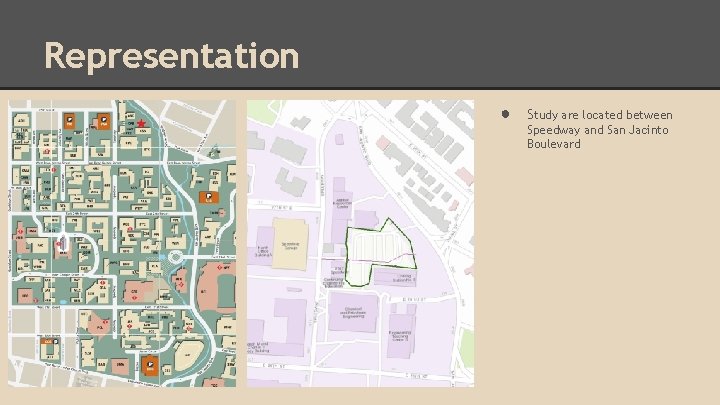
Representation ● Study are located between Speedway and San Jacinto Boulevard
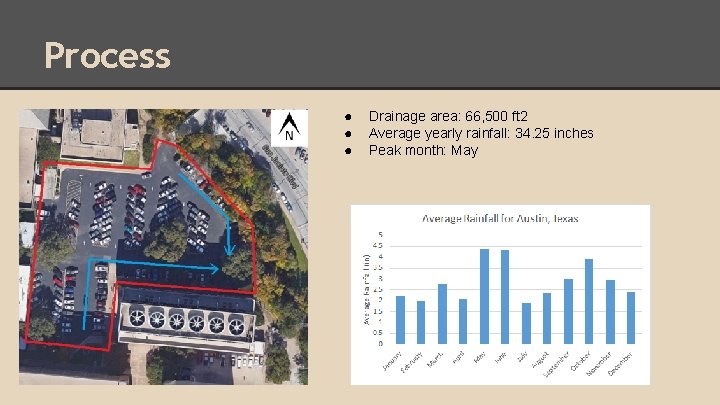
Process ● ● ● Drainage area: 66, 500 ft 2 Average yearly rainfall: 34. 25 inches Peak month: May
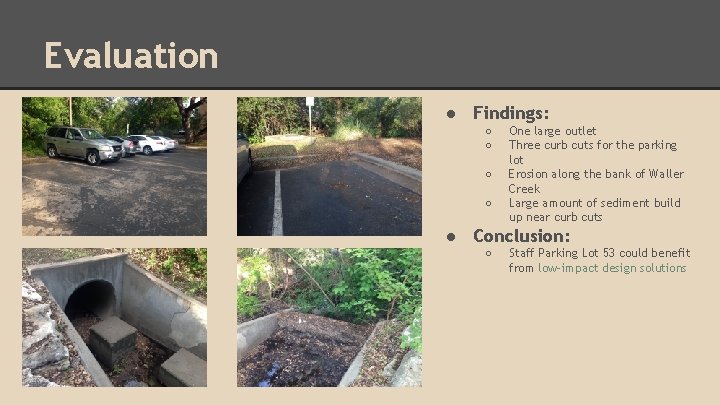
Evaluation ● Findings: ○ ○ One large outlet Three curb cuts for the parking lot Erosion along the bank of Waller Creek Large amount of sediment build up near curb cuts ● Conclusion: ○ Staff Parking Lot 53 could benefit from low-impact design solutions
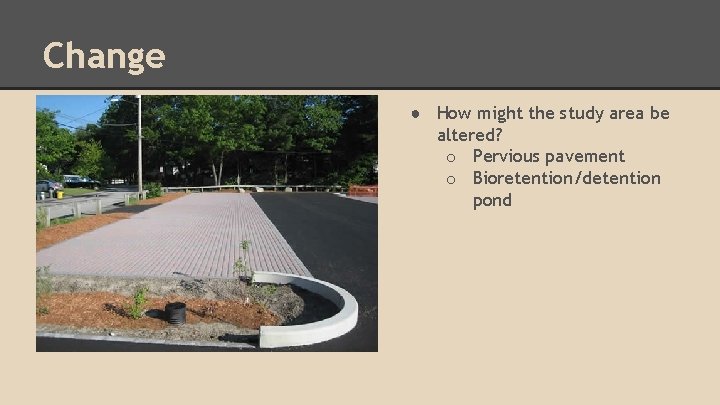
Change ● How might the study area be altered? o Pervious pavement o Bioretention/detention pond
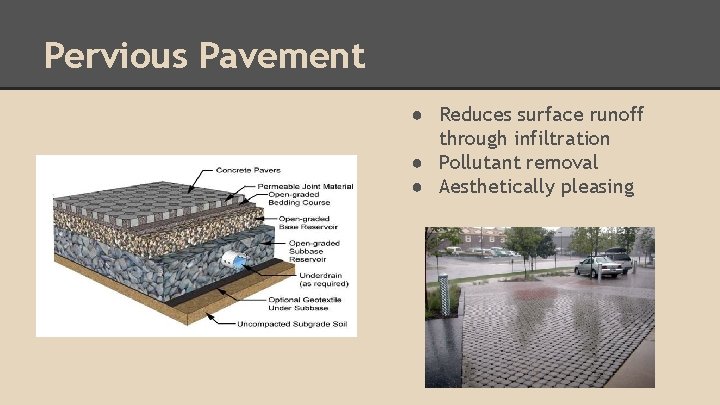
Pervious Pavement ● Reduces surface runoff through infiltration ● Pollutant removal ● Aesthetically pleasing
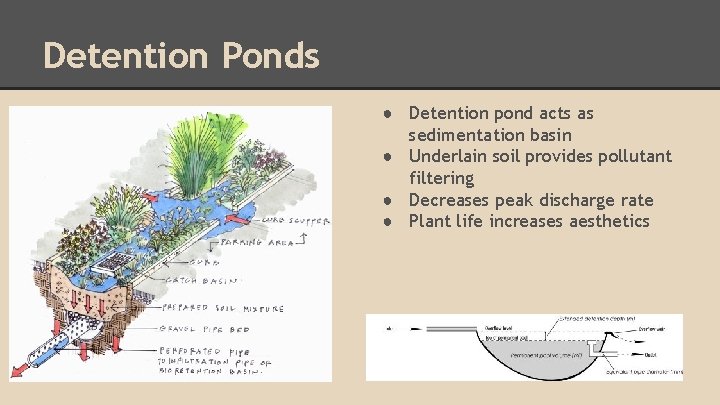
Detention Ponds ● Detention pond acts as sedimentation basin ● Underlain soil provides pollutant filtering ● Decreases peak discharge rate ● Plant life increases aesthetics
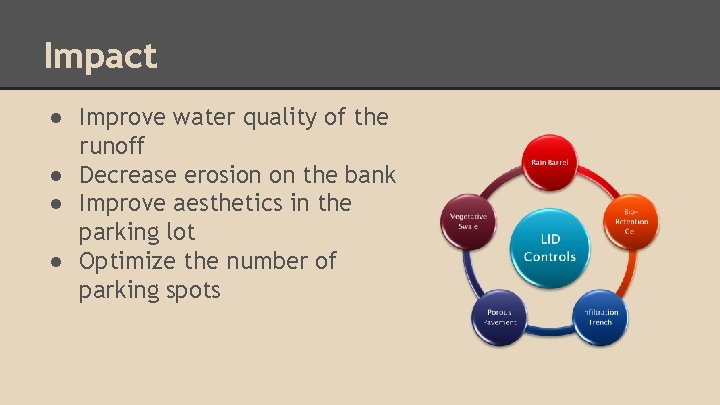
Impact ● Improve water quality of the runoff ● Decrease erosion on the bank ● Improve aesthetics in the parking lot ● Optimize the number of parking spots
Decision Steps left to take: 1. Finish Arc. GIS model in order to find slope and watershed area 2. Use rational method in order to determine current peak discharge 3. Use ICPI Permeable Design Pro to assess if pervious pavement will provide a solution that will reduce the current peak runoff discharge. 4. Analyze the effectiveness of a Bioretention/detention pond 5. Create a cost analysis for each solution 6. Choose one or both solutions to be implemented based on both cost and runoff reduction
Questions?
- Slides: 11