
Paris Capital of Modernity Dr Chris Pearson JacquesLouis
- Slides: 58
Paris: Capital of Modernity? Dr Chris Pearson
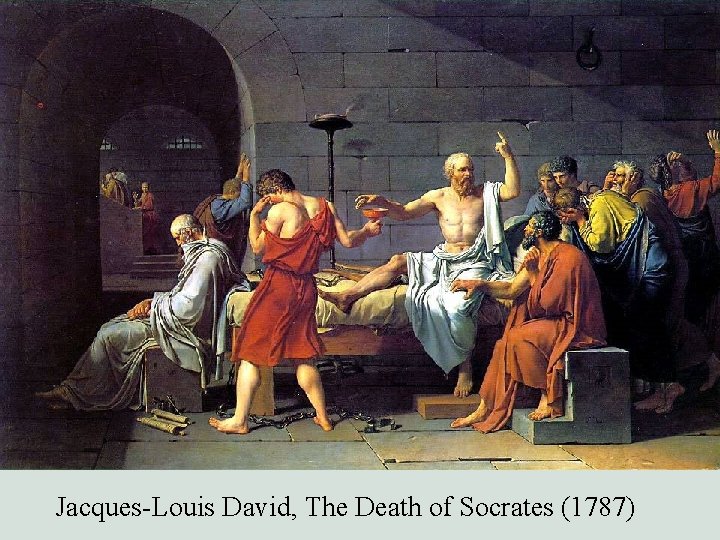
Jacques-Louis David, The Death of Socrates (1787)
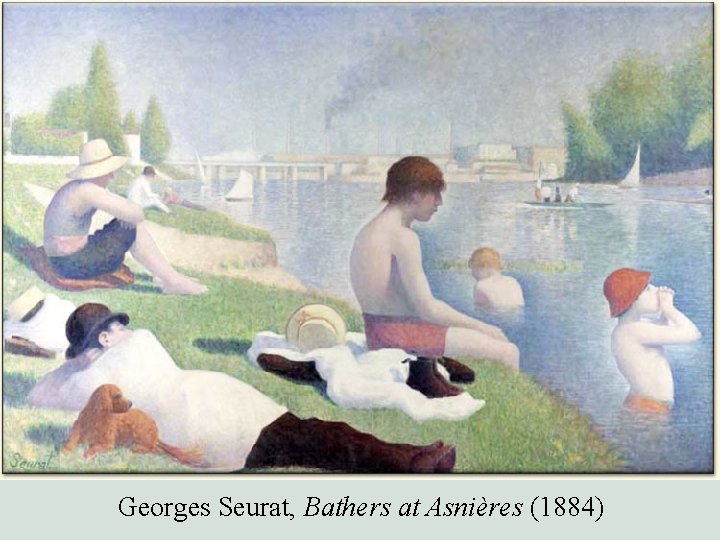
Georges Seurat, Bathers at Asnières (1884)
Lecture questions • What was Haussmannization? • Did it modernize Paris? • What was its social impact?
Lecture outline • Paris before Haussmann • Haussmannization • Historians assess Haussmannization • The social impact of Haussmannization
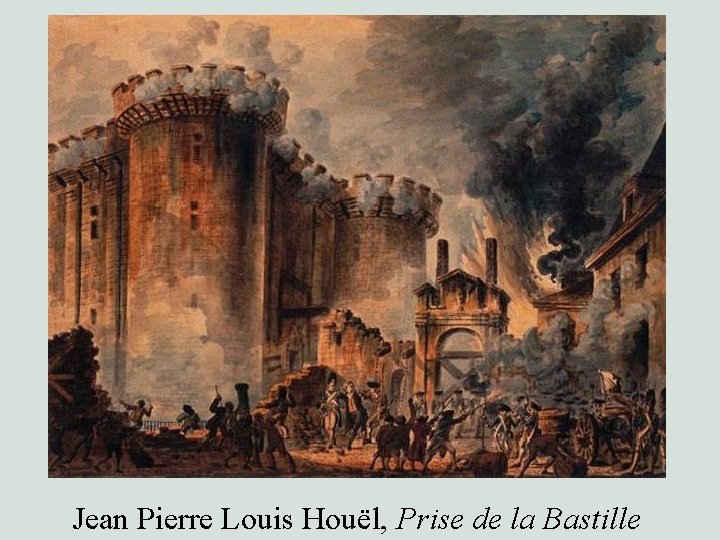
Jean Pierre Louis Houël, Prise de la Bastille
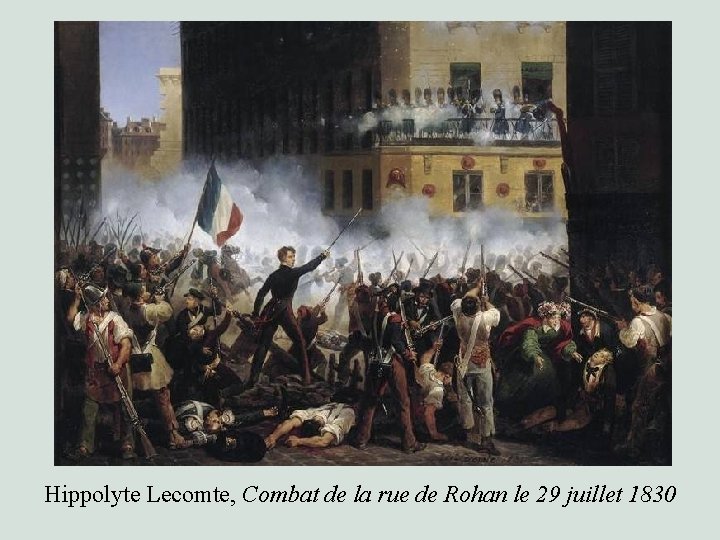
Hippolyte Lecomte, Combat de la rue de Rohan le 29 juillet 1830
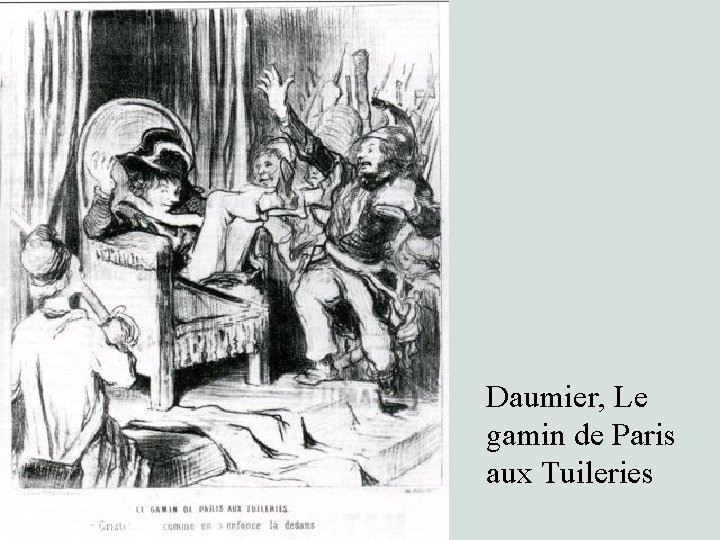
Daumier, Le gamin de Paris aux Tuileries
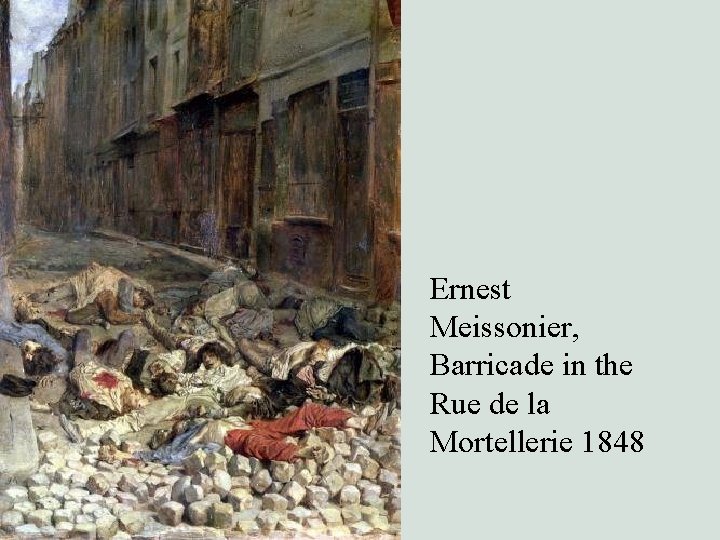
Ernest Meissonier, Barricade in the Rue de la Mortellerie 1848
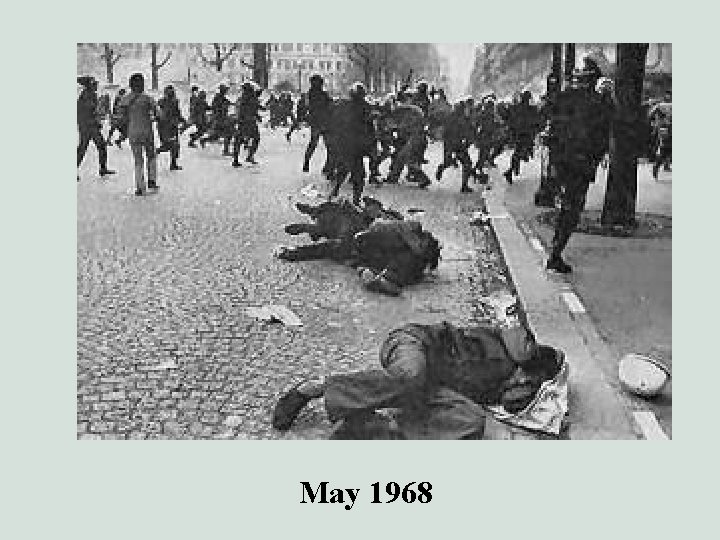
May 1968
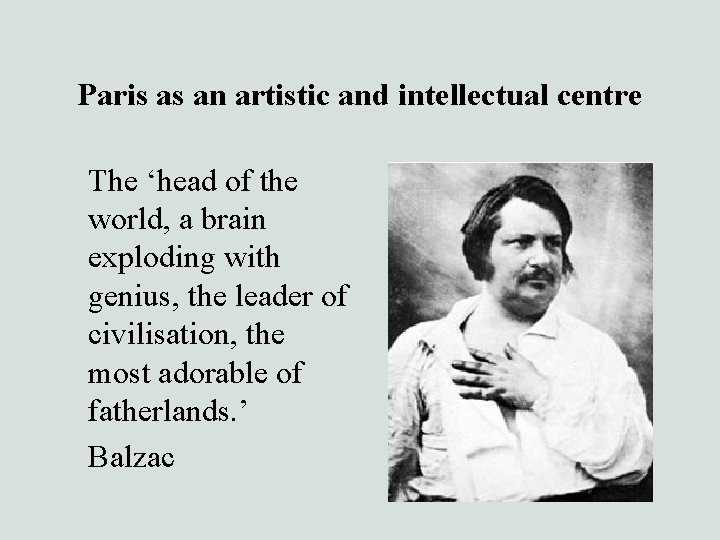
Paris as an artistic and intellectual centre The ‘head of the world, a brain exploding with genius, the leader of civilisation, the most adorable of fatherlands. ’ Balzac
The bubbling city Paris ‘is rapid, it is ardent, it is seething… The air vibrates. It is torn by brusque notes and long notes, and it is worn out by blasts of bizarre sound that suddenly erupt and suddenly vanish. The street is always babbling, and the paving stones groan or complain, grind or hiss. ’ Polish publicist Frankowski, quoted in Jones, Paris (2004), 319
The expanding city • Paris’ population in 1815: 700, 000 • Paris’ population in 1861: 1. 7 million
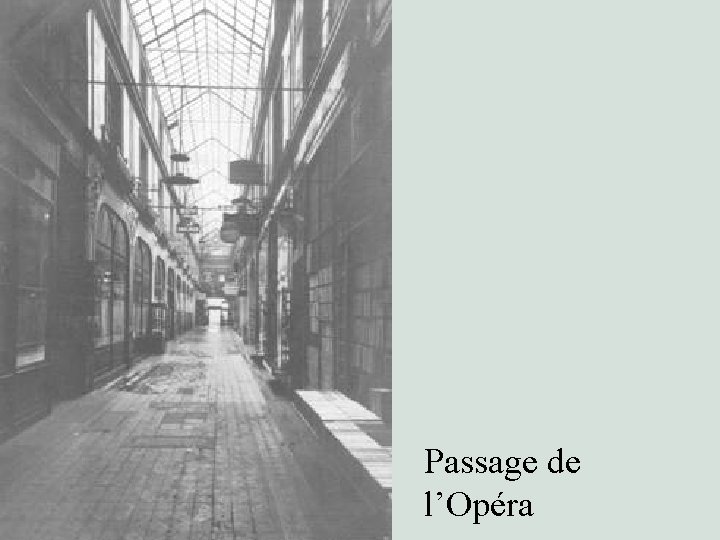
Passage de l’Opéra
The flâneur • “Gentlemen stroller” • Wealthy, refined, self-controlled • Wandered through Paris and its crowds, but not submerged by them • Able to resist the seductions and stimuli of the city environment • Associated with writers such as Balzac and Baudelaire
‘The crowd is his domain, just as the air is that of the bird and water that of the fish. His passion and his profession is to marry the crowd. For the true flâneur, for the impassioned observer, it is an immense pleasure to take up one’s abode in numbers, in the flowing, in movement, in the fleeting and the infinite. To be outside of oneself and nevertheless to feel oneself everywhere at home; to see the world, to be at the centre of the world and to remain hidden in the world, such are some of the lesser pleasures of those independent, passionate, and impartial spirits. ’ Baudelaire quoted in Forth, The Dreyfus Affair (2004), 108 -9
Imperial Ambitions ‘I want to be a second Augustus… because Augustus… made Rome a city of marble. ’ Louis Napoleon (1842)
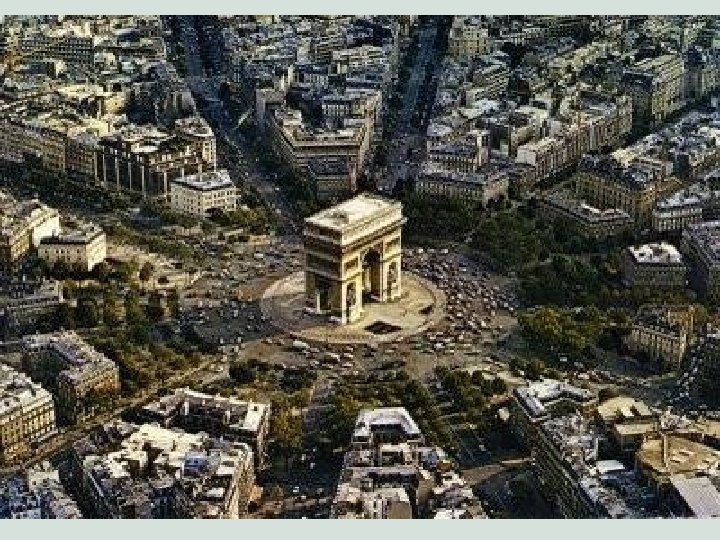
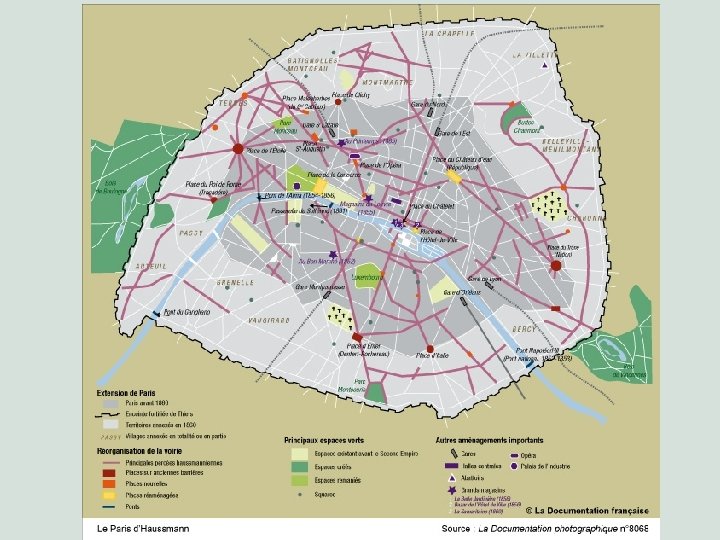
Modernizing Paris • New boulevards and straight roadways cutting through le vieux Paris (old Paris) • Improved circulation • Linking monumental sites • More green space • Better infrastructure to cope with a larger and more densely populated city
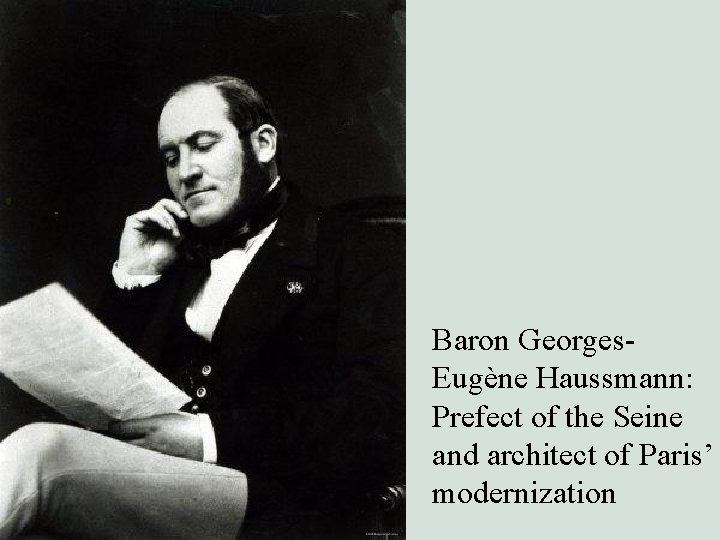
Baron Georges. Eugène Haussmann: Prefect of the Seine and architect of Paris’ modernization
Haussmann’s vision for Paris ‘A great city, a capital above all, has the duty to present itself as equal to the role that it plays in the country. When the country is France, when centralization, which is the basis of its strength, has made the capital both the head and heart of the social body, then that capital would betray its glorious mission if, in spite of everything, it became constantly stuck in the ways of superannuated routine. ’
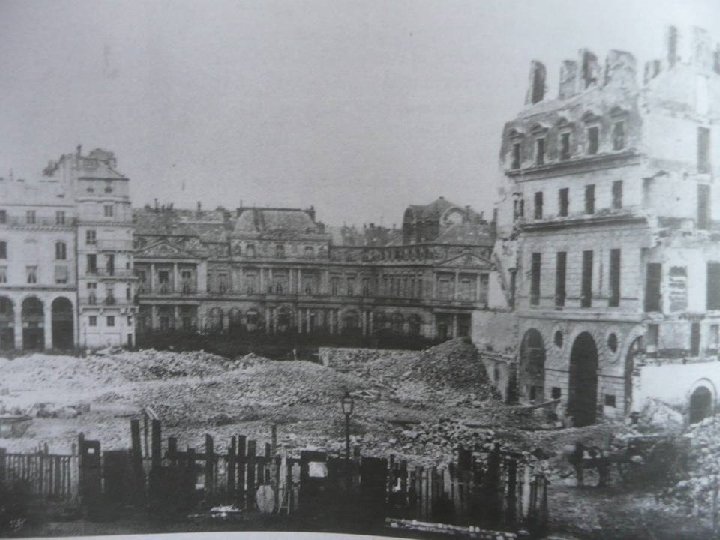
“Haussmannization” before Haussmann • Napoleon I’s penchant for monuments • Holistic plan to rationalize and modernize Paris put forward by socialist thinker Perreymond in the 1840 s • Road extensions and demolition of buildings had begun before Haussmann took office in 1853
‘Napoleon and Haussmann saw themselves as physician-urbanists, whose task was to ensure Paris’s nourishment, to regulate and to speed up circulation in its arteries (namely, its streets), to give it more powerful lungs so as to let it breathe (notably, through green spaces), and to ensure that its waste products were hygienically and effectively disposed of. ’ Jones, Paris (2004), 348
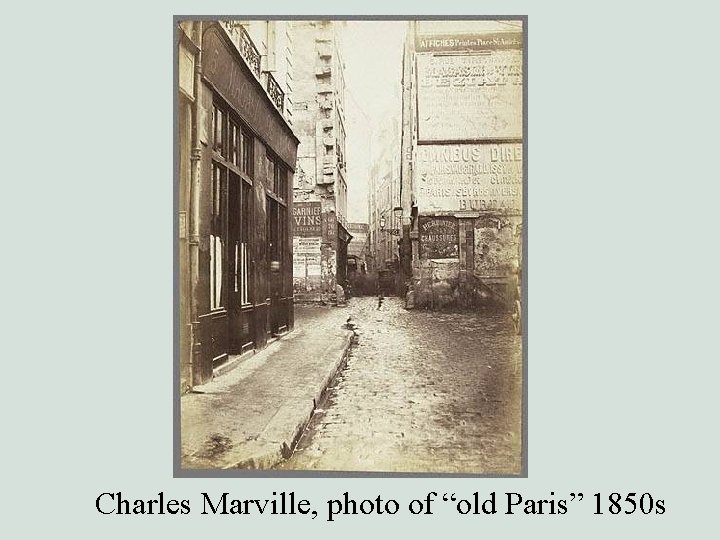
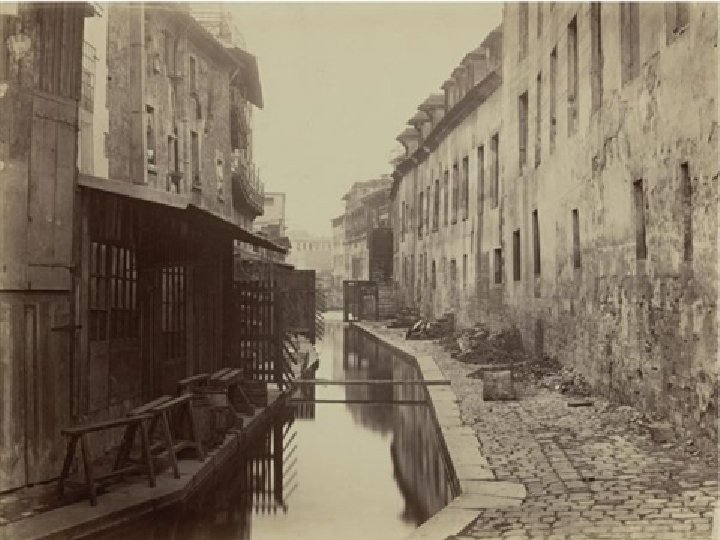
Charles Marville, photo of “old Paris” 1850 s
Paris before Haussmannization, according to Maxime du Camp: The city ‘was on the point of becoming uninhabitable. Its population [was] suffocating in the tiny, narrow, putrid, and tangled streets in which it had been dumped. As a result of this state of affairs, everything suffered: hygiene, security, speed of communications and public morality. ’
Financing modernization • Cost of modernization: 2, 500, 000 francs, 44 times the city government’s overall financial outlay in 1851 (Pinkney, Napoleon III and the Rebuilding of Paris [1955], p. 5) • Paid for by national government, sale of properties, and, in the main, loans • “Creative accounting”
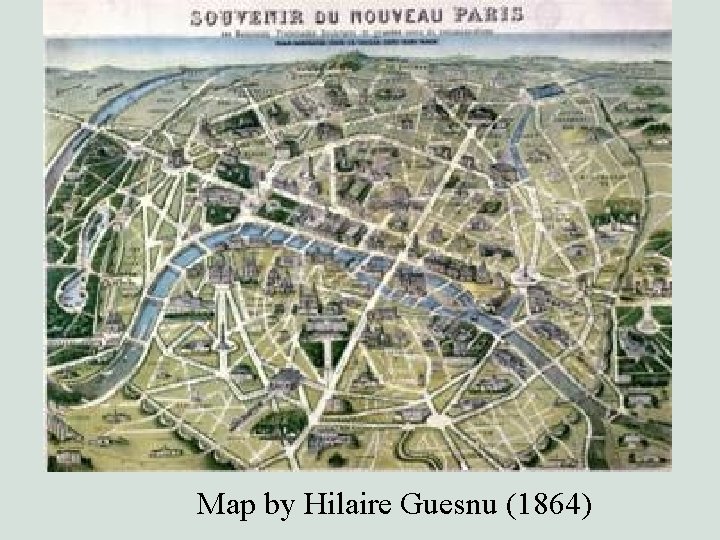
Map by Hilaire Guesnu (1864)
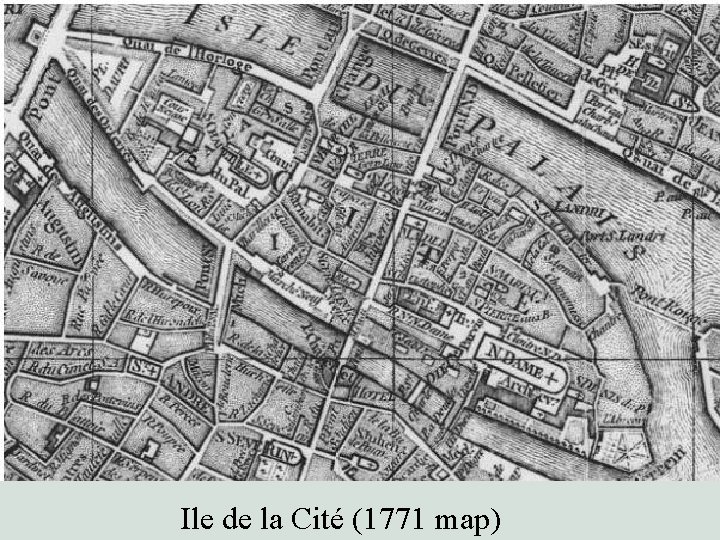
Ile de la Cité (1771 map)
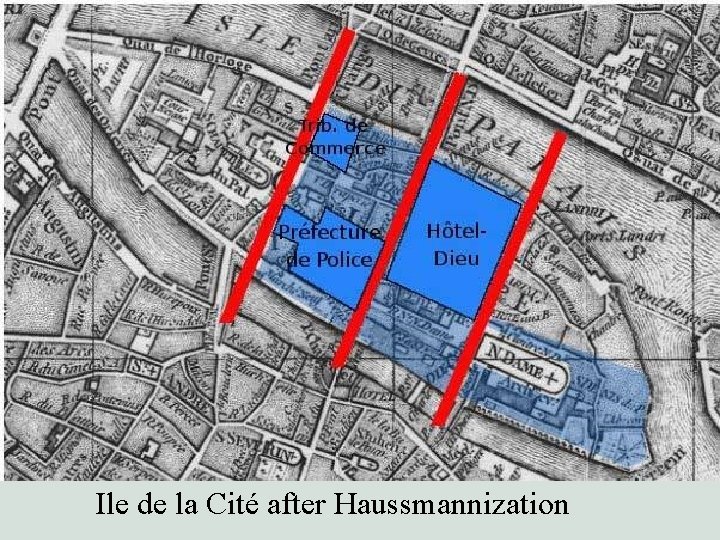
Ile de la Cité after Haussmannization
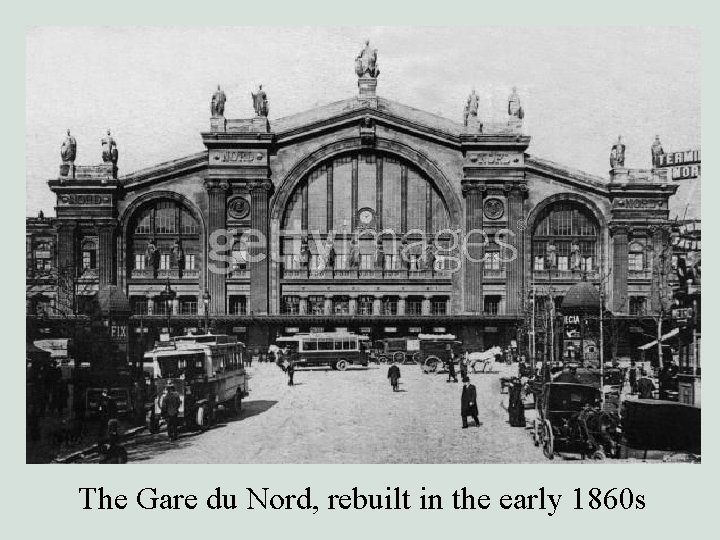
The Gare du Nord, rebuilt in the early 1860 s
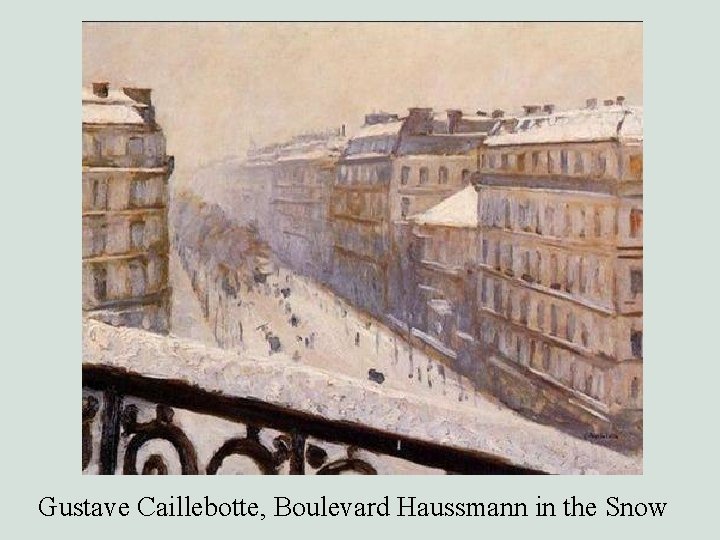
Gustave Caillebotte, Boulevard Haussmann in the Snow
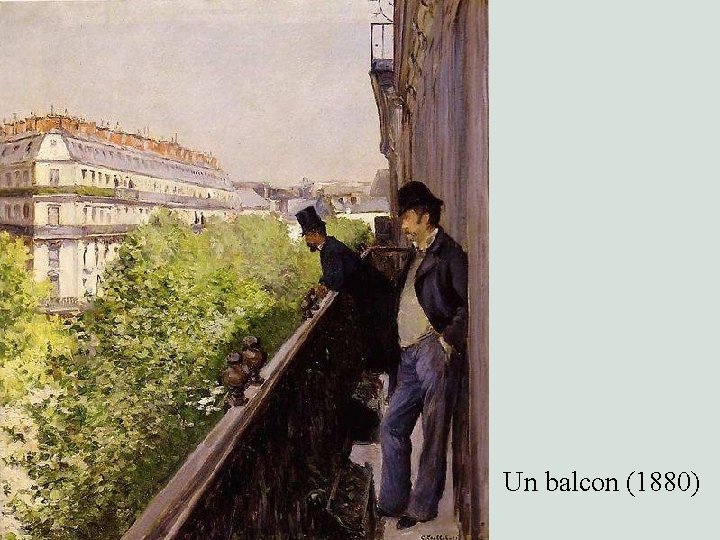
Un balcon (1880)
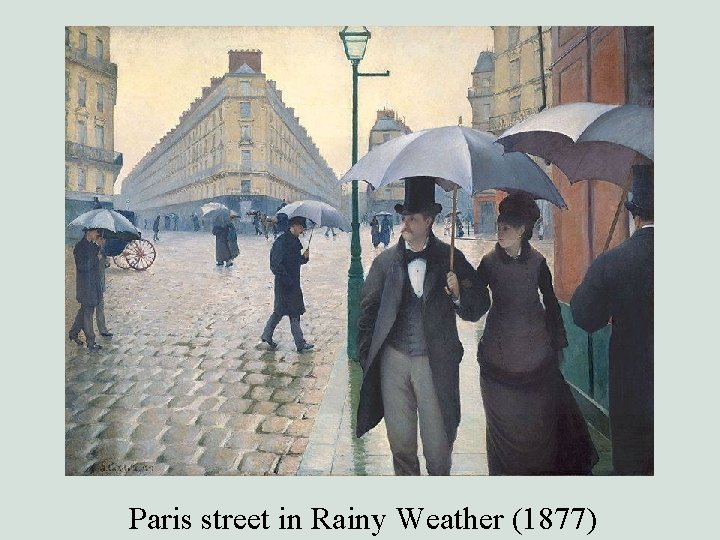
Paris street in Rainy Weather (1877)
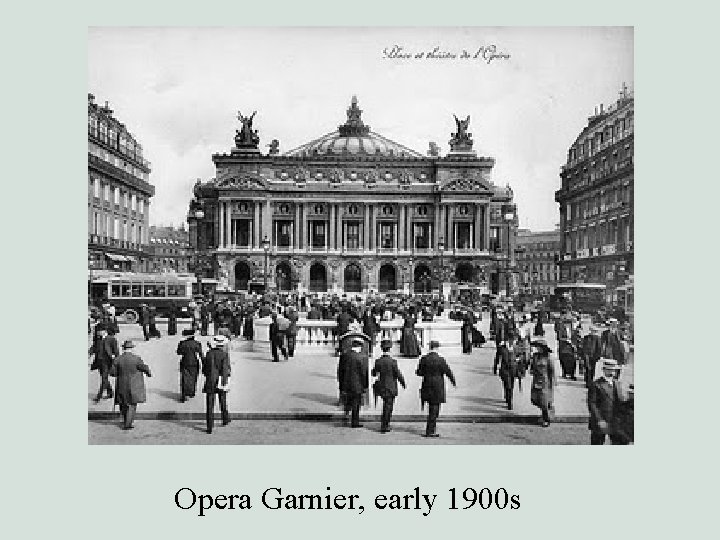
Opera Garnier, early 1900 s
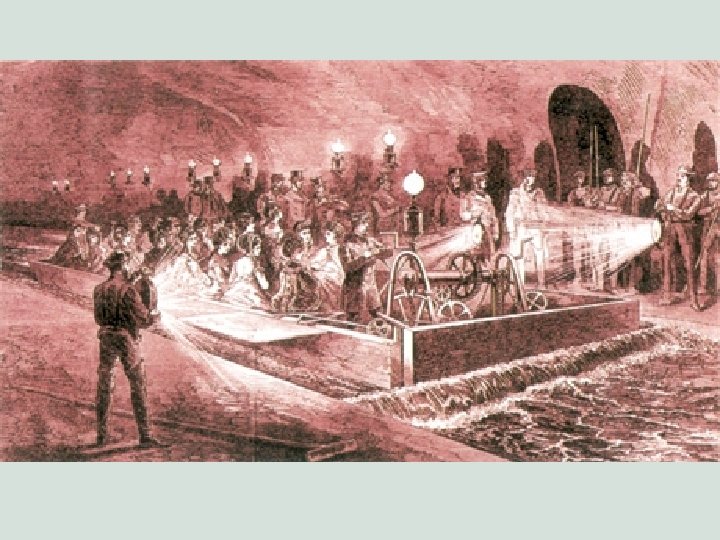
Haussmann on sewers: ‘These underground galleries would be the organs of the metropolis and function like those of the human body without ever seeing the light of day. Pure and fresh water, along with light and heat, would circulate like the diverse fluids whose movements and replenishment sustain life itself. These liquids would work unseen and maintain public health without disrupting the smooth running of the city and without spoiling its exterior beauty. ’
Haussmannization: A positive response ‘The city is improved as no other ever was and perhaps could be by any other than the present Napoléon and he will thus, whatever his fate, leave the grandest monument to his genius and power the world has ever seen or ever will see. ’ American sightseer in the 1860 s
Haussmannization: negative response (1) ‘Our Paris, the Paris in which we were born, the Paris of the manners of 1830 and 1848, is disappearing. And it is not disappearing materially but morally. Social life is beginning to undergo a great change. I can see women, children, husbands and wives, whole families in the café. The home is dying. Life is threatening to become public… I am a stranger to what is coming and what is here, as for example, to these new boulevards that have nothing of Balzac’s world about them, but make one think of London or some Babylon of the future. ’ Edmond Goncourt (1860)
Haussmannization: negative response (2) ‘What is called the embellishment of Paris is in essence merely a general system of defensive and offensive arming against riot, a warning shot against revolution. ’ Victor Fournel (1865)
‘The real aim of Haussmann’s works was the securing of the city against civil war. He wished to make the erection of barricades in Paris impossible for all time. ’ Walter Benjamin, ‘Paris: Capital of the Nineteenth Century, ’ Perspecta 12 (1969), 171
Historians assess Haussmannization • David Pinkney (1958) – generally positive account • Until Napoloen III and Haussmann, the city’s administrators had ‘lacked the courage [and] the imagination. . . to attack the staggering problem of virtually rebuilding the city. ’ (Napoleon III and the Rebuilding of Paris, 1958), 24
Haussmannization creates modernity ‘The result was a Paris which by the end of the century had new boundaries, a new configuration and, in some respects, a new identity as the city of modernity. ’ Colin Jones, Paris (2004), 344
Haussmann creates a modern, commercial, bourgeois city: ‘The Paris that emerged from the traumas of urban renewal was a city reborn: a business capital, a showpiece of Imperial grandeur, and a congenial playground for a rising bourgeoisie. ’ Philip Nord, Politics of Resentment (1986), 101
Haussmannization as anti-modernity • Haussmannization does not equate with “cultural modernity” – individuals’ recognition and celebration of the modern, such as public spaces that ‘transparency, spectacle, mobility, and exchange. ’ • Interior, private world of the apartment a reaction against modernity • S Marcus, ‘Haussmannization as anti-modernity, ’ Journal of Urban History 27 (2001), 723 -45
The social impact of Haussmannization • Dislocation of communities as working classes pushed out to outer arrondissements and suburbs • 350, 000 individuals displaced (Jones, Paris, 365) • Depopulation of central areas ‘the bourgeoisie wanted more elbow room’ (Jones, Paris, 365)
But… • Working class communities survived within Paris itself – café became a centre of community and sociability • Evidence that Haussmannization didn’t destroy all social networks • Scott Haine, 'Cafe Friend': Friendship and Fraternity in Parisian Working-Class Cafes, 18501914’ Journal of Contemporary History 27/4 (1992), 607 -626
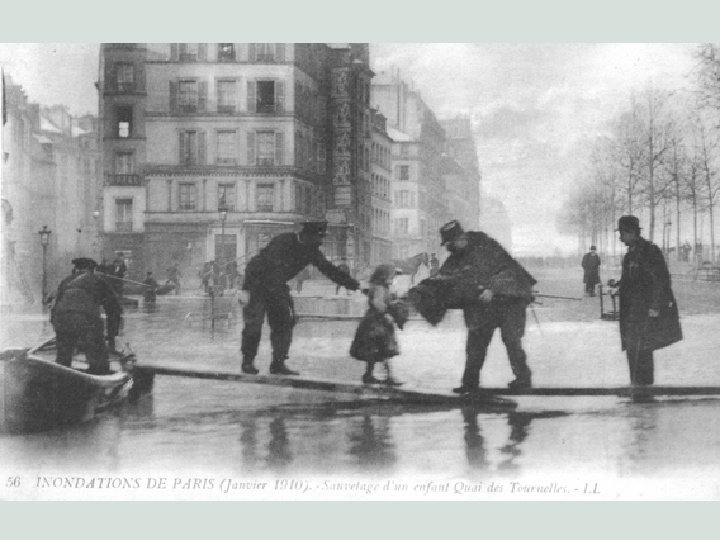
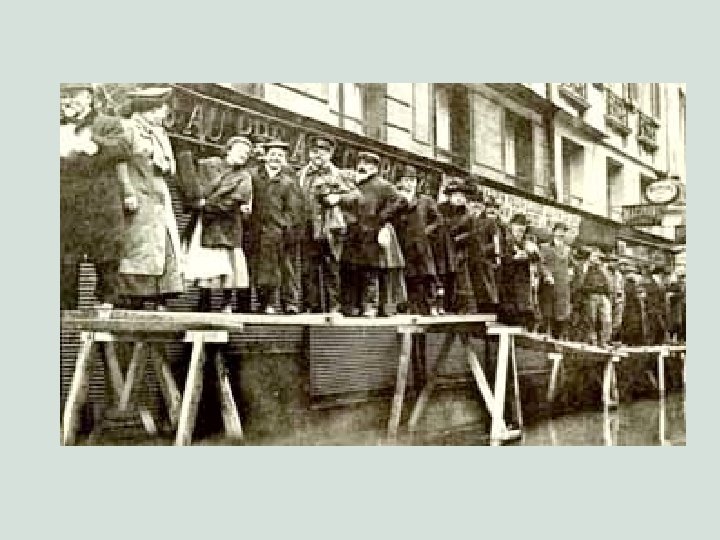
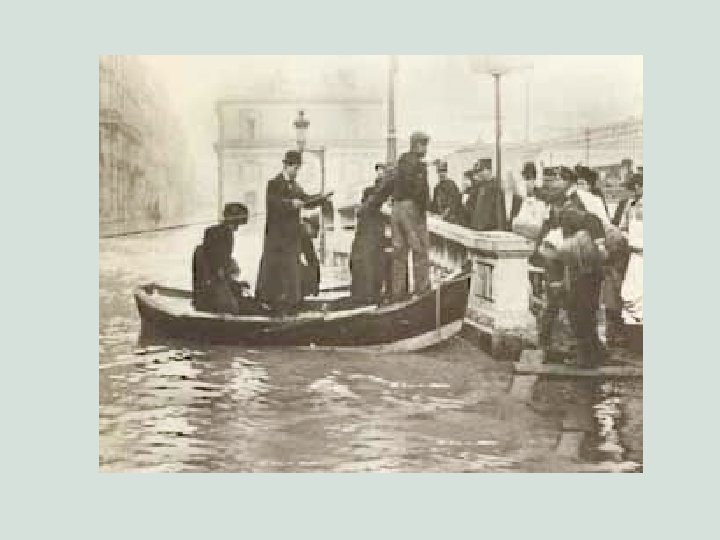
‘Paris in 1910 proved to be a viable network of neighbourhoods full of people willing and able to reach out to one another, even across class lines in calamity’ Jeffrey Jackson, Paris Under Water (2010)