
PARi HS Framework Promoting Action on Research Implementation

- Slides: 15
PARi. HS Framework Promoting Action on Research Implementation in Health Services Philip M. Ullrich, Ph. D. Spinal Cord Injury QUERI IRC Philip M. Ullrich, Ph. D. Cord Injury QUERI IRC Spinal Cord Injury. Spinal QUERI IRC
• PARi. HS Framework: History Features Proposed utility Future work Philip M. Ullrich, Ph. D. Spinal Cord Injury QUERI IRC
PARi. HS Origins Royal College of Nursing Institute, UK n 1990 s n n Contemporary models of the processes of implementing research into practice are inadequate. Unidimensional n Non-interactive n
PARi. HS Framework developmental aims: n Accurately represent the complexities of implementation. n Useful for explaining variability in the success of implementation projects. n Useful for guiding clinicians charged with implementing research into practice.
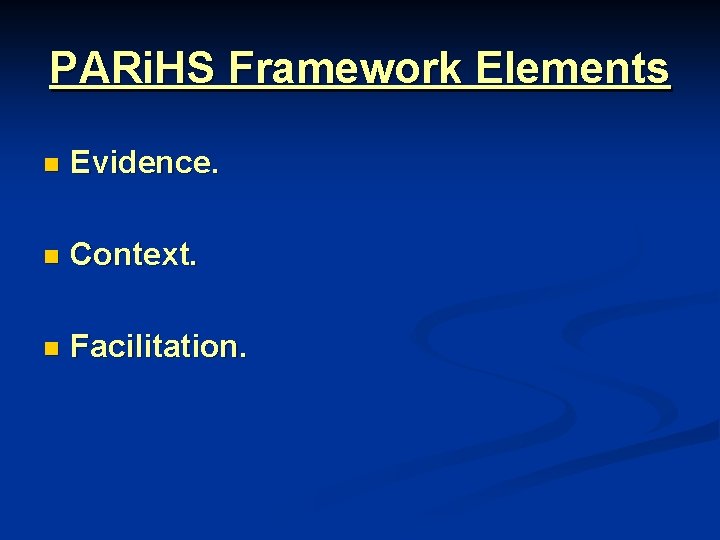
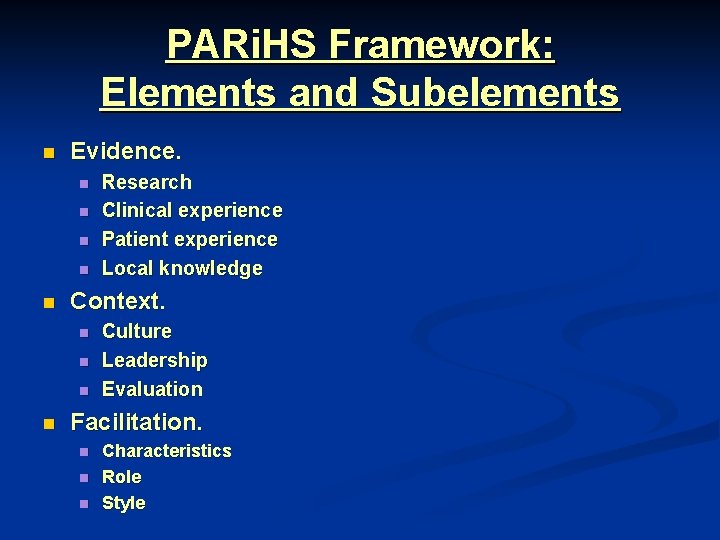
PARi. HS Framework Elements n Evidence. n Context. n Facilitation.
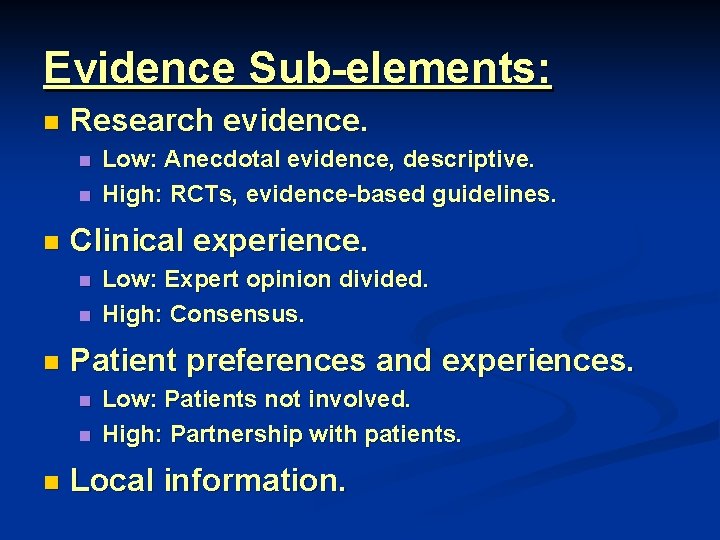
Evidence Sub-elements: n Research evidence. n n n Clinical experience. n n n Low: Expert opinion divided. High: Consensus. Patient preferences and experiences. n n n Low: Anecdotal evidence, descriptive. High: RCTs, evidence-based guidelines. Low: Patients not involved. High: Partnership with patients. Local information.
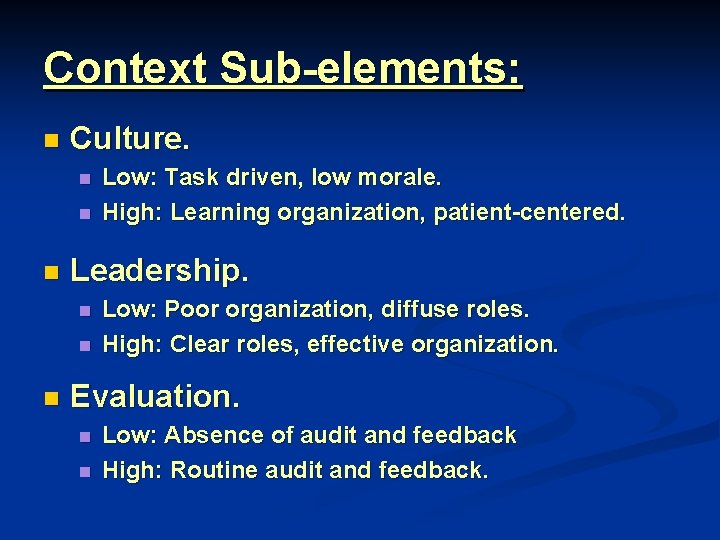
Context Sub-elements: n Culture. n n n Leadership. n n n Low: Task driven, low morale. High: Learning organization, patient-centered. Low: Poor organization, diffuse roles. High: Clear roles, effective organization. Evaluation. n n Low: Absence of audit and feedback High: Routine audit and feedback.
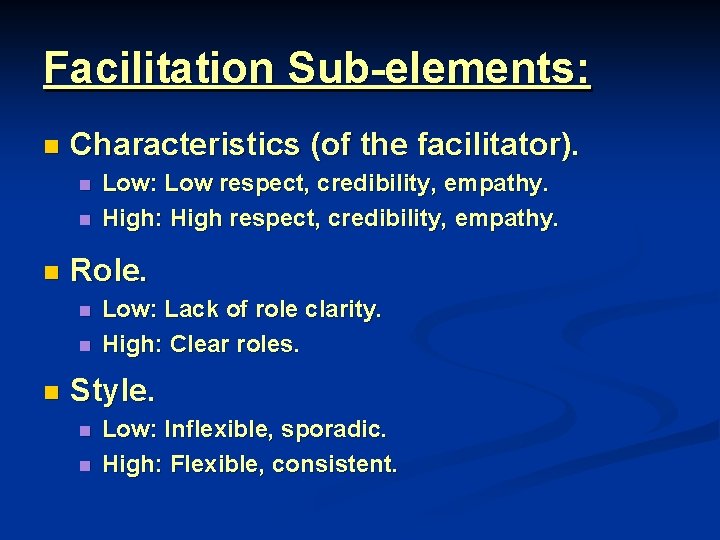
Facilitation Sub-elements: n Characteristics (of the facilitator). n n n Role. n n n Low: Low respect, credibility, empathy. High: High respect, credibility, empathy. Low: Lack of role clarity. High: Clear roles. Style. n n Low: Inflexible, sporadic. High: Flexible, consistent.
PARi. HS Framework: Elements and Subelements n Evidence. n n n Context. n n Research Clinical experience Patient experience Local knowledge Culture Leadership Evaluation Facilitation. n n n Characteristics Role Style
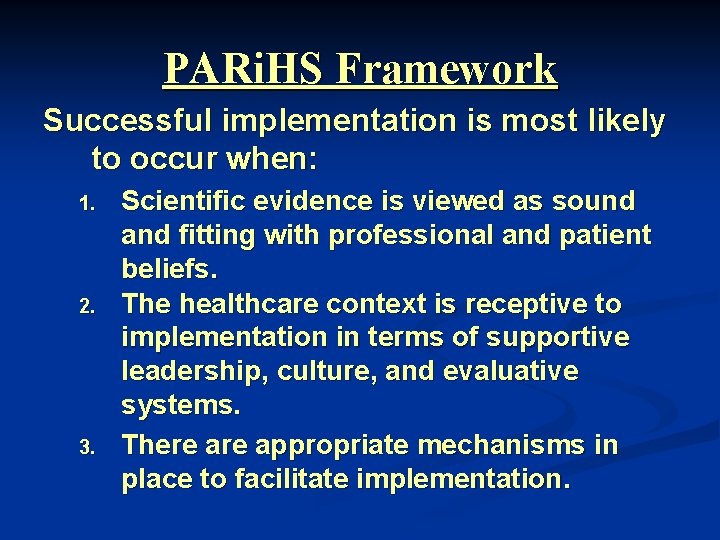
PARi. HS Framework Successful implementation is most likely to occur when: 1. 2. 3. Scientific evidence is viewed as sound and fitting with professional and patient beliefs. The healthcare context is receptive to implementation in terms of supportive leadership, culture, and evaluative systems. There appropriate mechanisms in place to facilitate implementation.
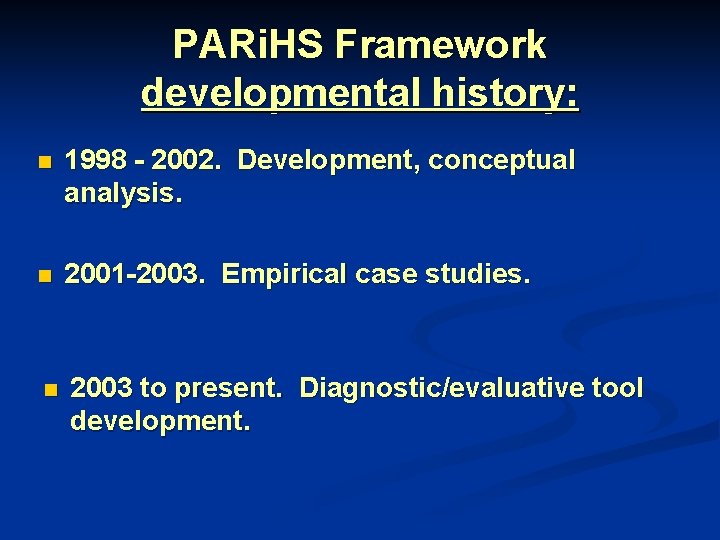
PARi. HS Framework developmental history: n 1998 - 2002. Development, conceptual analysis. n 2001 -2003. Empirical case studies. n 2003 to present. Diagnostic/evaluative tool development.
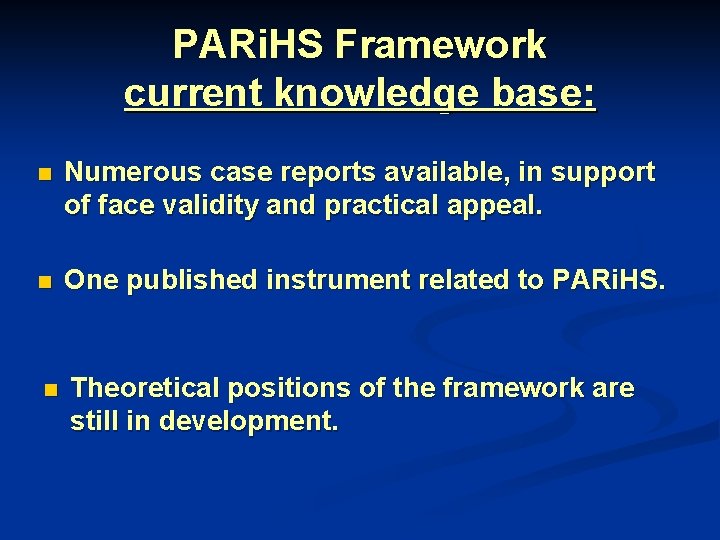
PARi. HS Framework current knowledge base: n Numerous case reports available, in support of face validity and practical appeal. n One published instrument related to PARi. HS. n Theoretical positions of the framework are still in development.
PARi. HS Diagnostic and Evaluative utility? PARi. HS Diagnostic and Evaluative grid: Kitson et al. , 2008.
Conclusions: n PARi. HS framework has long been the subject of theoretical development. n Exploratory work in applying PARi. HS to implementation interventions is encouraging. n Empirical foundations for the framework have not developed at pace with theory.
PARi. HS Framework future work: 1. Measure development and validation. 2. Develop methods for linking theory with specific interventions and tools. 3. Refine and clarify the framework.