
Parent Presentation The FRIENDS for Life Programme Pathways
- Slides: 18
Parent Presentation The FRIENDS for Life Programme. Pathways Health and Research Centre www. pathwayshrc. com. au Author: Professor Paula Barrett © Copyright Entire Contents Dr. Paula Barrett 2012
Agenda • Provide information about the FRIENDS programme • Provide an overview of anxiety and resilience in childhood. • Questions
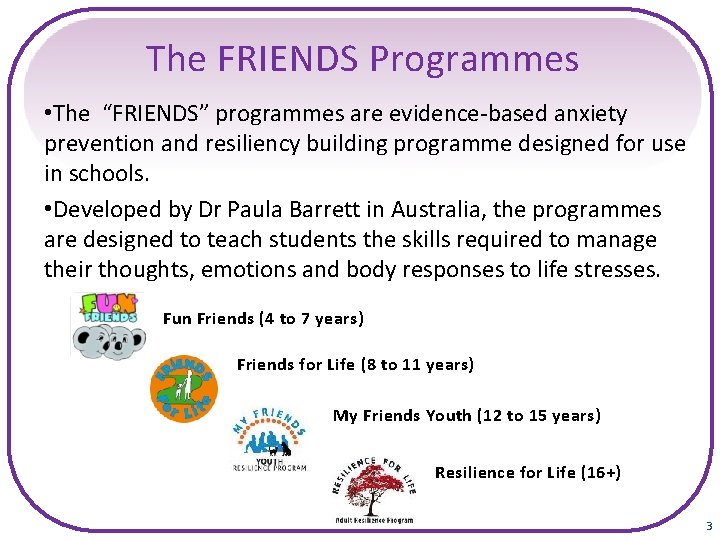
The FRIENDS Programmes • The “FRIENDS” programmes are evidence-based anxiety prevention and resiliency building programme designed for use in schools. • Developed by Dr Paula Barrett in Australia, the programmes are designed to teach students the skills required to manage their thoughts, emotions and body responses to life stresses. Fun Friends (4 to 7 years) Friends for Life (8 to 11 years) My Friends Youth (12 to 15 years) Resilience for Life (16+) 3
• “FRIENDS” is the only childhood anxiety prevention programme acknowledged by the World Health Organization for its 12 years of comprehensive validation in schools and health clinics across several countries and languages. • The programme meets many of the aims of the SPHE curriculum such as the promotion of physical, mental and emotional well-being in addition to providing pupils with opportunities for reflection and discussion.
What are the FRIENDS programmes ? n n The programmes seek to develop self-esteem and teach coping skills in a simple and structured way. It is a positive, fun learning experience that does not involve any clinical assessment or diagnosis and avoids labelling young people as anxious or different. “FRIENDS” will be delivered as a Universal Programme, this means that it will form part of your child’s SPHE curriculum. “FRIENDS for Life ” consists of 10 sessions during which pupils are guided through a series of classbased activities that are built around the core themes of the programme.
• The “FRIENDS” programme takes a preventative rather than a reactive approach to anxiety. • It is based on cognitive behavioural psychology principles. • It aims to help children develop an awareness of their thoughts, feelings and behaviours. • Pupils are taught how to identify anxious feelings; how to relax; how to change unhelpful thoughts; and how to overcome everyday problems.
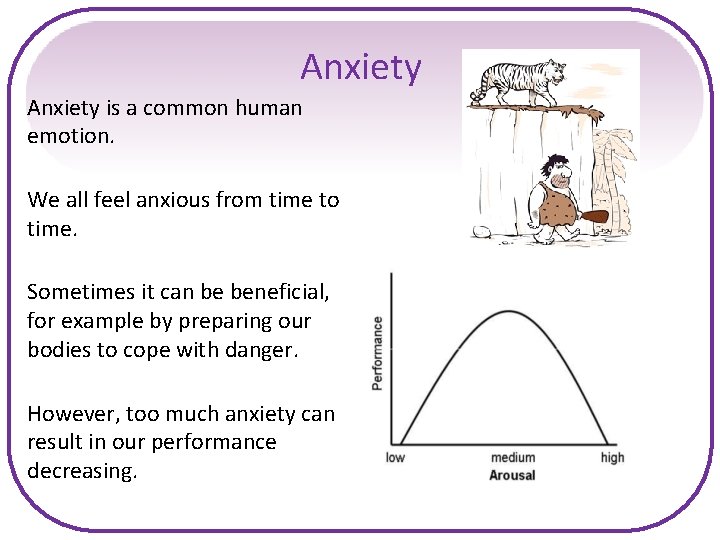
Anxiety is a common human emotion. We all feel anxious from time to time. Sometimes it can be beneficial, for example by preparing our bodies to cope with danger. However, too much anxiety can result in our performance decreasing.
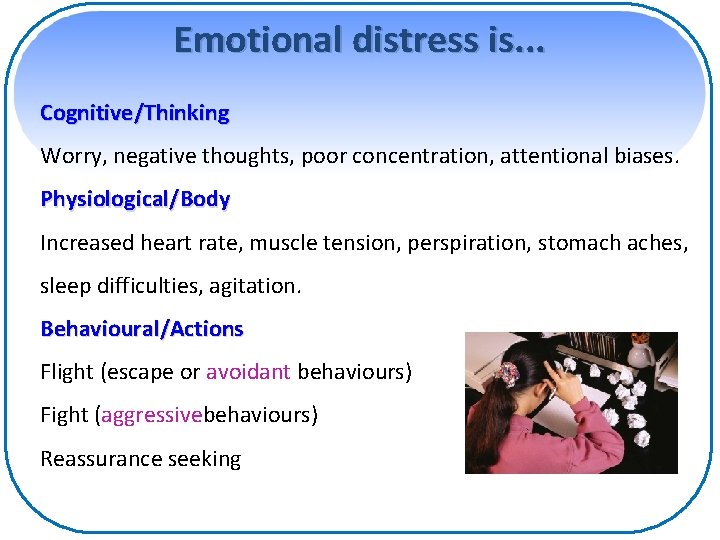
Emotional distress is. . . Cognitive/Thinking Worry, negative thoughts, poor concentration, attentional biases. Physiological/Body Increased heart rate, muscle tension, perspiration, stomach aches, sleep difficulties, agitation. Behavioural/Actions Flight (escape or avoidant behaviours) Fight (aggressivebehaviours) Reassurance seeking
Emotions become challenging when… • they have a significant negative impact on your life • they are beyond developmental appropriateness • they cause significant distress • they have been present for long periods Barriers that prevent us from thinking in helpful ways and paying attention to positive things around us.
If a child or an adult worries what are the signs of excessive worry? • Worry (anticipatory) • Avoidance • Attention to threat/ hyper vigilance • Fast and sustained physiological arousal • Psychosomatic complaints • Difficulty in resting and going to sleep • Shyness • Social withdrawal • Perfectionism • Appetite changes NB: Will vary across culture and individuals
Anxiety is normal • Infant anxiety - loud noises, unexpected events and unfamiliar people. • Children - loss or separation from parents and specific fears • Pre-Teens - death, danger and natural disasters • Adolescents - social comparisons [failure, criticism, physical appearance]
Some of the important gifts you can give your children… • Unconditional love/Positive, stable attachment • Paying attention to the positives • Positive thinking style • Time to be children/unstructured, creative, outdoor, active play • Resilience skills
Resilience = to spring back, or rebound Oxford Dictionary Ability to overcome adversity; achieving good outcomes regardless of life events or circumstances. The benefits of resilience: - “Children who are emotional and socially skilled are more successful at school (Durlak et al. , 2011)
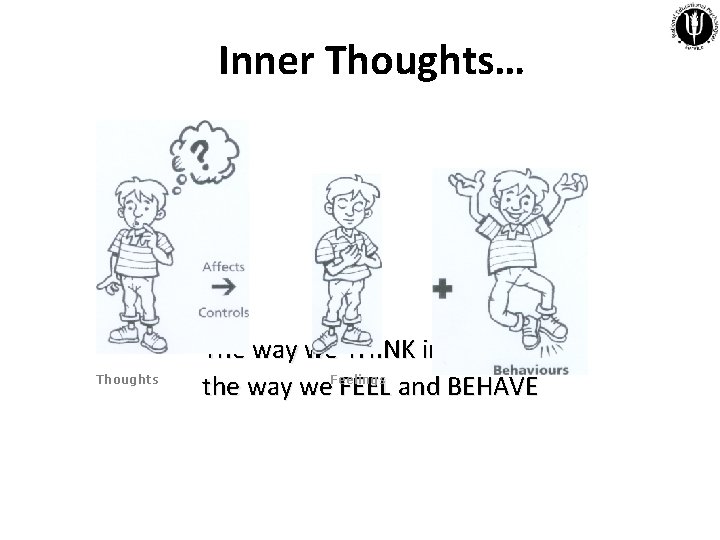
Inner Thoughts… Thoughts The way we THINK influences the way we. Feelings FEEL and BEHAVE
Overview of the Programme: Let’s take a look….
The FRIENDS acronym FRIENDS is an acronym for the skills and strategies taught in the programme Feelings Remember to Relax. Have quiet time. I can do it! I can try my best! Explore Solutions and Coping Step Plans. Now reward yourself! You’ve done your best! Do it everyday! Smile! Stay calm and talk to your support networks!
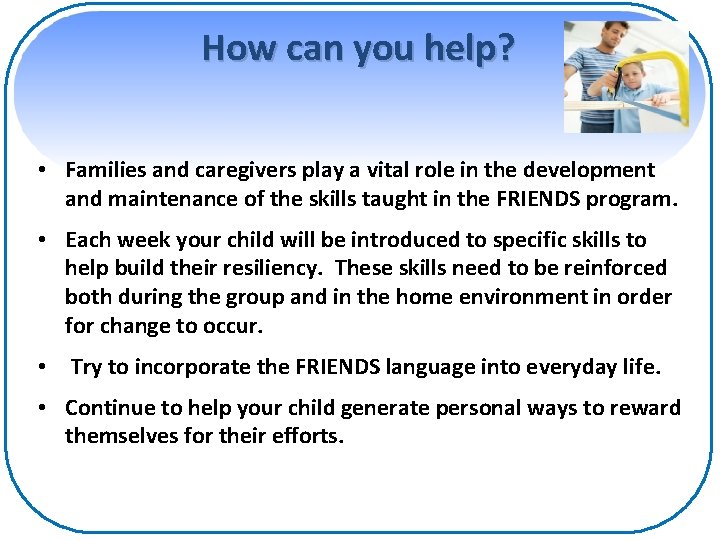
How can you help? • Families and caregivers play a vital role in the development and maintenance of the skills taught in the FRIENDS program. • Each week your child will be introduced to specific skills to help build their resiliency. These skills need to be reinforced both during the group and in the home environment in order for change to occur. • Try to incorporate the FRIENDS language into everyday life. • Continue to help your child generate personal ways to reward themselves for their efforts.
Are there any questions about the program?