
PARENT PRESENTATION Robin JonesCarpenter ECE 497 Child Development
PARENT PRESENTATION Robin Jones-Carpenter ECE 497: Child Development Capstone Course Instructor Katherine Palichuk June 22, 2015
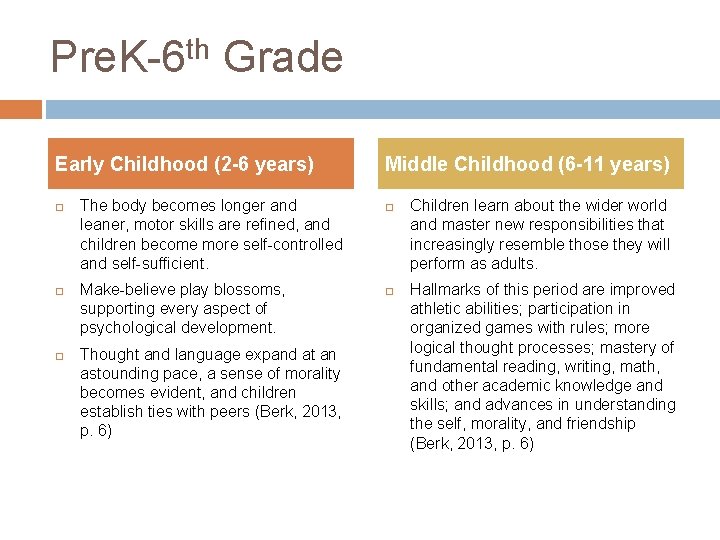
th Pre. K-6 Grade Early Childhood (2 -6 years) The body becomes longer and leaner, motor skills are refined, and children become more self-controlled and self-sufficient. Make-believe play blossoms, supporting every aspect of psychological development. Thought and language expand at an astounding pace, a sense of morality becomes evident, and children establish ties with peers (Berk, 2013, p. 6) Middle Childhood (6 -11 years) Children learn about the wider world and master new responsibilities that increasingly resemble those they will perform as adults. Hallmarks of this period are improved athletic abilities; participation in organized games with rules; more logical thought processes; mastery of fundamental reading, writing, math, and other academic knowledge and skills; and advances in understanding the self, morality, and friendship (Berk, 2013, p. 6)
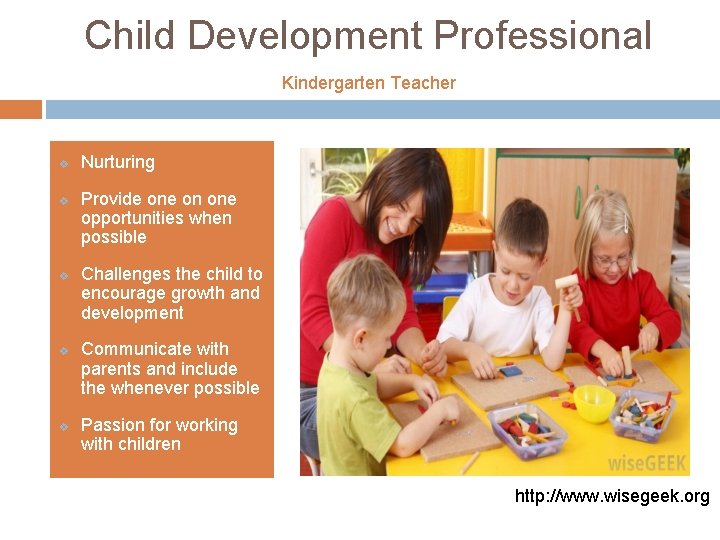
Child Development Professional Kindergarten Teacher v v v Nurturing Provide on one opportunities when possible Challenges the child to encourage growth and development Communicate with parents and include the whenever possible Passion for working with children http: //www. wisegeek. org
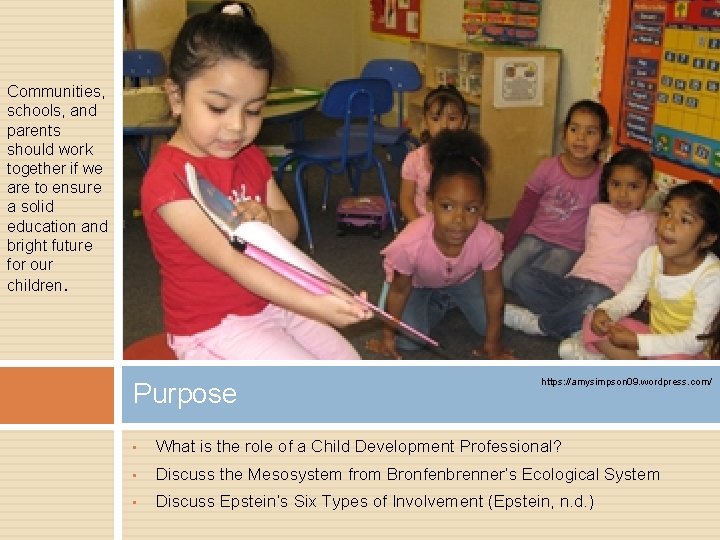
Communities, schools, and parents should work together if we are to ensure a solid education and bright future for our children. Purpose https: //amysimpson 09. wordpress. com/ • What is the role of a Child Development Professional? • Discuss the Mesosystem from Bronfenbrenner’s Ecological System • Discuss Epstein’s Six Types of Involvement (Epstein, n. d. )
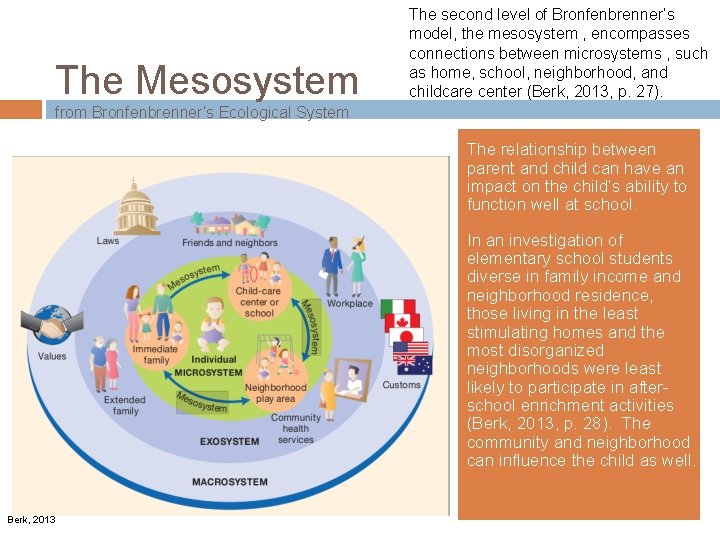
The Mesosystem The second level of Bronfenbrenner’s model, the mesosystem , encompasses connections between microsystems , such as home, school, neighborhood, and childcare center (Berk, 2013, p. 27). from Bronfenbrenner’s Ecological System The relationship between parent and child can have an impact on the child’s ability to function well at school. In an investigation of elementary school students diverse in family income and neighborhood residence, those living in the least stimulating homes and the most disorganized neighborhoods were least likely to participate in afterschool enrichment activities (Berk, 2013, p. 28). The community and neighborhood can influence the child as well. Berk, 2013
Epstein’s Types of Involvement Parenting Communicating Volunteering Learning at Home Decision Making Collaborating with Community (Epstein, n. d. ).
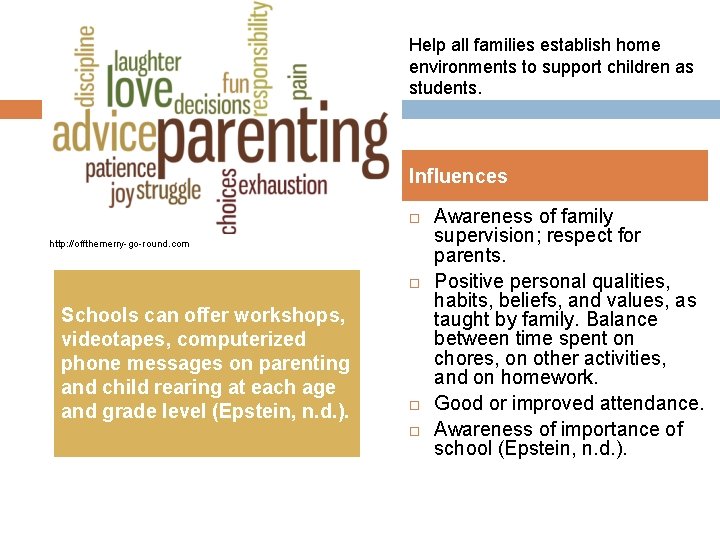
Parenting Help all families establish home environments to support children as students. Influences http: //offthemerry-go-round. com Schools can offer workshops, videotapes, computerized phone messages on parenting and child rearing at each age and grade level (Epstein, n. d. ). Awareness of family supervision; respect for parents. Positive personal qualities, habits, beliefs, and values, as taught by family. Balance between time spent on chores, on other activities, and on homework. Good or improved attendance. Awareness of importance of school (Epstein, n. d. ).
Communicating Design effective forms of school-to-home and home-to-school communications about school programs and children's progress. Influences www. bobmayfield. com Schools should offer language translators to assist families as needed (Epstein, n. d. ). Awareness of own progress and of actions needed to maintain or improve grades. Understanding of school policies on behavior, attendance, and other areas of student conduct. Informed decisions about courses and programs. Awareness of own role in partnerships, serving as courier and communicator (Epstein, n. d. ).
Volunteering Recruit and organize parent help and support (Epstein, n. d. ). Influences www. theresolved. com School and classroom volunteer program to help teachers, administrators, students, and other parents (Epstein, n. d. ). Research shows that family engagement promotes student success. Students with involved parents are more likely to earn higher grades, pass their classes, attend school regularly, have better social skills, and go on to postsecondary education. Family Engagement in children’s education allows kids to perform better in school, and navigate more easily some of the challenges of growing up, such as bullying (At School, n. d. ) Skill in communicating with adults. Increased learning of skills that receive tutoring or targeted attention from volunteers. Awareness of many skills, talents, occupations, and contributions of parent and other volunteers (Epstein, n. d. ).
Learning at Home Provide information and ideas to families about how to help students at home with homework and other curriculum-related activities, decisions, and planning (Epstein, n. d. ). Influences http: //www. pearsonschoolsandfecolleges. co. uk Regular schedule of homework that requires students to discuss and interact with families on what they are learning in class (Epstein, n. d. ). http: //gg. tigweb. org/La. La 17/62459 Gains in skills, abilities, and test scores linked to homework and classwork. Homework completion. Positive attitude toward schoolwork. View of parents as more similar to teacher and of home as more similar to school. Self-concept of ability as learner (Epstein, n. d. ).
Decision Making Include parents in school decisions, developing parent leaders and representatives (Epstein, n. d. ). Influences http: //www. stewardshipadvocates. org Active PTA/PTO or other parent organizations, advisory councils, or committees (e. g. , curriculum, safety, personnel) for parent leadership and participation (Epstein, n. d. ). Awareness of representation of families in school decisions. Understanding that student rights are protected. Specific benefits linked to policies enacted by parent organizations and experienced by students (Epstein, n. d. ).
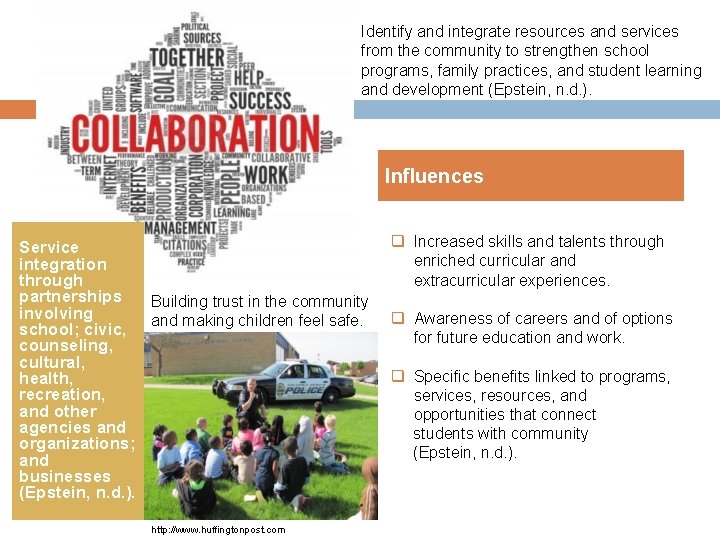
Collaborating Identify and integrate resources and services from the community to strengthen school programs, family practices, and student learning and development (Epstein, n. d. ). Influences Service integration through partnerships Building trust in the community involving and making children feel safe. school; civic, counseling, cultural, health, recreation, and other agencies and organizations; and businesses (Epstein, n. d. ). http: //www. huffingtonpost. com q Increased skills and talents through enriched curricular and extracurricular experiences. q Awareness of careers and of options for future education and work. q Specific benefits linked to programs, services, resources, and opportunities that connect students with community (Epstein, n. d. ).
References At School. (n. d. ). Retrieved from http: //www. pta. org/programs/? nav. Item. Number=504 Berk, L. E. (2013). Child development. (9 th ed. ). Upper Saddle River, NJ: Pearson. Epstein, J. (n. d. ). Epstein's framework of six types of involvement. Retrieved from http: //www. unicef. org/lac/Joyce_L. _Epstein_s_Framework_of_Six_Types_of_Involvement(2). pdf
- Slides: 13