
Parent Conferences Best Practices to Maximize Student Learning
Parent Conferences: Best Practices to Maximize Student Learning Family and Community Engagement (FACE) Department Jorge L. Arredondo, Ed. D. Assistant Superintendent of FACE June 2016
Session Norms • Universal silent signal • Actively participate • Be respectful and constructive • Maintain confidentiality • Use electronics respectfully and appropriately 2
Do Now • Read the paragraph included in your packet and write down ONE word that describes your feelings 3
Introductory Discussion • How do you know a parent-teacher conference is of high-quality and effective? • What professional development, procedures, protocols, and/or systems does your school provide to ensure parentteacher conferences are effective? 4
Objective Participants will be able to: • Cite at least two best practices for conducting high-quality parent-teacher conferences • Reflect and create an implementation plan to improve your parent-teacher conferences 5
Itinerary • Introductory Discussion • Overview of Literature and Data • Unpacking High-Quality Parent. Teacher Conferences • Creating an Action Plan • Final Reflections/Evaluations 6
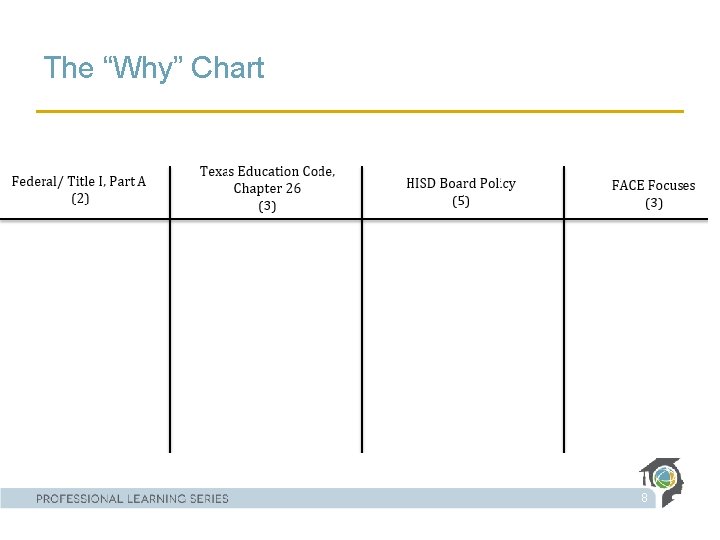
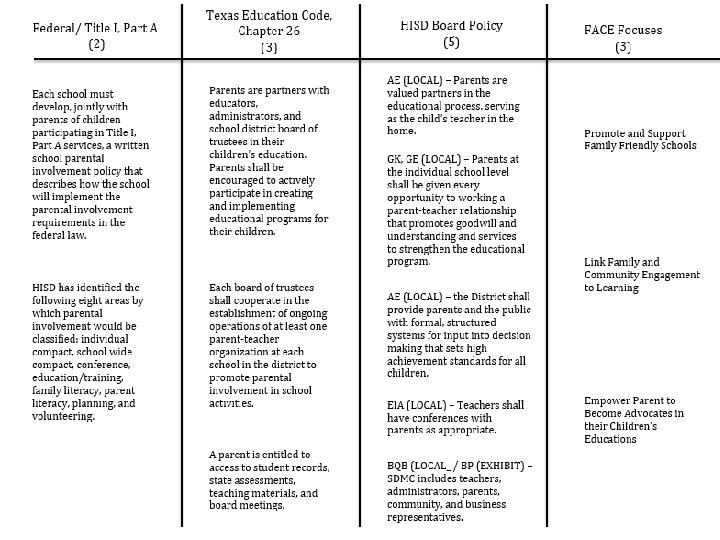
The “Why” Chart Using the materials at your table, place each printed indicator under the corresponding level of compliance for family engagement: • Federal / Title I, Part A • Texas Education Code, Chapter 26 • HISD Board Policy • FACE Focuses 7
The “Why” Chart 8
9
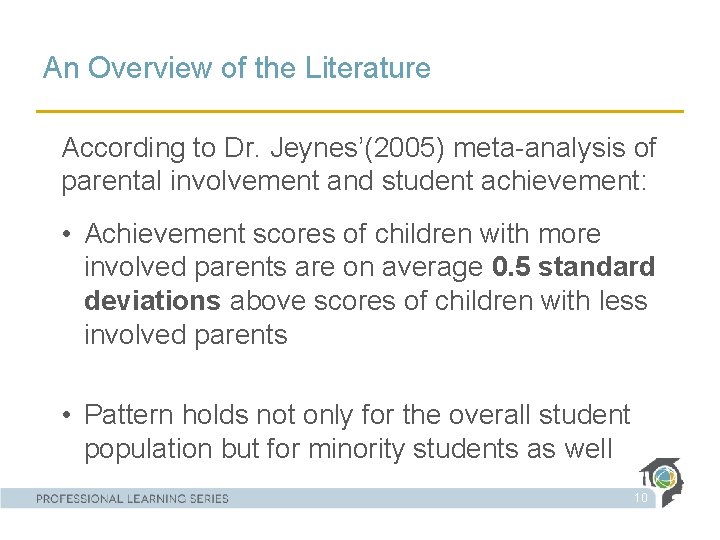
An Overview of the Literature According to Dr. Jeynes’(2005) meta-analysis of parental involvement and student achievement: • Achievement scores of children with more involved parents are on average 0. 5 standard deviations above scores of children with less involved parents • Pattern holds not only for the overall student population but for minority students as well 10
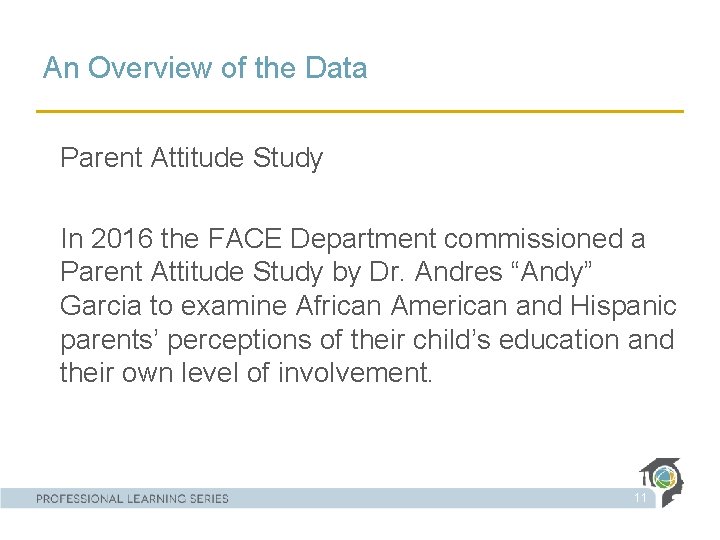
An Overview of the Data Parent Attitude Study In 2016 the FACE Department commissioned a Parent Attitude Study by Dr. Andres “Andy” Garcia to examine African American and Hispanic parents’ perceptions of their child’s education and their own level of involvement. 11
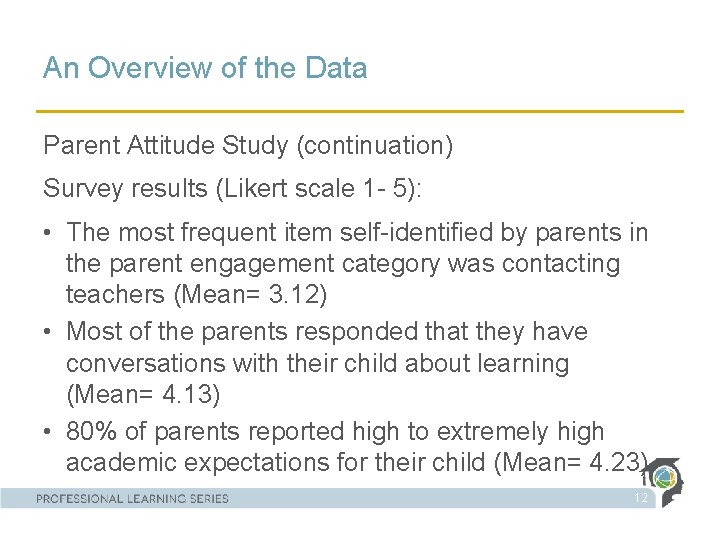
An Overview of the Data Parent Attitude Study (continuation) Survey results (Likert scale 1 - 5): • The most frequent item self-identified by parents in the parent engagement category was contacting teachers (Mean= 3. 12) • Most of the parents responded that they have conversations with their child about learning (Mean= 4. 13) • 80% of parents reported high to extremely high academic expectations for their child (Mean= 4. 23) 12
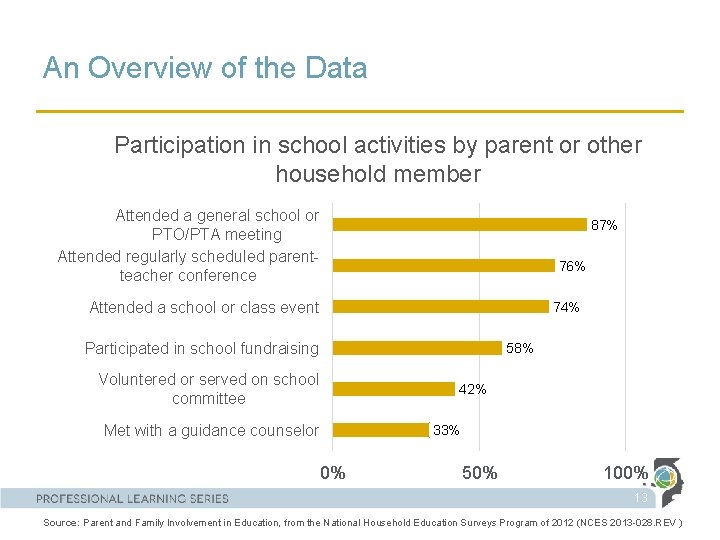
An Overview of the Data Participation in school activities by parent or other household member Attended a general school or PTO/PTA meeting Attended regularly scheduled parentteacher conference 87% 76% Attended a school or class event 74% Participated in school fundraising 58% Voluntered or served on school committee 42% Met with a guidance counselor 33% 0% 50% 100% 13 Source: Parent and Family Involvement in Education, from the National Household Education Surveys Program of 2012 (NCES 2013 -028. REV )
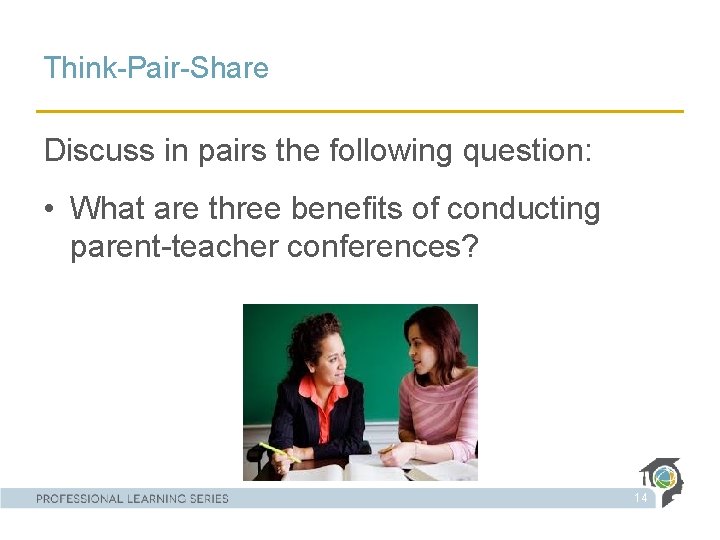
Think-Pair-Share Discuss in pairs the following question: • What are three benefits of conducting parent-teacher conferences? 14
Benefits of Parent-Teacher Conferences • Share information and learn more about the student • Develop new strategies to support student learning at school and at home • Opportunity for parents to learn from teachers, and for teachers to learn from parents • Opportunity to enhance and improve communication between the school and the families and improve relationships 15
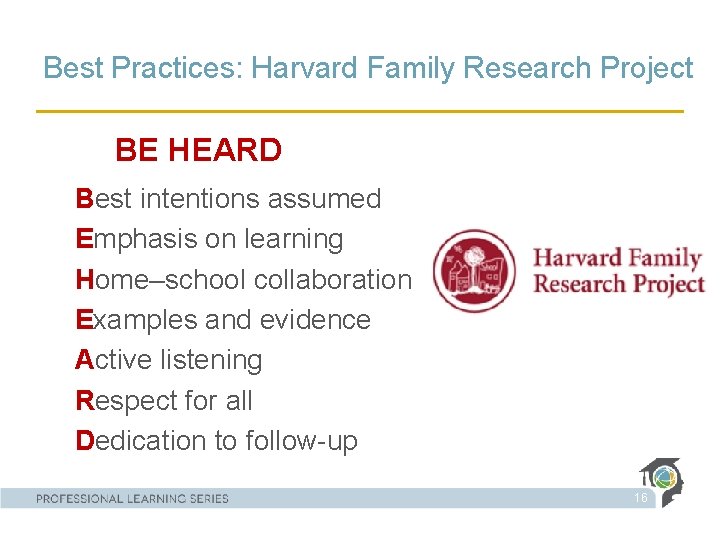
Best Practices: Harvard Family Research Project BE HEARD Best intentions assumed Emphasis on learning Home–school collaboration Examples and evidence Active listening Respect for all Dedication to follow-up 16
Best Practices - Before the Conference Directions: • Go to your assigned group based on your number (1 to 5) • Complete questions individually to determine if your school creates comfortable and productive parent-teacher conferences • Reflect on the question(s) in which you indicated “No” • Discuss with your group possible barriers your campus faces in regards to parent-teacher conferences Best Practices adapted from Stevens, B. A. & Tollafield, A. (2003), and Harvard Family Research Project, (2010). 17
Best Practices - Before the Conference ü Welcome ALL parents ü Have uniform structure for parent-teacher conferences ü When planning, consider feedback from teachers and parents ü Offer convenient schedule and plenty of options to choose from 18
Best Practices - Before the Conference ü Communicate importance, goals and logistics of conferences to teachers and parents ü Extend personal invitations ü Provide attendance incentives ü Send reminders close to conference day ü Train teachers to practice good communication skills during conferences 19
Best Practices - Before the Conference TRAIN TEACHERS TO ü Prepare the student materials in advance ü Start sharing positive feedback ü Keep the conversation focused on the student ü Clearly discuss student progress and growth ü Minimize the use of educational jargon ü Be culturally appropriate ü Be mindful of their time 20
Best Practices - Before the Conference ü Provide workshops/distribute information that preparents for conferences ü Create systems to capture frequency of conferences and monitor them on a regular basis 21
Best Practices - During the Conference Directions: • Complete questions individually to determine if your school creates comfortable and productive parent-teacher conferences • Reflect on the question(s) in which you indicated “No” • Discuss with your group possible barriers your campus faces in regards to parent-teacher conferences Best Practices adapted from Stevens, B. A. & Tollafield, A. (2003), and Harvard Family Research Project, (2010). 22
Best Practices - During the Conference CREATE A PLEASANT ATMOSPHERE BY ü Displaying student work at school ü Designating a comfortable waiting area for parents ü Providing adult-sized chairs ü Having information in multiple languages ü Providing accurate translation ü Offering transportation ü Serving light refreshments 23
Best Practices - During the Conference ü Engage parents to actively participate in the conference as equal players ü Clearly state measurable expectations for the student ü Suggest to parents simple activities and strategies to help their child at home or to develop habits such as regular visits to the library 24
Best Practices - During the Conference ü Create a plan that describes how teachers and parents will support the student ü Provide support to parents and students to implement the plan ü Document the plan ü School leaders should be available during conferences to support teachers and parents 25
Best Practices - During the Conference ü Establish clear lines of communication with families ü Share school’s visitation policy with families ü Observe parent-teacher conferences to give feedback to colleagues 26
Best Practices - After the Conference Directions: • Complete questions individually to determine if your school creates comfortable and productive parent-teacher conferences • Reflect on the question(s) in which you indicated “No” • Discuss with your group possible barriers your campus faces in regards to parent-teacher conferences Best Practices adapted from Stevens, B. A. & Tollafield, A. (2003), and Harvard Family Research Project, (2010). 27
Best Practices - After the Conference ü Thank parents who attended ü Follow up with all the families after the conference ü Teachers reach out to families to discuss their child's progress and growth ü Get feedback about what did and did not work well 28
Best Practices - After the Conference ü Create responsive instructional practices ü Recognize and celebrate faculty and staff who do exemplary work with parents ü Provide meaningful opportunities for families to get involved 29
Academic Parent-Teacher Teams (APTT) APTT Video • What are some elements you noticed in this video? 30
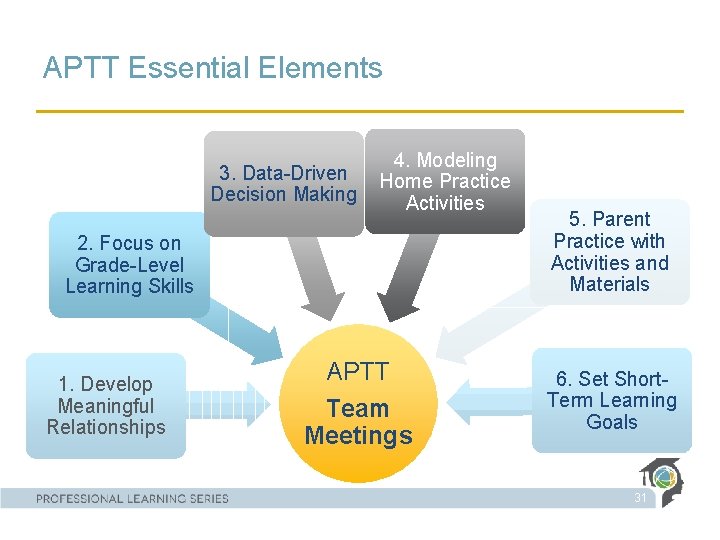
APTT Essential Elements 3. Data-Driven Decision Making 4. Modeling Home Practice Activities 2. Focus on Grade-Level Learning Skills 1. Develop Meaningful Relationships APTT Team Meetings 5. Parent Practice with Activities and Materials 6. Set Short. Term Learning Goals 31
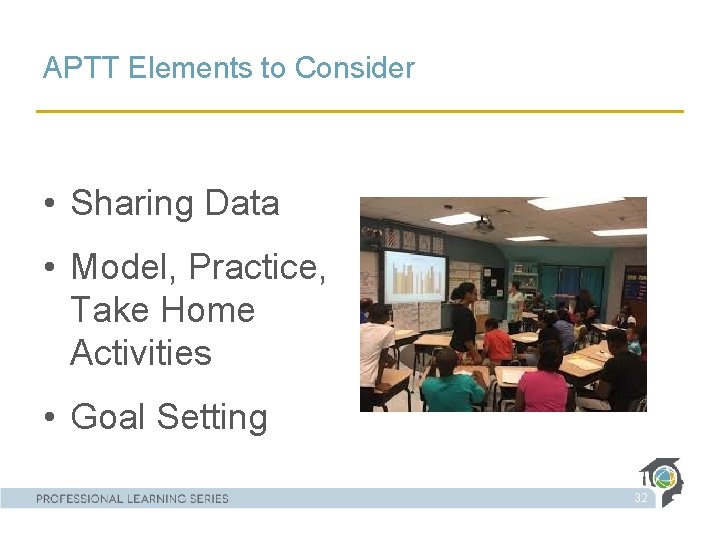
APTT Elements to Consider • Sharing Data • Model, Practice, Take Home Activities • Goal Setting 32
APTT Elements to Consider: Sharing Data Why is sharing data important? • Data is concrete evidence of what students know and are able to do • Provides talking points between teachers and families • Connects families to the Foundational Grade Level Skills and the practice activities • Helps parents take ownership over academic improvement 33
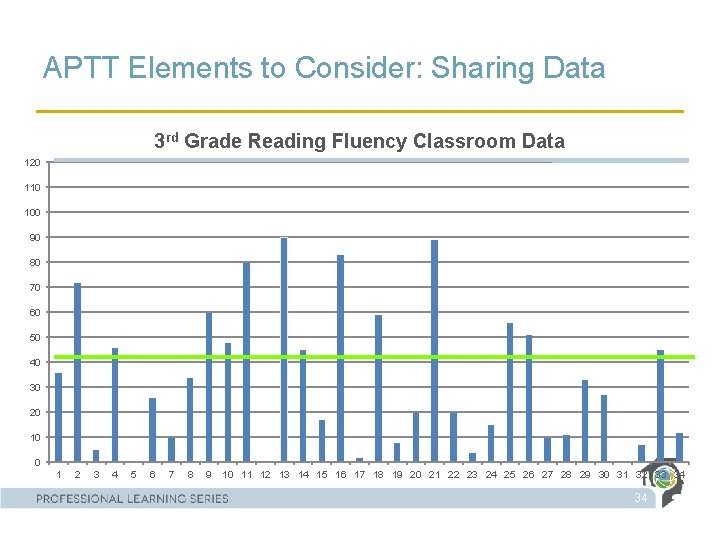
APTT Elements to Consider: Sharing Data 3 rd Grade Reading Fluency Classroom Data 120 110 100 90 80 70 60 50 40 30 20 10 0 1 2 3 4 5 6 7 8 9 10 11 12 13 14 15 16 17 18 19 20 21 22 23 24 25 26 27 28 29 30 31 32 33 34 34
APTT Elements to Consider: Model, Practice, Take Home Activities Why is modeling important? • Builds capacity • Builds confidence • Establishes high expectations Why is practice time important? • Deepens the understanding of the concept • Families are more comfortable and familiar with the materials • Learning activities they can do at home may be a first for many parents 35
APTT Elements to Consider: Goal Setting Why do we set S. M. A. R. T Goals • To establish partnership • To highlight what families can do to accelerate learning through home support • To clarify the role of the family in student learning • To challenge families to become meaningfully engaged 36
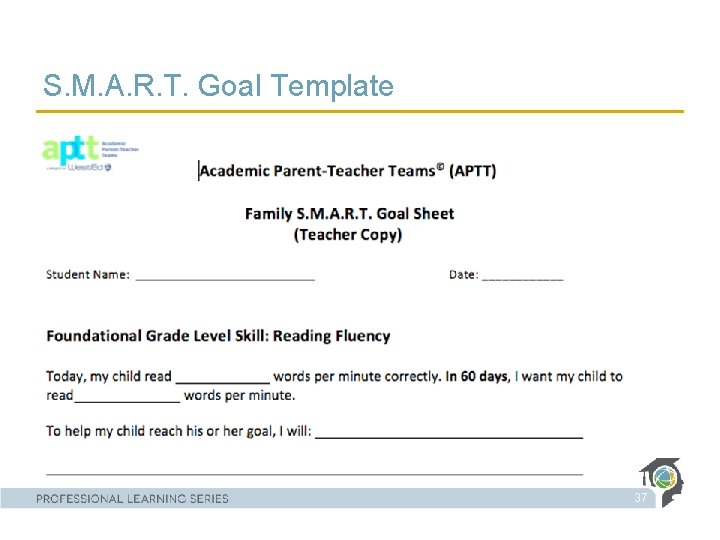
S. M. A. R. T. Goal Template 37
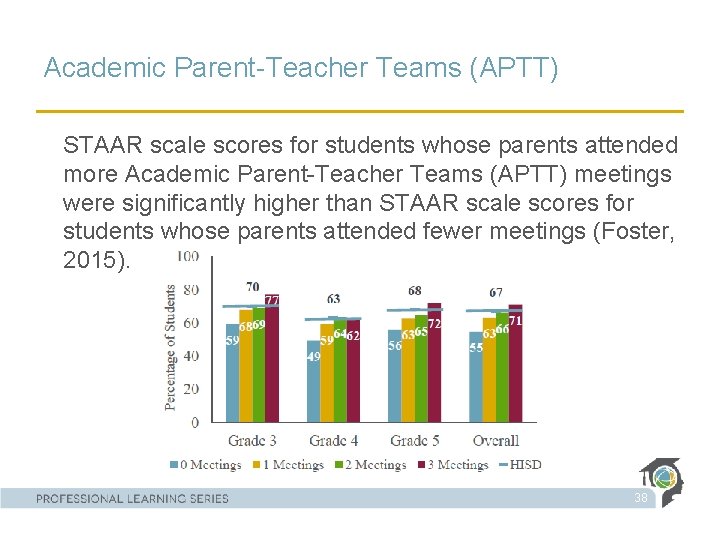
Academic Parent-Teacher Teams (APTT) STAAR scale scores for students whose parents attended more Academic Parent-Teacher Teams (APTT) meetings were significantly higher than STAAR scale scores for students whose parents attended fewer meetings (Foster, 2015). 38
School leader’s testimony about APTT at Eliot Elementary 2015 -2016 School Year 39
School Systems for Optimal Parent-Teacher Conferences • Design master schedule to promote collaboration among teachers in the same grade level • Designate key staff to facilitate parentteacher conferences – Parent Engagement Representative – Fully bilingual interpreters if needed 40
School Systems for Optimal Parent-Teacher Conferences • Provide professional development to school staff on topics such as: – Optimal parent-teacher conferences – Customer service – Communication skills • Use systematic and effective parent outreach strategies such as home visits or phone calls 41
Create an Action Plan • Identify one goal on how you will improve your parent-teacher conferences • Describe for that goal: – Strategies – Responsible person – Resources – Timeline – Benchmarks and evaluation 42
Final Reflections Reflect on the information you have learned in the session. • What are your key take-aways from this session? • What specific action steps will you take to make upgrades to your FACE plan? 43
FACE Contact information Phone: 713 -556 -7290 Email: FACE@Houston. ISD. org Twitter. com/hisdface Web: houstonisd. org/face 44
How to contact your FACE Specialist http: //www. houstonisd. org/Page/98468 • • • Elizabeth R. “Lisi” Cocina, Ed. D. F. Carmen Acevedo Meron Tilahun Victoria Graham Marisol Garcia De la Cruz Reminder: Campus Professional Development Reading Resources 45
THANK YOU
- Slides: 46