
PARENT CHILD INTERACTION MODEL DEVELOPED BY KATHRYN E
PARENT CHILD INTERACTION MODEL DEVELOPED BY KATHRYN E. BARNARD Group Members: Melinda Hawley Kathy La. Ponsie Ellen Scripsema Hilary Edmondson
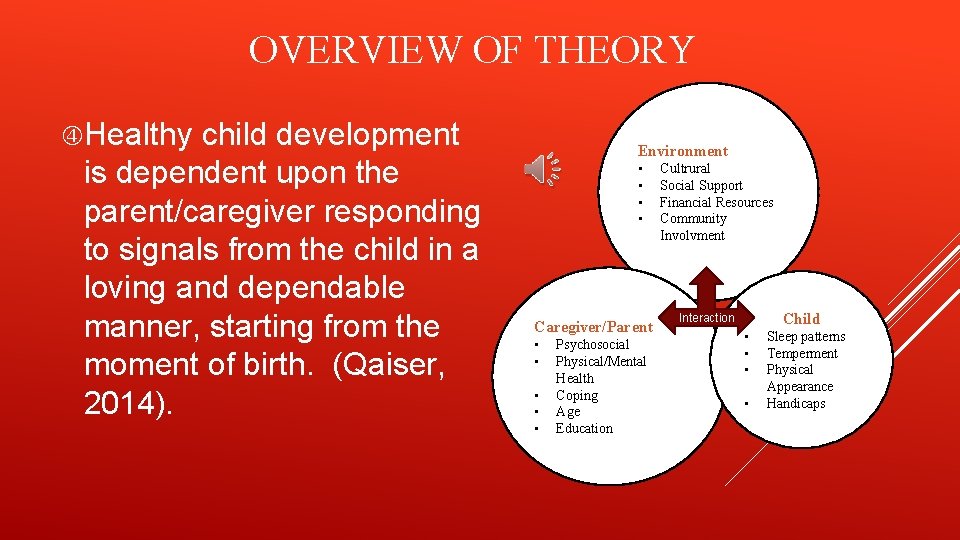
OVERVIEW OF THEORY Healthy child development is dependent upon the parent/caregiver responding to signals from the child in a loving and dependable manner, starting from the moment of birth. (Qaiser, 2014). Environment • • Caregiver/Parent • • • Psychosocial Physical/Mental Health Coping Age Education Cultrural Social Support Financial Resources Community Involvment Child Interaction • • Sleep patterns Temperment Physical Appearance Handicaps
NURSING PARADIGM DEFINED Person – to comprehend auditory, visual, and tactile stimuli; and then put this information to good use Health – family provides the basic preventative health care Environment – places, people, objects, sounds, and sights Nursing – education to facilitate changes
THEORY ANALYSIS Accuracy – relationship between depressed parents and child conduct Simplicity – basic concept, children that have a stronger interaction with parents/caregivers will have better behaviors Scope – nursing, psychologists, sociologists, parents, educators Acceptance – accepted throughout the world by parents, educators and clinicians Socio-Cultural Utility – useful across variety of cultures; may be affected by economics, family dynamics, and support

APPLICATION OF THE BARNARD MODEL q. Care of Premature Infants Quality parent-premie interactions Relationship-based Developmentally supportive
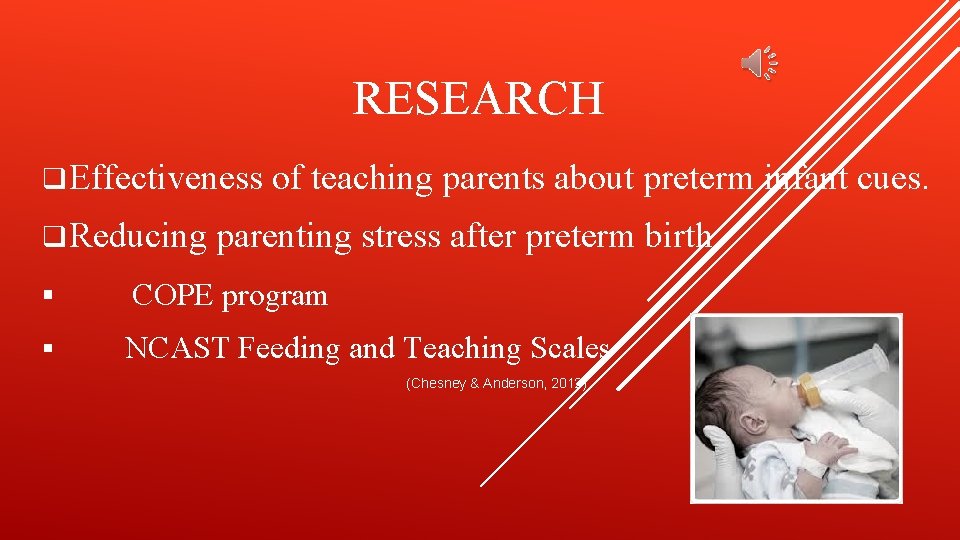
RESEARCH q Effectiveness q Reducing of teaching parents about preterm infant cues. parenting stress after preterm birth. § COPE program § NCAST Feeding and Teaching Scales (Chesney & Anderson, 2012)
RESEARCH WITHOUT THE FRAMEWORK Could this research have been done without the Barnard Model? How relevant is the Barnard model to parent-child interaction when it comes to preterm infants? Did this research prove the effectiveness of the Barnard Model?
REFERENCES De. Chesnay, M. & Anderson, B. (2012). Caring for the vulnerable (3 rd ed. ). Burlington, James & Bartlett Learning. MA:
- Slides: 8