
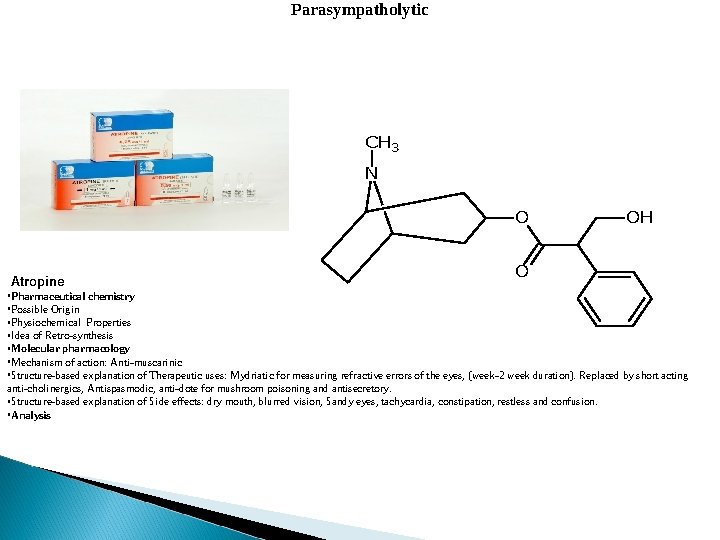
Parasympatholytic CH 3 N O Atropine OH O
- Slides: 8
Parasympatholytic CH 3 N O Atropine OH O • Pharmaceutical chemistry • Possible Origin • Physiochemical Properties • Idea of Retro-synthesis • Molecular pharmacology • Mechanism of action: Anti-muscarinic • Structure-based explanation of Therapeutic uses: Mydriatic for measuring refractive errors of the eyes, (week-2 week duration). Replaced by short acting anti-cholinergics, Antispasmodic, anti-dote for mushroom poisoning and antisecretory. • Structure-based explanation of Side effects: dry mouth, blurred vision, Sandy eyes, tachycardia, constipation, restless and confusion. • Analysis
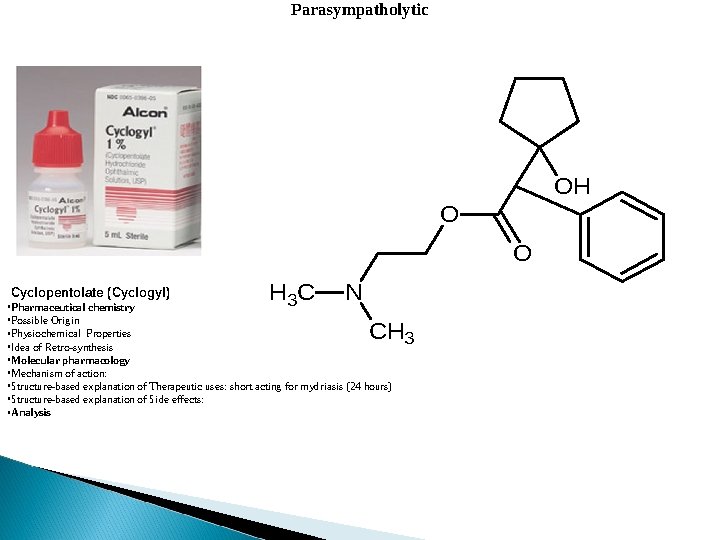
Parasympatholytic OH O O Cyclopentolate (Cyclogyl) H 3 C N • Pharmaceutical chemistry • Possible Origin • Physiochemical Properties • Idea of Retro-synthesis • Molecular pharmacology • Mechanism of action: • Structure-based explanation of Therapeutic uses: short acting for mydriasis (24 hours) • Structure-based explanation of Side effects: • Analysis CH 3
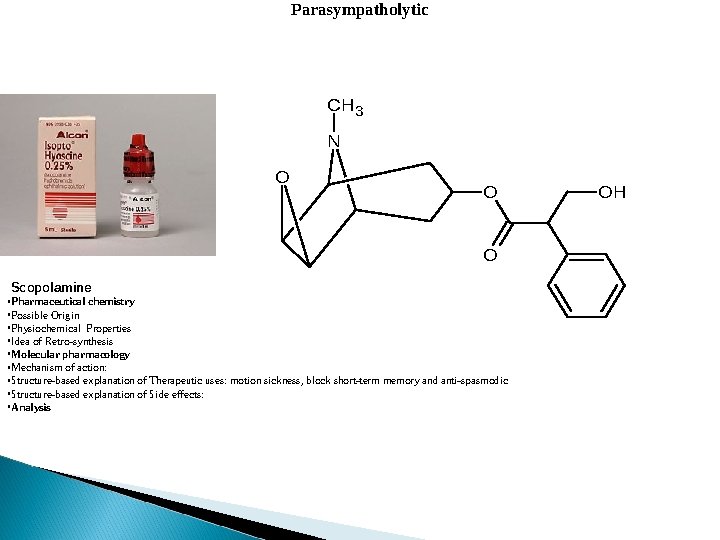
Parasympatholytic CH 3 N O O O Scopolamine • Pharmaceutical chemistry • Possible Origin • Physiochemical Properties • Idea of Retro-synthesis • Molecular pharmacology • Mechanism of action: • Structure-based explanation of Therapeutic uses: motion sickness, block short-term memory and anti-spasmodic • Structure-based explanation of Side effects: • Analysis OH
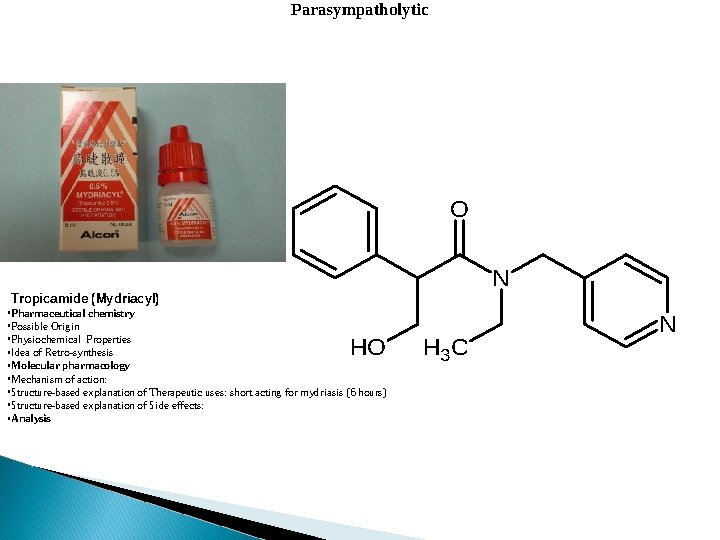
Parasympatholytic O N Tropicamide (Mydriacyl) • Pharmaceutical chemistry • Possible Origin • Physiochemical Properties • Idea of Retro-synthesis • Molecular pharmacology • Mechanism of action: • Structure-based explanation of Therapeutic uses: short acting for mydriasis (6 hours) • Structure-based explanation of Side effects: • Analysis HO H 3 C N
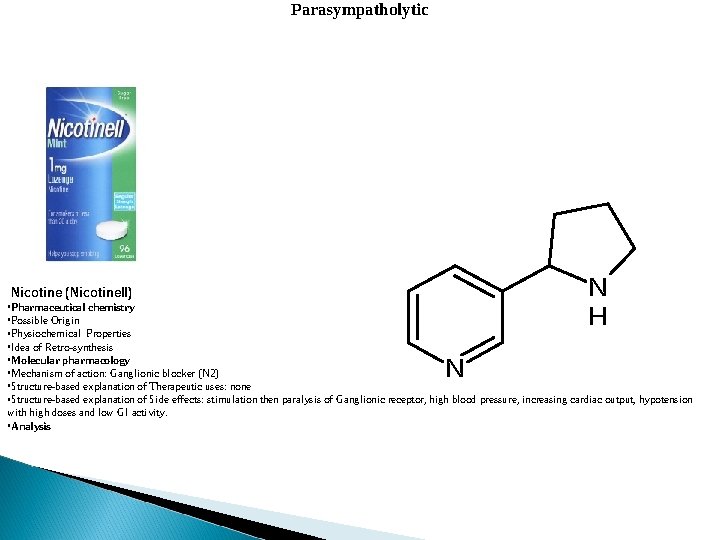
Parasympatholytic N H Nicotine (Nicotinell) • Pharmaceutical chemistry • Possible Origin • Physiochemical Properties • Idea of Retro-synthesis • Molecular pharmacology • Mechanism of action: Ganglionic blocker (N 2) • Structure-based explanation of Therapeutic uses: none • Structure-based explanation of Side effects: stimulation then paralysis of Ganglionic receptor, high blood pressure, increasing cardiac output, hypotension with high doses and low GI activity. • Analysis N
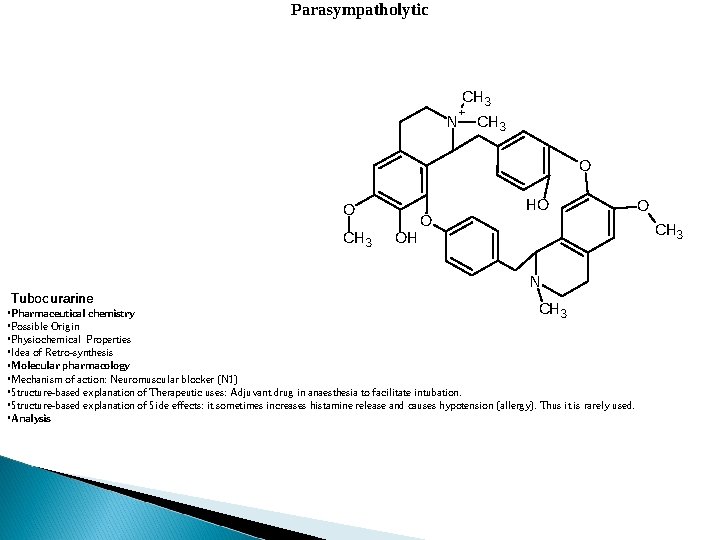
Parasympatholytic CH 3 + N CH 3 O O CH 3 O HO CH 3 OH N Tubocurarine O CH 3 • Pharmaceutical chemistry • Possible Origin • Physiochemical Properties • Idea of Retro-synthesis • Molecular pharmacology • Mechanism of action: Neuromuscular blocker (N 1) • Structure-based explanation of Therapeutic uses: Adjuvant drug in anaesthesia to facilitate intubation. • Structure-based explanation of Side effects: it sometimes increases histamine release and causes hypotension (allergy). Thus it is rarely used. • Analysis
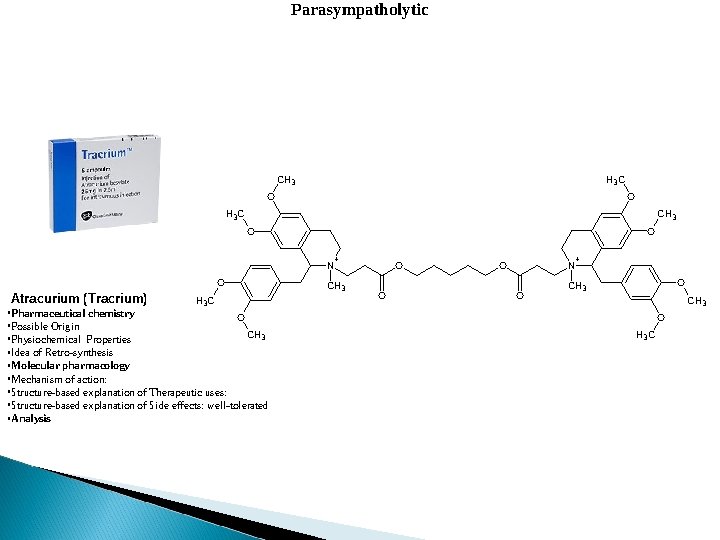
Parasympatholytic CH 3 H 3 C O O H 3 C CH 3 O O + N O Atracurium (Tracrium) H 3 C • Pharmaceutical chemistry O • Possible Origin CH 3 • Physiochemical Properties • Idea of Retro-synthesis • Molecular pharmacology • Mechanism of action: • Structure-based explanation of Therapeutic uses: • Structure-based explanation of Side effects: well-tolerated • Analysis CH 3 O O + O N O O CH 3 O H 3 C