
Parasitic Worms Pathogenic Human Helminthes and Arthropods Characteristics
- Slides: 53
Parasitic Worms Pathogenic Human Helminthes and Arthropods
Characteristics n n n Multicellular Well developed organ systems Reproductive – Dioecious – Hermaphrodite n Worldwide – Tropical, subtropical • Survival of eggs • Survival of larval stages – Less developed • Sanitation • Intermediate host survival
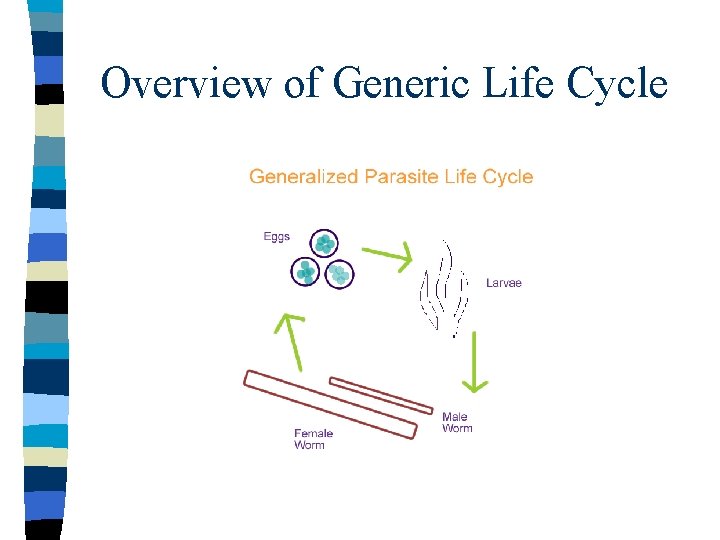
Life Cycle n Host – Definitive – Intermediate n Cycle – Egg ingestion – Larvae ingestion, penetration, migration – Infectious stage intermediate host – Adult reproduces
Overview of Generic Life Cycle
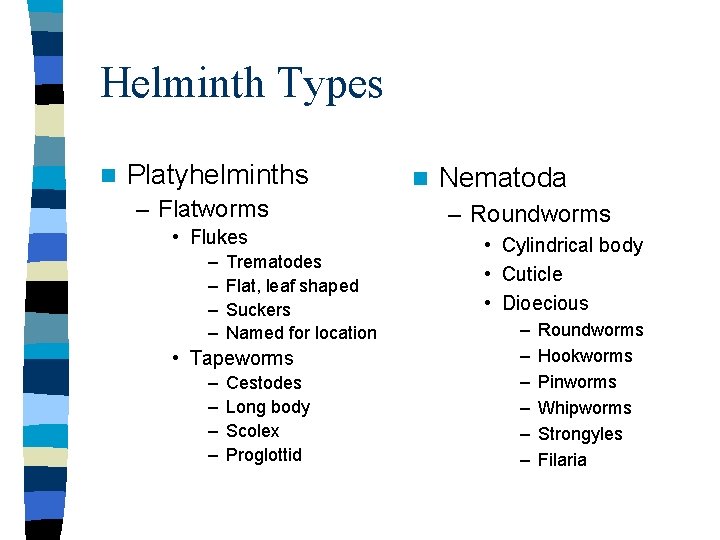
Helminth Types n Platyhelminths – Flatworms • Flukes – – Trematodes Flat, leaf shaped Suckers Named for location • Tapeworms – – Cestodes Long body Scolex Proglottid n Nematoda – Roundworms • Cylindrical body • Cuticle • Dioecious – – – Roundworms Hookworms Pinworms Whipworms Strongyles Filaria
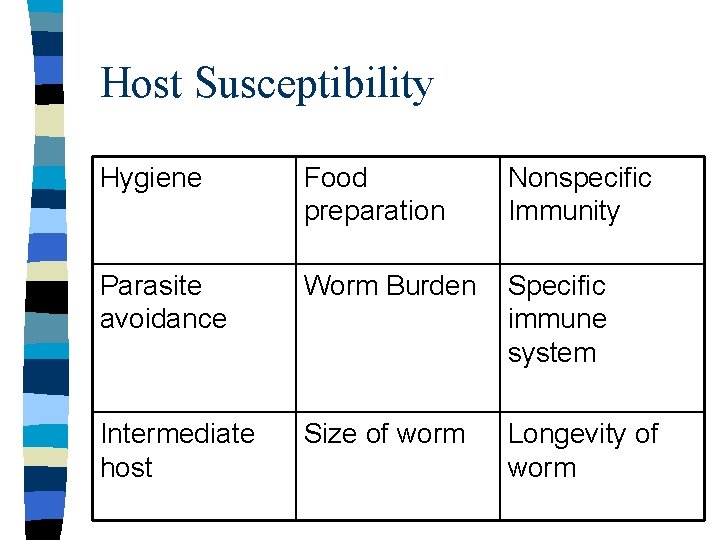
Host Susceptibility Hygiene Food preparation Nonspecific Immunity Parasite avoidance Worm Burden Specific immune system Intermediate host Size of worm Longevity of worm
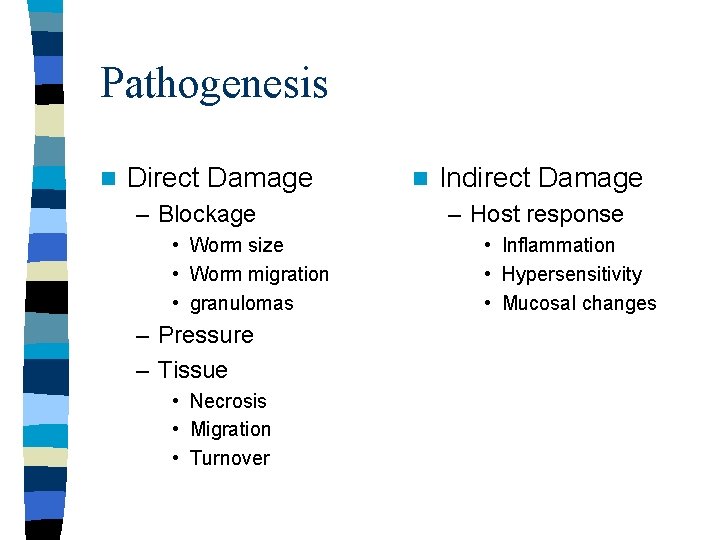
Pathogenesis n Direct Damage – Blockage • Worm size • Worm migration • granulomas – Pressure – Tissue • Necrosis • Migration • Turnover n Indirect Damage – Host response • Inflammation • Hypersensitivity • Mucosal changes
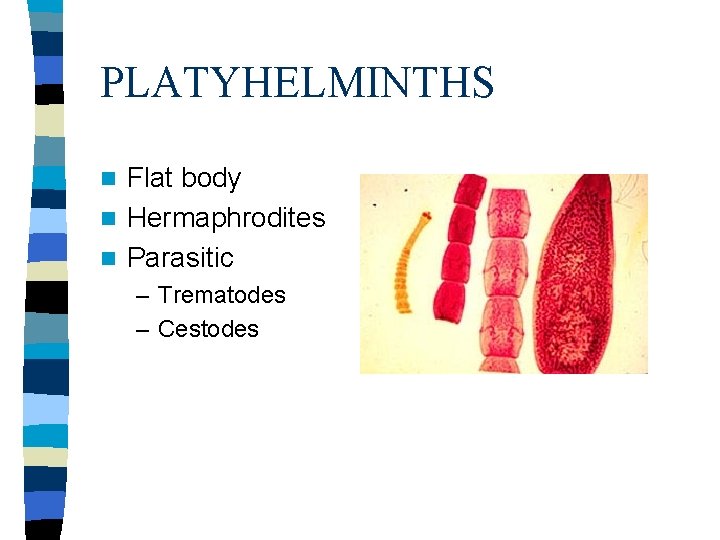
PLATYHELMINTHS Flat body n Hermaphrodites n Parasitic n – Trematodes – Cestodes
FLUKES (Trematodes) n n n Schistostomiasis Fascioliasis Intestinal Fluke Chinese Liver Fluke Lung Fluke n Life Cycle – Eggs – Miracidia • Intermediate host – Cercariae • Second intermediate host – Metacercariae • Definitive host – Adult fluke
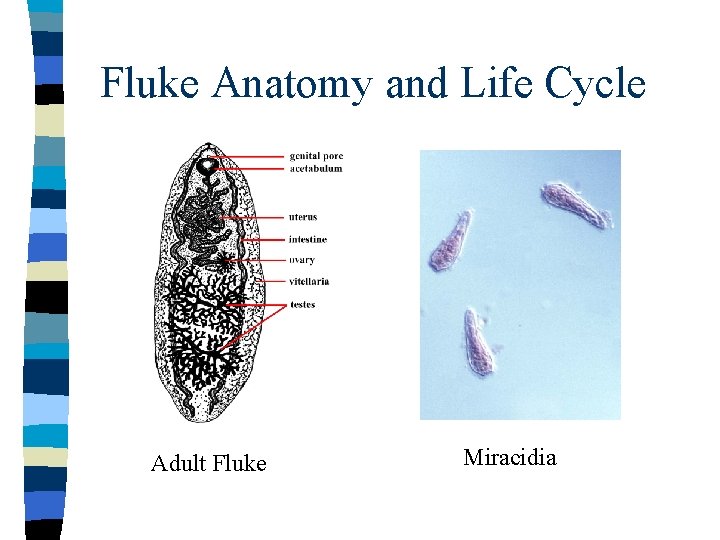
Fluke Anatomy and Life Cycle Adult Fluke Miracidia
Liver Flukes n Fasciola hepatica – Typical life cycle – Snail intermediate host – Humans exposed to metacercaria by eating watercress – Intestine Liver Bile Ducts eggs in feces n Chinese Liver Fluke – Typical life cycle – Snail intermediate host – Humans exposed to metacercaria by eating undercooked fish – Intestine Liver Bile ducts eggs in feces
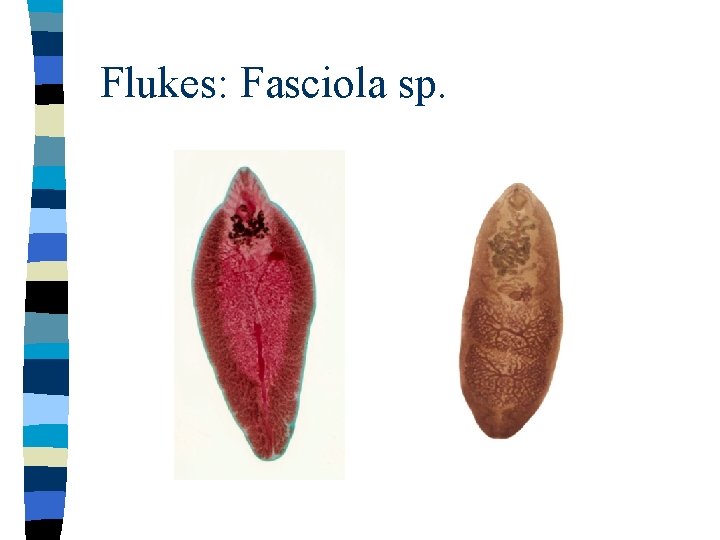
Flukes: Fasciola sp.
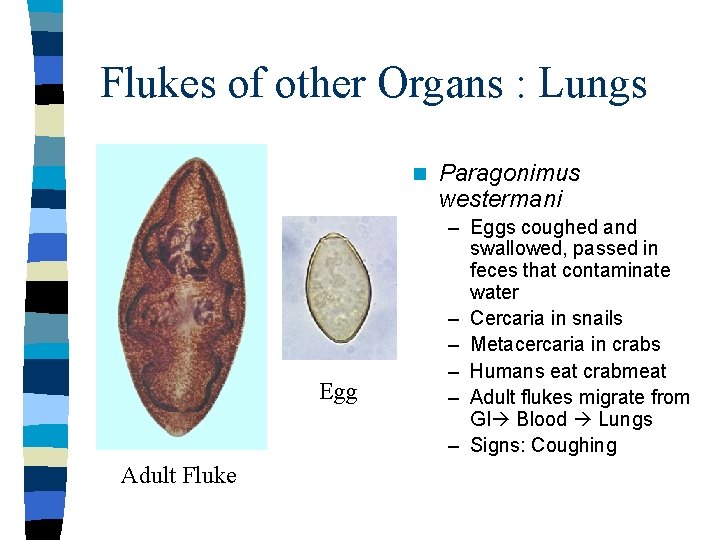
Flukes of other Organs : Lungs n Egg Adult Fluke Paragonimus westermani – Eggs coughed and swallowed, passed in feces that contaminate water – Cercaria in snails – Metacercaria in crabs – Humans eat crabmeat – Adult flukes migrate from GI Blood Lungs – Signs: Coughing
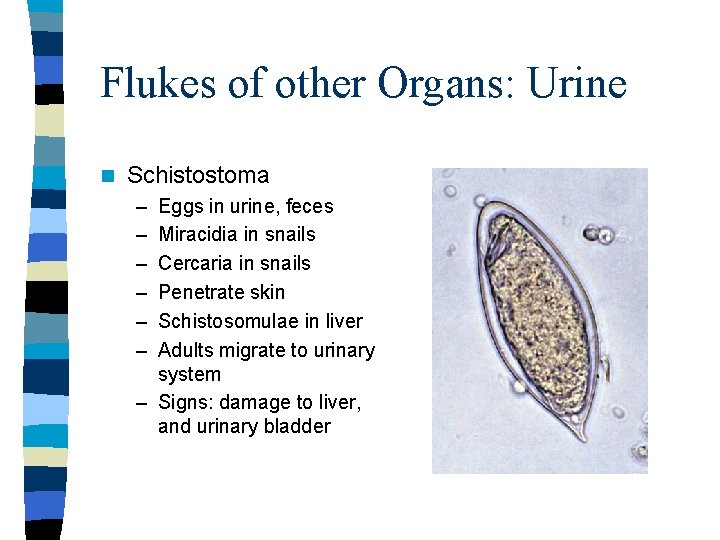
Flukes of other Organs: Urine n Schistostoma – – – Eggs in urine, feces Miracidia in snails Cercaria in snails Penetrate skin Schistosomulae in liver Adults migrate to urinary system – Signs: damage to liver, and urinary bladder
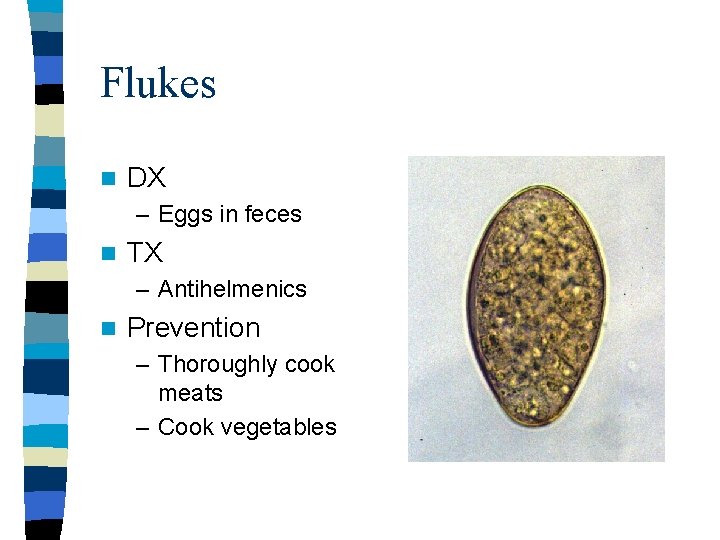
Flukes n DX – Eggs in feces n TX – Antihelmenics n Prevention – Thoroughly cook meats – Cook vegetables
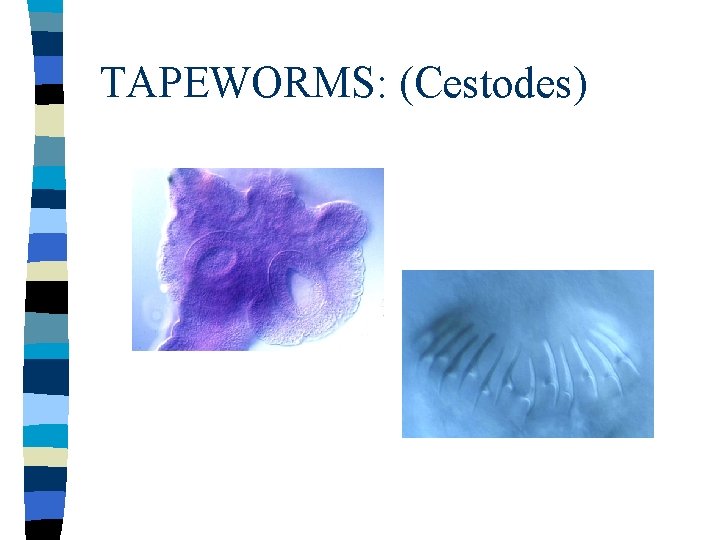
TAPEWORMS: (Cestodes)
Life Cycle of Tapeworms n Eggs in proglottids passed in stool n Larval phase in Intermediate host n Intestine blood Skeletal muscle and other tissue cysts n Acquire by eating raw meat with cysts n Cysts adult worms in intestines
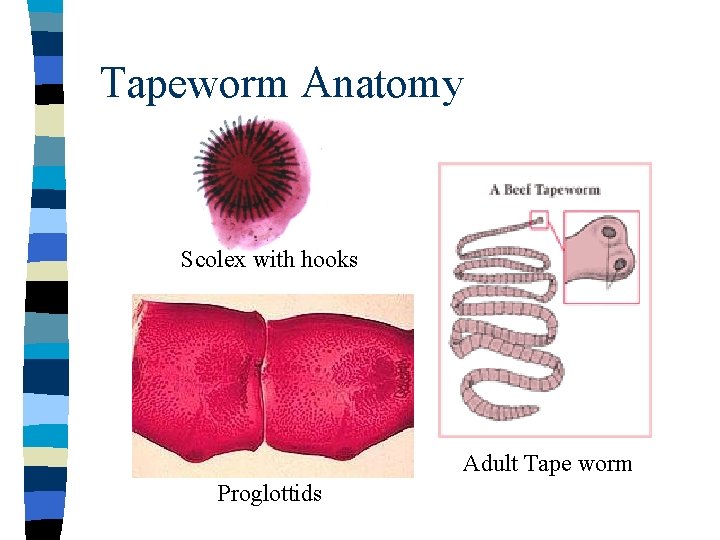
Tapeworm Anatomy Scolex with hooks Adult Tape worm Proglottids
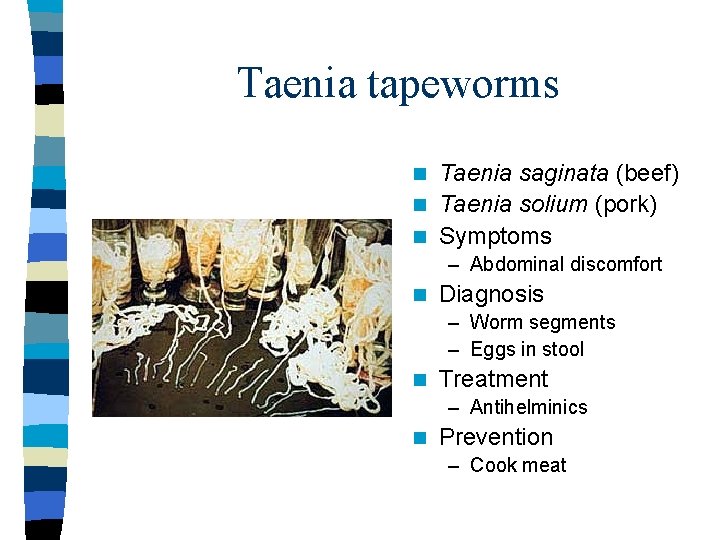
Taenia tapeworms Taenia saginata (beef) n Taenia solium (pork) n Symptoms n – Abdominal discomfort n Diagnosis – Worm segments – Eggs in stool n Treatment – Antihelminics n Prevention – Cook meat
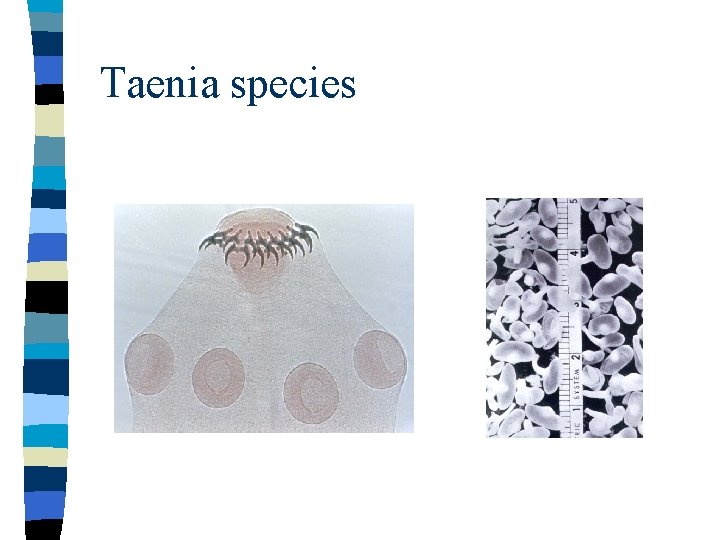
Taenia species
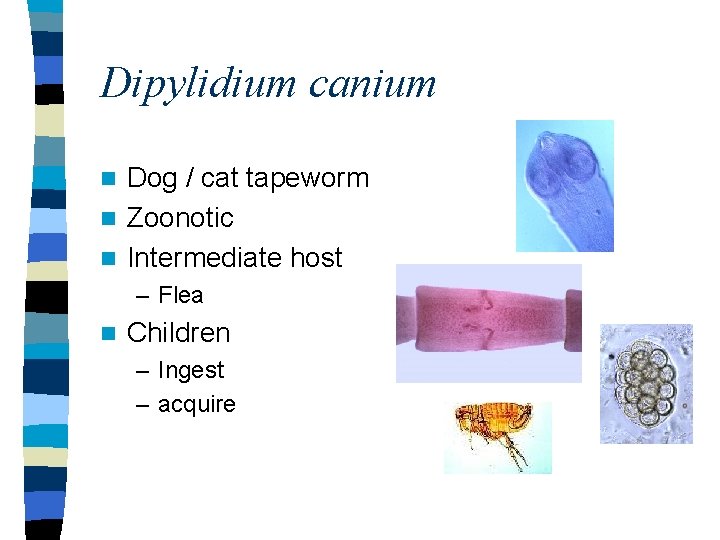
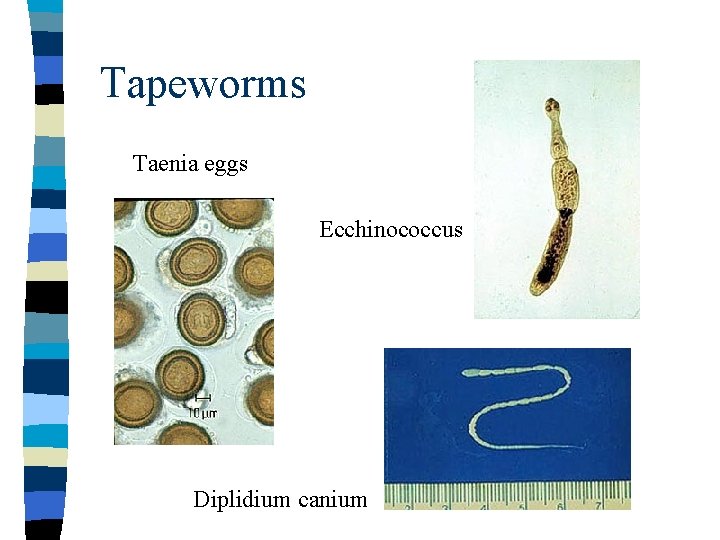
Dipylidium canium Dog / cat tapeworm n Zoonotic n Intermediate host n – Flea n Children – Ingest – acquire
Hydatid Disease n Echinococcus granulosus – Eggs ingested by herbivores – Embryos from eggs go to various sites to develop cysts – Ingestion of cysts or eggs – Humans intermediate host – Cyst • Damage due to size • Anaphylactic shock
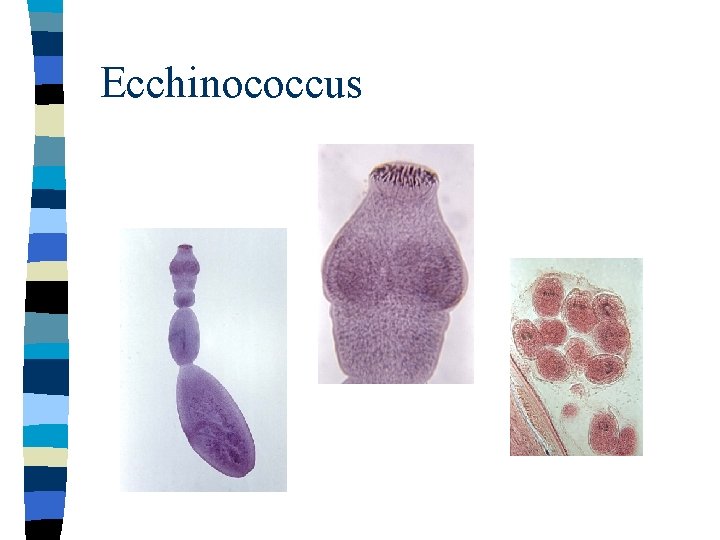
Ecchinococcus
Tapeworm Summary n DX – Worm segments – Eggs in stool n TX – Antihelmenthics n Prevention – Hygiene – Inspect meat
Tapeworms Taenia eggs Ecchinococcus Diplidium canium
NEMATODES n “Roundworms” – Cyclindrical body n Dioecious n Cuticle
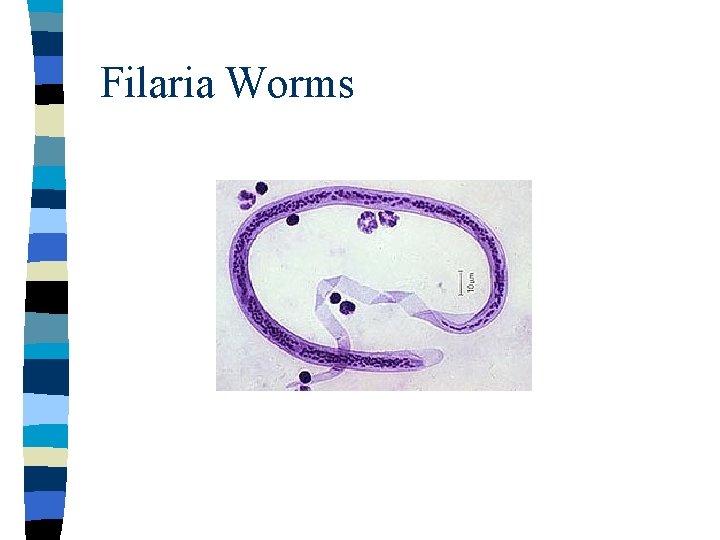
Filaria Worms
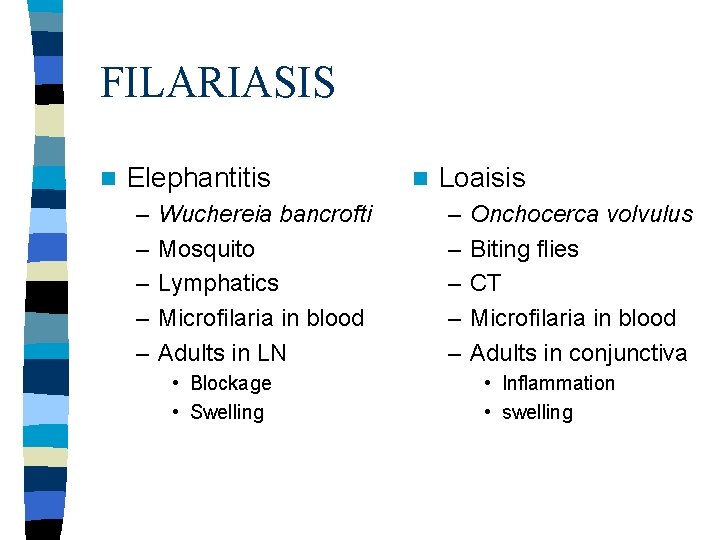
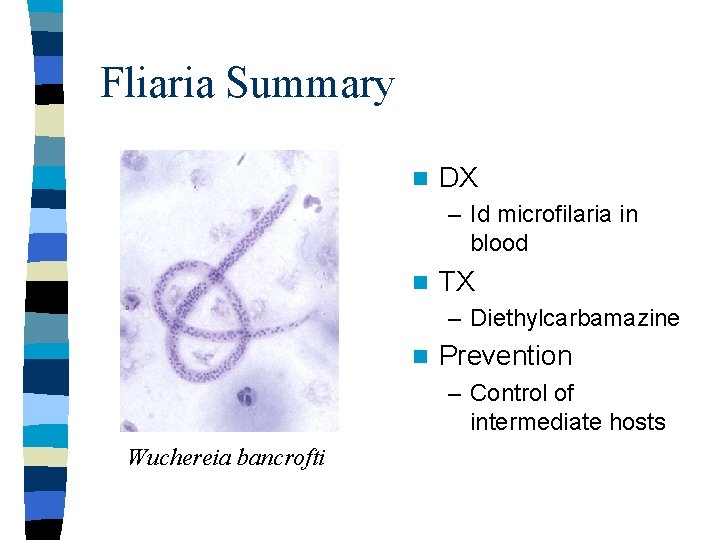
FILARIASIS n Elephantitis – – – Wuchereia bancrofti Mosquito Lymphatics Microfilaria in blood Adults in LN • Blockage • Swelling n Loaisis – – – Onchocerca volvulus Biting flies CT Microfilaria in blood Adults in conjunctiva • Inflammation • swelling
Fliaria Summary n DX – Id microfilaria in blood n TX – Diethylcarbamazine n Prevention – Control of intermediate hosts Wuchereia bancrofti
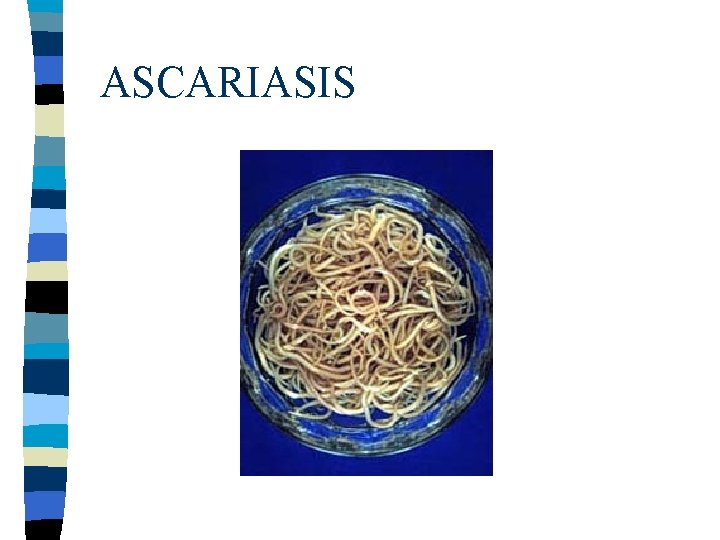
ASCARIASIS
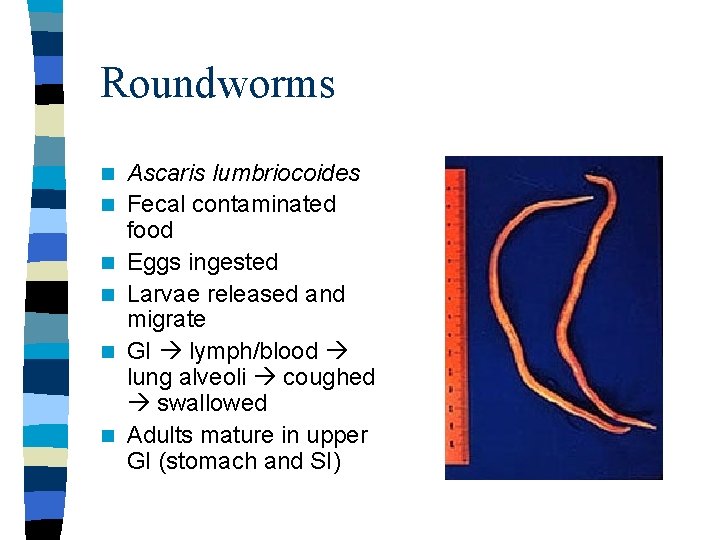
Roundworms n n n Ascaris lumbriocoides Fecal contaminated food Eggs ingested Larvae released and migrate GI lymph/blood lung alveoli coughed swallowed Adults mature in upper GI (stomach and SI)
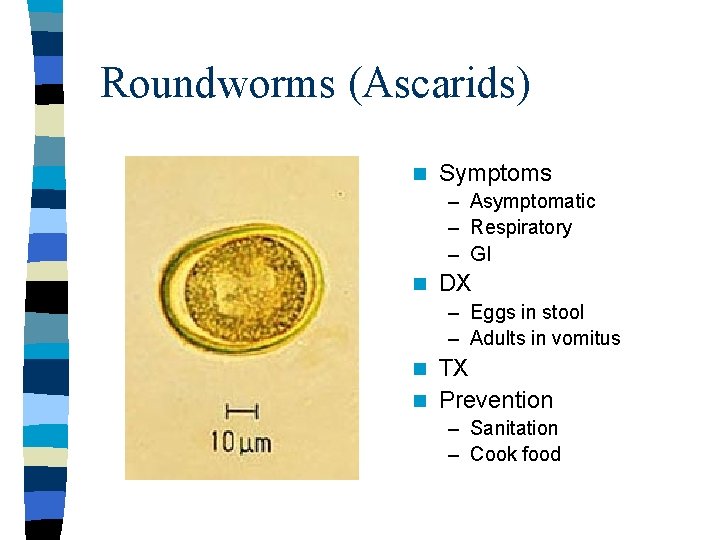
Roundworms (Ascarids) n Symptoms – Asymptomatic – Respiratory – GI n DX – Eggs in stool – Adults in vomitus TX n Prevention n – Sanitation – Cook food
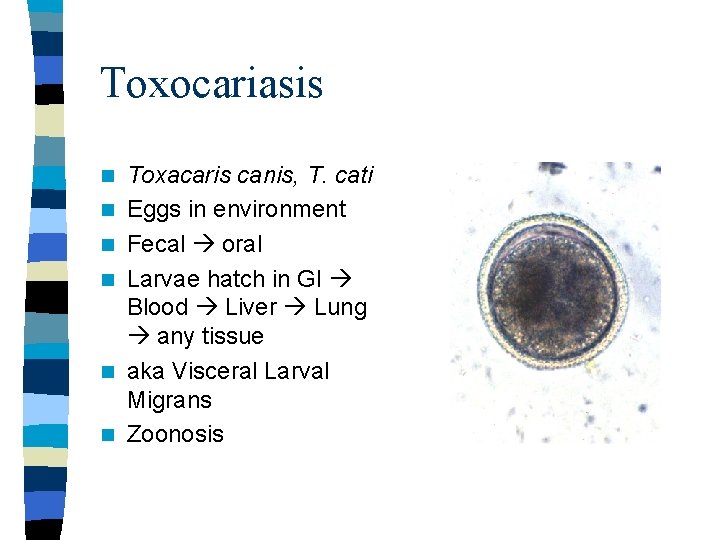
Toxocariasis n n n Toxacaris canis, T. cati Eggs in environment Fecal oral Larvae hatch in GI Blood Liver Lung any tissue aka Visceral Larval Migrans Zoonosis
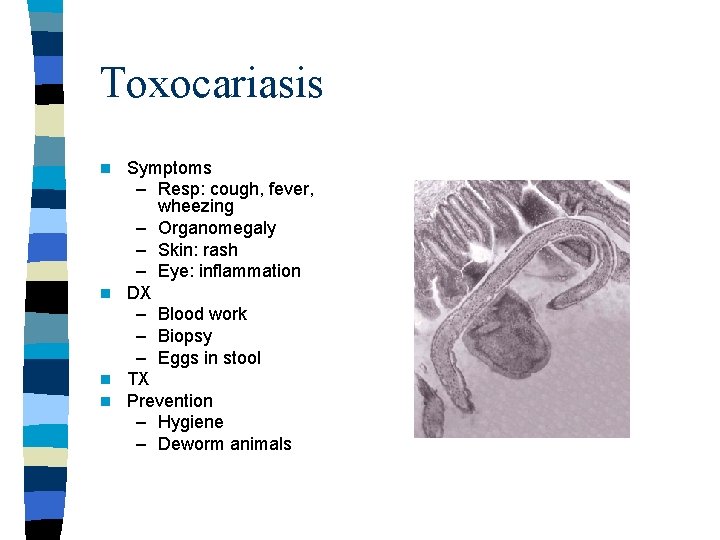
Toxocariasis Symptoms – Resp: cough, fever, wheezing – Organomegaly – Skin: rash – Eye: inflammation n DX – Blood work – Biopsy – Eggs in stool n TX n Prevention – Hygiene – Deworm animals n
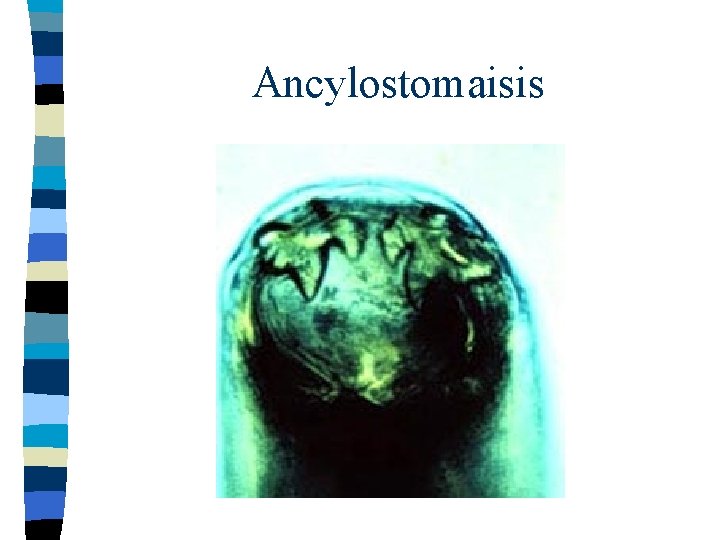
Ancylostomaisis
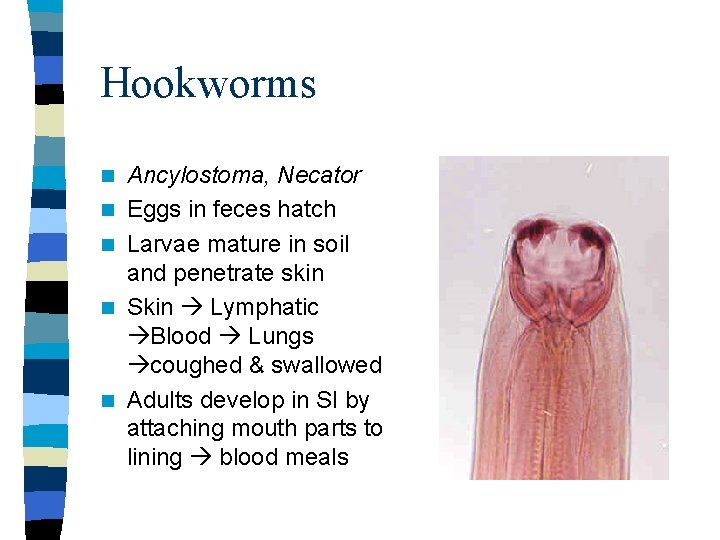
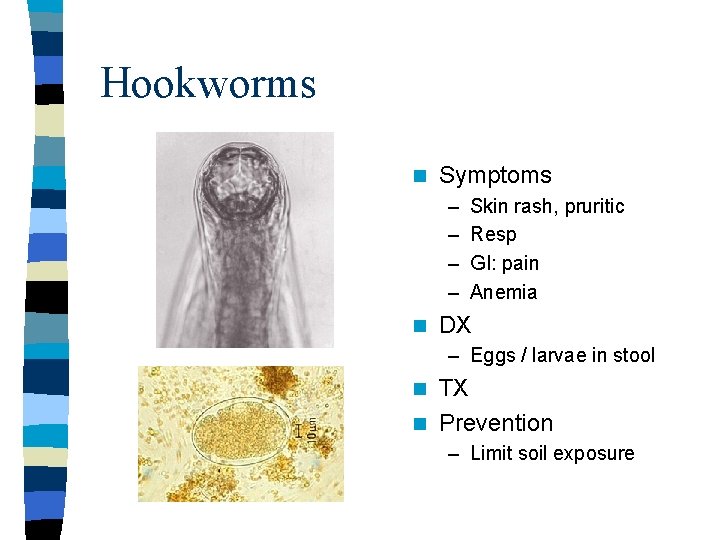
Hookworms n n n Ancylostoma, Necator Eggs in feces hatch Larvae mature in soil and penetrate skin Skin Lymphatic Blood Lungs coughed & swallowed Adults develop in SI by attaching mouth parts to lining blood meals
Hookworms n Symptoms – – n Skin rash, pruritic Resp GI: pain Anemia DX – Eggs / larvae in stool TX n Prevention n – Limit soil exposure
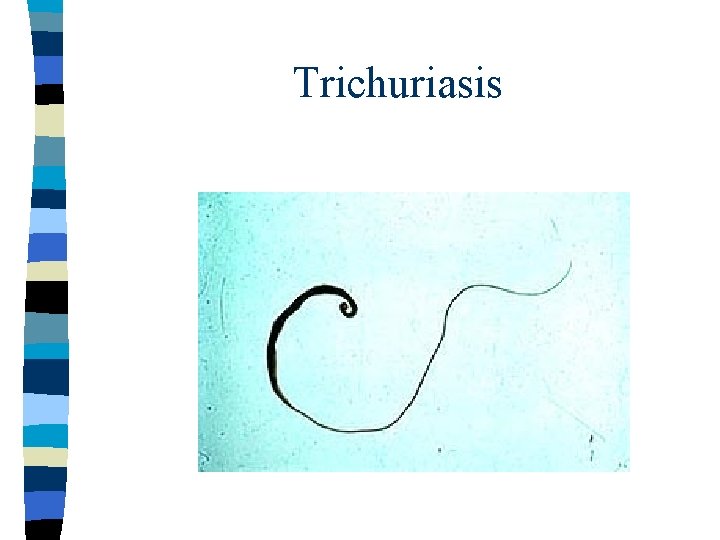
Trichuriasis
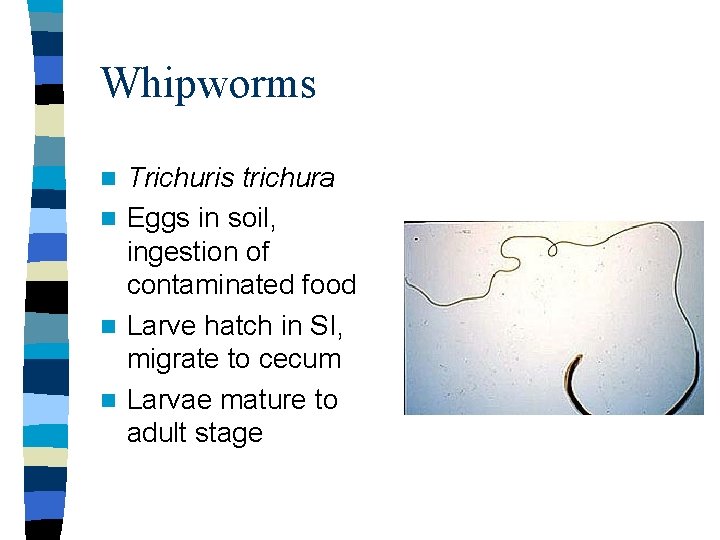
Whipworms Trichuris trichura n Eggs in soil, ingestion of contaminated food n Larve hatch in SI, migrate to cecum n Larvae mature to adult stage n
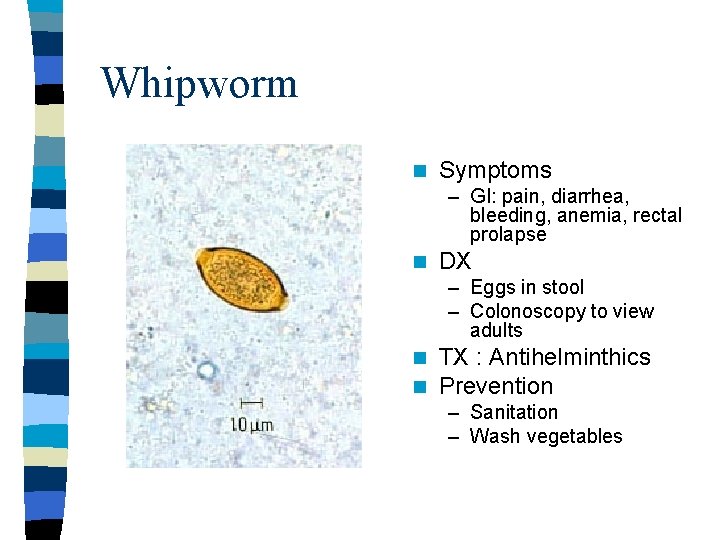
Whipworm n Symptoms – GI: pain, diarrhea, bleeding, anemia, rectal prolapse n DX – Eggs in stool – Colonoscopy to view adults n n TX : Antihelminthics Prevention – Sanitation – Wash vegetables
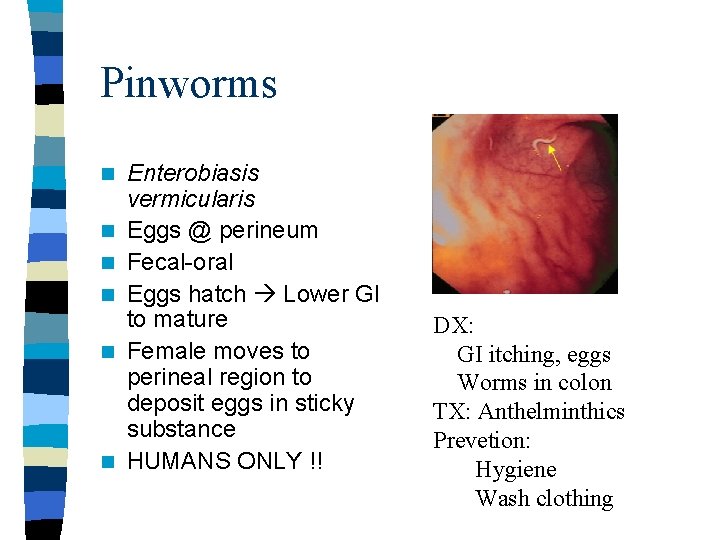
Pinworms n n n Enterobiasis vermicularis Eggs @ perineum Fecal-oral Eggs hatch Lower GI to mature Female moves to perineal region to deposit eggs in sticky substance HUMANS ONLY !! DX: GI itching, eggs Worms in colon TX: Anthelminthics Prevetion: Hygiene Wash clothing
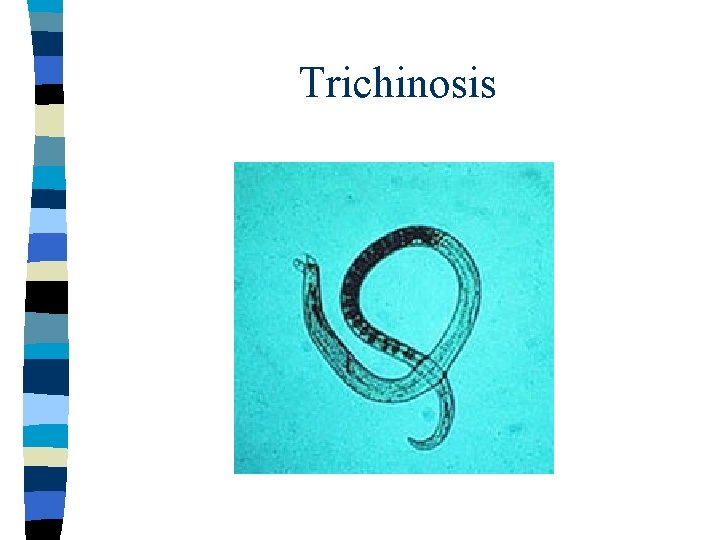
Trichinosis
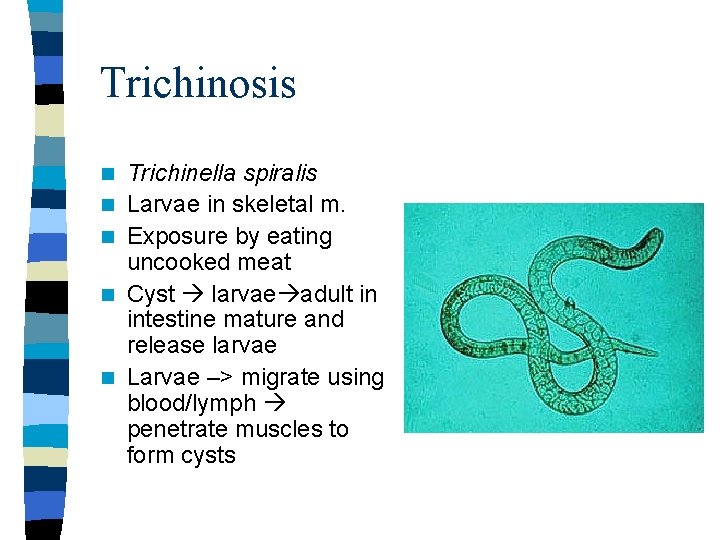
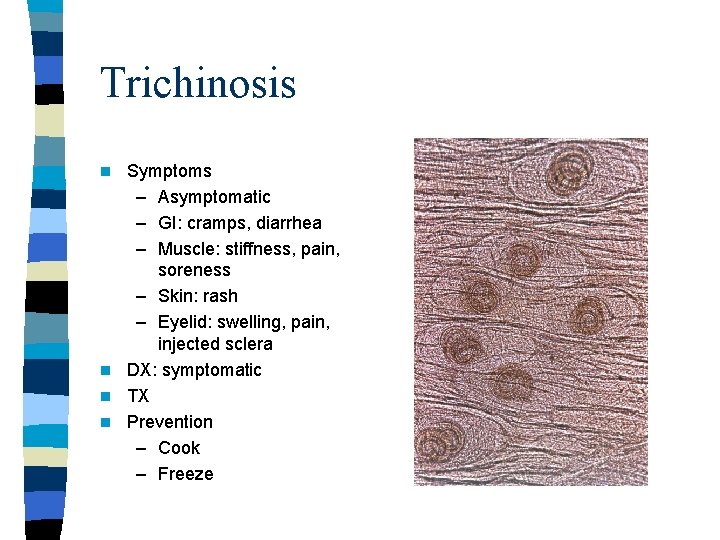
Trichinosis n n n Trichinella spiralis Larvae in skeletal m. Exposure by eating uncooked meat Cyst larvae adult in intestine mature and release larvae Larvae –> migrate using blood/lymph penetrate muscles to form cysts
Trichinosis Symptoms – Asymptomatic – GI: cramps, diarrhea – Muscle: stiffness, pain, soreness – Skin: rash – Eyelid: swelling, pain, injected sclera n DX: symptomatic n TX n Prevention – Cook – Freeze n
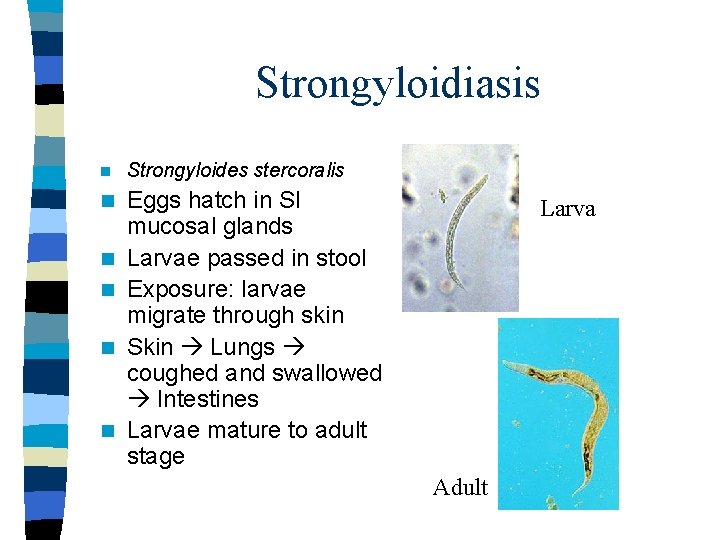
Strongyloidiasis n Strongyloides stercoralis n Eggs hatch in SI mucosal glands Larvae passed in stool Exposure: larvae migrate through skin Skin Lungs coughed and swallowed Intestines Larvae mature to adult stage n n Larva Adult
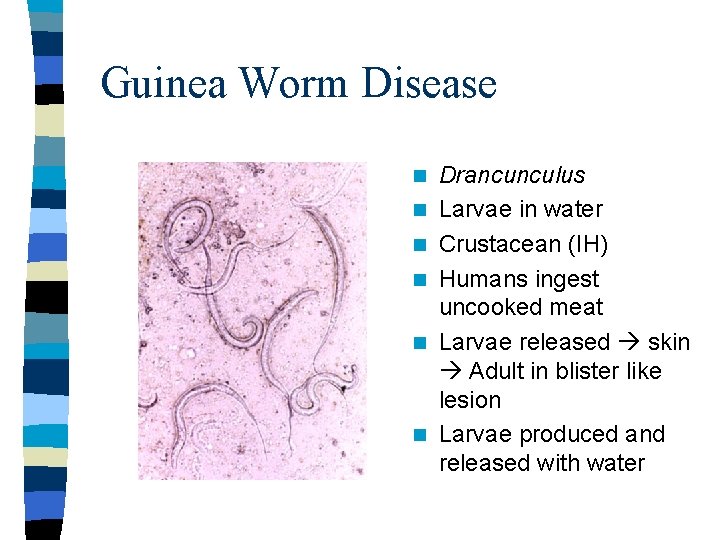
Guinea Worm Disease n n n Drancunculus Larvae in water Crustacean (IH) Humans ingest uncooked meat Larvae released skin Adult in blister like lesion Larvae produced and released with water
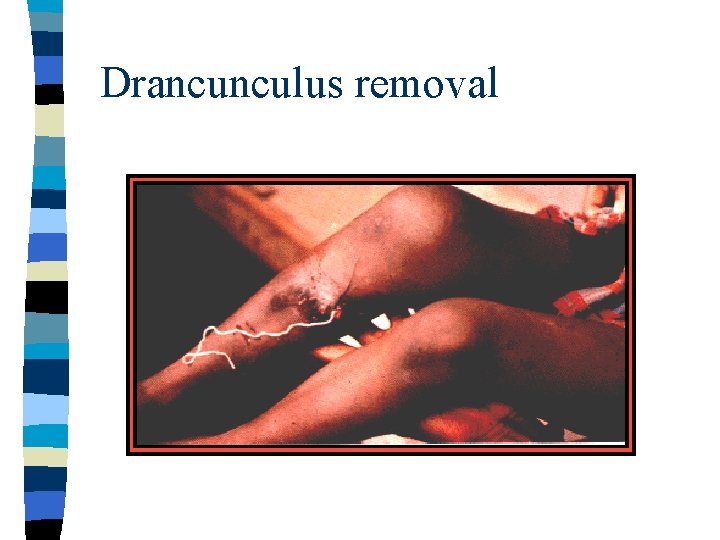
Drancunculus removal
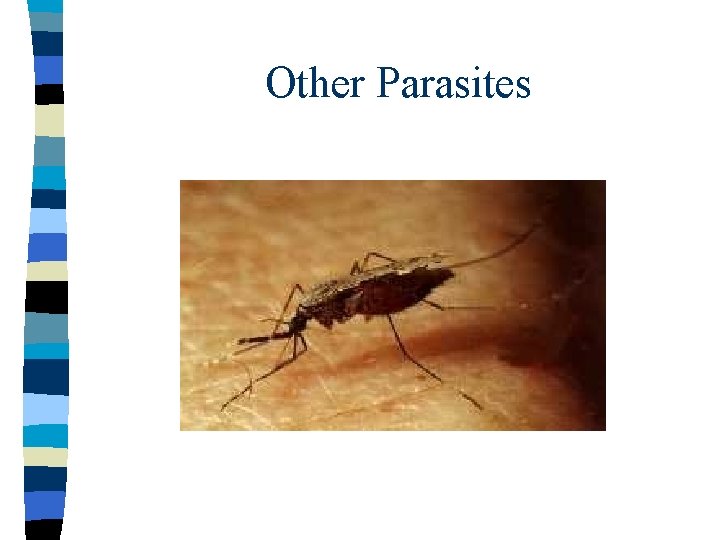
Other Parasites
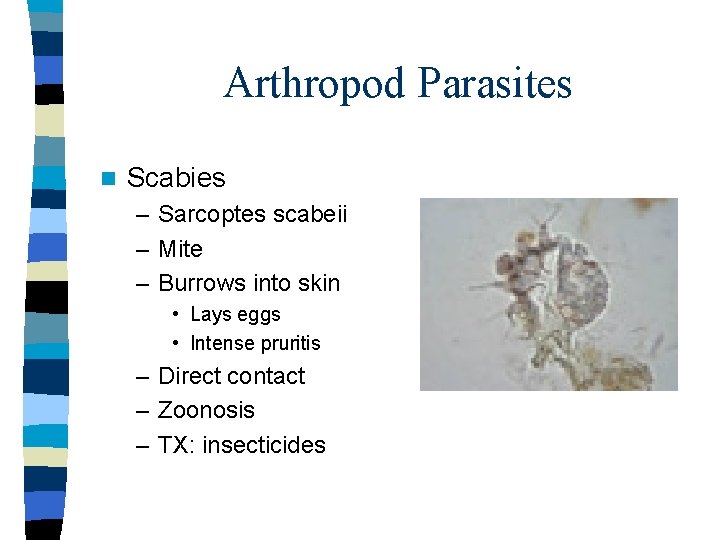
Arthropod Parasites n Scabies – Sarcoptes scabeii – Mite – Burrows into skin • Lays eggs • Intense pruritis – Direct contact – Zoonosis – TX: insecticides
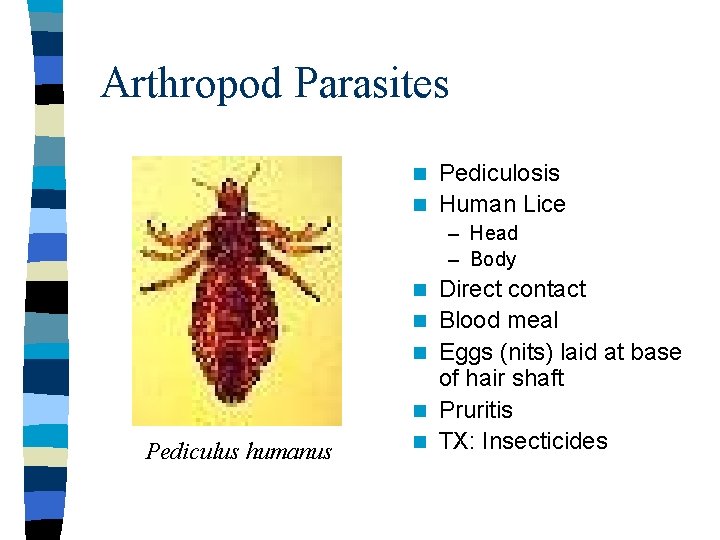
Arthropod Parasites Pediculosis n Human Lice n – Head – Body n n Pediculus humanus n Direct contact Blood meal Eggs (nits) laid at base of hair shaft Pruritis TX: Insecticides
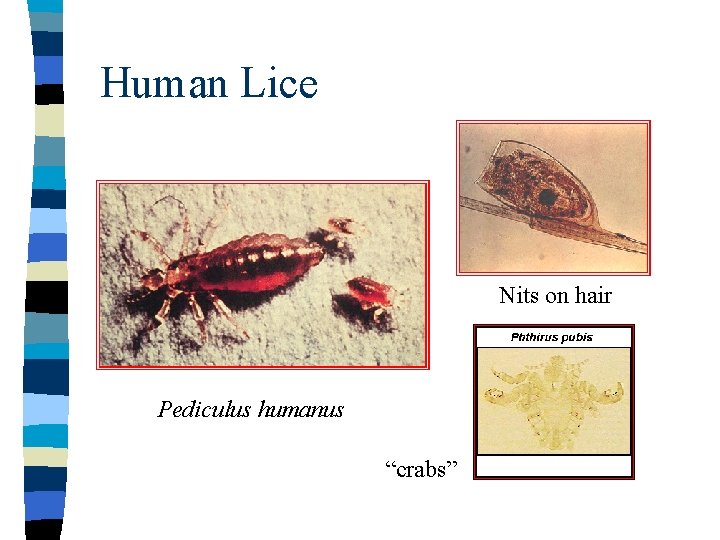
Human Lice Nits on hair Pediculus humanus “crabs”
Antihelminthics n n n Praziquantel Albendazole, Mebendazole Diethylcarbamazine Pyrantel pamoate Metronidizole Insecticides – Pyrethrin – Permethrin
Questions?