
PARASITIC FUNGAL INFECTIONS WHY IS THIS IMPORTANT Parasitic






- Slides: 43
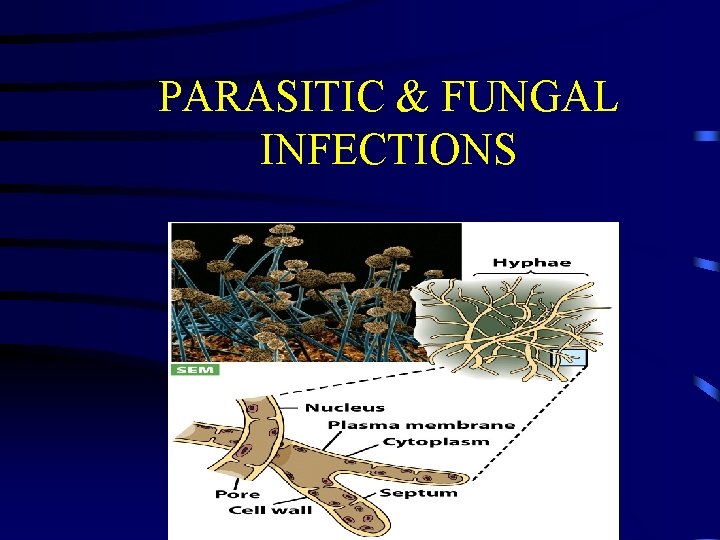
PARASITIC & FUNGAL INFECTIONS
WHY IS THIS IMPORTANT? • Parasitic infections affect billions of people in the world. • Fungal infections are usually opportunistic infections and have increased with the number of immunocompromised individuals. Parasites can be divided into two groups: • Protozoans – microscopic, single-celled eukaryotes. • Helminths – macroscopic, multicellular worms.
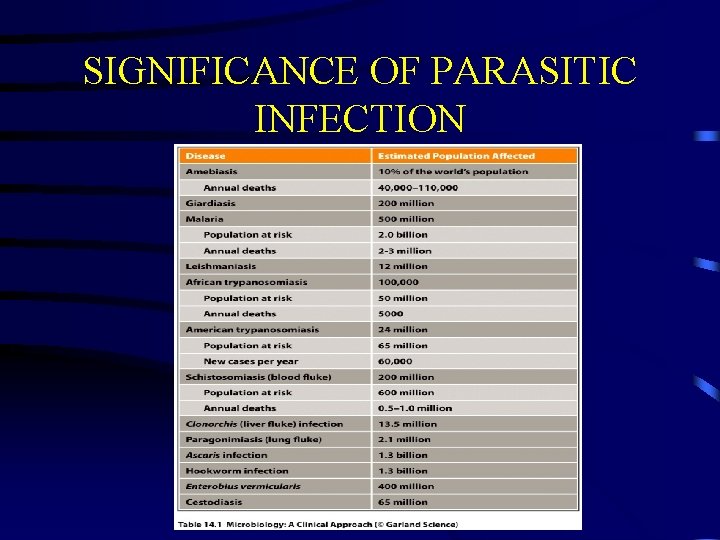
SIGNIFICANCE OF PARASITIC INFECTIONS Parasitic infections are a major problem worldwide. • More than 500 million people are infected with malaria. • More than 2 million (mostly children) die each year from malaria. • Entamoeba are intestinal parasites that infect 10% of the world population. • Trypanosoma parasites infect 16 million people in Latin America each year.
SIGNIFICANCE OF PARASITIC INFECTION
FUNGAL INFECTIONS • The study of fungi is known as mycology and scientist who study fungi is known is a mycologist • A fungus is a member of a large group of eukaryotic organisms • Microorganisms such as yeasts and molds, as well as the more familiar mushrooms • Over 60, 000 species of fungi are known • Fungi are important for the environment. • They are normally harmless to humans • Fungi can be opportunistic pathogens.
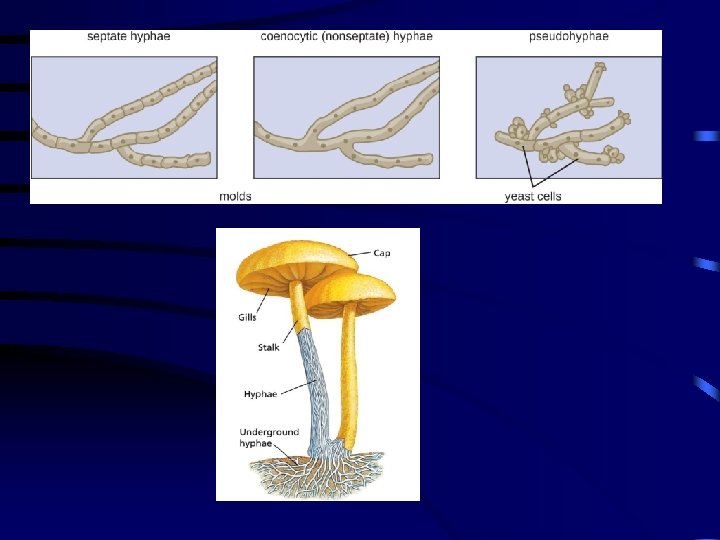
Structure • The main body of most fungi is made up of fine, branching, usually colourless threads called hyphae ( PG 310) • Several of these hyphae, all intertwining to make up a tangled web called the mycelium • Most fungi are multinucleate and multicellular organisms with cross wall called septa or aseptate (coenocytic) • Yeasts are unicellular • One major difference is that most fungi have cell walls that contain chitin, unlike the cell walls of plants, which contain cellulose
Single Hyphae
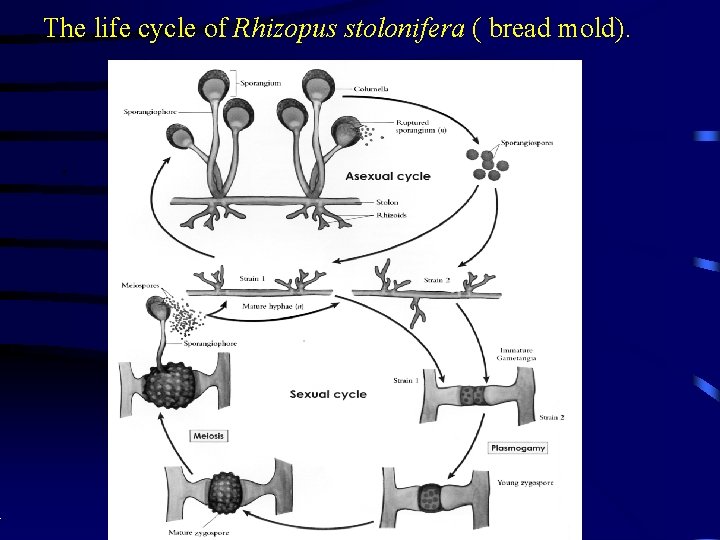
Reproduction • Life cycle involves the fusion of hyphae from two individuals (Male & Feamle • Each parent hyphae has haploid nuclei • The fusion of hyphae is called plasmogamy. • The fused hyphae containing haploid nuclei from two individuals is heterokaryotic. • In some cases, plasmogamy results in cells with one nucleus from each individual. This condition is called dikaryotic. • Two nuclei that originated from different individuals fuse to form a diploid zygote. • Meiosis then produces either four haploid nuclei or four haploid cells.
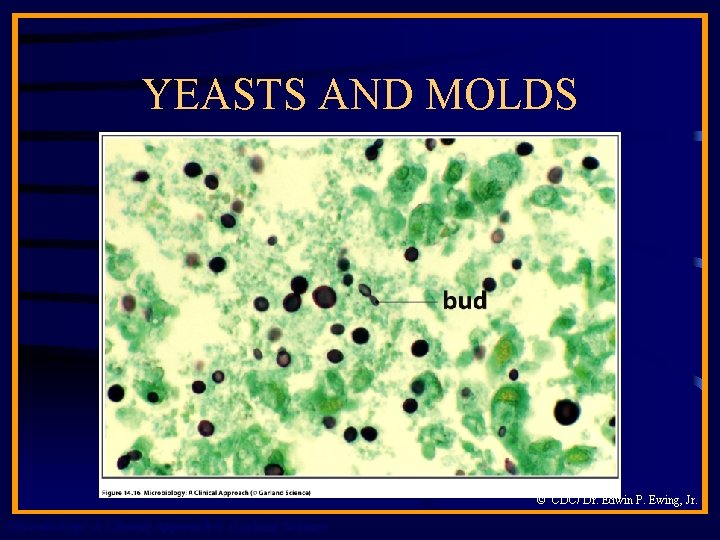
YEASTS AND MOLDS • Molds - multicellular • Yeasts - unicellular • The simplest form of growth is budding. • Buds are called blastoconidia. • Seen in yeasts.
. . Reproduction in yeast
YEASTS AND MOLDS © CDC/ Dr. Edwin P. Ewing, Jr. Microbiology: A Clinical Approach © Garland Science
The life cycle of Rhizopus stolonifera ( bread mold). .
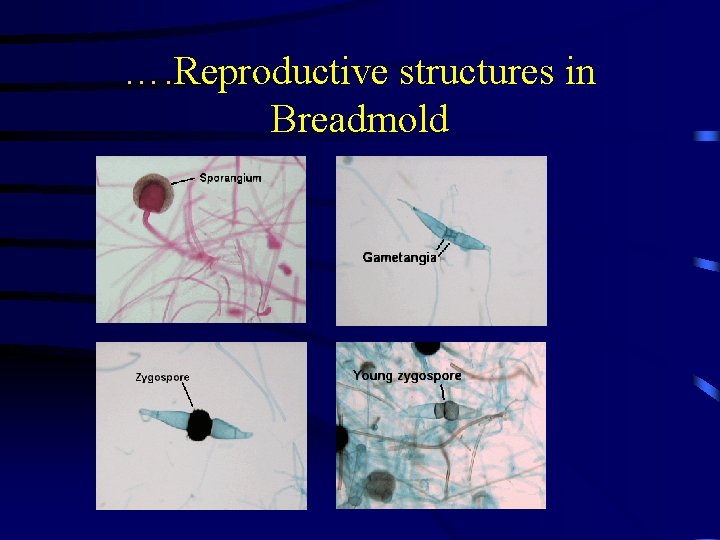
…. Reproductive structures in Breadmold.
Classification of Fungi By Reproductive Structures (PG 312) Oomycetes • Water Molds • Motile sexual spores • Example: Potato blight Phytophthora
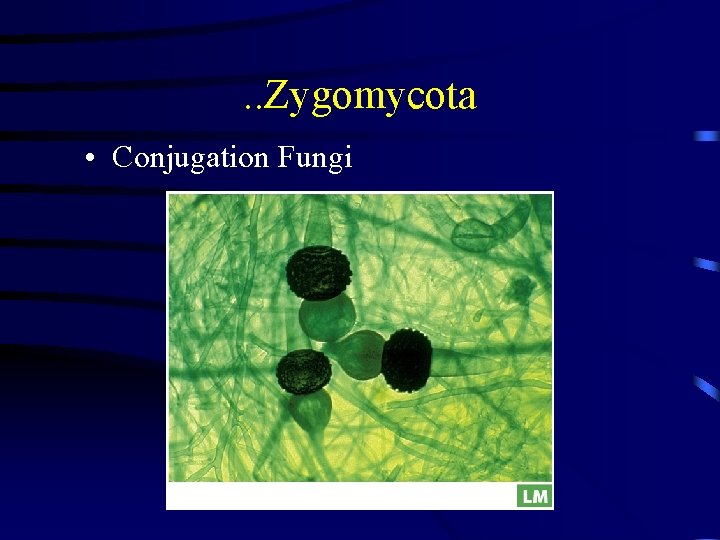
…. . Classification of Fungi Zygomycetes • Unenclosed zygospores produced at ends of hyphae • Example: Black bread mold Rhizopus Ascomycetes • Ascospores are enclosed in asci (sac-like structures) at the ends of hyphae or yeasts • Examples: Penicillium, Saccharomyces
. . Zygomycota • Conjugation Fungi
…. . Classification of Fungi Basidiomycetes • Basidiospores are produced on a club-shaped structure called a basidium • Example: Mushrooms, Cryptococcus Deuteromycetes • “Imperfect fungi” • No sexual stage is known for these fungi • Many parasitic fungi fall into this class • Examples: Candida, Epidermophyton
CLASSIFICATION OF PATHOGENIC FUNGI Fungal diseases are classified into 4 groups: • Superficial mycoses • Mucocutaneous mycoses • Subcutaneous mycoses • Deep mycoses
SUPERFICIAL MYCOSES Fungal infections that do not involve a tissue response: • Piedra – colonization of the hair shaft causing black or white nodules • Tinea nigra – brown or black superficial skin lesions • Tinea capitis – folliculitis on the scalp and eyebrows
…SUPERFICIAL MYCOSES • Favus – destruction of the hair follicle. • Pityriasis – dermatitis characterized by redness of the skin and itching: • Caused by hypersensitivity reactions to fungi normally found on skin • Mostly seen in immunocompromised patients.
CUTANEOUS AND MUCOCUTANEOUS MYCOSES Associated with: • Skin • Eyes • Sinuses • Oropharynx and external ears • Vagina
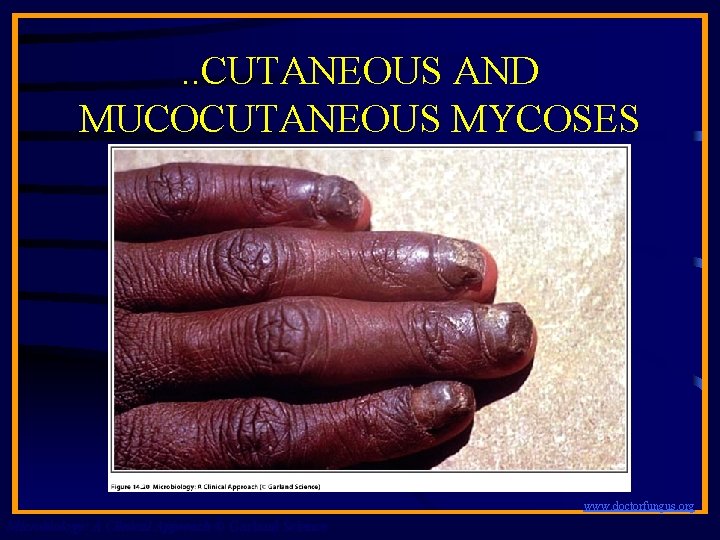
…CUTANEOUS AND MUCOCUTANEOUS MYCOSES Ringworm – skin lesions characterized by red margins, scales and itching: • Classified based on location of infection • Tinea pedis – on the feet or between the toes • Tinea corporis – between the fingers, in wrinkles on the palms • Tinea cruses – lesions on the hairy skin around the genitalia • Tinea capitis – scalp and eyebrows • Onychomycosis – chronic infection of the nail bed • Commonly seen in toes • Hyperkeratosis – extended scaly areas on the hands and feet
. . CUTANEOUS AND MUCOCUTANEOUS MYCOSES www. doctorfungus. org Microbiology: A Clinical Approach © Garland Science
…CUTANEOUS AND MUCOCUTANEOUS MYCOSES • Mucocutaneous candidiasis – colonization of the mucous membranes • Caused by the yeast Candida albicans • Often associated with a loss of immunocompetence • Thrush – fungal growth in the oral cavity • An indicator of immunodeficiency. • Vulvovaginitis – fungal growth in the vaginal canal • Can be associated with a hormonal imbalance
SUBCUTANEOUS MYCOSES Localized primary infections of subcutaneous tissue: • Can cause the development of cysts and granulomas. • Provoke an innate immune response eosinophilia.
…SUBCUTANEOUS MYCOSES There are several types: • Sporotrichosis – traumatic implantation of fungal organisms • Paranasal conidiobolae mycoses – infection of the paranasal sinuses • Causes the formation of granulomas. • Zygomatic rhinitis – fungus invades tissue through arteries • Causes thrombosis • Can involve the CNS.
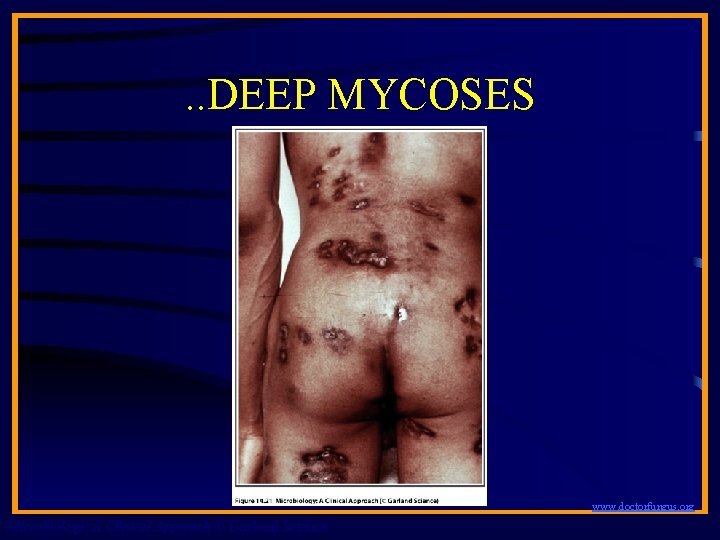
DEEP MYCOSES Deep mycoses Usually seen in immunosuppressed patients with: • AIDS • Cancer • Diabetes • Can be acquired by: • Inhalation of fungi or fungal spores • Use of contaminated medical equipment • Deep mycoses can cause a systemic infection – disseminated mycoses • Can spread to the skin
. . DEEP MYCOSES www. doctorfungus. org Microbiology: A Clinical Approach © Garland Science
. . DEEP MYCOSES Coccidiomycoses – caused by genus Coccidioides • Primary respiratory infection • Leads to fever, erythremia, and bronchial pneumonia • Usually resolves spontaneously due to immune defense • Some cases are fatal
…DEEP MYCOSES Histoplasmosis – caused by Histoplasma capsulatum • Often associated with immunodeficiency • Causes the formation of granulomas • Can necrotize and become calcified • If disseminated, histoplasmosis can be fatal.
. . DEEP MYCOSES © CDC/Susan Lindsley, VD Microbiology: A Clinical Approach © Garland Science
…DEEP MYCOSES Aspergillosis – caused by several species of Aspergillus • Associated with immunodeficiency • Can be invasive and disseminate to the blood and lungs • Causes acute pneumonia • Mortality is very high. • Death can occur in a matter of weeks.
Common Fungal Diseases Additional Information to read: • Candidiasis • Dermatomycoses • Respiratory Fungal Infections
Candidiasis Cause: Candida albicans – Dimorphic fungus of the class Deuteromycetes – Grows as yeast or pseudohyphae – Spread by contact; often part of normal flora – Opportunistic infections common – Vulvovaginitis – Oral candidiasis (thrush) – Intestinal candidiasis
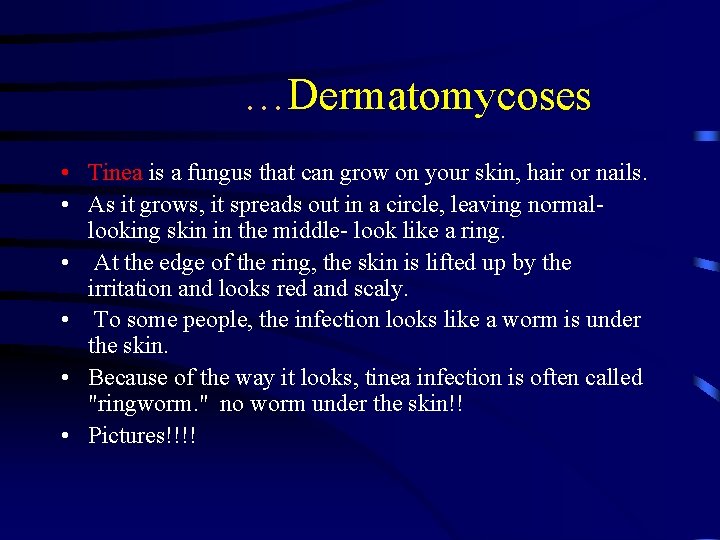
Dermatomycoses • Dermatomycoses are any fungal infection of the skin or hair. • Caused by many different species and are generally named after the infected area rather than the species that causes it. • Dermatomycoses are one of the most frequent sources of lesions on the skin.
…Dermatomycoses Cause: Several genera of dermatophytic fungi – Trichophyton, an ascomycete – Microsporum, an ascomycete – Epidermophyton, a deuteromycete – Grow on skin, hair, nails – Transmitted by contact with infected persons or animals
…Dermatomycoses • Tinea is a fungus that can grow on your skin, hair or nails. • As it grows, it spreads out in a circle, leaving normallooking skin in the middle- look like a ring. • At the edge of the ring, the skin is lifted up by the irritation and looks red and scaly. • To some people, the infection looks like a worm is under the skin. • Because of the way it looks, tinea infection is often called "ringworm. " no worm under the skin!! • Pictures!!!!
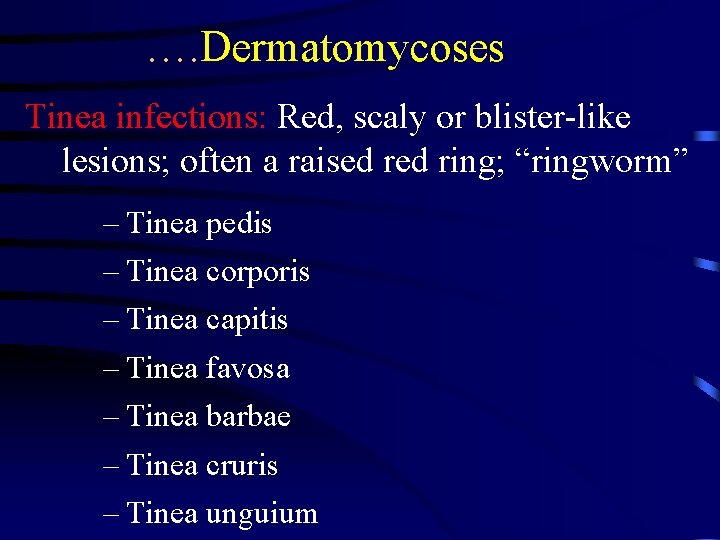
…. Dermatomycoses Tinea infections: Red, scaly or blister-like lesions; often a raised ring; “ringworm” – Tinea pedis – Tinea corporis – Tinea capitis – Tinea favosa – Tinea barbae – Tinea cruris – Tinea unguium
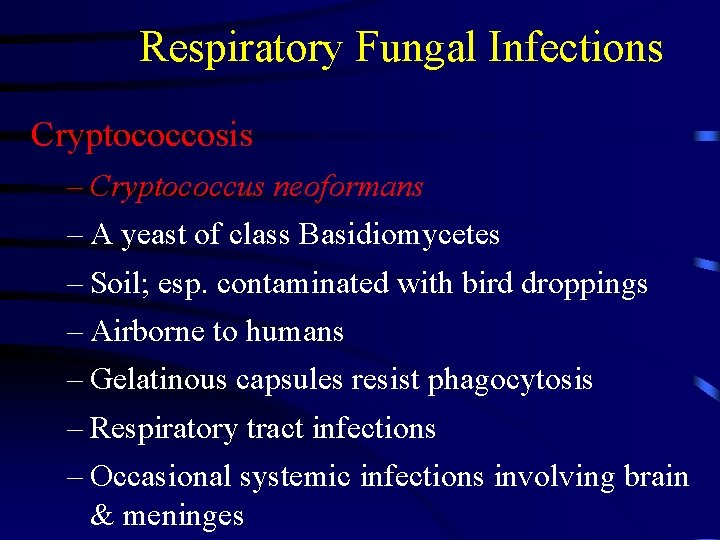
Respiratory Fungal Infections Cryptococcosis – Cryptococcus neoformans – A yeast of class Basidiomycetes – Soil; esp. contaminated with bird droppings – Airborne to humans – Gelatinous capsules resist phagocytosis – Respiratory tract infections – Occasional systemic infections involving brain & meninges
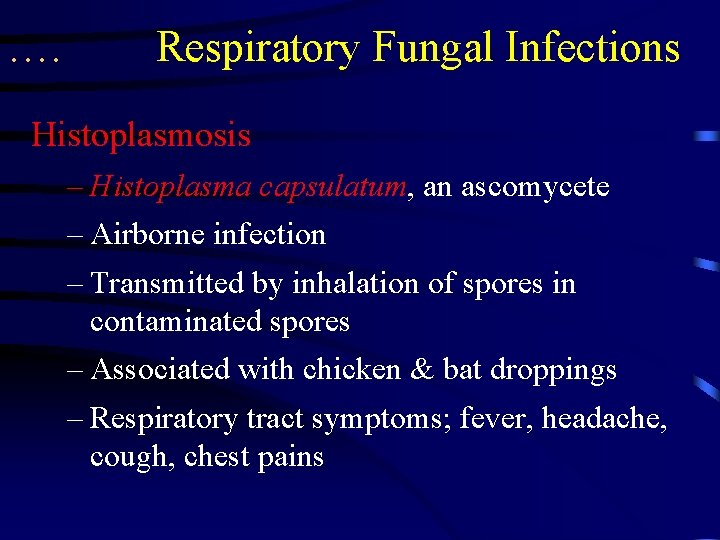
…. Respiratory Fungal Infections Histoplasmosis – Histoplasma capsulatum, an ascomycete – Airborne infection – Transmitted by inhalation of spores in contaminated spores – Associated with chicken & bat droppings – Respiratory tract symptoms; fever, headache, cough, chest pains
…. Respiratory Fungal Infections Blastomycosis – Blastomyces dermatitidis, an ascomycete – Associated with dusty soil & bird droppings – Skin transmission: via cuts & abrasions – Raised, wart-like lesions – Airborne transmission: via inhalation of spores – Respiratory tract symptoms – Occasional internal infections with high fatality rate
• References Microbiology, A clinical Approach -Danielle Moszyk. Strelkauskas-Garland Science 2010 • • • http: //en. wikipedia. org/wiki/Scientific_method https: //files. kennesaw. edu/faculty/jhendrix/bio 2261/home. html http: //www. cdc. gov/cmv/ Lecture Power. Points Microbiology Principles and Exploration 7 th edt. J G Black ; J Wiley Pub. http: //en. wikipedia. org/wiki/Scientific_method https: //files. kennesaw. edu/faculty/jhendrix/bio 2261/home. html http: //www. cdc. gov/cmv/ http: //kentsimmons. uwinnipeg. ca/16 cm 05/16 labman 05/lb 2 pg 21. htm http: //www. hcs. ohio-state. edu/hcs 300/fungi. htm • http: //www. microbiologybytes. com/introduction/myc 2. htm l