
Parasitic Diseases in fishes By Dr Mohamed Sayed
Parasitic Diseases in fishes By Dr. Mohamed Sayed Mohamed Marzouk Professor of Fish Diseases and Management , Faculty of Veterinary Medicine, Cairo University
Parasitic Diseases of cultured fishes What is meant by Parasite ? Classification of different parasites v Protozoa (unicellular). v Helminthes (multi-cellular) v Crustaceans
Protozoa According to habitate: 1. External. 2. Internal (Blood and Tissue). According to shape: 1. Cilliates (Icthyophthirius, Chilodonella, Trichodina). 2. Flagellates (Ichthyopoda, Trypanosoma, Cryptobia, Hexamita). 3. Sporozoa (Myxosoma).
External protozoa 1. Exteranl cilliated protozoa: Ichthyophthirius multifillis Chilodonella spp. Trichodina spp.
2. Exteranl flagellated protozoa: Ichthyoboda (Costia) necatrix and pyriformis Piscinoodinium spp. Amyloodinium spp. Cryptobia spp. 3. Internal flagellated protozoa Hexamita spp. Trypanoplasma spp.
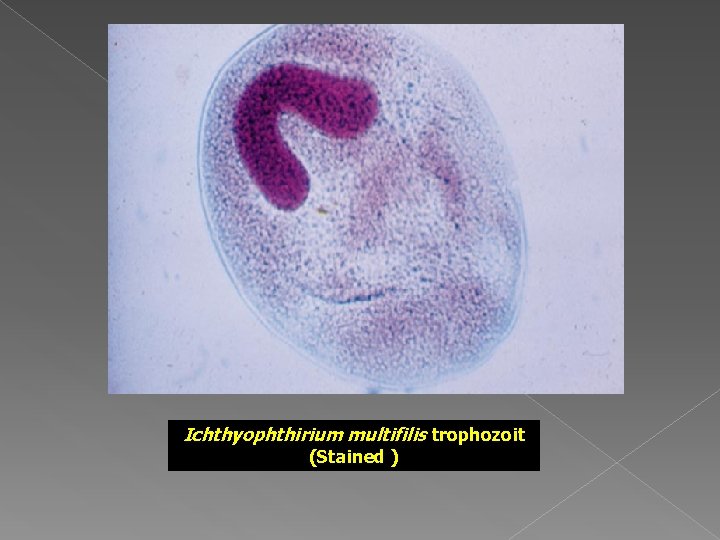
Ichthyophthirium multifilis trophozoit (Stained )
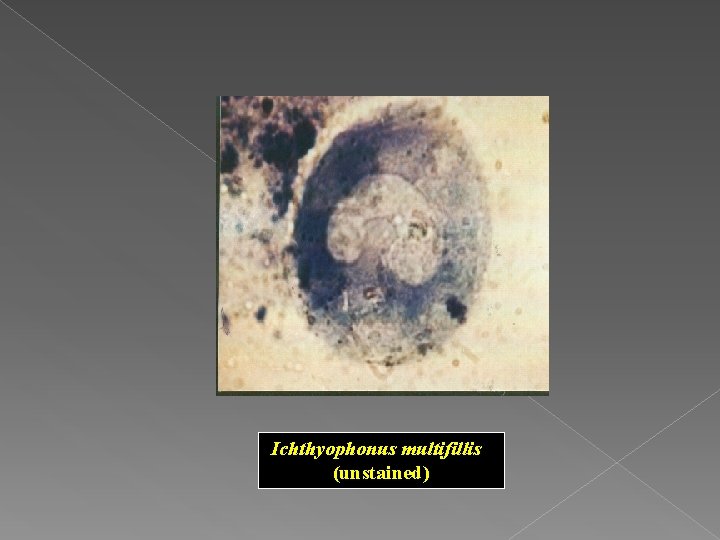
Ichthyophonus multifillis (unstained)
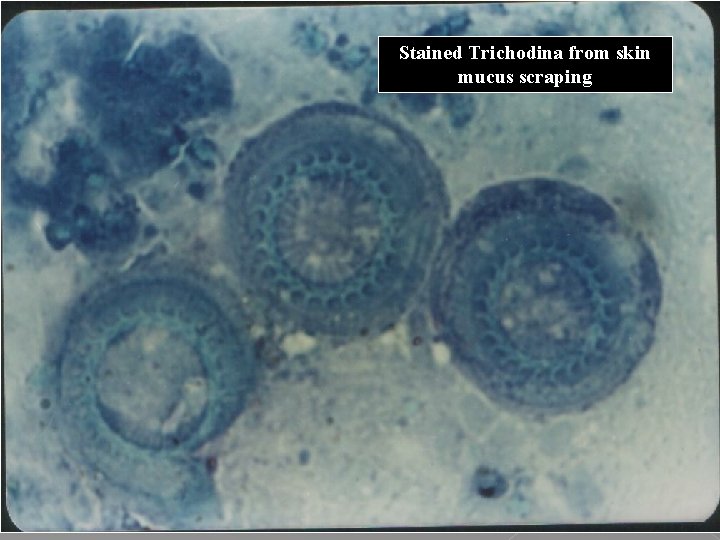
Stained Trichodina from skin mucus scraping
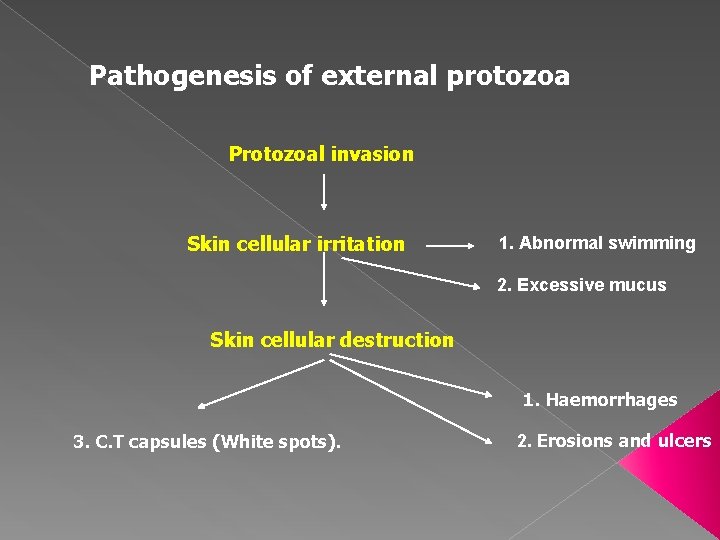
Pathogenesis of external protozoa Protozoal invasion Skin cellular irritation 1. Abnormal swimming 2. Excessive mucus Skin cellular destruction 1. Haemorrhages 3. C. T capsules (White spots). 2. Erosions and ulcers
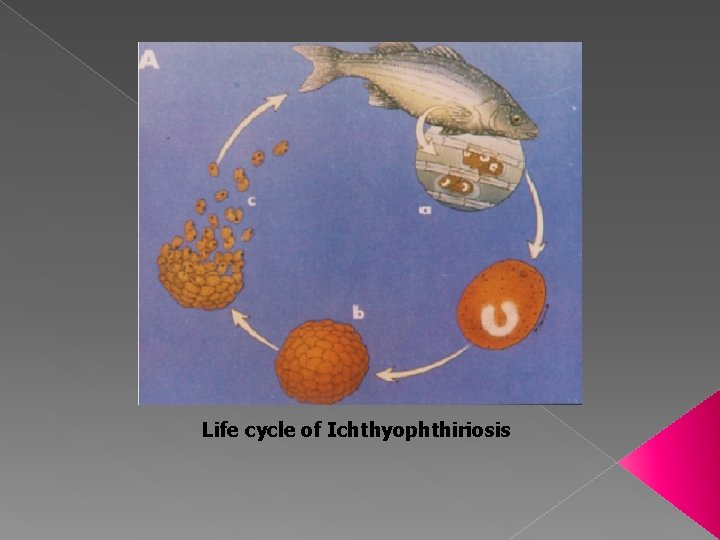
Life cycle of Ichthyophthiriosis
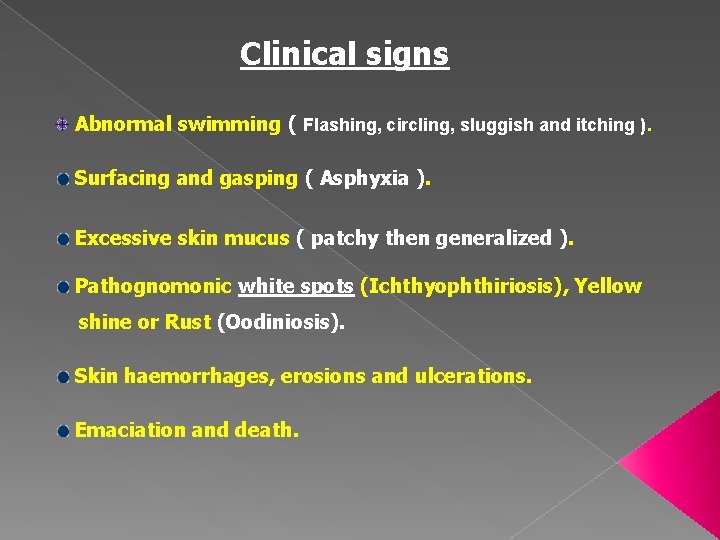
Clinical signs Abnormal swimming ( Flashing, circling, sluggish and itching ). Surfacing and gasping ( Asphyxia ). Excessive skin mucus ( patchy then generalized ). Pathognomonic white spots (Ichthyophthiriosis), Yellow shine or Rust (Oodiniosis). Skin haemorrhages, erosions and ulcerations. Emaciation and death.
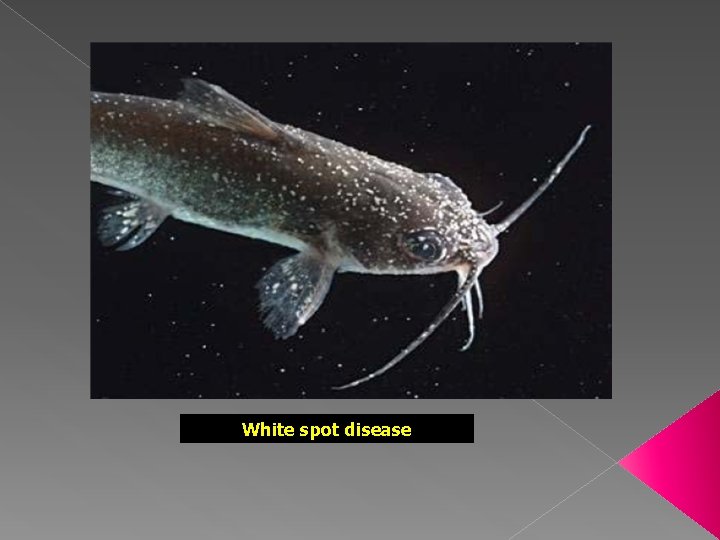
White spot disease
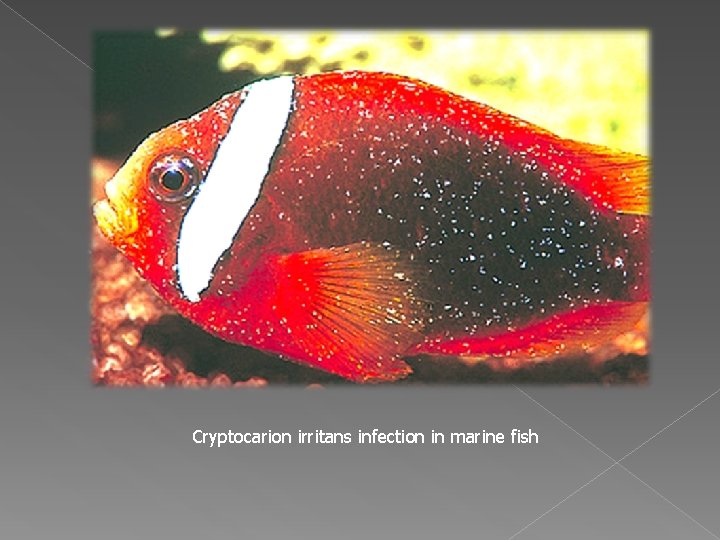
Cryptocarion irritans infection in marine fish
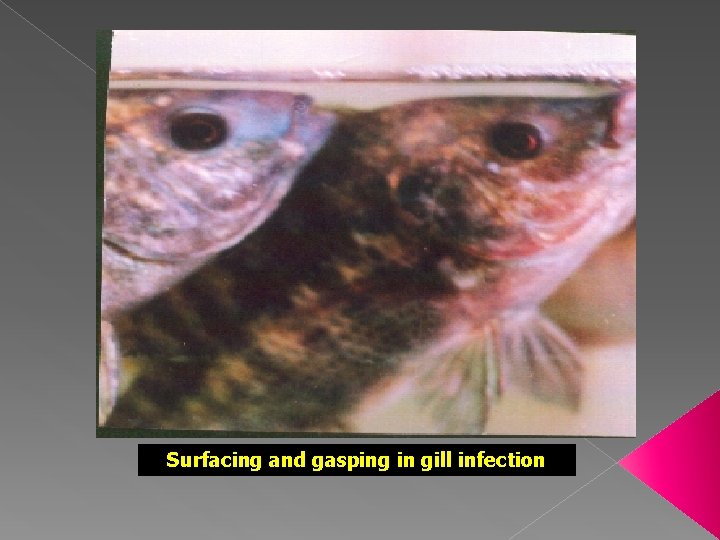
Surfacing and gasping in gill infection
Diagnosis of External parasitic Diseases 1. History ( new introduced fish, water parameters, ……… 2. Clinical signs and lesions. 3. Demonstration and identification of the causative parasites Skin and gill mucus scraping (wet mount). Stained skin and gill mucus smears.
Treatment of External parasitic Fish Diseases External chemical treatment q Dip treatment q Bath treatment q Flush treatment q Indefinite bath treatment Non-chemical treatment q Increase water temperature in White Spot disease q Change water facility q Use of ultraviolet radiation in re-circulating system
Types of Chemical treatments 1. Disinfectants: v Pot. Permenganate. v Malachite green. v Formaline. v Na Cl. v Acriflavin. v Methylene blue.
2. Pesticides: v. Chlorinated Hydrocarbones. v. Organophosphates.
Control of Fish diseases in infected fish farms In infected earthen ponds: o Drainage o Dryness o Disinfection using quick lime In infected concrete or fiberglass fish tanks: o Drainage o Disinfection with strong antiseptics
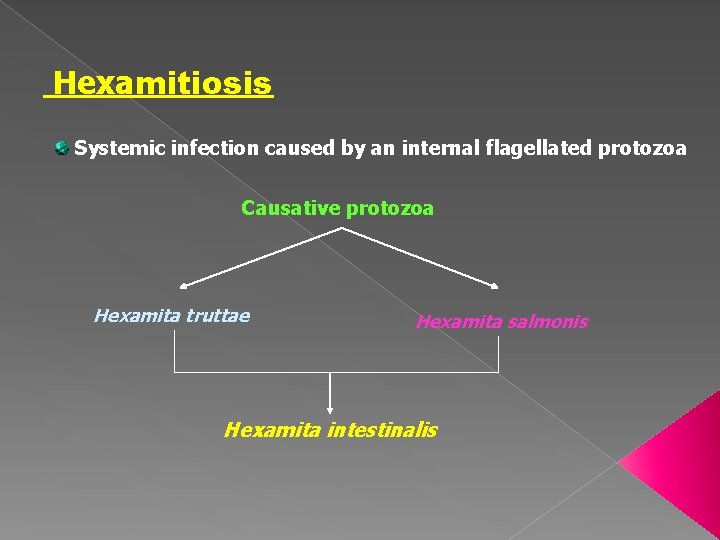
Hexamitiosis Systemic infection caused by an internal flagellated protozoa Causative protozoa Hexamita truttae Hexamita salmonis Hexamita intestinalis
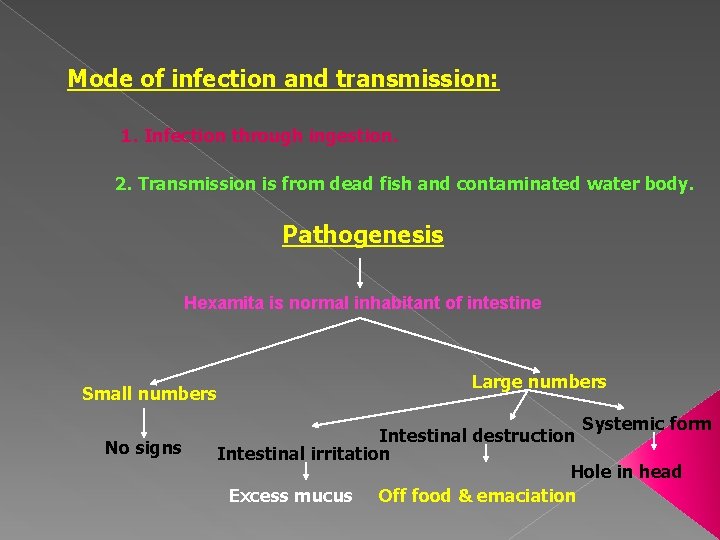
Mode of infection and transmission: 1. Infection through ingestion. 2. Transmission is from dead fish and contaminated water body. Pathogenesis Hexamita is normal inhabitant of intestine Small numbers No signs Large numbers Systemic form Intestinal destruction Intestinal irritation Hole in head Excess mucus Off food & emaciation
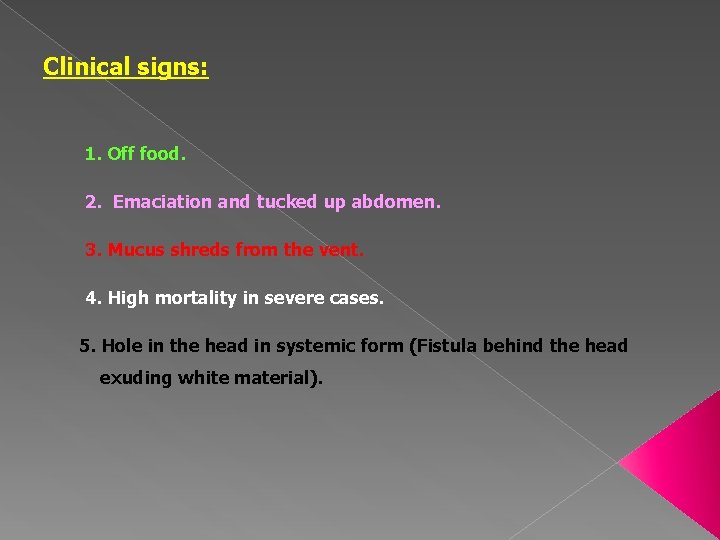
Clinical signs: 1. Off food. 2. Emaciation and tucked up abdomen. 3. Mucus shreds from the vent. 4. High mortality in severe cases. 5. Hole in the head in systemic form (Fistula behind the head exuding white material).
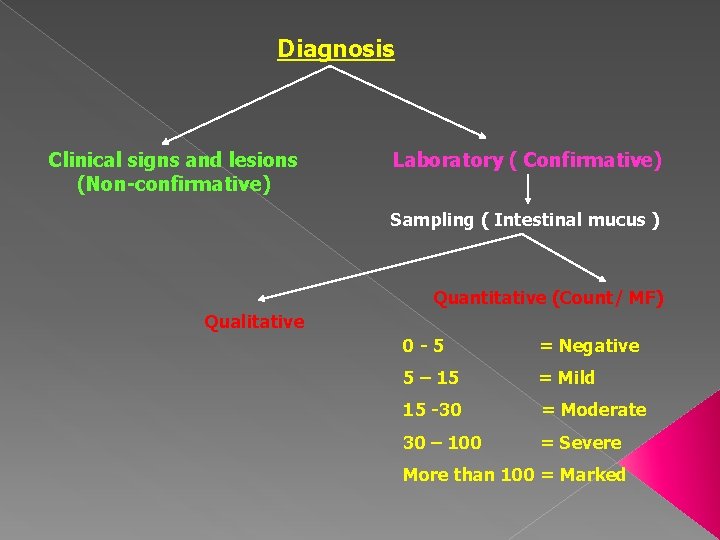
Diagnosis Clinical signs and lesions (Non-confirmative) Laboratory ( Confirmative) Sampling ( Intestinal mucus ) Quantitative (Count/ MF) Qualitative 0 -5 = Negative 5 – 15 = Mild 15 -30 = Moderate 30 – 100 = Severe More than 100 = Marked
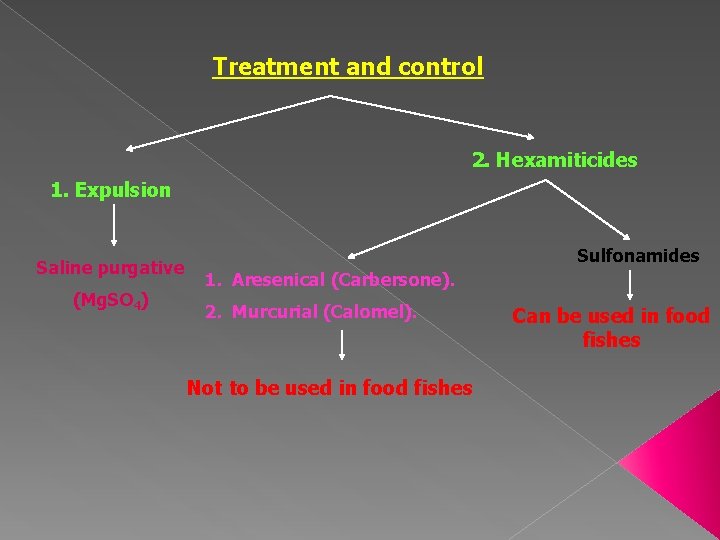
Treatment and control 2. Hexamiticides 1. Expulsion Saline purgative (Mg. SO 4) Sulfonamides 1. Aresenical (Carbersone). 2. Murcurial (Calomel). Not to be used in food fishes Can be used in food fishes
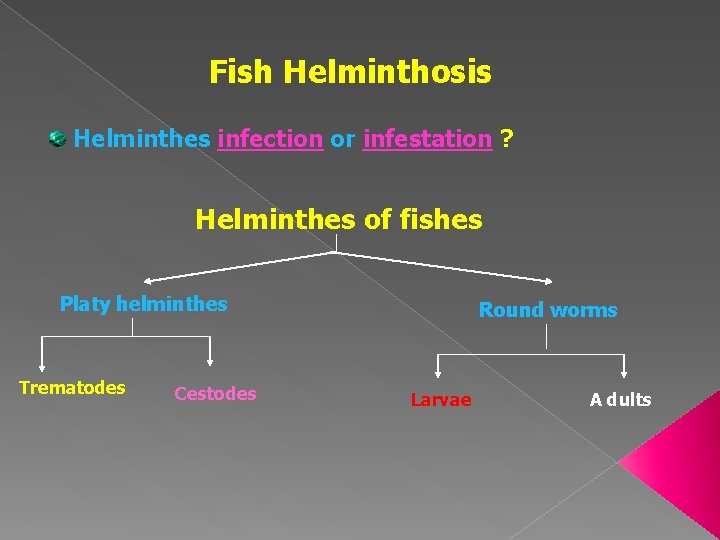
Fish Helminthosis Helminthes infection or infestation ? Helminthes of fishes Platy helminthes Trematodes Cestodes Round worms Larvae A dults
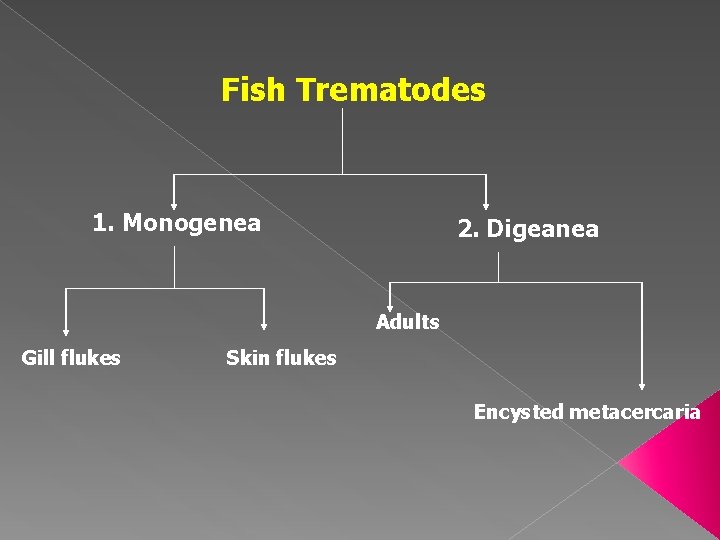
Fish Trematodes 1. Monogenea 2. Digeanea Adults Gill flukes Skin flukes Encysted metacercaria
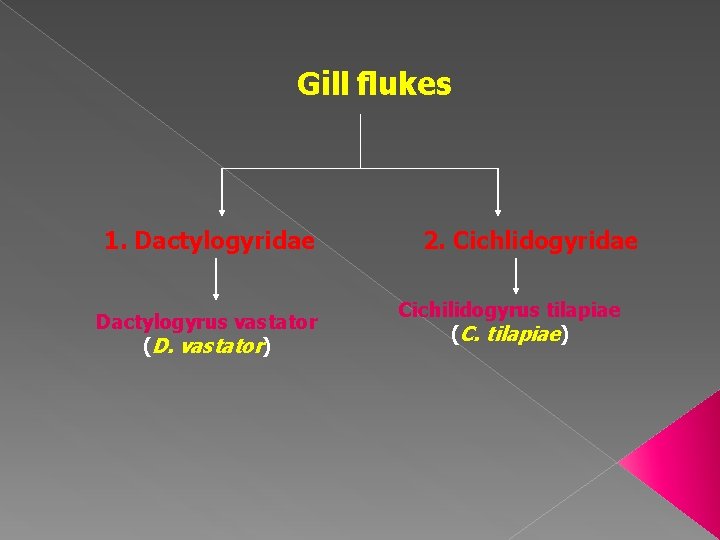
Gill flukes 1. Dactylogyridae Dactylogyrus vastator (D. vastator) 2. Cichlidogyridae Cichilidogyrus tilapiae (C. tilapiae)
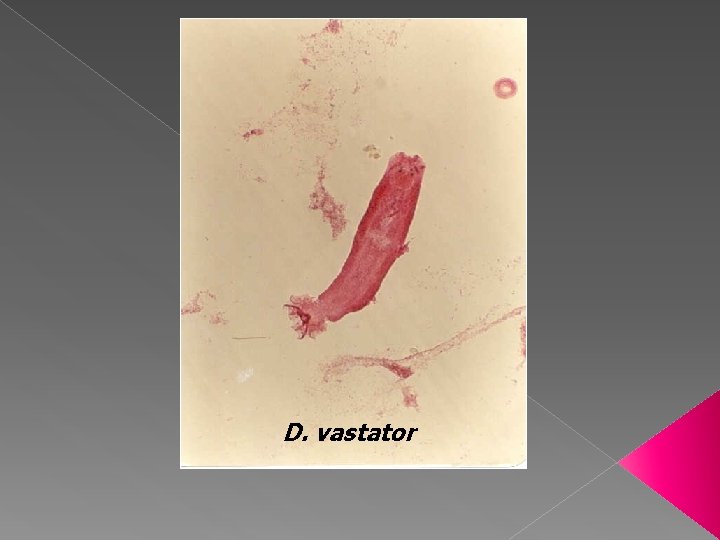
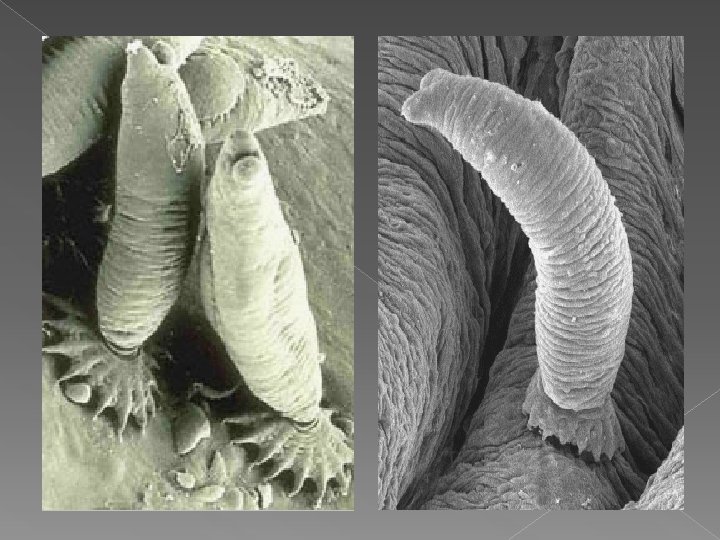
D. vastator
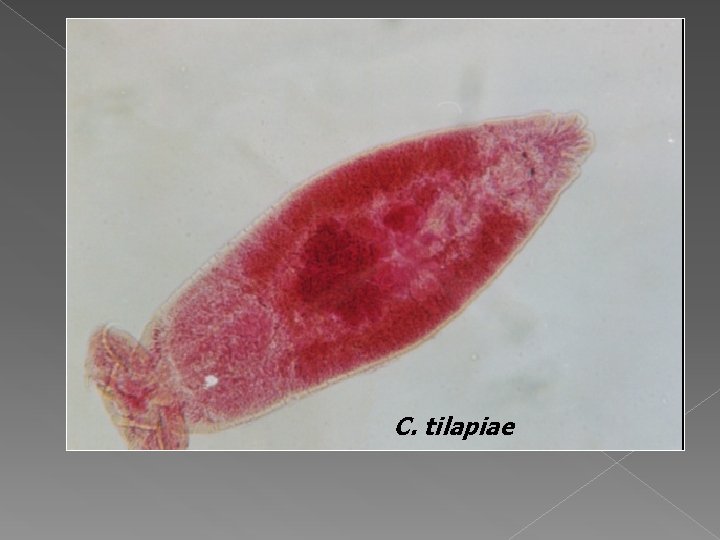
C. tilapiae
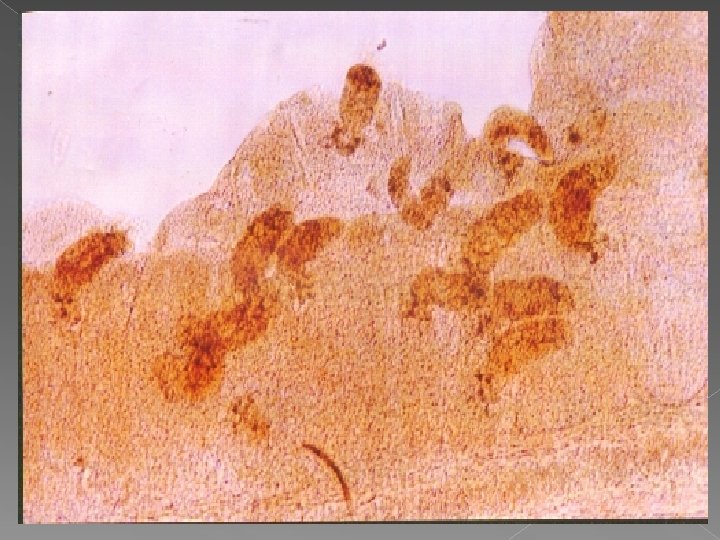
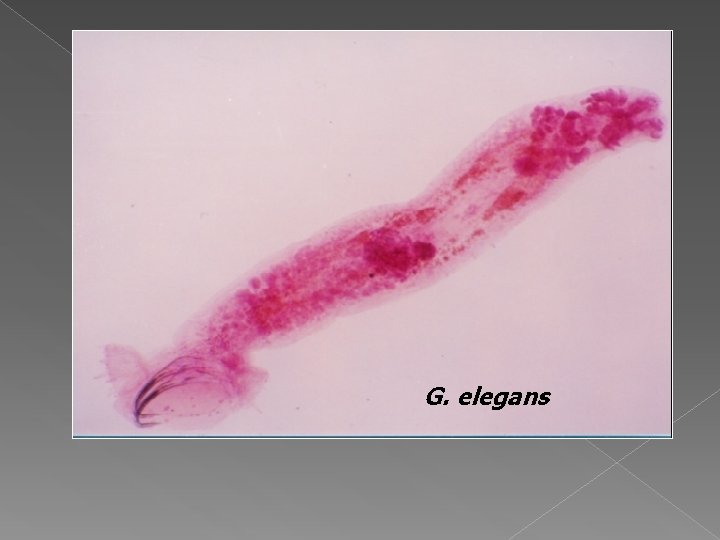
G. elegans
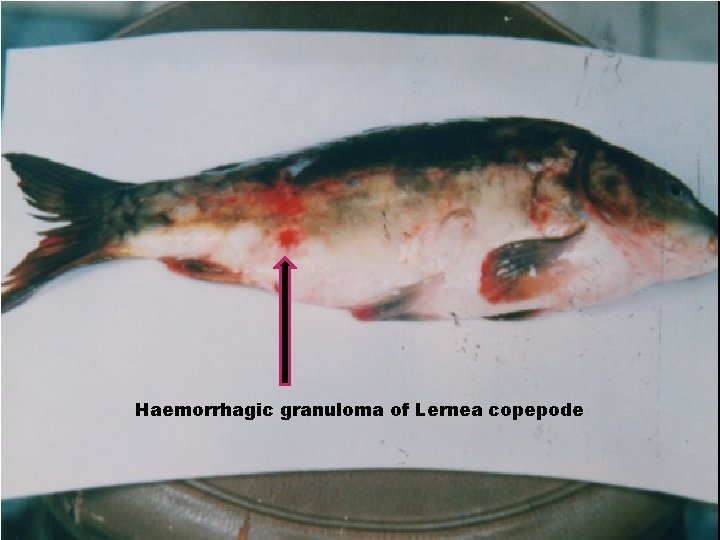
Haemorrhagic granuloma of Lernea copepode
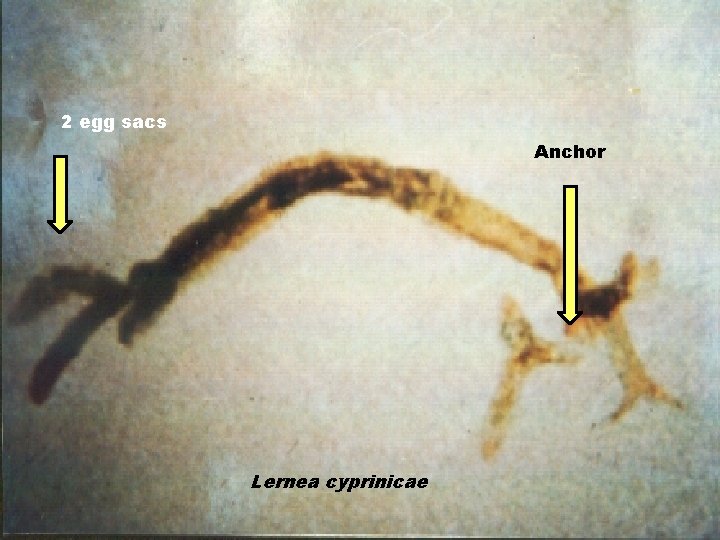
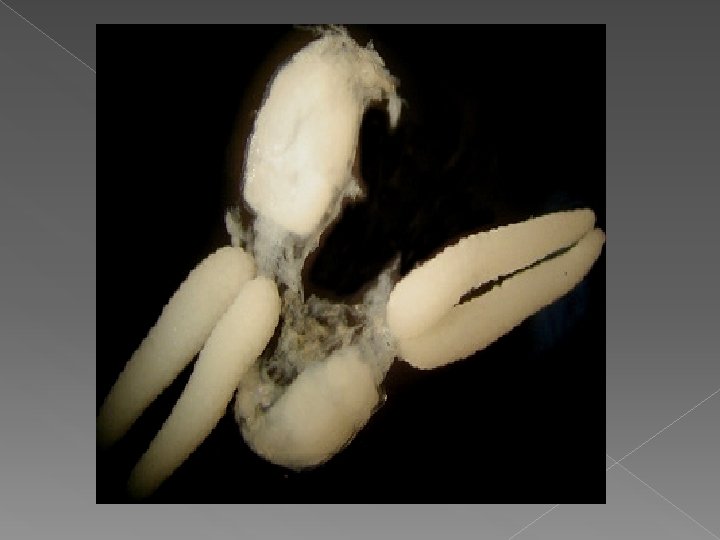
2 egg sacs Anchor Lernea cyprinicae
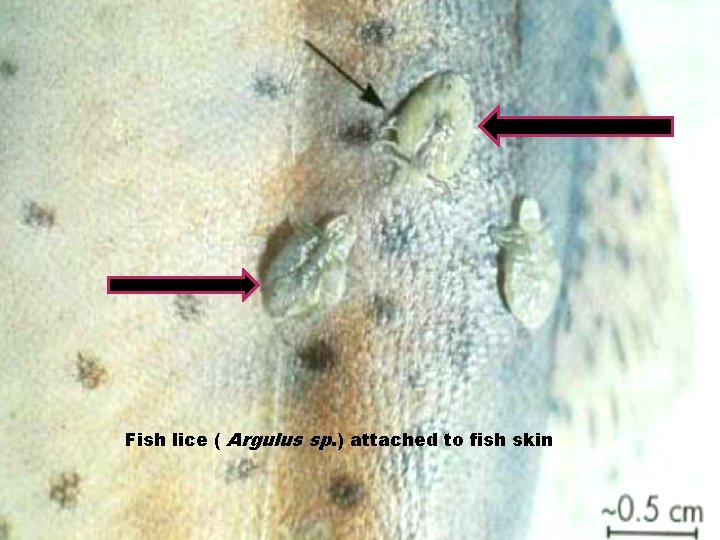
Fish lice ( Argulus sp. ) attached to fish skin
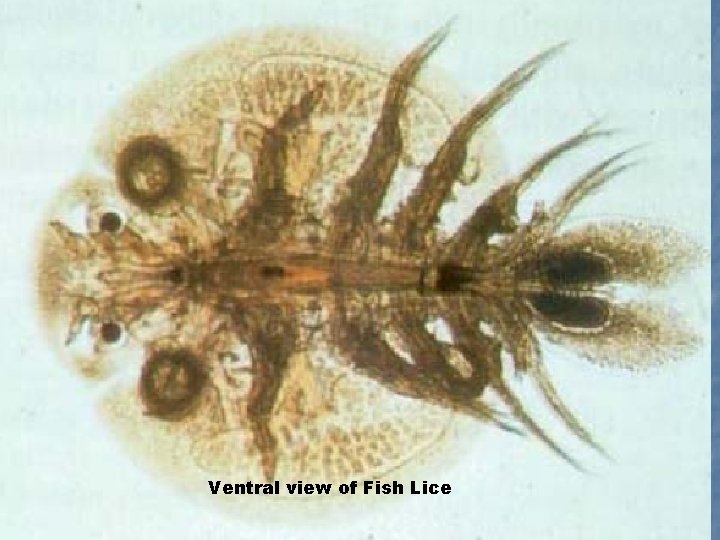
Ventral view of Fish Lice

- Slides: 39