
Parasites Giant Intestinal Fluke Chinese Liver Fluke Sheep
- Slides: 15
Parasites: -Giant Intestinal Fluke -Chinese Liver Fluke -Sheep Liver Fluke
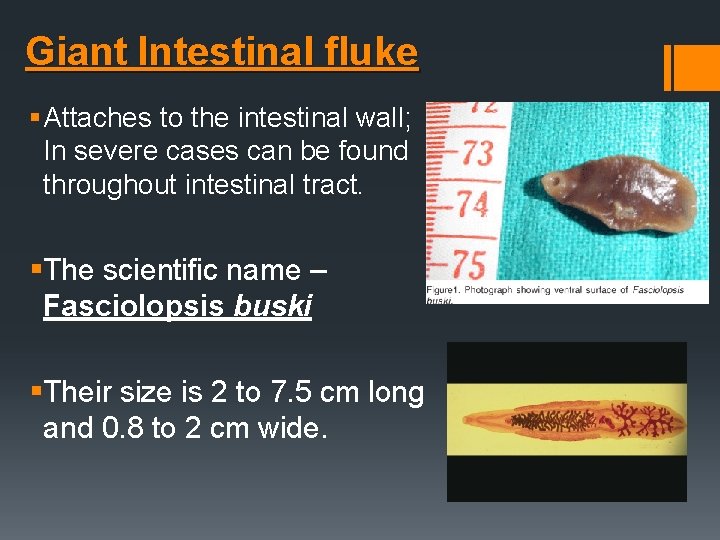
Giant Intestinal fluke § Attaches to the intestinal wall; In severe cases can be found throughout intestinal tract. §The scientific name – Fasciolopsis buski §Their size is 2 to 7. 5 cm long and 0. 8 to 2 cm wide.
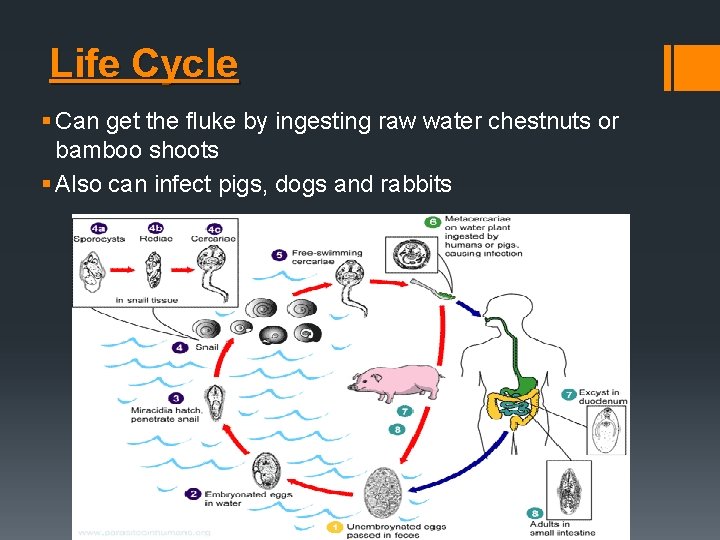
Life Cycle § Can get the fluke by ingesting raw water chestnuts or bamboo shoots § Also can infect pigs, dogs and rabbits
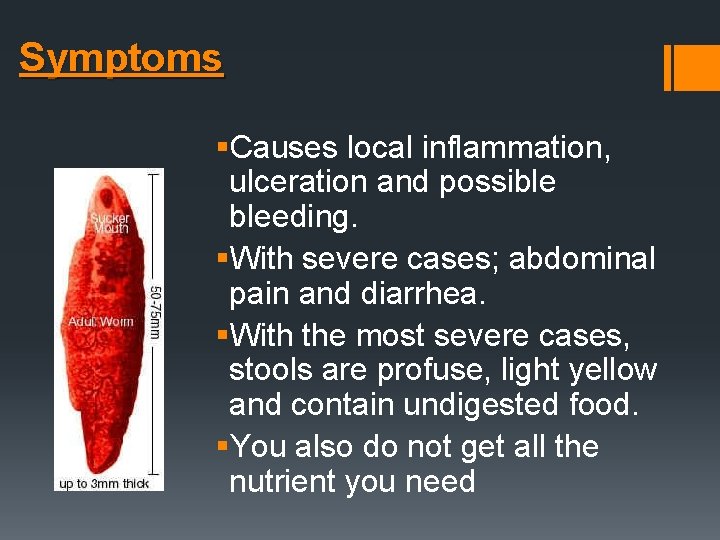
Symptoms §Causes local inflammation, ulceration and possible bleeding. §With severe cases; abdominal pain and diarrhea. §With the most severe cases, stools are profuse, light yellow and contain undigested food. §You also do not get all the nutrient you need
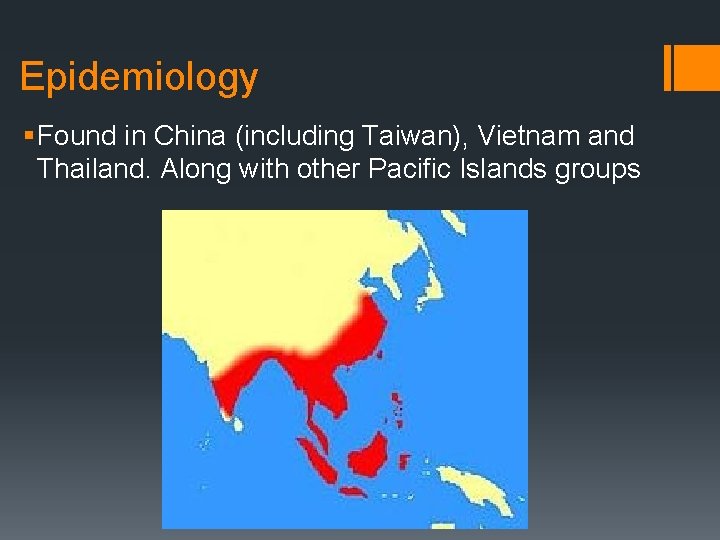
Epidemiology § Found in China (including Taiwan), Vietnam and Thailand. Along with other Pacific Islands groups
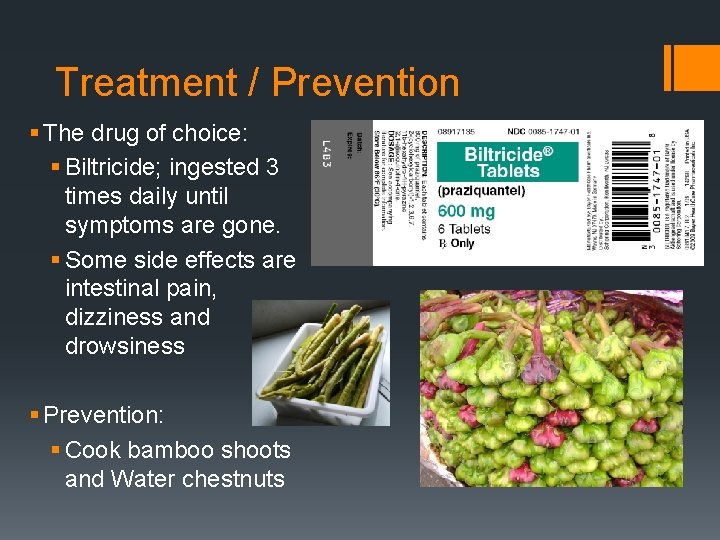
Treatment / Prevention § The drug of choice: § Biltricide; ingested 3 times daily until symptoms are gone. § Some side effects are intestinal pain, dizziness and drowsiness § Prevention: § Cook bamboo shoots and Water chestnuts
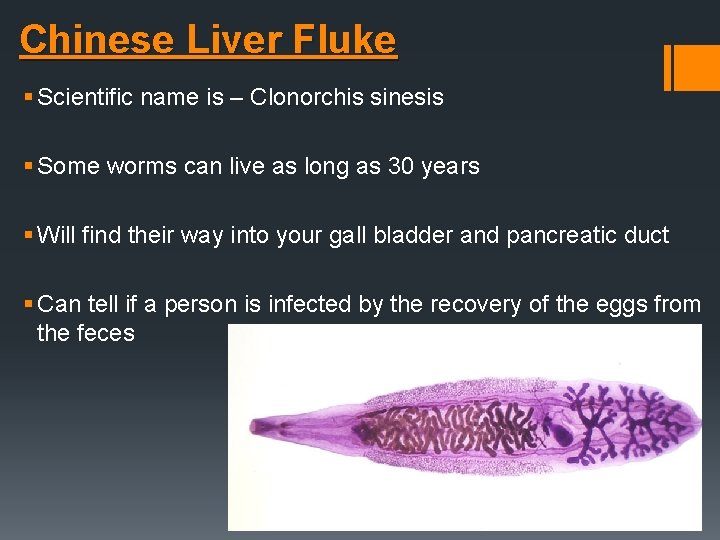
Chinese Liver Fluke § Scientific name is – Clonorchis sinesis § Some worms can live as long as 30 years § Will find their way into your gall bladder and pancreatic duct § Can tell if a person is infected by the recovery of the eggs from the feces
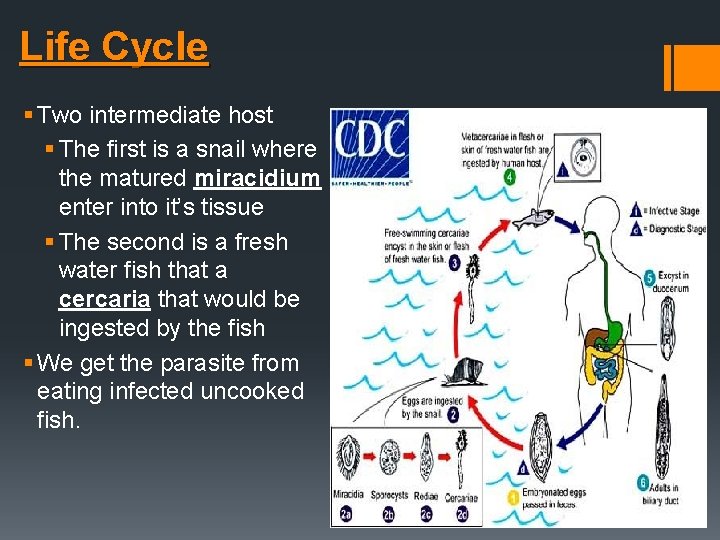
Life Cycle § Two intermediate host § The first is a snail where the matured miracidium enter into it’s tissue § The second is a fresh water fish that a cercaria that would be ingested by the fish § We get the parasite from eating infected uncooked fish.
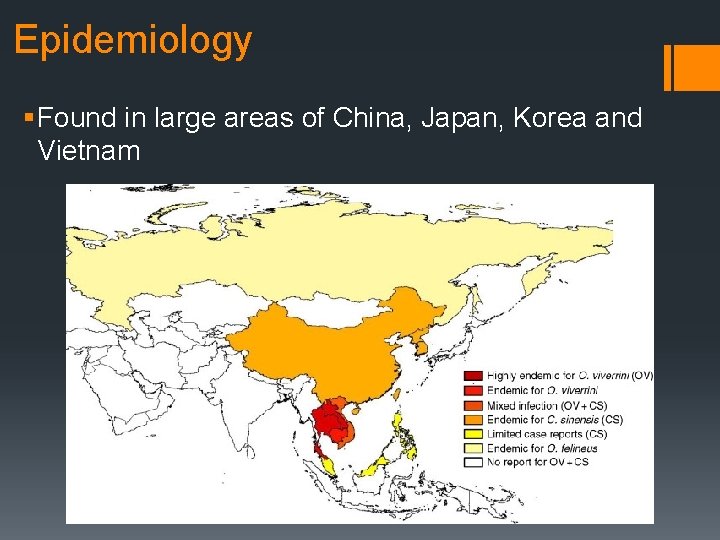
Epidemiology § Found in large areas of China, Japan, Korea and Vietnam
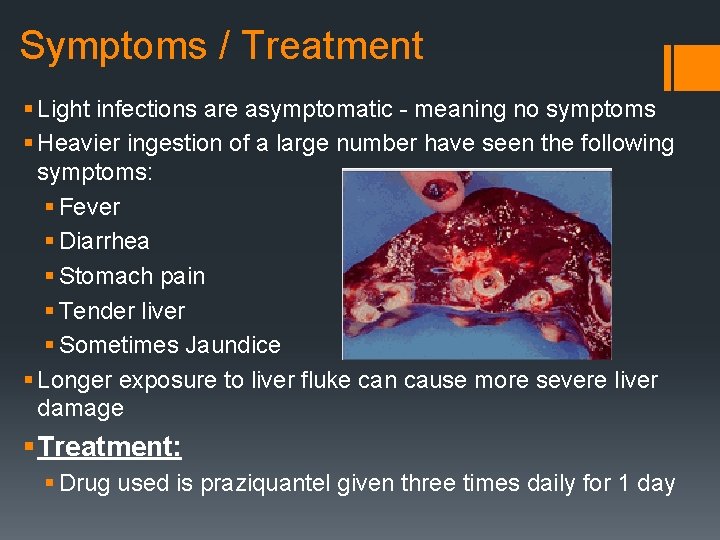
Symptoms / Treatment § Light infections are asymptomatic - meaning no symptoms § Heavier ingestion of a large number have seen the following symptoms: § Fever § Diarrhea § Stomach pain § Tender liver § Sometimes Jaundice § Longer exposure to liver fluke can cause more severe liver damage § Treatment: § Drug used is praziquantel given three times daily for 1 day
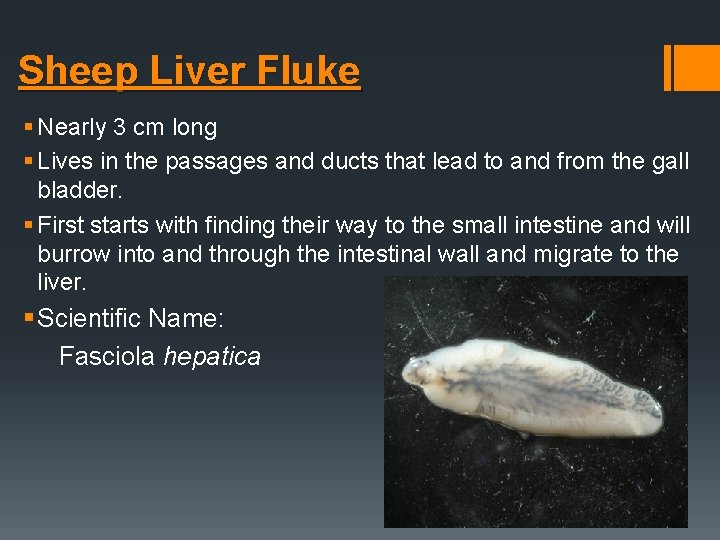
Sheep Liver Fluke § Nearly 3 cm long § Lives in the passages and ducts that lead to and from the gall bladder. § First starts with finding their way to the small intestine and will burrow into and through the intestinal wall and migrate to the liver. § Scientific Name: Fasciola hepatica
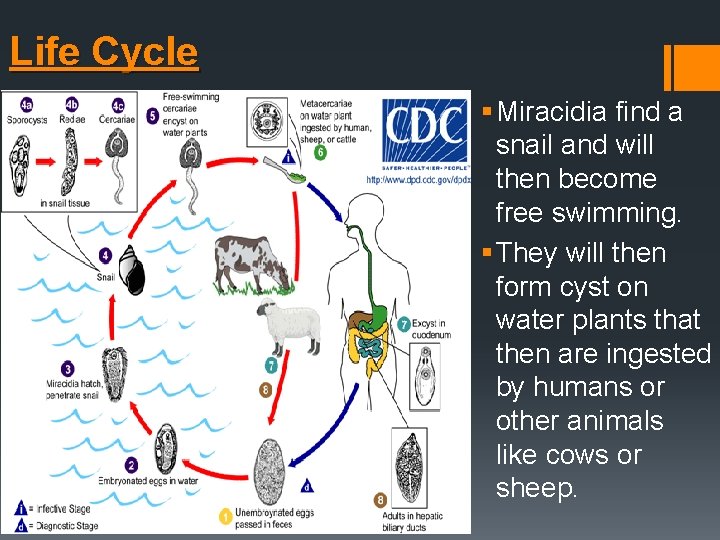
Life Cycle § Miracidia find a snail and will then become free swimming. § They will then form cyst on water plants that then are ingested by humans or other animals like cows or sheep.
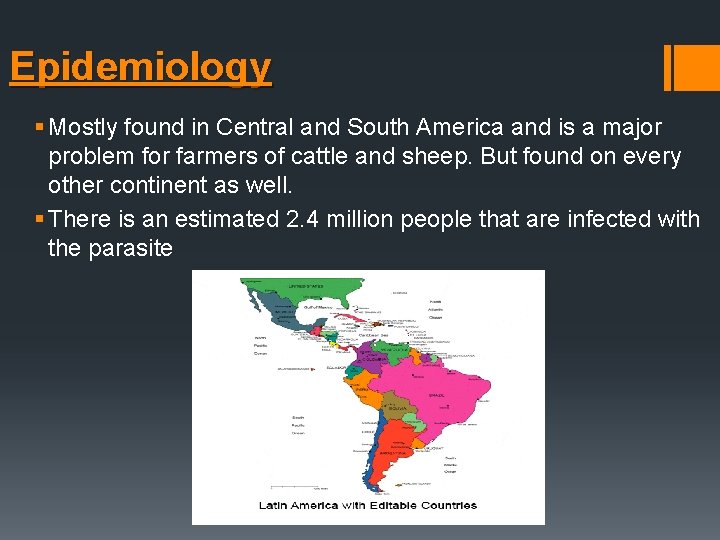
Epidemiology § Mostly found in Central and South America and is a major problem for farmers of cattle and sheep. But found on every other continent as well. § There is an estimated 2. 4 million people that are infected with the parasite
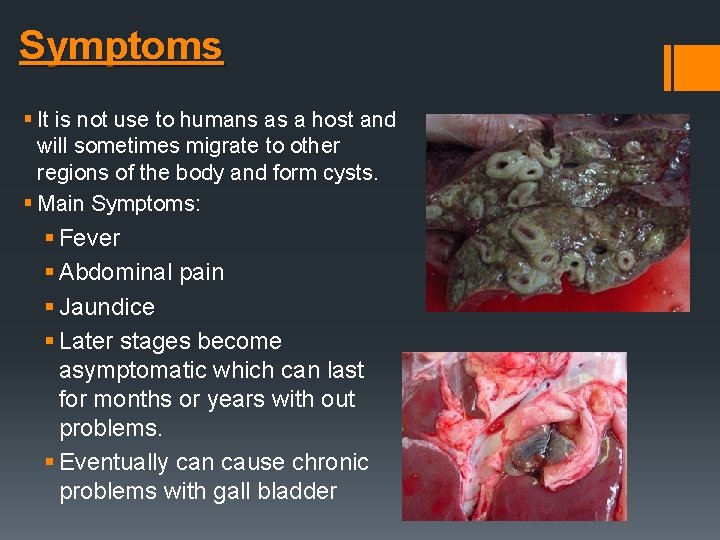
Symptoms § It is not use to humans as a host and will sometimes migrate to other regions of the body and form cysts. § Main Symptoms: § Fever § Abdominal pain § Jaundice § Later stages become asymptomatic which can last for months or years with out problems. § Eventually can cause chronic problems with gall bladder
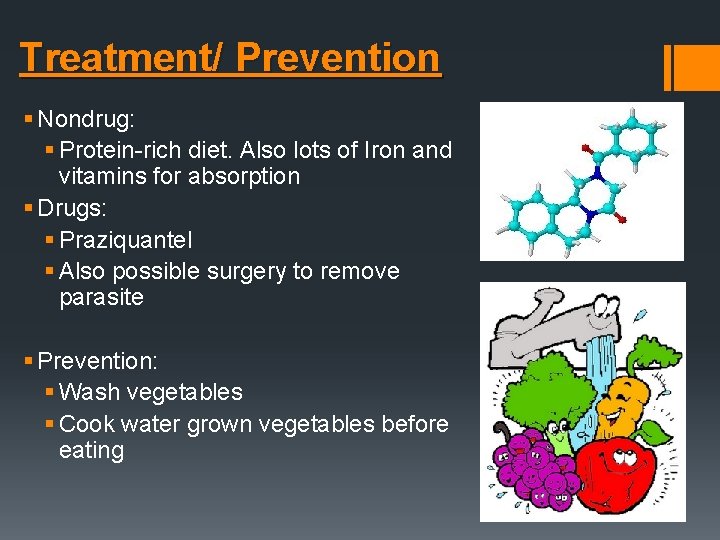
Treatment/ Prevention § Nondrug: § Protein-rich diet. Also lots of Iron and vitamins for absorption § Drugs: § Praziquantel § Also possible surgery to remove parasite § Prevention: § Wash vegetables § Cook water grown vegetables before eating