
Parasites Fungi Viruses Parasites Are eukaryotes that depend
- Slides: 28
Parasites , Fungi, Viruses
Parasites � Are eukaryotes that depend on another host for their nutrients and metabolic activities. � Divided to 1 -Protozoa: Unicellular. 2 -Helminths: Multicellular. 3 -Arthropods: Multicellular.
Protozoa � Common stages of life cycle 1 - Trophozoite: active growing stage 2 - Cyst: resting non active stage � Can infect all major tissues and organs of the body � Transmission of protozoan parasites by 1 - injection via bites of blood sucking insects 2 - ingestion of infective stages
Protozoa � Protozoa move by : � Psuedopod: (extending part of protoplasm towards direction of movement) Example: Entamoeba species � Flagella : Example: Trypanosoma species, Giardia Lamblia
Protozoa � Cilia: Example: Balantidium coli � non motile: Example : Plasmodium species
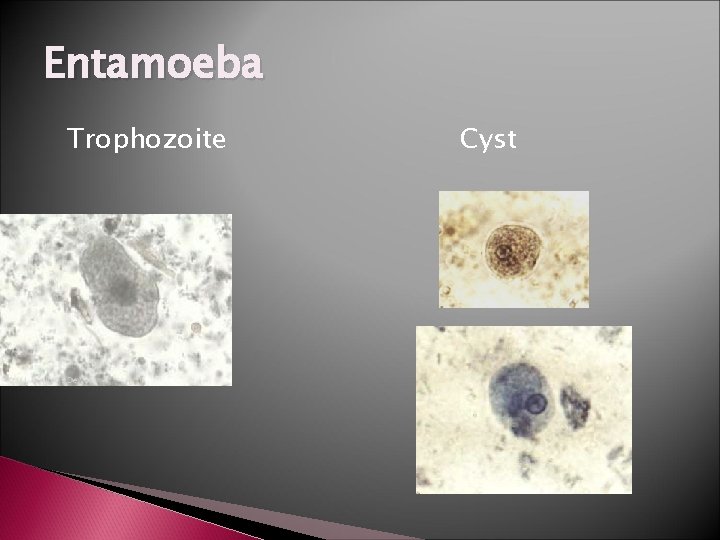
Entamoeba Trophozoite Cyst
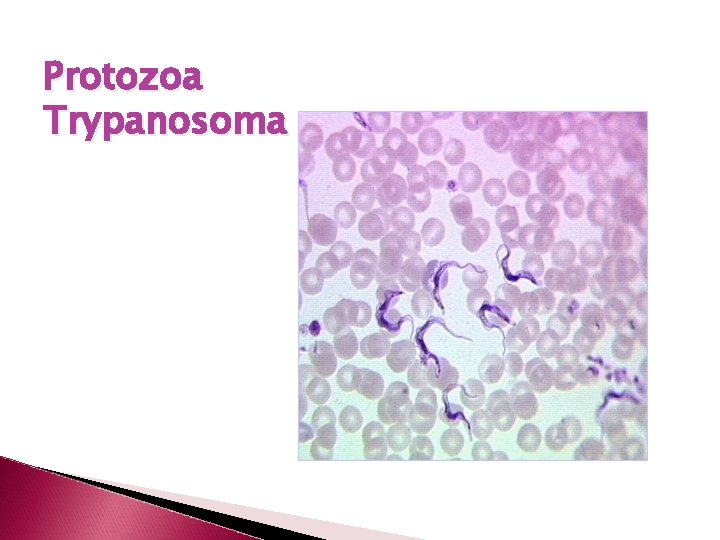
Protozoa Trypanosoma
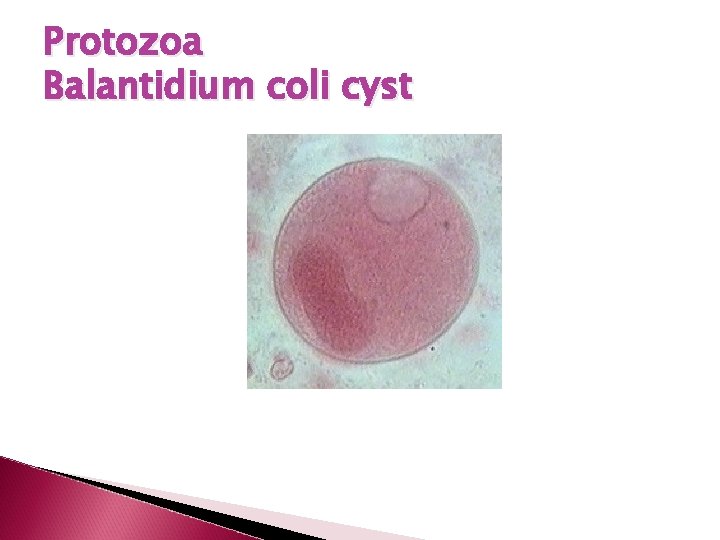
Protozoa Balantidium coli cyst
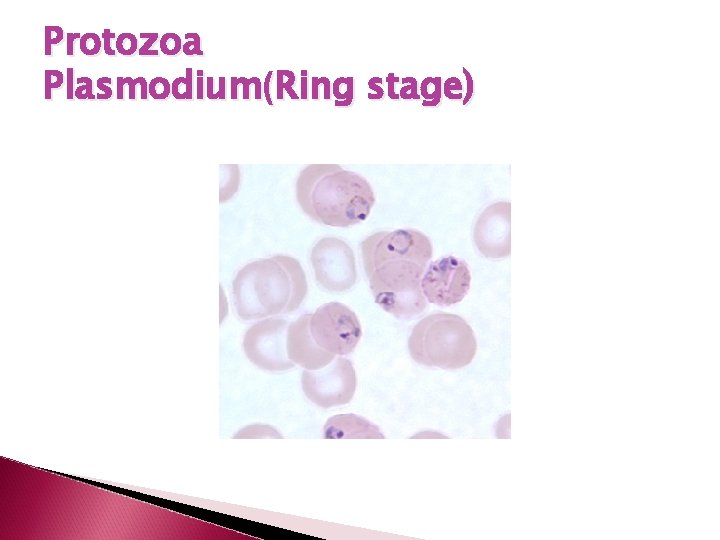
Protozoa Plasmodium(Ring stage)
Helminths(worms) � Multicellular organisms with organ systems as digestive, nervous , excretory system. � Have complicated life cycle � Mostly have different stages of life cycle which are: ova(egg), larvae (Adult) � Adult worms can measure centimeters or even meters long � Extracellular parasites
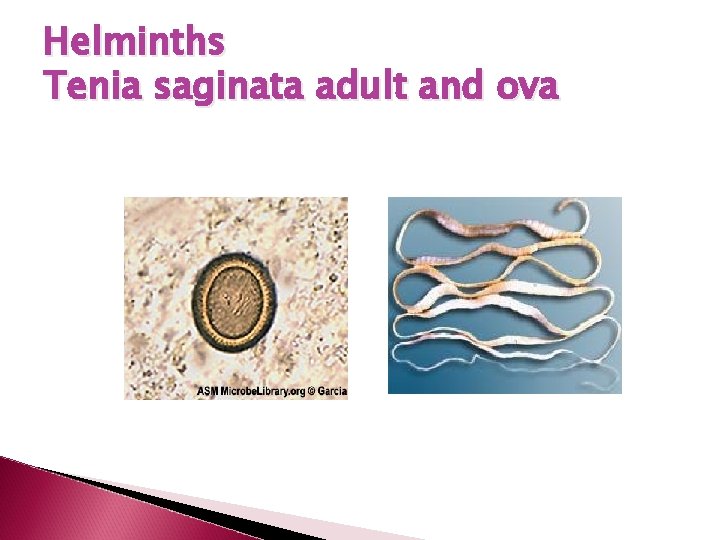
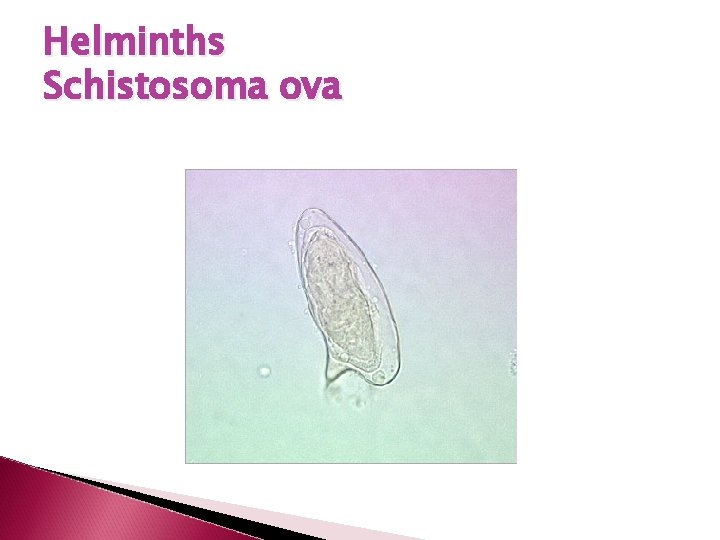
Helminths � Are classified according to shape into: 1 - Nematodes (round worms) cylindrical thin Example: Ascaris lumbricoides 2 - Cestodes ( tape worms)flat long worms Example: Tenia saginata, tenia solium 3 - Trematodes( Flukes)leaf like flat worms Example: Schistosoma species
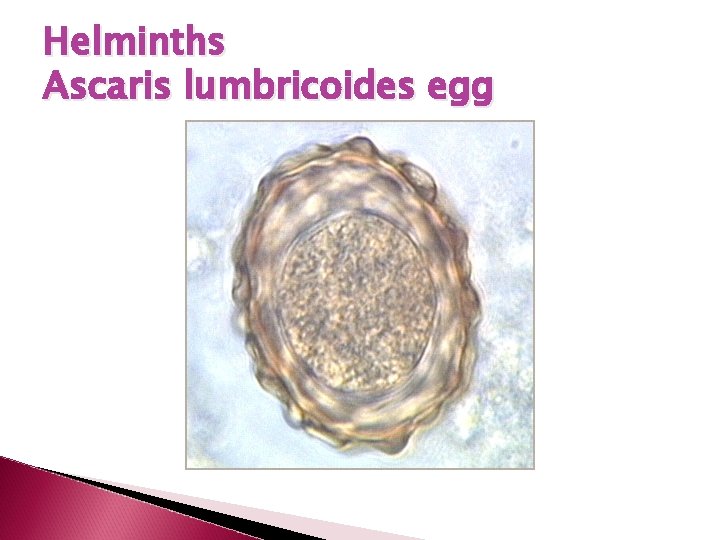
Helminths Ascaris lumbricoides egg
Helminths Tenia saginata adult and ova
Helminths Schistosoma ova
Arthropods � Are insects such as bugs , fleas, biting flies, mosquitoes etc. � Harmful effects of parasites Discomfort, transmission of diseases( malaria, yellow fever, typhus), cause disease(amoebic dysentery, bilharzias), damage to crops.
Fungi � Heterotrophic eukaryotes � Saprophytes: obtain nutrients from dead organic material � Nucleated achlorophyllous organisms � Reproduce sexually and asexually � Surrounded by true cell wall � 2 groups Yeast and mold
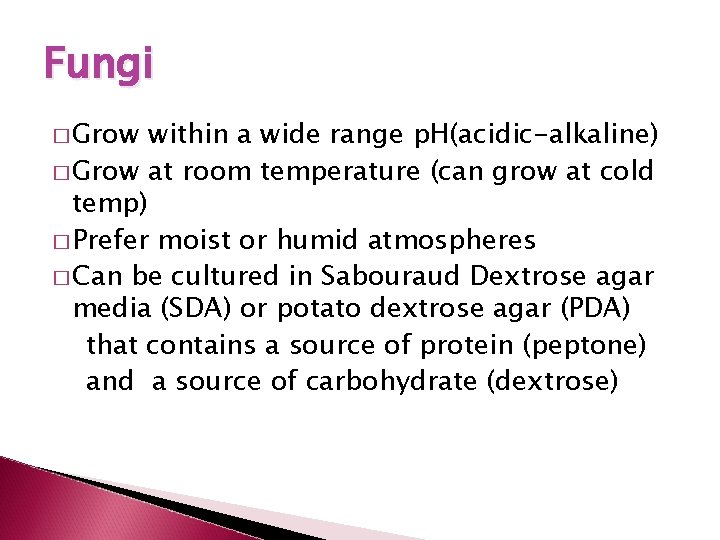
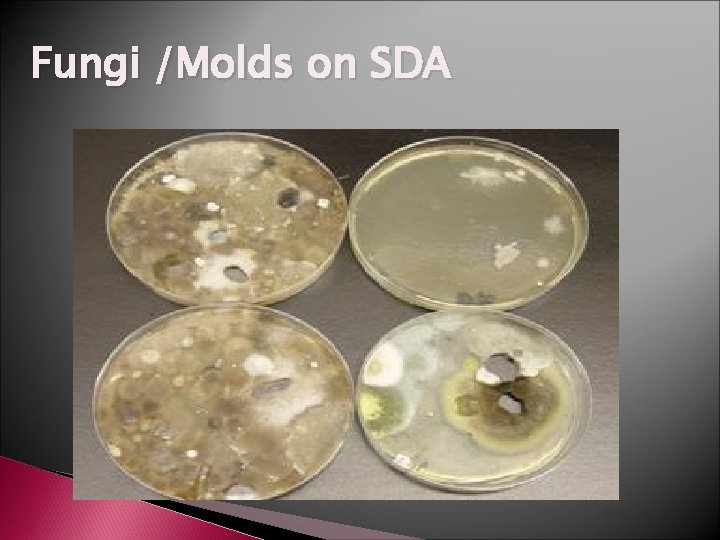
Fungi � Grow within a wide range p. H(acidic-alkaline) � Grow at room temperature (can grow at cold temp) � Prefer moist or humid atmospheres � Can be cultured in Sabouraud Dextrose agar media (SDA) or potato dextrose agar (PDA) that contains a source of protein (peptone) and a source of carbohydrate (dextrose)
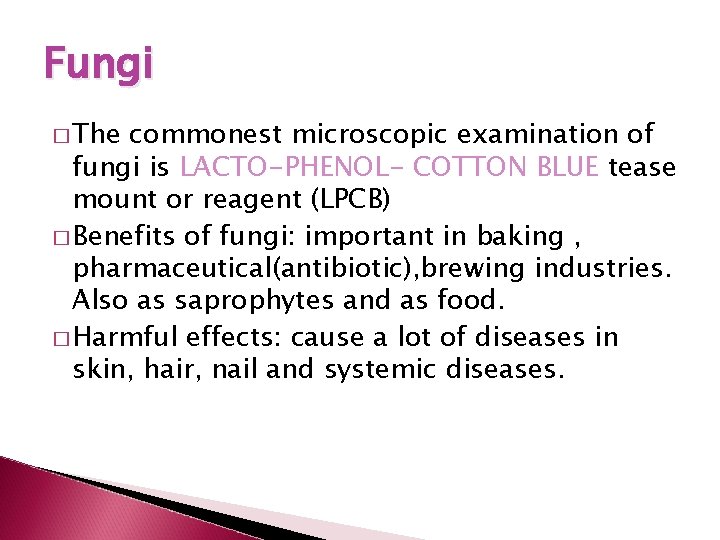
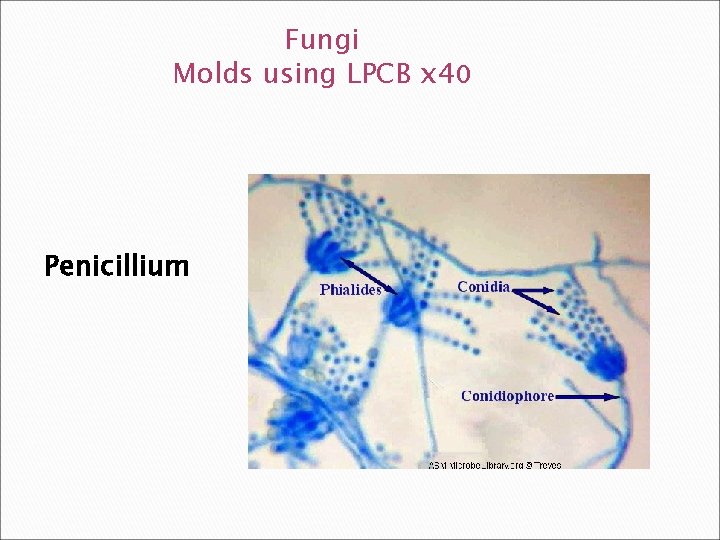
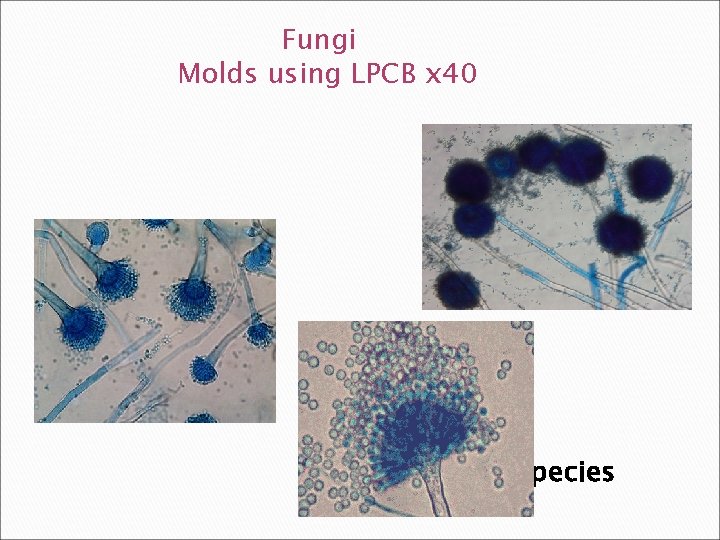
Fungi � The commonest microscopic examination of fungi is LACTO-PHENOL- COTTON BLUE tease mount or reagent (LPCB) � Benefits of fungi: important in baking , pharmaceutical(antibiotic), brewing industries. Also as saprophytes and as food. � Harmful effects: cause a lot of diseases in skin, hair, nail and systemic diseases.
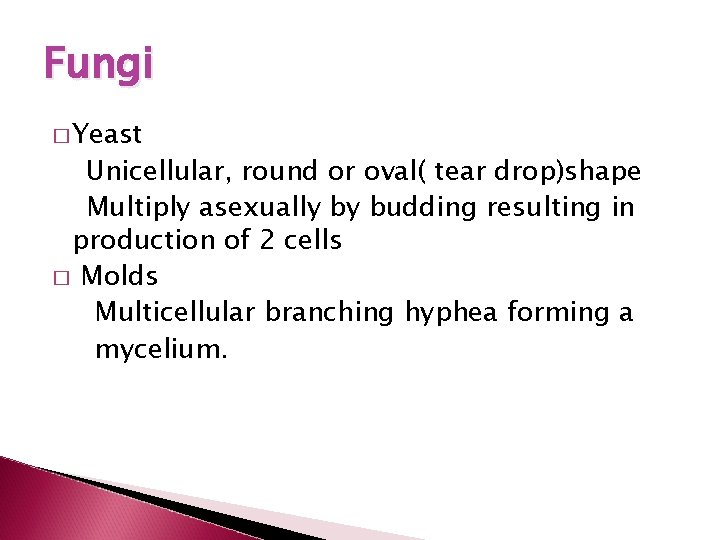
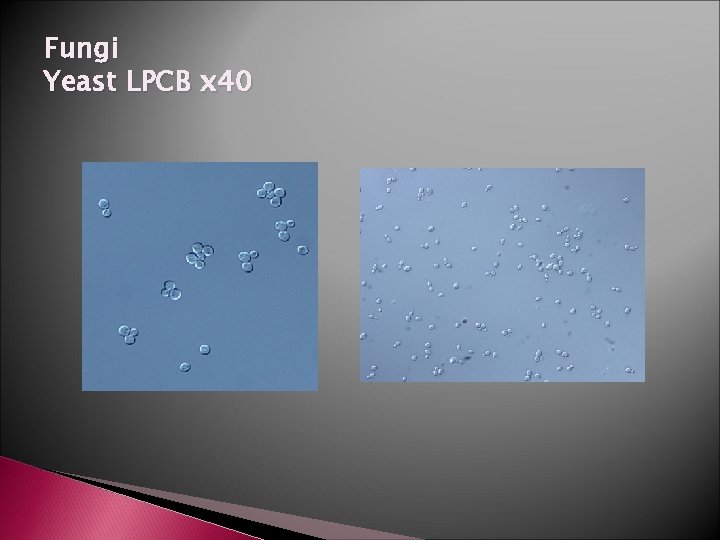
Fungi � Yeast Unicellular, round or oval( tear drop)shape Multiply asexually by budding resulting in production of 2 cells � Molds Multicellular branching hyphea forming a mycelium.
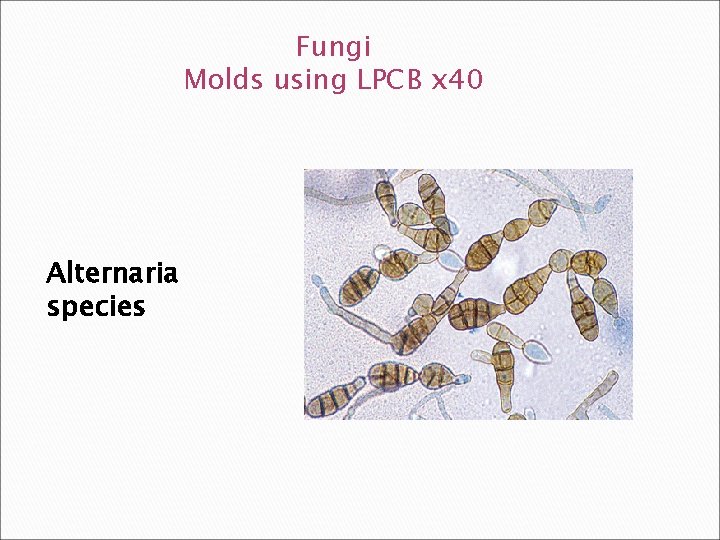
Fungi Molds using LPCB x 40 Alternaria species
Fungi Molds using LPCB x 40 Penicillium
Fungi Molds using LPCB x 40 Aspergillus species
Fungi Yeast LPCB x 40
Fungi /Molds on SDA
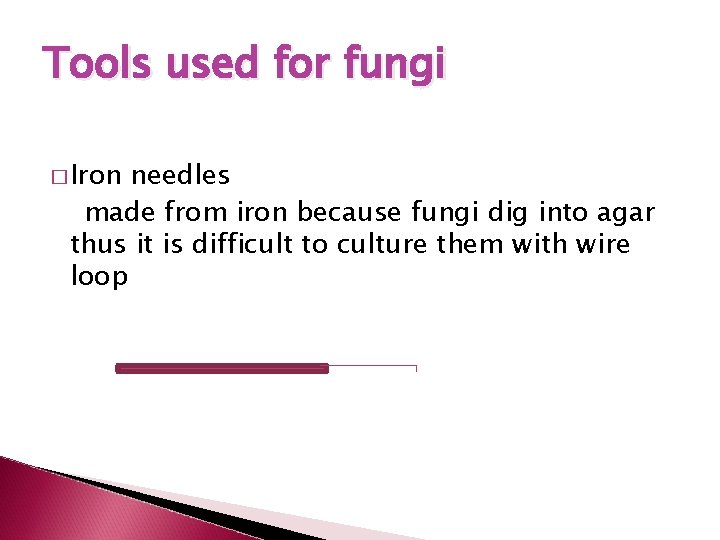
Tools used for fungi � Iron needles made from iron because fungi dig into agar thus it is difficult to culture them with wire loop
Viruses � Virus in Latin means poison � All viruses are obligate intracellular parasites( can multiply only in living cells) � Possess a single type of nucleic acid either DNA or RNA (Ss or Ds) � Nucleic material is enclosed in a protein coat called capsid. ( both capsid and nucleic acid are called nucleocapsid)
Viruses � Vary in size from 20 -300 nm � Cannot be seen by bright field microscope � Can be examined by Electron microscope � Can infect humans, animals, plants and bacteria � Viruses that infect bacteria are called bacteriophages
Viruses � Isolation of viruses : a- animal inoculation b- embrynoted egg inoculation c- cell culture � Cytopathic effects are morphological changes in cell lines due to virus infection.