
Parasites Characteristics of Parasites 18 Parasites Define and
- Slides: 7
Parasites
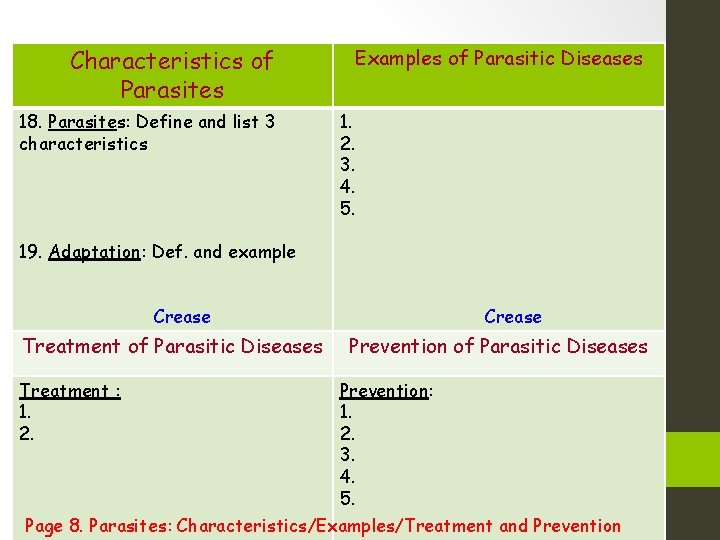
Characteristics of Parasites 18. Parasites: Define and list 3 characteristics Examples of Parasitic Diseases 1. 2. 3. 4. 5. 19. Adaptation: Def. and example Crease Treatment of Parasitic Diseases Treatment : 1. 2. Crease Prevention of Parasitic Diseases Prevention: 1. 2. 3. 4. 5. Page 8. Parasites: Characteristics/Examples/Treatment and Prevention
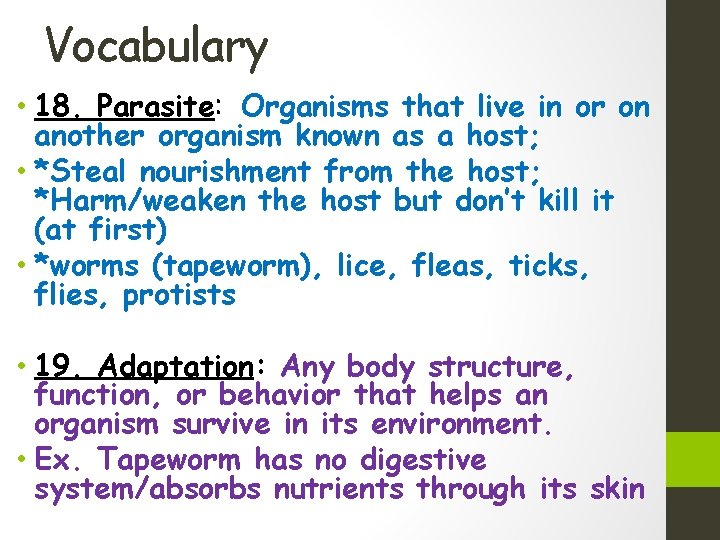
Vocabulary • 18. Parasite: Organisms that live in or on another organism known as a host; • *Steal nourishment from the host; *Harm/weaken the host but don’t kill it (at first) • *worms (tapeworm), lice, fleas, ticks, flies, protists • 19. Adaptation: Any body structure, function, or behavior that helps an organism survive in its environment. • Ex. Tapeworm has no digestive system/absorbs nutrients through its skin
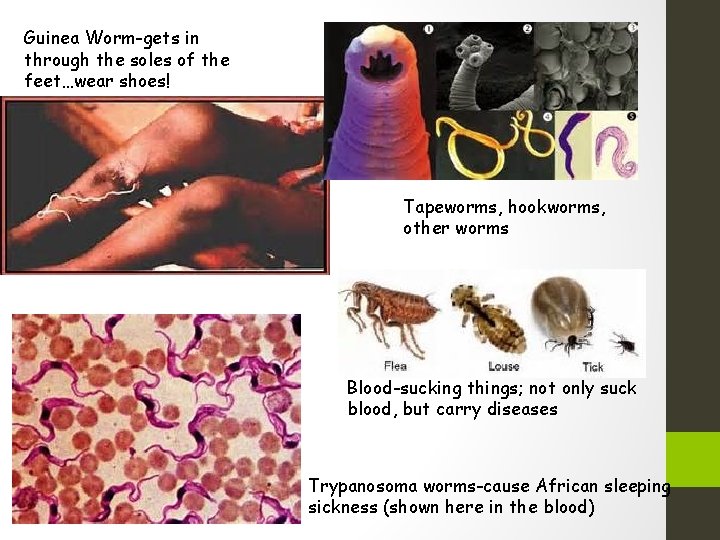
Guinea Worm-gets in through the soles of the feet…wear shoes! Tapeworms, hookworms, other worms Blood-sucking things; not only suck blood, but carry diseases Trypanosoma worms-cause African sleeping sickness (shown here in the blood)
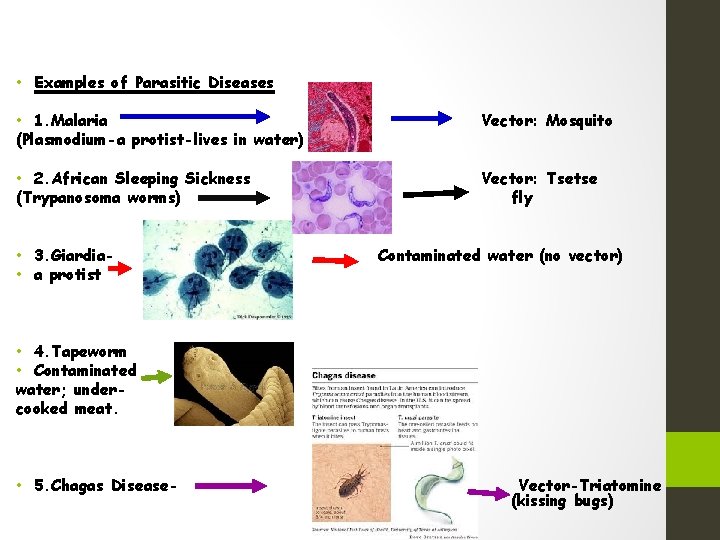
• Examples of Parasitic Diseases • 1. Malaria (Plasmodium-a protist-lives in water) Vector: Mosquito • 2. African Sleeping Sickness (Trypanosoma worms) Vector: Tsetse fly • 3. Giardia • a protist Contaminated water (no vector) • 4. Tapeworm • Contaminated water; undercooked meat. • 5. Chagas Disease- Vector-Triatomine (kissing bugs)
Malaria is a world health concern. It is caused by a parasite! • You MUST know this. It is specifically mentioned in the science standards from the state. • Malaria is a parasitic disease carried by mosquitoes (vectors). • It is NOT caused by a virus, bacteria, or fungus. • Malaria is caused by a PARASITE!!!!!!! • Any questions? ? ?
Treatment & Prevention of Parasitic Diseases • Treatment: 1. Antibiotics 2. Ultraviolet Radiation • Prevention: 1. Pasteurization 2. Cooking foods well 3. Vaccines (malaria) 4. Wearing shoes 5. Avoid non-chlorinated water 6. Wear insect repellent