
Parasite Presence Prevalence and Intensity of Eurasian Perch
- Slides: 28
Parasite Presence, Prevalence, and Intensity of Eurasian Perch at two different locations in Lake Constance By Lisa Breithut, Emily Fischbach, and Elizabeth Ostrowski
What exactly is a parasite? § A parasite is an organism that lives off a host. o It is a non-mutual relationship o Parasite benefits at the expense of the host. § Parasites usually stay in one host their entire life o Some have intermediate hosts as a means to get to their definitive host § They are generally trophically lower than their hosts, and are also almost always smaller in size.
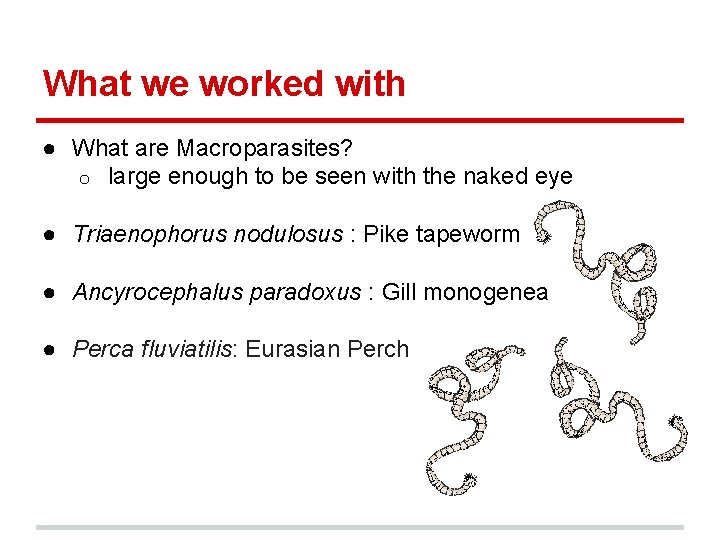
What we worked with ● What are Macroparasites? o large enough to be seen with the naked eye ● Triaenophorus nodulosus : Pike tapeworm ● Ancyrocephalus paradoxus : Gill monogenea ● Perca fluviatilis: Eurasian Perch
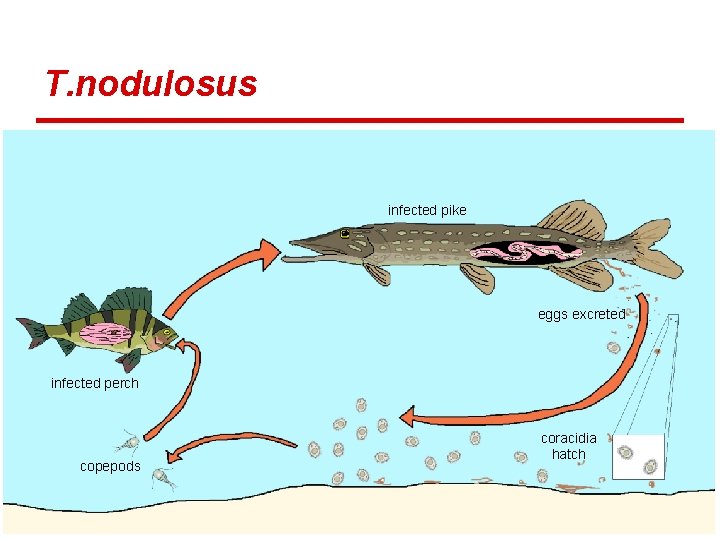
T. nodulosus infected pike eggs excreted infected perch copepods coracidia hatch
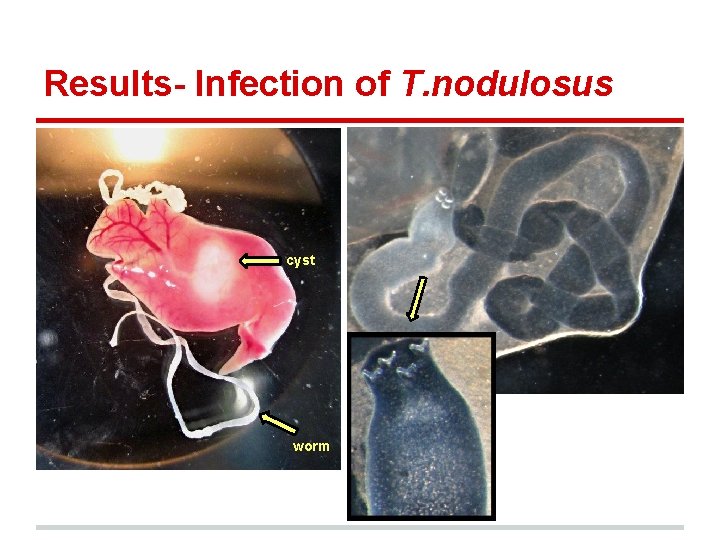
T. nodulosus Background § Plerocercoid larvae infects P. fluviatilis liver § Becomes encapsulated by host-tissue response § § Burrowing of the plerocercoid has been known to cause pathological symptoms such as inflammation, atrophy, necrosis, and more Perch with 3 or more T. nodulosus larvae showed more pathological alterations than perch with no T. nodulosus or with 1 -3 T. nodulosus larvae o Brinker and Hamers 2007
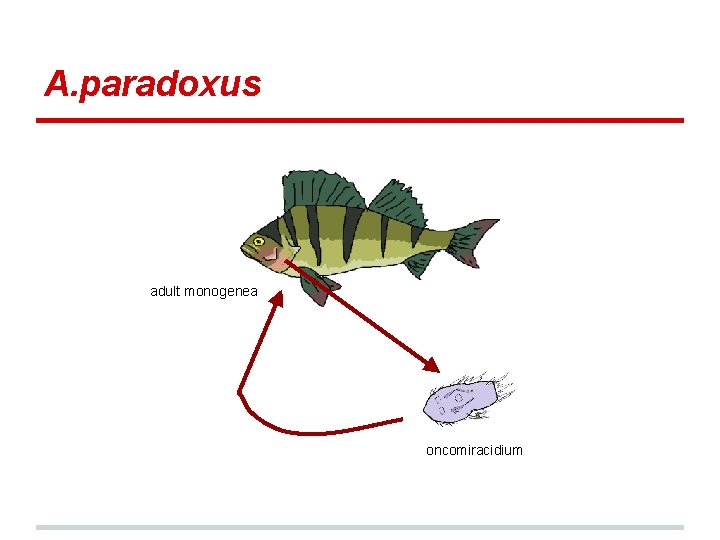
A. paradoxus adult monogenea oncomiracidium
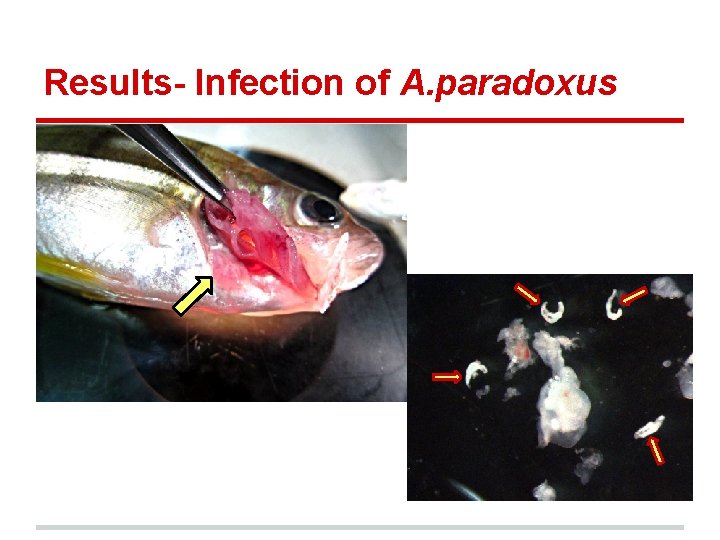
A. paradoxus Background § A. paradoxus is a monogenean § monogeneans are parasitic flatworms that are categorized as 'ectoparasites' § they have a simple lifecycle with only one host § there is not much information available on A. paradoxus
Why Examine These Parasites? § We wanted to examine young fish on both sides of the lake to see the spread of A. paradoxus, as well as prevalence and intensity § It has only been observed at a has only been observed at few sites in Lake Constance (Langenargen, Konstanzer Trichter, Egg § Is A. paradoxus present at Seefelden? § § If so, what is the prevalence and intensity of A. paradoxus on these fish? How is it different from the prevalence and intensity of fish infected with A. paradoxus at the site by the limnological institute?
Why Examine These Parasites (cot'd) § We also wanted to see whether the intensity and prevalence of T. nodulosus between the two sites differed § To look for an overall difference in parasitized fish and if it affected their condition
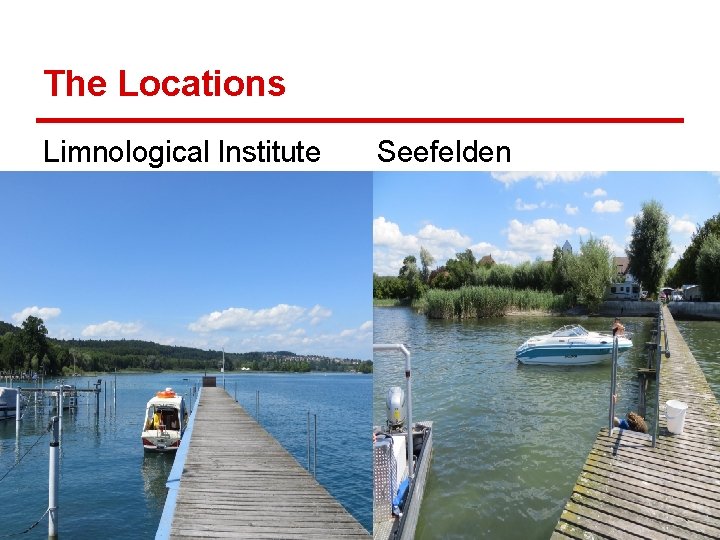
The Locations Limnological lnstitute Seefelden
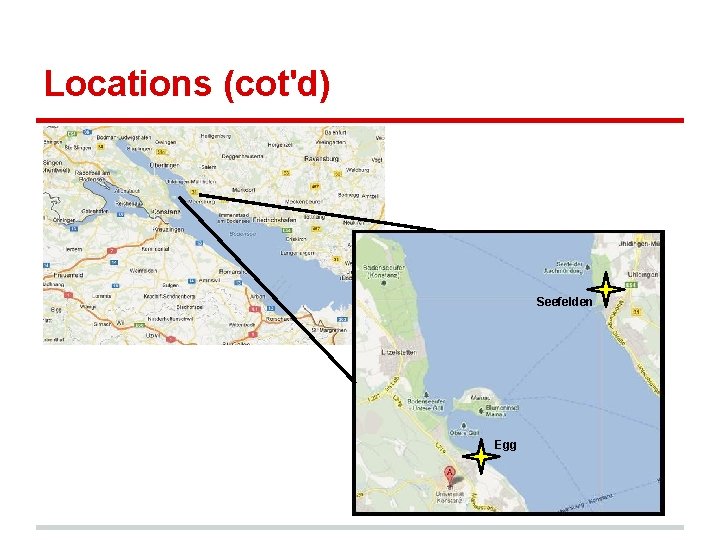
Locations (cot'd) Seefelden Egg
Our Hypothesis There will be a difference in the parasite prevalence and infection intensity and community between the 0+ perch at the Limnological Institute-Egg and Seefelden. There will a higher prevalence and intensity of A. paradoxus in older (1+) perch compared to the young (0+) perch at the Limnological Institute-Egg.
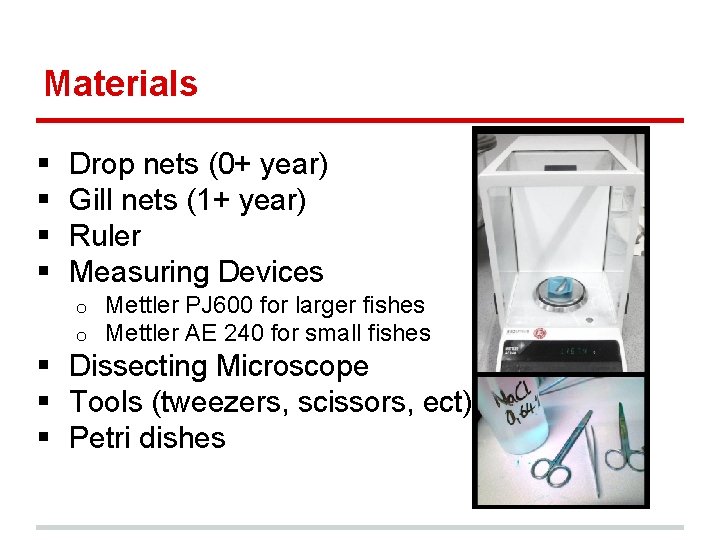
Materials § § Drop nets (0+ year) Gill nets (1+ year) Ruler Measuring Devices o o Mettler PJ 600 for larger fishes Mettler AE 240 for small fishes § Dissecting Microscope § Tools (tweezers, scissors, ect) § Petri dishes
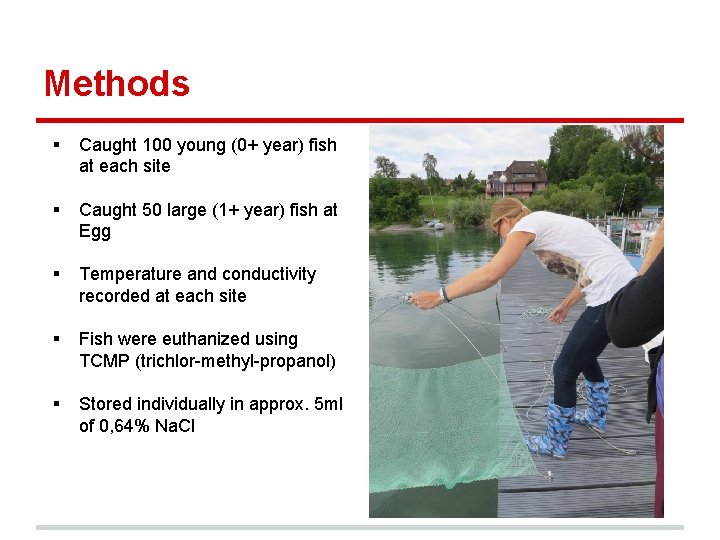
Methods § Caught 100 young (0+ year) fish at each site § Caught 50 large (1+ year) fish at Egg § Temperature and conductivity recorded at each site § Fish were euthanized using TCMP (trichlor-methyl-propanol) § Stored individually in approx. 5 ml of 0, 64% Na. Cl
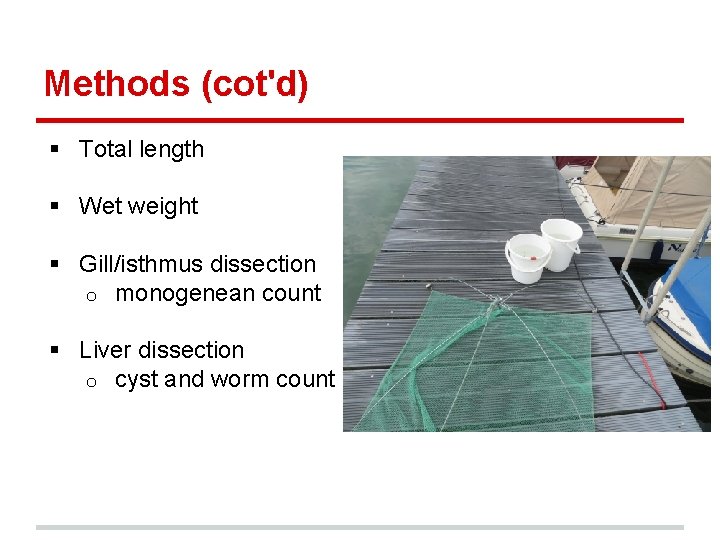
Methods (cot'd) § Total length § Wet weight § Gill/isthmus dissection o monogenean count § Liver dissection o cyst and worm count
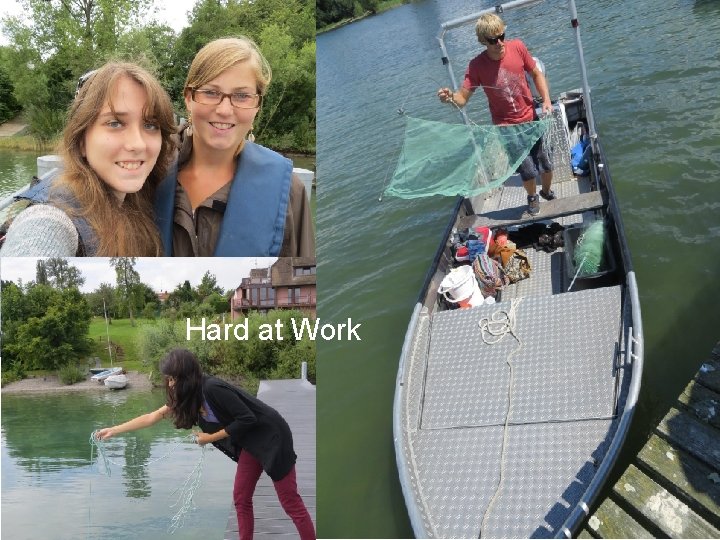
Hard at Work
Results- Infection of A. paradoxus
Results- Infection of T. nodulosus cyst worm
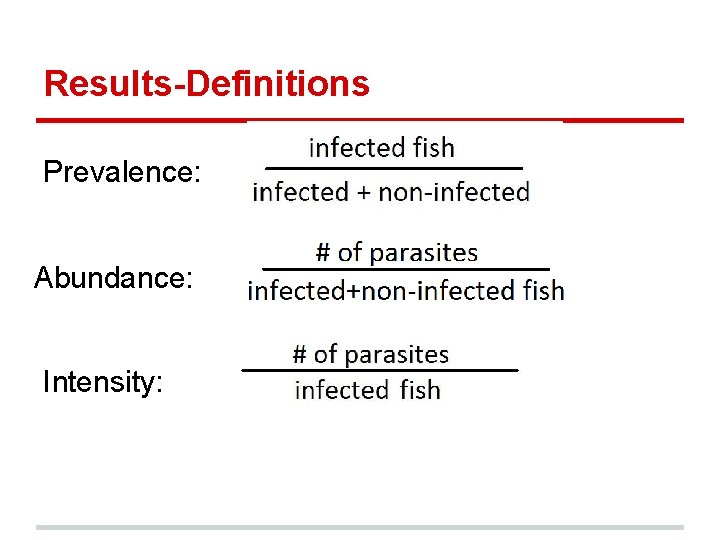
Results-Definitions Prevalence: Abundance: Intensity:
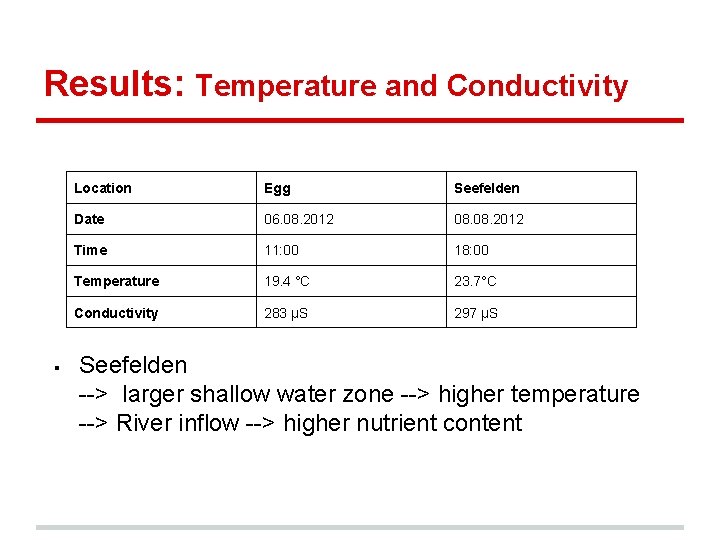
Results: Temperature and Conductivity § Location Egg Seefelden Date 06. 08. 2012 Time 11: 00 18: 00 Temperature 19. 4 °C 23. 7°C Conductivity 283 µS 297 µS Seefelden --> larger shallow water zone --> higher temperature --> River inflow --> higher nutrient content
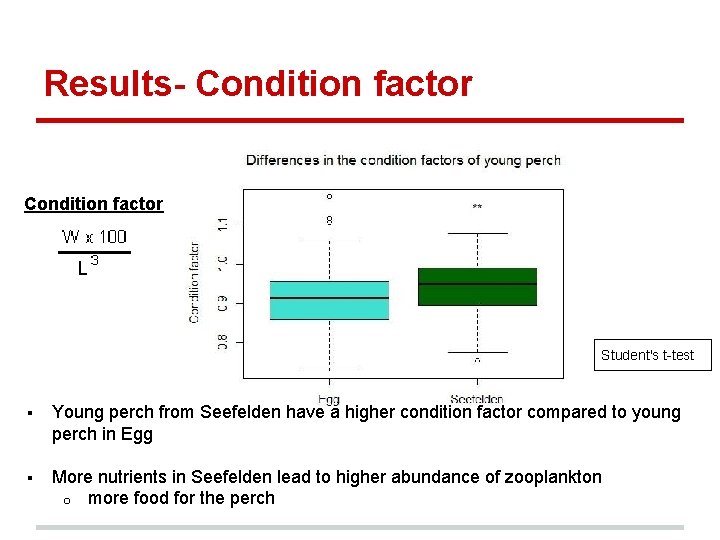
Results- Condition factor Student's t-test § Young perch from Seefelden have a higher condition factor compared to young perch in Egg § More nutrients in Seefelden lead to higher abundance of zooplankton o more food for the perch
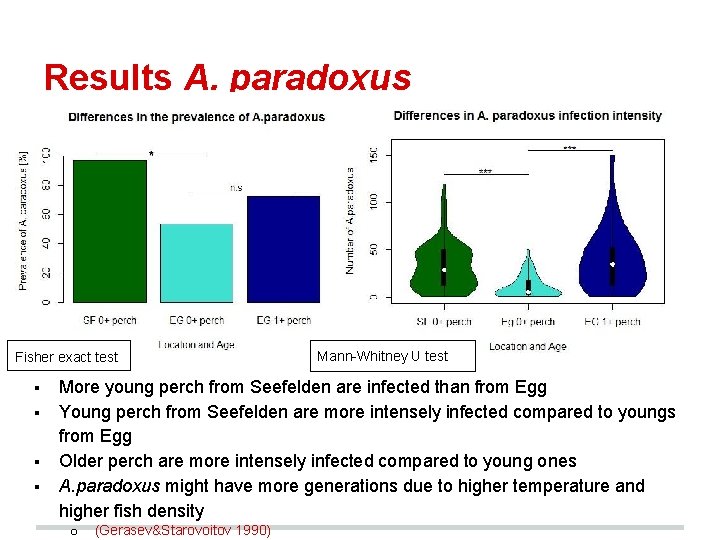
Results A. paradoxus Fisher exact test § § Mann-Whitney U test More young perch from Seefelden are infected than from Egg Young perch from Seefelden are more intensely infected compared to youngs from Egg Older perch are more intensely infected compared to young ones A. paradoxus might have more generations due to higher temperature and higher fish density o (Gerasev&Starovoitov 1990)
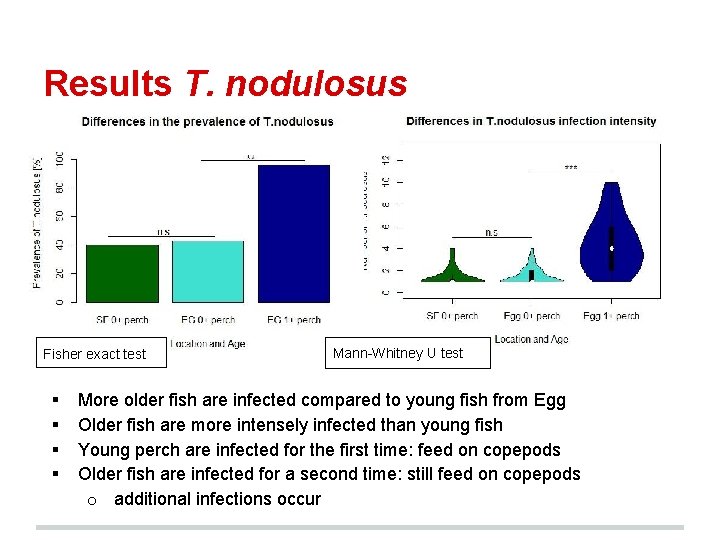
Results T. nodulosus Fisher exact test § § Mann-Whitney U test More older fish are infected compared to young fish from Egg Older fish are more intensely infected than young fish Young perch are infected for the first time: feed on copepods Older fish are infected for a second time: still feed on copepods o additional infections occur
Conclusions Condition Factor i. Young perch from Seefelden have higher condition factors compared to Egg A. paradoxus i. More young perch from Seefelden are infected ii. Young perch from Seefelden are more intensely infected compared to youngs from Egg iii. Older perch are more intensely infected compared to young ones T. nodulosus i. More older perch from Egg are infected than young perch ii. Older perch are more intensely infected compared to young iii. Young perch are not differently infected between the two sites
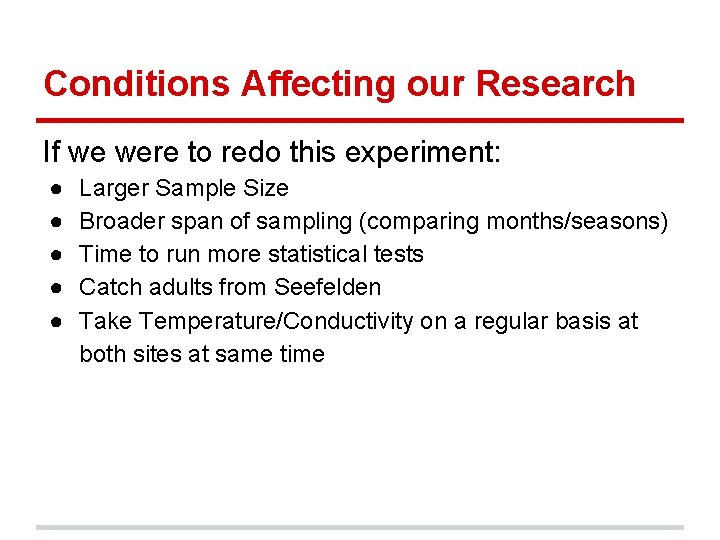
Conditions Affecting our Research If we were to redo this experiment: ● ● ● Larger Sample Size Broader span of sampling (comparing months/seasons) Time to run more statistical tests Catch adults from Seefelden Take Temperature/Conductivity on a regular basis at both sites at same time
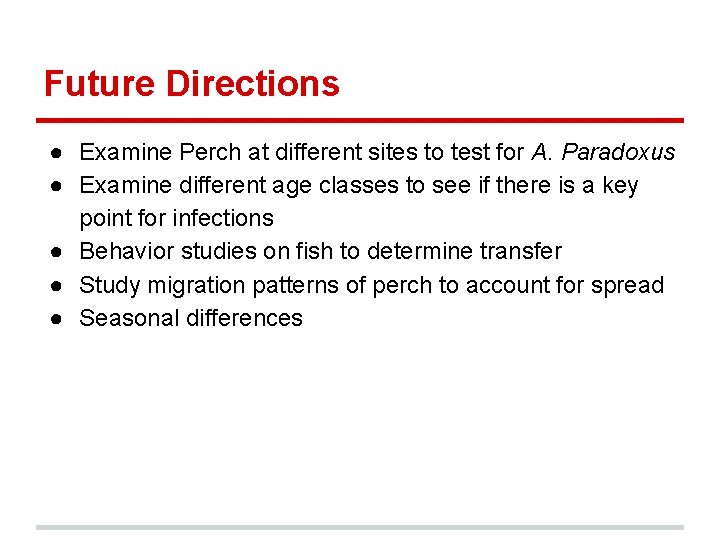
Future Directions ● Examine Perch at different sites to test for A. Paradoxus ● Examine different age classes to see if there is a key point for infections ● Behavior studies on fish to determine transfer ● Study migration patterns of perch to account for spread ● Seasonal differences
THANKS FOR YOUR ATTENTION Danke!
References Brinkers, A. , Hamers R. 2007. Evidence for negative impact of plerocercoid infection of Triaenophorous nodulosus on Perca fluviatilis L. stock in Upper Lake Constance, a water body undergoing rapid reoligotrophication. Journal of Fish Biology (71) 129 -147. Gerasev, P. I. , Starovoitov, V. K. . 1991. The number of generations in freshwater monogeneans per year. Journal of Fish Biology (38) 159 -163