
Paraphrasing Tutorial 8 J Language Arts 2017 2018
- Slides: 10
Paraphrasing Tutorial 8 J Language Arts 2017 -2018
Paraphrasing is. . . your own rendition of essential information and ideas expressed by someone else, presented in a new form. one legitimate way (when accompanied by accurate documentation) to borrow from a source. a more detailed restatement than a summary, which focuses concisely on a single main idea.
Paraphrasing is a valuable skill because. . . it is better than quoting information from an undistinguished passage. it helps you control the temptation to quote too much. the mental process required for successful paraphrasing helps you to grasp the full meaning of the original.
6 Steps to Effective Paraphrasing 1. Reread the original passage until you understand its full meaning. 2. Set the original aside, and write your paraphrase on a note card (or in a word document). 3. Jot down a few words with your paraphrase to help you find the source later. This can be the title of the source and where in the source the information came from. You will need this information to cite your source.
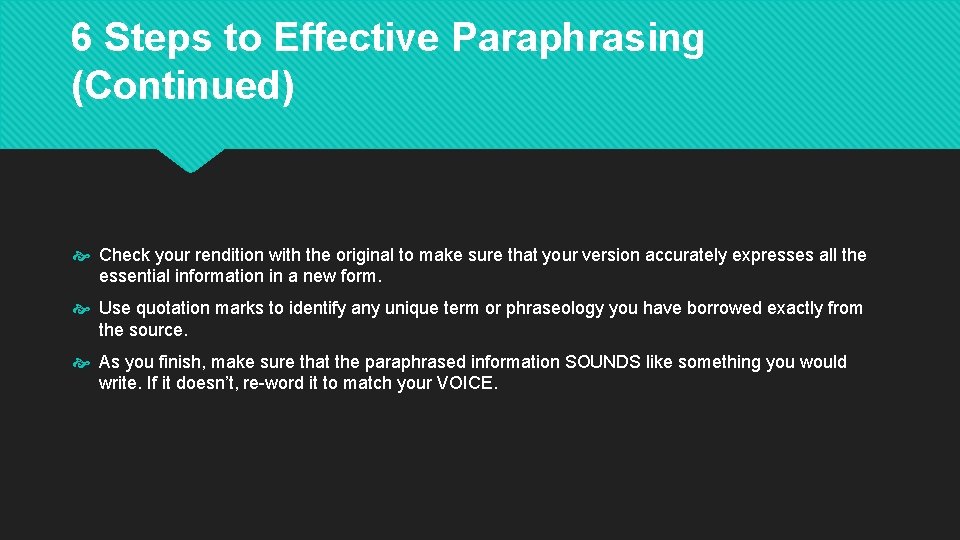
6 Steps to Effective Paraphrasing (Continued) Check your rendition with the original to make sure that your version accurately expresses all the essential information in a new form. Use quotation marks to identify any unique term or phraseology you have borrowed exactly from the source. As you finish, make sure that the paraphrased information SOUNDS like something you would write. If it doesn’t, re-word it to match your VOICE.
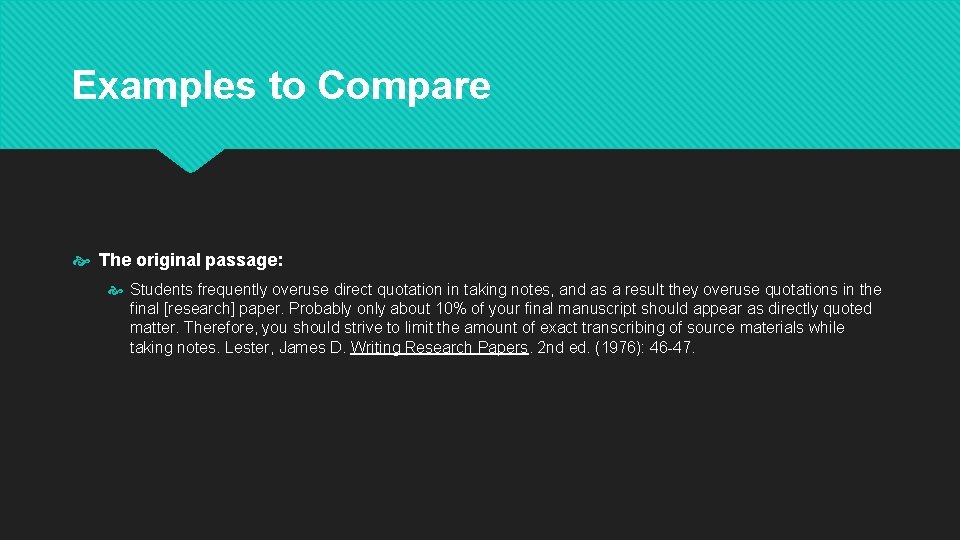
Examples to Compare The original passage: Students frequently overuse direct quotation in taking notes, and as a result they overuse quotations in the final [research] paper. Probably only about 10% of your final manuscript should appear as directly quoted matter. Therefore, you should strive to limit the amount of exact transcribing of source materials while taking notes. Lester, James D. Writing Research Papers. 2 nd ed. (1976): 46 -47.
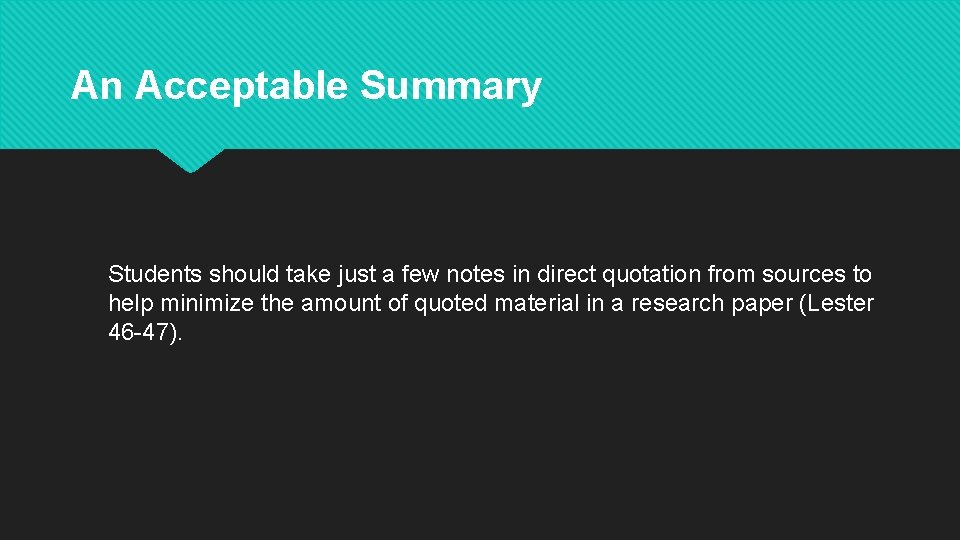
An Acceptable Summary Students should take just a few notes in direct quotation from sources to help minimize the amount of quoted material in a research paper (Lester 46 -47).
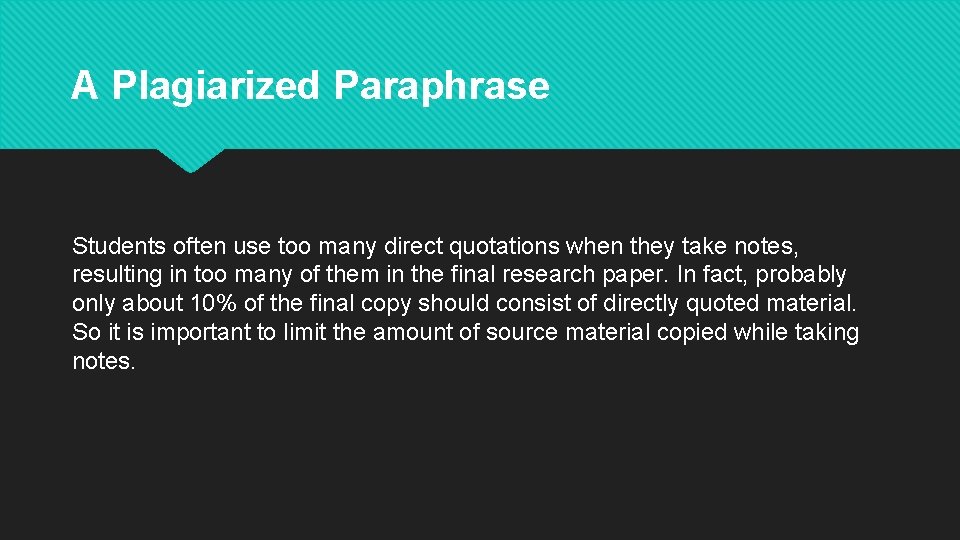
A Plagiarized Paraphrase Students often use too many direct quotations when they take notes, resulting in too many of them in the final research paper. In fact, probably only about 10% of the final copy should consist of directly quoted material. So it is important to limit the amount of source material copied while taking notes.
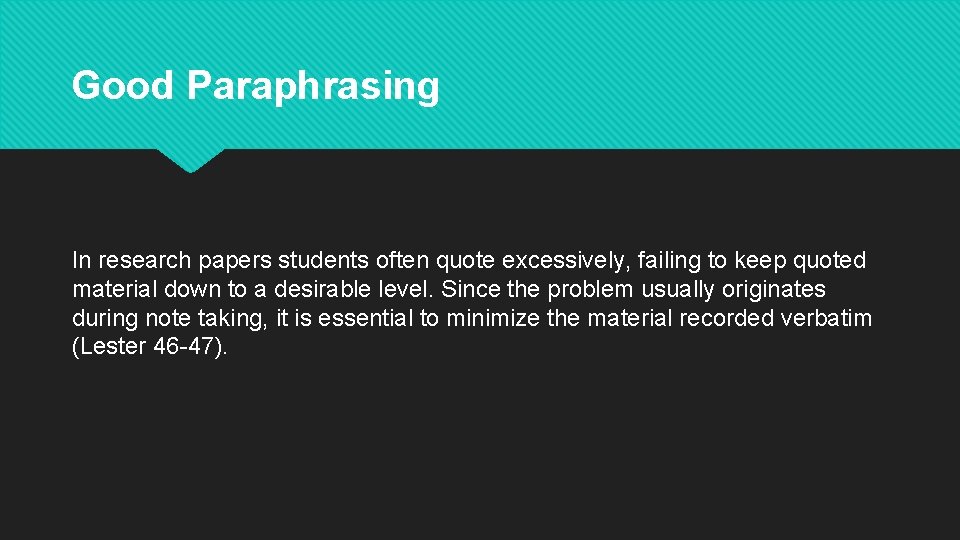
Good Paraphrasing In research papers students often quote excessively, failing to keep quoted material down to a desirable level. Since the problem usually originates during note taking, it is essential to minimize the material recorded verbatim (Lester 46 -47).
Your Turn! Complete the Practice Worksheet Read the information provided in each paragraph, then take information critical to the central idea of the writing and paraphrase it on the lines below. Make sure that you are not writing a summary of each piece.