
Parametric Designs Remember subtraction logic Classic Example T
Parametric Designs
Remember subtraction logic?
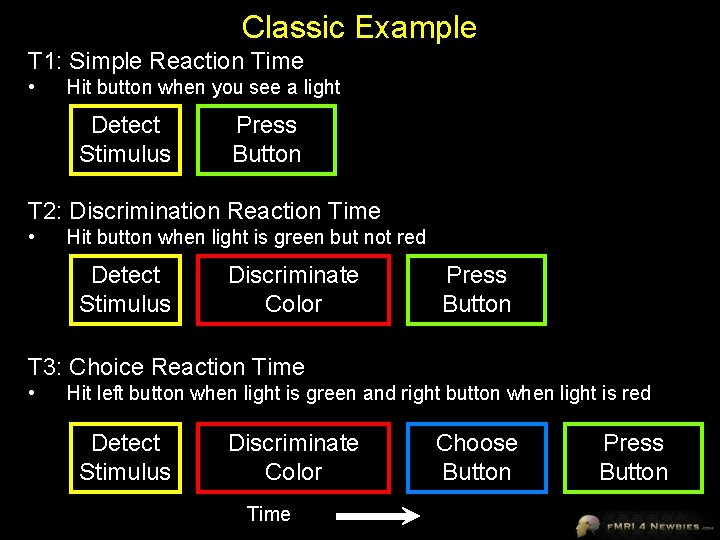
Classic Example T 1: Simple Reaction Time • Hit button when you see a light Detect Stimulus Press Button T 2: Discrimination Reaction Time • Hit button when light is green but not red Detect Stimulus Discriminate Color Press Button T 3: Choice Reaction Time • Hit left button when light is green and right button when light is red Detect Stimulus Discriminate Color Time Choose Button Press Button
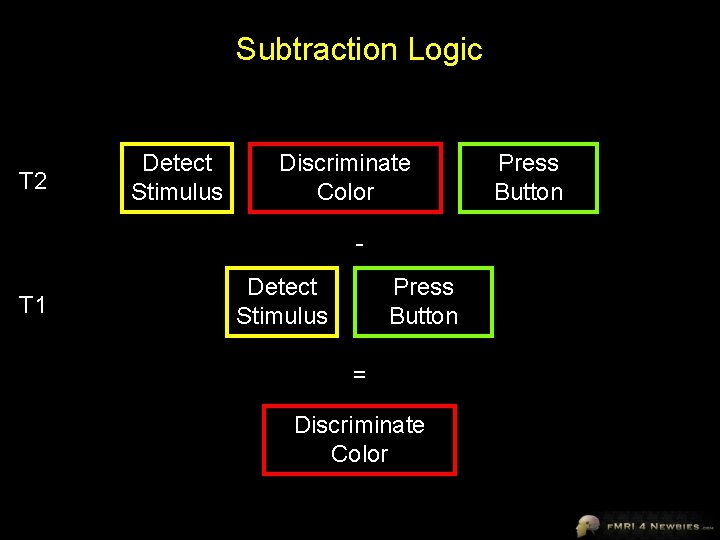
Subtraction Logic T 2 Detect Stimulus Discriminate Color - T 1 Detect Stimulus Press Button = Discriminate Color Press Button
Limitations of Subtraction Logic Assumption of pure insertion • You can insert a component process into a task without disrupting the other components • Widely criticized
Why are parametric designs useful in f. MRI? • As we’ve seen, the assumption of pure insertion in subtraction logic is often false • (A + B) - (B) = A • In parametric designs, the task stays the same while the amount of processing varies; thus, changes to the nature of the task are less of a problem • (A + A) - (A) = A • (A + A) - (A + A) = A
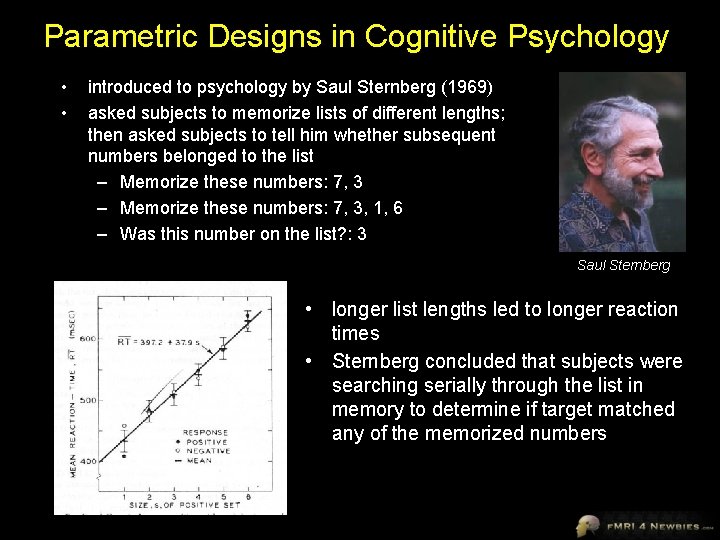
Parametric Designs in Cognitive Psychology • • introduced to psychology by Saul Sternberg (1969) asked subjects to memorize lists of different lengths; then asked subjects to tell him whether subsequent numbers belonged to the list – Memorize these numbers: 7, 3, 1, 6 – Was this number on the list? : 3 Saul Sternberg • longer list lengths led to longer reaction times • Sternberg concluded that subjects were searching serially through the list in memory to determine if target matched any of the memorized numbers
Parametric Designs in f. MRI • change the intensity of a process without changing the task
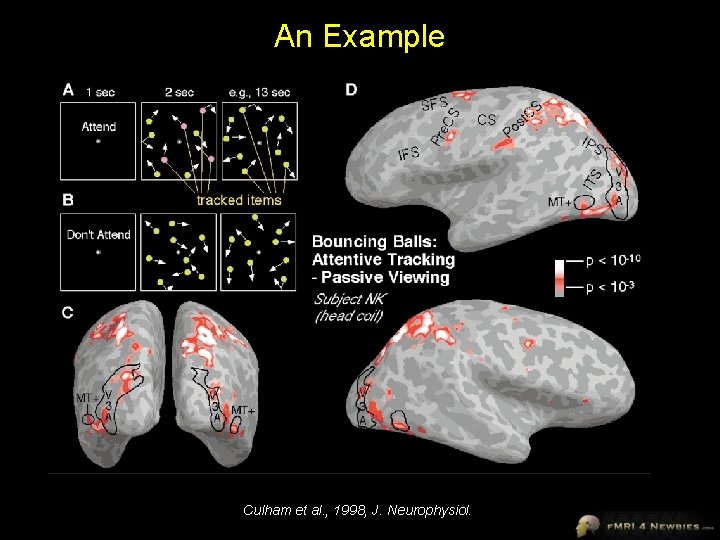
An Example Culham et al. , 1998, J. Neurophysiol.
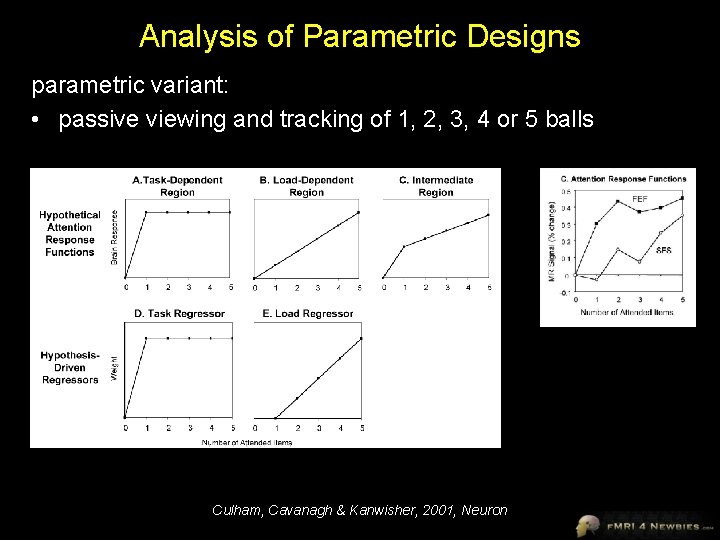
Analysis of Parametric Designs parametric variant: • passive viewing and tracking of 1, 2, 3, 4 or 5 balls Culham, Cavanagh & Kanwisher, 2001, Neuron
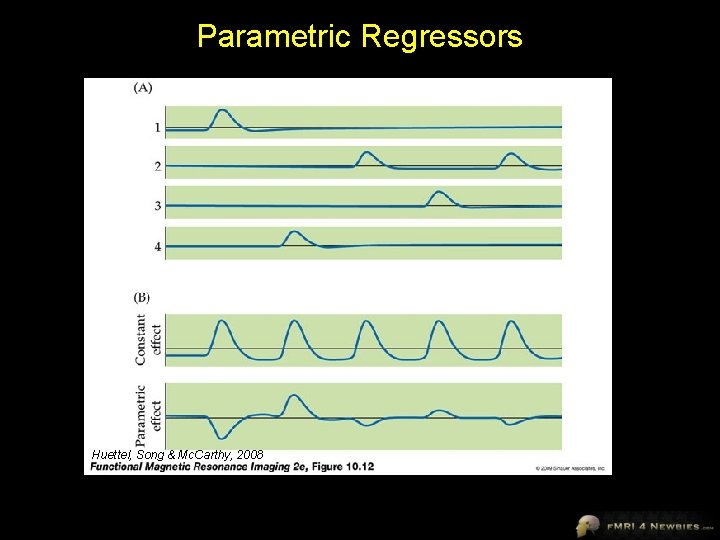
Parametric Regressors Huettel, Song & Mc. Carthy, 2008
- Slides: 11