
Parameterizing Collective Risk Models CAS Spring Meeting 2015

- Slides: 31
Parameterizing Collective Risk Models CAS Spring Meeting 2015 R 2 Richard Rosengarten May 18, 2015
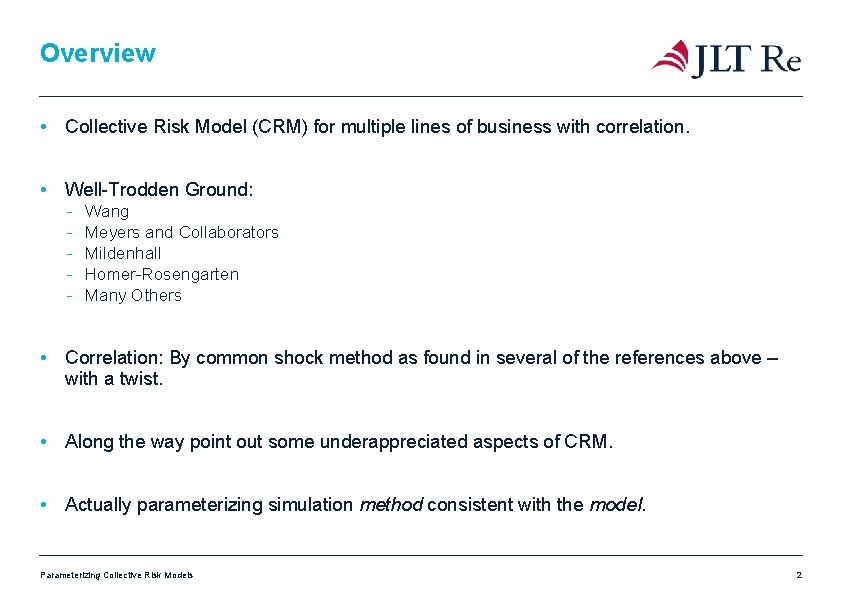
Overview • Collective Risk Model (CRM) for multiple lines of business with correlation. • Well-Trodden Ground: - Wang Meyers and Collaborators Mildenhall Homer-Rosengarten Many Others • Correlation: By common shock method as found in several of the references above – with a twist. • Along the way point out some underappreciated aspects of CRM. • Actually parameterizing simulation method consistent with the model. Parameterizing Collective Risk Models 2
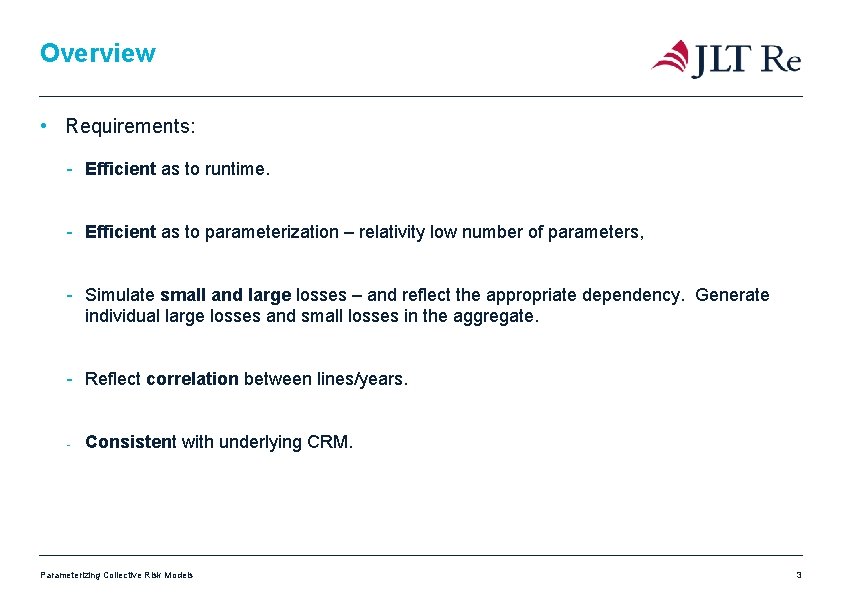
Overview • Requirements: - Efficient as to runtime. - Efficient as to parameterization – relativity low number of parameters, - Simulate small and large losses – and reflect the appropriate dependency. Generate individual large losses and small losses in the aggregate. - Reflect correlation between lines/years. - Consistent with underlying CRM. Parameterizing Collective Risk Models 3
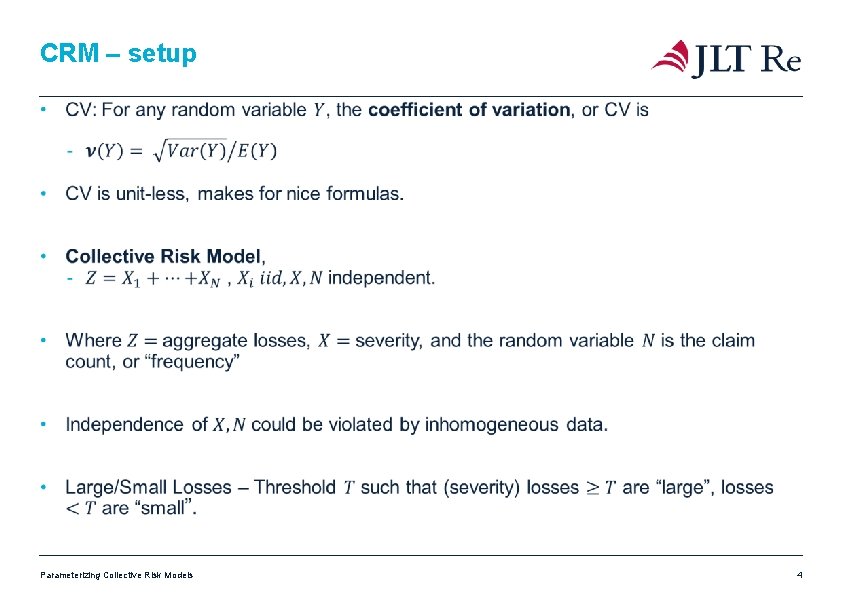
CRM – setup Parameterizing Collective Risk Models 4
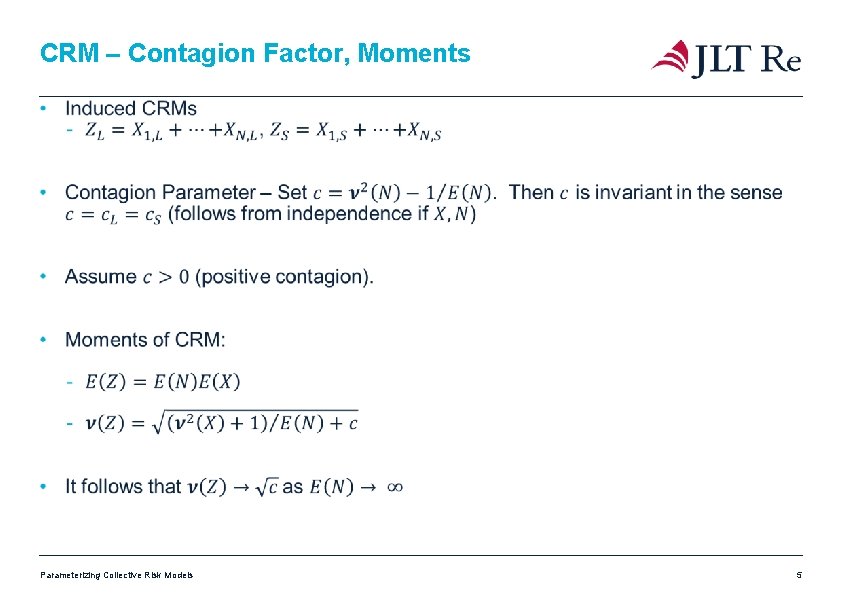
CRM – Contagion Factor, Moments Parameterizing Collective Risk Models 5
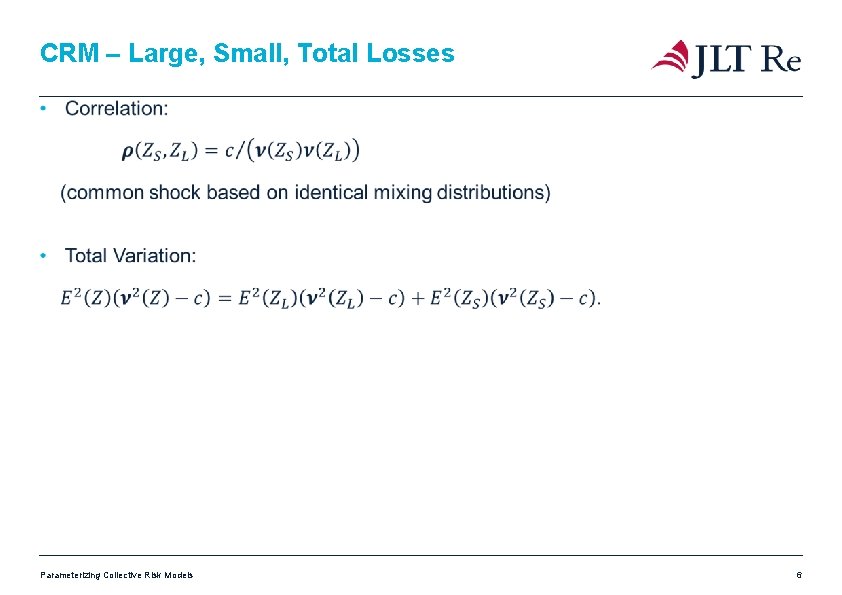
CRM – Large, Small, Total Losses Parameterizing Collective Risk Models 6
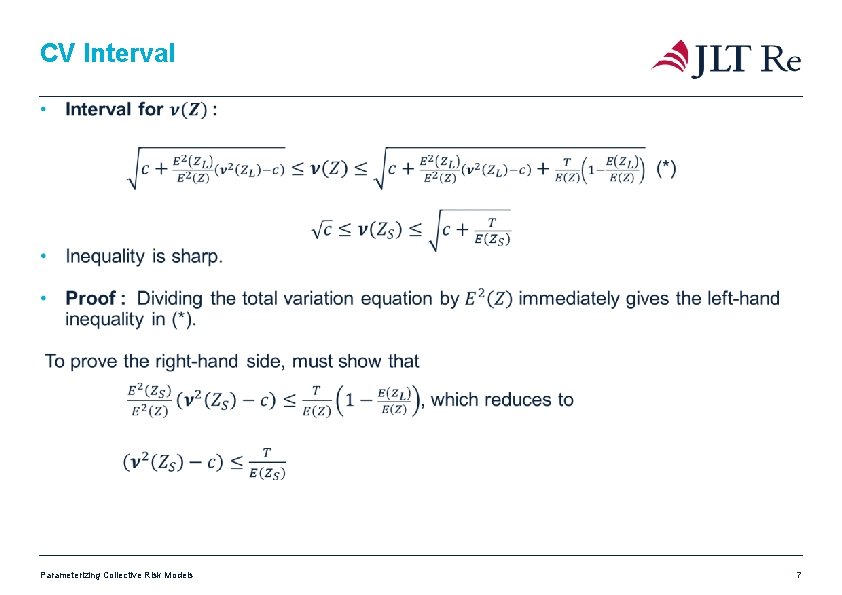
CV Interval Parameterizing Collective Risk Models 7
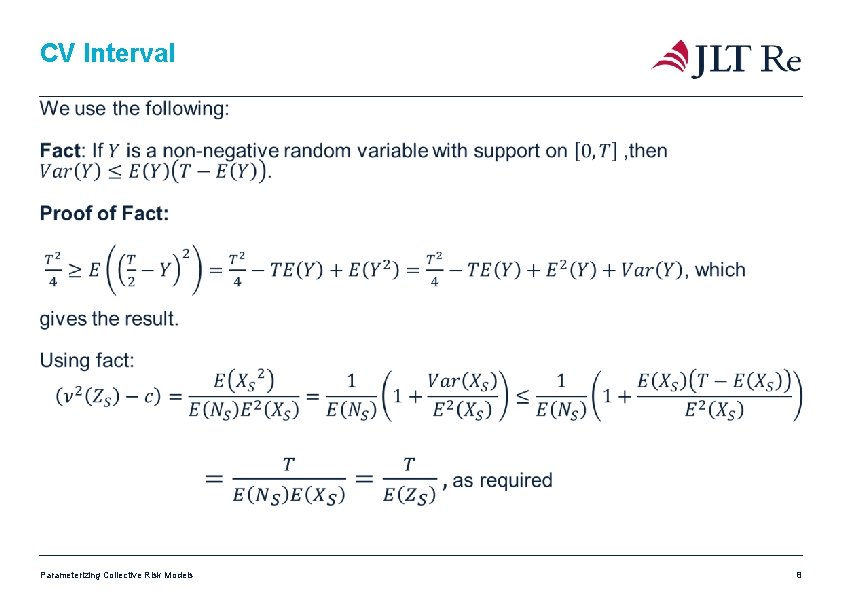
CV Interval Parameterizing Collective Risk Models 8
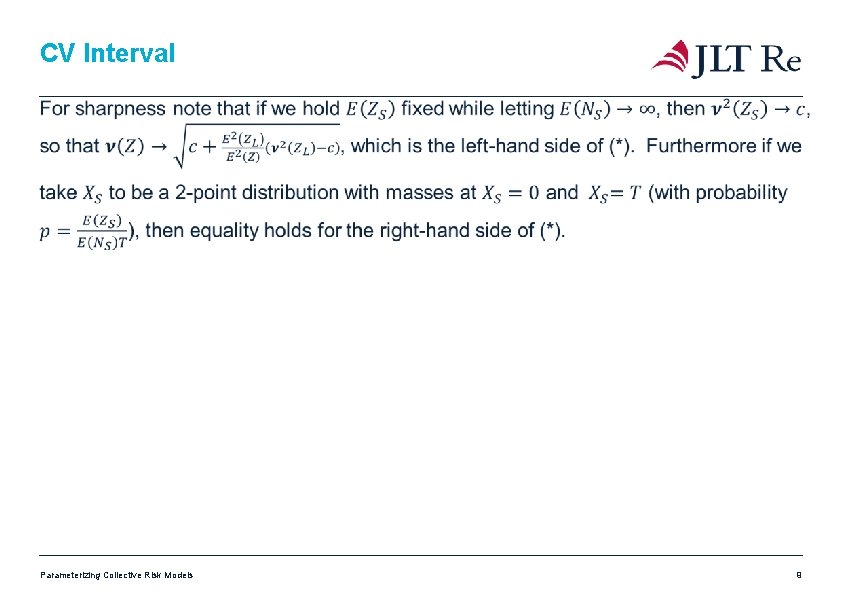
CV Interval Parameterizing Collective Risk Models 9
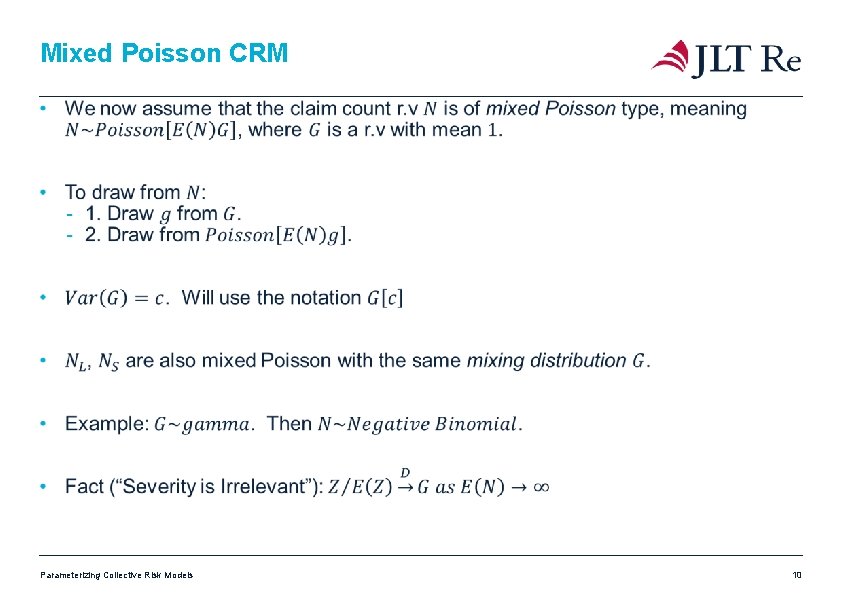
Mixed Poisson CRM Parameterizing Collective Risk Models 10
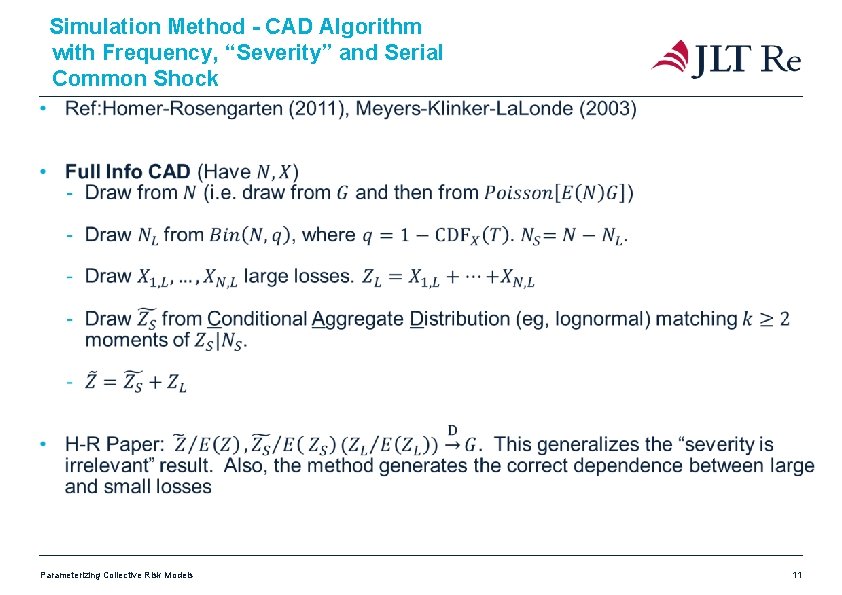
Simulation Method - CAD Algorithm with Frequency, “Severity” and Serial Common Shock Parameterizing Collective Risk Models 11
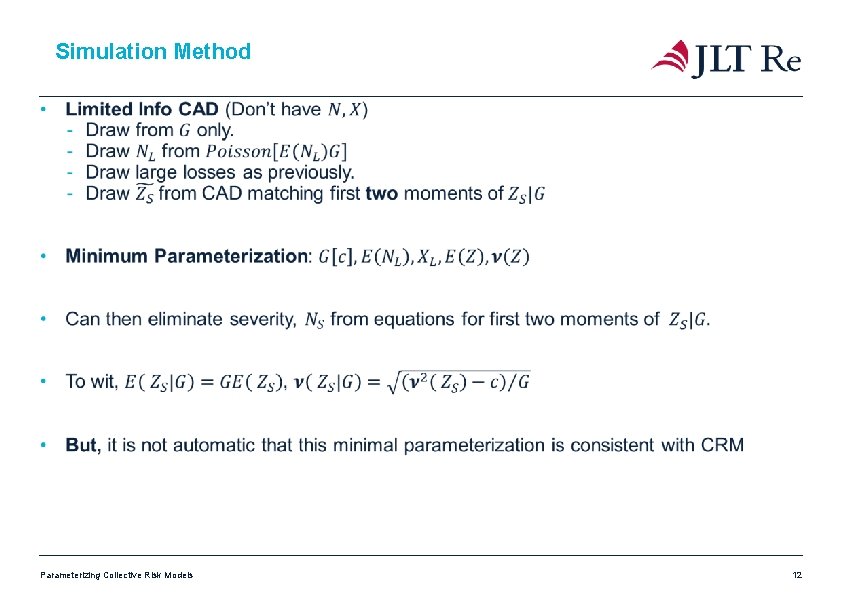
Simulation Method Parameterizing Collective Risk Models 12
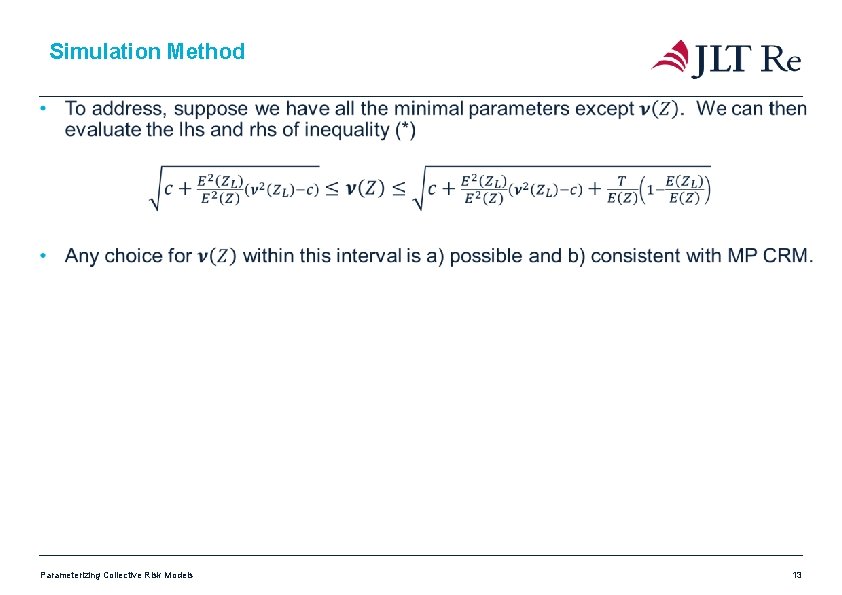
Simulation Method Parameterizing Collective Risk Models 13
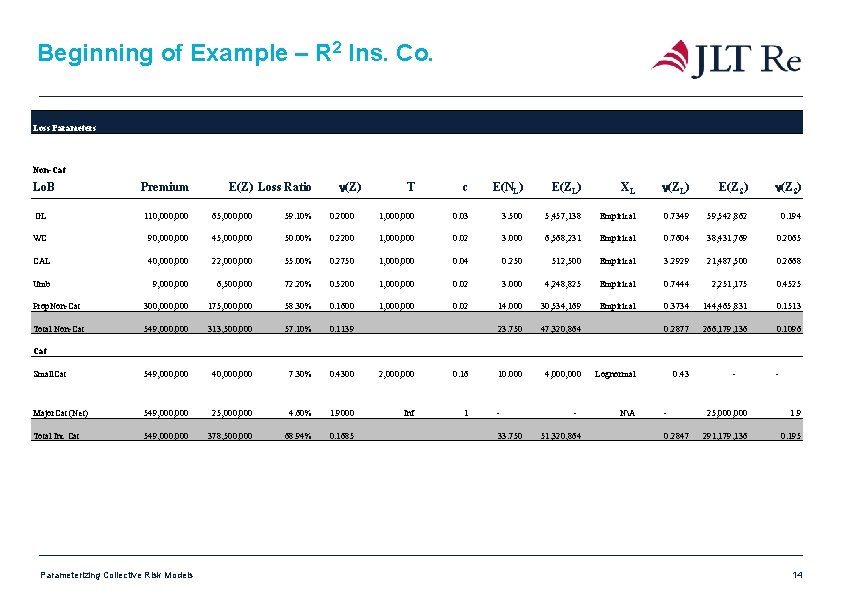
Beginning of Example – R 2 Ins. Co. Loss Parameters Non-Cat Lo. B Premium E(Z) Loss Ratio n(Z) T c E(NL) E(ZL) XL n(ZL) E(ZS) n(ZS) GL 110, 000 65, 000 59. 10% 0. 2000 1, 000 0. 03 3. 500 5, 457, 138 Empirical 0. 7349 59, 542, 862 0. 194 WC 90, 000 45, 000 50. 00% 0. 2200 1, 000 0. 02 3. 000 6, 568, 231 Empirical 0. 7604 38, 431, 769 0. 2065 CAL 40, 000 22, 000 55. 00% 0. 2750 1, 000 0. 04 0. 250 512, 500 Empirical 3. 2929 21, 487, 500 0. 2668 Umb 9, 000 6, 500, 000 72. 20% 0. 5200 1, 000 0. 02 3. 000 4, 248, 825 Empirical 0. 7444 2, 251, 175 0. 4525 Prop. Non-Cat 300, 000 175, 000 58. 30% 0. 1600 1, 000 0. 02 14. 000 30, 534, 169 Empirical 0. 3734 144, 465, 831 0. 1513 Total Non-Cat 549, 000 313, 500, 000 57. 10% 0. 1139 23. 750 47, 320, 864 0. 2877 266, 179, 136 0. 1096 Small. Cat 549, 000 40, 000 7. 30% 0. 4300 2, 000 0. 16 10. 000 4, 000 Major. Cat (Net) 549, 000 25, 000 4. 60% 1. 9000 Inf 1 Total Inc Cat 549, 000 378, 500, 000 68. 94% 0. 1685 Cat Parameterizing Collective Risk Models 33. 750 51, 320, 864 Lognormal NA 0. 43 0. 2847 - - 25, 000 1. 9 291, 179, 136 0. 195 14
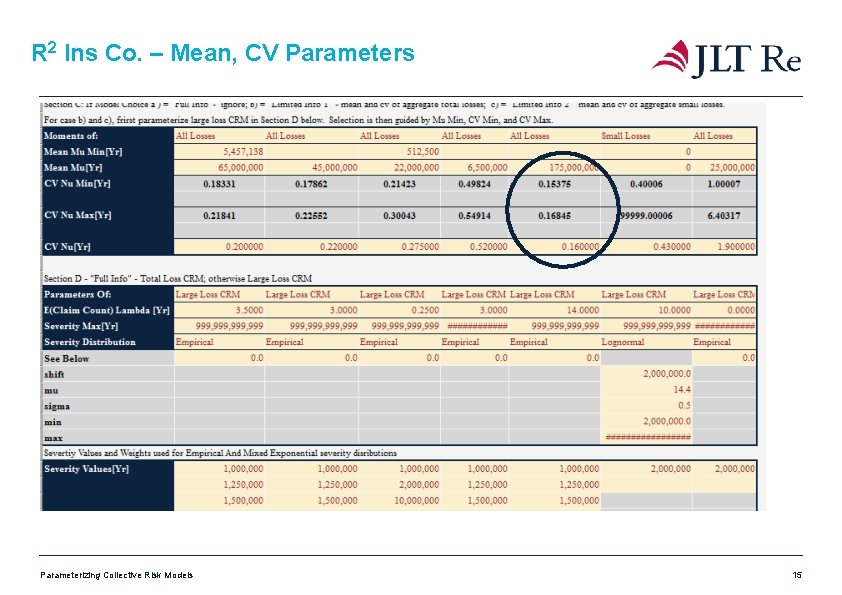
R 2 Ins Co. – Mean, CV Parameters Parameterizing Collective Risk Models 15
Common Shock Correlation • Correlate Lo. Bs modeled with MP CRM/CAD method. • Lo. Bs are organized into covariance groups. Only Lobs within the same covariance group co-vary with one another. • Frequency, “severity”, and serial common shock. Parameterizing Collective Risk Models 16
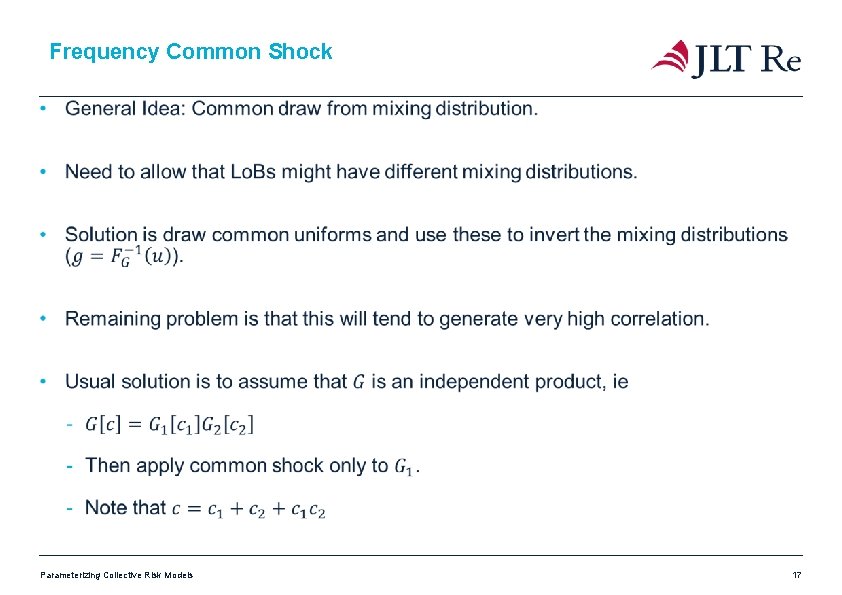
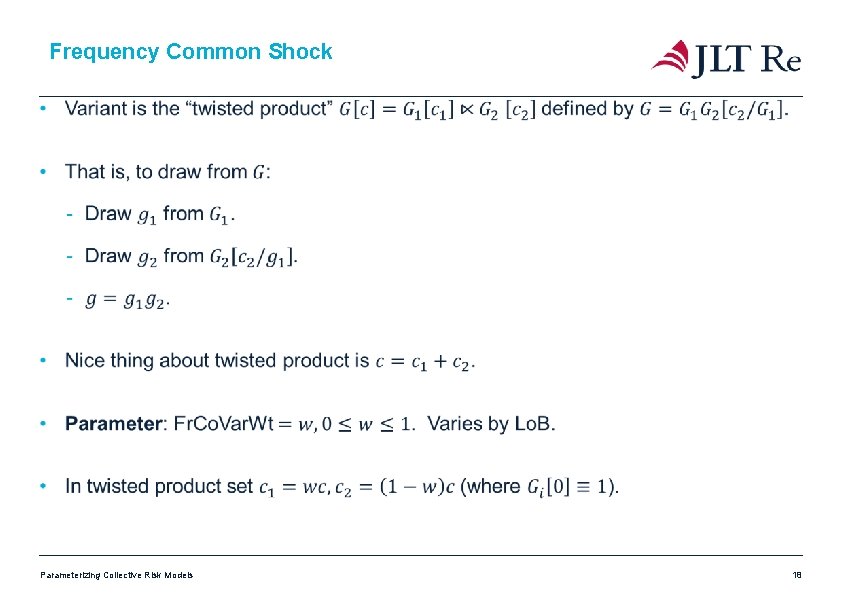
Frequency Common Shock Parameterizing Collective Risk Models 17
Frequency Common Shock Parameterizing Collective Risk Models 18
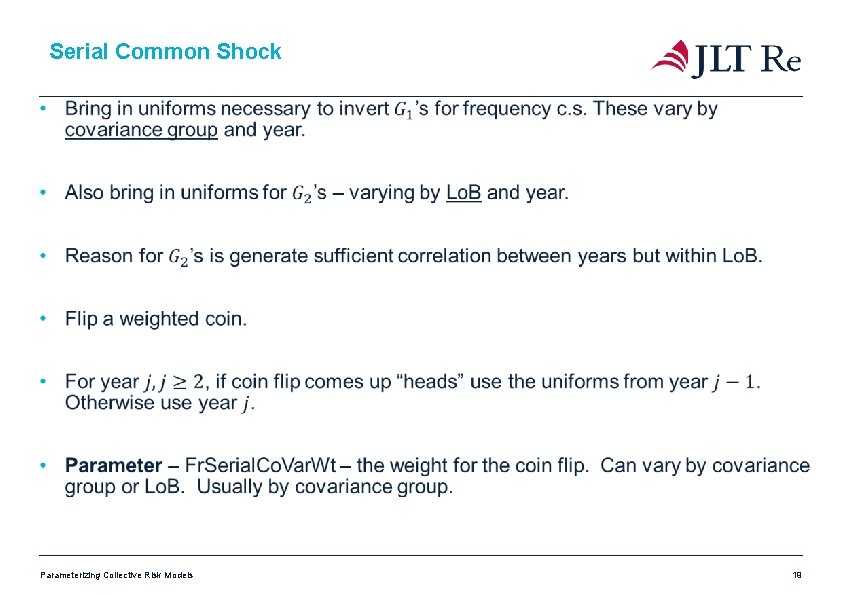
Serial Common Shock Parameterizing Collective Risk Models 19
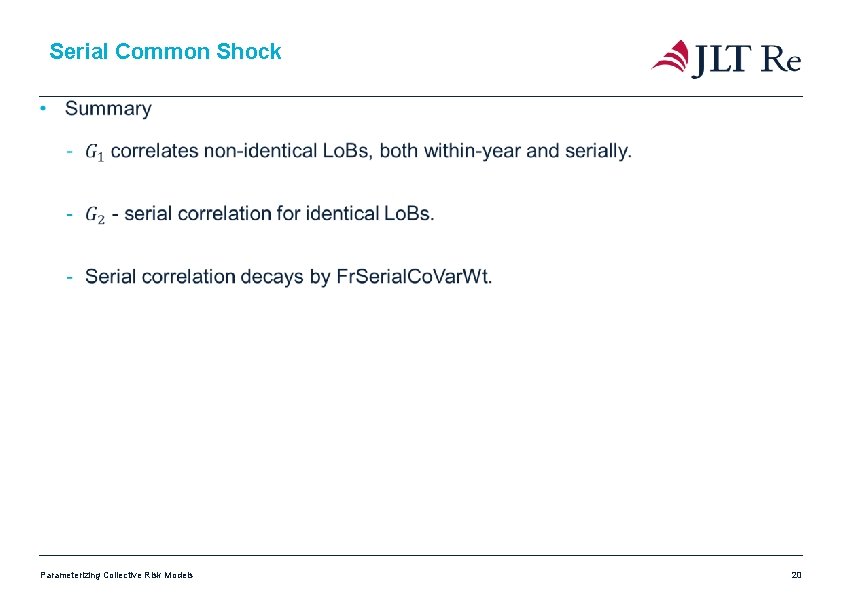
Serial Common Shock Parameterizing Collective Risk Models 20
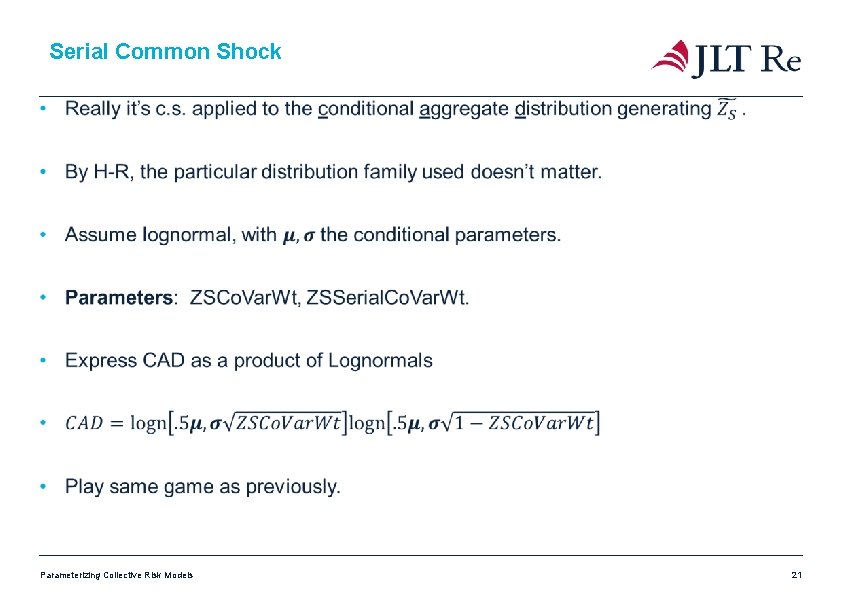
Serial Common Shock Parameterizing Collective Risk Models 21
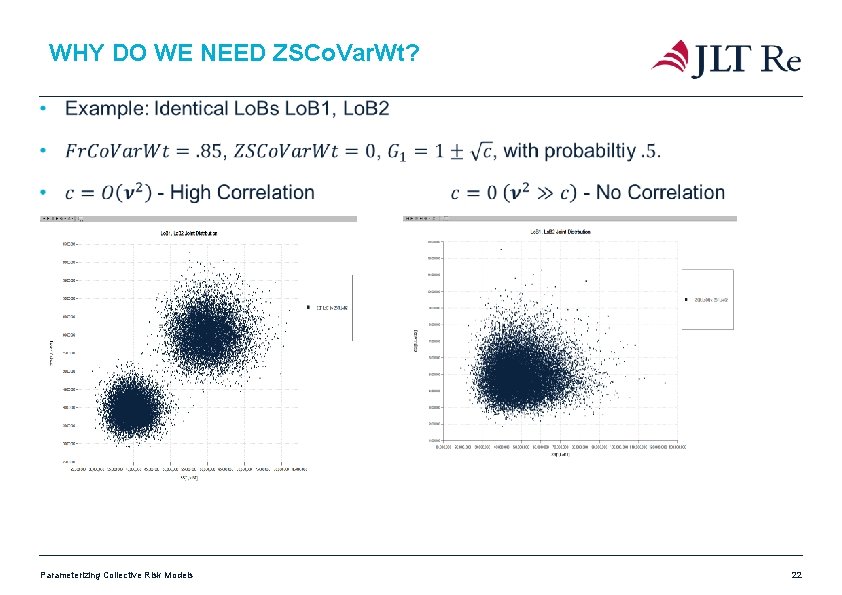
WHY DO WE NEED ZSCo. Var. Wt? Parameterizing Collective Risk Models 22
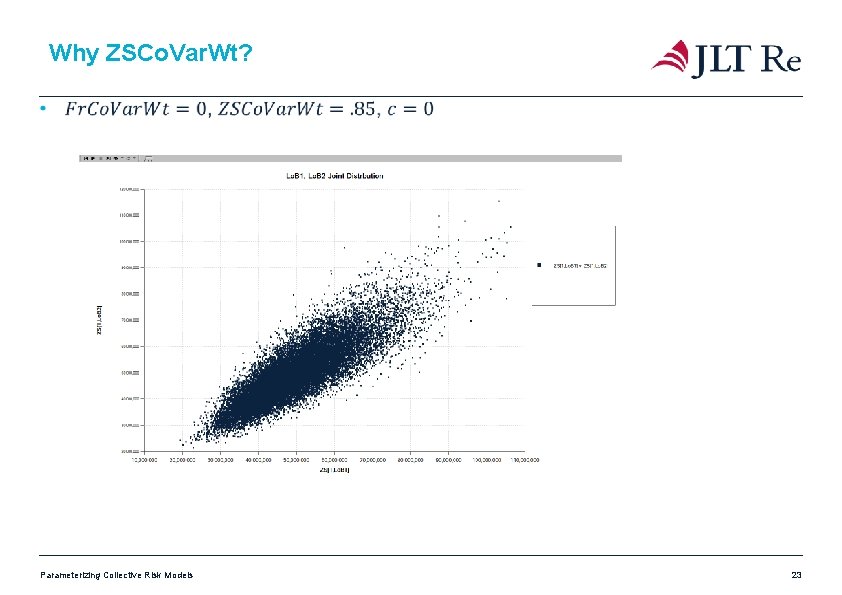
Why ZSCo. Var. Wt? Parameterizing Collective Risk Models 23
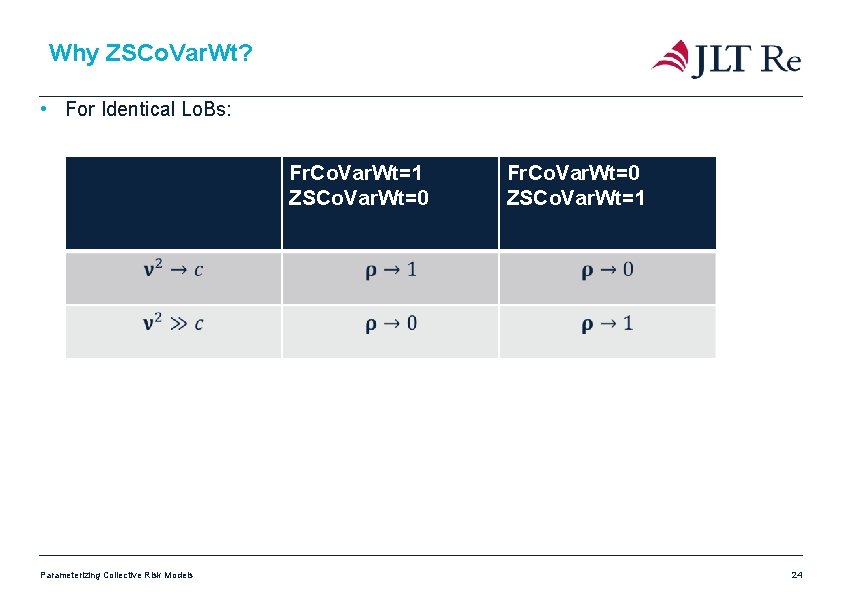
Why ZSCo. Var. Wt? • For Identical Lo. Bs: Fr. Co. Var. Wt=1 ZSCo. Var. Wt=0 Parameterizing Collective Risk Models Fr. Co. Var. Wt=0 ZSCo. Var. Wt=1 24
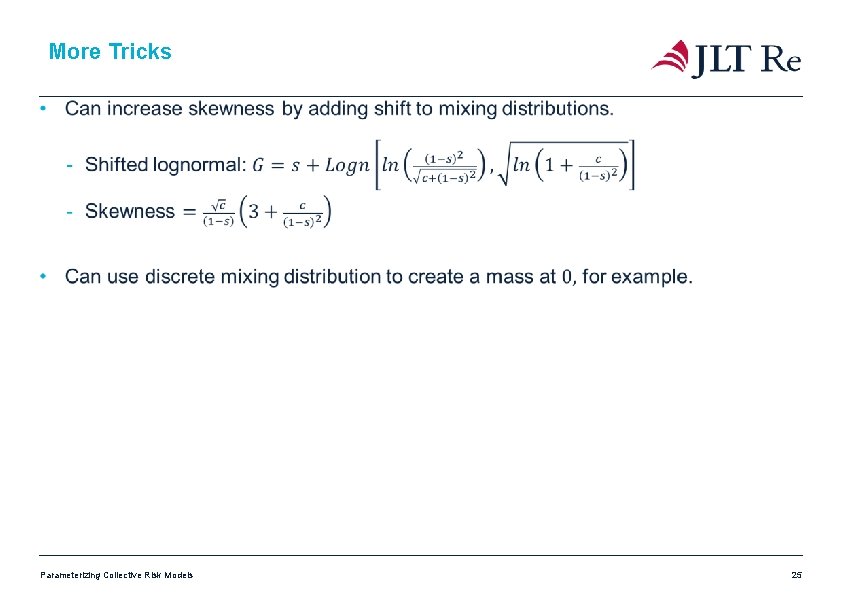
More Tricks Parameterizing Collective Risk Models 25
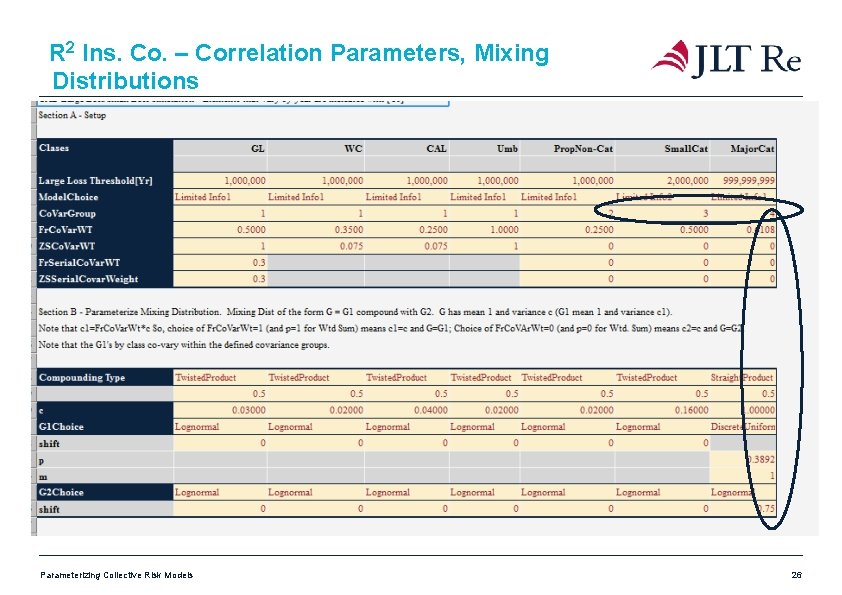
R 2 Ins. Co. – Correlation Parameters, Mixing Distributions Parameterizing Collective Risk Models 26
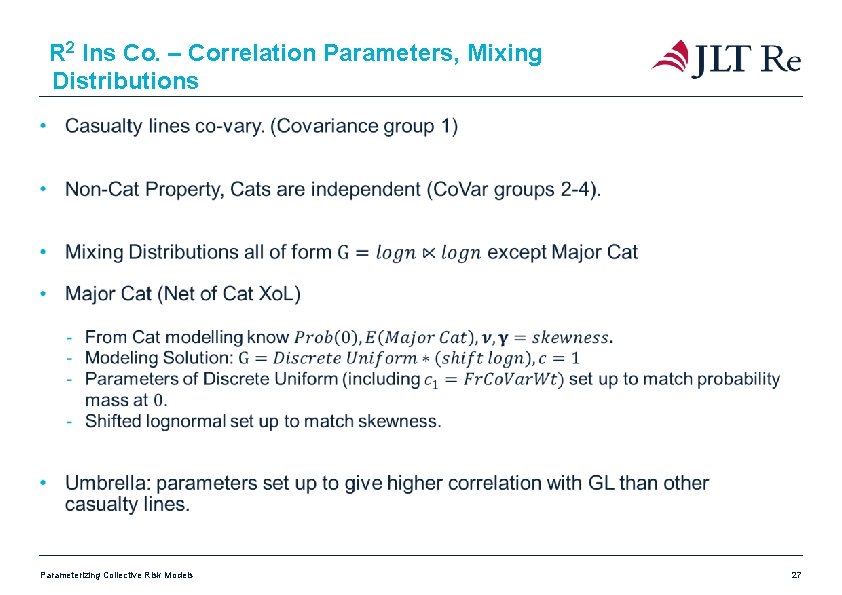
R 2 Ins Co. – Correlation Parameters, Mixing Distributions Parameterizing Collective Risk Models 27
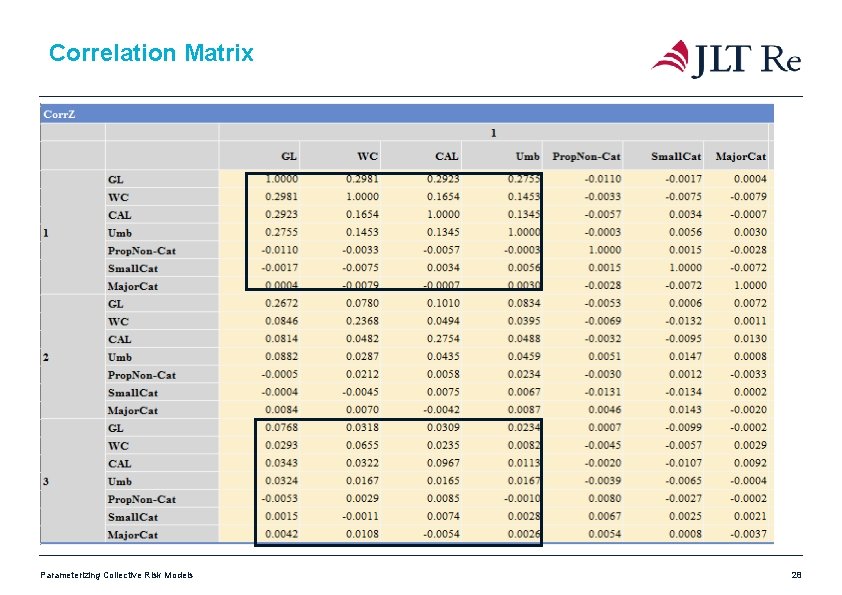
Correlation Matrix Parameterizing Collective Risk Models 28
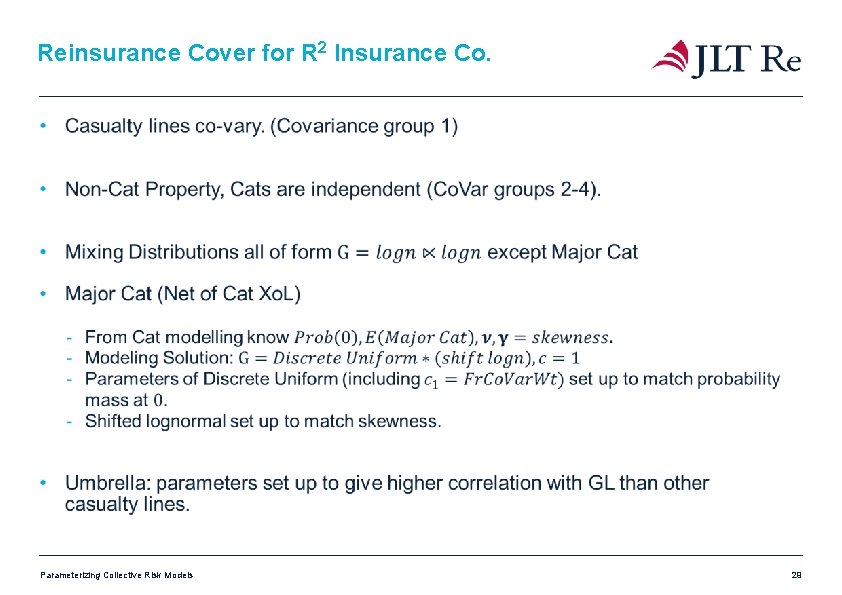
Reinsurance Cover for R 2 Insurance Co. Parameterizing Collective Risk Models 29
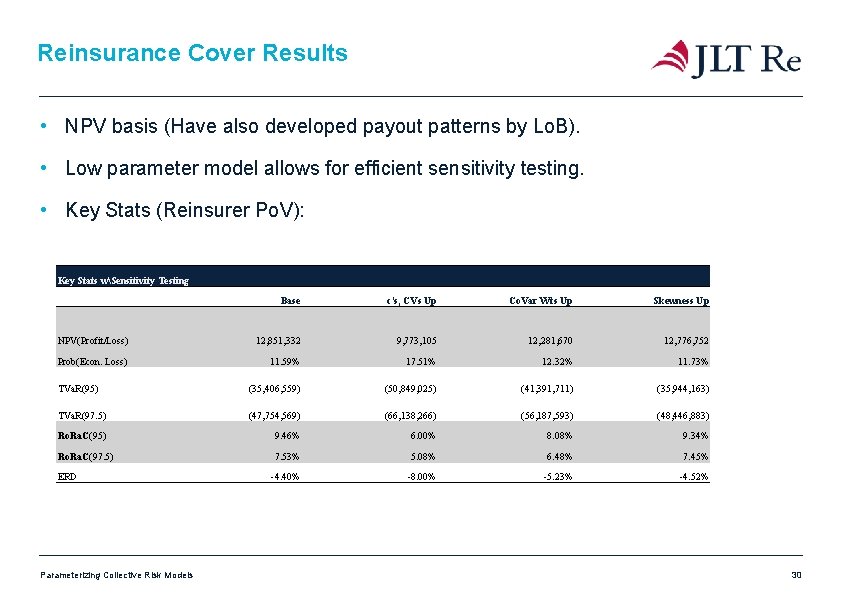
Reinsurance Cover Results • NPV basis (Have also developed payout patterns by Lo. B). • Low parameter model allows for efficient sensitivity testing. • Key Stats (Reinsurer Po. V): Key Stats wSensitivity Testing Base c's, CVs Up Co. Var Wts Up Skewness Up NPV(Profit/Loss) 12, 851, 332 9, 773, 105 12, 281, 670 12, 776, 752 Prob(Econ. Loss) 11. 59% 17. 51% 12. 32% 11. 73% TVa. R(95) (35, 406, 559) (50, 849, 025) (41, 391, 711) (35, 944, 163) TVa. R(97. 5) (47, 754, 569) (66, 138, 266) (56, 187, 593) (48, 446, 883) Ro. Ra. C(95) 9. 46% 6. 00% 8. 08% 9. 34% Ro. Ra. C(97. 5) 7. 53% 5. 08% 6. 48% 7. 45% -4. 40% -8. 00% -5. 23% -4. 52% ERD Parameterizing Collective Risk Models 30
CONTACT R 2 Richard Rosengarten E: Richard. Rosengarten@jltre. com T: 215 246 1711 This presentation by JLT Re (North America) Inc. is intended to provide only general information based on sources we believe are reliable. JLT Re (North America) Inc. makes no representations or warranties, express or implied, as to the accuracy of any of the information herein, which is not intended to be taken as advice with respect to any individual situation and cannot be relied upon as such. Any statements concerning tax, accounting, legal or regulatory matters should be understood to be general observations based solely on our experience as reinsurance brokers and risk consultants. We are not tax, accounting, legal or regulatory professionals and any such information provided is not professional advice. These matters should be reviewed with your own qualified advisors in these areas. This document may not be copied or reproduced in any form without the express permission of JLT Re (North America) Inc. , except that clients of JLT Re (North America) Inc. need not obtain such permission when using this report for internal business purposes. Presentation Title 31