
Parallelization and Characterization of Pattern Matching using GPUs
- Slides: 16
Parallelization and Characterization of Pattern Matching using GPUs Author: Giorgos Vasiliadis、Michalis Polychronakis、Sotiris Ioannidis Publisher: IEEE IISWC 2011 Presenter: Ye-Zhi Chen Date: 2012/02/15
Introduction � With ever increasing storage capacity and link speeds, the amount of data that needs to be searched, analyzed, categorized, and filtered is growing rapidly � Hardware platforms with a high and often prohibitive cost � ASICs and FPGAs are very efficient and perform well , however they are complex to program and modify, and they are usually tied to a specific implementation � modern graphics processors, is a compelling alternative option for inexpensively removing the burden of computationally-intensive operations from the CPU
Introduction The contributions of this work include: 1. The implementation of a GPU-based pattern matching library for inspecting network packets in real-time, with support for both string searching and regular expression matching operations. 2. The performance evaluation of the pattern matching engine using different memory hierarchies that modern graphics processors provide. 3. An efficient packet buffering scheme for transferring network packets to the memory space of the GPU for inspection.
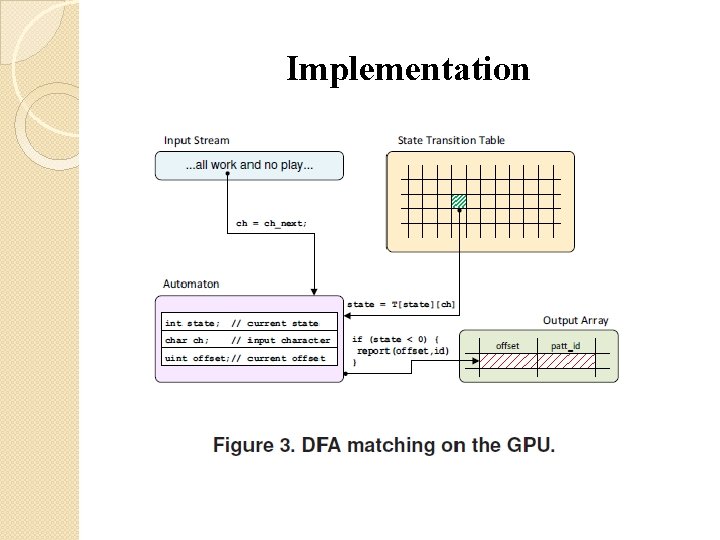
Converting � Using existing tools to compile regular expressions into NFAs and then convert NFAs to DFA by Subset Construction algorithm � Each DFA is represented as a two-dimensional state table array that is mapped on the memory space of the GPU. The dimensions of the array are equal to the number of states and the size of the alphabet (256 in our case) � Each cell contains the next state to move to, as well as an indication of whether the state is a final state or not. Since transition numbers may be positive integers only, we represent final states as negative numbers
Implementation � Initially, all patterns are compiled to DFA state tables. The user is able to compile each pattern to a separate DFA, or combine many different patterns to a single one (performed by the CPU) � The state table is then copied and mapped to the memory space of the GPU. � At the searching phase, each thread searches a different portion (i. e. , a separate network packet) of the input data stream
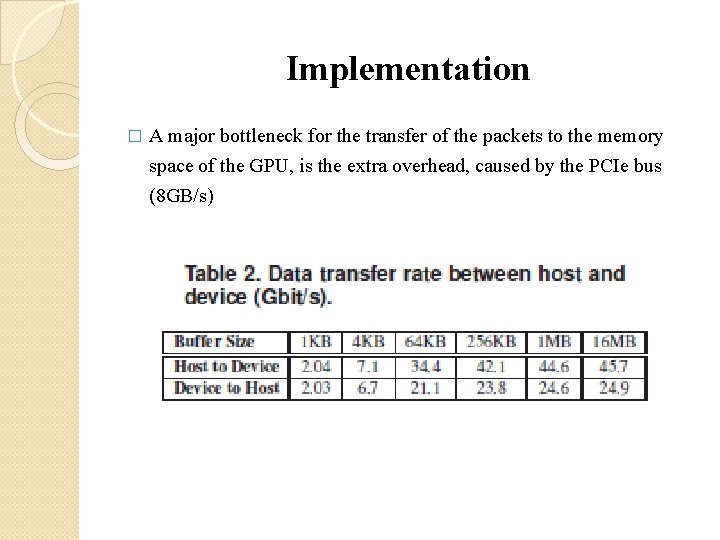
Implementation � A major bottleneck for the transfer of the packets to the memory space of the GPU, is the extra overhead, caused by the PCIe bus (8 GB/s)
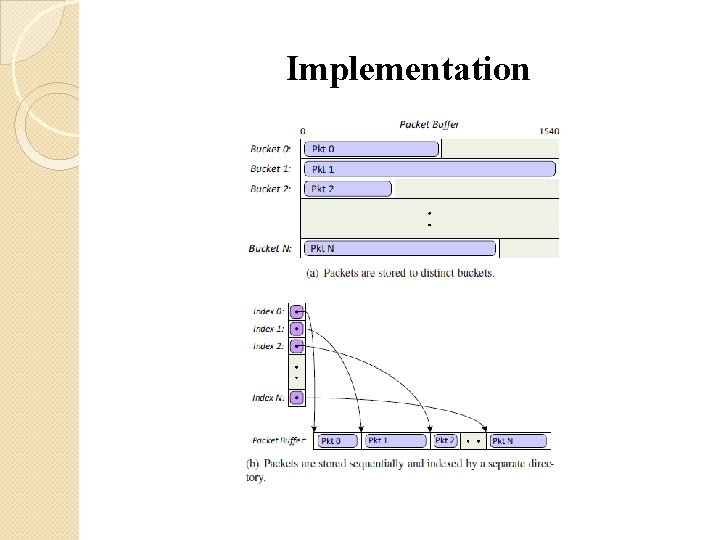
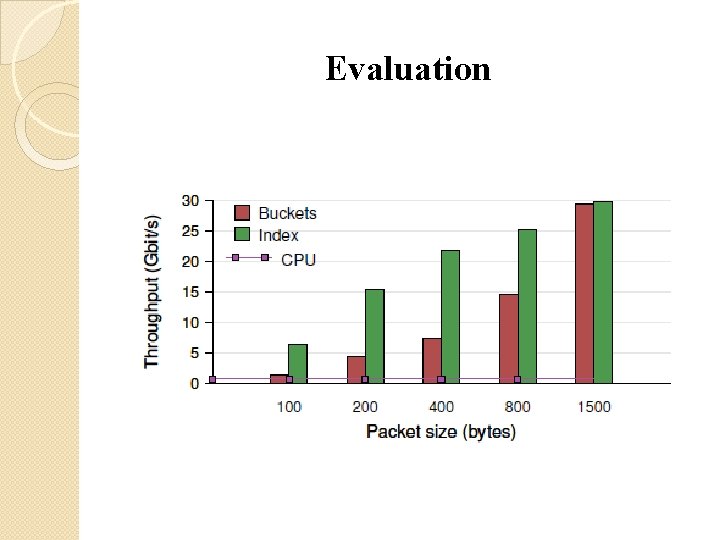
Implementation � The packet buffer scheme affects the parallelization approach, i. e. , the distribution of the network packets to the stream processors. The simplest the buffer format, the better the parallelization scheme. Two different approaches for collecting packets : 1. Fixed buckets for storing the network packets 2. Index-based, scheme: all packets are stored back-to-back into a serial packet buffer. A separate index is maintained, that keeps pointers to the corresponding offsets in the buffer, the index array is stored in the beginning of the packet buffer.
Implementation
Implementation
Implementation � Every time a thread matches a pattern, it reports it by appending it in an array that has been previously allocated in the global device memory � For each packet, we maintain a counter for storing the total number of matches found in the packet, and a fixed number of entries (currently 32) for saving the exact matching offsets inside the packet.
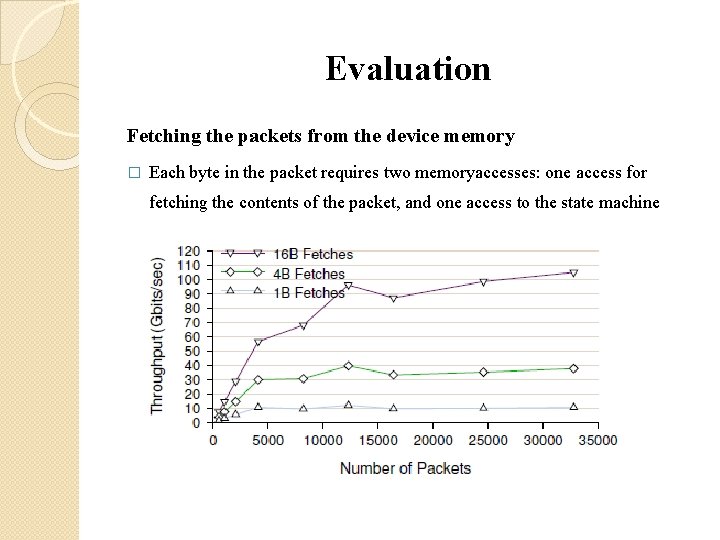
Implementation � One important optimization is related to the way the input data is loaded from the device memory � The minimum size for every device memory transaction is 32 bytes � Fetching 4 or 16 bytes at a time using the char 4 and int 4 built-in data types, respectively
Implementation Host Memory Optimizations 1. The use of page-locked memory 2. The reduction of the number of transactions between the host and the GPU device : we use a large buffer to store the contents of multiple network packets, which is then transferred to the GPU in a single transaction
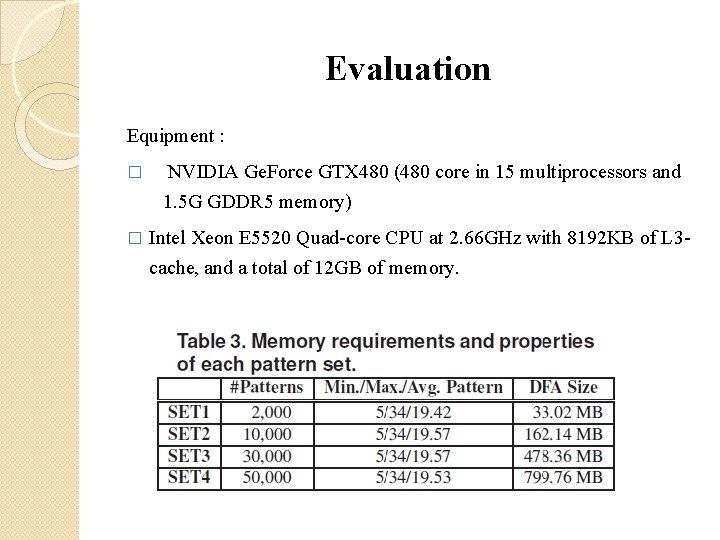
Evaluation Equipment : � NVIDIA Ge. Force GTX 480 (480 core in 15 multiprocessors and 1. 5 G GDDR 5 memory) � Intel Xeon E 5520 Quad-core CPU at 2. 66 GHz with 8192 KB of L 3 cache, and a total of 12 GB of memory.
Evaluation Fetching the packets from the device memory � Each byte in the packet requires two memoryaccesses: one access for fetching the contents of the packet, and one access to the state machine
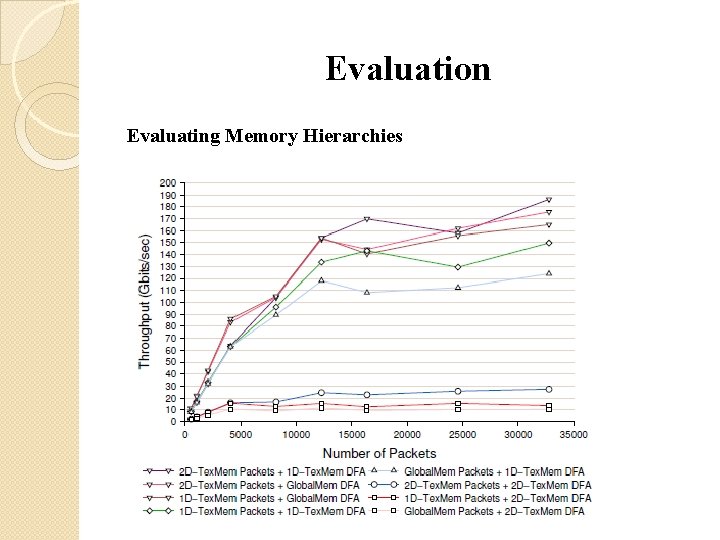
Evaluation Evaluating Memory Hierarchies
Evaluation